HTML

Egyik 19

Magyarországról, utódállami területekről, Európáról, Európai Unióról, további földrészekről, globalizációról, űrről

Friss topikok

Címkék

1956 (98) abkhazia (5) abudhabicrudeoilpipeline (1) accademiaungheresedellescienze (1) ádeniöböl (1) adriaitenger (13) adriakőolajvezeték (2) adriapipeline (3) adriaticsea (10) aegeansea (8) aegyptus (1) afganisztán (67) afghanistan (161) africa (201) africandevelopmentbank (1) afrika (92) agriculture (4) airbus (2) ajurabirodalom (1) akabaiöböl (1) alánia (1) alaptörvény (45) albania (34) albánia (18) algeria (24) algéria (13) algérie (2) alkotmány (36) alkotmánybíróság (25) államadósság (2) állambiztonságiszolgálatoktörténetilevéltára (5) államiszámvevőszék (5) állandóválasztottbíróság (1) állat (2) állatorvostudományiegyetem (1) allemagne (1) alpok (5) alps (5) altai (1) altáj (2) amazon (6) amazonas (2) americae (1) americanhungarianfederation (1) americansamoa (3) americas (15) amerika (14) amerikahangja (1) amerikaimagyarkoalíció (1) amerikaimagyarmúzeum (1) amerikaimagyarszépművesczéh (1) amerikaimagyarszövetség (2) amnestyinternational (10) amur (1) anc (1) ancientegypt (1) ancientpersia (1) ancientrome (2) andes (1) andorra (1) andrássygyulabudapestinémetnyelvűegyetem (1) angara (1) anglia (18) angola (9) antarctic (10) antarctica (2) antiguaésbarbuda (1) antiókhiaifejedelemség (1) antiquaandbarbuda (3) apec (1) appalachians (2) appenines (1) aquincumimúzeum (1) arabfélsziget (1) arabia (1) arabianpeninsula (4) arabiansea (11) arabköztársaságokszövetsége (1) arabtenger (1) áradás (24) arafurasea (2) araltó (2) archeology (4) architecture (3) arctic (84) arcticocean (8) ardeal (3) argentina (63) argentína (2) argentine (4) ária (1) armenia (34) árpádvonal (1) aruba (1) árvíz (22) asean (1) asia (343) asianinfrastructureinvestmentbank (3) assyria (1) asteroid (29) athén (1) atlanticocean (93) atlantióceán (15) atom (1) audio (8) australia (150) áustria (1) austria (131) austrianempire (1) austrohungarianmonarchy (7) ausztrália (48) ausztria (171) autonómia (40) autonomy (6) avarbirodalom (1) azerbaijan (78) azerbajdzsán (16) azovitenger (5) azovsea (2) ázsia (77) babelmandeb (4) bábelmandebszoros (1) babesbolyaitudományegyetem (4) babilon (1) babilónia (1) badeniőrgrófság (1) bahamas (5) bahamaszigetek (1) bahrain (26) bahrein (2) baikal (2) bajkáltó (1) bajorország (9) balassiintézet (7) balaton (29) balcans (63) balkán (65) baltics (78) balticsea (41) baltikum (27) baltitenger (18) balti államok (1) banat (4) banatus (1) banglades (10) bangladesh (20) bánság (21) baptistaszeretetszolgálat (1) barátságkőolajvezeték (9) barbados (3) barentssea (14) barentstenger (2) barlang (1) batthyáneum (4) bavaria (7) bayern (2) bayofbengal (5) bécsimagyartörténetiintézet (1) békásszoros (2) belarus (91) belgakongó (3) belgium (217) belgrádimagyarkulturálisintézet (1) belize (4) beltandroadinitiative (1) benesdekrétumok (4) bengurionproject (1) benin (3) beregszászimagyargörögkatolikusesperesikerület (1) beringsea (1) beringstrait (1) beringstreat (2) beringszoros (1) besszarábia (6) bethlengáboralap (3) bevándorlásihivatal (7) bhután (1) bhutan (4) Biblia (7) bismarcktenger (1) bissauguinea (1) bizánc (3) bizáncibirodalom (5) blackrock (1) blacksea (89) bluestream (4) boek (1) bog (1) bohaisea (2) bok (1) bolivia (13) bologna (1) bolyaiegyetem (2) bolyaitudományegyetem (2) book (163) borneo (1) bősnagymaros (1) bosniaandherzegovina (28) bosphorus (4) bosporus (2) bosznia (6) boszniahercegovina (23) boszporusz (3) botswana (1) brahmaputra (1) brandenburg (1) brasil (2) brazil (91) brazília (23) britbirodalom (6) britindia (1) britishpetroleum (4) britpalesztinmandátum (1) britszomália (1) britújguinea (1) brunei (5) buch (13) budapest (1) budapestfővároslevéltára (2) budapesthistorymuseum (2) budapesticorvinusegyetem (2) budapestiközlekedésiközpont (1) budapestiműszakiésgazdaságtudományiegyetem (4) budapestitörténetimúzeum (2) budapestneutroncentre (1) budapestostroma (2) bukovina (2) bulgaria (111) bulgária (78) bulgarianacademyofsciences (1) burkinafaso (11) burma (4) burundi (4) burzenland (1) byzantineempire (1) byzantium (1) caboverde (2) calvinjteológiaiakadémia (1) cambodia (15) cameroon (8) canada (190) canto (1) capehorn (1) capeofgoodhope (4) capeverde (1) caribbean (40) caribbeansea (22) caritashungarica (1) carpathianbasin (5) carpathians (5) carte (7) cartoon (2) caspiansea (28) catalonia (8) caucasus (35) celticmusic (1) centralafricanrepublic (3) centralamerica (19) centralbankofhungary (1) ceres(dwarfplanet) (1) chad (10) chechnya (9) chevron (9) chile (36) china (569) chinoingyógyszergyár (1) chorwerke (1) címer (1) Címkék (2) ciprus (19) ciszjordánia (1) civilaviationorganization (1) clouds (1) collectivesecuritytreatyorganization (1) collègebaronjózsefeötvös (1) colombia (40) comet (8) communism (18) communist (81) comunista (1) congo (2) constitution (8) constitutionalcourt (4) cookislands (3) corsica (1) costarica (11) councilofeurope (10) courtofjusticeoftheeuropeanunion (1) covid19 (2) crimea (91) crisana (1) croatia (53) csád (3) csángórádió (2) csecsenföld (3) csehország (96) csehszlovákia (45) csendesóceán (14) csíkiszékelymúzeum (1) csónak (5) cuba (47) cyprus (40) czechia (100) czechoslovakia (4) dal (8) dalmácia (1) dalszöveg (1) dance (14) dánia (31) danube (154) danubeinstitute (1) danubianresearchcenter (1) danubio (1) dardanellák (1) dardanelles (4) debreceniegyetem (7) debrecenireformátuskollégium (1) defenseadvancedresearchprojectsagency (1) délafrika (17) délamerika (27) déliáramlat (23) déljemen (1) délkínaitenger (6) délkorea (20) délszudán (2) délvidék (57) democaticrepublicofcongo (8) democraticrepublicofcongo (33) demográfia (1) denmark (115) depleteduranium (1) deutschland (7) dévaiszentferencalapítvány (3) diegogarcia (3) djibouti (10) dnestr (1) dnieper (3) dnipro (2) dnyeper (1) dobrudzsa (2) dominica (8) dominicanrepublic (8) don (3) donau (1) donbass (41) donbász (1) donetsk (1) donyecmedence (2) drava (1) dráva (1) drávaszög (2) druzhbapipeline (26) dubai (19) dubaj (1) dubliniegyezmény (2) duna (212) dunaipolynemzetipark (2) dunamédiaszolgáltatónonprofitzrt (2) dunamellékireformátusegyházkerület (1) dunamúzeum (1) dunatelevízió (8) dutcheastindiacompany (1) dutchrepublic (1) dzsibuti (1) earth (173) earthquake (64) eastchinasea (10) eastgermany (5) easttimor (8) ebolajárvány (2) ecocalipse (2) ecuador (31) ecumenicalpatriarchateofconstantinople (1) ég (139) égeitenger (4) egészségügy (2) egészségügyivilágszervezet (7) egriérsekség (1) egyenlítőiguinea (1) egyesültállamok (366) egyesültarabemírségek (15) egyesültarabköztársaság (2) egyesültkirályság (27) egyesültnemzetekszervezete (47) egyházikönyvtárakegyesülése (1) egyházzene (1) egyiptom (68) egyiptom(hellenisztikus) (1) egypt (121) éjszaka (2) ekokalipszis (1) elba (1) eleve (1) elsővilágháború (90) emberijogokeurópaibírósága (11) ének (20) england (56) englishchannel (5) eni (1) ensz (65) eötvösjózsefcollegium (5) eötvöslorándtudományegyetem (15) eötvösloránduniversity (2) építészet (140) equatorialguinea (3) equinor (1) erdély (328) erdélyimagyarközművelődésiegyesület (2) erdélyimagyarműszakitudományostársaság (1) erdélyimagyarnemzetitanács (19) erdélyimagyarnyelvmívelőtársaság (1) erdélyiművészetiközpont (2) erdélyimúzeumegyesület (21) erdélyinemzetimúzeum (1) erdélyinemzetimúzeumkézirattára (1) erdélyinemzetimúzeumlevéltára (1) erdélyireformátusegyházkerület (20) erdélyirómaikatolikusegyházmegye (2) erdélyirómaikatolikuspüspökség (1) erdélyirómaikatolikusstátus (1) erdélyiszépmívescéh (1) eritrea (20) erkelszínház (1) eső (7) este (26) estonia (71) estonianssr (1) eswatini (3) északamerika (18) északiáramlat (13) északiáramlat2 (4) északírország (2) északisark (6) északitenger (3) északjemen (1) északkorea (13) északmacedónia (1) északvietnam (1) esztergomiérsekség (1) esztergomifőegyházmegyeikönyvtár (1) eszterházakulturáliskutatóésfesztiválközpont (1) eszterházykárolyegyetem (1) észtország (21) ethiopia (37) etiópia (10) etna (1) eubam (1) eufrates (3) eufrátesz (3) euphrates (14) eurasia (64) eurázsa (2) eurázsia (22) európa (451) europa (6) europa(moon) (1) európaibékeintézet (1) európaibetegségmegelőzésiésjárványügyiközpont (1) európaibíróság (18) európaibizottság (146) európaibiztonságiésegyüttműködésiértekezlet (4) európaibiztonságiésegyüttműködésiszervezet (25) európaifejlesztésiésújjáépítésibank (1) európaiközpontibank (5) európainemzetiségekföderatívuniója (2) európainukleáriskutatásiszervezet (1) európaiparlament (127) európaipolitikaiközösség (1) európaitanács (64) európaiügyészség (2) európaiújjáépítésiésfejlesztésibank (3) európaiunió (356) európaiűrügynökség (1) europe (671) europeanantifraudoffice (1) europeanbankforreconstructionanddevelopment (3) europeancentralbank (15) europeancommission (253) europeancommunities (1) europeancouncil (110) europeancourtofauditors (3) europeancourtofhumanrights (7) europeancourtofjustice (24) europeaneconomicarea (2) europeangeosciencesunion (1) europeaninvestmentbank (6) europeanombudsman (2) europeanparliament (134) europeanpoliticalcommunity (11) europeanpublicprosecutorsoffice (6) europeansciencefoundation (1) europeanspaceagency (18) europeanunion (495) europol (9) eurostat (7) evangélikusországoskönyvtár (1) exxon (1) exxonmobil (5) eυρώπη (1) fák (124) fareasternroute (1) faroeislands (1) federalreservesystem (2) federationofhungarians (1) fehéroroszország (22) fehértenger (1) feketetenger (60) felhők (118) felvidék (84) fénykép (34) fényképek (372) ferenchoppmuseumofasiaticarts (1) ferencjózseftudományegyetem (1) ferencrákóczyIItranscarpathianhungarianinstitute (1) ferenczjózseftudományegyetem (1) fertőtó (1) festmény (1) fidzsiszigetek (1) fiji (7) film (155) finland (95) finnország (34) fire (1) firenze (2) firstworldwar (3) fitchratings (1) fiumeitengerészetiakadémia (1) flanders (5) főgáz (3) föld (27) földközitenger (51) földrajziintézet (1) földrengés (3) forsterközpont (3) fórumkisebbségkutatóintézet (4) france (509) franciaország (238) franciapolinézia (1) franciavichykormány (2) frankbirodalom (2) frenchpolynesia (1) frontex (17) függetlenállamokközössége (3) fülöpszigetek (9) fundamentallaw (2) galaxy (1) galícia (3) galilea (1) gambia (5) ganges (2) gangesz (1) ganz (1) gáza (8) gaza (207) gazprom (68) generalcourt (4) generalelectric (1) genfikonvenció (2) georgia (66) germanicpeoples (1) germánok (1) germanreich (14) germany (533) ghana (17) ghána (3) gibraltar (3) global (40) globális (7) globalizáció (49) globalization (151) globalizmus (11) globalsouth (1) góbisivatag (1) golfáram (1) google (1) görögbirodalom (1) görögkatolikusmetropólia (1) görögország (99) greatbritain (193) greece (119) greenland (57) grenada (5) grófklebelsbergkunómagyartörténetiintézet (1) grönland (6) grúzia (20) guam (9) guatemala (29) guinea (6) guineabissau (1) gulfofaden (7) gulfofalaska (1) gulfofaqaba (1) gulfoffinland (4) gulfofguinea (1) gulfofmexico (15) gulfofoman (15) gulfofthailand (1) gulfoftonkin (1) guyana (7) győriegyházmegyeilevéltár (1) gyulafehérvárirómaikatolikusérsekség (9) gyulafehérvárirómaikatolikusteológia (1) haázrezsőmúzeum (1) habsburgbirodalom (13) Habsburgermonarchie (1) habsburgmonarchia (3) hadtörténelmilevéltár (1) hadtörténetiintézetésmúzeum (16) hágainemzetközibíróság (1) hagyományokháza (2) haiti (22) hajdúdorogigörögkatolikusegyházmegye (1) hajó (60) hamvasbélakultúrakutatóintézet (1) hangzóanyag (18) hargitanemzetiszékelynépiegyüttes (1) havasalföld (8) háziállatok (1) heatwave (1) hegyek (7) hegység (1) híd (68) himalája (3) himalaya (15) himnusz (8) hindukush (1) hitelminősítők (7) hitrádió (2) (19) hőhullám (4) hold (7) holiday (18) hollandia (67) holyland (1) honduras (24) hongrie (9) hoppferencázsiaiművészetimúzeum (1) hormuziszoros (5) horvátország (90) houseofmusic (1) hunbirodalom (3) hungaria (9) HungariaArchiregnum (1) hungarianacademyofarts (1) hungarianacademyofsciences (4) hungarianamericancoalition (1) hungarianhumanrightsfoundation (1) hungariannationalbank (3) hungariannationalmuseum (5) hungarianparliamentbuilding (1) hungarianradio (1) hungarianstateopera (1) hungaricanaközgyűjteményikönyvtár (1) hungary (638) hungría (1) hunkultúramúzeuma (1) hunnia (1) hunok (1) huns (5) husarenlieder (1) hussarsongs (1) huszárnóta (2) hymn (1) iaea (1) iberia (2) ibériaifélsziget (1) iceland (28) ifla (3) IIbécsidöntés (1) IIrákócziferenckárpátaljaimagyarfőiskola (7) IIworldwar (4) ilhánbirodalom (1) imf (60) imperoromano (1) india (390) indiaióceán (6) indianocean (92) indokína (1) indonesia (50) indonézia (8) induló (1) indus (4) influenzavirus (1) információshivatal (1) inkabirodalom (1) insect (1) instituthongroisdeparis (1) interjú (1) internationalairtransportassociation (1) internationalatomicenergyagency (46) internationalbankofreconstructionanddevelopment (1) internationalcommissionofjurists (2) internationalcourtofjustice (11) internationalcriminalcourt (23) internationalcriminaltribunalfortheformerjugoslavia (1) internationalenergyagency (11) internationallabororganization (1) internationalmonetaryfund (9) internationalorganizationformigration (4) internationalpeacebureau (1) internationalseabedauthority (1) internationalspacestation (25) interpol (6) ioniansea (1) iparművészetimúzeum (5) irak (102) irán (91) iran (450) iraq (250) ireland (88) írország (24) írtenger (1) israel (432) istitutobalassi (1) itália (6) italia (7) italy (288) ithakaprogram (1) ivorycoast (7) Iworldwar (3) izland (6) izrael (111) izráel (3) jagellóegyetem (1) jamaica (13) japán (62) japan (245) japántenger (1) járművek (59) jászvásárirómaikatolikuspüspökség (1) jég (3) jegestenger (1) jemen (15) jeruzsálemikirályság (3) jordan (71) jordán (2) jordánia (35) józsefnádorműszakiésgazdaságtudományiegyetem (1) jugoszlávia (41) julianusprogram (1) jupiter (6) kaliningrad (19) kalocsabácsifőegyházmegye (2) kalocsaifőegyházmegyeilevéltár (1) kambodzsa (4) kamerun (4) kanada (63) karasea (2) karibtenger (3) károligáspáregyetem (3) kárpátalja (124) karpatenbecken (1) kárpátmedence (103) kárpátmedenceintézet (1) kárpátok (35) kashmir (9) kaszpitenger (7) katalónia (1) katar (18) katolikuskaritász (2) katonaiműszakifőiskola (1) katonanóta (2) kaukázus (14) kazahsztán (17) kazakhstan (53) kelet (1) keletikárpátok (1) keletkínaitenger (6) kenya (33) képeslap (1) kerchstrait (2) kereskedelmivilágszervezet (1) kgst (3) kijevifejedelemség (1) kijevinagyfejedelemség (1) kína (177) kínaikultúramúzeuma (1) királyhágó (5) királyhágómellékireformátusegyház (5) kirgizisztán (7) kiribati (1) kisebbségijogvédőintézet (4) kisebbségkutatóintézet (2) kitap (2) kitelepítés (1) knjiga (1) köd (3) kodályinstitute (1) kodályzoltánemlékmúzeumésarchívum (1) kolozsváriegyetemikönyvtár (1) kolozsvárifőkonzulátus (2) kolozsvárimagyarkirályiferenczjózseftudományegyetem (2) kolumbia (1) kommunista (86) kommunizmus (49) kongóidemokratikusköztársaság (6) kongóiköztársaság (1) konstantinápolyipatriarchátus (2) könyv (169) koralltenger (1) korea (24) kőrösicsomasándorprogram (1) kórus (3) kórusmű (2) kosovo (36) kossuthdíj (1) koszovó (33) kosztolányidezsőszínház (1) középafrikaiköztrásaság (3) középamerika (4) középeurópaiegyetem (1) központistatisztikaihivatal (12) krím (16) krizajánosnéprajzitársaság (4) książka (2) kuba (8) külügyiéskülgazdaságiintézet (3) kunország (1) kunsthistorischesmuseum (2) kurdistan (40) kurdisztán (8) kúria (7) kurilislands (1) kuriliszigetek (1) kuvait (7) kuwait (32) kyrgyzstan (16) lajta (2) lamanchecsatorna (2) laos (7) lapérousestrait (1) lapland (4) laptewsea (1) latinamerica (4) latvia (91) leagueofnations (1) lebanon (136) lechnerlajostudásközpont (1) leggefondamentale (1) lengyelország (181) leonardo (1) lesotho (1) lettország (23) levant (2) libano (1) libanon (38) liberia (10) libéria (3) líbia (56) libri (10) libro (7) liechtenstein (5) lisztferencacademyofmusic (2) lisztferenczeneművészetiegyetem (1) lithuania (80) litvánia (24) livre (7) londoncourtofinternationalarbitration (1) lsztferencnemzetközirepülőtér (1) ludovikaakadémia (3) ludwigmúzeumkortársművészetimúzeum (2) luhansk (1) lukoil (16) luxembourg (40) luxemburg (23) luzonstrait (1) lybia (69) macedonia (8) macedónia (36) macedonia(provincia) (1) madagascar (13) madagaszkár (1) madár (19) madžarska (1) magyarállaminépiegyüttes (1) magyarállamvasút (2) magyarenergetikaiésközműszabályozásihivatal (2) magyarfejedelemség (1) magyarföldrajzitársaság (1) magyarföldtaniésgeofizikaiintézet (3) magyarhonvédség (1) magyarírókszövetsége (1) magyarkanizsaiudvarikamaraszínház (1) magyarkirályierzsébettudományegyetem (1) magyarkirályság (59) magyarkülügyiintézet (1) magyarmáltaiszeretetszolgálat (2) magyarmérnökikamara (2) magyarművészetiakadémia (13) magyarnemzetibank (33) magyarnemzetigaléria (8) magyarnemzetilevéltár (7) magyarnemzetimúzeum (23) magyarnemzetioperaház (1) magyarnemzetitanács (2) magyarnemzetiüdülésialapítvány (1) magyarnóta (2) magyarnyelviintézet (1) magyarnyelvstratégiaiintézet (1) magyarokvilágszövetsége (16) magyarország (1038) magyarországireformátusegyház (4) magyarországiruszintudományosintézet (1) magyarországkrakkóifőkonzulátusa (1) magyarpolitikaifoglyokszövetsége (1) magyarrádió (1) magyarrendőrség (2) magyarságkutatóintézet (2) magyartáviratiiroda (5) magyartelevízió (1) magyartermészettudományimúzeum (1) magyartudománygyűjtemény (1) magyartudományosakadémia (65) magyartudományosakadémiakönyvtárésinformációsközpont (3) magyarunitáriusegyház (3) magyarvillamosművekzrt (6) magyarvöröskereszt (4) mahart (2) malaccastrait (1) malajzia (10) malawi (6) malaysia (36) malév (1) mali (32) malta (28) málta (15) mamelukbirodalom (1) manchuria (1) mansziget (1) map (90) máramaros (6) maramures (1) march (1) marcia (1) máriarádió (1) marokkó (19) maros (4) marosmegyeimúzeum (1) marosvásárhelyiművészetiegyetem (1) marosvásárhelyiorvosiésgyógyszerészetiegyetem (14) mars (20) marsch (1) marshallislands (6) másodikvilágháború (89) mathiascorvinuscollegium (5) matthiascorvinuscollegium (2) mauritania (5) mauritánia (2) mauritius (5) máv (1) médiatudományiintézet (5) mediterraneansea (101) mekong (2) memorandum (1) menekültügyihivatal (1) mercury (1) meteor (6) mexico (142) mexikó (19) mexikóiöböl (3) mezőgazdaság (8) mezopotámia (1) mia (1) mianmar (1) michelincsillag (2) micronesia (3) microspace (1) middleamerica (1) migrációkutatóintézet (1) migrationresearchinstitute (1) mikeskelemenprogram (1) mikóimrejogvédelmiszolgálat (1) miskolciegyetem (1) miskolcigörögkatolikusegyházmegye (1) mississippi (2) mol (40) moldova (109) moldva (22) molnáristvánmúzeum (1) monaco (3) monarchiaaustroungarica (1) mongolbirodalom (3) mongolia (12) mongólia (3) montenegro (22) montenegró (10) moon (45) móraferencmúzeum (1) morocco (24) morvaország (5) moszkvaifejedelemség (1) mountain (3) mounteverest (1) mozambik (4) mozambique (7) mozambiquechannel (1) műcsarnok (2) műegyetem (1) munkácsigörögkatolikusegyházmegye (3) munkácsirómaikatolikusegyházmegye (1) munkácsymihálymúzeum (1) mura (1) muravidék (4) museumofappliedarts (1) museumofhungarianagriculture (1) music (6) művészetekpalotája (1) myanmar (21) nabucco (4) naftogaz (1) nagorno-karabakh (11) nagybritannia (188) nagyváradirómaikatolikusegyházmegye (1) nakhchivan (1) namíbia (6) nap (47) naplemente (9) nápolyikirályság (1) nasa (94) nationalassembly (1) nationalheritageinstitute (1) nationalhistorymuseumofromania (1) nationalszéchényilibrary (2) nationaluniversityofpublicservice (1) nato (579) nauru (3) németausztria (1) németbirodalom (50) németdemokratikusköztársaság (12) németkeletafrika (1) németország (319) németrómaibirodalom (7) németszövetségiköztársaság (12) németújguinea (1) nemzetekszövetsége (2) nemzetgyűlés (4) nemzetiadóésvámhivatal (1) nemzetiaudiovizuálisarchivum (1) nemzeticsaládésszociálpolitikaiintézet (1) nemzetiélelmiszerláncbiztonságihivatal (2) nemzetifenntarthatófejlődésstratégia (1) nemzetikisebbségkutatóintézet (7) nemzetiközszolgálatiegyetem (10) nemzetikulturálisalap (8) nemzetikutatásifejlesztésiésinnovációshivatal (1) nemzetinépegészségügyiközpont (1) nemzetiörökségintézete (2) nemzetiszínház (4) nemzetivagyonvisszaszerzésiésvagyonvédelmihivatal (1) nemzetköziatomenergiaügynökség (9) nemzetközibíróság (1) nemzetközibüntetőbíróság (2) nemzetközihungarológiaiközpont (1) nemzetközimigrációsszervezet (3) nemzetköziűrállomás (1) nemzetközivalutaalap (29) nemzetközivöröskereszt (1) nemzetpolitikaikutatóintézet (1) nemzetstratégiaikutatóintézet (8) nepal (14) népdal (2) néprajzimúzeum (5) népszövetség (7) néptánc (2) népzene (2) newcaledonia (2) newdevelopmentbank (1) newzealand (55) nicaragua (28) niger (25) nigéria (15) nigeria (56) nile (6) nílus (1) nis (1) nobeldíj (14) nobelprize (32) nordstream2 (20) northamerica (242) northamericanfreetradeagreement (6) northcorea (1) northerncyprus (3) northernireland (3) northernsea (7) northkorea (136) northmacedonia (14) northpole (3) northsea (10) northvietnam (1) norvégia (30) norvegiansea (2) norway (128) norwegiansea (2) norwey (1) nyár (142) nyárisportok (3) nyugat (1) nyugatnémetország (1) nyugatrómaibirodalom (2) nyugatszahara (3) óceánia (2) oceania (14) odera (1) oecd (4) ókoriathén (2) ókoriegyiptom (5) ókorigörögország (3) ókoriizrael (1) ókorikréta (1) ókoriróma (4) ökumenikussegélyszervezet (1) olaszkeletafrika (1) olaszország (178) olimpia (9) olympics (11) oman (35) omán (2) omv (1) onu (1) opalvezeték (1) opec (22) opera (1) operaház (5) organizationforsecurityandcooperationineurope (16) orinoco (1) örményország (10) oroszbirodalom (8) oroszország (313) országgyűlés (85) országgyűlésikönyvtár (4) országház (17) országoskatasztrófavédelmifőigazgatóság (2) országoslevéltár (4) országosmagyargyűjteményegyetem (1) országosmeteorológiaiszolgálat (3) országosszéchényikönyvtár (30) országosszínháztörténetimúzeumésintézet (2) őrvidék (6) österreich (2) ősz (93) ősziszínek (5) oszmánbirodalom (36) osztrákmagyarmonarchia (38) ottomanempire (19) oυγγαρία (1) pacificocean (171) pakistan (122) pakisztán (38) paks (4) palau (3) palestine (154) palesztina (17) pallaszathénéközgondolkodásiprogram (1) panama (28) panamacanal (20) panamacsatorna (4) pannonhalmaarchabbey (1) pannonhalmifőapátság (1) pannonia (3) pannónia (5) pannontenger (1) pápaiállam (1) papuanewguinea (15) pápuaújguinea (2) paraguay (10) parlament (22) parliament (21) partium (57) partiumiésbánságiműemlékvédőésemlékhelytársaság (1) partiumikeresztényegyetem (4) patagonia (1) pázmánypétercatholicuniversity (2) pázmánypéterkatolikusegyetem (13) pechorasea (1) pécsitudományegyetem (2) penclub (4) permanentcourtofarbitration (2) persia (1) persiangulf (111) peru (30) perzsabirodalom (1) perzsaöböl (19) perzsia (2) petőfiirodalmimúzeum (14) petrochina (1) philippines (74) philippinesea (8) photo (204) photos (382) pianomusic (1) picture (2) piemont (1) pireneusok (1) pluto (1) po (1) poland (298) polishamericancongress (1) polonia (2) ponte (1) poroszország (2) portugal (44) portugálguinea (1) portugália (32) portugálmozambik (1) portugálnyugatafrika (1) powerofsiberia2 (2) prussia (1) puertorico (8) pyrenees (1) qatar (144) quebec (3) rába (1) rajna (2) redsea (44) reformátussegélyszervezet (1) regát (2) régészet (3) regionálisnyelvekeurópaichartája (5) RegnumHungariae (3) rendszerváltástörténetétkutatóintézet (1) republicofcongo (2) restitution (1) retyezát (1) rionegro (1) robot (3) rodézia (1) róma (1) rómaibirodalom (16) rómaicsászárság (1) romanempire (2) romania (179) románia (314) romániaievangélikuslutheránusegyház (1) romántudományosakadémia (1) rosatom (20) roscosmos (8) rosneft (21) roszatom (4) rosznyeft (5) rovar (17) ruanda (3) russia (723) russianempire (2) russianfederalspaceagency (1) ruténia (1) rwanda (14) ryukyukingdom (1) SacraCorona (2) sahara (15) sahel (9) saintlucia (1) saintpierreandmiquelon (1) saintvincentandgrenadines (1) saintvincentandthegrenadines (1) salamonszigetek (1) salamontenger (1) salvador (27) samoa (5) sanbernardinostrait (1) sãotoméandpríncipe (1) sapientiaerdélyimagyartudományegyetem (10) sarkvidék (3) sarkvidékitanács (1) saturn (4) saudiarabia (216) saxony (1) scandinavia (6) schengenagreement (11) schengenarea (1) schengeniegyezmény (1) schengeniövezet (43) schengenzone (11) scotland (30) seaofazov (6) seaofjapan (9) seaofmarmara (2) seaofokhotsk (4) secondaguerramondiale (1) secondworldwar (4) securitycouncil (1) semmelweisegyetem (1) senegal (6) serbia (105) seychelles (1) seychelleszigetek (1) shanghaicooperationorganization (1) shell (10) siberia (15) siberia1 (1) siberia2 (1) siebenbürgen (7) sierraleone (8) sinaibirodalom (1) singapore (71) sinopec (1) siria (1) skandinávia (3) skandinavia (6) skócia (20) slovakia (112) slovenia (31) slovenija (1) snow (1) solarandheliosphericobservatory (1) solarsystem (1) solemne (1) solomonislands (5) somalia (29) somaliland (2) song (2) southafrica (84) southamerica (100) southchinasea (72) southerngasinterconnection (1) southernocean (1) southkorea (144) southossetia (5) southstream (1) southsudan (7) southvietnam (1) sovereigntyprotectionoffice (4) sovietunion (157) soyastrait (1) space (232) spacex (1) spain (179) spanyolország (77) sport (1) srilanka (13) statestreetcorporation (1) Stephanskrone (1) straitofbosphorus (1) straitofgibraltar (3) straitofhormuz (72) straitofmagellan (1) straitofmalacca (3) straitofmessina (1) straitsofmalacca (1) straitsoftiran (1) stratégiakutatóintézet (1) stratfor (1) sudan (23) suezcanal (21) sumedpipeline (1) sumer (1) summer (2) sun (90) sundastrait (1) supernova (1) suriname (2) svájc (58) svédország (56) swaziland (1) sweden (145) swelling (1) switzerland (75) syria (322) szabadeuróparádió (4) szabadkainépszínházmagyartársulata (1) szabótattilanyelviintézet (1) szahara (12) száhelövezet (1) szászföld (1) szatmárirómaikatolikusegyházmegye (1) szatmárirómaikatolikuspüspökség (1) szaudarábia (5) szaúdarábia (45) száva (1) szegeditudományegyetem (8) székelyföld (99) székelyhadosztály (2) székelymikókollégium (2) székelynemzetimúzeum (5) szeklerland (1) szellemitulajdonnemzetihivatala (1) szemerebertalanmagyarrendvédelemtörténetitudományostársaság (1) szenegál (4) szentföld (1) szentistvánegyetem (1) SzentKorona (30) szépművészetimúzeum (8) szerbhorvátszlovénkirályság (1) szerbia (137) szibéria (4) szicíliaikirályság (1) szigligetiszínház (1) szingapúr (10) szíria (151) szivárvány (2) szlavónia (1) szlovákia (135) szlovénia (38) szolyvaiemlékpark (1) szomália (13) szövetségesellenőrzőbizottság (1) szovjetunió (154) szudán (16) szuezicsatorna (7) szuverenitásvédelmihivatal (8) szváziföld (1) tádzsikisztán (5) taiwan (118) taiwanstrait (16) taiwanstraits (10) tajikistan (12) tajvan (14) tajvaniszoros (1) tánc (16) tanganyika (1) tanzania (6) tanzánia (2) tátra (1) tavasz (87) ted (1) tejút (1) tél (44) telekilászlóalapítvány (2) telekilászlóintézet (1) télisportok (4) térkép (32) terrorházamúzeum (2) thaiföld (2) thailand (35) thales (1) thecentralbankofhungary (1) thefederalreserve (1) thenetherlands (151) thevanguardgroup (1) tianshan (1) tibet (26) tigáz (1) tiger (1) tigris (3) tisza (20) tiszántúlireformátusegyházkerület (2) togo (4) tonga (7) törökáramlat (7) törökország (157) transalpinepipeline (1) transatlantictradeandinvestmentpartnership (8) transcarpathia (12) transilvania (6) transnistria (10) transpacificpartnership (4) transsilvania (1) transsylvania (2) transvaal (1) transylvania (16) transylvanianreformedchurchdistrict (1) transylvanie (1) transzatlantiszabadkereskedelmimegállapodás (1) transzjordánemirátus (1) transznisztria (2) transznyeft (2) trees (1) trianon (2) trinidadandtobago (8) tripoliszigrófság (1) tsushimastrait (2) tunézia (12) tunisia (20) turkey (449) turkishstraits (1) türkiye (1) turkmenistan (9) Türkmenisztán (1) türkmenisztán (4) turkstream (12) tűzijáték (1) ucraina (1) uganda (18) újzéland (7) ukraine (544) ukrajna (246) ukrtranszgaz (1) unesco (21) ungaria (1) ungarischesinstitut (1) ungarn (2) ungheria (4) unitedarabemirates (129) unitedkingdom (451) unitednations (299) unitedstates (847) universityofarizona (1) ünnep (44) űr (36) urál (5) ural (7) uruguay (10) usa (55) üstökös (1) Üzbegisztán (1) üzbegisztán (6) uzbekistan (19) vanuatu (5) váradhegyfokipremontreiprépostság (1) városkép (118) varsóimagyarkulturálisintézet (1) varsóiszerződés (8) vaskapu (4) vatican (65) vatikán (36) velenceiköztársaság (4) velenceitó (1) venezuela (100) venus (4) veritastörténetkutatóintézet (2) vers (22) vidéo (6) video (519) vietnám (2) vietnam (45) vihar (1) világbank (16) vinagora (1) virág (154) virus (81) vírus (19) visegradcountries (11) visegrádialap (1) visegrádiországok (57) visztula (2) víz (158) vízuminformációsrendszer (1) vojvodina (1) volcanoes (39) volga (4) volhynia (1) vöröskereszt (5) vöröstenger (4) vulkán (4) wales (12) walles (1) wallonia (2) warsawpact (1) węgrzech (1) west-eastpipeline (1) westafrica (2) westbank (38) westernsahara (2) westgermany (5) westphilippinesea (1) who (34) worldbank (36) worldeconomicforum (15) worldhealthorganizaton (19) worldheritagelist (1) worldmeteorologicalorganization (3) worldmusic (1) worldtradeorganization (15) worldwarI (16) worldwarII (74) worshipsong (1) wto (6) yamal-europe (3) yellowsea (7) yemen (103) yugoslavia (11) yukos (1) zaire (1) zambia (8) zangezurcorridor (5) zanzibár (2) zene (11) zeneakadémia (7) zenemű (4) zeneszám (4) zimbabwe (6) zöldfokiszigetek (1) zongorajáték (2) βιβλίο (1) книга (1) книгата (1) унгария (1) Címkefelhő

2022. VIII. 4. Egyesült Államok. CPAC, Texas - Orbán Viktor beszéde

2022.08.05. 02:29 Eleve

.

Conservative Political Action Conference (CPAC), Texas

- Orbán Viktor beszéde -

Forrás: YouTube / HírTv):

https://tinyurl.com/kjwac6hs

(2022. VIII. 4.): 7 907 megtekintés

Kulcsszavak:

1956     alaptörvény     alkotmány     Egyesült Államok     Európa     Föld     globalizmus     kommunista     kommunizmus     Magyarország     Német Birodalom     Oroszország    Országgyűlés     Szovjetunió     Ukrajna
.

Szólj hozzá!

Címkék: magyarország ukrajna föld 1956 oroszország európa kommunizmus alkotmány kommunista globalizmus szovjetunió országgyűlés alaptörvény egyesültállamok németbirodalom

2022. VII. 23. Erdély. Orbán Viktor miniszterelnök előadása Tusnádfürdőn

2022.07.24. 02:12 Eleve

.

Orbán Viktor miniszterelnök beszéde Tusnádfürdőn,

a XXXI. Bálványosi Nyári Szabadegyetemen

(Forrás: YouTube / HírTv):

https://tinyurl.com/mryc3b8j

(2022. VIII. 4.): 270 982 megtekintés

Kulcsszavak:

II. világháború     alkotmány     Ausztrália     Bosznia-Hercegovina     Brazília    Bulgária     Csehország     Dél-Afrika     Dél-Korea     Egyesült Államok     Erdély     Európa     Európai Bizottság     Európai Unió     Franciaország     Gazprom     Görögország     Horvátország     India     Kárpát-medence     Kína     kommunista     könyv     Krím     Lengyelország     Magyarország     Nagy-Britannia     NATO     Németország    Olaszország     Oroszország     Oszmán Birodalom     Románia     Schengeni övezet     Székelyföld     Szlovákia    Szovjetunió     Ukrajna     Visegrádi országok     vírus
.

2 8 5

Szólj hozzá!

Címkék: kína könyv magyarország vírus franciaország horvátország szlovákia csehország ausztrália ukrajna románia görögország olaszország india németország erdély oroszország európa bulgária gazprom nato alkotmány brazília kommunista lengyelország szovjetunió székelyföld nagybritannia délkorea krím délafrika kárpátmedence európaiunió boszniahercegovina oszmánbirodalom egyesültállamok európaibizottság schengeniövezet másodikvilágháború visegrádiországok

July 12, 2022. Space. The James Webb Space Telescope is sending back its first full-colour images

2022.07.13. 00:20 Eleve

.

Space
Jul 12, 2022  Six months after reaching its final destination in orbit around the Sun, more than one million kilometres above the Earth, the James Webb Space Telescope (JWST) is sending back its first full-colour images - photographs made from 2,000 different infrared colours. Located roughly 7,600 light-years away, the edge of a nearby, young, star-forming region called NGC 3324 in the Carina Nebula, captured in infrared light by NASA’s new James Webb Space Telescope, this image reveals for the first time previously invisible areas of star birth.

https://tinyurl.com/ba5hpcd4

JWST is looking at light that has travelled billions of lightyears

- we are essentially looking at the past.

(Source: Cosmos)

.

Szólj hozzá!

Címkék: space sun nasa photo earth

June 2022. Italy. Celtic music by Cortese

2022.07.01. 01:12 Eleve

.

"The best Celtic mystique music for deep relaxation"

by Cortese from Tuscany (Italy)

(Source: YouTube):

https://tinyurl.com/bddvuyhm


(Since 2 June 2022): 7 319 336 views

Peaceful music, find peace.

.3 8 3  16:00

Szólj hozzá!

Címkék: video worldmusic music italy celticmusic

2025. IX. 26 - X. 2. Africa, China, Gaza, India, Indonesia, Iran, Israel, Palestine, Saudi Arabia

2022.06.27. 15:32 Eleve

.

Africa

02/10/2025  Generation Z, the first generation to have grown up in the internet age, is stirring up rebellion across borders in several countries of the Global South, from Morocco to Madagascar, at the forefront of anti-government protests. These youth-led movements use digital tools to communicate anger at corruption and underfunded social services. (Source: France 24)

Asia

China
Sept. 27, 2025  As President Trump has shown interest in striking an economic accord with China in the coming year, Chinese leader Xi is planning to press his American counterpart to formally state that the U.S. opposes Taiwan’s independence. In talks with their American counterparts, Chinese policy advisers outside the government have already stressed the need for the U.S. to officially announce its opposition to Taiwan’s independence. The people close to the White House said the administration is focused on deterring China from taking military actions against Taiwan and encouraging Taipei to increase its spending on capabilities such as drones and munitions to bolster its self-defense. We have long stated that we oppose any unilateral changes to the status quo from either side. China presents the single greatest threat to peace and stability in the Taiwan Strait, a State Department spokesperson said. Under Trump’s first presidency, the U.S. increased engagement with Taiwan and boosted arms sales. The U.S.’s one-China policy, which provides for executive-branch interactions with both sides of the Taiwan Strait, remains the same as the first Trump administration, a senior administration official said. A recent deal brokered by Trump and Xi for the sale of the social-media app TikTok to U.S. investors has paved the way for a series of high-level talks. The two leaders plan to meet at the coming Asia-Pacific summit in South Korea, with potential follow-up visits to Beijing by Trump in early 2026 and to the U.S. by Xi that December. This engagement remains tentative, as Trump’s trip to China hinges on Beijing’s cooperation on trade and efforts to curb the flow of substances that make fentanyl. Trump, unlike Biden, has largely avoided explicitly stating whether the U.S. would intervene militarily if China were to invade Taiwan, saying commenting publicly would weaken his negotiating position. In an August interview with Fox News, Trump said Xi had promised him that China wouldn’t invade Taiwan while he is the president. Trump noted that Xi added, “But I am very patient, and China is very patient.” (Source: The Wall Street Journal - U.S.)

Oct 2, 2025  President Trump and Israeli Prime Minister Benjamin Netanyahu announced Monday that they had reached an agreement to end the war in Gaza and secure the release of remaining hostages. Implementation could calm the region, protecting shipping routes and China’s economic interests, but the deal also introduces a diplomatic dynamic that may push Beijing to the sidelines. China welcomed the announcement by the White House of the new Gaza peace plan backed by many Arab and Muslim majority states. Tuesday, Chinese Foreign Ministry spokesperson Guo said Beijing supports all efforts conducive to easing the tensions between Palestine and Israel and calls on relevant parties to implement relevant UN resolutions, realize a full ceasefire in Gaza and release all those held captive at once, and alleviate the humanitarian crisis as soon as possible. He added that China advocates upholding the principle of Palestinians governing Palestine and pursuing the two-state solution. China’s regional interests in the Middle East are coming under increasing strain. The war has exacerbated instability and disrupted trade routes for Beijing. In 2024, in trade routes in the Red Sea, container vessel traffic dropped by approximately 75% compared with 2023, and these reduced levels have persisted into 2025. Egypt’s Suez Canal, a key route for China’s westbound trade handles around 10% to 15% of global trade and around 30% of container traffic. It is accounting for roughly 60% of China’s exports to Europe in 2023. The price to ship a standard 40-foot container from China to northern Europe jumped from $1,500 to $4,000 between 2023 and 2024. While Chinese ships themselves have remained somewhat insulated - some benefiting from China’s close relationship with Iran, a backer of the Houthis, and with the Houthis reportedly assuring Beijing they would avoid attacking Chinese vessels - many have been forced to divert around South Africa's Cape of Good Hope, adding roughly 11,000 nautical miles and 10 days of travel onto each journey and increasing fuel costs by around $1 million for each voyage. Given China's economic interests, a ceasefire and hostage-release deal that leads to a general cool-down in the region would likely be welcomed by the country. Yet the latest ceasefire plan also raises important concerns for China’s diplomatic ambitions. In July 2024, China hosted a major summit in Beijing, convening 14 Palestinian factions, including Hamas and Fatah. According to the Beijing Declaration published after the meeting, the factions agreed to work toward a comprehensive Palestinian national unity that includes all Palestinian factions under the PLO [Palestine Liberation Organization] framework, and to commit to the establishment of an independent Palestinian state with Jerusalem as its capital … with the help of Egypt, Algeria, China and Russia. While Hamas did not formally endorse the PLO, a major rival, it agreed to participate in the outlined unity framework. The declaration also envisioned a temporary national unity government. By contrast, the Trump ceasefire plan envisions Gaza being temporarily administered by a technocratic, apolitical Palestinian committee of local and international specialists, with oversight from a Board of Peace chaired by Trump and other foreign leaders until the Palestinian Authority completes reforms. The plan does not seem to give China any formal supervisory or leadership role. If the US plan is implemented, China's efforts to assert itself as a key mediator - and counterbalance the United States in the region - may be for naught. The deal shows the enduring nature of US ties not just with Israel but also with the deal's regional backers, including the United Arab Emirates, Saudi Arabia, Qatar, Egypt and Turkey, among others. Washington continues to maintain deep structural influence across Arab capitals, undercutting China's attempt to assert itself as a more reliable regional partner. (Source: Al-Monitor - based in Washington, D.C., U. S.)

Gaza
October 2, 2025 The Israeli military extended its operations in Gaza City, the capital of the Gaza Governorate, between September 28 and October 2, pushing further into the city and cutting it off from central Gaza. The IDF’s operation against Hamas in Gaza City has been moving forward systematically over the last month, with most of the Gaza City’s one million residents evacuated. The operations continued as the US unveiled a plan to end the war. The IDF has moved forces west along the Netzarim Corridor and taken over an area that stretches down to the sea, essentially cutting off Gaza City from central Gaza, dividing Gaza into north and south. Now, the IDF’s 99th Division has extended its control along the entire Netzarim axis. The Israeli military says it continues to locate terrorists as its forces move forward. It also continues to strike high-rise buildings in Gaza City that it says are being used by Hamas, in addition to carrying out numerous other airstrikes in Gaza. Between September 27 and 28, a total of 140 targets were struck in Gaza, the IDF stated. Two days later, the IDF reported that it had hit 160 targets. Three divisions are active in Gaza City, including the 162nd, 36th, and 98th. The 99th Division is operating to the south of the city in the Netzarim Corridor. The 188th Armored Brigade and the 828th Brigade struck and eliminated “dozens of terrorists” and dismantled tunnel shafts. A strike eliminated a Hamas commander of the Bureij Battalion in the Central Camps area on September 28. The deputy commander of Hamas’s Zeitoun battalion was eliminated, on September 29. Terrorist groups in Gaza continue to try to launch rockets at Israel. On September 29, two projectiles were launched at Nahal Oz near the border of Gaza. Shortly after Yom Kippur started on October 1, five projectiles were launched toward the southern Israeli city of Ashdod. The rocket fire has declined to around one incident per week. (Source: FDD’s Long War Journal – U.S.)
by Frantzman, author of The October 7 War: Israel's Battle for Security in Gaza (2024).

October 01, 2025 | 06:39 PM  Gaza's 'civil defence agency' said today that Israeli forces had killed at least 46 people, including 36 in Gaza City, which Israel's defence minister has told residents to flee. (Source: Gulf Times - Qatar)

(30 September 2025)  Trump's 20-point Gaza peace plan  - the full text of the proposal     1. Gaza will be a deradicalised terror-free zone that does not pose a threat to its neighbours.    2. Gaza will be redeveloped for the benefit of the people of Gaza, who have suffered more than enough.    3. If both sides agree to this proposal, the war will immediately end. Israeli forces will withdraw to the agreed upon line to prepare for a hostage release. During this time, all military operations, including aerial and artillery bombardment, will be suspended, and battle lines will remain frozen until conditions are met for the complete staged withdrawal.    4. Within 72 hours of Israel publicly accepting this agreement, all hostages, alive and deceased, will be returned.    5. Once all hostages are released, Israel will release 250 life sentence prisoners plus 1,700 Gazans who were detained after 7 October 2023, including all women and children detained in that context. For every Israeli hostage whose remains are released, Israel will release the remains of 15 deceased Gazans.    6. Once all hostages are returned, Hamas members who commit to peaceful co-existence and to decommission their weapons will be given amnesty. Members of Hamas who wish to leave Gaza will be provided safe passage to receiving countries.     7. Upon acceptance of this agreement, full aid will be immediately sent into the Gaza Strip. At a minimum, aid quantities will be consistent with what was included in the 19 January 2025 agreement regarding humanitarian aid, including rehabilitation of infrastructure (water, electricity, sewage), rehabilitation of hospitals and bakeries, and entry of necessary equipment to remove rubble and open roads.    8. Entry of distribution and aid in the Gaza Strip will proceed without interference from the two parties through the United Nations and its agencies, and the Red Crescent, in addition to other international institutions not associated in any manner with either party. Opening the Rafah crossing in both directions will be subject to the same mechanism implemented under 19 January 2025 agreement.    9. Gaza will be governed under the temporary transitional governance of a technocratic, apolitical Palestinian committee, responsible for delivering the day-to-day running of public services and municipalities for the people in Gaza. This committee will be made up of qualified Palestinians and international experts, with oversight and supervision by a new international transitional body, the "Board of Peace," which will be headed and chaired by President Trump, with other members and heads of state to be announced, including Former Prime Minister Tony Blair. This body will set the framework and handle the funding for the redevelopment of Gaza until such time as the Palestinian Authority has completed its reform programme, as outlined in various proposals, including President Trump's peace plan in 2020 and the Saudi-French proposal, and can securely and effectively take back control of Gaza. This body will call on best international standards to create modern and efficient governance that serves the people of Gaza and is conducive to attracting investment.    10. A Trump economic development plan to rebuild and energise Gaza will be created by convening a panel of experts who have helped birth some of the thriving modern miracle cities in the Middle East. Many thoughtful investment proposals and exciting development ideas have been crafted by well-meaning international groups, and will be considered to synthesize the security and governance frameworks to attract and facilitate these investments that will create jobs, opportunity, and hope for future Gaza.     11. A special economic zone will be established with preferred tariff and access rates to be negotiated with participating countries.    12. No one will be forced to leave Gaza, and those who wish to leave will be free to do so and free to return. We will encourage people to stay and offer them the opportunity to build a better Gaza.    13. Hamas and other factions agree to not have any role in the governance of Gaza, directly, indirectly, or in any form. All military, terror, and offensive infrastructure, including tunnels and weapon production facilities, will be destroyed and not rebuilt. There will be a process of demilitarisation of Gaza under the supervision of independent monitors, which will include placing weapons permanently beyond use through an agreed process of decommissioning, and supported by an internationally funded buy back and reintegration programme all verified by the independent monitors. New Gaza will be fully committed to building a prosperous economy and to peaceful coexistence with their neighbours.    14. A guarantee will be provided by regional partners to ensure that Hamas, and the factions, comply with their obligations and that New Gaza poses no threat to its neighbours or its people.    15. The United States will work with Arab and international partners to develop a temporary International Stabilisation Force (ISF) to immediately deploy in Gaza. The ISF will train and provide support to vetted Palestinian police forces in Gaza, and will consult with Jordan and Egypt who have extensive experience in this field. This force will be the long-term internal security solution. The ISF will work with Israel and Egypt to help secure border areas, along with newly trained Palestinian police forces. It is critical to prevent munitions from entering Gaza and to facilitate the rapid and secure flow of goods to rebuild and revitalize Gaza. A deconfliction mechanism will be agreed upon by the parties.    16. Israel will not occupy or annex Gaza. As the ISF establishes control and stability, the Israel Defense Forces (IDF) will withdraw based on standards, milestones, and timeframes linked to demilitarization that will be agreed upon between the IDF, ISF, the guarantors, and the Unites States, with the objective of a secure Gaza that no longer poses a threat to Israel, Egypt, or its citizens. Practically, the IDF will progressively hand over the Gaza territory it occupies to the ISF according to an agreement they will make with the transitional authority until they are withdrawn completely from Gaza, save for a security perimeter presence that will remain until Gaza is properly secure from any resurgent terror threat.    17. In the event Hamas delays or rejects this proposal, the above, including the scaled-up aid operation, will proceed in the terror-free areas handed over from the IDF to the ISF.    18. An interfaith dialogue process will be established based on the values of tolerance and peaceful co-existence to try and change mindsets and narratives of Palestinians and Israelis by emphasizing the benefits that can be derived from peace.    19. While Gaza re-development advances and when the PA reform programme is faithfully carried out, the conditions may finally be in place for a credible pathway to Palestinian self-determination and statehood, which we recognise as the aspiration of the Palestinian people.    20. The United States will establish a dialogue between Israel and the Palestinians to agree on a political horizon for peaceful and prosperous co-existence. (Text provided by the White House. Trump's plan to end the war in Gaza has been accepted by Israeli Prime Minister Benjamin Netanyahu, while Hamas is yet to issue an official response.) /Source: BBC – United Kingdom/

30.09.2025  US President Trump’s proposal to end Israel’s war on Gaza mirrors elements of a leaked draft by former UK Prime Minister Tony Blair. Blair’s plan outlines the creation of the Gaza International Transitional Authority, an interim administration to be led by the former UK prime minister. The board would include a chair, at least one Palestinian representative, senior UN officials, and ‘leading international figures with executive and financial expertise’. Under the plan, the Palestinian Executive Authority – a body distinct from the Palestinian Authority – would manage daily life but remain subordinate to GITA’s board and executive secretariat. (Source: Anadolu Agency - Turkey)

30 September 2025 14:08 BST  The colonial reality is that Israel and the US have come up with a cunning plan to outsource Israel’s continued dominance or occupation of the Gaza Strip under a governor, Blair (a man much reviled in the Middle East), and a king, Trump, who would run Gaza. They would rule indefinitely or until the Palestinian Authority, which governs the bits of the West Bank where Israel doesn’t want to be bothered with directly occupying, can show that it can be trusted to also run Gaza the way that the US and Israel want. (Source: The Independent - United Kingdom)
by Kiley

September 29, 2025  Trump unveils Gaza plan alongside Netanyahu (Source: The National - United Arab Emirates)

India
26 Sep 2025  For the past six years, thousands of people in Ladakh, led by local civic bodies, have launched peaceful marches and gone on hunger strikes to demand greater constitutional safeguards and statehood from India. They also want the power to elect a local government. The Himalayan territory’s main city, Leh, the regional capital was hit by unrest on Wednesday by violent Gen Z-led protests. Youth torched the regional office of Indian Prime Minister Narendra Modi’s Bharatiya Janata Party (BJP). Police vehicles were also set alight. Police responded with live fire. They also imposed a curfew in several districts and shut down mobile internet in Leh as tensions continued. In Leh at least four protesters were killed and dozens were injured. Ladakh, home to both Buddhist and Muslim communities, has faced political uncertainty since 2019, when Modi’s government stripped the region of autonomy by separating it from Jammu and Kashmir and placing it under federal control. Protesters are demanding statehood, constitutional protections for Indigenous communities, and reserved jobs for locals. (Source: Al Jazeera - Qatar)

Indonesia
29 September 2025  In 1964, under President Sukarno, British-owned commercial interests had been placed under Indonesian management and control. Sixty years ago, Harold Wilson’s Labour government together with the US government under Lyndon Johnson secretly conspired with the Indonesian military as it conducted one of the postwar world’s worst bloodbaths after 30 September 2065. Anti-Sukarno generals, led by General Suharto, move against a powerful and popular political faction with mass support, the Indonesian Communist Party (PKI). It did so brutally: in a few months the PKI was destroyed. Suharto emerged as leader. The British files show that by February 1966 the British ambassador was estimating 400,000 dead – but even this was described by the Swedish ambassador as a gross under-estimate. By April, the US embassy stated that 'we frankly do not know whether the real figure is closer to 100,000 or 1,000,000 but believe it wiser to err on the side of the lower estimates, especially when questioned by the press'. Most studies put the number of dead in the mid-1960s slaughters at between 500,000-800,000. The struggle between the army and the PKI was “a struggle basically for the commanding heights of the Indonesian economy”, British officials noted. At stake was using the resources of Indonesia for the primary benefit of its people or for businesses, including Western companies. BP, British Gas and Britoil were some of the companies that took advantage. Southeast Asia was “a major producer of some essential commodities” such as rubber, copra and chromium ore". A combination of Western advice, aid and investment subsequently helped begin to transform the Indonesian economy into one that, although retaining some nationalist orientation, provided substantial opportunities and profits for Western investors, as Indonesia rejoined the IMF and the World Bank. The consequence was that landlessness increased as land ownership became more concentrated; the peasants were afraid to organise, and the prospects of fundamental economic changes preferential to the poor were successfully eradicated. Western businesses moved in. Britain was keen to establish good relations with Suharto, which were to remain for 30 years. (Source: Declassified UK)
(From an edited extract from Curtis’ book, Web of Deceit: Britain’s Real Role in the World

Iran
Monday 29 September 2025  More than 1,000 people
were executed between January and September this year, according to the Norway-based NGO Iran Human Rights (IRN). An estimated 64 hangings were carried out last week alone. Iran executed Choubi-asl today, with the judiciary's Mizan news outlet claiming he was one of the most important spies for Israel in Iran. (Source: The Independent - United Kingdom)

Sep 26, 2025 17:24 IST  The 15-member UN Security Council today rejected a draft resolution to permanently lift sanctions on Tehran. Amid global sanctions pressure, Iran and Russia’s state nuclear corporation Rosatom have signed a $25 billion nuclear deal in Moscow to build four new power plants. The deal covers the construction of Generation III plants on a 500-hectare site in the Sirik region of southeastern Hormozgan province. The plants are expected to generate 5,000 megawatts of electricity. The head of Iran’s atomic energy organisation, Eslami, who is also Iran’s vice president, went to Moscow. Eslami said bilateral cooperation agreements would be signed during his visit, including a plan to construct eight additional nuclear power plants. (Source: India Today)

Israel
Sep 29, 2025  Israel’s intelligence unit, Unit 8200, had stored and analysed millions of recorded phone conversations made by Palestinians in Microsoft's Azure data centres in the Netherlands. Up to 8,000 terabytes of data were analysed - interception that targeted not only soldiers but the entire population of Gaza. Microsoft launched an investigation in August to determine whether its service had been misused. On September 25, Microsoft stated that it had ceased and disabled several services connected to the Ministry of Defence, highlighting restrictions on the use of its technology for mass surveillance of civilians. The decision was made official by Smith, the company’s president and vice chair. (Source: Tamil Guardian - based in London, United Kingdom)

September 29, 2025 5:00 AM ET  More than 500 Israeli soldiers have survived serious injuries fighting in Gaza, according to the military. Many of them endured catastrophic wounds that would have killed or maimed them in Israel's past wars, Israeli combat medics and surgeons say. Medical advances has saved their lives, like drones delivering blood units on the battlefield, and lessons surgeons have learned treating many soldiers on the operating table. (Source: NPR - U.S.)

Palestine
(26 September 2025)  A world that recognises Palestine, but not its rights. In recent months, a cascade of recognitions has lifted the number of UN member states recognising Palestine to about 156, reflecting a global consensus on Palestinian statehood within the two-state frame. Is it already too late for two states? Statehood talk is theatre politics. The map has been so fragmented. (Source: TRT World - Turkey)

Saudi Arabia
30.09.2025  The Cabinet affirms the Kingdom’s readiness to cooperate with the US to achieve a comprehensive agreement to end the war in the Gaza Strip, implement a full Israeli withdrawal from the Strip, and deliver sufficient humanitarian aid without restrictions, it said in a statement. (Source: Anadolu Agency - Turkey)

.

Szólj hozzá!

Címkék: russia india taiwan jordan china map iran madagascar imf egypt france book europe himalaya israel africa turkey norway gaza indonesia qatar morocco communist unitedkingdom palestine unitednations unitedstates southkorea suezcanal redsea saudiarabia pacificocean thenetherlands worldbank unitedarabemirates britishpetroleum rosatom taiwanstrait capeofgoodhope westbank

Danube photos

2022.06.20. 09:57 Eleve


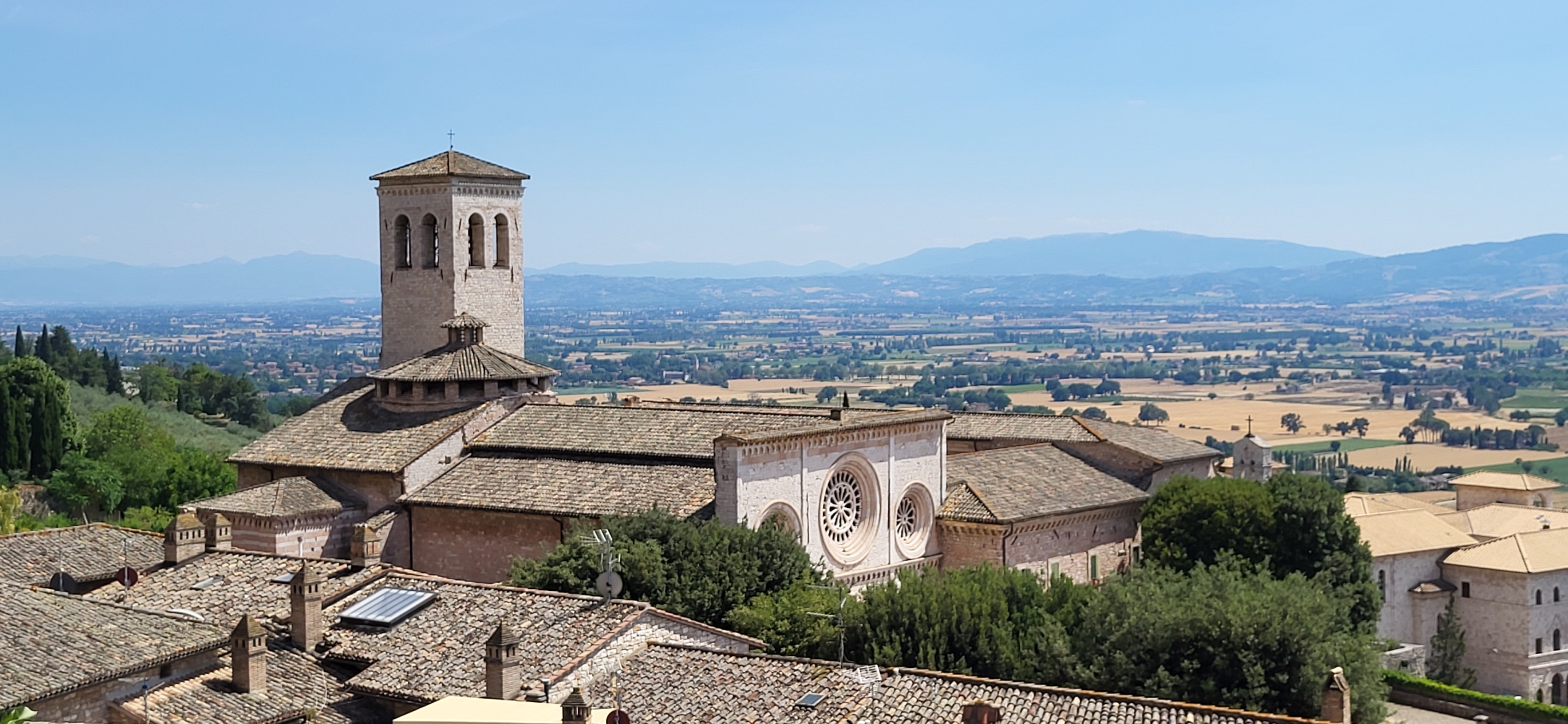
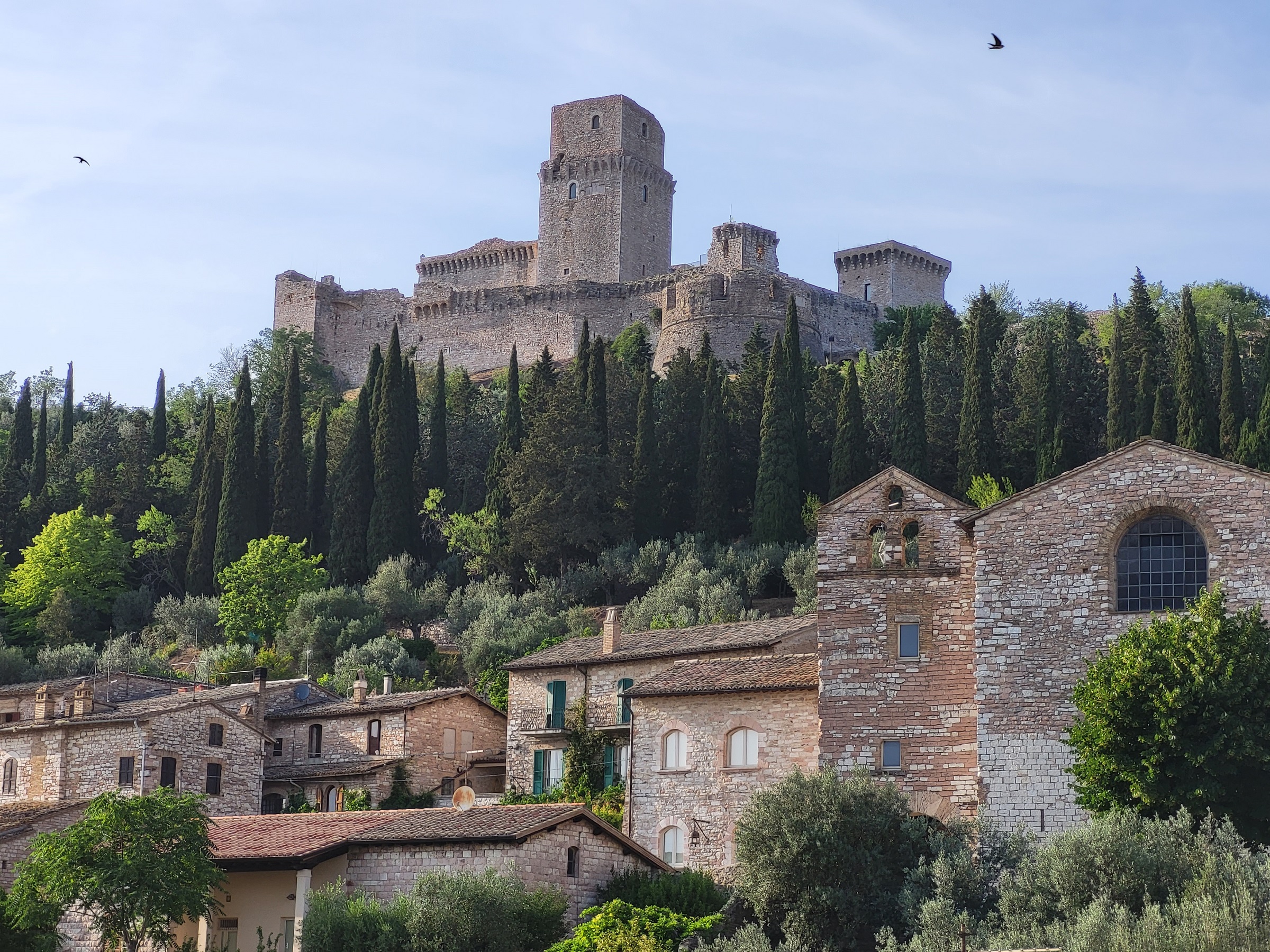
Umbriában: XX.

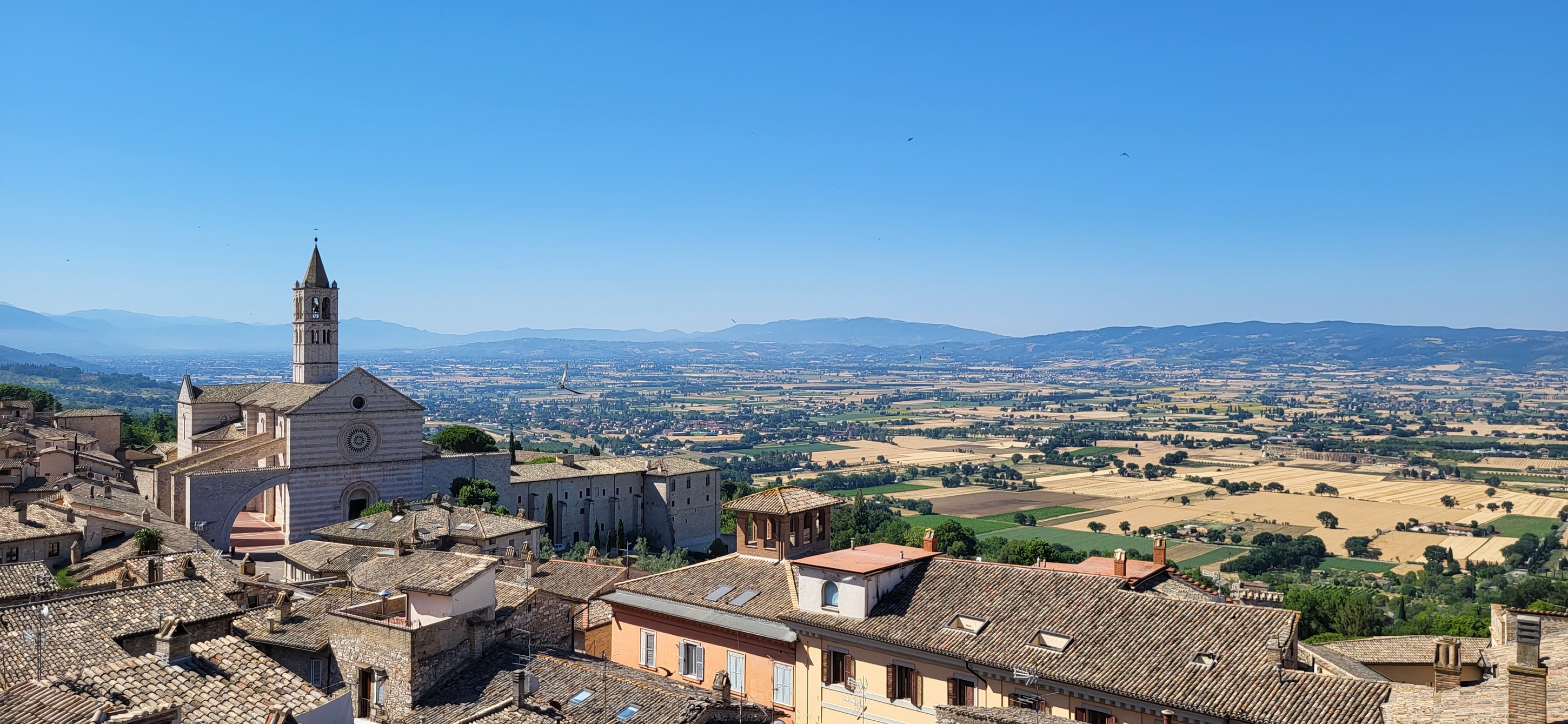
Városkép

Assisi, 2022. VI. 20.


Szólj hozzá!

Címkék: olaszország nyár photos mezőgazdaság ég madár építészet hegyek városkép italy fényképek

Danube photos

2022.06.19. 11:09 Eleve


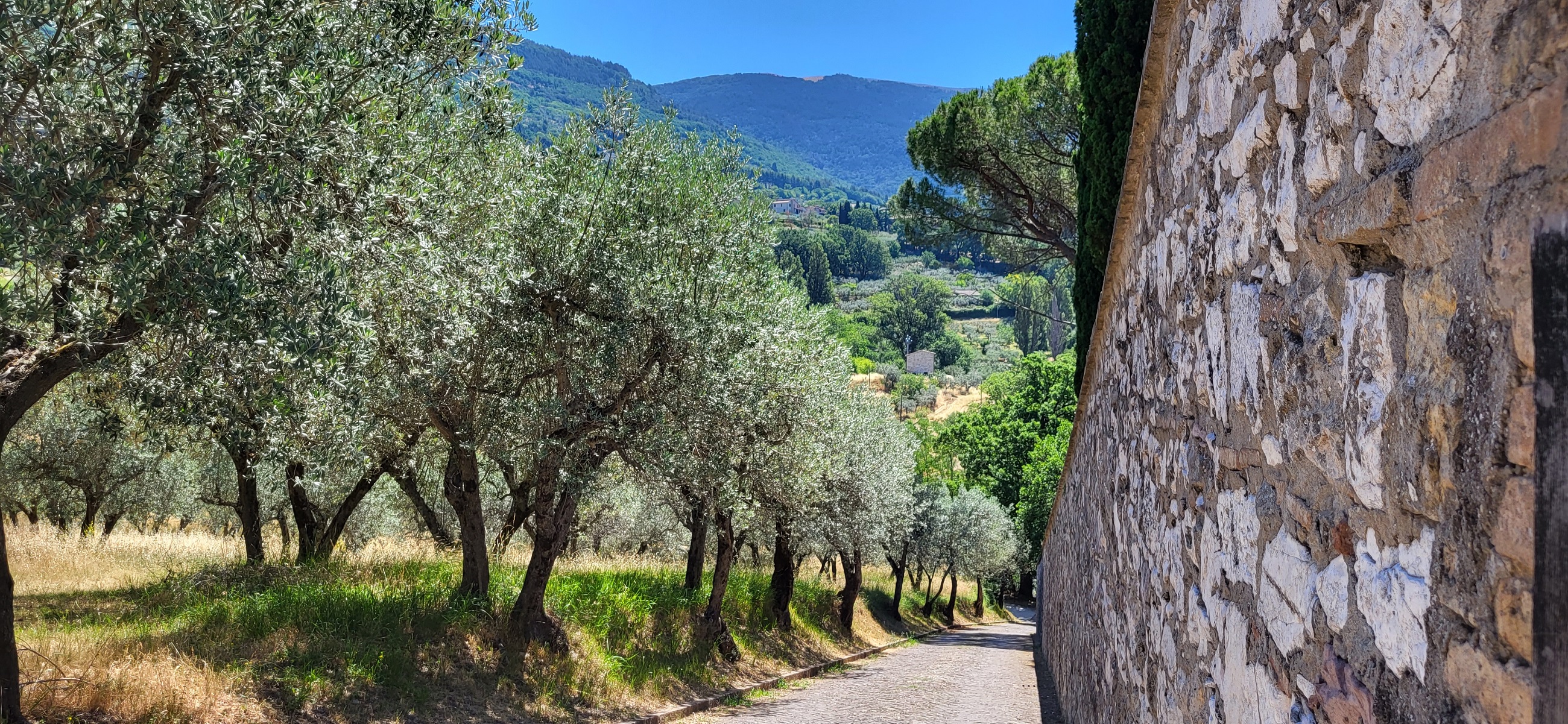
Umbriában: XVIII.

Assisi, 2022. VI. 19.


Szólj hozzá!

Címkék: olaszország nyár photos mezőgazdaság ég építészet fák hegyek italy fényképek

Danube photos

2022.06.19. 10:04 Eleve


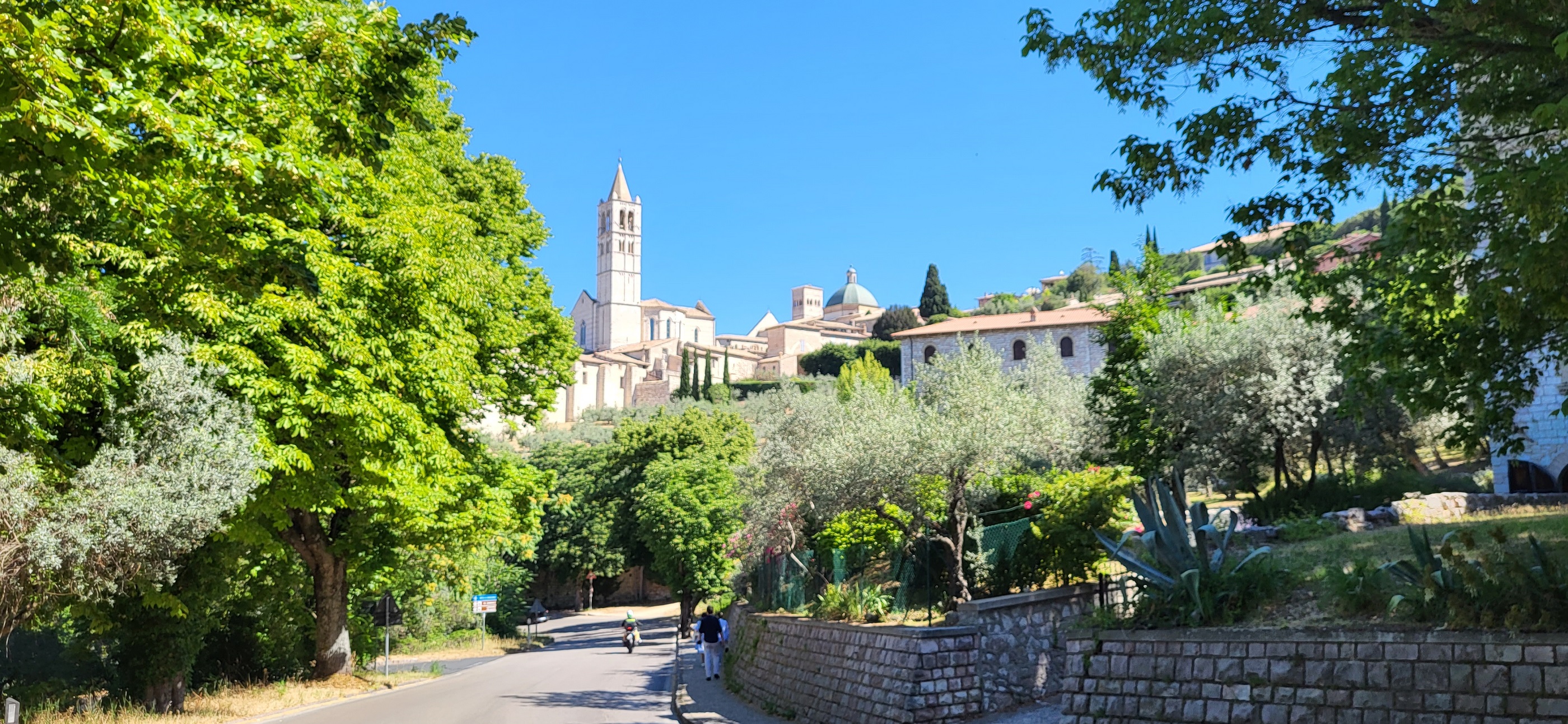
Umbriában: XIV.

Városkép-részlet

Assisi, 2022. VI. 19.


Szólj hozzá!

Címkék: olaszország nyár photos virág ég építészet fák városkép italy fényképek járművek

Danube photos

2022.06.18. 16:57 Eleve


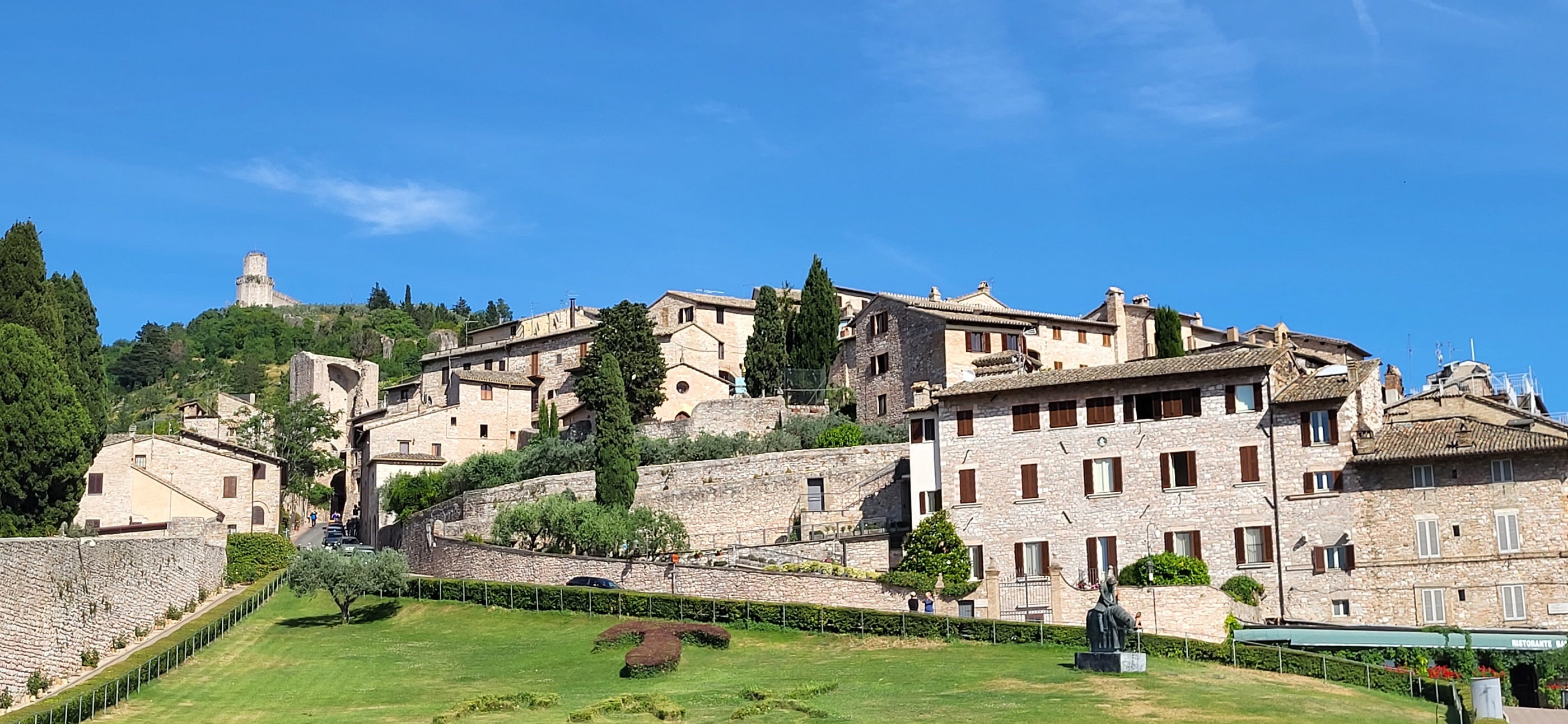
Umbriában: XII.

PAX et bonum. Tau kereszt. Városkép-részlet az Assisi Szent Ferenc bazilika felől nézve

Assisi, 2022. VI. 18.


Szólj hozzá!

Címkék: olaszország nyár photos ég építészet fák városkép italy fényképek

Danube photos

2022.06.18. 16:35 Eleve


Umbriában: X.

Basilica di San Francesco d'Assisi. 1295 körül készült freskó-sorozat a bazilika felső
templomának rózsaablakos hajójában (részlet).

Assisi, 2022. VI. 18. Assisi Szent Ferenc életéből huszonnyolc jelenetet elevenítenek
föl a freskók oszlopközökben, az alsó sorban; fölöttük ószövetségi és újszövetségi
jelenetek sora.


Szólj hozzá!

Címkék: olaszország nyár photos fénykép építészet italy

Danube photos

2022.06.18. 15:21 Eleve


Umbriában: VI.

Assisi, 2022. VI. 18.


Szólj hozzá!

Címkék: olaszország nyár photos mezőgazdaság ég építészet fák hegyek italy fényképek

Danube photos

2022.06.17. 18:26 Eleve


Umbriában: I.

A középkori város a Subasio hegység teraszain (részlet)

Assisi, 2022. VI. 17.


Szólj hozzá!

Címkék: olaszország nyár photos ég madár építészet fák hegyek városkép italy felhők fényképek

Danube photos

2022.05.08. 14:43 Eleve


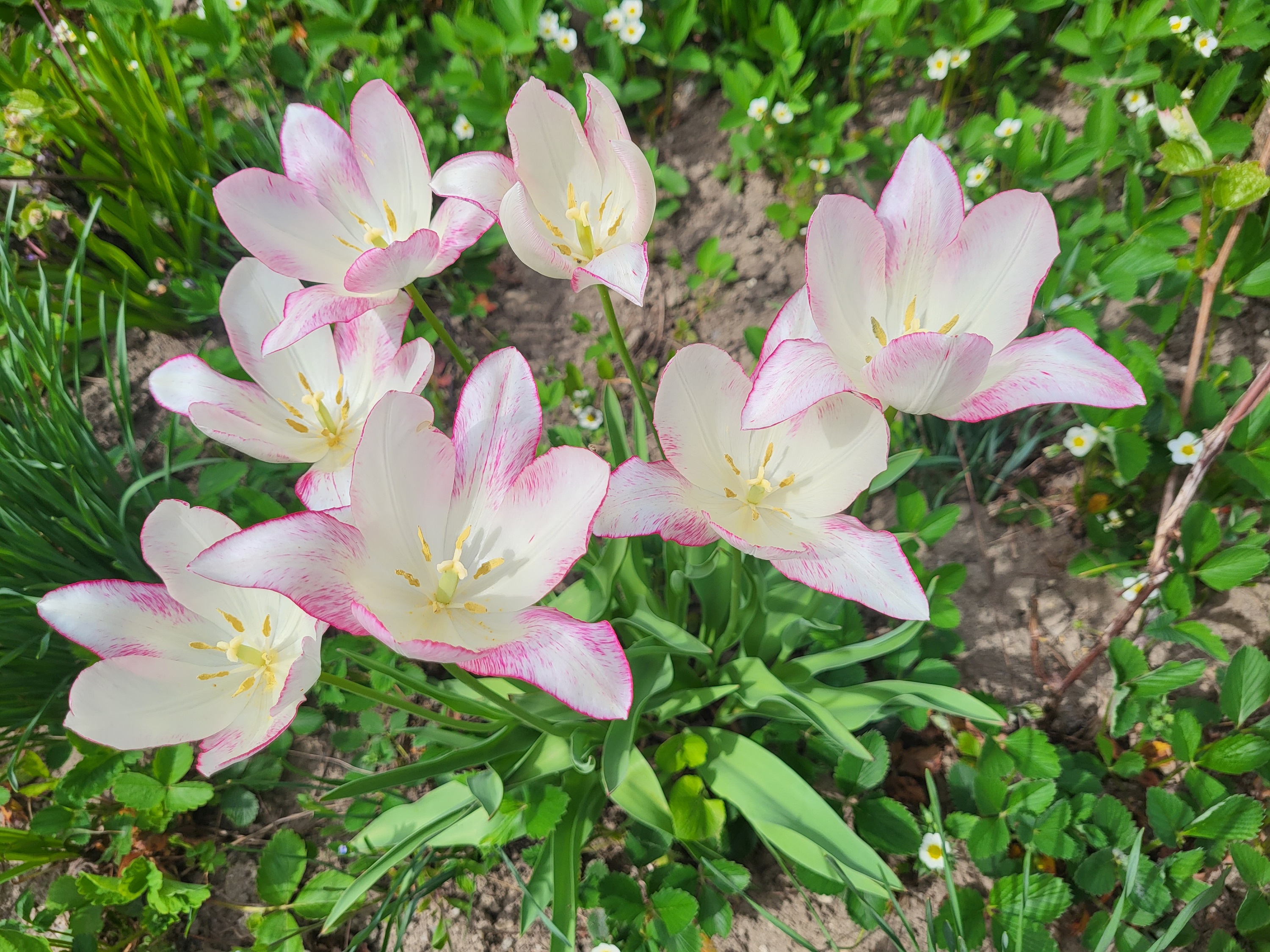
2022. V. 8. Partiumban.


Szólj hozzá!

Címkék: tavasz photos virág partium fényképek

2022. V. 1. France, Germany, Greece, European Union, Russia, Ukraine, Turkey, United States

2022.05.05. 10:09 Eleve

.

Europe

France
Sunday 1 May 2022 19:34   May Day protests
turn violent in Paris. Banks and a McDonald's restaurant were attacked. Tear gas was used during a May Day protest in Paris, with some protesters angry over Macron's pension reform plans. (Source: SkyNews)

Germany
May 1, 2022  Economy and Climate Minister
Habeck said today that Europe’s largest economy has reduced the share of Russian energy imports to 12% for oil, 8% for coal. Before Russia invaded Ukraine on Feb. 24, Germany got more than half of its natural gas imports from Russia. That share is now down to 35%, partly due to increased procurement from Norway and the Netherlands, the ministry said. To further reduce Russian imports, Germany plans to speed up the construction of terminals for liquified natural gas (LNG). The Energy and Climate Ministry said Germany aims to put several floating LNG terminals into operation as early as this year or next. That’s an ambitious timeline that the ministry acknowledged  'requires an enormous commitment from everyone involved.'  Germany has resisted calls for an EU boycott on Russian natural gas. Germany’s central bank has said a total cutoff of Russian gas could mean 5 percentage points of lost economic output and higher inflation. (Source: AP)

Greece
01.05.2022 
In Greece, metro trains came to a halt and ships stayed docked in ports as workers rallied against soaring food and energy prices. Police said some 10,000 people marched in the center of Athens to protest over the cost of living. (Source: DW)

European Union
Sunday, May 1, 2022  The Conference
on the Future of Europe has been debating proposals to reform the EU since last year but a key meeting today agreed 325 proposals to achieve 49 objectives, and will now go to EU leaders for consideration. The European Parliament approved a draft of the proposals on April 29. Once approved by the conference’s executive, the proposals are likely to go to the heads of the EU’s three principal institutions – the parliament, the commission and the council – on May 9th, Europe day. However, they are likely to meet opposition among many national governments wary of ceding powers to the EU. The proposals were backed by representatives of five of the parliament’s main political groupings, including the European People’s Party, Renew Europe, the Socialists, the Greens and the Left group. These groups will now bring a resolution to the parliament this week in support of a revision of the European treaties to introduce the reforms, said one of the conference chairmen, Verhofstadt. Right-wing MEPs from Identity and Democracy group and the European Conservatives and Reformists group refused to support the proposals, saying there was no public support from them, and they withdrew from the conference on Saturday. The conference also suggests that some members of the European  Parliament be elected through union-wide or “transnational” voting lists, and suggests that the president of the European Commission could be directly elected by EU citizens. A proposal to dispense with the need for unanimity, 'which make it very difficult to reach agreement” – effectively meaning an end the national veto – is likely to be resisted by many national governments. (Source: IrishTimes)

Russia
May 1, 2022 5:26 am  Mariupol civilian evacuation
begins. Some have left the Azovstal steelworks. The Russian defence ministry says some 80 civilians have left the besieged steelworks and were taken to Bezimenne, a village in Russian-held territory in Ukraine. They are being provided with medical care and supplies, it said. President Zelensky said a large group is also on its way to Zaporizhzhia, which Ukraine maintains control of. The United Nations confirmed it was involved with the operation, alongside the Red Cross and the "parties to the conflict". (Source: RNZ)

Ukraine
May 01, 2022 4:13 PM  Nearly 5.5 million people have fled Ukraine
since the start of Russia's war on Feb. 24, according to data from the U.N. refugee agency. Most have entered countries on Ukraine's western border: more than 3 million people have fled to Poland, while more than 817,000 others have fled to Romania and around 520,000 have crossed into Hungary, UNHCR statistics show. The Romanian government is currently giving away free train tickets to Ukrainian refugees arriving in Romania that they can use to travel on to Hungary, Austria, Germany, Switzerland, Slovakia and Bulgaria. (Source: VoANews)

10:34, Sun, May 1, 2022 | Updated 16:38  A tenth Russian General has been killed during fighting near the city of Izyum according to the Ukrainian military. Major General Simonov reportedly died after his command post came under artillery fire by Ukrainian forces on April 30. The bombardment also took out more than 30 Russian armoured vehicles, including tanks. Videos circulating on social media appeared to show the command post being hit by Grad rockets, fired from a multiple-launch rocket system. Presidential adviser Arestovych said in an interview  that some 100 Russian servicemen were also killed in the rocket attack. Russian forces are trying to push south from Izyum towards Slovyansk, in a pincer movement designed to encircle Ukrainian troops defending the Donbas. The strategic importance of the Izyum axis for Moscow was shown with the recent announcement that Russian Chief of the General Staff Gerasimov would take personal command of the offensive there. Reports suggest the Kremlin is strengthening its Izyum front with additional troop deployments. Analysts for the Institute for the Study of War (ISW) noted that units from the Eastern Military District along with air-defence assets were being sent from the Russian town of Belgorod to the Izyum front. The new units would supplement Russian forces attempting to advance south of the Ukrainian city. 'These forces are unlikely to enable Russian forces to break the current deadlock, as Russian attacks remain confined to two major highways (toward Slovyansk and Barvinkove) and cannot leverage greater numbers, the researchers predicted'. They added: 'Russian forces appear increasingly unlikely to achieve any major advances in eastern Ukraine, and Ukrainian forces may be able to conduct wider counterattacks in the coming days.' (Source: Express)

Asia

Turkey
01.05.2022  There were clashes - and some 160 arrests - in Turkey, where images showed protesters being pinned to the ground and dragged away from the rally. The protest took place despite a ban on the event by the Istanbul governor's office. Among the refrains chanted by the crowd was "Labor and freedom!" Clashes took place as protesters tried to reach the central Taksim Square, particularly significant in Turkish May Day rallies. (Source: DW)

North America

United States
10:27 BST, 1 May 2022 | Updated: 18:26 BST  Microsoft billionaire Gates told the FT: 'We're still at risk of this pandemic generating a variant that would be even more transmissive and even more fatal'. In December 2021, he warned his millions of Twitter followers to brace themselves for the worst part of the pandemic having previously cautioned in 2015 that the world was not ready for the next pandemic. Covid-19 has killed an estimated 6.2million people worldwide since March 2020. Case numbers and deaths have been dropping in recent weeks. Gates - who releases his new book 'How to Prevent the Next Pandemic' in May 3 - advised governments across the world to invest in a team of epidemiologists and computer modellers to help identify global health threats in the future.
A comment: 'Doctor Gates didnt succeed the first time but is working again now, to succeed the second time! Deceitful, evil man!' (Source: DailyMail)

.

Szólj hozzá!

Címkék: video russia hungary virus holiday romania france book germany europe asia turkey bulgaria austria poland slovakia switzerland greece norway ukraine donbass europeanunion unitednations unitedstates europeanparliament europeancommission thenetherlands europeancouncil northamerica

2022. IV. 30. I. Magyarország, Transcarpathia, Germany, Romania, Kosovo, Russia, Serbia, Ukraine, United Kingdom.

2022.05.02. 14:24 Eleve

.

Európa     Europe

Magyarország
2022.04.30. 20:29  Már több mint 650 ezer ukrajnai menekült érkezett Magyarországra
, akik közül 108 ezren kértek és kaptak ideiglenes tartózkodási engedélyt – jelentette ki a miniszterelnök belbiztonsági főtanácsadója. Bakondi közölte: Magyarországra naponta 8-12 ezren érkeznek Ukrajnából és részben Románia területéről. A menekültek száma várhatóan elérheti azt a 900 ezret, amit előre jelzett a kormány a háború kitörésekor. Társadalmi összefogás nyomán Magyarország eddig 40 milliárd forintot fordított a menekültek ellátására, ennek az összegnek csupán a 2%-át biztosította az Európai Unió – tette hozzá. A kormány kellő higgadtsággal kezeli a helyzetet. A legfontosabb szempontja, hogy távol tartsa Magyarországot a háborúból és a háború árát ne a magyar embereknek kelljen megfizetniük. Bakondi kifejezte reményét, hogy az Európai Unió növeli az ukrajnai  menekültek ellátásának támogatását. Abban is reménykednek, hogy megváltozik az Európai Unió 2015 óta tartó, elhibázott migrációs politikája. Baloldali, liberális csoportok, Soros által finanszírozott szervezetek továbbra is a legális migráció szervezését szorgalmazzák – jegyezte meg. (Forrás: Híradó / MTI, M1)

Transcarpathia
30 April 2022  The Hungarian government is adding new financing of 200 million forints (EUR 531,000) for humanitarian aid and efforts to help the internally displaced and those in need in Transcarpathia
in Ukraine. The government is supporting war refugees both in Hungary and in Transcarpathia, Azbej, the state secretary for assisting persecuted Christians and implementing the Hungary Helps Programme, said in Uzhhorod (Ungvár) after a meeting with the leaders of the Hungarian Cultural Association of Transcarpathia (KMKSZ). Also, an additional 120 million forints will be given in support of other charitable activities, alongside a consignment of medicines and equipment worth 210 million forints destined for Transcarpathia next week. The state secretary met local entrepreneurs involved in the One Meal Programme provided by Hungary Helps. Around 60,000 servings of hot food have been served to refugees in Transcarpathia over the period of a month. Fully 230,000 refugees have officially made their way to Transcarpathia, though the real number may be double that, KMKSZ vice-president Barta said at the event. (Source: dailynewshungary)

Germany
April 30, 2022 
Germany’s parliament, the Bundestag, gave the green light for the delivery of heavy weapons to Ukraine in April 28  The motion has the cynical title “Defending Peace and Freedom in Europe.' It was jointly introduced by the governing parties as well as the opposition, passing by 586 votes to 100, with seven abstentions. Is it a barely veiled declaration of war on Russia? The ten-page motion calls on the German government to “continue and, where possible, accelerate the delivery of needed equipment to Ukraine, including extending the delivery to heavy weapons and complex systems, for example in the framework  of the ring exchange.” The 'ring exchange' refers to a process whereby Eastern European NATO members supply Ukraine with Soviet-era weaponry, which is then back-filled by Germany with ultra-modern equipment. The Bundestag passed its declaration just two days after the US government held a war summit at Ramstein Air Base in Rhineland-Palatinate with representatives of 40 nations to plan the next stage of the escalation. The meeting left no doubt that NATO  itself is the driving force in the war with Russia. At the meeting in Ramstein, Defence Minister Lambrecht (SPD) announced that the German government would now also supply Ukraine with heavy weapons and provide it with “Gepard” anti-aircraft tanks. Just four days earlier, Chancellor Olaf Scholz (SPD) had warned of a nuclear war and made assurances that everything would be done to avoid a direct military confrontation with the nuclear power Russia. Now he has cast his own warning to the wind. The Bundestag resolution boasts that Germany has “provided a good two billion euros in financial support” since 2014 to Ukraine. How much of this has gone to military projects is not mentioned. One day before passage of the Ukraine motion, the Bundestag debated the first reading of the special fund appropriation of 100 billion euros, which triples the defence budget in one fell swoop this year. Here, too, all parties pulled together. For ammunition shortages alone, 20 billion euros would be required. Planned armament projects - including procurement of nuclear-capable F-35 fighter bombers - meant that the 100 billion in special funds would quickly be depleted Defence Minister Lambrecht said. The Reservists Association is urging a doubling of troop strength. “With around 200,000 soldiers, the Bundeswehr is too small,” association President Sensburg told the Rheinische Post. For national defence, he said, around 340,000 servicemen and women and 100,000 regularly exercising reservists were needed. (Source: wsws)

30.04.2022   Germany has asked the International Court of Justice (ICJ) to halt the sale of German-owned buildings in Rome that could soon be auctioned off to pay for Nazi war crimes compensation cases. The four properties include buildings in Rome that house the local offices of the German Archaeological Institute, the German Historical Institute, the cultural Goethe Institute and the German School of Rome. Germany argues in its filing that "Italy has violated, and continues to violate, its obligation to respect Germany's sovereign immunity" by threatening to take the buildings to pay complaints filed by victims of Nazi crimes. An Italian court said it would decide on May 25 whether to auction off the buildings. In the ICJ's previous 2012 decision, the judges found Italy's highest court violated Germany's sovereignty by ruling in several Nazi crime compensation cases. Germany argues that it has already paid out billions of euros in compensation for atrocities committed by the Nazi regime since the end of WWII, taking part in extensive reparations and peace treaties with the countries affected. The ICJ is the highest judicial organ of the United Nations, and its rulings are final and legally binding. (Source: DW)

Romania
April 30, 2022  A ship loaded with 70,000 tonnes of Ukrainian corn left a Romanian Black Sea port,
allowing Kyiv to dodge a Russian blockade of its key grain exports. (Source: AlJazeera)

Kosovo
April 30, 2022
Six Ukrainian women train in Kosovo to find, clear landmines. The 18-day training camp takes place at a range in the western town of Peja where a Malta-based company regularly offers courses for job-seekers, firms working in former war zones, humanitarian organizations and government agencies. Praedium Consulting Malta’s range includes bombed and derelict buildings as well as expanses of vegetation. Military analysts say it appears Russian forces have employed anti-personnel and anti-vehcile mines, while Ukraine has used anti-tank mines to try to prevent the Russians from gaining ground. (Source: AP)

Russia
14:37, 30 Apr 2022  Kremlin-backed TV Channel One on the popular TV show 60 Minutes
in Russia hosted by wife and husband Skabeyeva and Popov, simulated a nuclear strike on three European capitals as presenters claiming the nukes would obliterate Paris, Berlin, and London in around 200 seconds and there would be 'no survivors.'  It claimed that Berlin could be destroyed by a nuclear strike in only 106 seconds, Paris in 200 seconds and London in only 202 seconds. 'One Sarmat [missile] and that's it - the British Isles are no more,' guest Zhuravlyov said. The show unveiled a map showing how the missiles could be launched from Kaliningrad, the Russian enclave between Poland, Lithuania and the Baltic Sea. Putin recently ordered his military to test-fire its Sarmat missiles. Only last week, Putin claimed that his country’s hypersonic missiles could “break through all modern defences” . This comes amid reports that top military brass pushing Putin to stop calling the invasion a “special operation” and instead declare all-out war. (Source: Mirror)

Sat 30 Apr 2022 The Tass state news agency cites Yermakov, the foreign ministry’s head of nuclear non-proliferation, as saying all nuclear powers had a duty to stick to the logic enshrined in joint official documents aimed at avoiding nuclear war. It quotes him as saying: The risks of nuclear war, which should never be unleashed, must be kept to a minimum, in particular through preventing any armed conflict between nuclear powers. Russia clearly follows this understanding. The official documents Yermakov refers to are a joint statement published in January by Russia, China, Britain, the US and France, in which the five countries - which are the permanent members of the UN security council – agreed that the further spread of nuclear arms and a nuclear war should be avoided. Dialogue between Moscow and Washington on strategic stability is formally “frozen”. Yermakov said those contacts could be restarted after Russia completes what it terms its “special military operation” in Ukraine, according to the Tass news agency. Yermakov claimed Moscow believed the US planned to finalise projects to deploy medium- and short-range missiles in Europe and the Asia-Pacific region. "The emergence of such weapons in those regions will further worsen the situation and fuel the arms race,” Tass quotes him as saying.     Moscow’s artillery units had hit 389 Ukrainian targets overnight, according to Russian media. The figure, reported by Russian news agency Interfax, includes 35 control points, 15 arms and ammunition depots, and several areas where Ukrainian troops and equipment were concentrated, it said. The statement added that Russian missiles also struck four ammunition and fuel depots. (Source: TheGuardian)

April 29, 2022  Russian billionaire Tinkov, who has called Moscow's war against Ukraine "crazy," has sold his stake in the company he founded to a firm controlled by Potanin, a tycoon close to President Putin. Potanin's Interros Capital said yesterday that it was acquiring Tinkov's 35 percent stake in TCS Group Holding, the group that owns Russia's second-largest bank, Tinkoff Bank. Interros added that Russia's central bank had approved deal. The RBK news agency estimated the deal at about $2.4 billion. Cyprus-based TCS Group Holding controls a broad range of companies from banking and insurance to mobile phones. The 54-year-old Tinkov has long resided outside of Russia to receive treatment for leukemia. Potanin, 61, is the head of mining giant Norilsk Nickel (Nornickel), which has benefited from high metals prices in recent months. He is Russia's second-richest man, with a fortune estimated at $17.3 billion. (Source: VoANews)

April 29, 2022  Moscow continues to benefit from Europe's energy dependence on Russian oil despite a reduction in sales due to sanctions imposed to pressure it to end its war against Ukraine, according to experts of the Center for Research on Energy and Clean Air (CREA), a Finland-based research organization. The research released on April 28 shows that Russia has nearly doubled its revenues from sales of fossil fuels to the EU during the two months of war in Ukraine. Soaring prices have more than compensated Russia for the loss in sales volume due to sanctions, the research shows. Researchers at CREA also say new sanctions promise to drive up prices even more, nullifying efforts to prevent Russian President Putin from using energy to pressure the EU and to finance the war against Ukraine. Since the start of the war, Russia has sold 46 billion euros worth of energy resources to the European Union, and the figure continues to rise. This is about twice as much as the amount of sales in the same period in 2021, according to CREA. Even though there was a decline in the volume of sales, the increase in the price of oil brought Moscow about 63 billion euros ($66 billion) on the energy exported on ships and through pipelines since the invasion was launched on February 24. According to CREA, the volume of Russian oil imported by the EU fell by 20 percent and coal by 40 percent. However, gas imports grew, and Germany remains the main buyer. The German government has ruled out a gas embargo because of the economic damage it would cause, but Chancellor Olaf Scholz said on April 28 during a visit to Tokyo, that Germany must prepare for Russia to suspend gas deliveries. Gazprom forecast a fall in gas output of about 4 percent this year in another sign of the impact of Western sanctions against Moscow. (Source: VoANews)

30 April, 2022  2.8 million people in Ukraine have asked to be evacuated into Russia, said Foreign Minister Lavrov in China's official Xinhua news agency published on the Russian foreign ministry's website. More than 1 million people have been evacuated from Ukraine into Russia since February 24, Russian Foreign Minister Lavrov said in remarks published early today. The 1.02 million includes 120,000 foreigners and people evacuated from Russian-backed breakaway regions of Ukraine, the so-called Donetsk and Luhansk People's republics, which Russia recognised as independent just before launching its invasion. According to data from the United Nations, more than 5.4 million people have fled Ukraine since the start of the invasion. Lavrov said that if the United States and NATO are 'truly" interested in resolving the Ukrainian crisis, they should stop sending weapons to Kyiv. "By publicly expressing support for the Kyiv regime, the NATO countries are doing everything to prevent ending of the operation through political agreements," Lavrov said. (Source: alaraby *)
* London

Serbia
Saturday, April 30, 2022  Serbia today publicly displayed a recently delivered Chinese anti-aircraft missile system during the military exercises on Batajnica, military airport near Belgrade. Serbia has been arming itself mostly with Russian and Chinese weapons, including T-72 battle tanks, MiG-29 fighter jets, Mi-35 attack helicopters and drones. The sophisticated HQ-22 surface-to-air system whose export version is known as FK-3 was delivered last month by a dozen Chinese Air Force Y-20 transport planes in what was believed to be the largest-ever airlift delivery of Chinese arms to Europe. The Chinese missile system has been widely compared to the American Patriot and the Russian S-300 surface-to-air missile systems although it has a shorter range than more advanced S-300s. Serbia is the first operator of the Chinese missiles in Europe. Vucic said Serbia is also negotiating a purchase of French multi-purpose Dessault Rafale jets, as well as British Eurofighter Typhoon fighters. He said that only “political hurdles” could prevent the purchase of the Western aircraft. Although Serbia has voted in favor of U.N. resolutions that condemn the bloody Russian attacks in Ukraine, it has refused to join international sanctions against its allies in Moscow or outright criticize the apparent atrocities committed by the Russian troops in Ukraine. There are widespread concerns that Russia could push its ally Serbia into an armed conflict with its neighbors to try at least partly to shift public attention from the war in Ukraine. Serbia was at war with its neighbors in the 1990s and does not recognize Kosovo’s independence declared in 2008. It still has frosty relations with NATO-members Croatia and Montenegro as well as Bosnia, whose separatist Bosnian Serb leader Dodik attended the military drill today. An arms buildup in the Balkans could threaten fragile peace in the region. (Source: AP)

Ukraine
30/04/2022 - 07:22  Russian missile strike has hit Odessa airport, rendering its runway unusable.
The general staff of the armed forces posted on Facebook that the Ukrainian military had regained control over four settlements in the Kharkiv region. Zelensky thanked France for sending 'large-scale military shipments that contribute to the Ukrainian resistance'. Kharkiv was hit by multiple Russian shellings today, though President Zelensky says Ukrainian forces are making "tactical successes" in the region. (Source: France24 with AFP, AP and Reuters)

Sat 30 Apr 2022 08.51 BST  This week, Russia hit Ukraine’s main fuel producer, the Kremenchuk oil refinery, alongside others. A Russian missile strike on Odesa airport has damaged the runway and it can no longer be used, the Ukrainian military said. Russian forces attacked Ukraine’s eastern Donbas region today but failed to capture three target areas, Ukraine’s  military said. The Russians were trying to capture the areas of Lyman in Donetsk and Sievierodonetsk and Popasna in Luhansk, the general staff of Ukraine’s armed forces said. The agriculture ministry said yesterday speaking to Ukrainian national TV, that six of Ukraine’s 24 regions had completed their early spring grain sowing despite the Russian invasion. There are no plans to sow in Luhansk due to the fighting. In the last two weeks Russian forces have stolen “several hundred thousand tonnes” of grain in the areas of Ukraine they occupy, Solskyi, Ukraine’s deputy agriculture minister said. The Kremlin denied the allegations. He expressed concern that most of what he said was 1.5m tonnes of grain stored in occupied territory could also be stolen by Russian forces. "Queues and rising prices at gas stations are seen in many regions of our country. The occupiers are deliberately destroying the infrastructure for the production, supply and storage of fuel. Russia has also blocked our ports, so there are no immediate solutions to replenish the deficit,” in his nightly video, Zelenskiy said. (Source: TheGuardian)

Sat, April 30, 2022, 4:01 AM Social media evidence, testimony from residents, and materials seized by Kyiv Oblast police suggest that the Kadyrovtsy regiments in Bucha most likely belonged to the Special Rapid Response Unit (SOBR) and (Special Purpose Mobile Unit) OMON, and that these units, along with other Russian troops, were likely responsible for a significant portion of the massacre that took place there. 'What they do have experience in, in terms of military operations, is really these zachistki, these clean sweep operations, brutal style of house-to-house searches and killings that Russian forces perfected during the Chechen Wars in the 1990s and early 2000s' , independent security analyst Chambers, who specializes in the north Caucasus said. 'It plays into their specialty of targeting civilian populations'. Despite their presence in Bucha in late February, Russian forces were not able to gain full control of the town until several days later on or after March 2. The Ukrainian Ministry of Defense has identified the 64th Separate Motor Rifle Brigade as one of the Russian military groups responsible for the massacre that ensued in Bucha throughout March, but evidence suggests they were not the only ones involved. According to Halavin, the priest at the Church of the Holy Apostle St. Andrew the First-Called in Bucha,  where a mass grave for around 280 people was dug during the Russian occupation, regiments that included SOBR and OMON units began to replace the original occupying forces later in March. “At the beginning, even though they were, shall we say, strict, they were fair. At the very beginning they would just search my car and tell me to just continue with my work, and so on,” Halavin said. “But after that the others came.” (Source: Yahoo / TheDailyBeast)

April 30, 2022 Ukraine claims that the Ukrainian armed forces use 227mm M270 multiple launch rocket system [MLRS] and M142 high mobility artillery rocket system [HIMARS] delivered from the US. Both missile systems have a caliber of 227mm. The GUR-Ukraine says that on the night of April 22-23, Ukrainian troops used the “latest MLRS” to attack Russian positions near Novobahmutka in the Donetsk region. The M270 and M142 can cover a distance of 480 km on a single refueling. The M270 and M142 use [but are not limited to] the MGM-140 army tactical missile system [ATACMS] which is actually a surface-to-surface missile and is manufactured by Lockheed Martin. The MGM-140 ATACMS weighs 1,670 kg. Develops maximum speed Max 3 and has integrated a system for GPS-aided inertial navigation guidance. In both missile systems, the effective and maximum range is identical: 300 km effective and 500 km maximum in precision strike missiles. Participation in the wars in the Persian Gulf, Afghanistan, and Iraq has been officially documented. MGM-140 ATACMS is in service in four countries: the United States, South Korea, Greece, and Turkey. It was built in 1986 but entered service in the early 1990s. (Source: BulgarianMilitary)

United Kingdom
April 30, 2022  Britain’s controversial plan to deport migrants to Rwanda announced just before the May council elections when the Tories fear electoral defeat - the plan applies only to single men, who would be given one-way plane tickets to a country 4,000 miles away, where their asylum claims will be processed.  Even if they are granted asylum, the men would not be allowed back to Britain. Rejected applicants will be deported again. The idea is to deter migrants, stop people smugglers, and ultimately end mass immigration. The scheme particularly targets migrants and asylum seekers who cross the English Channel from France in rubber dinghies, after paying a fortune to people traffickers. Some 6,000 people have crossed the channel this way so far this year, almost three  times the number that had crossed by this time last year. The migrants largely come from Syria, Afghanistan, South Sudan, Somalia, Myanmar and Venezuela. The irony is that the controversial plan is the brainchild of Home Secretary Patel, the daughter of Ugandan-Asian immigrants who arrived in Britain in the 1960s. Initial costs are projected to be up to £30,000 per migrant, although the actual cost is likely to be much higher. Rwanda will receive £120 million from Britain for “economic development”. Britain has form when it comes to deportation. Most famously, more than 162,000 convicts were deported to Australia between 1788 and 1868, the majority for petty crimes such as stealing a sheep, cutting down a tree or poaching. In the early 18th century, it also deported convicts to the American colonies to work; the alternative was execution. Rwanda is the world’s 14th most densely populated country. Rwanda hosts about 174,000 refugees, including 57,000 people from neighbouring Burundi who fled violence in 2015. (Source: TheElephant*)
* edited in Kenya

.

Szólj hozzá!

Címkék: magyarország ukrajna románia russia európa china gazprom nato ruanda france croatia germany italy asia malta finland turkey kosovo greece australia serbia cyprus caucasus donbass európaiunió unitedkingdom persiangulf unitednations unitedstates southkorea sovietunion kaliningrad blacksea transcarpathia pacificocean donetsk englishchannel bosniaandherzegovina luhansk internationalcourtofjustice

2022. IV. 30. II. Albania, Austria, Belgium, Bulgaria, Croatia, Cyprus, Czechia, Denmark, Estonia, Finland, France, Germany, Greece

2022.05.02. 11:18 Eleve

.

Europe

Europe
30 April 2022 10:00  Ukraine has been calling for the delivery of heavy weapons for weeks. Kyiv needs anti-missile systems, anti-aircraft systems, armoured vehicles, tanks, and other heavy equipment. NATO has been ready to support Ukraine in the war against Russia for years, including help for Kyiv to shift from Soviet-era weapons to modern Western arms and systems, Secretary-General Stoltenberg said on 28 April. Most of the heavy weapons NATO countries have sent to Ukraine are Soviet-built arms still in the inventories of east European NATO member states. The EU agreed to support the Ukrainian resistance through the European 'Peace Facility' with a set of measures ranging from personal protection equipment, first aid kits, fuel and military equipment to defensive platforms designed to deliver lethal force. According to EU officials, the instrument, currently having firepower of €1.5 billion, could and should provide much more assistance if member states would be more willing to do so.    Albania has not sent any aid to Ukraine. Aid has been provided by members of the public and NGOs and drives for food and clothing organised by the Ukrainian embassy. They have offered to take Ukrainian refugees, and there are around 400 in the country at the moment. All political parties are pro-Ukraine, and there is a strong anti-Russian sentiment in the country. Albania has pledged to assist with any NATO-led missions assisting Ukraine, and it has enacted EU sanctions against Russia. President Zelenskyy will address the Albanian parliament next week.    Vienna was providing €17.5 million in aid for the Red Cross and other NGOs. There were questions about whether Austria could support Ukraine. Austria’s Chancellor Karl Nehammer visited Ukraine on 8 April, followed by a visit to the Kremlin on 11 April. Both the Austrian government and the FPÖ have been sceptical of whether Ukraine’s accession to the EU should be fast-tracked. Foreign minister Schallenberg is calling for an alternative approach. “Holding out the prospect of EU accession to Ukraine and at the same time to Georgia and Moldova only raises false hopes that simply cannot be fulfilled,” said Vilimsky, leader of the FPÖ delegation in the European Parliament. The Austrian government is contributing €10 million to the World Bank’s Ukraine assistance programme. A possible appearance of President Zelenskyy had become problematic, the right FPÖ is blocking him from addressing the Austrian legislative. Initially, the Social Democrats (SPÖ) also opposed Zelenskyy addressing the Parliament. As a neutral country, the republic has sent 10,000 helmets and body armour and 100,000 litres of fuel for civilian use.    Belgium has allocated €13.09 million to humanitarian programmes in Ukraine and €2.1 million to support those countries neighbouring Ukraine that have accepted refugees. The political mainstream has condemned Russia. The left Belgian Workers Party blames the US & NATO for provoking Moscow. The party voted against sanctions and condemnations. It accounts for 12% of Belgian MPs and is currently polling at around 16% (Flanders 8.5%, Wallonia 19%). The coalition government is vocal in its support for Ukraine. Incumbent Prime Minister De Croo said that the country had provided €76.9 million in support to the Ukrainian army. Donations have included 5000 assault rifles, 200 anti-tank weapons, 3800 tonnes of fuel and other protective equipment.    As of 27 March, the Bulgarian Red Cross had sent some 220 tonnes of Bulgarian donations: clothes, blankets, bedding, shoes, medicines and hygiene materials. An additional 13,000 food packages have been sent. There is a strong pro-Russian public sentiment among the Bulgarian public. Sixty-seven per cent of Bulgarians are in favour of  neutrality in the conflict, while only 16% believe that Bulgaria should actively support Ukraine and provide weapons. Bulgaria does not officially provide military assistance to Ukraine due to the intervention of the pro-Russian Bulgarian Socialist Party, which is part of the quadruple ruling coalition. Politically, there is an  overwhelming majority in the Bulgarian parliament that supports sending military aid to Ukraine, including three of the four parties in the ruling coalition and two of the three opposition parties. The right Vazrazhdane party is openly pro-Russian. Its leader, Kostadinov, has been banned from entering Ukraine for 10 years. Bulgarian Prime  Minister Kiril Petkov visited Kyiv on 28 April. The delegation included representatives of all parties in the ruling coalition, except for those from the pro-Russian Bulgarian Socialist Party. The official military aid figures from Sofia – 2,000 helmets and 2,000 items of body armour for Ukrainian civilians – belie the vast quantities of Bulgarian weapons flowing into Ukraine. Unofficially, Bulgaria is one of the largest weapons suppliers to Ukraine. The country’s sizeable arms industry produces weapons and ammunition according to Soviet standards, which are used by the Ukrainian army. Since the beginning of the Russian invasion, Bulgaria has signed new contracts worth over €1 billion, with the volume of arms exported from Bulgaria increasing three to four times. The weapons are exported primarily to Poland and then immediately imported to Ukraine.     Croatian President Milanović (S&D) had made pro-Russian comments on multiple occasions. He caused fear and confusion in Finland & Sweden when he made comments that threatened to scupper their NATO membership bid. The Croatian Prime Minister Andrej Plenković and government (EPP) have been supportive of Ukraine against Russia, as has the opposition in parliament. The president’s remarks have become problematic enough for Plenković that he announced he would break off all contact with him. Croatia sent €16.5 million of weapons at the start of March and around €12 million in humanitarian aid with more specific information on the nature of Croatia’s help to Ukraine hard to come by. On 19 April, Plenkovic tweeted that more support would be forthcoming.    Nicosia has contributed 215 tonnes of humanitarian aid, including food, civil protection equipment, medical and pharmaceutical supplies and other essentials. The estimated value is €2m. The Cypriot MFA has contributed over €150,000 to support Ukrainian refugees. The country historically awash with Russian money. The biggest noise coming out of the country regarding Russia’s war on Ukraine was uproar across the Cypriot political spectrum that Ukrainian President Zelenskyy did not draw a direct comparison between his country’s plight and the Turkish invasion and partition of the island of Cyprus. The main opposition party, the left AKEL, is openly pro-Russian and accuses the government of being pro-NATO as a form of insult. The governing Democratic Rally (EPP) is onboard with the common European approach to Ukraine. At the start of April, the US requested that Cyprus send old military equipment it bought from Russia in the late 1990s and early 2000s to Ukraine with promises to backfill with more modern  equipment. This request is being considered, but no decisions have yet been made. Cyprus has not provided any military support, claiming that to do so would leave the country exposed to an attack by Turkey.     Czechia claims to be among the countries giving the most aid to Ukraine. Yermak, the head of Ukraine’s presidential office was saying that the Czech share in total help provided stands at 11%. There is a consensus on Ukraine in Czechia’s five-party coalition government. The government has sent 127 tonnes of food while civil society has raised over €140 million in humanitarian aid. The opposition ANO has criticised them for focusing too much on Ukraine and neglecting the Czech people. The right SPD (ID) and the Czech Communist Party have tried the same line of attack. Czech Prime Minister Petr Fiala visited Kyiv, going there with the Polish and Slovenian Prime Ministers while the city was still under direct daily attack. The Czech Defence Ministry avoids specific details on its military support to Ukraine. Currently €41 million of Soviet-era tanks, guided missiles and drones have been provided.     Denmark has spent over €67m humanitarian aid, covering a wide range of support, from donations to Danish and international organisations, medical supplies, and support for refugees. After years of parties from all parts of the spectrum working to dissuade refugee and migrant flows from the Middle East, the reversal in the country has been a welcoming stance to refugees from Ukraine. The stances taken by Denmark seem to enjoy cross-party support, with the political mainstream pulling together and even voting unanimously on some rules, such as guaranteeing English and Ukrainian language education for refugee children. The Danish political scene is now preparing for a referendum on 1 June on potentially getting rid of Denmark’s EU opt-out on defence cooperation. Danish Prime Minister Mette Frederiksen visited Kyiv together with Spanish Prime Minister Pedro Sánchez, where she announced a further increase in spending on military support for Ukraine, taking the total to €134m. This spending includes M113 armoured personnel carriers, anti-tank mines, and mortar shells.    In the EU, Estonia has given the 6th most significant amount of support by value, and globally it comes ahead of much larger countries such as Spain, Canada, and Japan. In the Russian-speaking minority, which has traditionally held very positive views of Russia, 1one in four are pro-Putin and trust Russian news sources. Estonia has been an especially vocal advocate for Finland and Sweden to accede to NATO. President of Estonia Karis accompanied the Presidents of Poland and Latvia in April to the Ukrainian capital. Estonia’s support for Ukraine enjoys broad cross-party support. In cooperation with Germany, Estonia donated to Ukraine a field hospital and medical supplies worth almost €10 million. Almost all of Estonia’s aid to Ukraine has been military in nature. It has given aid to a value of €230 million, including Javelin antitank missiles, 122-mm howitzers, antitank mines, small arms, ammunition, vehicles, fuel, communications equipment, medical supplies, personal protective equipment, and food parcels.    Finland has provided 17 shipments on the humanitarian front, including massive emergency accommodations for up to 5,000 people, shower tents, medical supplies, and 13 ambulances. Given Finland’s 1,400 kilometres stretch of land bordering Russia, much public debate has focused on whether the country should apply to join NATO. Support for NATO membership jumped from 20% to 50% amongst the population, with the idea currently having majority support in parliament. All opposition parties but the far-right single MP party “Power belongs to people” are in favour. The social democrats in government continue to dither on their stance on NATO but are expected to come to a position on 14 May, which some expect to result in application end of May, likely in concert with Sweden. The Ukrainian government has received a total of €15 million in new financial support as well as €1.5 in donations from large Finnish cities. Following the invasion, Helsinki sent 2,500 assault rifles, 150,000 bullets, 1,500 light anti-tank weapons, 2,000 bulletproof vests, 2,000 helmets and some 100 stretchers and two first-aid stations. Two more shipments followed, the latest having been on 19 April. The estimated value of the shipments has been €30 million in total.    France sent 55 tons of material to Ukraine in March, including medical equipment (medicines and oxygen generators), milk for children, IT equipment (smartphones, computers, routers as well as 60km of fibre optics), and 31 generators to reinforce the country’s electrical security. A package of €300m was released to help prop up the Ukrainian economy. France is sending investigators and gendarmes to help collect evidence of Russian war crimes in the country. The right of French politics is pro-Russian - Le Pen tried to play it down during the second round of the presidential election. She was on the record agreeing with most European sanctions and favouring France hosting refugees from Ukraine. In third place was the left Mélenchon, who has traditionally been non-aligned and sceptical of both the EU and NATO. The newly re-elected President Macron positioned himself as a defender of Europe and a supporter of Ukraine. A French cross-party delegation went to Ukraine in early April. Military support from France has consisted of €100m of military equipment delivered to Ukraine, including defensive and optronic equipment, weapons and ammunition, weapons systems, fuel, and artillery guns.     The humanitarian aid by the German government has amounted to a total of €370 million for Ukraine and its neighbouring countries. Another fast-tracked development aid programme will see €122 million disbursed. Kyiv prevented an attempted visit by President Steinmeier. A cross-party delegation of leading MPs from the governing parties has visited Ukraine. Politically, the newish German government struggles with the pacifist wing of Scholz’s social democrats, personified by the party’s parliament whip Mützenich. The largest opposition party CDU's support is needed to pass Scholz’s extraordinary €100 billion modernisation fund for the army. The far-right AfD and the far-left Die Linke have condemned arms deliveries to Ukraine, as they historically are closer to Russia than the West. On 29 April, a letter signed by public personalities called upon Scholz to limit arms deliveries to Ukraine, especially heavy ones, to avoid a third world war. The finance ministry has been rather tight-lipped about Germany’s share of the €24 billion the G7 states have pledged for Ukraine. Berlin provided a €150 million loan on 14 February, with another €50 million a year ringfenced for a green recovery. At the beginning of April, Defence Minister Lambrecht stated that the German government had delivered the second-most arms if measured by weight, third-most if going by value, which she put at €80 billion. On 21 April, the government announced its intention to undergo a ring-swap, giving modern tanks to Slovenia in exchange for Soviet-era tanks going to Ukraine. It supplied the Ukrainians with 100,000 hand grenades, 2000 mines and 5,300 explosive charges, as well as 16 million rounds of ammunition for  handheld arms. Media reports of 21 April put the total at 2500 anti-aircraft missiles, 900 anti-tank guns with 3000 rounds of ammunition, 100 machine guns and 15 bunker busters. Arms deliveries to Ukraine referred to as Zeitenwende saw 1,000 anti-tank weapons, 500 Stinger surface-to-air missiles, some 2,700 Strela anti-aircraft missiles, and ammunition. The latest announcement was that “Gepard” tanks will be provided to Ukraine, although munition for the tanks, which the German army hasn’t used in a decade, has yet to be procured from Brazil. Scholz has announced his intention to supply grenade launchers with a range of up to six kilometres and training for Ukrainian soldiers in the use of mortars with a range of 40 kilometres.     Although relations between Athens and Moscow have reached an all-time low due to Greece’s strong stance against Russia, Athens has blocked sanctions aiming to ban Russian owned ships or those with Russian interests from EU ports. The Greek government has committed to the reconstruction of Mariupol’s maternity hospital. It has also sent 20,000 pairs of medical latex gloves, 300,000 pieces of medical protective masks (protection class not less than FFP2), 30,000 respirators, 8,000 protective suits, 1,000 hand sanitizers, and 1,000 pairs of protective glasses. The government also provided Moldova and Slovakia with equipment to help deal with migration waves. In polls, most Greek citizens opposed the decision to send military aid to Ukraine. A speech by President Zelenskyy to the Greek parliament on 7 April was overshadowed by the inclusion of a video message from the far-right militia group, the Azov Battalion, that was addressed to lawmakers. The main opposition Syriza opposed dispatching military equipment and reacted saying the Greek Premier did not consult with any other party in advance. The communist party has been neutral blaming both the US and Russia for the war in Ukraine. The populist pro-Russian “Greek Solution” party has asked to send humanitarian aid only to Greeks living in Ukraine. Both parties have negligible power in the Greek parliament. Since the very beginning, the Greek government has condemned the Russian aggression and PM Kyriakos Mitsotakis immediately sent military aid. Athens sent to Ukraine 40 tonnes of defence material including seized Kalashnikov rifles and anti-tank and specific RPG-18 type weapons.

.

Szólj hozzá!

Címkék: brazil russia japan sweden nato france belgium moldova croatia germany latvia europe denmark georgia canada finland turkey bulgaria slovenia austria poland slovakia spain greece ukraine albania cyprus communist estonia europeanunion unitedstates europeanparliament sovietunion czechia worldbank

2022. IV. 30. III. Hungary, Ireland, Italy, Latvia, Lithuania, Malta, the Netherlands, Poland, Portugal, Romania, Slovakia, Slovenia, Spain, Sweden

2022.05.01. 23:56 Eleve

.

European Union

European Union
30 April 2022 10:00  Ukraine has been calling for the delivery of heavy weapons for weeks. Kyiv needs anti-missile systems, anti-aircraft systems, armoured vehicles, tanks, and other heavy equipment. NATO has been ready to support Ukraine in the war against Russia for years, including help for Kyiv to shift from Soviet-era weapons to modern Western arms and systems, Secretary-General Stoltenberg said on 28 April. Most of the heavy weapons NATO countries have sent to Ukraine are Soviet-built arms still in the inventories of east European NATO member states. The EU agreed to support the Ukrainian resistance through the European 'Peace Facility' with a set of measures ranging from personal protection equipment, first aid kits, fuel and military equipment to defensive platforms designed to deliver lethal force. According to EU officials, the instrument, currently having firepower of €1.5 billion, could and should provide much more assistance if member states would be more willing to do so.      The Hungarian foreign minister, speaking at the UN on 27 April, said his country’s humanitarian aid to Ukraine has exceeded 1,000 tonnes. The country has also offered to treat injured soldiers of the Ukrainian army. The government maintains that it intends to keep Hungary “out of the war”. It claims its two-thirds victory during the  general elections of 3 April is evidence most Hungarians support its Ukraine policy. There has been no sign Fidesz is willing to soften its position of not providing Ukraine with military aid. The six-party united opposition has previously supported providing military aid. The issue has not been discussed much since the elections. The right “Our Homeland” party, the only other party to make it into the parliament besides Fidesz and the united opposition, has blasted any form of support to the government in Kyiv. “Our Homeland is against military support for the chauvinistic Ukraine, which is pursuing a repressive policy against the Hungarian ethnic group in Transcarpathia, and against serving American interests”, party deputy chair Novák said on 22 April. Hungary’s treaty obligation as a member of NATO would only apply to “helping to defend a member state in the event of an attack, but Ukraine is not a NATO member,” he added.    In March, Ireland announced a €20 million package of humanitarian assistance. Around €2 million of this will go to Ireland-based international NGOs working on the ground in Ukraine, Poland, and Moldova. Over 25,000 refugees have arrived from Ukraine, who are struggling to find accommodation – a symptom of the country’s ongoing housing crisis. The country’s support for the war-torn Ukraine was leading to a debate on the position of military neutrality for the first time since the Second World War. In February, a leftwing lawmaker from the People Before Profit party proposed a referendum to codify the policy into the constitution. Polling suggests there is little public appetite for abandonment of the principle. Two independent Irish MEPs, Daly and Wallace were among the 13 who voted against the European Parliament’s condemnation of the invasion due to its support for NATO and the sending of weapons to Ukraine. Members of the PBP chose not to applaud Zelenskyy after addressing Ireland’s parliament earlier this month. The Fine Gael TD visited the site of the massacre at Bucha, from where he called for war crimes investigations and announced an extra €3 million in funding for the International Criminal Court, €1 million of which would be dispersed immediately to the Prosecutor’s office. The government has strongly condemned Russia’s actions. Foreign Minister Coveney has said the war should prompt “an honest rethink” of Ireland’s security and defence policy and spending (the lowest in the EU). He visited Kyiv on 14 April, meeting with Ukrainian Foreign Minister Kuleba and Defence Minister Reznikov. Taoiseach Micheál Martin met with Ukrainian Prime Minister Denys Shmyhal when he visited Ireland on 20 April. Dublin sent non-lethal assistance such as fuel, helmets, vests, and medical supplies. The government also pledged €1 million in aid to Moldova – a sum that has drawn fire from some quarters for being too low. No military aid has been sent by Ireland.    Italy has pledged €110 million in financial assistance for the Ukrainian government, with some €26 million in humanitarian contributions. Assistance has extended to Poland, Moldova, and Slovakia affected by the influx of Ukrainian refugees. The decision to send weapons was backed almost unanimously by the parliament. Lega’s Salvini supported the government’s line, as did Meloni, leader of the right-wing opposition party Fratelli d’Italia. Doubts surrounding the supply of military aid were voiced by the Five Star Movement (5SM), part of the governing coalition, and the Italian Left party. Former Prime Minister Giuseppe Conte, head of the 5SM, said his party would oppose the decision to send weapons that are not defensive in nature, such as heavy armaments. We will not look the other way, said prime minister Mario Draghi on 9 April, reiterating Italian support for the embattled nation. To date, the Italian government has allocated roughly €150 million for military aid to Ukraine, with Rome providing both non-lethal military protective equipment and weapons. Weapons to be shipped include Stinger anti-aircraft missiles, Milan anti-tank missiles, 120mm mortars, heavy and light machine guns, bulletproof vests, bullets, and munitions. A further announcement will cover the supply of heavier arms, such as M113 and PzH2000 tracked vehicles.    Latvia has given €1.2m in humanitarian aid, gone towards international organisations providing help to refugees, soldiers, their families, media and journalists in Ukraine. Riga’s City Council donated 80 tonnes of aid to the Kyiv region in 11 Mercedes-Benz buses, which will also be donated to help the city restore public transport  infrastructure. 90% of Latvians support Ukraine. However the significant Russian-speaking minority community is split, with about 20% supporting Ukraine, 20% Russia. The rest is 'unwilling' to express an opinion. President Levits visited Kyiv on 13 April. There is broad cross-party support for sending help and championing the cause of  Ukraine on the European and world stages. Latvia joined Lithuania in offering use of its ports to Ukraine to export agricultural products to help sustain the Ukrainian economy and offset a looming global food crisis. Latvia has given €1.2m of financial aid to the European 'Peace Instrument' in support of the Ukrainian military    Lithuania - alarmed by Russia’s invasion of Ukraine - had put a State of Emergency in place given its geographical proximity to Kaliningrad and Belarus. On the European stage, Lithuania invested heavily in LNG fuel supplies back when Russia annexed Crimea. It is now pushing hard for the EU to wean itself off Russian fossil fuels altogether. There is a political consensus in the parliament with key votes now and historically in support of Ukraine passing unanimously. Lithuania was among the first to close its airspace to Russian planes. The Parliament has recently voted to ban the Russian ‘Z’ symbol and label Russia’s war crimes in Ukraine ‘genocide’. The speaker of the Parliament is currently pressuring Germany, in particular, to not stand in the way of an accelerated EU accession process for Ukraine. Prime Minister Ingrida Šimonytė, Foreign Minister Landsbergis, and the Lithuanian European Commissioner Sinkevičius have all visited Kyiv. The country has given away so much military assistance that there  is now a valid concern that sending more military supplies would risk Lithuania compromising its own defence. Purely military in nature, Lithuania’s support is amounting to 'tens of millions of euros' (at least €30m, likely more), including Stinger anti-aircraft missiles, heavy mortars, rifles, and ammunition.    Malta along with Cyprus and Greece, have refused to enforce sanctions against banning ships with Russian owners from their ports. In April 28, Spain turned away a Maltese ship from its own ports over fears it had a Russian cargo that could infringe sanctions. Malta has a cash-for-passport scheme that has seen hundreds of Russians acquire Maltese citizenship for cash and real estate investment. These include many close to or linked to President Putin. The government is supporting Ukraine verbally and invited President Zelenskyy to address the parliament. After meeting with representatives of the Ukrainian community, the foreign ministry shared a note saying that the community was grateful for Malta’s support for Ukraine. The government stated that it sent €1.15 million worth of medicines in March. Malta has not donated any military equipment.    The Netherlands has released some €20 million in emergency humanitarian aid for Ukraine, with a further €10 million for Moldova, aimed at helping the country deal with the flow of Ukrainians fleeing war. The national fundraising campaign Giro555 has collected €160.8 million for Ukraine. Dutch-based international aid organisations have been highly active in Ukraine, providing food, water, medicine, and shelter. The Dutch government gave a €1.5 million grant to the Red Cross to support its humanitarian work. On the fringes, pro-Russian sentiment is more common. The right political party's Forum voor Democratie (FvD) leader, Baudet, made pro-Russia comments following the invasion. The Russian narrative of the war in Ukraine is also fuelling radical ideas in right-wing extremist groups. Dutch leader Mark Rutte has condemned the invasion and spoken out about the importance of a united NATO, reflecting the mainstream opinion in Dutch politics. He was having paid a visit to Kyiv on 2 February. The nation has since backed Rutte's promise. On 14 April, the Netherlands sent a Dutch anti-aircraft missile system, with armoured Howitzers following on 26 April. Around 150 Dutch soldiers have been transferred to Slovakia as part of a German-led initiative to reinforce the eastern flank of the NATO area.    Poland has become the strongest advocate of Ukraine’s EU membership application, with Warsaw having the legacy of initiating the Eastern Partnership format for that purpose together with Sweden in 2009. The frontline NATO country and the main destination for Ukrainian refugees, Poland emerged early in the war as key logistical hub for weapons supplies and humanitarian aid, channelling supplies through its border into the western part of Ukraine. Before the current crisis, Prime Minister Mateusz Morawiecki had not visited Ukraine at all, and neither had his predecessor, Beata Szydło, while relations were warm and productive at the presidential level between  presidents Duda and Zelenskyy. The Polish ruling Law and Justice (PiS) government has softened its previously hostile attitude towards the EU. Poland buried the hatched with Ukraine over historical disputes. Morawiecki was among the first to pay a surprise visit to Kyiv in support of the country, hosting a range of leaders in Warsaw and making Poland the main lobbying force on the European level for more support and stronger sanctions against Russia. Morawiecki said Poland had provided Ukraine with weapons worth around €1.5 billion. Warsaw sent more than 200 T-72s – produced by the Soviet Union – into Ukraine in recent weeks along with mobile artillery, drones and rocket launchers. According to Polish defence experts, the share of donated tanks amounts to at least 25% of its 808-strong total tank arsenal. Poland also donated air-to-air missiles for MiG-29 and Su-27 aircraft, portable anti-aircraft missile systems “Perun” and 2S1 Gvozdika self-propelled howitzers.     Most of the Portuguese political class has condemned Russia’s invasion of Ukraine. Two Communist party (PCP) MEPs are part of the mere 13 MEPs that voted against the European Parliament’s resolution condemning the war on Ukraine. The PCP has stood out by condemning Ukraine. Portugal MPs squabble over whether a delegation should visit the Ukrainian parliament without receiving an invitation. The Portuguese government has sent various humanitarian aid goods worth €100,000 to Ukraine, including syringes, painkillers and emergency shelter materials like blankets. Lisbon has successfully delivered 70 tonnes worth of gear, both lethal weapons and ammunition, as well as non-lethal helmets or night vision goggles. Another 100 tonnes of material are in transit, including medicine.    Given Romania’s tenuous relationship with the Kremlin, support for Ukraine has been near-unanimous, only marred by the nationalists from AUR trying to score political points by warning against attracting the wrath of Russia. On 19 April Romania was changing its constitution to be able to supply lethal weaponry to allies. Alongside NGOs and private companies, the government has set up a hub of humanitarian assistance in Suceava, operational since 9 March. It has funnelled hundreds of trucks filled with humanitarian aid goods into Ukraine. The Romanian government has been silent about the arms it is supplying to Ukraine since a first public tranche in February. Immediately after the invasion of Ukraine, Bucharest provided €2 million worth of helmets and bulletproof vests. The Romanian Prime Minister, Nicolae Ciuca, visited Kyiv on 26 April. The government has not confirmed reports of Romanian T72 tanks or Soviet-era MiG21 planes having been supplied. It is better not to talk too much publicly on these things, the foreign minister said.    The Slovaks manage the logistics centre in Haniska near Košice, which has been assisting in the transport of aid from EU Member States through Slovakia to Ukraine. So far, almost 600 tonnes of humanitarian material have passed through it. Bratislava has also provided Ukrainian regions with €5 million through cross-border cooperation frameworks, while Slovak citizens continue to collect donations to support Kyiv. There is a clear consensus in the country’s four-party coalition about the need to provide both humanitarian and military help to Ukraine. The two biggest opposition parties and former prime ministers complain that the government is dragging Slovakia into the  conflict by providing military help. Fringe right parties claim similar positions to the opposition heavyweights, calling members of government “lunatics” for providing military help to Ukraine. Slovakia’s Prime Minister Eduard Heger visited Ukraine on 8 April after turning down an invitation to come in March alongside Poland, Czechia and Slovenia, citing “security reasons.” The Slovenian (Sic!) government has provided Ukraine with the S-300 air defence system while negotiating the sale of one battery of self-propelled Slovak-made Zuzana Howitzers. According to the Slovak defence ministry, negotiations are already coming to a close. Slovakia has so far provided other military material assistance worth more than €10 million - ten million litres of diesel, 2.4 million litres of aviation petrol and 12,000 pieces of 120 mm ammunition. The government approved a proposal on April 27 to donate military equipment worth another €2 million. The Ministry of Defence stated that they want to have some of their expenses reimbursed at the European level and based on bilateral agreements.    Financially, Slovenia pledged €1 billion at the international donor conference in April, on top of another €1 million previously donated to charities like the Red Cross and Caritas. Supporting Ukraine is helped by the political support for the besieged country, with the only pro-Russian party performing dismally during the parliamentary elections in April. The Left is anti-NATO, but its campaigning against defence spending cost it half of its MPs.The government has been at the vanguard of campaigning in the EU for Ukraine to be supplied with weapons. Prime Minister Janez Janša was among the first EU leaders to visit Kyiv on March 15. The country was quick to supply Ukraine with arms, sending Kalashnikovs, ammunition and helmets to Ukraine following the invasion in February aboard several aircraft. Janša has been defeated at the polls, putting the Freedom Movement in power, whose foreign policy advisor had previously decried the country’s pro-NATO and anti-Russian policies. Aid for Ukraine has slowed down due to domestic elections and the subsequent careful coalition-building process that followed. The country is in talks to deliver Yugoslav-era tanks to Ukraine as part of a swap deal with Germany in exchange for newer armoured personnel carriers.    Spain provided a specific humanitarian aid package of €31 million, of which €7 million was dedicated to protecting women and children, channelled through UNICEF and the United Nations. Madrid has additionally sent over 20 tonnes of health materials and medicines. CIS released a poll showing that 70.9% of citizens are “in favour” of sending more arms to Ukraine. Spain has contributed with financial aid through the European 'peace fund', amounting to €111 million. Opposition parties are criticising the government’s domestic policy, particularly on energy prices. The matter has become so dire that PM Sanchez held up the last meeting of European leaders in March to attain a derogation to heavily intervene in markets. Sánchez's left-wing coalition partner Unidas Podemos had opposed sending lethal weapons to Kyiv. The party’s Belarra, minister for social rights, has publicly expressed her opposition to the latest arms shipment. Pedro Sánchez, made a journey to Kyiv on 21 April. The extent of Madrid’s support has resulted in the country’s largest-ever shipment of armaments to a foreign country, amounting to some 400 tonnes of military equipment, half of which is through the European 'Peace Facility'. On 21 April, a transport vessel of the Spanish navy shipped 30 military trucks, several heavy transport vehicles, including a plated military ambulance vehicle, and ten smaller vehicles loaded with assorted “light” military material for Ukraine. Previously, the Spaniards had provided the Ukrainian military with 1,370 anti-tank missiles like the Spanish “Alcotán 100” and the “C-90,” which are lighter versions of the US-made “Stinger,” as well as 700,000 rounds for rifles and machine guns.    Following the invasion, Sweden's government increased its humanitarian aid budget by around €58 million while extending a $50 million loan guarantee for Kyiv at the World Bank. Stockholm also provided some 20,000 emergency shelters to the tune of €19 million. The Swedes are primarily concerned with their domestic debate over whether and how their country should accede to NATO, given their proximity to Russia. The 2014 annexation of Crimea had kickstarted a security policy rethink, which resulted in the return of mandatory conscription in 2017. The conservative and far-right opposition parties support NATO membership, while the far-left are opposed and trying to force a referendum. The invasion of Ukraine by Russia prompted a population-wide U-turn on whether  the country should accede to NATO, with PM Andersson stating that she’s “open” to the idea. Andersson’s social democrats continue reckoning with their historic opposition to joining the military alliance. One of Sweden’s social democrat MPs made the trip to Ukraine on 28 April. The traditionally neutral country has helped arm Ukraine at the cost of SEK 900 million (around €87 million), of which more than half is going to the Ukrainian armed forces through the European 'Peace Facility'. The rest went to Ukraine in the form of ammunition, 5000 helmets, 5000 pieces of body armour and 135,000 rations. (Source: EURactiv)

.

Szólj hozzá!

Címkék: russia hungary yugoslavia sweden nato romania germany latvia europe italy malta ireland lithuania slovenia poland slovakia portugal spain greece ukraine cyprus belarus communist europeanunion unitednations unitedstates europeanparliament sovietunion kaliningrad transcarpathia czechia worldwarII thenetherlands worldbank crimea internationalcriminalcourt

Danube photos

2022.04.23. 17:14 Eleve


Budapest 2022. IV. 23. Hajók a Dunán: Neptun, Legenda, Gondola és hat Viking.


Szólj hozzá!

Címkék: tavasz magyarország hungary duna photos építészet víz hajó fák városkép felhők fényképek danube

Danube photos

2022.04.15. 17:09 Eleve


Budapest 2022. IV. 15., Nagypéntek.


Szólj hozzá!

Címkék: tavasz magyarország ünnep hungary photos virág ég fák fényképek

Danube photos

2022.04.15. 17:07 Eleve


Budapest 2022. IV. 15., 17:07 CEST. Nagypéntek.


Szólj hozzá!

Címkék: tavasz magyarország ünnep hungary eső photos virág fényképek

Danube photos

2022.04.15. 16:56 Eleve


Budapest 2022. IV. 15. Nagypéntek.


Szólj hozzá!

Címkék: tavasz magyarország ünnep hungary eső photos virág fényképek

Danube photos

2022.04.14. 12:17 Eleve


Budapest, 2022. IV. 14. Városkép dunai hajókkal


. 3 8 11

Szólj hozzá!

Címkék: tavasz magyarország híd hungary duna photos ég építészet svájc víz hajó fák városkép felhők fényképek járművek switzerland

Danube photos

2022.04.11. 14:16 Eleve


Budapest 2022. IV. 11.  Mérges vadgesztenye rügy. 'Aesculus glabra'.


Szólj hozzá!

Címkék: tavasz magyarország hungary photos fák fényképek

2022. IV. 2. Hungary, Romania, European Commission, Russia, Ukraine, United Kingdom, United States, globalization

2022.04.07. 10:04 Eleve

.

Hungary
Saturday 02/04/2022 - 08:31  Viktor Orbán, 58, Hungary's Prime Minister, who has been serving for twelve years now is the EU's longest-serving leader and could on Sunday renew his time at the helm of the eastern country for another four years. His party, Fidesz, currently has a slight lead over the opposition, which banded together to present a single candidate for the top job and in most constituencies. His campaign was, as is now usual, filled with attacks against Brussels -  its "imperialist tantrums" and "pro-immigrant bureaucrats" - and thin allusions to a possible Huxit. He cast himself as the protector of traditional - read Christian - European values and promoted an "illiberal democracy" agenda. European Union institutions responded to this barrage of attacks after a while, but they let Orbán get away with them for many, many years. Orbán was shielded by former German Chancellor Angela Merkel and by the European People's Party. The centre-right EPP was sharply criticised for how long it took them to condemn Orbán and Fidesz's domestic policies and to proceed with a possible expulsion course. Fidesz is now out of the European People's Party (EPP) group in the parliament, having chosen to leave in March 2021 right before it could get expelled  the party had been suspended from the EPP in 2019. "In my view, the Hungarian Fidesz delegation in the European Parliament, and Fidesz when it was in the EPP, strengthened the topics of rule of law, democracy, human rights and women's rights in the EP as a whole and also in the EPP group. This was precisely because Fidesz challenged all of these values so strongly,' Pietikainen, a Finnish EPP MEP, told. "Without the challenging from Fidesz of these values, it could even be that we would now have a less defined and less united position on rule of law, human rights violations or gender equality issues. Sometimes the paradox is  that by challenging something you end up strengthening the principle you challenge," she argued. The question before Orbán was expelled from the EPP was would he form a separatist group in the parliament? As Fidesz is not included in any other group, they are independent, they don't have much to say inside of Parliament, their voice is now practically not heard. The constant attacks on the EU it undertook seemed to have boosted MEPs' resolve to protect the bloc as a liberal beacon. The European parliament's MEPs triggered Article 7 proceedings - calling for  the suspension of certain rights - against Hungary and Poland in September 2018 over rule of law concerns. While MEPs have triggered Article 7 and have now pushed for the use of the new rule of law mechanism against Hungary to financially sanction member states, nothing much has happened. Action is out of their hands. The Commission acts as the defender of EU legislation. It has launched and won multiple court cases against Budapest over changes in the Hungarian Constitution, the lowering of the retirement age for judges, the crackdown on NGOs and the treatment of migrants and refugees. Yet, not much has changed. The rule of law issue practically off the table due to the Russian aggression on Ukraine. Orbán knows he doesn't need to fear the Commission or sanctions. The EU has many other challenges and you do need the support of Hungary's prime minister for tackling these challenges, so they have to make various compromises. "The rule of law mechanism keeps being postponed and it has been watered down anyway and only applies to some very, very specific violations of rule of  law and not a general drift towards authoritarian rule', Enyedi, a professor and senior researcher at the Central European University's Democracy Institute said. Yet even though the Council - especially Poland which has similarly drawn the ire of Brussels -  largely protects Orbán from MEPs' wrath. Orbán's veiled references to a Huxit are not seen as credible by his fellow heads of state who are still reeling from the consequences of the UK's departure from the union. The Hungarian government did a lot on its multilateral foreign policy and close ties with Russia and China to demonstrate for the EU institutions that it has other strategic options but these strategic  options are not genuine. Neither Russia, nor China, would be ready to provide that sort of financial transfer for Hungary which amounts to 3-4% of its annual GDP. So no, leaving the European Union is not an option. Orbán's shift toward a semi-authoritarian regime may have also impacted the bloc's enlargement - unchanged since the accession of Croatia in 2013. The Hungarian leader has been developing closer ties with leaders in the Western Balkans, where many countries hope one day to become member states. "The very strong ties between Serbian  President Vučić and Orbán mean that if Serbia was accepted, the Orbán bloc will get stronger and nobody wants that', Enyedi said. As for Orbán's hope of exporting its "illiberal democracy" model to other member states, this too has largely stalled, mostly because, as is the case in the European Parliament, right-wing parties across the bloc do not actually align on many issues. Even the Visegrád group, comprising the Czech Republic, Poland, Slovakia and Hungary, has many cracks and these are widening because of the Russian invasion of Ukraine with Warsaw  resolutely anti-Russia while Orbán has been much more conciliatory. He put a lot of energy into supporting forces that could undermine liberal democracy in Europe, Enyedi stressed - a Hungarian bank provided a €10.7 million loan to French presidential candidate Le Pen to fund her campaign. He has been trying to build a right-wing alliance for a long time, which was not successful, and actually now, the prospects are not very good, he concluded. (Source: euronews)

April 2, 2022  Viktor Orbán, the prime minister of Hungary, has a strong portfolio of positive qualities. One is charm. In his presence, even critics admit to feeling the man’s powerful magnetism. The extension of charm in professional terms is public relations: Orbán loves PR – and he spares no expense on it. That is one reason the former liberal anti-communist student is set to win his fourth consecutive general election tomorrow. He and his Fidesz party have won five in total, with its first coming in 1998. Fast forward to spring 2010, and they had long  rebranded as centre-right conservatives. Orbán returned to power in 2010, with a two thirds constitutional majority in parliament. His administration set about rewriting the constitution (or “fundamental law”) with only superficial cross-party consultation. The result involved wide-ranging changes, ranging from the seemingly innocuous – defining the country as simply “Hungary”, dropping the title of “Republic” – to reforms affecting the appointments of state officials, the judiciary, the constitutional court and election law. The latter was vexatious, with the new 106 single-member constitution boundaries indicating gerrymandering practices. The enactment of the fundamental law can be seen as initiating a long series of battles with the European Commission, European Parliament and other EU bodies over legislation and policies. The European Commission was alerted by the lowering of the retirement age for judges from 70 to 62, widely seen as a way to remove older, less sympathetic figures to Fidesz lawmakers’ conservative ideals. The European Court of Justice later ruled the new mandatory age was incompatible with European law, but very few of the affected judges returned to their former duties. In addition, examples began to emerge of the reduction of independent media outlets; measures against homosexuals; licensing of the tobacco retail sector; recognition of churches; the regulation of NGOs. On the international stage, Hungary’s cosying up to Putin’s Russia – including a €12bn contract to build a new, Russian-designed and funded nuclear power plant – and to China, have raised more questions. By 2020, the European Commission declined to make any payments, access the EU’s Recovery and Resilience Facility (meant to aid EU economies to recover from the Covid pandemic). Budapest protested, claiming the commission’s decision was politically motivated by “left-wing” and “Soros-funded institutions”. Then, Russia invaded Ukraine. With Hungary’s eastern border abutting Ukraine, Orbán’s reaction has been to support all initial EU sanctions against Russia. He has refused to agree any moves to cut energy ties to Moscow, claiming it would cause a disproportionate burden on the population and economy, as Hungary is largely dependent on Russian gas for its energy needs. While the opposition claims the election is about whether Hungary moves towards the West and democracy or the east, Orbán has cast his election campaign as a choice between himself as peacemaker and the opposition as warmongers - he is the author of “strategic calm”, and is the only guarantor and protector of Hungarian security. This has cemented his ratings in the polls, putting him on track to win on 3 April. Where will this leave the EU as it tries to cope with the threat of Russia? If Brussels wants his cooperation over Russia, it can hardly be punishing Orbán by holding back EU funds. But having given a slew of pre-election handouts, state coffers are largely empty. So Orbán arguably needs EU funding as much as the EU needs him to help tame Putin. Orbán and his PR operation will be working at full output, both at home and abroad to argue his case. (Source: TheNewStatesman)

Romania
April 2, 2022 9:03 am ET  The military base Mihail Kogalniceanu, Romania, near the Black Sea, until recently was little more than a stopover. The base is now part of a new front line for NATO in Romania, which shares a 400-mile-long border with Ukraine. Since Russia invaded Ukraine in February, fears have increased that the conflict could spread beyond Ukraine’s borders. The cornerstones of the North Atlantic Treaty Organization states that an attack on one of its 30 members represents an attack on all. Russia’s invasion has prompted the alliance to place an unprecedented number of troops, planes and vehicles on alert. The alliance has deployed 40,000 troops on its  eastern flank, along with significant air and naval assets. Mr. Stoltenberg has noted that Russian President Putin has said he wants NATO pushed back from its eastern positions, but the invasion has instead brought a greater number of alliance troops to his doorstep. The military base on Romania’s Black Sea coast is bustling with troops from U.S., France and Belgium as part of new defensive reinforcements. The troops are part of four new battle groups recently deployed by NATO in Romania, Bulgaria, Hungary and Slovakia. The battle groups’ mission is to reinforce NATO’s eastern defenses and deter Russian aggression. They are there to complement the forces that NATO sent to Poland and the Baltic countries after Russia seized Crimea from Ukraine in 2014. Every day, helicopters and jet fighters fly overhead and tanks roll across empty fields as part of regular military exercises. U.S. troops have for years used the aging compound’s airstrip as a transit point for supplying operations in Afghanistan. In recent weeks American and allied militaries have deployed more than 1,800 personnel, hundreds of vehicles and other military equipment to the wind-swept fields. The base is now home to about 3,000 soldiers, including around 1,900 Americans, some of whom have recently been deployed from Germany. More soldiers are expected to arrive in the coming months, according to U.S. and French officials. Col. Minguet is the commander of a new NATO force that includes about 500 French and 300 Belgian troops. Last week, NATO started deploying troops in other parts of Romania as part of large-scale military exercises, Col. Minguet said. Eventually, some troops could be stationed in other military bases across the country, he added. The base includes a post office, a theater and stores. In the nearby town of Mihail Kogălniceanu, for many locals Russia has long been a very distant threat. But its invasion of neighboring Ukraine has raised fears of an imminent attack on Romanian soil. Codrin, who owns a local grocery store, welcomes NATO’s protection. “If the base wasn’t here, the danger would be bigger,” she said. Others disagree. Diaconescu, a 28-year-old delivery man, said the new military presence adds fuel to the fire. “We are a target now,” he said. “Why do they come here to disturb us?” (Source: TheWallStreetJournal)

European Commission
April 2, 2022  Many Ukrainians who fled the war have found it impossible to exchange their hryvnias for euros or other currencies in their host country in the EU. This is because the National Bank of Ukraine was forced to suspend the exchange of hryvnia banknotes for foreign cash in order to protect Ukraine’s limited foreign currency  reserves. As a consequence, credit institutions in EU Member States were unwilling to carry out the exchange due to the limited convertibility of hryvnia notes and exposure to exchange rate risk. Yesterday the European Commission adopted a proposal for a Council Recommendation on the conversion of hryvnia banknotes into the currency of host Member States by persons fleeing the war in Ukraine. 'Some Member States are considering introducing national schemes that support limited hryvnia convertibility per person and the Commission’s objective is to promote a consistent approach to such schemes,' says the press release. “The schemes should provide for a maximum limit of 10,000 hryvnias per person, without charge, at the official exchange rate published by the National Bank of Ukraine. The duration of such schemes should be at least three months.” (Source: EUNeighboursEast)

Russia
0839 GMT (1639 HKT) April 2, 2022    "Amateurs talk strategy. Professionals talk logistics," military maxim attributed to Gen. Bradley, an American general during World War II. Russian President Putin often evokes the Soviet Union's epic defeat of Nazi Germany during World War II to justify his country's invasion of Ukraine. He hasn't paid enough attention to the lessons of the "Great Patriotic War" he reveres.     Ukraine has become a graveyard for Russian tanks - Ukrainian soldiers are using everything from drones to Javelins to destroy tank convoys.    The once-vaunted Russian army has become bogged down in Ukraine not just because of resistance but by something more prosaic: logistics. Putin has struggled to feed, fuel and equip his army. There have been reports of Russian troops looting banks and supermarkets, tanks running out of fuel, and soldiers using substandard forms of military communication - like smartphones - that have contributed to what Ukraine says are the deaths of at least seven Russian generals. "The evidence suggests that Putin thought he could win a quick victory with the deployment of special forces and airborne units," says Johnson, a professor of military history at the University of Notre Dame.    Brutality can backfire in war. Putin has potential allies in Ukraine. Russia and Ukraine are two Slavic nations that share religious and cultural ties. Many Ukrainians have relatives in Russia and speak the language. And there has historically been more allegiance to Russia in the eastern part of the country. But the Russian army's brutality, though, is having the opposite effect. Russia's army has been accused of bombing hospitals, shopping malls, apartment buildings and a theater, been accused of trying to starve a Ukrainian city into submission by blocking humanitarian relief. Many Soviets despised and feared Stalin. He murdered about four million Ukrainians by starving them during one infamous period known as the Holodomor. That's why some Soviets initially welcomed Hitler as a liberator, he had many potential allies in the Soviet Union. Stalin was so hated that roughly a million Soviets served in the German army, says Johnson, the Notre Dame historian. But Hitler's brutal treatment of civilians quickly stiffened Soviet resistance. "Instead of taking advantage of large numbers of people who might been sympathetic or at least think the Germans were better than the Soviets," Johnson says, "Hitler rapidly alienated all those groups." An estimated 26 million Soviets died during World War II. One was Putin's two-year-old brother, Viktor, who died after the German army lay siege to a Russian city, blocking the delivery of food and water.    Last summer, Putin published a lengthy essay entitled "On the Historical Unity of Russians and Ukrainians" that sought to explain that there was an artificial division between the two countries and that "true sovereignty of Ukraine is possible only in partnership with Russia." Some of the strongest reaction to Putin's rhetoric stems from his claim that the Russian army is striving for the "de-Nazification" of Ukraine and seeks to protect people who have been "abused by the genocide of the Kyiv regime." Putin's claim about "de-Nazification" is trying to justify invading a democratic country - led by a Jewish president who lost relatives in the Holocaust - by claiming he's there to fight Nazis. By telling lies that Ukraine is run by Nazis bent on genocide, Putin is making a mockery of people who survived the Holocaust, says Snyder, author of "On Tyranny."    We don't know how the war in Ukraine will end. Putin could still prevail. He could split the nation and seize the energy-rich resources of Eastern Ukraine and consolidate his hold on the country's coastline. In war no one side has a monopoly on brutality. A far-right group with a history of neo-Nazi leanings has played a crucial role in Ukrainian resistance. Ukrainian soldiers have been accused of shooting Russian prisoners. If Ukraine somehow preserves its independence and its territory, a Ukrainian victory will be depicted as another Great Patriotic War. (Source: CNN)

Ukraine
April 2, 2022 12:12 AM GMT+2  Ukraine recaptured more territory around Kyiv as Russian soldiers moved away from the capital. Regional governors in Kyiv and Chernihiv said Russians were pulling out of areas in both those provinces, some heading back across borders to Belarus and Russia. Russia has painted its draw-down of forces near Kyiv as a goodwill gesture in peace talks. Ukraine and its allies say Russian forces have been forced to regroup after suffering heavy losses. The negotiations led to a prisoner exchange yesterday, with the release of 86  Ukrainian troops, said Tymoshenko, deputy head of the Ukrainian president's office said. Ukrainian forces went on to take back Bucha, its mayor said yesterday in a video. In Irpin, a commuter suburb northwest of Kyiv now back in Ukrainian hands, volunteers and emergency workers carried the dead on stretchers out of the rubble. In southwest Ukraine, anti-air defences thwarted an attempted attack on critical infrastructure in the Black Sea port of Odesa, the Ukrainian military said. Odesa's governor, Marchenko, said three missiles fired from an Iskander missile system in Crimea had hit a residential district, causing casualties. Russia denies targeting civilians. Russia says the southeastern region of Donbas, where it has backed separatists since 2014, is now the focus of its war efforts. The besieged and bombarded Azov Sea port city of Mariupol has been its main target there. Conditions yesterday made it impossible to go ahead with a plan to evacuate civilians from Mariupol, the International Committee of the Red Cross said. A total of 6,266 people were evacuated from Ukrainian cities through humanitarian corridors yesterday, said Tymoshenko. In the Russian border city of Belgorod, a logistics hub for its war effort, Moscow said Ukrainian helicopters struck a fuel depot, causing a huge fire which destroyed several oil tanks. Ukraine denied  responsibility for the incident. Kremlin spokesman Peskov said the incident could jeopardise Ukrainian-Russian peace talks, which resumed today by video link. Russia will strengthen its western borders, Peskov said later. A Russian threat to cut off gas supplies to Europe unless buyers paid with roubles by yesterday was averted for now, with Moscow saying it would not halt supplies until new payments are due later in April. United Nations aid chief Griffiths will travel to Moscow today and then to Kyiv as the U.N. pursues a humanitarian ceasefire in Ukraine, U.N. Secretary-General Guterres told. (Source: Reuters)

Saturday 2 April 2022, 9:14am  In the northern city of Chernihiv surgeon says Russian pledge to cut back military activity in the region is false. Russia said it would reduce “military activity in the direction of Kyiv and Chernihiv," after talks in March 28. There has continued to be heavy shelling in cities. "They're nearby, they destroy our city, they destroy the electric, they destroy water, they destroy our supermarkets,' Bondarenko said. "We don't have electricity, we don't have water. We have a little gas. Once or twice in a day our government sends us a little water in cars," he said. It was "perfect" if they had water for five minutes or light from a diesel generator that meant they were also able to recharge the phone. He said they had bandages and some antibiotics at the hospital he worked at, where they were treating badly injured patients wounded by the shelling. Explosions sounded in the background and he moved to a place of safety. (Source: ITV)

April 2, 2022 As talks between the nations resumed yesterday, some Russian forces continued pulling away from around Kyiv. They are likely resupplying, Ukrainian and Western officials have said. President Zelenskyy said Russia is leaving a treacherous landscape in its wake as the invading forces retreat. 'They are mining the whole territory, they are mining homes, mining equipment, even the bodies of people who were killed," Zelenskyy said in a video late yesterday. He urged residents to wait to resume their normal lives until land mines could be cleared and the danger of more shelling has passed. Ukrainian troops retaking territory in the north carefully navigated streets. They attached cables to the dead bodies of civilians to pull them off the street, fearing they were boobytrapped, and placed red rags on remnants of unexploded ordnance. (Source: TheAssociatedPress)

April 2, 2022  European Parliament President Metsola yesterday visited Kyiv to express the European Union’s support for the Ukrainian people and condemn the Russian attack. She travelled on the invitation of the Chairman of the Ukrainian Parliament, Stefanchuk. Metsola made three promises to the Members of the Ukrainian Rada. She said Europe would not let this aggression unchallenged, those responsible will be held accountable. 'We need more and harder sanctions,' she added. She also confirmed the support of the European Parliament to Ukraine’s aspiration to become a candidate for EU accession. And she promised that “we will take care of the Ukrainian families that have been forced to flee until the day they can safely return to their homes”. She added the EU would create the Ukraine Solidarity Trust Fund and organise an International Donors Conference to help rebuild Ukraine. Metsola met President Zelenskyy, Prime Minister Shmyhal, Chairman of the Rada Stefanchuk, and representatives of the political groups of the Rada, among others. (Source: EUNeighboursEast)

United Kingdom
16:29, 2 APR 2022  Russian ambassador Kelin has warned that the arrival of British weapons will make the conflict in Ukraine 'even bloodier' and stressed that British arms convoys will be 'legitimate targets' as soon as the high-precision weapons cross the Ukrainian border. They exacerbate the situation, Kelin has told TASS news agency, after the UK's Defence Secretary, Wallace, announced the successful deployment of British-made Starstreak anti-air systems in Ukraine. Britain will soon be sending smart weapons similar to the Switchblade “kamikaze” drones sent to the Ukrainians by the US. The UK has so far given Ukraine weapons and other equipment worth over £100 million according to documents published by Chancellor Sunak on March 23. Mr Wallace appeared to tell two Russian hoax callers last week that Britain had sent over 4, ,000 missiles to Ukraine and supplies were running low at home. Responding to the apparent gaffe, Mr Wallace said: "Things must be going so badly for the Kremlin that they are now resorting to pranks and video fakes." As well as weaponry, medical supplies are also being sent to Ukraine. South Central Ambulance Service (SCAS) said the supplies could maintain a field hospital for up to a fortnight. (Source: DailyStar)

United States
April 2, 2022  The Biden administration intends to work with allies to provide Soviet-made tanks to Ukraine to help its defense in the eastern Donbas region. It would mark the first time since Russia invaded Ukraine in February that the U.S. has worked to transfer tanks to Ukraine. Unnamed officials said the T-72 tanks would be delivered within 'days, not weeks.' The tanks would allow Ukraine forces to conduct long-range artillery strikes on Russian targets in Donbas, which borders Russia. The move was requested by President Zelenskyy, who held an  hourlong phone call with President Biden his week. The U.S. would act as an intermediary. Zelenskyy last week singled out tanks as equipment needed by his country. The transfer of tanks to the heavily contested Donbas region comes as Russia has appeared to have shifted its military focus away from the Ukrainian capital of Kyiv. (Source: USAToday)

April 2, 2022  The United States has provided more than $1.6 billion in security assistance to Ukraine since Russia launched its invasion of its neighbor. The U.S. Defense Department has announced it is allotting $300 million in "security assistance' for Ukraine to bolster the country's defense capabilities. Pentagon press secretary Kirby said yesterday that the gear in the new package includes laser-guided rocket systems, unmanned aircraft, armored vehicles, night-vision devices, ammunition and medical supplies. The U.S. also continues to work with its allies and partners to identify and provide to the Ukrainians additional capabilities, he said. (Source: RFERL)

Globalization
Sat 2 Apr 2022 08.26 BST  How war in Ukraine is affecting food supply in Africa and the Middle East? Russia’s invasion of Ukraine could mean less bread on the table in Egypt, Lebanon, Yemen and elsewhere in the Arab world, where millions already struggle to survive. Prices of basics such as oil and wheat are shooting up and shortages are showing on supermarket shelves in Lebanon, Somalia, Egypt.     Lebanon already mired in economic crisis and battling inflation before the war broke out in Ukraine, now finds itself grappling with even higher price rises for wheat and cooking oil. The fears around wheat imports - more than 60% of which came last year from Ukraine - are particularly acute because Lebanon’s reserves are limited. The huge explosion that tore through Beirut’s port in August 2020 and killed more than 200 people also destroyed the main grain silos. The country is thought to have enough wheat to last only about six weeks. The government has said it is trying to secure fresh imports from India, the US and Kazakhstan – all of which would entail grain travelling much longer distances on increasingly expensive shipping routes. Shortages are already starting to show on supermarket shelves. Some bakeries are rationing bread. “From 24 February to 21 March we have seen a general increase of 14% on food prices,” says Hoxha, country director for Care International. “For bread, for example, it’s 27%. For white sugar it’s 72%. For sunflower oil it’s 83%.” Fears are also mounting over the cost of fuel, essential to the supply of electricity and water. Lebanon’s 1.5 million Syrian refugees live in abject poverty and are dependent on food aid. The decision of some countries to bar exports has exacerbated the problem. Last week the Lebanese prime minister, Najib Mikati, asked Algeria to exempt it from a ban on sugar exports imposed in mid-March. Hoxha says Care tried to buy vegetable oil from Turkey but had been unable to do so. “This will be one of the most difficult Ramadans that Lebanon has faced,” says Hoxha.     The worst drought for four decades; hunger so widespread that famine could develop within months; a resurgence in violence by jihadi terrorists seeking to overthrow the fragile government: even before 24 February, Somalia had more than enough on its plate. Now, the country is having to contend with the skyrocketing price of staple goods. Before February 24, food prices had already been increasing because of the drought, with livestock dying or decreasing in quality, and harvests of cereals such as sorghum well below long-term averages. “A week ago, the 20-litre jerrycan of cooking oil was $25, today it’s about $50. A litre of gasoline was $0.64 and today it runs about $1.80 – it’s crazy,” Osman, a trader, told this week. The drought gripping the country has been building since October 2020. The UN has warned that Somalia could be tipped into famine this year if the rains expected in the next few weeks aren’t plentiful enough. In 2011, the last time Somalia saw famine, almost 260,000 people are believed to have died. In Somalia about 1.4 million children under five are thought to be acutely malnourished and more than 4 million people are reliant on emergency food aid. While it does not depend as heavily as some countries on wheat imports, Somalia has many other reasons to fear the ripple effect of the war in Ukraine. Wilton, a spokesperson for the UN’s World Food Programme (WFP), says most of the agency’s food assistance in Somalia was done through cash transfers, which were highly vulnerable to market fluctuations. WFP in Somalia is “just about” to receive the last shipment of food – a delivery of yellow split peas – that left the port of Odesa before it was forced to shut, Wilton adds. “After that, we currently don’t have any visibility on further expected shipments. So yes, there is a real concern that scarcity of some of these commodities coming into Somalia and the region could drive prices up.”     The bread is so central to the Egyptian way of life that it is known as aish – literally, “life”. For decades, tens of millions of Egyptians have been able to pop to their local bakery and pick up subsidised flatbread for just a few pennies. Soon, however, that fixed price could rise, as the government seeks to respond to the rise in wheat costs. Consumers are already seeing big increases in the cost of non-subsidised goods. Egypt is the world’s top importer of wheat. Last year, Egypt imported more than 70% of its wheat from either Russia or Ukraine. The first challenge for the state is to seek alternative suppliers away from the Black Sea. This week, France’s agriculture minister said his country would “stand by” Egypt “to make sure it gets the wheat that it needs in the coming months”. Wheat from France has in the past been considered too moist. Other big exporters such as Australia or Canada bring with them significant extra costs in terms of transportation, in a time of high fuel prices. Last month, the minister of supply, Moselhy, implored Egyptians not to worry, saying that the country’s stocks were sufficient for at least four months and that there was “a political will and vision to maintain wheat reserves”. The local harvest, he added, was expected to bring in 1m tonnes more than anticipated. However, with the average price per tonne of imported wheat about $100 more expensive now than last year, many also expect the government to act on the subsidised loafs. The programme had already been a target before the Ukraine invasion; last year President Sisi declared: “It’s not realistic that I sell 20 loaves for the same price as a cigarette … This must stop.” Now such a move seems inevitable. But in a country where about a third of the population live below the poverty line, it remains to be seen if the government is prepared for the social ramifications. “When prices jump, and poor people cannot feed their families, they will be on the streets,” warns Georgieva, the managing director of the International Monetary Fund, last weekend. (Source: TheGuardian)

.

Szólj hozzá!

Címkék: video russia india hungary china nato imf egypt romania france belgium croatia germany europe turkey bulgaria poland slovakia ukraine serbia donbass belarus constitution somalia unitedkingdom lebanon europeanunion unitednations unitedstates europeanparliament europeancommission sovietunion blacksea baltics visegradcountries czechia globalization crimea europeancouncil azovsea

2022. IV. 1. Hungary, European Union, Europol, Ukraine, China, United States

2022.04.01. 22:25 Eleve

.

Hungary
Friday, April 1, 2022 Only weeks ago, Hungary’s prime minister was proclaiming that Sunday’s parliamentary election would determine whether his country could be defended from the “gender madness” overtaking the West. As war rages in neighboring Ukraine, Viktor Orbán’s strategy for winning a fourth consecutive term has shifted away. Orbán - cautiously balancing his Western alliances and economic ties with Russia - describes an existential choice the peace and security embodied by him and his Fidesz party, or the threat of war and chaos. “If we want peace, we must vote for Fidesz,” Orbán said at a campaign rally in March 29. “If we want to risk our peace, we can vote for the left.” Orbán - the longest serving head of government in the European Union - will on Sunday face a serious challenge to his power. Opinion polls forecast a close race, with a small lead for Fidesz. United for Hungary, a diverse coalition of six opposition parties, has put aside ideological differences to create a front against Orbán and his political and economic system, which they say is rife with corruption, graft and a pervasive erosion of democratic freedoms. The coalition has nominated Márki-Zay, a 49-year-old economist and mayor of a small Hungarian city to face Orbán as its candidate for prime minister. Speaking at a rally in the capital Budapest in March 29, Márki-Zay, a self-described Christian, said Orbán had created a “single-party state” and the election is about Hungary’s future as a Western-style democracy. “We strongly belong to the West, belong to NATO, and belong to the EU,” he said. Orbán, 58, has long been accused by critics in the EU, his policies have made Hungary the subject of European court proceedings. The EU withhold billions in funding over concerns that his government was flouting the rule of law. Orbán -  who for more than a decade nurtured close political and economic ties with Russia under President Putin, giving him a reputation as the Kremlin’s closest ally in the EU - has condemned Russia’s invasion of Ukraine. And declared his country’s neutrality in the conflict. “Hungarian policy is neither Ukrainian-friendly nor Russian-friendly: it’s Hungarian-friendly,” Orbán said in a radio interview on March 27. He has voted for most EU sanctions against Russia. He allowed the deployment of NATO troops into  Hungary. Orbán’s government has refused to supply Ukraine with weapons or allow their transit across the Hungarian-Ukrainian border. It has antagonized President Zelenskyy. The opposition parties have tried to show to the Hungarian population what the cost of 'Russian friendship' is by pointing out Orbán’s policies. As election day approaches, Márki-Zay continues to make campaign stops around the country, bringing United For Hungary’s message to voters in the face of what he calls a media blackout on the opposition. Hungary’s government is arguing against sanctioning Russian energy imports - such a move would destroy the country’s economy. It has used both party and state resources to campaign on the claim that the opposition coalition, if it wins on Sunday, would deploy weapons and soldiers into the conflict in Ukraine and draw Hungary into war. Recent polling shows that the vote is likely to be the closest in recent years, though Fidesz maintains a slim lead in most measurements. A survey by Zavecz Research conducted between March 23 and 25 showed support for Orbán’s government at 44% compared to 42% for the opposition. The poll’s margin of error was 3.5%. (Source: AP)

01/04/2022 - 09:26  After a campaign dominated by Russia's invasion of neighbouring Ukraine, Hungarians will vote in a general election on Sunday, April 3. Polls are giving the edge to incumbent Prime Minister Viktor Orbán. His Fidesz party will face a united opposition coalition. All options are on the table. The mobilisation in the last few days will be key in turning out the estimated half a million undecided voters in the country of 9.7 million. Today Orbán, 58, will hold a final rally in the town of Székesfehervár. His rival from the opposition coalition Márki-Zay will hold his last event in the capital tomorrow. Orbán will doubtless use the opportunity to drive home his message that he represents "peace and security", in contrast to the "dangerous" opposition. Hungary has neutral stance on the war. Traditional ally Poland's view is that Russian gas imports could be phased out by the end of the year. There was no feasible way to make Hungary less dependent on them. While going along with support for Kiev at an EU level, Orbán's government has refused to let weapons for Ukraine cross its territory. It's basic question: whether Hungary should be involved or remain out. This message has been much more effective than the opposition's criticism of the government. President Zelensky singled Orbán out for criticism. In return the Hungarian government has accused Ukraine of attempting to interfere in April 3's election. Orbán is the seasoned doyen of European politics. Hungary has enjoyed economic and social success over the past 12 years. Fidesz's propaganda machinery is far more effective than the opposition's capability to reach voters. The campaign has seen the government cap energy prices and promise voters various financial sweeteners. The opposition says Fidesz's economic management has left the country ill-equipped to combat galloping inflation. It is eating up these measures. As for Márki-Zay, 49, he is a mere figurehead who has no party and no MPs. He gained prominence by defeating Fidesz to become mayor of Hódmezővásárhely. He says the country must choose the path "of Europe, not of the East'. He has had the tough task of leading a coalition of parties ranging from the right-wing through to liberals, greens and social democrats, united by the goal of removing Orbán. The election will be held at the same time as a referendum on LGBT issues. The polling will for the first time be monitored by a team of more than 200 international observers who will monitor the fairness of the vote. (Source: France24)

European Union
April 1, 2022 9:46 am   The EU-China ‘April Fool’s Day’ summit. Thanks to Putin’s war and a frozen investment deal, the EU’s summit with China will be among the toughest. Diplomats preparing for the summit say they expect the two EU leaders to spell out "very clearly" to Xi that the Russian aggression is "central" to the future of EU-China relations. The big question is how closely the Chinese will stick to Russian President Putin in his assault on Ukraine.  Xi has called Putin his "best friend" and EU leaders say they have 'very reliable evidence' that Beijing has considered sending military support to Putin's troops in Ukraine. China has also taken to blaming NATO for the crisis and has supported the Kremlin's desire to rewrite the future security architecture of Europe - much against the wishes of the EU and NATO. China may have hoped to focus more on cooperation in the summit, such as climate change. But these issues of potential common ground will all take a back seat now. Officials say von der Leyen and Michel will tell Xi "how much the population in China cherish the economic fruits with the West and have a yearning for luxury products made in Europe' -  which is clearly a warning of what might follow should he 'breach the current balance position and over-support Putin.' Beijing has made clear that while it doesn't want the war to go on, it's not going to ditch the guys who started it. In a meeting with Russian Foreign Minister Lavrov in March 30, his Chinese counterpart Wang said the two countries "have withstood the new test of evolving international landscape, remained on the right course and shown resilient development momentum." Brussels hit a hard pause on an EU-China investment deal last May, stuffing the product of seven years of negotiations in the freezer amid tit-for-tat sanctions related to China's crackdown against its Muslim minority in Xinjiang. As long as members of the European Parliament are under sanctions, this is not moving an inch. No progress is expected at the summit. Beijing has imposed a trade embargo on Lithuania, after the Baltic nation and Taiwan deepened their diplomatic and trade ties. China sees this as a breach of the "One China" policy. The EU, which has sole competence over trade issues, took action on behalf of Lithuania against China at the World Trade Organization. Diplomats said this week that China’s adherence to International Labor Organization standards are still a sticking point. Health is definitely on the menu - but don't expect any serious debate on the origins of COVID-19. China last year reacted with outrage to a World Health Organization plan to audit labs, accusing the probe of "arrogance toward science.' Western leaders are calling for new international health rules that would require countries to be more transparent about an outbreak. In late February, Russia objected to such a proposal from the U.S., on sovereignty grounds. (Source: Politico)

Europol
(April 1, 2022) In view of protecting the European Union and Ukrainian refugees from criminal threats,
Europol has deployed operational teams to the frontline countries neighbouring Ukraine within the framework of the Agency’s response to the ongoing conflict in Ukraine.  Europol now has operational teams in Lithuania, Poland, Romania, Slovakia and Moldova, with an upcoming deployment planned to Hungary, coming at the request of these countries, These teams, comprised of Europol specialists and guest officers, support the national authorities with secondary security checks and investigations at the European external borders to identify criminals and terrorists trying to enter the EU in the refugee flow and exploit the situation. These operational teams are also gathering information in the field, which is used to develop criminal threat assessments at the European level and to support investigations.  Europol has already carried out such a service at the request of EU Member States in the migration hotspots in the Mediterranean as of 2016. This complements Europol’s active engagement with Ukrainian law enforcement through the Ukrainian liaison officer present at Europol’s headquarters in the Netherlands. All this intelligence gathering activity is allowing Europol to anticipate developments and coordinate operational activities with EU Member States to respond to the activities of criminal groups seeking to take advantage the war in Ukraine. (Source: Europol)

Ukraine
April 1, 2022 8:45 PM GMT+2  At least 31 people have been confirmed killed as a result of March 30's rocket strike on the regional administration building in southern city of Mykolaiv, local emergency services said in an online post today. Rescue workers had to pull victims from the rubble after the attack blasted a hole through the side of the building. (Source: Reuters)

April 1, 2022 10:07 AM GMT+2  Russian forces are withdrawing from the northern Chernihiv region but have not yet left entirely, the local governor said in a video address today, adding that Ukrainian forces were entering and securing settlements previously held by Russian troops. Russian troops "are still on our land,' Governor Chaus said. Russia said in March 30 it would scale down operations in the Chernihiv and Kiev regions. (Source: Reuters)

Apr 1, 2022 at 9:19 am ET  Zelensky fires two generals for being ‘traitors’. 'I do not have time to deal with all the traitors. But gradually they will all be punished,' Mr. Zelensky said in an overnight address. A southern-region security chief lost his general’s rank. Kryvoruchko had led Ukraine’s security service office in the Kherson region, where Russia seized the capital earlier in the war with little military opposition. Mr. Zelensky also stripped the rank from Brig. Gen. Naumov, the former head of internal security at the Security Service of Ukraine, who is believed to have fled the country shortly before the war began. Mr. Zelensky, in the address, cheered battlefield successes as Ukraine’s military retakes ground from retreating Russian forces. But he also urged caution. 'We know that they are moving away from the areas where we are beating them to focus on others that are very important. On those where it can be difficult for us,” he said. (Source: TheWallStreetJournal)

April 1, 2022  Irpin is a town in the pine forests on Kyiv's northwestern edge. It was becoming the closest Moscow's forces got to the centre of the capital some 20 kilometres away. Shelling has blasted huge chunks out of modern, pastel-coloured apartment blocks. It is now back under Ukrainian control, as Russian troops pull back  from outside Kyiv. The deserted town centre is free of shelling for the first time in a month. Rescue workers are still retrieving the dead from Irpin and placing them in body bags, before taking them to the blown-up bridge that links the town with Kyiv. In Irpin -  authorities say - at least 200 were killed. The last survivors in the ruins of Irpin have just one word to describe the Russians who have retreated after the battle of the war: 'Fascists!' (Source: msn / AFP)

China
01:35, 01-Apr-2022   EU and Chinese leaders are preparing for a key summit today aimed at easing tensions and finding common ground over the conflict in Ukraine. The EU is pushing China to put pressure on Russia's President Putin to end what it describes as a 'senseless war'. Brussels is also looking to get assurances from Beijing that it will not undermine western sanctions against Russia. There's little expectation of a breakthrough. The Chinese and Russian foreign ministers met this week to enhance their relationship, and reiterate their "unlimited  cooperation". Chinese Foreign Ministry spokesperson Wang said: 'There is no limit to China-Russia cooperation, no limit to our efforts to achieve peace, safeguard security and oppose hegemony. China-Russia relations are non-aligned, non-confrontational and not targeted at any third party.'  Beijing has previously criticised Western sanctions in principle. It also comes after a difficult year in Sino-European relations. The EU has sanctioned Chinese officials accused of mass detentions of muslim Uygurs, a claim Beijing denies. In return, China then sanctioned European politicians - accusing them of harming Chinese sovereignty. The European Parliament then refused to ratify a major trade deal between the two economic blocs.  The EU describes China both as a partner, and a "systemic rival." This week, the EU's top diplomat Borrell, said: 'It's not in our interest to lean Russia towards China, in order to create a great alliance.' There is expected to be no joint statement after the summit, and no 'deliverables,' but both sides agree there is much to resolve. (Source: CGTN)

United States
April 1, 2022  Are Russian forces in Ukraine being led from Moscow?  U.S. military experts observing the war in Ukraine believe that the invading Russian forces lack a central war commander in the country, leading them to rely on government officials in Moscow for orders. If true, this centralized approach to decision-making - a hallmark of Russian strategy in Ukraine that has significantly hindered the invading force - could help explain why the Russian military has failed to make any significant strategic gains in the country after a month of fighting. No clear Russian commander had emerged in Ukraine, leading the United States and NATO to believe that day-to-day decision-making in the war was being made by high-level officials in Moscow, including Defense Minister Shoigu and Chief of the General Staff Gerasimov. Earlier in the week, Biden administration officials announced that they believed Putin was receiving incomplete or misleading information from his generals on the conduct of the war, adding that the Russian leader has felt increasingly frustrated by members of his inner circle, including Shoigu, who he believes have failed to tell him the truth about the situation in Ukraine. The Kremlin denied the White House report yesterday, describing it as a “complete misunderstanding” of Putin’s relationship with his subordinates. However, the experts warned that these officials could not fully understand the realities on the ground in Ukraine from Moscow, which is 500 miles east of the fighting. U.S. experts have also highlighted the role of Russia’s logistical difficulties and its seeming inability to conduct combined arms operations between sea, air, and land units in its battlefield setbacks. These failures have been costly for the Russian military, which has lost 40,000 killed, injured, or captured troops, according to a NATO estimate. Moreover, the Russian military has lost at least seven Russian generals. Observers in the United States and elsewhere have speculated that a lack of initiative or clear instructions among Russian mid-level officers leads generals to forward positions in attempts to solve problems, exposing them to enemy fire. Although Russia has in recent days suggested that it would scale back the invasion and withdraw troops from northern and southern Ukraine to focus on the country’s east, it has also sought to reinforce the initial invasion forces with mercenaries from outside Russia, including as many as 40,000 Syrian nationals. Moscow has also reportedly hired mercenaries from the Wagner Group, a private Russian military company closely linked to the Kremlin, to supplement its conscript-based army. (Source: TheNationalInterest)

April 1, 2022  In March 30, Kirby, a Pentagon spokesman, said the United States believed that about 1,000 mercenaries from the Wagner Group, a Russian military contractor, are focused on the eastern Donbas region of Ukraine, where Russia has installed two separatist enclaves. Mr. Kirby added that Wagner was believed to recruit from Arab countries, including Syria and Libya. Syria’s long-running war drew in foreign powers such as Iran, Turkey, Russia and the United States, all of which worked with Syrian military groups on the ground to advance their interests. Russia and Turkey together dispatched about 10,000 Syrian fighters to bolster their preferred sides in the conflict in Libya, and Turkey sent about 2,000 Syrians to Azerbaijan during last year’s war in the disputed territory of Nagorno-Karabakh. Using mercenaries is not considered a war crime under the Geneva Conventions, but there is a separate United Nations treaty that criminalizes it. Ukraine is a signatory to that treaty, but Russia is not. “They are taking advantage of the poor socioeconomic situation that these people find themselves in,' said MacLeod, the chair of the United Nations Working Group on the use of mercenaries. The war in Ukraine has caused interest to spike, and recruiters have launched registration drives across Syria. A recruiter in southern Syria said the Russians want as many as 16,000 Syrians to fight in Ukraine. Applicants must be between 20 and 45 years old and weigh between 110 and 200 pounds. Those with military experience get priority. All recruits must be vetted by the Syrian security services. The promise of earning is $1,000-$2,000 a month. The roughly 300 soldiers already in Russia are from the 25th Division of the Syrian Army, known as the Tiger Forces, which are seen as elite and work closely with Russian officers. The Russians have offered them $1,200 a month for six months with a $3,000 bonus when they return to Syria. Their families are promised $2,800, plus $600 a month for one year, if their loved ones are killed in combat. In Syria, those soldiers earn about $100 a month, while soldiers from less elite units earn less than $50 per month. A commander of a militia made up of fighters from Syria and neighboring countries that received Russian support during the Syrian war said his group had sent another contingent of 85 men to Russia. They included Lebanese, Iraqis and Syrians, he said, adding that more were on the way. “The Russians helped us when needed it, and now it’s time to give back part of what they offered us,” the commander said. (Source: msn / TheWashingtonPost)

April 1, 2022  In his address to NATO on March 24, president Zelensky begged Europe for 'One percent of all your planes. One percent of all your tanks.' He made the plea again a few days later in a public statement and will likely continue to do so. Zelensky’s 1% solution for tanks and aircraft: a bold but unworkable idea. The long times -  months or years - required to set up training programs, maintenance facilities, and supply pipelines for this equipment make such an approach unworkable as a mechanism for affecting the outcome of the current conflict. For example, an M-1 tank, the type now in the U.S. inventory, has four initial entry jobs (called military occupational specialties) with training times ranging from 13 weeks to 34 weeks. The U.S. military divides maintenance into three levels: organizational, intermediate, and depot. Intermediate-level maintenance would be done by specialized facilities on a base. Depots are specialized industrial facilities to completely rebuild equipment periodically over its lifetime to prevent the widespread wearing out of parts and to provide the latest upgrades. For US M-1 tanks, this facility is at the Aniston Army Depot in Alabama. That sprawling industrial facility disassembles M-1 tanks and  rebuilds them with new parts. And supply pipeline is required. An M-1 tank has thousands of individual components. Each of the dozen or so organizational and intermediate-level maintenance organizations would need to stock a few hundred parts while the single depot would need to stock them all. Examples of systems that are  either easy to use or that the Ukrainians already operate are anti-tank like Javelin or NLOS and shoulder-fired anti-aircraft weapons like Stinger. It takes only a few days to train troops on the basics of using them (although it takes several weeks to fully train personnel on all the intricacies of the systems and the tactics for employment). A variety of other systems fall into this category, like night vision goggles and some communications equipment. The Ukrainians already operate typically older Soviet systems - for example MiG-29s - that some of the eastern NATO allies still have in their inventories and would like to swap out for more modern NATO systems. NATO is also apparently looking for S-300s, a medium-range anti-aircraft system that Ukrainians use. In theory, NATO could provide systems like T-72 tanks, which are available on the world market, and potentially other equipment as well. NATO and the United States are also, apparently, thinking about providing anti-ship missiles to help Ukraine deal with the Russian Black Sea fleet, which is threatening its southern coast. The missiles come in self-contained canisters, but the launch platform, likely a truck of some sort, and the sensors for spotting a target need specialized training and maintenance. The realities of modern military equipment have thus driven NATO and the United States to their current policies. They might provide a few additional capabilities, but the options are limited. (Source: CenterforStrategicandInternationalStudies)

.

Szólj hozzá!

Címkék: video russia hungary taiwan china virus iran nato who romania moldova europe tiger iraq turkey europol lithuania poland slovakia ukraine donbass syria lybia lebanon europeanunion unitednations unitedstates europeanparliament mediterraneansea sovietunion blacksea azerbaijan thenetherlands worldtradeorganization nagorno-karabakh internationallabororganization

süti beállítások módosítása