.
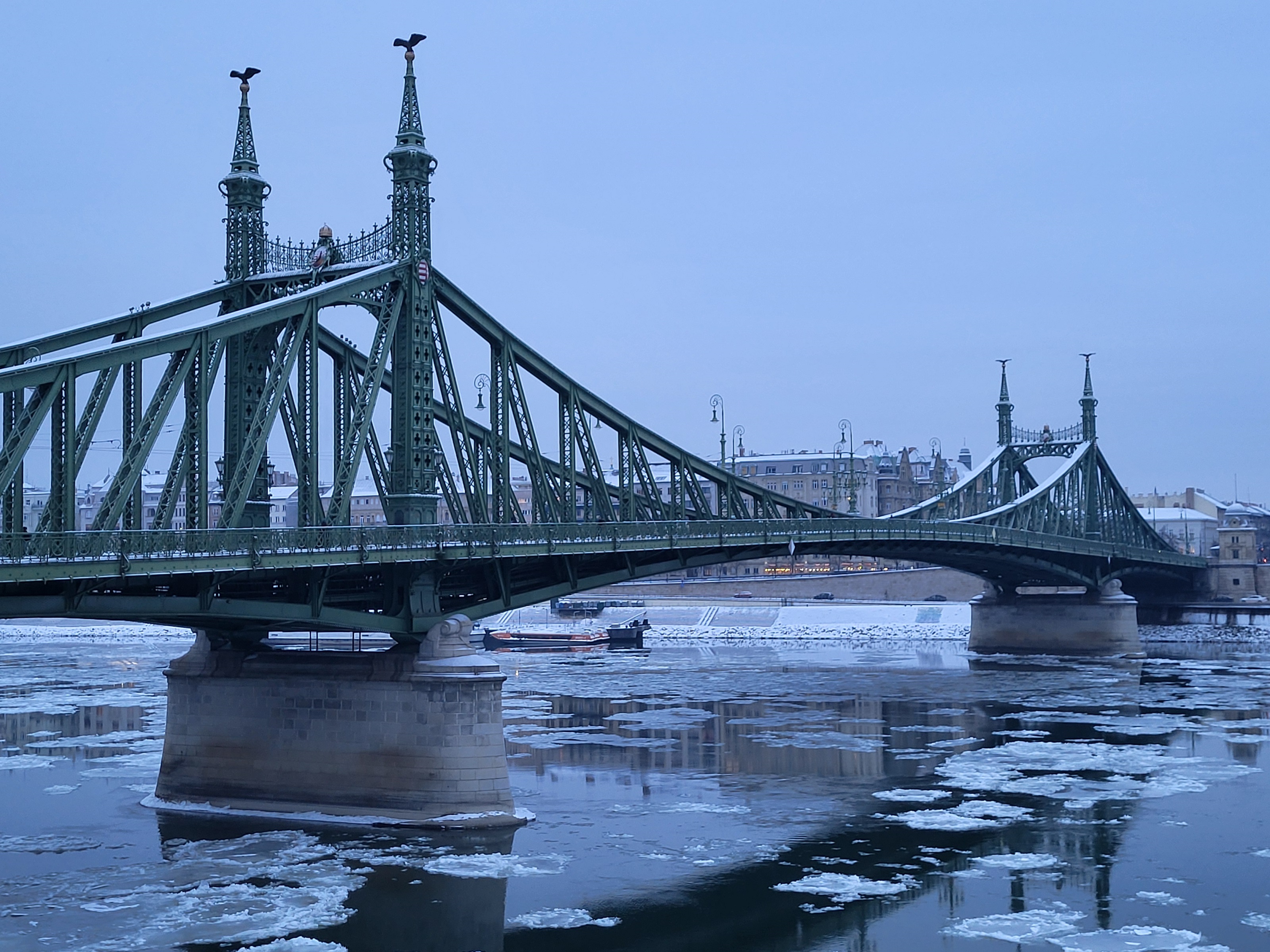
Budapest, 2026. I. 13. ©
.6 2 9

.
Budapest, 2026. I. 13. ©
.6 2 9
.
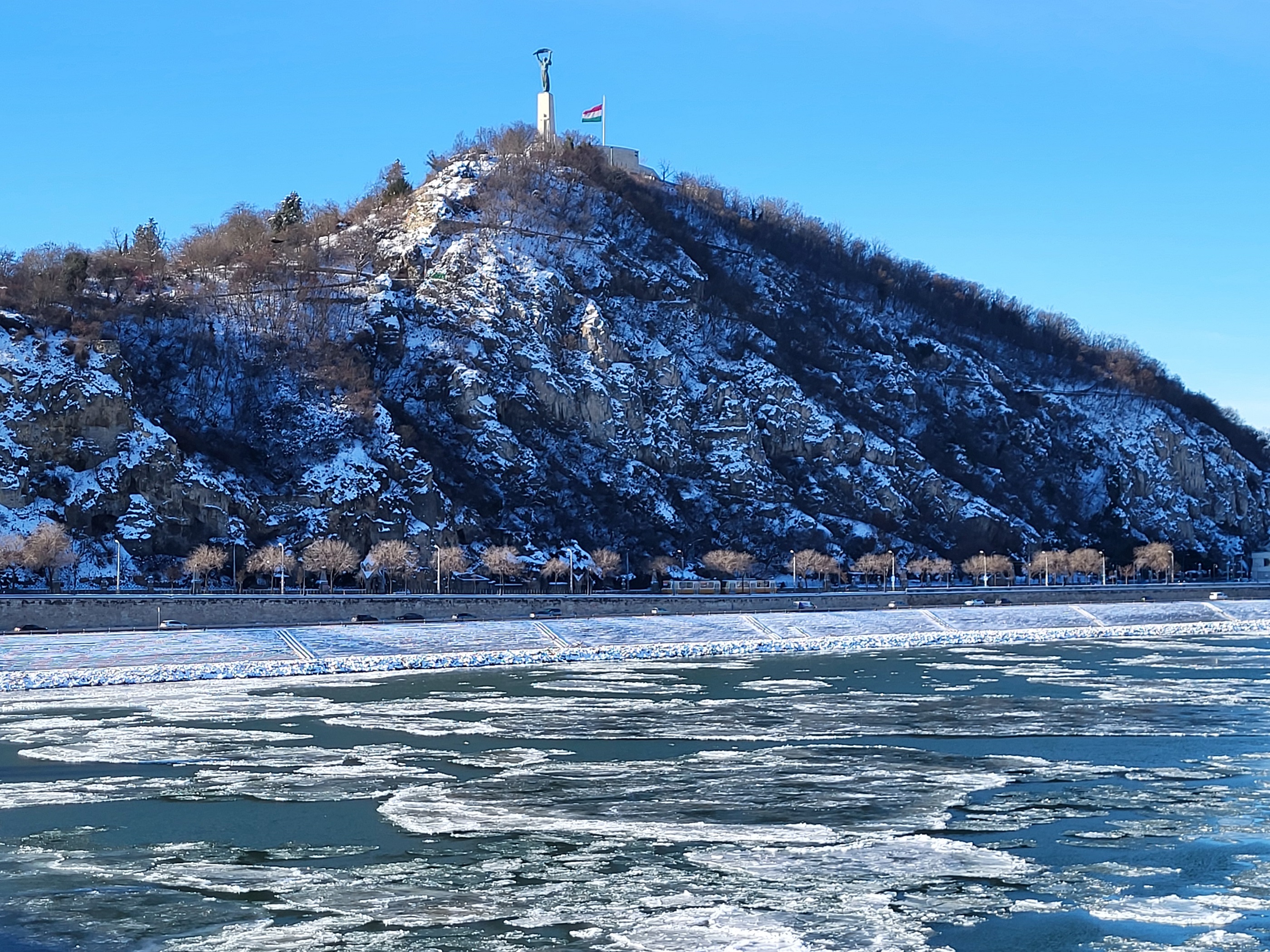
Budapest, 2026. I. 12. ©
.6 2 5
.
North America
Canada
1/10/2026 The shock capture of Venezuelan President Maduro and Trump’s ramped-up talk of seizing Greenland have rattled Canada, forcing citizens to take seriously the US president’s past threats to Canadian sovereignty. Canadians have particular reason to worry. With Greenland, Trump and his advisers are seeking control - even raising the possibility of military action - of a territory that is democratic, strategically located in the Arctic, and part of NATO. Canada is all of those things, too. Less clear is what Canada can do to dissuade Trump. PM Carney this week called for the US to respect the sovereignty of Greenland and Denmark, of which the island is a territory, without addressing Trump’s past threats to Canada. Canada’s military isn’t built for a more hostile world. Its regular and primary reserve forces total fewer than 100,000 people to defend the second-largest land mass on Earth. Natural disasters and other duties, such as a NATO mission in Latvia where Canadian soldiers are stationed, stretch its resources. Carney’s government is boosting soldiers’ pay to help recruitment and allocating tens of billions of dollars for new fighter jets, submarines and other equipment - all of which will help Canada, at long last, meet the minimum NATO spending level of 2% of gross domestic product. ’There’s also a nascent plan, reported in the Canadian media, to build a force of 100,000 reserves and 300,000 supplementary reserve troops’. But most of those steps will take years. There’s the possibility of the US interfering in Canadian politics. The oil-rich province of Alberta - which has long chafed under Ottawa’s control - may be headed toward an independence referendum, with a few so-called “Maple MAGAs” holding out hope of not only leaving Canada but eventually joining the US. A separatist organizer, Rath, told has met with US State Department officials three times and they are supporting his cause. Early polls suggest the Alberta separatists are likely to lose. Trump’s attention is elsewhere now, but it will swing back to Canada. The US-Mexico-Canada Agreement has the potential to become a forum for the airing of every Washington grievance against Ottawa - its small military presence in the far north, its approach to sectors such as agriculture - and for Trump’s negotiating style of exerting maximum leverage against smaller trading partners. The existing deal means that about 85% of Canada-US trade is currently tariff-free, exempted from Trump’s 35% import taxes against other Canadian goods. Trump merely has to threaten to cancel the exemption or blow up USMCA to create havoc. Ending the trade accord in the short term, it would be catastrophic for Canada, which sends almost 70% of its exports south across the border. Carney set a public goal in October to double Canada's exports to other countries over the next decade. Despite calling China the biggest security threat to his country in April, Carney next week will become the first Canadian leader to visit the Asian giant in almost a decade. Since becoming prime minister, Carney has worked to improve Canada’s relations with Trump, which had grown toxic under Trudeau. He removed some of his predecessor’s counter-tariffs and digital services tax. And the boost in defense spending addresses one of Trump’s key complaints about America’s NATO partners. None of those concessions, however, led to a detente on tariffs. And they carry the danger of the steady erosion of Canadian sovereignty. (Source: Bloomberg - U.S)
United States
Jan. 13, 2026, 9:24 PM GMT+1 Israeli officials have privately suggested the Trump administration delay large-scale strikes until the Iranian regime is even more strained, while one Arab official said there is lack of enthusiasm from the neighborhood for American military action in Iran right now. They also noted the situation in Iran is rapidly developing, with the stability of the regime potentially changing quickly in one direction or the other. Another Arab official expressed concern that ’any attack or escalation by Israel or the U.S’. will unite Iranians and noted there was a rally-around-the-flag effect in Iran after the American and Israeli attack there in June. Israeli officials have told the Trump administration that while they fully support regime change in Iran, and U.S. efforts to facilitate it, they are concerned that outside military intervention at this moment might not finish the job that protesters have started. The Israelis have suggested other types of U.S. action aimed at destabilizing the regime and supporting the protesters could help further weaken the regime to the point where larger strikes could then be decisive. Those possible actions include boosting communications for Iranians around the country to circumvent the regime’s internet blackout, increasing or strengthening economic sanctions, launching a cyberattack, or even taking very targeted military action against specific Iranian leaders - that could help facilitate a broader breakdown in the regime. The conversations, which have involved American political and military leaders, underscore the complex dynamic Trump faces as he weighs possible options for U.S. action in Iran. Trump, who is expected hold a meeting today with his national security team to review options, has threatened Iran with U.S. military action if the regime is killing protesters. White House officials have said Trump is considering a range of possible options as protests enter their third week, including ones that don’t involve military force. Members of Trump's national security team held a meeting today morning on Iran that he did not attend, according to White House press secretary Leavitt. Trump posted on social media today that he’d canceled all meetings with Iranian officials until the senseless killing of protesters stops. The U.S.-based organization Human Rights Activists News Agency said today morning that about 2,000 people have been killed. More than 16,000 people have been detained, according to the group. Iran’s Parliament speaker said Sunday that if the U.S. attacks Iran, the American military and Israel would be legitimate targets for retaliation. Asked Sunday about Iranian threats of retaliation, Trump told reporters, ’If they do that, we will hit them at levels that they’ve never been hit before.’ (Source: NBC News - U.S.)
Tuesday 13/01/2026 During the course of his second term in office, Trump has often threatened and imposed tariffs on other countries over their ties with US adversaries and over trade policies that he has described as unfair to Washington. Trump said yesterday nations doing business with Iran face 25% tariff on US trade, as Washington weighs a response to the situation in Iran which is seeing its biggest anti-government protests in years. Tariffs are paid by US importers of goods from those countries. Iran, a member of the OPEC oil producing group, has been heavily sanctioned by Washington for years. It exports much of its oil to China, with Turkey, Iraq and India among its other top trading partners. This Order is final and conclusive, Trump said without providing any further detail. There was no official documentation from the White House of the policy on its website, nor information about the legal authority Trump would use to impose the tariffs, or whether they would be aimed at all of Iran’s trading partners. Iran exported products to 147 trading partners in 2022, according to World Bank’s most recent data. Trump’s trade policy is under legal pressure as the US Supreme Court is considering striking down a broad swathe of Trump’s existing tariffs. The Chinese embassy in Washington criticised Trump’s approach, saying China will take all necessary measures to safeguard its interests and opposed any illicit unilateral sanctions and long-arm jurisdiction. “China’s position against the indiscriminate imposition of tariffs is consistent and clear. Tariff wars and trade wars have no winners, and coercion and pressure cannot solve problems,” a spokesman of the Chinese embassy in Washington said on X. Iran is seeing its biggest anti-government demonstrations in years. Tehran said yesterday it was keeping communication channels with Washington open as Trump considered how to respond to the situation in Iran, which has posed one of the gravest tests of clerical rule in the country since the Islamic Revolution in 1979. Demonstrations evolved from complaints about dire economic hardships to defiant calls for the fall of the deeply entrenched clerical establishment. Trump has said the US may meet Iranian officials and that he was in contact with Iran’s opposition, while piling pressure on its leaders, including threatening military action. US-based rights group HRANA said it had verified the deaths of 599 people, 510 protesters and 89 security personnel, since the protests began on December 28. While air strikes were one of many alternatives open to Trump, “diplomacy is always the first option for the president,” White House press secretary Leavitt said yesterday. Some senior aides in President Trump’s administration, led by Vice President Vance, are urging Trump to try diplomacy before strikes against Iran, the Wall Street Journal reported yesterday, citing US officials. The White House was weighing an offer from Tehran to engage in talks regarding its nuclear programme as Trump seemed to eye authorising military action against Iran. The Journal’s report was not accurate, Martin, Vance’s communications director said. “Vice President Vance and Secretary of State Rubio together are presenting a suite of options to the President, ranging from a diplomatic approach to military actions,” said the spokesman for Vance. “They are presenting those options without bias or favour.” (Source: The Arab Weekly - 'Put out by Al Arab Publishing House in London', United Kingdom, owned by a Saudi state-backed media company headquartered in Riyadh)
January 13, 2026 9:51am The US president has received a briefing from the Pentagon on ’options against Iran’. Trump is reportedly weighing up potential tools he could use against Iran if the situation in the country escalates following protests and reports of killings and mass arrests. Trump was reportedly briefed on cyber and psychological operations, which could occur at the same time with traditional military attacks. Air strikes and long-range missiles could be used, while a cyber campaign could disrupt the country’s command structures, communications and the state-run media. No final decision has been made yet. Trump’s national security team will be holed up in the White House today to discuss Iran. The US has at least 19 military bases dotted across the Middle East, with the nearest ones located in Iraq close to the Iranian border. Iran is believed to have depleted its arsenal of medium-range missiles capable of travelling up to 1,240 miles. It has several short-range weapons which can reach up to 435 miles, and up to several US bases in the region. Trump said yesterday on board Air Force One: ‘The military is looking at it, and we’re looking at some very strong options.’ (Source: Metro – United Kingdom)
(Tuesday), 13/01/2026 - 9:46 GMT+1 Vice President Vance, Secretary of State Rubio and key White House National Security Council officials began meeting Friday to develop a suite of options from diplomatic approaches to military strikes to present to Trump in coming days, according to US media reports. US President Trump told reporters Sunday a meeting is being set up with Iranian officials but cautioned ’we may have to act because of what's happening before the meeting.’ "We're watching the situation very carefully," Trump said. A violent crackdown on protests has left more than 600 people dead. White House press secretary Leavitt said Trump is exploring messages from Iranian regime officials. ’What you're hearing publicly from the Iranian regime is quite different from the messages the administration is receiving privately, and I think the president has an interest in exploring those messages," Leavitt told reporters yesterday. ’However, with that said, the president has shown he's unafraid to use military options if and when he deems necessary, and nobody knows that better than Iran.’ Leavitt confirmed Trump's special envoy Witkoff will be a key player engaging Tehran. Trump has repeatedly threatened military action if Iran uses deadly force against anti-government protesters, a red line Washington says Iran is starting to cross. Iran's parliamentary speaker warned US military and Israel would be legitimate targets if Washington uses force to protect demonstrators. Foreign Minister Araghchi said Tehran is open to talks but remains prepared for war. Trump announced on Truth Social yesterday he would impose 25% tariffs on any and all business being done with the United States of America on countries doing business with Tehran effective immediately, in his first action penalising Iran for the protest crackdown. Brazil, China, Russia, Turkey, the United Arab Emirates are among the countries that do business with Tehran. Trump has been briefed on military options against Iran. Media reports indicate Pentagon officials have discussed long-range missile attacks, cyber operations and psychological campaign responses. (Source: Euronews - based in Lyon, France)
(Monday, 12 January 2026 11:06 - 12:17 CET) The US has threatened to intervene, and yesterday President Trump said Iran's leaders had called him to "negotiate". However, Trump warned overnight that the US 'may have to act before a meeting'. Late last night, Pahlavi, in fresh call to action, again urged Iranian security forces to defect and appealed to Iranians living in Western countries to reclaim embassies for the people. He said Iran’s diplomatic missions should display the national flag rather than what he described as the 'disgraceful banner' of the Islamic Republic. It comes after a protester climbed onto the balcony of the Iranian embassy in west London on Saturday and pulled down the official flag and briefly replaced it with the Lion and Sun emblem. This morning a group of protesters entered the grounds of the Iranian embassy in Canberra, Australia, and removed the official flag of the Islamic Republic. Demonstrators - reported to be supporters of the exiled crown prince Pahlavi - replaced it with the Lion and Sun flag, a symbol associated with Iran before the 1979 revolution. (Source: BBC - United Kingdom)
January 12, 2026 3:56 AM ET Today, in response to the protests, Iranian leaders drew large crowds of pro-government demonstrators to the streets. Iranian state television showed images of demonstrators thronging Tehran toward Islamic Revolution Square, in the capital. State broadcasters have framed the anti-government protests as actions fomented by the U.S. and Israel and have said armed rioters were being arrested. The Iranian regime persistently for decades asked the people of Iran to sacrifice, including economically, for the sake of the survival of the Islamic Republic. Iran has recently lost geopolitical status, as proxy militias that it had long used as a security buffer and to project influence come under attack. Israel's war in Gaza has dramatically reduced the power of Hamas. And the collapse of Assad regime in Syria a little over a year ago cut off vital supply lines to the Iranian-backed Lebanese militia, Hezbollah. Iran poured countless sums of money into these proxies. American strikes on targets inside Iran in June last year, have left people feeling that they sacrificed for nothing. Pahlavi, the exiled son of the country's last shah and a prominent voice in the fragmented opposition, has encouraged Iranians to continue their demonstrations. It's not clear how widespread his support is. Iran, which has threatened to strike Israel and American bases and ships in the region should the U.S. take military action against it, has indicated that it would be open to negotiation. Officials will brief President Trump tomorrow on options for intervening, according to the Wall Street Journal. These could include everything from military strikes, to using secret cyber weapons, to sanctions, to helping meet the needs of the protesters. Experts say expectations that the regime could collapse may be premature. There is no sign yet of defections or dissent in the security apparatus that maintains the country's theocracy. (Source: NPR - U.S.)
12 January 2026 8:35 am Rights groups say Iran protest death toll reaches at least 544 as crackdown intensifies since protests erupted over Iran’s collapsing currency and for the removal of Supreme Leader Khamenei. Asked if Iran was crossing the red line in its crackdown on the protests, Trump told reporters aboard Air Force One, ’They're starting to, it looks like, and there seem to be some people killed that aren't supposed to be killed. These are violent if you call 'em leaders. I don't know if they're leaders or just they rule through violence.’ Tehran has warned that the U.S. military and Israel would be considered legitimate targets if the U.S. intervenes to protect demonstrators. “We’re looking at it very seriously. The military is looking at it, and we’re looking at some very strong options. We’ll make a determination,’ Trump told reporters on board Air Force One late yesterday. (Source: Outlook – India; „with inputs from agencies”)
12.01.2026 On Sunday, on his social media company Truth Social, Trump posted himself as the acting leader of the South American country as of January 2026. Trump said his administration would ’run’ Venezuela and its oil assets during a transition period. Following Maduro's capture, his vice president, Rodrigues, was sworn in as interim president. The country's new government has continued to engage with the Trump administration throughout this period, with a US team of diplomatic and security personnel traveling to Caracas to assess the possibility of resuming operations at the US Embassy. (Source: Anadolu Agency - Turkey)
Jan 11, 2026 - 15:41 Earlier today, Trump reposted a message suggesting that US Secretary of State Rubio could become the president of now communist-ruled Cuba. Trump shared that post with the comment: Sounds good to me! In his own post soon afterwards, Trump said that Cuba lived, for many years, on large amounts of oil and money from Venezuela. In return, Cuba provided security services for the last two Venezuelan dictators, but not anymore. 'Most of those Cubans are DEAD from last week’s U.S.A. attack, and Venezuela doesn’t need protection anymore from the thugs and extortionists who held them hostage for so many years.” (Source: Euractiv - Belgium)
January 11, 2026, Sunday // 13:30 Greenland sits at a critical juncture for monitoring Russian and Chinese military activity, contains vast mineral resources essential for modern technology, and controls key shipping routes. The president was oscillating between vague promises of deals and explicit threats of force. What began as seemingly impulsive statements has crystallized into a multi-pronged strategy that experts warn mirrors tactics employed by authoritarian regimes. According to reports from Politico, the Trump administration appears to be following a playbook that bears uncomfortable similarities to Russian expansionist tactics. The strategy reportedly includes four potential phases: conducting influence campaigns to boost Greenland's independence movement, offering economic incentives through agreements like a Compact of Free Association, pressuring European allies into acquiescence, and the possibility of military intervention. American operatives with ties to Trump have already conducted covert influence operations in Greenland. This echoes Russian disinformation campaigns in Moldova and Ukraine, where Moscow worked to amplify pro-Russian sentiment and create the appearance of popular support for alignment with Russian interests. Political leaders across Greenland's spectrum have issued joint statements affirming their desire to remain Greenlandic, neither American nor simply Danish. The people of Greenland deserve security and self-determination, not to be objectified in great power competition. Multiple European officials and defense experts warn that any American military action against Greenland would effectively end NATO and destroy 80 years of carefully constructed alliance systems. America's allies deserve predictability, not threats. The United Kingdom has already begun withholding intelligence from the United States. 'France reportedly positioned a nuclear submarine near Canada as a warning during Trump's annexation threats toward America's northern neighbor'. Countries that have relied on American security guarantees for decades are now openly discussing developing their own nuclear arsenals. Swedish media reports that 'Nordic countries, led by Sweden, are revisiting the possibility of acquiring nuclear weapons'. Japan, ’Poland, and other nations previously committed to non-proliferation may follow suit’ if they conclude American protection is unreliable or that America itself poses a threat to allied sovereignty. Reports indicate the European Union is preparing potential sanctions against American technology giants and financial institutions should Trump reject proposed NATO security arrangements for Greenland. More extreme options being discussed include evicting American military bases from Europe, which would cripple U.S. strategic positioning in the Middle East and elsewhere. Trump's actions rather than securing American interests, aggressive posturing toward Greenland are pushing European allies toward greater independence from Washington and potentially into alternative security arrangements. The alternative is a world where might makes right, nuclear proliferation accelerates unchecked, and former allies become adversaries. China stands to benefit enormously as countries seek counterweights to American unpredictability. Russia would welcome the fracturing of Western unity. ’The situation demands urgent congressional action. Lawmakers have a constitutional duty to check executive overreach and uphold international law’. (Source: Novinite - Bulgaria)
by Kolev
02:02 GMT, 11 January 2026 Sources say that the policy 'hawks' around the US President, led by political adviser Miller, have been so emboldened by the success of the operation to capture Venezuela's leader Maduro that they want to move quickly to seize Greenland ’before Russia or China makes a move’. British diplomats believe that Trump is also motivated by a desire to distract American voters from the performance of the US economy before the mid-term elections later this year. He could lose control of Congress to the Democrats. According to the sources, the President has asked the Joint Special Operations Command (JSOC) to draw up a plan for the invasion of the island. But he is being resisted by the joint chiefs of staff on the grounds that it would be illegal - and would not be supported by Congress, The Mail has learned today. A diplomatic source said: 'The generals think Trump's Greenland plan is crazy and illegal. So they are trying to deflect him with other major military operations.’ One source said: 'They have tried to distract Trump by talking about less controversial measures, such as intercepting Russian 'ghost' ships - a clandestine network of hundreds of vessels operated by Moscow to evade Western sanctions - or launching a strike on Iran. Diplomats have war-gamed what they describe as an 'escalatory scenario' under which Trump uses force or 'political coercion' to sever Greenland's links to Denmark. One diplomatic cable describes the 'worst-case' scenario as leading to 'the destruction of Nato from the inside'. It adds: 'Some European officials suspect this is the real aim of the hardline MAGA faction around Trump. Since Congress would not allow Trump to exit Nato, occupying Greenland could force the Europeans to abandon Nato. If Trump wants to end Nato, this might be the most convenient way to do it.' Under the 'Compromise Scenario', Denmark would agree to give Trump full military access to Greenland and deny access to Russia and China. Although America already has free access to the island, it would be put on a legal basis. The cable says: 'For domestic political reasons, Trump can start with an escalatory scenario which shifts to a compromise scenario. 'European officials fear that, for Trump, the window of opportunity before the mid-terms is closing in the summer, therefore action is expected sooner rather than later. The Nato summit on July 7 seems like the natural timing for a compromise deal'. (Source: Daily Mail - United Kingdom)
.
.
Asia
China
January 15, 2026 China has appointed a special representative to deepen ties with member states of the Shanghai Cooperation Organization (SCO), the foreign ministry spokesperson Mao announced today. Ambassador Yan was appointed special representative on SCO affairs as well as the SCO national coordinator, she said. Besides 10 member states, the SCO has 16 SCO Partners, identified as observer and dialogue partners, in Asia, Europe, and Africa. The SCO covers about 24 percent of the world’s land area and 42 percent of the global population. Member states account for roughly one-quarter of global GDP, with trade increasing nearly 100-fold in the last two decades. Their share of world trade rose from 5.4 percent in 2001 to 17.5 percent in 2020. The 25th summit of the SCO was hosted by Chinese President Xi in the northern city of Tianjin, where the bloc adopted a 10-year SCO Development Strategy to 2035, alongside outcome documents on security, trade, energy and cultural cooperation. China’s trade with SCO members, observers and dialogue partners reached a record $890 billion in 2024, or 14.4 percent of its total foreign trade. (Source: TRT World - Turkey)
Gaza
Saturday 17 January 2026 14:32 GMT The White House has released the names of the officials who will be on Trump’s so-called Board of Peace for Gaza. This week, a national committee for the administration of Gaza (Ncag), and a separate 15-member Palestinian technocratic committee was appointed. The White House also named an 11-member Gaza Executive Board. (Source: The Independent - United Kingdom)
India
(17.01.2026) India has been trying to develop the North–South Transport Corridor with Russia and Iran since 2003. India’s decade-long involvement in Iran’s strategically vital Chabahar Port on the Gulf of Oman, in Iran's southern Makran region, outside the Strait of Hormuz is under scrutiny. Under US pressure New Delhi may be winding down its involvement amid renewed US sanctions and the threat of punitive tariffs. India has already transferred the entirety of its financial commitment - estimated at around $120 million - to Iran, effectively liquidating its liabilities related to the development of the port. The payout was completed before the United States reimposed sanctions on Chabahar in late September 2025. India subsequently received conditional sanctions waiver from the US – which remains valid until April 26, 2026 – giving New Delhi limited room to manage its commitments and explore an arrangement with Washington. Surprisingly, India paid the entire amount committed to Iran for the port project before the sanctions kicked in, since it would not have been possible to do so when sanctions were on. The Indian government has not officially announced a withdrawal. Once the money was transferred, India effectively removed any remaining financial obligations tied to the project. India is already facing a 50 percent tariff imposed by the Trump administration, while simultaneously trying to negotiate a long-pending free trade agreement (FTA) with the United States. This dual pressure leaves New Delhi with limited room to manoeuvre, even as it seeks to preserve its long-term strategic interests in the region. The uncertainty intensified after US President Trump warned on January 12 that any country doing business with Iran would face an additional 25 percent tariff on all trade with the United States. Iran is free to operate the port without Indian involvement. The state-owned India Ports Global Ltd (IPGL) - tasked with developing and running Chabahar - has also reportedly stepped back. Government-nominated directors resigned en masse following the sanctions, and the company’s website was taken down. Chabahar’s importance extends far beyond trade volumes. Located on Iran’s southeastern coast, outside the Strait of Hormuz, the Chabahar terminal and port has long been viewed as a strategic gateway for India’s access to trade through the Caspian for Central Asia and Russia, and for Afghanistan since Pakistan has blocked access. It is a key node in the International North–South Transport Corridor (INSTC), a 7,200-kilometre multimodal network connecting India to Iran, Russia, Central Asia and Europe. This strategic logic has not changed. (Source: TRT World - Turkey)
12.01.2026 The Polar Satellite Launch Vehicle (PSLV)-C62 rocket mission suffered a setback today, during the third stage of flight after it was launched at local time 10.17 am (0447GMT) from the Satish Dhawan Space Centre in Sriharikota located in Southern India. Earlier, the the Indian Space Research Organization (ISRO) said PSLV-C62 will carry EOS-N1 and 15 co-passenger satellites. EOS-N1 or the Anvesha satellite was developed by India’s Defense Research and Development Organization and designed to provide cutting-edge imaging capabilities, „enabling India to map enemy positions with pinpoint accuracy,” public broadcaster All India Radio said. In May 2025, India’s attempt to launch PSLV-C61, a new earth observation satellite into orbit, had failed due to a technical issue during the third stage of flight. (Source: Anadolu Agency - Turkey)
Iran
Saturday, January 17, 2026 ’In this revolt, the U.S. president made remarks in person, encouraged seditious people to go ahead and said: ‘We do support you, we do support you militarily,’ said Iran’s Supreme Leader Ayatollah Khamenei today in a speech broadcast by state television. He branded President Trump a criminal for supporting protesters in Iran, and blamed demonstrators for causing thousands of deaths. Khamenei said the protests had left ’several thousand’ people dead. He, who has final say on all state matters, described the protesters as foot soldiers of the United States and said they had destroyed mosques and educational centers. Khamenei reiterated an accusation that the U.S. seeks domination over Iran’s economic and political resources. In his speech, Khamenei said rioters were armed with live ammunition that was imported from abroad, without naming any countries. “We do not plan, we do not take the country toward war. But we do not release domestic offenders, worse than domestic offenders, there are international offenders. We do not let them alone either,” he said, and urged officials to pursue the cases. Yesterday, Iran’s President Pezeshkian, in a phone conversation with Russian President Putin, accused the U.S. and Israel of meddling in the unrest. There have been no signs of protests for days in Tehran, where shopping and street life have returned to outward normality, and Iranian state media has not reported on any new unrest. Today, cellphone text messaging began operating overnight and very limited internet services began functioning again briefly in parts of Iran. Users were able to access local websites through a domestic internet service. Some also reported limited access to international internet services via use of a virtual private network, or VPN. It was possible that officials were turning on some systems for the start of the Iranian working week, as the outage has affected businesses, particularly banks in the country trying to handle transactions. A call by Iran’s exiled Crown Prince Pahlavi for protesters to take to the streets again from today to Monday did not appear to have been heeded by today afternoon. (Source: The Washington Times - U.S.)
January 16, 2026 5:20 PM CE Munich Security Conference which will take place Feb. 14-16, disinvites Iran’s top diplomat. Earlier invitations to regime representatives are canceled after Tehran’s crackdown on protesters. It remains unclear whether Iranian opposition representatives will be invited to Munich instead. (Source: Politico - U.S.)
Friday 16/01/2026 Clear signs of de-escalation started to emerge yesterday. The US administration seems to have chosen the path of de-escalation putting on hold at least for now its previous plans for military action against Iran after Arab Gulf allies as well as Israel expressed strong misgivings about such an action in the current juncture. ’Quoting US Israeli and Arab sources’ US website Axios said President Trump is delaying a decision on striking Iran as the White House consults internally and with allies about the timing for such an operation and whether it would meaningfully destabilise the regime. Axios also said Israeli Prime Minister Binyamin Netanyahu spoke to Trump on Wednesday and asked him to wait to give Israel more time to prepare for possible Iranian retaliation. Washington seems to have stepped back from military action. US Ambassador to the United Nations Waltz told the UN Security Council yesterday that the United States stands by brave people of Iran and all options remain on the table for the president to stop the slaughter. Diplomatic sources also said yesterday that the security posture at the US Al-Udeid Airbase in Qatar had been lowered and gradually planes have started moving back to position pre-Wednesday. Some personnel had been moved out of the base on Wednesday, with staff at US missions in Saudi Arabia and Kuwait warned to exercise caution as fears mounted of a US attack. Many US bases and assets are located in the Gulf. Gulf states are fearful that US military facilities in their countries could be caught in any Iranian retaliation to US attacks, and that the energy facilities underpinning the regional economy could also end up being targeted. A Gulf official said Saudi Arabia, Qatar, Oman and Egypt were involved in the diplomacy over 48 hours before Trump signalled yesterday that he had ultimately decided against an attack for now. The four countries had conveyed to Washington the sense that any attack would have consequences. The Gulf efforts aimed to avoid an uncontrollable situation in the region, a Saudi official said. They told Washington that an attack on Iran would open the way for a series of grave blowbacks for the wider region in terms of both security and economics, which would ultimately impact the United States itself. A message was conveyed to Iran that attacking US regional facilities would have consequences. In telephone talks yesterday, Iranian Foreign Minister Araghchi told his Saudi counterpart Farhan that Iran would defend itself against any foreign threat. In the Islamic republic, the demonstrations appear to have diminished over the last few days in the face of repression and a week-long internet blackout. The Norway-based Iran Human Rights (IHR) NGO said on Wednesday that Iranian security forces had killed at least 3,428 protesters. Turkey yesterday said it opposes a military operation against Iran. “We believe the authentic problems of Iran should be resolved by themselves,” Foreign Minister Fidan told in Istanbul. (Source: The Arab Weekly - 'Put out by Al Arab Publishing House in London', United Kingdom, owned by a Saudi state-backed media company headquartered in Riyadh)
January 16, 2026 16:12 CET Security forces maintain a heavy presence on the streets in Iranian cities. Rights groups report thousands killed and more than 19,000 detained, with an ongoing Internet blackout. The US has warned Iran of grave consequences over further bloodshed. Across the Middle East, tensions have eased over the possibility of US strikes on Iran over the crackdown. The White House said on January 15 that US President Trump and other officials had warned Tehran there would be grave consequences if there is further bloodshed. Reports had said that one detained protester, 26-year-old Soltani, would be executed on January 14, on charges of ’waging war against God’ over his role in the protests. Rights groups said the execution did not take place after a warning by Trump. The Iranian Judiciary Media Center later said the reports Soltani faced execution were fabricated and that he is charged with gathering information and colluding against the country's internal security and propaganda activities against the regime. Russian President Putin has been silent on uprising since it started. Putin in his calls with Iranian President Pezeshkian and Israeli Prime Minister Benjamin Netanyahu said Moscow was willing to mediate in the region. (Source: RFE/RL - U.S.)
Friday, January 16, 2026 Iran’s top police official asserted yesterday that security forces had restored stability across the country. Human rights organizations and witnesses have reported little protest activity inside major population centers in Iran. Norway-based human rights organization Hengaw reported Friday that Iran has maintained a massive military and police presence in most cities where major protests had taken place. Iranian state media reported today that it had conducted several successful waves of arrests of alleged protest leaders in the provinces of Kerman and Kermanshah. Still, sporadic demonstrations have occurred, with state-affiliated media reporting that protesters destroyed an education office in Isfahan Province yesterday evening. On Wednesday, Mr. Trump announced that he had been informed that Iran had decided to halt the executions, though it remains unclear where he received his information. White House press secretary Leavitt confirmed yesterday Iran had officially halted the executions of 800 prisoners but said Mr. Trump was monitoring the situation and would not take any option, including military action, off the table. U.S. partners in the Middle East, including Israel, Oman, Saudi Arabia and Qatar, had reportedly rushed to dissuade the U.S. from launching military strikes on Iran this week, fearing that it could expand into a wide regional conflict. (Source: The Washington Times - U.S.)
January 15, 2026 Foreign military intervention is unlikely to produce a consolidated democracy of any kind, let alone one favorable to the interests of the intervening power. The president’s refusal to meet with the former crown prince of Iran, Pahlavi, in Mar-a-Lago, has been attributed to a perception in the White House that he does not have the mettle to lead Iran even if the regime is toppled. Strikes against ballistic missile manufacturing and storage sites or senior Islamic Republic officials would fall into the deterrence category. What all options have in common is that they are unlikely to afford the protesters more than temporary protection. Increasing the intensity of cyberattacks, on the other hand, may be worth trying because it would probably not provoke kinetic Iranian retaliation or have counterproductive unintended consequences for Iranian internal dynamics. The administration should encourage its allies to establish an international tribunal with the authority to investigate and try violations of international law, gross violations of human rights, and other flagrant abuses by the Iranian government. Given U.S. efforts to insulate its own officials and that of its allies from international justice in recent years, no U.S. administration will have the credibility to lead on such an initiative. Fortunately, some U.S. allies are better positioned. A successful policy is one that empowers the Iranian people to retake control of their own future. The United States has an important supporting, not starring, role to play in this endeavor. (Source: Foreign Affairs - U.S.)
by Miller, a Senior Fellow in National Security and International Policy at the Center for American Progress. He was Deputy Assistant Secretary of State for Israeli-Palestinian Affairs in the Biden administration and Director for Egypt and Israel Military Issues on the National Security Council in the Obama administration.
Thursday 15 January 2026 06:35 GMT U.S. President Trump said yesterday afternoon that he had been told that killings in Iran's crackdown on nationwide protests were subsiding. He believed there was currently no plan for large-scale executions. The UK ambassador to Iran and all his staff have been evacuated from the embassy in Tehran, which „will now operate remotely”, a UK government spokesperson said. Both Poland and Italy have urged their citizens to leave. The US is reducing its personnel numbers at its Qatari Al-Udeid air base which houses around 10,000 troops. The UK is also withdrawing staff from a US base in Qatar. Tehran briefly closed its airspace late yesterday, though at 7am today morning. Several commercial flights entered Iranian airspace after the order expired. Some domestic flights in Iran have appeared to be resuming. Tens of thousands of mourners thronged the streets near Tehran University for a mass funeral of security forces and civilians. Iranian state television reported that 300 coffins would be on display at Tehran University. Many held Iranian flags and identical photos of Ayatollah Khamenei and their relatives. The caskets, covered in Iranian flags, were stacked at least three high in the backs of trucks and covered with red and white roses and framed photographs of people who were killed. The crowd chanted and beat their chests in response to an emcee speaking from a stage. The presenter, his voice booming across the crowd, blamed the US for the unrest. The UN Security Council will meet this afternoon to discuss the situation in Iran after the US requested an emergency meeting. Trump calmed market anxiety about potential U.S. military action against Iran. Oil prices retreated from multi-month highs today and safe-haven gold eased back from a record peak. (Source: The Independent – United Kingdom)
(Thursday), 15 January 2026 Speaking at the White House, United States President Trump yestersday said he had been informed on good authority that the killings of protesters in Iran had stopped, describing his sources as important sources “on the other side”, AP reported. He added that he would later find out whether the information was true and said the US would wait and watch how events unfold before deciding on any action. The US president’s claims came hours before Iranian Foreign Minister Araqchi told Fox News yesterday that there is no plan to hang people, when asked about the crackdown on nationwide anti-government protests. Hanging is out of the question, he asserted. On January 8, the government snapped internet access and telephone lines. The restrictions were eased on Tuesday, AP reported. Text messaging services were still - internet users were only able to connect to government-approved websites locally. (Source: Scroll - India)
January 14, 2026 6:28 PM GMT+1 All the signals are that a U.S. attack is imminent, a Western military official told later today. Two European officials said U.S. military intervention could come in the next 24 hours. An Israeli official also said it appeared Trump had decided to intervene. Tehran is seeking to deter U.S. President Trump's repeated threats to intervene on behalf of anti-government protesters. US withdraws some personnel from key bases in Middle East, a U.S. official said after a senior Iranian official said Tehran had asked U.S. allies in the region to prevent Washington from attacking Iran. ’Tehran has told regional countries, from Saudi Arabia and UAE to Turkey, that U.S. bases in those countries will be attacked’ if the U.S. targets Iran, the official said. Direct contacts between Iranian Foreign Minister Araqchi and U.S. Special Envoy Witkoff have been suspended, the official added. The United States has forces across the region including the forward headquarters of its Central Command at Al Udeid in Qatar and the headquarters of the U.S. Navy's Fifth Fleet in Bahrain. Qatar said drawdowns from its Al Udeid air base, the biggest U.S. base in the Middle East, were being undertaken in response to the current regional tensions. Britain was also withdrawing some personnel from an air base in Qatar ahead of possible U.S. strikes. Trump has repeatedly threatened to intervene in support of protesters in Iran, where people have been reported killed in a crackdown on the unrest which began two weeks ago as demonstrations against dire economic conditions. It rapidly escalated in recent days, as the most violent since the 1979 Islamic Revolution that installed Iran's system of Shi'ite clerical rule. Armed Forces Chief of Staff Mousavi today was blaming foreign enemies. Iranian authorities have accused the U.S. and Israel of fomenting the unrest, carried out by people it calls armed terrorists. An Iranian official has said more than 2,000 people have died. The U.S.-based HRANA rights group said it had so far verified the deaths of 2,403 protesters and 147 government-affiliated individuals. It does not appear that the government faces imminent collapse, and its security apparatus still appears to be in control. Elected President Pezeshkian told a cabinet meeting that as long as the government had popular support, ’all the enemies' efforts against the country will come to nothing’. Iranian state TV broadcast footage of large funeral processions for people killed in the unrest in Tehran, Isfahan, Bushehr and other cities. People waved flags and pictures of Supreme Leader Ayatollah Khamenei, and held aloft signs with anti-riot slogans. State media reported that the head of Iran's top security body, Larijani, had spoken to the foreign minister of Qatar, while Iran's top diplomat Araqchi had spoken to his Emirati and Turkish counterparts. Araqchi told UAE Foreign Minister Sheikh Zayed that calm has prevailed. HRANA reported 18,137 arrests so far. (Source: Reuters - United Kingdom)
12:37, 14/01/2026, Wednesday As Trump vows „help,’ the US faces limited options for Iran intervention. US President Trump's call for Iranians to occupy government buildings, along with his public encouragement of protesters including a promise that ’Help is on the way,’ has been interpreted as a sign that US intervention in Iran is imminent. Gulf ally resistance, and the risk of Iranian retaliation make any direct intervention highly complex. Analysis of the military and geopolitical landscape reveals significant logistical hurdles, assesses Washington’s constrained military and political options for direct intervention in the Islamic Republic. A major obstacle is the current US military posture in the Middle East. Unlike during the Gaza conflict, no American aircraft carriers are currently stationed in the region, complicating any rapid air campaign. According to analysis cited by The Guardian, launching strikes would require permission to use bases in countries like Qatar, Bahrain, and Saudi Arabia, which are now reluctant. The Wall Street Journal reports that Gulf nations, led by Saudi Arabia, have reportedly signaled they would not allow their airspace to be used for such operations. Military experts outline several problematic scenarios. Airstrikes risk high civilian casualties and would likely trigger immediate Iranian retaliation against US assets and allies. A campaign targeting Iran's ballistic missile stockpiles would be vast and uncertain. An assassination attempt on Supreme Leader Ayatollah Khamenei would violate international norms and could unify Iran rather than weaken it. A US-backed coup is seen as implausible, given the resilience of Iran's Revolutionary Guard command structure. Cyber operations are considered a more likely tool. However, experts like former UK cyber security chief Martin express skepticism, noting that disabling infrastructure often harms civilians more than the regime. Trump’s "help' pledge contrasts with the on-the-ground reality, where US-based rights groups estimate a high protest death toll, while Iranian authorities blame foreign agitators. Iran has formally complained to the UN, calling Trump's statements a violation of international law. For regional powers like Türkiye, which neighbor Iran, any escalation threatens broader instability. (Source: Yeni Şafak - Turkey)
12:37, 14/01/2026, Wednesday Gulf states urge US not to strike Iran, fear oil chaos. While US President Trump has publicly encouraged protesters, stating "HELP IS ON ITS WAY," the Gulf states' urgent behind-the-scenes appeals highlight the vast gulf between Washington's rhetoric and the complex, risk-averse calculations of Iran's neighbors, for whom war represents an existential economic and security threat. (Source: Yeni Şafak / Anadolu Agency = Turkey)
(14 January 2026) Saudi Arabia, joined by Oman and Qatar, has been privately lobbying the Trump administration after the White House warned them to prepare for possible action against Tehran, according to the Wall Street Journal. Arab states bordering the Gulf are urging the US not to launch a military strike on Iran, warning that such an intervention could trigger economic and political instability across the region, media reports said yesterday. According to Arab Gulf officials, any military effort to topple Iran’s government could severely disrupt global oil shipments through the Strait of Hormuz, through which around 20 percent of the world’s oil supply passes. Gulf leaders have a great aversion to instability. They are concerned about the unpredictability of a post-Khamenei Iran, including the possibility of power shifting to the Islamic Revolutionary Guard Corps (IRGC) or resulting in regional chaos. Analysts suggest the Gulf's preferred outcome would be domestic reforms in Iran rather than government collapse. Saudi Arabia, focused on its Vision 2030 plan to diversify its economy, views regional calm as essential. Saudi officials have reportedly told Tehran they will not participate in any conflict or allow American airspace access. (Source: TRT World - Turkey)
January 13, 2026 ‘Help is on the way’ - Trump’s today statement is the closest he has come to calling for regime change since protests began. Tehran has pushed for negotiations over its contested nuclear program as a way to stave off a U.S. strike, but ’Trump shuts door on Diplomacy with Islamic Republic officials until they stop killing protesters, urges Iranian people to seize Government institutions’ promising the Iranian people that the United States will soon aid their uprising against the hardline regime. ’CBS News reported that the regime has killed at least 12,000 and as many as 20,000 since protests began’. Larijani, the secretary of Iran's Supreme National Security Council, said yesterday during a regime-orchestrated counterprotest that Trump ’talks too much and should not be taken seriously.’ Former Iranian diplomat Mousavi said on Friday that Trump is a ’treacherous terrorist’ who ’needs to be disciplined and humbled.’ Mousavi added that Iran is likely to ’initiate [an attack] that would discipline these bullies in the region and the world, according to a translation from the Middle East Media Research Institute’. Iran's ambassador to China, Fazli, warned that Iran is not Venezuela and will not collapse so easily. ’We are growing stronger day by day and year by year, and we have prepared all the measures necessary to defend ourselves, both offensively and defensively,’ Fazli said late last week. ’We are ready to deliver the necessary and regrettable response to the U.S. should such a situation arise.’ ’The old tricks aren't working, the propaganda, disinformation and phony offers of diplomacy don't work on Trump - and now Iran has no air defense and no nuclear program to threaten. This is Trump's moment to change the world,’ Goldberg, a former White House National Security Council official who worked on Iran policy and now works as a senior adviser to the Foundation for Defense of Democracies told. As Trump weighs options that reportedly include targeted military strikes and cyber warfare, the Israeli government is also exploring avenues to support a potential U.S. operation. The Jewish state's security cabinet is reportedly scheduled to meet today to discuss assuming an offensive posture in coordination with the United States. Former Israeli defense minister Gallant said in a today interview that his country's best course of action would be to stay in the background and steer things with an invisible hand. (Source: The Washington Free Beacon - U.S.)
Jan. 13, 2026 3:40 p.m. ET For the past five days, the Iranian authorities have shut down the internet, international phone lines and sometimes even domestic mobile phone connections. But videos trickling out of the country and the messages of some Iranians who occasionally get satellite internet connections offer a devastating picture of bloodshed. Videos and witness accounts slowly emerging suggest that the government is waging one of its deadliest crackdowns on unrest in more than a decade. Eyewitnesses say government forces have begun opening fire, apparently with automatic weapons and at times seemingly indiscriminately, on unarmed protesters. Hospital workers say protesters now arrive with gunshot wounds and skull fractures. In footage aired on Iranian state television, a morgue official, sheathed in blue scrubs, stands amid bags neatly arranged along the floor of a white room, under glaring fluorescent lights. The state broadcaster said the images show the danger that protests pose to Iran’s society: ’There are individuals in these gatherings who want to drag ordinary people - people who have nothing to do with these events - and their families into this situation. So that they too are drawn into the chaos,’ the reporter in the voice over said. The toll of dead and injured across the country is unclear. Multiple American officials say that U.S. intelligence agencies have conservatively estimated that more than 600 protesters have been killed so far. ’A senior Iranian health ministry official, speaking on the condition of anonymity, said about 3,000 people had been killed across the country’ but sought to shift the blame to terrorists fomenting unrest. The figure included hundreds of security officers, he said. Witnesses spoke of seeing snipers positioned on rooftops in downtown Tehran and firing into crowds; of peaceful protests turning abruptly into scenes of carnage and panic as bullets pierced through people’s heads and torsos, sending bodies toppling to the ground. Videos posted to social media on Monday night and verified showed a large crowd of protesters in Tehran. The sound of gunfire could be heard, and the cry: “Death to the dictator!” In a sign of the scale of the crackdown, the government has taken the unusual step of acknowledging that there have been large numbers of casualties, but it has sought to portray the dead as victims of violent protesters and members of the security forces. ’Take firm and effective measures to avenge the martyrs and those killed,’ Iran’s attorney general, Mohseni-Ejei, said at a meeting of the Supreme Judicial Council yesterday, according to the semiofficial news agency, Tasnim. Ghaemi, the executive director of the Center for Human Rights in Iran based in New York, said that hospitals and clinics had been occupied by security forces who were searching for wounded protesters and collecting their personal information. The Center for Human Rights has chosen not to keep a toll, Mr. Ghaemi said, because it has been unable to connect with enough people to follow its typical procedures of corroborating the accounts of local rights activists with those of victims’ families. ’We estimate at least 1,000 deaths nationwide and potentially higher’. Mr. Ghaemi said in an interview. Activists at the Washington-based Iranian rights group HRANA have gathered reports from hospitals suggesting that in some cases security officials were detaining protesters even before they had been treated for their wounds. Thompson, the deputy director of HRANA, said her organization’s death toll has jumped in fits and starts over the past two days. On Saturday, the group was putting the toll at 70 dead. By today, the number had grown to 1,850 protesters and 135 members of the government and military killed. The group works through verifying 770 other cases. Whether the violent crackdown will succeed in intimidating protesters into silence remains to be seen. Yesterday, fewer videos of the unrest appeared than in previous days. (Source: The New York Times - U.S.)
13 January 2026 9:49pm GMT An Iranian man accused of taking part in the anti-regime protests, sentenced to death, will be executed tomorrow, the Hengaw Organisation for Human Rights group has said. Soltani, 26, a clothes shop owner, arrested at his home in Karaj, in north-central Iran, is due to be hanged after being detained on Thursday last week. His family have been given no information about the charges against him or the judicial proceedings. It said he was given no right to defence or to a proper trial. Beyond the rampant killings of demonstrators on the streets by security forces, it is the first known case of an execution being ordered amid the current unrest. ’Many more executions are expected’. Mr Soltani is one of the 10,700 people who have been arrested since protests began late last year, according to the US-based Human Rights Activists News Agency. Mr. Trump said the US would take “very strong action” if the Iranian government started hanging protesters. „I haven’t heard about the hanging. If they hang them, you’re going to see some things... We will take very strong action if they do such a thing’, the US president told CBS News. Today, Mr Trump, who is considering air strikes against the regime, told Iranian protesters that help is on its way. Mr Trump also wrote on his social media post that he had cancelled 'all meetings with Iranian Officials until the senseless killing of protesters STOPS', indicating he was unwilling to engage in diplomacy at this stage. Today, the US warned its citizens to leave Iran immediately. The latest advice by the UK Government warns against all travel to Iran. It urges British nationals already in the country to carefully consider their presence there. (Source: The Telegraph – United Kingdom)
January 13, 2026 / 1:40 PM EST Internet access and text messaging services were still blocked in Iran today. Iranian officials have not provided regular official estimates of overall deaths from the unrest. Britain's Foreign Secretary Cooper said in Parliament today that the U.K. government believed ’there may have been 2,000 people killed, there have been more’. Reuters quoted an unnamed Iranian official today as saying about 2,000 people had been killed since the protests began on Dec. 28, and blaming the violence on foreign influenced terrorists, even suggesting that agitators had been paid to foment chaos. Iran's police chief claimed the protests had been ordered from outside the country and that terrorists paid to cause unrest had been confronted inside Iran. Some Iranians were able to make phone calls out of the country today, though it was still not possible to call into Iran from outside. ’Two sources, including one inside Iran’, told today that activist groups working to compile a full death toll from the protests, based on reports from medical officials across the country, ’believed the toll was at least 12,000, and possibly as high as 20,000’. The same source said security forces were visiting the many private hospitals across Tehran, threatening staff to hand over the names and addresses of those being treated for injuries sustained in the protests. ’The opposition Iran International television network said today that its information suggested about 12,000 people were killed’. ’A source in Washington with contacts in Iran’ told today that a credible source had told him the toll was likely between 10,000 and 12,000. An Iranian activist and blogger who identifies himself only as Vahid Online first posted online a shocking 16-minute clip. The video shows the bodies of at least 366 and likely more than 400 people killed amid the protest piled up at a morgue in a Tehran suburb. The graphic video appears to show forensic personnel documenting gruesome injuries on the bodies, and crowds of people seemingly trying to identify the dead. The injuries visible are extensive and include gunshot wounds, birdshot shotgun wounds, gashes and other severe injuries. ’The whole international community's red lines have been crossed, … so not only [the] United States, not only President Trump, but the European Union, basically all countries have a responsibility to stop these atrocities,’ said Amiry-Moghaddam, who leads the Norway-based activist organization Iran Human Rights. „Iran is a country with a lot of different kinds of people, different opinions. Some would like to have monarchies, some are opposed to monarchy, but I think the priority is to remove this regime’. Amiry-Moghaddan said that 80% of Iranians was roughly divided into three groups, those who would like to have [the] shah's son, those who oppose a monarchy, and those who haven't made up their minds. Pahlavi has said he's ready to return to lead Iran, despite not having been there since his father, the U.S.-backed shah, fled almost 50 years ago amid intense public outrage over his rule. He told yesterday that the Iranian people need action to be taken. The best way to ensure that there will be less people killed in Iran is to intervene sooner, so this regime finally collapses and puts an end to all the problems that we are facing, he said. Pahlavi said he has communicated with the Trump administration, but he didn't reveal any details of those conversations. Mr. Trump warned multiple times as the protests escalated last week that if the Iranian regime killed protesters, the U.S. would take action, without ever specifying a red line that might prompt a response, or what the response might be. "Iranian Patriots, KEEP PROTESTING — TAKE OVER YOUR INSTITUTIONS!!! Save the names of the killers and abusers. They will pay a big price. I have cancelled all meetings with Iranian Officials until the senseless killing of protesters STOPS. HELP IS ON ITS WAY,’ Mr. Trump said in a social media post today. (Source: CBS News - U.S.)
13.01.2026 Mousavi, Iran’s top military commander accused the United States and Israel today of deploying members of the isis (Daesh) terrorist group inside the country. Mousavi, chief of staff of Iran’s armed forces said the isis members, whom he described as mercenaries, were sent into the country to carry out violent attacks that targeted both the Iranian public and security forces. Iran will not tolerate any violation of its sovereignty or territorial integrity, he said, adding that security forces have acted with restraint in handling protests but would not allow terrorist elements to operate in the streets. Iranian officials have accused the US and Israel of backing what they describe as armed rioters in the country. The Human Rights Activists News Agency (HRANA), a US-based rights group estimates that the death toll has reached at least 646, including both security forces and protesters, with over 1,000 injured. HRANA also reported that at least 10,721 people have been detained across protests in 585 locations nationwide, including 186 cities in all 31 provinces. (Source: Anadolu Agency - Turkey)
(12 January 2026 10:10 - 15:06 CET) Addressing foreign ambassadors in Tehran, Iran’s foreign minister Araghchi says Tehran does not plan pre-emptive military action, but is fully prepared for war if attacked. Baqaei, a spokesperson for Iran's Ministry of Foreign Affairs says communication between Foreign Minister Araghchi and US officials is possible "whenever necessary", but Iran will not engage in negotiations that aren't bilateral. Baqaei has accused Western governments of failing to meet their obligations to protect diplomatic premises, to ensure the security of Iranian missions. Gathering accurate, timely information about the unfolding situation in Iran has become difficult. With the internet outage, most information coming out of Iran right now is from state media and officials, who increasingly blame those considered foreign enemies - especially the US and Israel - as they try to contain the unrest. Iran's General Prosecutor Movahedi-Azad said on 10 January that 'all rioters' could face the charge of moharebeh - waging war against God - an offence punishable by death, and one used in previous rounds of protests to issue death penalties for some alleged armed protesters. Iran’s judiciary chief Mohseni-Ejei told police commanders last week, that rioters would face rapid prosecution and punishment in order to serve as a deterrent. He has doubled down on threats of swift and harsh punishment for those involved in the protests, warning courts to show no leniency towards what he calls rioters. Speaking at a meeting with senior judicial officials this morning, Mohseni-Ejei urges prosecutors to work closely with intelligence agencies so cases are handled as swiftly as possible. The judiciary chief again accuses protesters of being backed by the US and Israel, which he describes as the main perpetrators 'of these violent and terroristic acts'. 'The Islamic Republic has one of the deepest, most pervasive and most effective security apparati in the world. It has informers, eavesdroppers, online content monitors and a whole army of Basij enforcers whose job it is to safeguard the regime and its repressive values. It has succeeded in crushing every protest movement so far - by killing and arresting large numbers of people, in many cases torturing them in jail and then releasing them, battered and traumatised, so they can warn others of what happens if you are caught. It is a policy of deterrence through fear', Gardner, Security correspondent reveals. The US-based Human Rights Activist News Agency says it has verified the deaths of 495 protesters and 48 security personnel nationwide. Another 10,600 people have been detained over the weeks of unrest, the agency says. The internet blackout has entered its 84th hour. The shutdown is so severe that even the banking system doesn't operate. Only likely way to connect to the outside world was via Starlink satellite. There are fears users could be traced by the government. It seems like the authorities are trying to clamp down on those who are connected via Starlink, by disrupting the connection. They could be accused of espionage - an accusation that could potentially carry the death sentence. Qalibaf, the speaker of Iran's parliament has issued a stark warning that US military bases, ships and personnel in the Middle East could be targeted in the event of any military intervention by Washington. Addressing the US president directly at a state-organised pro-government rally in Tehran, he warns: 'Come and see how all your assets in the region will be destroyed… what will befall American bases, American ships and American forces.' He stresses that the region would be 'set ablaze', describing Trump as delusional - urging the US president not to believe what the speaker calls misleading intelligence. (Source: BBC - United Kingdom)
12.01.2026 Iran today summoned the ambassadors of Britain, Germany, Italy and France over what it described as their countries’ support for recent protests inside the country. The Foreign Ministry presented video footage that Iranian officials said showed acts of violence during the unrest, stressing that such actions amounted to organized sabotage. Tehran said any political or media support for the protests constitutes unacceptable interference in Iran’s internal affairs, national security and called on their governments to withdraw official statements backing the protesters. (Source: Anadolu Agency - Turkey)
12/01/2026 - 7:58 GMT+1 Video indicating a deadly crackdown on protests in Iran. (Source: Euronews - based in Lyon, France)
(Sunday), 11 January 2026 5:44 pm Nationwide protests challenging Iran’s ruling regime saw protesters flood the streets in the country’s capital and its second-largest city into Sunday, crossing the two-week mark as violence surrounding the demonstrations has killed at least 116 people, activists said. A day after Iranian officials warned its people that actively taking part in demonstrations would attract a death penalty charge, the Islamic republic's President Pezeshkian, speaking in an interview, aired by Iranian state television today, has said he is open to listening to the protestors. On January 10, 2026, the Iranian government had warned that rioters would be charged with the crime of being 'enemies of god', which is a death penalty offence in Iran. “People have concerns, we should sit with them and if it is our duty, we should resolve their concerns,” Pezeshkian said. “But the higher duty is not to allow a group of rioters to come and destroy the entire society.” Since the protests started in Iran two weeks ago, it is estimated that around 116 people have died due to the surrounding violence. 2,600 others have been detained, according to a U.S.-based Human Rights Activists News Agency. The comments from Pezeshkian represent a hardening tone from the reformist leader, who so far has been unable to assuage the public, as anger over the country’s ailing economy exploded into a direct challenge to the nation’s ruling regime. On Sunday, Iranian state television broadcast the parliament session live. Qalibaf, a hard-liner who has run for the presidency in the past, gave a speech applauding police and Iran's paramilitary Revolutionary Guard, particularly its all-volunteer Basij, for having stood firm during the protests. ’The people of Iran should know that we will deal with them in the most severe way and punish those who are arrested,’ Qalibaf said. (Source: Outlook – India)
Sunday, 11 January 2026 02:20 PM Israel is on high alert for the possibility of any U.S. intervention in Iran. In a phone call yesterday, Israeli Prime Minister Benjamin Netanyahu and US Secretary of State Rubio discussed the possibility of US intervention in Iran, according to an Israeli source who was present for the conversation. A US official confirmed the two men spoke. The sources, who were present for Israeli security consultations over the weekend, did not elaborate on what Israel’s high-alert footing meant in practice. Israel has not signalled a desire to intervene in Iran as protests grip the country. In an interview with the Economist published on Friday, Netanyahu said there would be horrible consequences for Iran if it were to attack Israel. Trump has repeatedly threatened to intervene in recent days and warned Iran’s rulers against using force against demonstrators. Authorities there confront the biggest anti-government protests in years. On Friday, Trump cautioned Iranian authorities not to open fire, saying the US would respond if they did. Death toll in protests challenging Iran's theocracy reaches 116, activists say. Trump has warned Iran against continuing to kill protesters. In a post on Truth Social yesterday, Trump said Iran was ’looking at freedom, perhaps like never before,’ and added that the US stood ready to help. Iran’s Supreme Leader Ayatollah Khamenei, meanwhile, strongly criticised the United States and President Trump. He also claimed that protesters were acting to please the US. Iranian authorities have intensified their crackdown on protests across the country. (Source: The Telegraph – India / ’Reuters' - United Kingdom; 'Agencies’)
(Saturday), 10/01/2026 - 09:38 New demonstrations took place late yesterday, ’according to images and other videos published on social media’, despite an internet shutdown imposed by the authorities. In Tehran's Saadatabad district, people banged pots and chanted anti-government slogans including ’death to Khamenei’ as cars honked in support. Images disseminated on social media and by Persian-language television channels based outside Iran showed similar large protests elsewhere in the capital, as well as in the eastern city of Mashhad, a city home to one of the holiest shrines in Shiite Islam,Tabriz in the north and the holy city of Qom. In the western city of Hamedan, a man was shown waving a shah-era Iranian flag featuring the lion and the sun amid fires and people dancing. Pahlavi, the US-based son of Iran's ousted shah, hailed the turnout yesterday and urged Iranians to stage more targeted protests today and tomorrow. ’Our goal is no longer just to take to the streets. The goal is to prepare to seize and hold city centres,’ Pahlavi said in a video message on social media. Pahlavi, whose father Mohammad Reza was ousted by the 1979 revolution and died in 1980, added he was also ’preparing to return to my homeland’ at a time that he believed was ’very near’. The Norway-based Iran Human Rights group has said at least 51 people have been killed in the crackdown so far. Authorities say several members of the security forces have been killed. Khamenei in a defiant speech yesterday lashed out at ’vandals’ and vowed the Islamic republic would not back down. He blamed the US for stoking the unrest in comments echoed by several other Iranian officials. US President Trump again refused yesterday to rule out new military action against Iran after Washington backed and joined Israel's 12-day war against the Islamic republic in June. ’Iran's in big trouble. It looks to me that the people are taking over certain cities that nobody thought were really possible just a few weeks ago,’ Trump said. Asked about his message to Iran's leaders, Trump said: ’You better not start shooting because we'll start shooting too.’ (Source: RFI - France)
January 9, 2026 ’Opposition figure’ Pahlavi, the eldest exiled son of the last Shah of Iran, lives in the US. He warned that the Iranian regime plans to use the internet blackout in the country to murder protesters, and asked US President Trump to be ready to intervene. ’You have proven and I know you are a man of peace and a man of your word. Please be prepared to intervene to help the people of Iran,’ Pahlavi wrote on X. (Source: CNN - U.S.)
08:03-9 January 2026 A timeline of how the protests in Iran unfolded and grew: In early December the government had raised prices for nationally subsidized gasoline, increasing discontent. Dec. 28: Protests break out in two major markets in downtown Tehran, after the Iranian rial plunged to 1.42 million to the US dollar, a new record low, compounding inflationary pressure and pushing up the prices of food and other daily necessities. Dec. 29: Central Bank head Farzin resigns. Police fire tear gas to disperse protesters in the capital. The protests in Tehran spread to other cities. Dec. 30: Iranian President Pezeshkian meets with a group of business leaders to listen to their demands. Protests include more cities, as well as several university campuses. Dec. 31: Iran appoints Hemmati as the country's new central bank governor. In southern Iran protests in the city of Fasa turned violent after crowds broke into the governor's office and injured police officers. Jan. 1: The protests' first fatalities are officially reported. Authorities were saying at least seven people have been killed. The semiofficial Fars news agency reports three people were killed in Azna, a city in Iran’s Lorestan province. Videos posted online show objects in the street ablaze and gunfire echoing as people shouted: Shameless! Shameless! Other protesters are reported killed in Bakhtiari and Isfahan provinces while a 21-year-old volunteer in the paramilitary Revolutionary Guard’s Basij force was killed in Lorestan. Jan. 2: Only months after American forces bombed Iranian nuclear sites, US President Trump was writing on his Truth Social platform that if Iran ’violently kills peaceful protesters,’ the United States ’will come to their rescue.’ The warning includes the assertion, without elaboration, that: ’We are locked and loaded and ready to go.’ According to the US-based Human Rights Activists News Agency (HRANA), protests, meantime expand to reach more than 100 locations in 22 of Iran's 31 provinces. Jan. 3: As a green light for security forces to begin more aggressively putting down the demonstrations, Iran's Supreme Leader Khamenei says ’rioters must be put in their place’. Protests expand to more than 170 locations in 25 provinces, with at least 15 people killed and 580 arrested, HRANA reports. Jan. 6: Protesters conduct a sit-in at Tehran's Grand Bazaar until security forces disperse them using tear gas. The death toll rises to 36, including two members of Iranian security forces, according to HRANA. Demonstrations have reached over 280 locations in 27 of Iran’s 31 provinces. Jan. 8 to 9: HRANA says violence around the demonstrations has killed at least 42 people while more than 2,270 others have been detained. Following a call from Iran's exiled crown prince, a mass of people shout from their windows and take to the streets in an overnight protest. The government responds by blocking the internet and international telephone calls, in a bid to cut off the country of 85 million from outside influence. (Source: Asharq Al-Awsat - headquartered in London, United Kingdom, owned by a member of the Saudi royal family)
Israel
16.01.2026 The Indian Embassy in Tel Aviv yesterday advised its citizens to avoid all non-essential travel to Israel. "In view of the prevailing situation in the region, all Indian nationals currently in Israel are advised to remain vigilant and strictly adhere to the safety guidelines and protocols issued by the Israeli authorities and the Home Front Command," said a statement from the embassy. It also urged Indian citizens to contact the embassy in case of any emergency. (Source: Anadolu Agency - Turkey)
.
.
Europe
France
(Saturday), January 10, 2026 Roughly 60,000 allied forces, made up of French, British, and Turkish personnel took part in the initial landings in Crimea in September 1854 when the three nations - later joined by the Kingdom of Sardinia in western Italy - went to war with Russia. 'Total troop deployment during the Crimean War included more than 310,000 French soldiers and more than 111,300 British soldiers'. ' This month, the governments of the UK and France signed a declaration of intent on deploying troops to Ukraine only after war ends - if and when a ceasefire is ever reached to end the hostilities. During the meeting of the Coalition of the Willing, both countries announced they would 'establish military hubs across Ukraine' intended to deter future invasions. The UK originally proposed sending 10,000 personnel to Ukraine on its own, but that number was deemed unsustainable inside the Ministry of Defence given the current size of the British Army, which had only 71,000 trained personnel, and could only be stretched to send 7,500 troops, The Times reported. The burden would fall on France, but it is also constrained by the personnel available. Estimates suggest that Britain and France could scrape together 15,000 troops for deployment in Ukraine. The coalition of the willing has to have real force and rules of engagement that allow it to immediately react and respond to any violations, General Hodges, US Army (Retired), told the Guardian. Captains can’t be having to call back to Paris or London to find out how to deal with a Russian drone, Hodges explained. ' 'The deployment of Western military units, military facilities, depots, and other infrastructure on Ukrainian territory will be classified as foreign intervention, posing a direct threat to the security of not only Russia but also other European countries,” the Russian government said in a statement on Thursday. 'All such units and facilities will be considered legitimate combat targets of the Russian Armed Forces,” the Kremlin added. 'The fresh militaristic declarations of the so-called coalition of the willing and the Kyiv regime constitute a veritable ‘axis of war.' (Source: The National Interest - U.S.)
09/01/2026 - 14:49 EU chief der Leyen hailed the green light given to the bloc's trade deal with South American bloc Mercosur today, saying she looked forward to signing the accord ’soon’. German Chancellor Friedrich Merz also hailed the agreement. The European Commission chief confirmed she would travel to Paraguay for the signing, without specifying a date. Argentina's foreign minister said the deal would be signed on January 17. But the European Commission, which negotiated the text, failed to win over all of the bloc's member states. In France, politicians are up in arms against a deal attacked as an assault on the country's influential farming sector. But Italy threw its weight behind the pact. A majority of the European Union's 27 nations overrode France and backed the long-delayed trade deal championed by business groups but loathed by many European farmers. Germany, Spain and others were strongly in favour, believing the deal will provide a welcome boost to their industries hampered by Chinese competition and tariffs in the United States. This will save EU businesses four billion euros ($4.6 billion) worth of duties per year and help exports of vehicles, machinery, wines and spirits to Latin America, according to the EU. But France and other critics opposed it over concerns that their farmers would be undercut by a flow of cheaper goods, including meat, sugar, rice, honey and soybean, from agricultural giant Brazil and its neighbours. The deal is removing import tariffs on more than 90 percent of products. Over the past months, the commission stressed the accord is expected to boost EU agri-food exports to South America by 50 percent, in part by protecting more than 340 iconic European products – from Greek feta to French champagne – from local imitations. It also laid out plans to set up a €6.3 billion crisis fund and safeguards allowing for the suspension of preferential tariffs on agricultural products in case of a damaging surge in imports. The latter were tightened further at the last minute by member states lowering the threshold for action, in a late concession to Italy. The deal still needs approval from the European Parliament before it can definitively come into force. (Source: France 24 „with AFP’)
Ireland
Sat, 10 Jan, 2026 - 17:25 Today, the Independent Ireland party organised a large-scale protest in Athlone, Co Westmeath. Farmers and supporters staged a nationwide show of opposition amid fears the EU-Mercosur deal could undermine Irish agriculture. A convoy of about 1,000 tractors and vehicles travelled through the town, crossed the River Shannon and finished beside the TUS campus. An estimated 20,000 protesters gathered in Athlone on today to oppose the Mercosur agreement, the landmark trade deal ’between the EU and South America’. The Government voted against the deal in its current form, with senior Cabinet figures insisting negotiations have not concluded. Irish beef farmers fear the deal could threaten exports by opening the market to lower-cost Brazilian beef. The Irish Farmers’ Association (IFA) welcomed the Government’s decision to vote against the deal, saying the proposed safeguards do not provide assurances that Brazilian beef will meet EU standards. The march culminated in a rally inside a sports arena at TUS, where thousands listened to politicians and farming representatives deliver speeches opposing the deal. Some participants held placards criticising senior Government figures, including Taoiseach Micheál Martin and Tánaiste Harris, as well as European Commission President der Leyen. Sinn Féin agriculture spokesperson Kenny said the progression of the Mercosur agreement at EU level marked a bad day for Irish farming. Green Party senator Noonan said the protest highlighted the farmers’ anger at the manner in which the Irish Government flipped and flapped on the issue. ’They secured the nitrates derogation – were held up very favourably by Europe on that.’ And then waited to see what the vote was going to going to play out in Brussels, and then went against it. MEP Mullooly led the event and received a standing ovation. Earlier, he said he would call on all Irish MEPs to vote against the deal, adding: “There is opposition to this rotten trade deal right across the continent.” “Our message to MEPs is to follow suit with the Irish Government when they honoured the commitment in the Programme for Government to vote against this deal”, IFA president Gormman said speaking during the protest. “Our MEPs now have to do the same and also work with MEPs across the spectrum in the European Parliament to build alliances and make sure they can build a majority vote against this deal which will probably be tabled some time in early spring.” (Source: The Irish Examiner - Ireland)
Sat, 10 Jan 2026 - 06:06 Thousands of farmers from all over Ireland will converge on the Midlands today, for a mass protest over the EU's approval of the controversial Mercosur trade deal. Farmers drive tractors across the country to the rally at Institute of Technology (TUS) Athlone. As well as a march by participants, the tractors will form convoys that will snarl up the local roads. The protestors are determined to continue fighting against a deal that will see an influx of South American beef into the EU, including to Irish shelves. Irish Farmers Association (IFA) president Gorman said yesterday that Irish MEPs should lobby against the deal in the European Parliament. Gorman said countries including Ireland representing a sizeable proportion of the EU population - 31.3% - had not backed the deal in the ambassadors’ vote. When the result of the vote was confirmed it was met with protests in a number of parts of Europe including France and Poland. He pointed out that the deal still requires approval by the European Parliament. Irish farmers will renew their focus with their colleagues across the continent on securing a majority against the deal in the parliament, Gorman said. “The commission cannot ignore the scale of the opposition to the deal. "Our MEPs now have a crucial role to play in building alliances within their groupings and amongst colleagues from other countries to build opposition to the deal." “The Irish Government was not alone in expressing deep reservations about the deal and what it means for farmers and public health,” Mr Gorman said. Tánaiste Simon Harris also said the EU can’t take for granted that the deal will go ahead. “No officials, at any level, including the European Commission, should ever take for granted the decisions that the democratically-elected representatives right across the European Union may decide to make in the European Parliament,” said Mr Harris. He said the Government had not ruled out supporting the deal if changes and improvements are made around food safety and parity with environmental standards. Mr Harris said Ireland benefits from free trade but “it has to be free trade that doesn’t expect our farmers or our consumers to adopt a different set of standards”. If it were to be rubberstamped by the parliament, the deal will distort agricultural markets if EU farmers are forced to compete with lower-cost South American beef, farmers and others argue. Two Irish MEPs have publicly backed the deal - Fianna Fáil’s Andrews and Fine Gael’s Doherty. Mr Andrews argued that the debate on Mercosur lacked balance, saying groups like the pharmaceutical and drinks industries have remained silent on its benefits. Sinn Féin MEP Funchion described the European Council’s decision to back the deal as being bad for Irish farmers, the environment, and public health. Ms Funchion said it would force Irish farmers into unfair competition with Mercosur ranchers, who produce under far less strict regulation. (Source: The Irish Examiner - Ireland)
Poland
09.01.2026 President Nawrocki meets farmers’ representatives ahead of protest against draft EU trade deal with Mercosur. Rural groups warn agreement threatens livelihoods. Thousands of farmers converged on central Warsaw, blocking key streets around the Sejm and government buildings. Polish farmers argue the proposed EU-Mercosur pact would open the EU market to cheaper agricultural imports from countries they say operate with lower production standards and weaker environmental and labor regulations. The agreement would grant tariff concessions in exchange for improved access for European machinery, pharmaceuticals and industrial goods. Poland, along with France and Hungary, currently opposes approving the deal. Ambassadors from EU member states are due to vote today. Poland is Europe’s sixth-largest agricultural producer, and rural voters play a pivotal role in both national and EU politics. If approved, the agreement would still require ratification by individual member states. (Source: Anadolu Agency - Turkey)
Spain
Monday 12 January 2026 14:46 GMT Spanish police have made their largest-ever cocaine seizure on the high seas, on the Atlantic Ocean intercepting a Europe-bound merchant vessel - a container ship with 9,994 kilograms of cocaine concealed in a shipment of salt - en route from Brazil to Europe. The vessel, which ended up running out of fuel, had to be towed to port by coastguards in Santa Cruz de Tenerife, Canary Islands. The seizure is the largest maritime cocaine bust since 1999. (Source: The Independent - United Kingdom)
11.01.2026 EU member states approved the EU–Mercosur agreement on Friday. due to farmer protests and opposition from countries including France, Italy, and Poland. Critics are warning that the deal could accelerate the collapse of small-scale agriculture across the EU. Spanish farmers have continued protests against a planned free trade agreement between the EU and the South American trade bloc Mercosur. The agreement, which is expected to be signed on Jan. 17 in Paraguay, aims to reduce tariffs on agricultural products such as beef, poultry, dairy, sugar and ethanol from Mercosur countries while opening up South American markets to European industry. Farmers in Spain argue that cheaper imports from Latin America, which they say are produced under lower standards, will lead to unfair competition and threaten the survival of many family farms. Similar concerns have been raised by farmers across Europe, particularly in France. Protests have intensified in Spain’s Catalonia region. Farmers have left tractors on the roads, sometimes weighed down with truck tires or tree trunks. Spain’s transport employers’ association, Fenadismer, said the protests have left more than 40,000 trucks stranded in Catalonia and the neighboring Basque Country. Farmers from Galicia and the Basque region have also joined the demonstrations in support. (Source: Anadolu Agency - Turkey)
European Commission
08.01.2026 Farmers staged protests across several European countries today, blocking major roads, ports and border crossings with tractors, as the EU prepares to vote on a free trade agreement with the South American Mercosur bloc tomorrow. The European Commission has recently proposed advancing €45 billion in EU funding to farmers under the bloc's next seven-year budget and cutting import duties on some fertilizers ’in an effort to ease opposition’. In Belgium, the actions are expected to continue until the evening. In French-speaking Belgium, the Walloon Federation of Young Farmers (FJA) said it would block several strategic junctions with tractors. In France, farmers drove dozens of tractors into Paris early today, gathering near the Eiffel Tower and the Arc de Triomphe. Farmers say trade agreements expose them to unfair competition, administrative requirements and EU rules weaken their competitiveness. Government spokesperson Bregeon said France remains opposed to the agreement in its current form. Germany supports the deal. In Greece, farmers have escalated nationwide protests, were blocking major highways, bypasses, and key crossings, and warned of a 96-hour strike if their demands are not met. The Athens-Lamia highway is fully closed to all traffic except emergency vehicles. Diversions are in place across Thessaloniki, Tempi Valley, and Western Macedonia, including the key customs posts. Hungary and Ireland have announced they will vote against the agreement, citing concerns over its impact on farmers. Italy has expressed conditional backing, calling for safeguards to protect vulnerable agricultural sectors. Poland is known to oppose the deal. Spain support the deal. Farmers in Catalonia disrupted access to the port of Tarragona,resumed road blockades, as nearly 100 tractors blocked several main roads. Protesters warned they would continue demonstrations indefinitely until the Mercosur agreement is withdrawn, arguing that it would lead to unfair competition and pose risks to consumer and animal health due to differences in phytosanitary standards. (Source: Anadolu Agency - Turkey)
European Union
09.01.2026 EU states approve trade deal with South American bloc despite protests, divisions. Austria, France, Hungary, Ireland, Poland voted against the agreement, while Belgium abstained amid internal divisions. Enough members backed the European Commission's proposal, meeting the threshold of at least 15 countries representing 65% of the EU population. The trade deal now requires approval from the European Parliament, where a simple majority vote is needed. Earlier today, farmers once again staged protests across several European capitals, including Belgium, France, Poland, and Greece. The farmers argue that the agreement threatens domestic markets and endangers both agricultural livelihoods and food standards. (Source: Anadolu Agency - Turkey)
Russia
Jan. 9, 2026, 2:59 p.m. ET The Russian Defense Ministry said today that it had struck western Ukraine with a nuclear-capable intermediate-range ballistic missile. (Source: The New York Times - U.S.)
Jan 9, 2026 4:58 pm KST Russia hit Ukraine with its hypersonic Oreshnik missile overnight after rejecting the latest post-war peacekeeping plan. Ukraine and its Western allies agreed this week that Europe would deploy troops after any ceasefire. But Moscow, which says it launched its February 2022 invasion in part to prevent an expansion of the NATO defence treaty, has repeatedly rejected the idea of any Western forces stationed in Ukraine. Such troops would be considered legitimate military targets, Russian foreign ministry spokeswoman Zakharova warned yesterday, branding Ukraine and its American and European allies an 'axis of war'. Russia's defence ministry said it had used the Oreshnik hypersonic missile on strategic targets overnight, saying the attacks were in response to a December drone strike on a resident of Russia's leader Putin. In Russia's Belgorod, the governor said more than half a million people were without power or heating after a Ukrainian attack targeted the region's utilities *. Nearly 200,000 people were also cut off from water supplies, Gladkov added. (Source: The Korea Times - South Korea)
* Note: A Russian power plant in the city of Oryol affected the water and heating systems. (Source: BBC - United Kingdom)
January 09, 2026 8:45 AM The governor of Ukraine's western Lviv region had earlier said that a Russian attack had struck an infrastructure target, which unverified social media reports said was a massive underground gas storage facility. The Ukrainian air force confirmed today that Russia had fired an Oreshnik missile launched from the Kapustin Yar test range near the Caspian Sea. The Russian military said it had fired its hypersonic Oreshnik missile at a target in Ukraine in response to what it described as an attempted Ukrainian drone strike on one of President Putin's residences. The Russian Defence Ministry said the strike had targeted critical infrastucture in Ukraine. It said Russia had also used attack drones and high-precision long-range land and sea-based weapons. The strike's targets were hit. The targets included facilities producing unmanned aerial vehicles used in the terrorist attack (allegedly against the Putin residence), as well as energy infrastructure supporting Ukraine's military-industrial complex, the ministry said in a statement. (Source: AsiaOne - Singapore)
United Kingdom
Jan 12, 2026 15:00 IST The United Arab Emirates has decided to restrict state funding for Emirati students seeking to study at United Kingdom-based universities due to fears they might get radicalised by Islamic ideologies of the Muslim Brotherhood in British educational institutions. The UAE Ministry of Higher Education released a revised list of overseas universities eligible for government scholarships and official degree certification. The list included institutions across the US, Australia, France and Israel. The UAE has indicated it will not recognise degrees from institutions outside its approved list. Names of British universities were visibly excluded despite the UK being home to many of the world's top-ranked academic institutions. That could make British degrees less attractive for Emiratis. The exclusion was intentional. This comes after the British government's refusal to ban the Muslim Brotherhood, which has been designated a terrorist outfit by the UAE – which has long pushed European governments to follow suit - and several other Islamic countries. Abu Dhabi views the Muslim Brotherhood as a serious threat to its autocratic yet relatively secular political system. Dozens of suspected members have been jailed, and the UAE backed Egypt's military takeover in 2013 to remove President Morsi, who was linked to the Muslim Brotherhood. The UAE has also supported factions in Libya and Sudan that it believes oppose the group. The Muslim Brotherhood or the Ikhwan al-Muslimun is a transnational Sunni Islamist organisation founded in 1928 in Ismailia, Egypt. Its core ideology views Islam as a complete system (’Islam is the solution’), promoting gradual reform through education, charity, and political participation in Sharia-governed societies. The 1967 Six Day War, Israel's military victory over Egypt, Iraq, Jordan and Syria led to the decline of secular Pan-Arab Nationalism in favour of Islamism. In the 1970s, offshoots like Hamas emerged from a Brotherhood linked charity. The Muslim Brotherhood briefly held power in Egypt post-Arab Spring between 2011 and 2013, with Morsi elected president before a 2013 military coup led to severe repression, mass arrests, and designation as a terrorist group in Egypt. It retains influence via affiliates in Tunisia, Morocco, and exile networks, often backed by Qatar and Turkey. As of January 2026, it faces bans or terrorist designations in several countries, including Egypt, Jordan, Russia, Saudi Arabia, the UAE., and amid US efforts under the Trump administration to designate specific branches in Egypt, Lebanon, and Jordan as foreign terrorist organisations. Official data cited by the Financial Times shows that in the 2023 -24 academic year, 70 students out of nearly three million in higher education were reported for possible referral to the Prevent deradicalisation programme for signs of Islamist radicalisation. A UK enquiry launched by David Cameron's government, led by Jenkins in 2014 criticised the Brotherhood's ideology - and stopped short of recommending a ban. A comprehensive UK government review in 2015, after warnings from Saudi Arabia, concluded that while the group's beliefs were at odds with British values, it could not find any evidence linking it to terrorist activity in or against the UK. According to the Financial Times, ’far-right’ politician Farage has vowed to ban the Muslim Brotherhood if he becomes prime minister and the UAE government paid for him to visit the country last year. (Source: India Today)
.
.
Europe
Belgium
07.01.2026 Speaking before the Belgian Federal Parliament's Defense Committee, Belgium's Defense Minister Francken today said that decades of weak leadership and underinvestment in military capabilities have left Europe heavily dependent on the United States for its security, attributing the dependence to years of budget cuts and structural gaps in intelligence, air defense, aerial refueling, and drones, Flemish-language broadcaster VRT reported. He said, that countries without credible military capabilities risk being sidelined in international affairs. ’A world in which our vision of the international legal order is not shared by everyone, the strong do what they want, the weak suffer what they must. ’What position has weak European leadership brought us to?’ On the issue of Greenland, Francken confirmed that no request has been made for Belgian troop deployments, either by the EU, Denmark, or NATO, emphasizing that no Belgian military involvement in Greenland is planned. (Source: Anadolu Agency - Turkey)
Denmark
Jan 7, 2026 - 16:13 Denmark’s defence leadership has confirmed Copenhagen’s armed forces will fight American troops should they invade the island of Greenland, highlighting the possibility of direct combat between two military allies. A 1952 law orders Danish forces to engage immediately against an attack, even if there was no formal declaration of war, Danish media Berlingske reports. The order states that units shall without delay take up the fight without awaiting orders, and must continue resisting to buy time for broader mobilisation. The rule also obliges police to support military efforts against internal collaboration and requires Home Guard members to report for duty. Danish soldiers must not obey orders from authorities who have been captured or who have been otherwise incapacitated by the enemy. A 1951 defence agreement between Denmark and the US that gives the Americans wide military access to the island. During the Cold War, the United States operated up to 50 bases and radar stations in Greenland. Today, only one remains – the Pituffik Space Base – which hosts around 150 US personnel. (Source: Euractiv - headquarters in Brussels, Belgium)
Greenland
07.01.2026 Greenland covers 2.16 million square kilometers * and is home to roughly 56,000 people, mostly of Inuit origin. Its population is concentrated along the western coast, with Nuuk serving as the capital. The island is largely covered by ice, and its economy is primarily based on fishing. While Greenland has pursued greater autonomy from Denmark, including home rule granted in 1979 and self-government in 2009, its foreign and security policies remain under Danish control. The US maintains a military presence on the island through Thule Space Base, a key component of its missile defense and early warning systems. With northern shipping routes expected to become navigable for longer periods, Greenland's location is becoming even more significant. Greenland is rich in mineral resources increasingly seen as essential to modern economies and defense industries. 25 of the 34 minerals classified as critical raw materials by the European Commission, used in electric vehicles, wind turbines, advanced electronics and military equipment are found in Greenland, a 2023 survey showed. Three of Greenland's largest rare earth deposits are located in the southern Gardar province, with companies exploring the area. Mining projects often encounter bureaucratic hurdles as well as opposition from indigenous communities. Graphite, used in EV batteries and steelmaking, is widespread, while copper and nickel remain underexplored, with mining company Anglo American holding Western Greenland licenses. Zinc is mainly found in northern Greenland, with Citronen Fjord among the world’s largest undeveloped zinc-lead deposits. Southern areas around Sermiligaarsuk Fjord host gold, including Amaroq Minerals’ Mt. Nalunaq mine. Greenland also hosts deposits of diamonds, iron ore, titanium, vanadium, tungsten, and uranium. Uranium mining was banned in 2021, halting projects where uranium appears as a byproduct. Greenland's local leadership has condemned US remarks regarding the seizura of it. Greenland’s Prime Minister Jens-Frederik Nielsen described the idea of US control as completely unacceptable and emphasized that any discussions must respect international law and the will of Greenlanders. Denmark has firmly rejected any US claim on Greenland. Danish Prime Minister Mette Frederiksen warned: "If the US chooses to attack another NATO country militarily, everything stops, including NATO and thus the security that has been provided since the end of World War II." Greenland is formally under NATO's security umbrella as part of a member state. According to polls conducted in January 2025, 85% of Greenlanders oppose becoming part of the United States. (Source: Anadolu Agency - Turkey)
* Europe covers 10.18 km²
(Wednesday), January 07, 2026 11:54 IST The Trump administration believes that taking over Greenland is a national security priority of the United States, and was important to defend itself against adversaries in the Arctic region, mainly China. Trump himself has expressed renewed interest in taking the island. White House itself was declaring that using military power is not off the table. Analysts are examining four potential ways the invasion of Greenland could happen. White House Deputy Chief of Staff Miller was openly declaring that military force was on the table and no one was going to fight the US over Greenland. Miller in his CNN interview said nobody is going to fight the United States militarily over the future of Greenland. ’We live in a world, in the real world, that is governed by strength, that is governed by force, that is governed by power. These are the iron laws of the world,’ Miller said. Greenland, the world’s largest island, but with a population of just 57,000 people, does not have the military capacity to take on the US. Trump could also use coercion as a means to take over Greenland. ’The real estate maverick’ that he is, Trump could make an offer the island can’t refuse. The US President has already offered to invest ’billions of dollars to create new jobs and make you rich’. This could change the fate of over 57,000 people with a GDP of less than £3 billion, overwhelmingly dependent on fishing and subsidies from Copenhagen. Secretary of state Rubio told lawmakers on Monday that the administration’s goal is to buy Greenland and not invade it. The US had earlier contemplated buying Greenland from Denmark on three occasions, in 1867, 1910, and 1946. Reports hint that the US officials were working on a potential deal where Greenland would sign a “Compact of Free Association” (Cofa) with the US. This means that the US relations with Greenland would be similar to its association with Palau, Micronesia and the Marshall Islands. This means the island to keep its formal independence while effectively giving the American military carte blanche on their territory in return for duty-free trade. But, for this to happen, Greenland has to be free from Denmark, which can happen only with the Danish parliament’s consent. The Denmark government isn’t enthusiastic about this as it would mean the US get control over their strategically vital territory in their neighbourhood.….One way for the US to remove the Danish hegemony is to push Greenland towards independence. Without Danish control, Greenland could sign deals directly with the US. Danish media claims that the US have already tried this. Denmark’s security and intelligence service, PET, was already warning Greenland that it is the target of influence campaigns of various kinds. They added that Americans with ties to Trump have carried out covert influence operations in Greenland. Kartte, a digital policy expert who has advised EU institutions and governments, told Politico that this is similar to what Russia did to influence political outcomes in countries such as Moldova, Romania and Ukraine. (Source: The Week - India)
(Tuesday, 6 January 2026) Big European powers may have issued their joint statement underlining Nato as a forum to discuss Arctic security and insisting that only Denmark and Greenland can decide the islands future, but how far would the UK , France, Germany and others actually go to guarantee that sovereignty? Nobody's going to fight the United States militarily over the future of Greenland, said the confident sounding White House deputy chief of staff in an interview with CNN yesterday. 'In the new world of Big Power Politics we now inhabit, where the US and China, along with others like Russia and India, dominate, Europe at best looks like it's standing on the sidelines, and risks being trampled underfoot'. When Trump 'slapped 15% tariffs on EU goods last year, the bloc swallowed its pride and promised not to retaliate, insiders say because it feared losing US support this continent relies on for its security and defence'. And now there's Greenland and Denmark - where EU countries are deeply divided in their attitudes towards the Trump administration and therefore to what extent they might stick their neck out for Copenhagen. Does risk this situation breaking the EU as well as being an existential dilemma for Nato? Trump has never been a big fan of the transatlantic alliance. Consider the irony at play at the France meeting. Multiple European national and other leaders, including of Nato and the EU, are trying to engage the Trump administration in safeguarding the future sovereignty of a European country (Ukraine) against the aggressive territorial ambitions of an outside force (Russia), just after the US has swooped into sovereign Venezuela militarily, taking its president into custody, while also continuing to actively threaten the sovereignty of another European nation (Denmark). On Sunday US President Trump insisted that the island is "so strategic right now, Greenland is covered with Russian and Chinese ships all over the place. We need Greenland from the standpoint of national security and Denmark is not going to be able to do it.' Greenland is the world's largest island - it's six times the size of Germany. Under a bilateral agreement, the US has a military base already on Greenland - established at the beginning of the Cold War. It has reduced the number of personnel there from around 10,000 during peak Cold War operations to around 200 and the US has long been accused of taking its eye off Arctic Security, until now. Nato treaties do not make a distinction between an attack on an ally from outside countries or from another Nato ally but there is an understanding that the alliance's Article 5 - nicknamed its all for one and one for all clause - isn't applicable to one Nato country attacking another. Take, for example, strife between member states Turkey and Greece over Cyprus. The worst violence was in 1974 when Turkey invaded. Nato did not intervene but its most powerful member the US was able to help mediate. Nato insiders say, right now, even in meeting behind closed doors European member states of the alliance can hardly bring themselves to contemplate what could happen if Washington were to move in on Greenland militarily. (Source: BBC - United Kingdom)
Tuesday 06 January 2026 15:21 GMT Statement by Prime Minister Frederiksen of Denmark, President Macron of France, Chancellor Merz of Germany, Prime Minister Meloni of Italy, Prime Minister Tusk of Poland, Prime Minister Sánchez of Spain and Prime Minister Starmer of the United Kingdom on Greenland. "Arctic security remains a key priority for Europe and it is critical for international and transatlantic security. “NATO has made clear that the Arctic region is a priority and European Allies are stepping up. We and many other Allies have increased our presence, activities and investments, to keep the Arctic safe and to deter adversaries. The Kingdom of Denmark – including Greenland – is part of NATO. “Security in the Arctic must therefore be achieved collectively, in conjunction with NATO allies including the United States, by upholding the principles of the UN Charter, including sovereignty, territorial integrity and the inviolability of borders. These are universal principles, and we will not stop defending them. “The United States is an essential partner in this endeavour, as a NATO ally and through the defence agreement between the Kingdom of Denmark and the United States of 1951. “Greenland belongs to its people. It is for Denmark and Greenland, and them only, to decide on matters concerning Denmark and Greenland.” Miller, the White House deputy chief of staff, said yesterday afternoon that Greenland should be part of the United States in spite of a warning by Frederiksen that a U.S. takeover of Greenland would amount to the end of NATO. “The president has been clear for months now that the United States should be the nation that has Greenland as part of our overall security apparatus,” Miller said during an interview with CNN. (Source: Independent - United Kingdom)
European Commission
Jan 7, 2026 - 14:08 German MEP De Masi filed a lawsuit against the European Commission before the EU’s General Court, accusing President der Leyen of failing to properly disclose contacts with defence industry representatives. It argues that der Leyen violated her obligation, stipulated in EU treaties, to answer inquiries from Parliament. The co-chair of the left-populist BSW party argued that der Leyen only partially and belatedly answered his formal request for information about meetings, calls, emails and other communications with arms industry officials since the 2024 European elections. De Masi said that the Commission chief failed to elaborate on whether she had any additional contacts with defence industry representatives beyond those officially disclosed. The Commission president cited only a small number of meetings – including a ’strategic dialogue’ with defence firms and an industry dinner – and otherwise referred vaguely to transparency registers, press releases and social media, while omitting information on calls, emails and other correspondence that was explicitly requested. Der Leyen has previously been found liable for withholding information. Whilst serving as German defence minister, der Leyen was accused of mismanaging millions of euros in public funds in awarding contracts to private consultants. In May, the EU General Court also found that the European Commission had wrongly dismissed a request by The New York Times to access texts between the president and the Pfizer CEO during the pandemic. ’From the Bundeswehr’s procurement scandal to the Pfizer affair, Ms der Leyen has repeatedly been implicated in mismanagement and the deletion of files, De Masi wrote in a press release. The complaint was filed before Christmas last year but was first reported by the German news agency dpa today. (Source: Euractiv - headquarters Brussels, Belgium)
Russia
21:08, Wed, Jan 7, 2026 UK forces supported today the seizure carried out by US special forces of the Russian-flagged oil tanker Marinera. The Marinera has been under scrutiny since last month, when the US Coast Guard attempted to board it in the Caribbean after obtaining a warrant over alleged violations of US sanctions and claims that the ship had transported Iranian oil. The operation failed when the vessel suddenly changed course, changed its name, and reflagged itself from Guyana to Russia. Its move toward Europe has been was by the deployment of roughly 10 US transport aircraft and helicopters before it was boarded. ’UK Armed Forces provided pre-planned operational support, including basing, to U.S. military assets interdicting the Bella 1 in the UK-Iceland-Greenland gap following a U.S. request for assistance. ’RFA Tideforce provided support for U.S. forces pursuing and interdicting the Bella 1, while the RAF provided surveillance support from the air’. (Source: Express - United Kingdom)
January 7, 2026 The deployment of Oreshnik hypersonic missile systems to Belarus - the likely front line of a NATO-Russia conflict - was confirmed last month by Belarusian President Lukashenko, a longtime ally and personal friend of Russian President Putin. These missiles have been officially placed on combat duty. Belarus not only neighbors Russia, but shares a border with embattled Ukraine as well. Is Moscow planning to use them at some near-future point as part of a new round of offensives aimed at breaking the back of Ukraine’s resistance? Opening an offensive with hypersonic weapons fired from Belarus would be devastating to the beleaguered defenders of Ukraine - especially since there are no known defenses against them - the Oreshnik missile supposedly travels at Mach 10, making it all but impossible to intercept with existing air defenses. But European NATO members such as Poland, Lithuania, and Latvia - all are near to Belarus’ borders. Moscow is attempting to send a strong signal of renewed deterrence to the Europeans. Oreshniks have an estimated range of up to 5,500 kilometers. This is on top of Moscow’s conventional nuclear weapons capability. Researchers Lewis of the Middlebury Institute of International Studies in California along with Eveleth of the CAN research and analysis organization based in Virginia told Reuters that “they were 90 percent certain that mobile Oreshnik launchers would be stationed at the former airbase near Krichev, some 307 km east of the Belarus capital of Minsk, and 478 km southwest of Moscow.” The movement of these systems nearer to Ukraine and the rest of NATO Europe is a response to more provocative actions taken by NATO. As 2025 closed out, the United States Army announced they would be stationing their own intermediate-range hypersonic weapons system, known as Dark Eagle. The Army’s Dark Eagle platform is largely untested and is still very much an experimental system. The Russians, on the other hand, have had access to the Oreshnik for years and they have perfected this system. Moscow is committed to restoring deterrence. If the Americans are planning to place the Dark Eagle system in Germany, nearer to Russian borders, at some point this year, Moscow was going to preempt that move by placing their more advanced - and numerous - Oreshniks in Belarus. Another development: The 2010 New START Treaty, negotiated by Putin and former US President Obama, expires this year. Once that treaty is gone, there will be no further strategic arms limitation agreement existing between the world’s two largest nuclear powers. So, the deployment of the Oreshnik gives the Kremlin added leverage. It’s the product of careful strategy. (Source: The National Interest - U.S.)
by Weichert
.

.
Budapest, 2026. I. 7.
.6 2 19

.
Budapest, 2026. I. 7.
.6 2 17

.
Budapest, 2026. I. 7. Téli jázmin. Jasminum nudiflorum
6 2 9
.
.
Americas
Caribbean
Aruba
January 6, 2026 4:07 pm CET The Netherlands has pulled out of U.S.-led counter-drug missions in the Caribbean where it controls six islands. It cooperated closely with the United States and other partners in the region, including through the Joint Interagency Task Force South. Dutch defense forces and the coast guard worked with U.S. counterparts on surveillance, interdiction, arrests and extraditions. 'The method and the operation the United States is carrying out now, they are really doing that themselves. We are not participating in that,” Defense Minister Brekelmans said in Aruba. In November, London had suspended some intelligence sharing with the United States after Washington began launching lethal strikes on boats in the Caribbean. (Source: Politico - U.S.)
Cuba
January 5, 2026, 3:20 AM Cuba has acknowledged the deaths of 32 Cubans in the American military operation that ousted Venezuela's leader over the weekend. (Source: ABC News - U.S. / „Associated Press (U.S.) Janetsky in Mexico City and Superville aboard Air Force One contributed to this report”/
North America
United States
January 7. (2026) The US authorities put forward demands to the acting President of Venezuela, Rodriguez, the US-based television broadcaster ABC News television channel reported. They demand that the Bolivarian Republic should sever economic ties with China, Cuba, Iran and Russia as a condition for increasing oil production. Secondly, Caracas is required to agree to exclusive cooperation with the United States in the field of oil production. US President Trump announced earlier in the day that the interim Venezuelan authorities agreed to hand up to 50 million barrels of oil over to the United States. /Source: TASS - Russia/.
(5.01.2026) Washington's direct intervention in the internal affairs of the region has shaped the political direction of numerous Latin American countries, almost always under the argument of "security", "democracy", or the "fight against communism", and with deep and long-lasting consequences for their societies. From coups d'etat and covert operations to military invasions - US interventions in Latin America over the past 75 years: Nicaragua Although Nicaragua in Central America had achieved independence in 1838, its volatile political landscape - defined by clashes between liberals and conservatives - created an opening for US influence. In 1912, following a request from conservative leaders, US troops invaded the country, maintaining a military presence until 1933 and Washington wielded disproportionate power over Nicaragua's political and economic life. Grant, who would later become president of the United States, described it as one of the most unjust ever waged by a strong nation against a weaker one. Cuba Bay of Pigs: On April 15 1961, B-26 aircraft sent by the United States bombed Cuban bases to annihilate the Revolutionary Air Force and facilitate the landing of the so-called Brigade 2506, made up of exiles and mercenaries who had been trained by the CIA, in Guatemala and Nicaragua. On April 17, Brigade 2506 - made up of some 1,500 armed men and supported by aircraft and ships of the US Navy -- attempted to land at Playa Giron, in Cuba's Bay of Pigs, about 180 kilometres southeast of Havana. The attack sought to overthrow Castro and install a government that had been formed in Miami, but it was repelled and crushed by the Cuban Army after 72 hours of fighting, in which 200 people on both sides were killed and 1,200 attackers were captured. They were exchanged in 1963 for food and medicine from the United States. The failure of the Bay of Pigs invasion took place in the context of the Castro government's rapprochement with the Soviet Union. It represented a serious setback for then-President Kennedy. Dominican Republic On April 28 1965, then-US President Johnson sent 20,000 Marines to the Dominican Republic to quell the civil conflict the country was experiencing after Bosch - who had come to power following the death of dictator Trujillo in 1961 - was deposed by the military. Washington's aim was to "prevent the country from falling into the hands of communism" and from creating "a second Cuba" in the Caribbean. The US installed General Barrera at the head of the government, and in September 1966 Washington's troops left the country, shortly before presidential elections were held in which Bosch was defeated by Balaguer, who had been part of Trujillo's administration and would remain in power until 1996. Grenada On October 25 1983, nearly 2,000 US Marines, along with a symbolic force of 300 soldiers from other small Caribbean countries - Jamaica, Antigua, Barbados, Dominica, Saint Lucia and Saint Vincent - invaded the Caribbean island of Grenada to overthrow the military regime that had seized power on October 19, after executing Prime Minister Bishop, three of his ministers and numerous civilians. That coup had overthrown a government established in 1979, also by force, and had installed an administration supported by Cuba. Reagan, justified the intervention - called "Operation Urgent Fury" - by citing the need to protect the lives of the thousand US citizens living on the island and to restore democratic institutions, while also claiming that an airport was being built for military use by the Soviets and Cubans. Most US troops left the country on November 1 1983, after a provisional government was established, and elections were held in 1988. Since then, the country has remained a parliamentary democracy. The invasion was condemned even by the European allies of the US. Panama On the night of December 20 1989, with Bush in the White House, 26,000 US soldiers entered Panama to dismantle the country's army and capture Noriega, accused of drug trafficking, in an operation known as "Just Cause". Noriega, who ruled the country between 1983 and 1989 and had been collaborating with the CIA, surrendered 13 days later to US troops surrounding the Apostolic Nunciature in Panama, where he had taken refuge after the invasion. More than 500 people died, 314 of them military personnel and the vast majority Panamanians, according to data declassified by the Pentagon in 2019. Humanitarian organisations put the number of Panamanian civilians killed at between 500 and 4,000. Transferred to Miami on January 4 1990, Noriega was tried and sentenced in the US to 40 years in prison for drug trafficking, later reduced to 20. After serving two years of the sentence in France, he was extradited to Panama in 2011, where he faced sentences totaling more than 60 years in prison, and where he died in May 2017. The Inter-American Commission on Human Rights (IACHR) condemned the events in 2018 and demanded that the US compensate the victims and launch a full investigation. Haiti On September 19 1994, more than 23,000 US troops peacefully occupied Haiti to facilitate the transition to democracy and the return of Aristide, the island's first president voted into power in democratic elections (1990), who had been overthrown on September 30 1991 by a military coup led by General Cedras. The arrival of the troops came hours after a US delegation led by former President Carter reached an agreement with Cedras for the entry of US forces into Haiti, the departure of the coup government, Aristide's return, and the calling of future elections. Aristide returned to Haiti on October 15 and resumed his mandate. At the end of March 1995, US forces transferred command of the peace operation to the UN. In June legislative and municipal elections were held, which the opposition denounced as favoring Aristide's party. In February 2004, the United States again deployed Marines in Haiti, this time as part of an international coalition authorised by the United Nations, following an armed uprising that led to Aristide's departure. This intervention sought to stabilise the country and create favourable conditions for the formation of a transitional government and the arrival of a UN peacekeeping force. (Source: TRT World - Turkey)
South America
Venezuela
1/7/2026 The US has begun marketing Venezuelan crude to global buyers, a move that could make it one of the most powerful oil traders in the world. ’We have engaged the world’s leading commodity marketers and key banks to execute and provide financial support for these crude oil and crude products sales,’ the Energy Department said today. President Trump is pushing for US oil companies such as Chevron Corp., ConocoPhillips and Exxon Mobil Corp. to rebuild Venezuela’s infrastructure and revive production. The undertaking is estimated to cost $10 billion per year over the next decade. The Energy Department said it would selectively roll back sanctions to enable the transport and sale of Venezuelan crude and oil products to global markets. The changes would also allow the import of select oil field equipment, parts and services. Venezuela’s state oil company, Petroleos de Venezuela SA is in negotiations with Washington over crude sales through a framework that would be similar to its arrangement with Chevron Corp., the only US oil major still operating in the country. (Source: Bloomberg - U.S.)
07.01.26, 11:15 AM U.S. President Trump has said he wants interim President Rodriguez to give the U.S. and private companies total access to Venezuela's oil industry. Caracas and Washington have reached a deal to export up to $2 billion worth of Venezuelan crude to the United States, Trump said yesterday. "This Oil will be sold at its Market Price, and that money will be controlled by me, as President of the United States of America, to ensure it is used to benefit the people of Venezuela and the United States!,’ he added. The agreement is a strong sign that the Venezuelan government is responding to Trump's demand that they open up to U.S. oil companies or risk more military intervention. The flagship negotiation would divert supplies from China while helping Venezuela avoid deeper oil production cuts. U.S. Energy Secretary Wright is in charge of executing the deal, Trump said, adding that the oil will be taken from ships and sent directly to U.S. ports. That flow of oil is controlled entirely by Chevron, PDVSA's main joint venture partner, under a U.S. authorization. Supplying the trapped crude to the U.S. could initially require reallocating cargoes originally bound for China. The Asian country has been Venezuela's top buyer in the last decade. U.S. crude prices fell more than 1.5% after Trump's announcement. Chevron - the only company that has been loading and shipping crude without interruption from the South American country in recent weeks under the blockade - has been exporting between 100,000 and 150,000 barrels per day (bpd) of Venezuelan oil to the U.S. It was not immediately clear if Venezuela would have any access to proceeds from the supply. Sanctions mean PDVSA is excluded from the global financial system, its bank accounts are frozen and it is blocked from executing transactions in U.S. dollars. Venezuela has been selling its flagship crude grade, Merey, at around $22 per barrel below Brent for delivery at Venezuelan ports, giving a value for the deal at up to $1.9 billion. Rodriguez, sworn in as interim president on Monday, is herself under U.S. sanctions imposed in 2018 ’for undermining democracy’. Venezuelan and U.S. officials this week discussed possible sales mechanisms, including auctions to allow interested U.S. buyers to bid for cargoes, and issuing U.S. licenses to PDVSA's business partners that could lead to supply contracts. Those licenses have in the past allowed PDVSA's joint venture partners and customers, including Chevron, India's Reliance, China National Petroleum Corporation (CNPC) and European Eni and Repsol, to have access to Venezuelan oil to refine or to resell to third parties. This week, some of those companies have begun making preparations for receiving Venezuelan cargoes again. The U.S. and Venezuela have also discussed if Venezuelan oil can be used in the U.S. Strategic Petroleum Reserve in the future, one of the sources said. Trump did not refer to this possibility. U.S. refineries on the Gulf Coast can process Venezuela's heavy crude grades and were importing some 500,000 barrels per day (bpd) before Washington first imposed energy sanctions on Venezuela. PDVSA has already had to cut production due to the embargo, because it is running out of storage for the oil. Without a way to export oil soon, it would have to cut production more. (Source: The Telegraph – India)
.

.
2026. I. 5. A Balatonnál
. 6 2 8

.
Budapest, 2026. I. 4.
.26 2 5
.
Europe
Germany
January 3, 2026 Germany is leading Europe’s rearmament panic. It has expanded its Arrow-3 air defense system purchase with Israel earlier this month, in what is being dubbed as the single largest Israeli defense export ever. Berlin has expanded its purchase order to around $3.1 billion from the initial purchase value, bringing the whole deal’s value up to more than $6.7 billion. This purchase is part of the larger European Sky Shield Initiative (ESSI) that the continent’s powers are embracing as part of a larger strategy of defense. They are looking to Israel, which has pioneered the world’s most cutting-edge air defense systems to protect its airspace from terrorist threats. Relying on the Israelis to produce these systems, when their defense industrial base is already overburdened - and the Israelis require these systems as much as the Germans and Europeans do - is unrealistic. The Arrow-3 is never going to be effective in the way that European leaders believe the system will be effective. All this can be avoided if the Europeans can get behind a real peace negotiation between Russia and Ukraine, rather than continuing to try to expand the Ukraine War. By the time they see the wisdom in it, it may be too late. (Source: The National Interest - U.S.)
by Weichert
Poland
02.01.2026 In a New Year’s address, Poland’s prime minister Donald Tusk said his government would speed up military expansion, launch major infrastructure projects, and continue what he called the repolonization and rebuilding of key industries, including the defense sector. ' We will accelerate construction of the strongest army in Europe ' he said. Reflecting on 2025, Tusk described the year past as a turning point for the country despite global instability. (Anadolu Agency - Turkey)
(Tuesday ), 01.01.2026 Farmers across Poland staged nationwide protests today at more than 160 locations, demonstrating against the planned EU-Mercosur trade agreement, which they say threatens Poland’s agricultural sector, rural communities, and national food security. Actions organized by the National Grassroots Farmers’ Protest were held on highways, expressways, national roads and key transport points. Traffic disruptions were reported in central Poland, Pomerania, the Lodz and Opole regions, and in Warsaw, with additional demonstrations in Lublin and Silesia. Organizers argue the deal would open the EU market to agricultural products from South America produced under lower environmental and regulatory standards, undercutting Polish farmers and accelerating the decline of family-run farms. The EU-Mercosur trade agreement would grant preferential tariffs for imports of beef, poultry, dairy products, sugar, and ethanol from Brazil, Argentina, Paraguay, Uruguay, and Bolivia. European industrial goods would gain wider access to South American markets. “These agricultural protests are a direct result of inaction, decision-making chaos, and a lack of real support from Polish politicians,’ the National Grassroots Farmers’ Protest said on social media, calling for guarantees for the sector. The deal has been postponed to January 2026. Prime Minister Donald Tusk has maintained a negative stance toward the agreement, saying the delay should give the European Commission time to consider safeguards. President Nawrocki has urged the government to seek partners within the EU to form a blocking minority. In mid-December, farmers from several European countries, including France and Italy, protested in Brussels, warning that Mercosur tariff preferences could harm European agriculture. Organizers of today’s demonstrations said further protests are possible if demands are not addressed. (Source: Anadolu Agency - Turkey)
30.12.2025 ' Poland signs $3.8B deal with South Korea to jointly manufacture medium-range precision-guided missiles. The contract was signed yesterday by Poland’s Armament Agency and a consortium of South Korea’s Hanwha and Poland’s WB Group. It covers the joint production of more than 10,000 CGR-080 medium-range missiles for Poland’s Homar-K rocket launcher systems, a Polish-adapted version of South Korea’s K239 Chunmoo multiple rocket launcher platform, mounted on domestically produced Jelcz military trucks. Under the agreement, a joint Polish–South Korean production facility will be established in the northwestern city of Gorzow Wielkopolski. Missile deliveries scheduled to take place between 2030 and 2033. The agreement is the third major defense deal between Poland and South Korea in recent years. Under contracts signed in 2022 and 2024, Warsaw purchased around 290 Homar-K launcher modules along with thousands of precision-guided medium- and long-range missiles. ' (Source: Anadolu Agency - Turkey)
Spain
01.01.2026 More than 3,000 drowned attempting to reach Spain by sea in 2025. Victims come from 30 countries, mainly in west and north Africa, but also from Pakistan, Syria, Yemen, Sudan, Iraq and Egypt. The Atlantic crossing from North Africa to the Canary Islands remained the deadliest route, accounting for 1,906 deaths this year. The journey can take up to 12 days at sea. Migrants also attempted the route from Algeria to the Balearic Islands, where 1,037 people lost their lives. (Source: Anadolu Agency - Turkey)
Russia
(2 January 2026) Russia has accused Ukraine of killing at least 27 people in a drone strike on a New Year's party in a hotel and cafe in the Russian-occupied southern Kherson region, in the village of Khorly on the Black Sea. The damaged building seen in the photos appears to be a three-storey hotel and restaurant formerly known as Ukrainian House, and now called Buganova's Cafe. (Source: BBC - United Kingdom)
(Wednesday), December 31, 2025, 11:11 AM Ukraine’s air force said Wednesday that Russia fired 127 drones at the country during the night, with 101 of them intercepted by air defenses. Russian drones blasted apartment buildings and the power grid in the city of Odesa in an overnight attack. Power company DTEK said two of its energy facilities suffered significant damage. The company said that 10 substations that distribute electricity in the Odesa region were damaged in December alone. The Russian Defense Ministry said that 86 Ukrainian drones were shot down overnight over Russian regions, the Black Sea and the Crimea peninsula. Moscow has alleged that Ukraine attempted to attack Russian President Putin’s residence in northwestern Russia with 91 long-range drones late Saturday and early Sunday. Ukrainian officials deny the claim. Maj. Gen. Romanenkov of the Russian air force claimed today that the drones took off from Ukraine’s Sumy and Chernihiv regions. At a briefing, he presented a map showing the drone flight routes before they were downed by Russian air defenses over the Bryansk, Tver, Smolensk and Novgorod regions. (Source: ABC News / Associated Press = U.S.)
December 30, 2025 9:18pm Nearly half a million Moscow residents are understood to be without power after Ukrainian drones attacked the city. The blackout was caused by a fire at a substation. Moscow is claiming it was caused by an enemy drone attack. Communication lines were also down in the southeast Moscow neighbourhoods for several hours. Moscow Mayor Sobyanin claimed that at least 100 drones were shot down between 5pm and 7.48pm - most downed above the Bryansk region, which borders Ukraine, while eight drones were shot down in the Moscow region. City officials said 73 back-up generators have been installed. The interceptions forced Moscow’s airports to suspend travel. (Source: Metro – United Kingdom)
Baltic Sea
31/12/2025 - 17:25 Finnish authorities seized cargo vessel Fitburg en route from the Russian port of St Petersburg to Israel sailing today, suspected of sabotaging an undersea telecommunications cable running from Helsinki to Estonia across the Gulf of Finland. The cable belongs to Finnish telecoms group Elisa. The Fitburg's 14 crew members were from Russia, Georgia, Kazakhstan and Azerbaijan, and were all held by Finnish police. The Fitburg was dragging its anchor in the sea. (Source: France 24)
Ukraine
2 January 2026 Zelensky has offered the position of presidential chief of staff to military intelligence chief Budanov. He proposed appointing First Deputy Prime Minister Fedorov as Ukraine's new defence minister who could be replacing Shmyhal. (Source: Independent - United Kingdom)
United Kingdom
30 December 2025 When the British Labour government created a Minister for Safeguarding Women and Girls, the true objective was not to protect the she-people in the title against real harm, but to attack a largely imaginary enemy. In this case, the class enemy would be suitably-diabolised white men, such as the Anglo-American Tate, and not the real threat to British women, namely the Asian men who have raped many thousands of poor white English girls. A concerted campaign against that ethnic entity would almost certainly result in the collapse of the Pakistani vote for the Labour Party and perhaps its permanent exclusion from power. 'Better by far to attack an imaginary peril than the real one', for which there is a sound precedent. Catastrophe has been visited on so many poor white English girls and women by Muslim immigrants. This time last year. Musk posted on X that: '[Prime Minister] Starmer was complicit in the RAPE OF BRITAIN when he was head of Crown Prosecution for six years (2008-2013)', demanding that he “face charges for his complicity in the worst mass crime in the history of Britain'. This was in response to Phillips’ 'remarkable decision', as minister for the safeguarding of women and girls, to reject a national public inquiry into the sexual grooming of children in Oldham. In the almost totally-unknown town of Telford in rural Shropshire, over a thirty years period, more than 1,000 girls are known to have been raped by Pakistani immigrants. Extrapolated from that, not exponentially but linearly, we easily get a figure of 100,000 girl-victims in England. Extrapolating exponentially, the figure rises towards numbers of the great war-crimes against the women of Austria and Germany in 1945, measurable only in the hundreds of thousands. No wonder women in power in Britain such as Blyth, Cooper and Phillips want the smokescreen of white male guilt to conceal their own complicity-by-inertia. After all, these are university graduates with serious skin in the game, namely their careers. These are 'far more important' than some merely abstract concepts of “justice” to the relatively 'unimportant' poor white girls of all those dreary English provincial towns, surely? (Source: Brussels Signal - Belgium)
by Myers, an Irish journalist, author and broadcaster who has reported on the wars in Northern Ireland - where he worked throughout the 1970s - Beirut and Bosnia.
.
.
Asia
China
Dec 30, 2025, 9:55 PM CET New Pentagon maps show the size and estimated ranges of China's vast missile arsenal. Missiles can reach Taiwan, the Philippines, Japan, Guam, and even the continental US. China's missile branch, known as the People's Liberation Army Rocket Force has received a lot of investment, it has seen substantial growth and capability upgrades amid the country's military modernization. Beijing builds new platforms for conventional and nuclear strike. The latest Pentagon report on China's military offers estimates for the number of launchers and missiles in the Chinese arsenal, including the country's intercontinental ballistic missiles, key parts of its nuclear deterrent. Chinese ICBMs include missiles like the DF-5 and DF-41. The Pentagon estimates China has 550 ICBM launchers and 400 missiles with estimated ranges beyond 5,500 km, the threshold for classification as an ICBM. For China's medium-range ballistic missiles, such as China's DF-21s or hypersonic DF-17, the Pentagon assesses that China has 300 launchers for 1,300 missiles with ranges between 1,000 and 3,000 km. The report also documented increases in the number of launchers and missiles for some notable systems. China's intermediate-range ballistic missiles, like the DF-26 missile, jumped from 250 launchers in last year's report to 300 this year, and the number of IRBMs total went from 500 to 550. The Pentagon highlighted in its report that the Rocket Force could play an important role in a Chinese invasion of Taiwan or other regional conflict. According to the latest report, China's rocket force is prepared to conduct missile attacks against high-value targets, including Taiwan's C2 [command and control] facilities, air bases, and radar sites as well as deter or delay the US or its allies and partners from coming to Taiwan's aid. The Pentagon said that the Rocket Force has continued to rehearse strikes in recent military exercises, including 2024 drills simulating an invasion or blockade of Taiwan. One map in the report shows the estimated reach of Chinese missiles that could be particularly relevant in a fight over Taiwan, weapons such as ship- and shore-launched surface-to-air missiles for knocking out hostile aircraft, as well as anti-ship cruise missiles fired from naval platforms like Chinese destroyers and land-based close- and short-range ballistic missiles. Another Pentagon map shows the estimated reach of China's conventional strike missiles, including the DF-17 and DF-21 MRBMs, the DF-26 IRBM, and the newly fielded DF-27 ICBM, which, like the DF-26 and some DF-21s, has an anti-ship role in addition to land attack. Many of these systems can reach across the first island chain, which includes Japan, Taiwan, and the Philippines, while longer-range missiles extend toward the second island chain and beyond. The DF-26 weapon, nicknamed the Guam Express, can be armed with either conventional or nuclear warheads and reach US installations on Guam. It can target US aircraft carriers and other surface ships as well. Bombers, like China's H-6, carrying CJ-20 cruise missiles could threaten parts of Alaska. The DF-27 can range parts of the continental United States. The Department of Defense report also looks at China's nuclear strike options, such as land-based ICBMs and submarine-launched ballistic missiles. This year, at a military parade in Beijing, China unveiled new, previously unseen ICBMs, including the new DF-61 and DF-31BJ. Those weapons, are not included in the Pentagon's assessments. China continues to bolster its nuclear warhead count, estimated at over 600 warheads. The Pentagon still assesses that the Chinese military is on its way to 1,000 warheads by 2030, only a fraction of the US and Russian stockpiles. A Pentagon map estimating the ranges of Chinese missiles available for nuclear strike indicates that three - the DF-5, DF-41, and DF-31 - all have the continental US well within range, while the submarine-launched JL-3 missile can hit most of it from waters near China. Questions remain on the differences in quality and capabilities of Chinese weapons and training compared to the US. The Pentagon also believes China is still navigating the impacts of a vast anti-corruption campaign in the military that has particularly targeted PLARF officials. The campaign could be detrimental if driven by political agendas, or it could deliver long-term improvements if it addresses actual problems within the force. (Source: Business Insider - U.S.)
India
01.01.026 India yesterday officially took over the rotating presidency of the BRICS grouping for 2026. World Bank data shows that the expanded grouping accounts for roughly 49 percent of the global population, 29 percent of worldwide GDP and 23 percent of international trade. In February, Trump cautioned BRICS nations against introducing a shared currency, saying he had warned the bloc that if they want to play games with the dollar, then they're going to be hit with a 100 percent tariff. Facing Trump tariffs, India will likely resist confrontational de-dollarization, and instead promote local currency settlements to maintain strategic autonomy, according to Gandhi, an associate fellow at India’s Vivekananda International Foundation. India will also push for reforms in multilateral institutions like the World Trade Organisation and International Monetary Fund while encouraging dialogue that reduces fragmentation and promotes stability in global supply chains, she was quoted as saying. At the same time, India will also support reform of global governance institutions like the United Nations Security Council, the World Bank and the IMF, Sharma, a senior research fellow at NatStrat, a New Delhi-based think tank said. He said issues such as food and fuel shortages, debt relief and climate finance will be central to India's 2026 BRICS presidency, which could face some challenge from America's G20 presidency. Meanwhile, Pakistan, which is grappling with economic difficulties, has expressed interest in joining the BRICS-backed New Development Bank as it looks to diversify its sources of financing. Islamabad applied for BRICS membership in 2023 with backing from Russia and China. India is likely to push for clearly defined criteria for BRICS membership so that the bloc does not lose its significance due to [any] unplanned expansion, Sharma said. Gandhi echoed that view, noting that New Delhi wants expansion to enhance the bloc’s effectiveness, rather than politically driven admissions. (Source: TRT World - Turkey)
Iran
Friday, January 2, 2026 2:28 PM CET U.S. President Trump wrote on his Truth Social network that Washington was ’locked and loaded’ and ready to intervene if the Iranian authorities kill peaceful protesters in nationwide demonstrations. Shamkhani, political adviser to Iran’s Supreme Leader Khamenei, warned Trump to back off. The people of Iran are well acquainted with the experience of Americans coming to the rescue, from Iraq and Afghanistan to Gaza. Any hand of intervention that approaches Iranian security with pretexts will be severed by a regret-inducing response. Iran’s national security is a red line, not fodder for adventurist tweets, Shamkhani wrote on X. (Source: Politico - U.S.)
(Thursday), Jan 01, 2026, 9:44 am EST Cost-of-living demonstrations broke out on Sunday in Tehran. The protests spread after students from at least 10 universities joined in on Tuesday. Shopkeepers went on strike over high prices and economic stagnation. Protesters and security forces clashed in several Iranian cities today, with six reported killed. The demonstrations are smaller than the last major outbreak of unrest in 2022. Iranian President Pezeshkian has sought to calm tensions, acknowledging protesters' legitimate demands, and he urged the government today to take action to improve the economic situation. Authorities, however, have also promised to take a firm stance, and have warned against exploiting the situation to sow chaos. On Wednesday evening, the arrest of seven people was described as being affiliated with groups hostile to the Islamic Republic based in the United States and Europe. Iran is in the middle of an extended weekend, with the authorities declaring Wednesday a bank holiday at the last minute, citing the need to save energy during the cold weather. The weekend in Iran begins on Thursday, and Saturday is a long-standing national holiday. The inflation rate in December was 52 percent year-on-year, according to the Statistical Centre of Iran, an official body. The national currency, the rial, has lost more than a third of its value against the US dollar over the past year, while double-digit hyperinflation has been undermining Iranians' purchasing power for years. (Source: Barron’s - U.S. / Agence France Presse)
Japan
December 31, 2025 Japan’s deployment of F-15J Fighters was one of the most underrated geopolitical moments of 2025. Japan dispatched F-15J fighters, along with supporting transport aircraft, personnel, and planners, on a tour that took Japanese forces to North America and Europe. The Japanese force visited Canada, Germany, and the United Kingdom for a series of high-profile training exercises aimed at deepening interoperability with NATO partners. The Japanese Air Self-Defense Force (JASDF) mission operated out of two different hubs in Europe, RAF Coningsby and Laage Air Base in Germany. The last time an Asian combat force was deployed to Europe - exempting colonial units and the transcontinental Ottoman Empire - was during World War I, when Japanese warships conducted anti-submarine patrols and protected convoys from German and Austrian attacks. Beginning in 1917, 14 Japanese destroyers (with cruisers in support) operated under direct British command out of bases in Malta. These Japanese warships played a key role in protecting British, Australian, New Zealand, and Indian troops aboard. The new era of military cooperation in particular recalls the Anglo-Japanese Alliance (1902–1922), which once linked the two island countries across the Eurasian landmass. The deployment demonstrated that the JASDF’s F-15J fleet has an ongoing modernization program to enhance survivability in contested environments and enable data sharing. The upgrades are also meant to ensure their interoperability with NATO – one of the themes of the September deployment. (Source: The National Interest – U.S.)
Syria
Dec. 31, 2025, 4:02 AM GMT+1 U.S. Central Command, which oversees the Middle East said in a statement on X yesterday that nearly 25 operatives of the islamic state group were killed or captured in Syria this month. The latest operations followed a Dec. 13 ambush that occurred near the ancient city of Palmyra. Two members of the Iowa National Guard and a civilian interpreter from Michigan were killed, while three other U.S. troops and members of Syria’s security forces were wounded. 11 missions were carried out over the past 10 days and followed initial strikes against is weapons sites and infrastructure on Dec. 19, which hit 70 targets across central Syria. In the operations since, the U.S. military and other forces from the region, including Syria, killed at least seven is members and eliminated four weapons caches, to root out the isis threat posed to U.S. and regional security. Adm. Cooper leads the command. A growing collaboration between the United States and Syria’s relatively new government meant that U.S. forces were able to attack is in areas of the country where they previously did not operate. ’The goal, like in Iraq’, is to ultimately hand over the effort fully to the Syrians. The initial retaliatory strike on is targets in Syria included fighter jets from Jordan. (Source: NBC News - U.S.)
Taiwan
30.12.2025 On day 2 of exercise, the impact of the Chinese military's live-fire drill was inside Taiwan's 24-nautical-mile line, according to Taiwan’s Defense Ministry. The ministry also said that 130 PLA aircraft, 14 naval vessels, and eight official ships were operating around Taiwan up until 6 am (2200GMT Monday). 90 out of 130 sorties crossed the median line and entered Taiwan’s northern, central, southwestern and eastern ADIZ (air defense identification zone), it added. Drills involving assaults on maritime targets, anti-air and anti-submarine operations were carried out north, south of island. 'Parts of all five of the drill zones designated by the People's Liberation Army (PLA) for live-fire drills today are within Taiwan's territorial waters,' the Taiwanese military also said. (Source: Anadolu Agency - Turkey)
Turkey
31/12/2025 Turkish authorities have arrested 29 individuals as part of ongoing efforts to combat the terrorist organization isis as the Istanbul Public Prosecutor’s Office has announced. 28 of the suspects are accused of spreading isis propaganda on social media. The detentions followed an investigation by the Istanbul Anti-Terrorism Branch, acting on instructions from the Public Prosecutor’s Office. Counter-terrorism teams carried out coordinated raids across 29 locations early Wednesday, seizing three pistols, ammunition, and organizational documents. Turkish Interior Minister Yerlikaya reported the arrest of 357 suspects across 21 provinces during simultaneous anti-isis raids conducted recently nationwide. (Source: SANA - Syria)
Yemen
Dec 30, 2025 5:27 pm KST Saudi Arabia bombed Yemen's port city of Mukalla today over what it described as a shipment of weapons for the separatist forces of the Southern Transitional Council there that arrived from the United Arab Emirates. The kingdom later directly linked the UAE to the separatists' recent advances in Yemen. Saudi Arabia and the UAE maintain close relations and are members of the OPEC oil cartel, but have competed for influence and international business in recent years. Riyadh and Abu Dhabi had been backing competing sides in Yemen’s decadelong war against the Iranian-backed Houthi rebels. Yemen’s anti-Houthi forces declared a state of emergency today, ending its cooperation with the UAE and ordering all Emirati forces within its territory to evacuate within 24 hours. Sudan is another nation on the Red Sea, where the kingdom and the Emirates support opposing forces in that country’s ongoing war. (Source: The Korea Times - South Korea / AP - U.S.)
.
.
North America
United States
(Jan. 3, 2026) Maduro indicment (text). (Source: DocumentCloud - U.S.)
January 03, 2026 16:57 IST If Venezuela holds the world's largest proven oil reserves, Iran holds the third largest after Saudi Arabia. It is definitely no coincidence that the US President Trump warned Iran yesterday that it was “locked and loaded” to act if Tehran clamped down on protestors. While the action was not clearly defined, it could mean anything, including military action. But the US did walk the talk today when President Trump ordered a strike against Venezuela. It is clear that the US has energy interests in mind when it takes positions against Venezuela and Iran. While Venezuelan oil is very heavy with hydrocarbons, it is the prime source for diesel, on which the world economy runs. The American aim is clear - to establish its oil monopoly in Venezuela. The American influence in Venezuela had waned after the Bolivarian Revolution of 1999. Clearly, Trump wants the US influence back. The Trump-led US strategy is to carve out its own sphere of influence in the western hemisphere as part of the Monroe Doctrine, a cornerstone of US foreign policy, which declared in 1823 the Western Hemisphere as off-limits for any other power. Any act otherwise would be seen as hostile. This Doctrine has become more relevant for Trump than ever before, with Russia and China increasing their footprints in Latin America. Mexico, Paraguay and Nicaragua are already positioned against the US in the South American continent. It is interesting to see that Trump has been vacillating on the Ukraine question. Seemingly, there is a strategy at work here again. If one goes by his recent statements, Trump may be trying to work out a compromise with Russia. It may be indicating to Russia that Washington may recognise the Caucasus and Ukraine to be areas under the Russian sphere of influence if Moscow recognises the western hemisphere as part of the American sphere of influence. Again, the Monroe Doctrine is at work. (Source: The Week – India - India)
January 3, 2026 at 6:25 AM Venezuelans react outside the El Arepazo in Doral, Florida, after the United States captured Venezuelan leader Maduro today. (Source: Miami Herald - U.S.)
/Video/
(3.1.2026) Secretary of State Rubio suggested the arrest could help reduce tensions, noting that no further military action is expected now that Maduro is detained. (Source: TRT World - Turkey)
08:08, 02/01/2026, Friday The US Army has deactivated a frontline reconnaissance squadron stationed in South Korea. The 5th Air Cavalry Squadron, 17th Cavalry Regiment, ceased operations at Camp Humphreys in Pyeongtaek on December 15. The now-deactivated squadron had been operational in South Korea since May 2022, providing direct aerial reconnaissance and security support for the US Army's 2nd Infantry Division. The unit was equipped with AH-64E Apache attack helicopters and RQ-7B Shadow tactical unmanned aerial vehicles. Analysts suggest the action could signal a strategic review of Washington's longstanding military posture on the Korean Peninsula. The administration of US President Trump could consider reducing the 28,500-strong US Forces Korea (USFK) contingent. Such a move could be motivated by a desire to reallocate military resources to better counter China's growing influence in the broader Indo-Pacific region, a stated priority for Washington. The United States and South Korea are bound by a mutual defense treaty dating back to 1953. The presence of American troops is viewed as ’a cornerstone of deterrence’ against North Korea. (Source: TRT World - Turkey)
Jan 01, 2026 First Muslim mayor Mamdani takes office as New York mayor. In a first for the city, Mamdani is using several Korans to be sworn in as mayor - two from his family and one that belonged to Puerto Rico-born Black writer Schomburg, The New York Times reported. Born in Uganda to a family of Indian origin, Mamdani moved to New York at age seven. He became a member of the New York state assembly before being elected mayor. Mamdani, virtually unknown a year ago vows to tackle cost-of-living. He is surrounding himself with seasoned aides recruited from past mayoral administrations and former US president Biden's government. Mamdani has vowed to protect immigrant communities. He has opened dialogue with business leaders, some of whom predicted a massive exodus of wealthy New Yorkers if he won. Real estate leaders have debunked those claims. As a defender of Palestinian rights, Mamdani will have to reassure the Jewish community of his inclusive leadership. (Source: Eastern Eye - United Kingdom)
December 30, 2025 6:28 AM GMT+1T U.S. President Trump and Israeli Prime Minister Benjamin Netanyahu, with their delegations, meet in Palm Beach, Florida, U.S., on December 29, 2025. Netanyahu said last week that Israel was not seeking a confrontation with Iran, but was aware of the reports, and said he would raise Tehran's activities with Trump. Speaking following the meeting at his Mar-a-Lago estate in Florida yesterday, Trump said his talks with Netanyahu focused on advancing the fragile Gaza peace deal he brokered and addressing Israeli concerns over Iran and over Hezbollah in Lebanon. Trump suggested Tehran may be working to restore its weapons programs after a massive U.S. strike in June. He said the United States could support another major strike on Iran were it to resume rebuilding its ballistic missile or nuclear weapons programs. We know exactly where they're going, what they're doing, and I hope they're not doing it because we don't want to waste fuel on a B-2, Trump added. It's a 37-hour trip both ways. I don't want to waste a lot of fuel. Trump said he wanted to move to the second phase of the ceasefire deal between Israel and the Palestinian militant group Hamas reached in October after two years of fighting in Gaza, a progression that entails international peacekeeping forces deployed in the Palestinian enclave. The first phase of the ceasefire included a partial Israeli withdrawal, an increase in aid and the exchange of hostages for Palestinian detainees and prisoners. Trump's plan to end the Gaza war ultimately calls for Israel to withdraw from the Palestinian territory and Hamas to give up its weapons and forgo a governing role. Israel and Hamas accuse each other of major breaches of the deal and look no closer to accepting the much more difficult steps envisaged for the next phase. Israel has indicated that if Hamas is not disarmed peacefully, it will resume military action to make it do so. Hamas, which has refused to disarm, has been reasserting its control as Israeli troops remain entrenched in about half the territory. There will be hell to pay, Trump warned when asked what he will do if Hamas does not lay down its arms. Trump said that he and Netanyahu did not agree fully on the issue of the Israeli-occupied West Bank. Before the meeting, Trump told reporters he would talk to Netanyahu about the possibility of stationing Turkish peacekeepers in Gaza. The deployment of the international security force was mandated by a November 17 U.N. Security Council resolution. Netanyahu said yesterday that Israel was keen to ensure a peaceful border with Syria. (Reuters - United Kingdom)
South America
Colombia
(Saturday ), 3 Jan 2026 The Colombian government condemned Washington’s early Saturday morning attacks on Venezuela and announced plans to fortify its 2,219-kilometre eastern land border, a historic hotbed of rebellion and cocaine production. Maduro’s deposition could aggravate an already deteriorating security situation in Colombia. Refugee advocacy groups warn the country would bear the brunt of possible migration waves triggered by the fallout from the intervention. In an X post today morning, President Petro said the government had bolstered humanitarian provisions on its eastern border, writing, “all the assistance resources at our disposal have been deployed in case of a mass influx of refugees.” To date, Colombia has received the highest number of Venezuelan refugees worldwide, with nearly 3 million of the approximately 8 million people who have left the country settling in Colombia. An operation is likely to prove challenging now, with Colombia losing roughly 70 percent of all humanitarian funds after the Trump administration shuttered its USAID programmes in the country last year. Maduro’s removal raises difficult questions for Petro, who has been engaged in a war of words with Trump since the US president assumed office last year. In recent months he condemned Washington’s military buildup in the Caribbean and alleged a Colombian fisherman had been killed in territorial waters. Trump has on multiple occasions floated military strikes against drug production sites in Colombia. Experts say it is unlikely the White House would take unilateral action given their historic cooperation with Colombian security forces. Despite Petro condemning Washington’s intervention in Venezuela, he previously called Maduro a dictator and joined the US and other nations in refusing to recognise the strongman’s fraudulent re-election as president in 2024. Rather than supporting Maduro, the Colombian leader has positioned himself as a defender of national sovereignty and international law. Today, Petro called for an emergency meeting of the United Nations Security Council, which Colombia joined as a temporary member just days ago. The Colombian government held an emergency national security meeting at 3am (09:00GMT) announcing the mobilisation of state forces to secure the border. The primary national security risk to Colombia following the attacks stems from the National Liberation Army (ELN), which controls nearly the entire border with Venezuela. The ELN positions itself as a bastion against US imperialism in the region. The ELN, a left-wing group and the largest remaining rebel force in the country, have been vocal as recently as December in its preparations to defend the country against ’imperialist intervention’. The rebel group is heavily involved in cocaine trafficking and operates on both sides of the border. It has benefited from ties with the Maduro government. US intervention threatens the group’s transnational operations. In December, ELN ordered Colombians to stay home and bombed state installations across the country, an action it described as a response to US aggression. The Colombian government has ramped up security measures in anticipation of possible retaliatory action by the ELN following Maduro’s removal. “All capabilities of the security forces have been activated to protect the population, strategic assets, embassies, military and police units, among others, as well as to prevent any attempted terrorist action by transnational criminal organisations, such as the ELN cartel,” read a statement on Saturday morning issued by Colombia’s Ministry of Defence. (Source: Al Jazeera - Qatar)
Venezuela
(3 January 2026) Around 02:00 local time (06:00 GMT), loud explosions were heard in Caracas, while plumes of smoke were seen rising over the city. Places hit by strikes include military airfield, La Carlota, in the centre of the capital and the main military base of Fuerte Tiuna. Surrounding communities were also without power. Videos of explosions and helicopters flying overhead have been circulating on social media. The Venezuelan government said the states of Miranda, Aragua and La Guaira were also hit. Maduro was captured by the US army's Delta force - the military's top counter terrorism unit - according to CBS. The country's defence minister López said that Venezuela would resist the presence of foreign troops. Venezuela's government issued an official statement, it described the attack as an attempt to seize Venezuela's strategic resources, particularly its oil and minerals in an attempt to forcibly break the political independence of the nation. Trump told today that Maduro and his wife were taken from a house that was more like a fortress. He said no US forces were killed and there were few injuries in the operation, which he said he watched live. Maduro and his wife were on a ship on their way to New York City, Trump said. A CIA source inside the Venezuelan government helped the US track Maduro's location in the lead-up to his capture, CBS News reported. Trump is due to hold a news conference at his Mar-a-Lago residence in Florida at 11:00 EST (16:00 GMT). (Source: BBC - United Kingdom)
January 3, 2026 6:03 AM The United States of America has successfully carried out a large scale strike against Venezuela and its leader, President Maduro, who has been, along with his wife, captured and flown out of the Country, Trump wrote on Truth Social today. (Source: Miami Herald / Newsweek = U.S.)
Jan 3, 2026, 06:00 AM EST The explosions in Caracas, Venezuela’s capital, early on the third day of 2026 - at least seven blasts - sent people rushing into the streets, while others took to social media to report hearing and seeing the explosions. It was not immediately clear if there were casualties on either side. The attack itself lasted less than 30 minutes and it was unclear if more actions lay ahead, though Trump said in his post that the strikes were carried out successfully. Multiple explosions rang out and low-flying aircraft swept through Caracas, as Maduro’s government immediately accused the United States of attacking civilian and military installations. The Venezuelan government called it an imperialist attack and urged citizens to take to the streets. Trump announced the developments on Truth Social shortly after 4:30 a.m. ET. 'This operation was done in conjunction with U.S. Law Enforcement, Trump said. He set a news conference for later today morning. Maduro was indicted in March 2020 on narco-terrorism conspiracy charges in the Southern District of New York. Maduro last appeared on state television yesterday while meeting with a delegation of Chinese officials in Caracas. Under Venezuelan law the vice president, Rodríguez, would take power. There was no confirmation that had happened, though she did issue a statement after the strike. “We do not know the whereabouts of President Maduro and First Lady Cilia Flores, Rodriguez said. “We demand proof of life.” Secretary of State Rubio told Sen. Lee, R-Utah that Maduro “has been arrested by U.S. personnel to stand trial on criminal charges in the United States,” Lee posted on X. Venezuela’s government responded to the attack with a call to action. “People to the streets! it said in a statement. “The Bolivarian Government calls on all social and political forces in the country to activate mobilization plans and repudiate this imperialist attack. The statement added that Maduro had ordered all national defense plans to be implemented and declared a state of external disturbance. That state of emergency gives him the power to suspend people’s rights and expand the role of the armed forces. Armed individuals and uniformed members of a civilian militia took to the streets of a Caracas neighborhood long considered a stronghold of the ruling party. But in other areas of the city, the streets remained empty hours after the attack. Parts of the city remained without power, but vehicles moved freely. Smoke could be seen rising from the hangar of a military base in Caracas, while another military installation in the capital was without power. The Federal Aviation Administration (FAA) warned all commercial and private U.S. pilots that the airspace over Venezuela and the small island nation of Curacao, just off the coast of the country to the north, was off limits due to safety-of-flight risks associated with ongoing military activity. The Armed Services committees in both houses of Congress, which have jurisdiction over military matters, have not been notified by the administration of any actions. Cuba, a supporter of the Maduro government and a longtime adversary of the United States, called for the international community to respond to what president Bermúdez called the criminal attack on X. President Milei of Argentina praised the claim by his close ally, Trump, that Maduro had been captured with a political slogan he often deploys to celebrate right-wing advances: “Long live freedom, dammit! (Source: Huffpost - U.S.)
/by Toropin and AP journalist Mascaro 'reported from Washington'/
January 2, 2026 3:08am EST Venezuelan President Maduro said yesterday that his government is open to negotiating an agreement with the United States. In a pre-taped interview aired on state television, Maduro said Venezuela is ready to discuss an agreement to combat drug trafficking with the U.S. 'If they want oil, Venezuela is ready for U.S. investment, like with Chevron, whenever they want it, wherever they want it and however they want it.' Chevron Corp. is the only major U.S. oil company currently exporting Venezuelan crude to the United States. Maduro said the U.S. wants a regime change in Venezuela and access to its oil reserves through a months-long pressure campaign that began with a major military deployment to the Caribbean Sea in August. He said it is clear the U.S. wants to impose themselves through threats, intimidation and force. The interview was recorded on New Year’s Eve. At least 114 people have been killed since the U.S. began bombing alleged drug-trafficking boats in the Caribbean and eastern Pacific in early September. U.S. authorities have also seized two ships carrying sanctioned oil. In recent weeks, Trump has intensified pressure on Maduro, ordering a total blockade of oil tankers entering or leaving Venezuela, designating his regime a foreign terrorist organization, and accusing it of 'using stolen U.S. assets to fund terrorism, drug trafficking and other criminal activity’. (Source: Fox News – U.S.)
Tuesday 30 December 2025 at 6:50am US President Trump has indicated that the US has hit a dock facility along a shore. Sources told CNN that the CIA carried out a drone strike earlier this month on a port facility on the coast of Venezuela, marking the first known US attack on a target inside that country. It is understood the drone strike targeted a facility on the Venezuelan coast that the US believed belonged to the Venezuelan gang Tren de Aragua and was being used to store drugs. No one was present at the facility at the time it was struck. (Source: ITW News - United Kingdom)
Globalization
December 2025 Global Conflict Tracker (Source: The Council on Foreign Relations - U.S.)
/Map/
.
.
Ukrajna elveszítette a háborút ?
Interjú Kusaival,
korábbi pekingi nagykövettel,
a Pázmány Péter Katolikus Egyetem címzetes egyetemi docensével.
Világos érvelés, kritikus vélemény az EU-csúcs döntéseiről,
az orosz vagyon befagyasztásáról,
Ukrajna finanszírozásáról,
a nemzetközi politikai erőviszonyok átrendeződéséről.
Műsorvezető: Fekete
(Forrás: YouTube / Hit Tv)
/Video, hangzóanyag/
38 688 megtekintés 2025. XII. 20. óta.
Kulcsszavak:
Anglia Belgium Brazília Ciprus Csehország Dél-Amerika Dél-Korea Donbass Egyesült Államok Egyiptom Első világháború Európa Európai Bizottság Európai Unió Észak-Korea földrengés Franciaország Frank Birodalom hangzóanyag India Kína Lengyelország Magyarország Málta Második világháború NATO Német Birodalom Németország Olaszország Oroszország Pázmány Péter Katolikus Egyetem Portugália Szaúd-Arábia Szlovákia Szovjetunió Tajvan Ukrajna ünnep video
.
.
Europe
Hungary
December 19, 2025 Hungary’s paradox. For over a decade, Hungary, under the leadership of Prime Minister Viktor Orbán, has faced relentless condemnation, legal battles, and staggering EU fines totaling hundreds of millions of dollars for its hardline stance against mass migration and forced migrant quotas. The blueprint of the Hungarian way was forged amid the chaos of the 2015 migration crisis, when hundreds of thousands of asylum-seekers, primarily from the Middle East, surged toward Europe via the Balkans. Hungary’s Viktor Orbán moved decisively, establishing a tripartite strategy that prioritized border security over open-door policies to defend the EU’s external borders. The Hungarian policy rests on three pillars: ironclad border fences, a broadened interpretation of the safe third country concept, and a zero-tolerance approach to asylum-seekers crossing irregularly. During the summer of 2015, as hundreds of thousands of migrants from Syria, Afghanistan, and other Middle-Eastern countries poured through the Balkans en route mainly to Germany, the Hungarian government decided to erect a 108-mile-long razor-wire fence along its Southern border with Serbia, finishing it in the same year. The fence was subsequently extended to the Croatian-Hungarian border and reinforced by sensors, drones, thermal cameras, and a secondary fence during the following years. Orbán minced no words: “We don’t see these people as Muslim refugees. We see them as Muslim invaders,' warning that unchecked flows threaten Europe’s Christian roots. As the bloc grapples with persistent pressures on its frontiers and with unassimilable masses at home, key elements of the “Hungarian way” - robust physical barriers, a broadened interpretation of safe third countries, and mechanisms enabling swift returns at the border - are being adopted wholesale. As a frontline state that has virtually eliminated irregular arrivals through its innovations, Budapest is a victim ’of its own efficacy’. The European Court of Justice, aligning with the Commission’s 'pro-open-borders' stance, ruled in 2020 and 2023 that Hungary’s extensive use of safe third country (STCs) and border pushbacks 'breached' EU law. In 2024, it imposed a $230 million lump-sum fine and a $1.17 million daily fine for continued noncompliance - for an ’unprecedented and exceptionally serious breach.’ By Q3 2026, penalties could surpass $1 billion, equating to 0.4 percent of Hungary’s GDP. As EU leadership is gradually incorporating elements of Orbán’s initial approach, Hungary continues to fund its border defense and is paying a fine for keeping the migrants out. Hungary is vindicated, yet exorbitantly penalized. This dissonance reveals the unelected eurocrats’ detachment from sovereign realities and rising public backlash against unmanaged migration. As Orbán’s realism permeates the bloc, Hungary’s vindication is bittersweet: penalized for foresight while its roadmap saves Europe from itself. In an Orwellian twist, fines for defying outdated ideals may simply be rebranded as solidarity contributions once the Hungarian model becomes official doctrine. Europe must confront this hypocrisy, lest it erode the very union it seeks to preserve. Actual progress demands not punishment for effectiveness, but partnership in securing shared borders. (Source: The National Interest - U.S.)
by Palotai, a senior fellow at the Religious Freedom Institute; Veres, the international director of the Danube Institute. Prior to his current position, he worked as a researcher at the Budapest-based Migration Research Institute.
Czechia
27.12.2025 10:00 Czech Prime Minister Andrej Babiš said he spoke by phone yesterday - on the second Christmas holiday [Boxing Day] - with U.S. President Trump. The discussion focused on war, migration, Europe, and the Visegrad Four, according to a statement Babiš posted on the social network X. The draft program statement of Babiš’ government identifies the renewal and strengthening of relations within the V4 - which includes the Czech Republic, Hungary, Poland and Slovakia - as an important foreign policy priority, with cooperation based on mutual respect, common interests, and effective regional cooperation. The Czech prime minister said the conversation also touched on a past visit to the White House, when he and Trump met in March 2019 along with their wives, Monika and Melania. Trump said he believed the two leaders would achieve success together in areas such as defense, energy, and migration, similar to the period when their previous terms overlapped. The call followed Trump’s public congratulations last week on Babiš’ recent appointment as prime minister, posted on Trump’s social network Truth Social. Babiš said last week that he was pleased by Trump’s congratulations, but that another meeting is not currently on the agenda. He added that it is more important for European leaders and the American president to find a way to end the war in Ukraine. International media outlets like The Economist and The New York Times have referred to the Czech prime minister as the Czech Trump, due to Babiš’ 'populist style' and status as a billionaire businessman. (Source: Expats.cz – Czechia)
Germany
29.12.2025 ' 'Germany’s arms and military equipment exports fell" to around €8.4 billion ($9.8 billion) in 2025 due to a fall in arms aid to Ukraine versus the previous year. 'Germany’s arms exports to Ukraine came in at $9.5 billion in 2024'. 'Berlin approved the sale of $1.3 billion worth of arms and military equipment to Kyiv this year'. 'The government approved $9.8 billion worth of arms and military equipment sales as of Dec. 8'. 'Germany’s arms and military equipment exports "fell" after reaching record highs in 2023 and 2024 with $14.3 billion and $15.6 billion, respectively'. ' (Source: Anadolu Agency - Turkey)
Dec 26, 2025 - 19:26 Leader of the European People’s Party (EPP) in the European Parliament, Weber, called for EU military force - troops under the 'European flag' - today, to secure peace in Ukraine. Europe must take charge of Ukraine’s security instead of leaving it to Trump and US forces, he said. (Source: Euractiv - headquarters Brussels, Belgium)
December 24, 2025 Ukraine is the least strategically important for projecting American power and also the most likely to survive without American support, 'given that the rest of Europe could shore up Ukraine’s defenses'. Israel occupies a very different position. The United States has no other reliable allies in the Middle East, a region that remains geostrategically indispensable: it still produces about a third of the world’s oil, serves as a central conduit for global trade, and sits astride critical maritime chokepoints. Israel’s role as a reliable partner in an unstable region makes it uniquely valuable. Similarly, Taiwan sits as an outpost of democracy in the Indo-Pacific, the region which few dispute will be the most strategically and economically important heading into the middle of the 21st century. If the United States made clear that it could or would not help Taiwan in the event of a Chinese invasion, Taipei would almost certainly surrender to Chinese aggression. In other words, Eastern Europe is both the least strategically important region that the US is engaged in, and also the theater it can most readily pass on to another power, the Western Europeans. It is difficult to imagine an independent Europe’s core strategic objectives diverging sharply from those of the United States. Europe has every incentive to preserve a rules-based international system from which it disproportionately benefits. For all its wealth and cultural prestige, Europe faces profound structural challenges: prolonged economic stagnation, dense regulatory burdens, aging societies heavily dependent on increasingly generous welfare states, and a demographic trajectory that makes those commitments steadily harder to finance. For decades, these vulnerabilities have been cushioned by American defense guarantees and cheap Russian energy, both of which encouraged strategic complacency. That Germany’s new chancellor is now openly questioning long-taboo assumptions, including the sustainability of existing retirement ages, suggests that this era of denial may finally be ending. If so, 'Europe’s rearmament will have achieved more than greater military capacity; it will have forced the continent to confront the conditions of its own continued sovereignty - a development not only in Europe’s interest, but in that of the wider world'. 'The success or failure of any future European rearmament will depend substantially on Berlin.' (Source: The National Interest - U.S.)
by Diddams, the managing editor of Providence: A Journal of Christianity & American Foreign Policy
(19 December 2025) 11:40 How big a humiliation is this outcome for Germany’s Merz? He argued hard for the frozen assets scheme that has now flopped. The whole episode tells you a lot about the man who was only elected as chancellor this year. Less cautious than his predecessors, Friedrich Merz is known for a shoot-from-the-hip style. His supporters may argue that ’Europe needs’ leaders like him; a man who’s willing to stick his neck out on the big debates. Others may question whether the chancellor needs to get better at recognising when a plan just isn’t going to fly. As Merz has learned, being politically bold brings risks. And ’if you want to lead from the front’, you need others to follow. (Source: BBC - United Kingdom)
by Parker, BBC News Berlin correspondent
European Commission
Wednesday 24 December 2025 15:42, UK The European Commission is warning of possible action against the United States after travel bans were imposed on five Europeans accused of pressuring American technology firms to censor or suppress US viewpoints. EU Commission President der Leyen said the European Union will continue 'protecting freedom of speech". Breton, a former French finance minister engaged in a social media dispute last year with tech billionaire Musk over airing an online interview with Trump in the months before the US election. The other Europeans are Ahmed, chief executive of the Centre for Countering Digital Hate who has links to senior Labour figures, Ballon and von Hodenberg, leaders of the German organisation HateAid, and Melford, who runs the Global Disinformation Index. Mr Rubio has said the five had advanced foreign government censorship campaigns against Americans and US companies, creating 'potentially serious adverse foreign policy consequences' for the United States. Mr Breton and the other Europeans were affected by a new visa policy announced in May that bars entry to foreigners accused of censoring protected speech in the United States. (Source: Sky News - United Kingdom)
December 19, 2025 7:52 PM CET EU taxpayers will have to pay €3 billion per year in borrowing costs as part of a plan to raise common debt which is largely financed by EU governments to finance Ukraine’s defense against Russia, according to senior European Commission officials. Czechia, Hungary and Slovakia will not join the bloc’s other 24 countries in sharing the debt burden, but agreed not to obstruct Ukraine’s financing needs. Belgium was strongly opposed to using the frozen Russian assets - about €210 billion - most of which are held in the Brussels-based financial depository Euroclear. The bloc’s leaders agreed in the early hours of Friday to raise €90 billion for the next two years, backed by the EU budget, to ensure Kyiv’s war chest won’t run dry in April. The new plan would provide Ukraine with €45 billion next year, handing Kyiv a crucial lifeline as it enters its fifth year of fighting. The remaining funds would be disbursed in 2027. Ukraine will only have to repay the loan once Russia ends the war and pays war reparations. That seems unlikely. The war-ravaged Ukraine faces a budget shortfall of €71.7 billion next year. The European Commission will propose a so-called enhanced cooperation early next week, giving the 24 countries a legal platform to raise joint debt. Many of the hallmarks of the €210 billion financing package for Ukraine will be transferred to the new plan for common debt. These include payout structures in tranches, anti-corruption safeguards, and an outline for how much money should be spent on Kyiv’s military and the country’s budgetary needs. (Source: Politico - U.S.)
European Council
23/12/2025 - 13:46 GMT+1 A behind-the-scenes look at how the European Union agreed an unprecedented loan to keep Ukraine going. On the table was an innovative plan to issue a reparations loan for Kyiv based on immobilised Russian assets held mostly in Belgium - option preferred by German Chancellor Friedrich Merz, Danish Prime Minister Mette Frederiksen and Commission President der Leyen. The resistance from the Belgian Prime Minister Bart de Wever was the main obstacle. On Wednesday night, EU leaders and their counterparts from candidate countries hoping to join the bloc gathered for a working dinner. That same night, der Leyen, Merz and de Wever excused themselves from the EU-Western Balkans dinner to take a sideline meeting about the reparations loan. The Belgian prime minister – angered by his portrayal as a Russian asset in some media – was clear that Ukraine had to receive a financial lifeline, but that it shouldn't come at his country's sole expense or risk jeopardising the Belgian financial sector and, possibly, the eurozone. By the time of the Wednesday night was a sideline discussion, with Rome growing louder about the knock-on effects the reparations loan could have. Fuelling those concerns was a report by credit rating agency Fitch had put Euroclear, the depository holding the Russian frozen assets in Belgium, on negative watch, citing liquidity and legal risks. Meanwhile, Hungarian Prime Minister Viktor Orbán ’teased’ his Belgian counterpart, saying he would be submitted to torture. Orbán also 'created confusion' after he declared that the reparations loan had been removed from the points of discussion for the summit. Orbán, the most senior head of state in the European Council knows the Brussels machine well. He was on to something. The summit started with a declaration by der Leyen: ’EU leaders would not exit the building’ until a solution on how to fund Ukraine was found. Behind closed doors, Zelenskyy addressed the 27. He told leaders that Russia should pay for the damage done to his country, and referred to the reparations loan as a ’smart and fair approach.’ After Zelenskyy left the assembled leaders, he employed a much more severe tone at the press conference, warning that without a cash injection by the spring at the latest, Ukraine's war effort would be dented. By the start of dinner, the reparations loan was the main subject of discussion. Der Leyen, Merz and Frederiksen all spoke about the merits of the proposal, arguing it would keep Ukraine well-funded and that Russia would have to pay for the damage under the principle of you break it, you pay. Different leaders around the table asked for time to speak. Giorgia Meloni made a detailed and well-thought out long intervention casting doubt on the plan. Orbán also spoke against it. Other leaders were aware that they would have to ask permission of their national parliaments to commit to something they could not even quantify. Council President Costa understood the reparation loan was stuck and he took the lead, as der Leyen couldn't. He reminded leaders that the Commission had presented an alternative to cover the €90 billion Ukraine would need for next year and 2027 through joint borrowing backed by the EU budget. It would require a unanimous vote. It is difficult to see how Ukraine will ever pay the €90 billion back if Moscow doesn’t pay reparations. With plan B in the open, Orbán with his Czech counterpart Andrej Babiš and Slovak prime minister Robert Fico were meeting privately at the Hungarian room in the Council building to discuss a way for the EU to issue joint debt without their input; countries willing to pay up for Kyiv would pay in, while the three of them would get an opt-out. Babiš floated the idea of using enhanced cooperation as foreseen in the EU treaties. Orbán posted a picture of the three's meeting on social media. Babiš posted his own confirmation on X telling his followers: Keep your fingers crossed for me that it turns out well. Once their agreement was established, and with the legal proposal in writing, the summit moved fast towards a deal. The Hungarian prime minister is deeply sceptical of Zelenskyy and his government, but it is not in his interest to have Ukraine collapse. As Orbán exited the summit, he lifted his hands in front of reporters. "We are innocent." With the deal done, Belgian PM de Wever celebrated a victory for Ukraine, Europe and international law. He had held his ground, understanding that resistance to the reparation loan went further than Brussels and riding a wave of cross-party and public support in Belgium. Costa said the EU had promised to back Ukraine and had now proved it was able to do so. To the leaders who wanted a different solution, Costa seemed a more honest broker than der Leyen, seen as too close to Berlin. Commission president der Leyen had been sidelined in negotiations during the night as the talks moved away from the reparations loan. It was also a disappointment for Frederiksen, the Danish prime minister hosting the rotating presidency of the EU on its final summit. For everyone to save face, the conclusions included a line suggesting that the immobilised Russian assets could be used in the future but not specifying how. As for German chancellor Merz, who had lobbied intensively both publicly and privately for the reparations loan, the outcome was a cold shower at an EU summit – the biggest European stage a head of state can hope for. He ended up with a solution Berlin had long campaigned against: more EU borrowing. (Source: Euronewsm - based in Lyon, France)
/AP photo/: 'Germany's Chancellor Friedrich Merz and European Commission President der Leyen.
European Union
22 December 2025 One of the primary drivers of the French Revolution was the monarchy’s fiscal collapse, accelerated by its financing of the American Revolutionary War. Morally, supporting American independence was a justifiable cause. But practically? It bankrupted the state, failed to bring the expected economic benefits, and created the conditions for the monarchy’s overthrow. Europe is walking the same path in Ukraine. The idea that aggressive powers are never rewarded is a nice bedtime story, but history - from Frederick the Great to the Prussian invasion of France in 1871 - tells us otherwise. By overextending ourselves financially and militarily for a conflict we cannot sustain, European governments are delegitimising themselves at home. You cannot demand that your citizens sacrifice their living standards for a war in the Donbas when they are worried about the cost of heating their homes. This brings us to the second pillar of Europe’s decline: The Soviet-style prioritisation of ideology over economic reality. Nowhere is this clearer than in our energy policy. We are shutting down blast furnaces and aluminium smelters in the name of saving the planet, while our geopolitical rivals expand theirs. You can go green, or you can go to war, but you cannot do both. You cannot fight a war of attrition if you have deindustrialised your economy to satisfy an environmentalist religion that treats empirical evidence as heresy. It is complete madness. We have created a regulatory regime where saving a single salmon or protecting a nesting site takes precedence over national security and economic viability. Then there is the cultural dimension. Young German men are asking a very logical question: You want us to pay high taxes to support a migration policy that imports young men from Syria who live on welfare, and then you want to conscript us to fight a Russian tank in Eastern Europe? You cannot spend 40 years of a fantasy by Washington and London teaching your youth that nationalism is evil, that patriotism is suspect, and that the military is bad, and then expect them to suddenly rush to the recruitment office. The social contract is broken. The Green Party - once the pacifists - are now the loudest militarists, while the only people with actual military experience seem to be in the AfD. It is a total inversion of reality. People feel this disconnect. They feel it when they visit a Christmas market and see armed military guards next to the mulled wine stand. We are told crime stats are fine, but the anxiety is real. A society where mundane activities require military protection is not a healthy society. This is why voters in Austria, the Netherlands, and increasingly Germany are looking toward Hungary and asking why the Hungarians don’t have these problems. If these grievances are not addressed, the system will break. If the establishment tries to ban parties, censor speech with "democracy shields,' and prevent political change, they only make the eventual eruption more violent. The Soviet Union thought it was eternal in 1988. The French monarchy thought it was secure in 1788. The EU thinks it is safe today. They are wrong. The EU could be gone in four years: A revolutionary eruption is coming. (Source: Brussels Signal - Belgium)
by Schoellhammer
Russia
(Monday), Dec 29, 2025 AT 11:25 AM EST ’Ukraine carried out a terrorist attack using 91 long-range uncrewed aerial vehicles (UAVs) against the Russian president’s state residence’, Russian Foreign Minister Lavrov told reporters in Moscow. Lavrov has claimed that President Putin's state residence in the Novgorod region was the target. The minister said that all UAVs were destroyed by air defense systems, adding: No information has been received about casualties or damage caused by UAV debris. Typical Russian lies, Zelensky dismissed the claim in a post on X. Lavrov connected the alleged attack on Putin's residence to the peace talks. “We draw attention to the fact that this action was carried out during a period of intensive negotiations between Russia and the United States on a settlement of the Ukrainian conflict," Lavrov said, per Interfax. "Such reckless actions will not go unanswered. The targets of retaliatory strikes and the timing of their execution by the Russian Armed Forces have been determined. "At the same time, we do not intend to withdraw from the negotiation process with the United States. "However, in view of the final transformation of the criminal Kyiv regime, which has shifted to a policy of state terrorism, Russia’s negotiating positions will be revised." Russia is demanding that Ukraine hand over the remaining areas of the Donbas still under its control, or Moscow will take them by force. (Source: Newsweek - U.S.)
(Monday, 22 December 2025) In Miami, the US separately met the Ukrainian and Russian delegations, with the meetings yielding optimistic statements but no clear progress to bring the end of Moscow's nearly four-year war on Ukraine any closer. US President Trump's special envoy Witkoff said he and his Ukrainian counterpart Umerov had worked on aligning positions on a 20-point draft peace plan put forward by Ukraine earlier this month. The plan is an alternative to a proposal presented by the US in November, which was seen as favourable to Moscow. Before Russian envoy Dmitriev even returned to Moscow from Florida, Kremlin foreign policy aide Ushakov told reporters that the European and Ukrainian changes to the peace proposal would not improve the chances of peace being achieved. Today, Russian Deputy Foreign Minister Ryabkov accused EU countries of having a firm aspiration to derail potential Russia-US agreements on Ukraine and to in general prevent Russia-American relations getting healthier. He also said European countries were possessed by a maniacal fear of a Russian attack. Russia was ready to confirm in a legal agreement that it had no intention of attacking either the EU or Nato, Ryabkov added, echoing previous comments from Putin. "We've never planned to [attack Europe], but if they want to hear it from us, well, let's do it, we'll put it in writing," Putin said in November. Today evening, strikes hit port infrastructure in Odesa, damaging a civilian vessel. On Sunday night, strikes cut off electricity for 120,000 people and sparked a fire at a major port which destroyed dozens of containers of flour and vegetable oil. Last week, a ballistic missile strike on the Pivdenniy port east of Odesa killed eight people and injured at least 30. Commander of the air force for the region Karpenko saw dismissed over the weekend. Another attack earlier in the week temporarily cut off the Odesa region's only bridge linking Ukraine and Moldova. (Source: BBC - United Kingdom)
United Kingdom
December 28, 2025 11:57am EST The total number of Muslims is accounting for about 6% of the U.K.'s population. According to a March 2025 report by the Muslim Council of Britain, the country’s Muslim population increased by 1.2 million between 2011 and 2021. Critics are arguing the display of Palestinian flags on public buildings represents an abandonment of traditional British values, and that immigrant communities are dictating community values. Several councils in major cities, all with sizable immigrant communities - including Sheffield, Preston, Bradford and others - chose to raise the Palestinian flag last month to honor the United Nations International Day of Solidarity with the Palestinian People. Britain should follow America’s model of nation-building as the U.K. wrestles with imported disintegration. Importing 10 million people in 25 years has a ruinous consequence. Parts of the country seem to care more about causes happening thousands of miles from its borders. In August, a group of concerned citizens started operation Raise the Colours, which called for people to put their flags up where they live and in their everyday lives to rally Britons. The online movement encouraged Britons to continue putting up England’s St. George's Cross and Union Jack flags. From the left, many were angered at the proliferation of the flags, complaining they represent anti-migration and 'far-right' sentiment. 58% of 2024 Labour voters perceive the English flag as a racist symbol. Prime Minister Keir Starmer recognized a Palestinian state in September. A few days later, Starmer delivered an impassioned speech to the Labour Party’s annual conference as his center-left party pushed back against critics who said it had abandoned patriotism. 68% of Pakistani/Bangladeshi adults are believing that the England flag has become a racist symbol, compared to 54% of those of mixed ethnicity, 51% of those with Indian heritage and 43% of Black adults. (Source: Fox News - U.S.)
Europe
December 27, 2025 Vice-President Vance warned yesterday that France and the United Kingdom could pose a future security risk to the US if what he called Islamist-adjacent ideas were to gain political influence. Speaking in an interview with UK-based online outlet UnHerd, Vance argued that the backlash over immigration has left Europe without a very good sense of itself. There are Islamist-aligned or Islamist-adjacent people who hold office in European countries right now, he added, without specifying who exactly he referred to. For this reason, it is absolutely possible to see Islamist-adjacent views rise to power in a European nuclear power, like Paris or London, in 15 years. The issue was of direct concern to Washington. ’If they allow themselves to be overwhelmed with very destructive moral ideas, then you allow nuclear weapons to fall in the hands of people who can actually cause very, very serious harm to the US.’ Washington will have to have certain moral conversations with Europe. Earlier this month, the US Trump administration released its new security strategy, painting a dire picture of Europe’s political and economic trajectory. The document emphasised a US ambition to restore European greatness to a continent Washington said is facing economic decline and the stark prospect of civilisational erasure. (Source: Eurasia Review - U.S. / Euractiv - headquarters Brussels, Belgium)
.
.
Europe
Russia
December 20, 2025, Saturday // 12:02 Russian Prime Minister Mikhail Mishustin has signed a decree instructing the Defense Ministry to end a series of military agreements with 11 Western nations, NATO countries. The decree specifies the termination of multiple bilateral defense agreements, such as the pact between Russia’s Defense Ministry and Germany’s Ministry of Defense, signed in Moscow on April 13, 1993. Additional agreements terminated include: Belgium (December 19, 2001); Bulgaria (August 4, 1992); Croatia (December 18, 1998); the Czech Republic (April 16, 2002); Denmark (September 8, 1994); the Netherlands (June 18, 1997I); Norway (December 15, 199I); Poland (July 7, 1993); Romania (March 28, 1994) and the United Kingdom (March 18, 1997). /Source: Novinite - Bulgaria/
December 20, 2025 4:49 AM Russia is moving swiftly to expand the International North-South Transport Corridor (INSTC), a multimodal trade network spanning Russia, Central Asia, Iran, and India, linking Northern Europe with South Asia. For Moscow, the corridor is a strategic lifeline, allowing Russian goods and energy to bypass the long and increasingly insecure maritime routes through the Black Sea, Suez Canal, and Red Sea. Its exports currently rely on the Black Sea route, controlled by Turkey, before passing through the Mediterranean and Suez Canal. This path is long, costly, exposed to geopolitical instability. The INSTC combines rail, road, and maritime routes and offers a direct alternative: Russian cargo travels by rail to Azerbaijan's Baku port, crosses the Caspian Sea, and then continues through through Kazakhstan, Turkmenistan northern Iran via the Rasht-Astara railway to Bandar Abbas on the Persian Gulf. From there, goods can reach India and South Asia efficiently. It ultimately connects Russia's northern cities with Indian ports such as Mumbai, cutting transit times nearly in half compared with traditional Suez Canal routes. It reduces vulnerability under Western sanctions while strengthening trade ties with India and potentially China. Iran, meanwhile, stands to emerge as a central hub in Eurasian trade, gaining influence without deploying military force. Earlier this week, Russia and Iran announced plans to accelerate work on the INSTC, signaling a renewed push to complete the corridor. Larijani, secretary of Iran's Supreme National Security Council, met Russian Deputy Prime Minister for Transport Savelyev in Tehran to review steps toward full operation. In a separate discussion, President Putin pressed Iranian Parliament Speaker Pezeshkian on progress with the Rasht-Astara railway, a critical 162.5-kilometer segment linking Russia's rail network directly to southern Iran's Bandar Abbas port. Today, more than 106 kilometers of the Rasht-Astara line are complete. The INSTC could eventually link with East-West routes to China and Europe, forming a fully integrated Eurasian rail and shipping network. Moscow and Tehran expand a corridor capable of reshaping global logistics and regional power dynamics. (Source: Miami Herald / Newsweek = U.S.)
Ukraine
Dec 18, 2025 Diplomats in Brussels dismissed the notion of fast-track Ukraine EU bid as nonsense: There needs to be an appetite for enlargement that isn’t there. Trying to accelerate Ukraine’s entry into the European Union by 2027 makes sense as part of the U.S.-sponsored efforts to end the war with Russia. This appears a practical compromise, given Zelensky’s concession that Ukraine will drop its aspiration to join NATO. But Ukraine isn’t ready, and Europe can’t afford it. Ukraine is nowhere near ready to meet the EU’s exacting requirements for membership. And it has been abundantly clear since the start of the war that Russia’s NATO red line will never change. Russia has verbalized its opposition at least since Putin’s Munich Security Conference speech in 2007, when he said that NATO expansion ’represents a serious provocation that reduces the level of mutual trust.’ He followed that up at the 2008 Bucharest NATO Summit by saying, ’we view the appearance of a powerful military bloc on our borders...as a direct threat to the security of our country.’ At the start of November, in presenting its enlargement report, the EU said that it could admit new members as early as 2030, with Montenegro the most advanced in negotiations. The EU enlargement report on Ukraine downgraded the country’s status from A+ to B, largely in light of the corruption scandal that first erupted in the summer and that rumbles on today. The report indicated that Ukraine had made good progress on just 11 of the 33 chapters required for accession. It has made limited progress on 7 of the chapters, including on corruption, public procurement, company law and competition policy. It has yet to finalize negotiations on any of the chapters. In July, German Chancellor Friedrich Merz commented that Ukraine was unlikely to join before 2034. The EU has already formalized its next seven year budget through to that time, coming in at $2.35 trillion. Ukrainian membership of the EU would come with an enormous price tag. In total, according to a 2023 estimate, Ukraine could be eligible for over $31 billion per year in EU subsidies should it join on equal terms to existing member states. Neighbouring Poland, by far the largest recipient of EU subsidies, has a proposed allocation of $145 billion in the upcoming budget; bigger, wealthier France $106 billion, Italy $102 billion and Germany $80.5 billion. Unlike Poland, those countries pay into the budget more than they receive. Lower subsidies would effectively mean they had to pay in more. Agricultural subsidies, from which Ukraine might benefit to the tune of $113.5 billion over an EU budget cycle of seven years would lead to a 20.3% cut to agriculture subsidies to farmers in other member states. That would lead to France losing around $2.2 billion per year in farming subsidies, and Poland losing around $1.2 billion. Polish farmers have consistently protested since the start of the war at the inflow of cheap Ukrainian food products. French farmers have historically been extremely protectionist and will almost certainly resist any loss of their subsidies. So the economic cost of delivering Ukrainian membership may not be politically viable any time soon, and certainly not before 2034, as the German premier has indicated. Russian President Putin has dropped his opposition to EU membership for Ukraine. Ukraine needs hope that EU membership will sweeten the bitter pill of losing out on NATO. If Ukraine is allowed to jump the queue, other countries much further forward in the accession process, such as Montenegro may rightly ask, ‘what about us?’ (Source: Responsible Statecraft - U.S.)
by Proud, who was a member of His Britannic Majesty's Diplomatic Service from 1999 to 2023, a Non-Resident Fellow at the Quincy Institute. He served as the Economic Counsellor at the British Embassy in Moscow from July 2014 to February 2019. His recently published memoir: "A Misfit in Moscow: How British diplomacy in Russia failed, 2014-2019"
December 14, 2025 09:17 - 37. Lviv's cemetery keeps growing. The city has had to open a new burial site to accommodate the daily funerals of fallen soldiers. The expanding cemetery shows the devastating loss Ukraine is facing as the fight against the Russian invasion is in its fourth year. (Source: Radio Free Europe Radio Liberty - U.S.)
/Video, photo/
.
.
Asia
China
Monday 29 December 2025 07:12 GMT China began fresh - 'Justice Mission 2025' - military drills using the army, air force and navy around Taiwan on Monday after the US cleared the largest arms sale ever to Taipei. They come less than two weeks after the US announced $11.1bn in arms sales to Taiwan, the largest-ever weapons package for the island. China's military said it had deployed fighter jets, bombers, unmanned aerial vehicles, long-range rockets, and would practice striking mobile land-based targets while simulating a coordinated attack on the island from multiple directions. Col Shi, spokesperson for the People's Liberation Army's Eastern Theatre Command, said the drills would be conducted in the Taiwan Straits and areas to the north, southwest, southeast and east of the island. He explained the activities would focus on sea-air combat readiness patrol, joint seizure of comprehensive superiority, blockades of ports, and deterrence of external intervention. China's state broadcaster said the drills would focus on sealing off Taiwan's deep-water port of Keelung in the north and the largest port city of Kaohsiung to the south. (Source: The Independent - United Kingdom)
December 25, 2025 7:08 AM GMT+1 State media praised Peng Peiyun, head of China's Family Planning Commission from 1988 to 1998, as an outstanding leader in her work related to women and children. The reaction on China's social media to population control czar Peng’s death in Beijing on Sunday, just shy of her 96th birthday, was less positive. China’s near-universal mandate of just one child per couple from 1980 through 2015 prompted local officials to compel women to undergo abortions and sterilizations. Peng focused her commission’s work on the countryside. In rural China, large families were once seen as a goal for couples looking to ensure that they would be taken care of in their old age. Those children who were lost, naked, are waiting for you over there in the afterlife, one person posted on China’s popular micro-blog Weibo. By the 2010s, Peng had publicly shifted her views, saying the one-child policy should be eased. The number of workers declines. Rising costs from elderly care and retirement benefits will likely create additional budgetary strains for already indebted local governments. Now Beijing is trying to boost the flagging birth rate with childcare subsidies, longer maternity leave and tax benefits. China’s population declined last year to 1.39 billion. Experts warn the downtrend will accelerate in coming years. (Source: Reuters - United Kingdom)
December 22, 2025 11:19 PM GMT+1 China had likely put in more than 100 solid-fuelled DF-31 intercontinental ballistic missiles (ICBMs) in silo fields close to China's border with Mongolia, according to a draft Pentagon report. Last month, U.S. President Trump said that he may be working on a plan to denuclearize with China and Russia. The draft report said Beijing did not appear to be interested on a plan to denuclearize. We continue to see no appetite from Beijing for pursuing such measures or more comprehensive arms control discussions, the report said. U.S. officials noted that the report could change before it was sent to lawmakers. The report said China's nuclear warhead stockpile was still in the low 600s in 2024, which reflected a slower rate of production when compared to previous years. Revenues at China's giant military firms fell last year as corruption purges slowed arms contracts and procurement. In the past 18 months, at least 26 top and former managers in state-owned arms companies have been investigated or removed from their positions. Investigations have expanded from a 2023 focus on procurement of rockets and missiles industry to most of China’s defense industry, including China’s nuclear and shipbuilding industry, the Pentagon report added. China's embassy in Washington D.C. said China has maintained a defensive nuclear strategy, kept its nuclear forces at the minimum level required for national security, and abided by its commitment to a moratorium on nuclear testing. China has said it adheres to a nuclear strategy of self-defense and pursues a no-first-use policy. Trump has said he wants the United States to resume nuclear weapons testing, but it is unclear what form that will take. The report comes less than two months before the expiration of the 2010 New START treaty, the last U.S.-Russia nuclear arms control accord, which limits the sides to deploying 1,550 strategic nuclear warheads on 700 delivery systems. Russian President Putin and Former U.S. President Biden extended the pact for five years in February 2021, but its terms do not allow for a further formal extension. Biden and Trump, during his first term, sought to engage China and Russia in negotiations on replacing New START with a three-way strategic nuclear arms control treaty. Many experts fear that the expiration of the pact could fuel a three-way nuclear arms race. (Source: Reuters - United Kingdom)
India
24.12.25, 05:04 PM In its annual report to the US Congress titled ‘Military and Security Developments Involving the People’s Republic of China 2025’, released yesterday, the Department of War noted that Indian leaders announced an agreement with China in October 2024 to disengage from the remaining standoff points along the Line of Actual Control (LAC). China probably seeks to capitalise on decreased tension along the LAC to stabilise bilateral relations and prevent the deepening of US-India ties; however, India probably remains sceptical of China’s actions and motives. Continued mutual distrust and other irritants almost certainly limit the bilateral relationship, the report said. China’s leadership has extended the term 'core interest' to cover Taiwan and China’s sovereignty claims amid territorial disputes in the South China Sea, the Senkaku Islands, and the northeastern Indian state of Arunachal Pradesh, the report said. Emphasising that US interests in the Indo-Pacific are fundamental but limited, the report stated, “We do not seek to strangle, dominate, or humiliate China. Rather, as laid out in President Trump’s National Security Strategy, we seek only to deny the ability of any country in the Indo-Pacific to dominate us or our allies. That means being so strong that aggression is not even considered, and that peace is therefore preferred and preserved,” it said. (Source: The Telegraph - India)
Dec. 13, 2025 The Himalayan Incident or the Nanda Devi Affair. Voyager I, the interstellar probe launched more than 45 years ago that is still drifting through the cosmos, some 15 billion miles away, continues to communicate with Earth thanks to these generators. They were developed in the 1950s for the first generation of satellites. They work by converting heat from radioactive material into electricity, and NASA credits them with enabling “some of the most challenging and exciting space missions in history.” By the mid-1960s, they entered a new realm: espionage. In October 1964, when China detonated its first atomic bomb, President Johnson had been fixated on blocking China from going nuclear. Keeping tabs on China’s nuclear evolution was especially hard because neither the United States nor India had much human intelligence inside the country. Major Gen. LeMay was the head of the United States Air Force, a Cold War hawk and one of the architects of America’s nuclear weapons strategy. At a party, he was having drinks with Bishop, a photographer for the magazine and an acclaimed mountaineer who had summited Mount Everest. Mr. Bishop regaled General LeMay with tales of the views from the top of Everest being able to see for hundreds of miles across the Himalayas deep into Tibet and inner China. The C.I.A. laid out a bold plan. A group of American alpinists working for the agency would slip into the Himalayas undetected, drag several backpacks stuffed with surveillance equipment up the slopes and install a secret sensor at the top of a mountain to intercept radio signals from Chinese missile tests - missiles launched from China’s Lop Nur testing grounds. As missiles traveled above the Earth, they would transmit radio signals back to mission control containing information on their speed, altitude and trajectory. From the top of the second-highest peak in India, the nuclear-powered antenna of the device on Nanda Devi would listen in secrecy, free from interference thanks to the altitude. Information collected by the device would be transmited to a secret relay station 50 miles away, then on to New Delhi and eventually to C.I.A. headquarters. Mr. Bishop was a logical choice for their secret ringleader. He was a military veteran and a tested climber with an excellent cover as a National Geographic photographer. The agency tasked Mr. Bishop with recruiting the best, most trustworthy alpinists he could find. The C.I.A. then turned to India for help. Maybe two or three people in the entire government knew about this. The Indian government’s fear of China going nuclear was intense. India was just lost, had been humiliated in the brief but intense flare-up along China border in 1962. India’s Intelligence Bureau tapped Captain Kohli, a decorated naval officer who had been scaling mountains since he was 7, to head up the Indian side of the mission. The first plan that the C.I.A. hatched, Captain Kohli recalled, was to put the telemetry station on Kanchenjunga, the world’s third-highest mountain after Everest and K2. “I told them whoever is advising the C.I.A. is a stupid man,' Captain Kohli said. The Indians rejected the Kanchenjunga idea, saying it was in an acutely sensitive military area. Then China detonated a second, even bigger, atomic bomb, injecting a new sense of urgency. They had to find a new mountain. Standing 25,645 feet high, Nanda Devi has a mythic, almost terrifying reputation. It rises from a ring of white-toothed peaks like a forbidden mountain in an adventure book. But it offered a strategic location within India, towering above the Chinese border. Once again, Captain Kohli said, his concerns were dismissed. Mr. Bishop announced that the climbers were going up into the mountains to study atmospheric physics and physiological changes at high altitudes. It was all cover. The team flew off to Mount McKinley in Alaska for a quick practice run with the Indian climbers on the mission. The American team members were also taken to a secret government facility in North Carolina to familiarize themselves with explosives, in case they needed to blow holes in Nanda Devi to secure the telemetry station, and in clandestine training in Baltimore at the headquarters of Martin Marietta, the defense contractor that built the portable nuclear device. The generator known as SNAP-19C (SNAP stands for Systems for Nuclear Auxiliary Power) was a terrestrial model. Its radioactive fuel capsules were made at Mound Laboratories in Miamisburg, Ohio, and shipped out in July 1965. Next stop: New Delhi. The Americans and the top Indian climbers, including Captain Kohli, were flown by helicopter to the foot of Nanda Devi, around 15,000 feet above sea level. Late September. The climbers and a team of Sherpas still faced a climb of more than 10,000 vertical feet. Winter and its ferocious storms were just around the corner. The climbers got altitude sickness, being dehydrated and cold, racked by headaches and extreme nausea. But staggering forward. The radioactive material, Plutonium 238 has a relatively short half-life, 88 years. It sheds heat. Carrying the plutonium capsules, the Sherpas loved them, called the device Guru Rinpoche, the name of a Buddhist saint, because it was so warm. The Sherpas were never told what the heat source was. 'Oct. 4: High winds. Tent was lost; Oct. 5: Short of food; Oct. 11: Snows all day; Oct. 14: Jim tried again to move up but again developed a severe headache; Oct. 15: “Almost constant snow. Frostbite. Coming to a crux.' Packs stuffed, plutonium capsules loaded into the generator. On Oct. 16, as they tried to push for the summit, a blizzard hit. Empty stomachs, no water, no food, and totally exhausted. The mission was collapsing. If they hadn’t been experienced mountaineers, they would have all died. Kohli didn’t know anything, he was sitting at base camp. The C.I.A. had told the American climbers to leave all communication to the Indians. They didn’t want American voices on the radio. The operation was being conducted on Indian soil. There was a Chinese division right on the other side of Nanda Devi. Shouting into a walkie-talkie, Captain Kohli ordered the men to abandon the equipment at Camp Four and hurry back to base camp. “You have to bring that generator down!” Mr. McCarthy, the last surviving American climber on the mission recalled shouting. Mr. McCarthy insists the climbers could have brought the generator down. “The damn thing in its pack weighed 50 pounds. The Sherpas could take that.” But the conditions at the top were so treacherous, that the trek between the camps, which usually took three hours, required 15 that day. In a situation like that, you can’t carry an extra needle, said Wangyal, one of the last surviving Indian climbers. He said at the end of the mission they were 99 percent dead. The Indian climbers pushed the boxes of equipment into a small ice cave at Camp Four. They tied everything down with metal stakes and nylon rope. Then they scurried down as fast as possible. Captain Kohli said that he had maintained constant radio contact with his bosses in the Indian intelligence services and that they backed up all his decisions. A few days later, the climbing season ended. Captain Kohli and another C.I.A. team waited until May 1966, the next climbing season, to go back for the device. But when the climbers scaled Nanda Devi and reached Camp Four, they were shocked. The generator wasn’t there. A winter avalanche must have sheared it off, leaving nothing but a few scraps of wire. ’These are plutonium capsules!’ he remembered C.I.A. officers telling him. Had he realized how dangerous it might be, he said, he would never have left the generator behind. Captain Kohli organized another search mission in 1967 and again in 1968. The team used alpha counters to measure for radiation, telescopes to scan the snow, infrared sensors to pick up any heat and mine sweepers to detect metal. They found nothing. Mr. McCarthy believes that the very warm device buried itself in the deepest part of the glacier - it would melt the ice around it and keep sinking. In a letter found in the archives of the Lyndon B. Johnson Library, a National Security Council official expressed “the gratitude of our government” for permitting Mr. Bishop to assist a unique priority project which concerns the security of the United States. According to Captain Kohli and the once-secret Indian government documents, a team of climbers finally managed to install a new batch of surveillance equipment, powered by radioactive fuel, on a flat ice shelf on a lower summit, near Nanda Devi, in the spring of 1967. It’s the same as the model that is still missing. But the Himalayan snows constantly buried it, cutting off signals it might have picked up. Once, when Indian climbers scaled back up to see what was wrong, they found the warm generator melted straight through the flat ice cap, Captain Kohli said. It sat in a strange cave, like a tomb, several feet under the snow. It was as if the device was hiding itself. That telemetry station was shut down in 1968, with the equipment retrieved and sent back to the United States, according to Indian documents. But the C.I.A. still didn’t give up. Climbers were fighting their way up another peak near Nanda Devi. According to Captain Kohli, who wrote a book about his clandestine work, “Spies in the Himalayas,” the C.I.A. set up a snooping device in 1973 that worked well, picking up signals from a Chinese airborne missile. But by the mid-1970s, the United States was fielding a growing constellation of spy satellites. A small antenna on a mountaintop now was totally obsolete. The whole mission remained a secret for more than a decade. A relentless young reporter, Kohn, was just taken aback at the fact that ’the C.I.A. knew no bounds.’ He started digging into the story in early 1978 for Outside magazine, which was then a little-known offshoot of Rolling Stone. He said the climbers he spoke to at the time felt bitter about the mission and pointed him in the same direction: to Mr. Bishop. who tried to deny the whole thing but eventually admitted his role and broke down. “The Nanda Devi Caper” story broke on April 12, 1978, without mentioning Mr. Bishop or the other climbers’ names. That same day, two Democratic congressmen, Dingell of Michigan and Ottinger of New York, wrote to President Carter that this nation take whatever steps may be necessary to resolve this serious and embarrassing situation. The congressmen made another point: The U.S. Navy had searched exhaustively for a pair of SNAP-19B2 generators that disappeared off the Californian coast in 1968 when a weather satellite crashed. The government was so anxious to recover them that the Navy sent half a dozen ships and plumbed the ocean for nearly five months until they were found. Why, then, had the Americans simply packed up in India, leaving a similar nuclear device lost in the Himalayas? As the glaciers melt, the generator could emerge from the Himalayan ice and sicken anyone who stumbles upon it, especially if it’s damaged. Plutonium, if swallowed or breathed in, can cause internal damage and form toxic compounds in a person’s body. A few hints of the possible dangers are contained in a once-classified report from 1966 on a similar secret device, a SNAP 19-C2. The U.S. Navy placed that one on a remote rock island in the Bering Strait, apparently to spy on Soviet submarines prowling around Alaska. Anyone attempting to recover it, the 1966 report warned, needs to approach the area from an upwind direction and be equipped with self-contained breathing apparatus or ultra-filter, full-face respirators. Hungry for electricity, India is damming rivers across the Himalayas and widening mountain roads. A lot of activities are going on in that area. It’s building high-altitude army outposts along the China border, a contested area where Indian and Chinese troops have fought deadly hand-to-hand brawls. The past is now colliding with India’s future. “Once and for all, this device must be excavated and the fears put to rest”, said Maharaj, the tourism minister for Uttarakhand, the mountainous state where Nanda Devi sits. Mr. Maharaj met with India’s prime minister, Narendra Modi, in 2018 to discuss the problem. Mr. Modi seemed unaware of what had happened in 1965, Mr. Maharaj said, but promised to look into it. A spokesman for India’s Department of Atomic Energy said the agency did not have ’any information regarding the missing device.’ A new round of articles in July in the Indian press reminded people of the ’aborted secret mission’ and the possibility of radioactive contamination. That month, Dubey, a member of Parliament from Mr. Modi’s party, put out a statement on social media questioning whether the missing device was responsible for a string of natural disasters. In an interview, Mr. Dubey explained that he had heard many accounts of landslides, floods and houses collapsing. He ran across some of the old C.I.A. documents and now believes that the generator is ’very dangerous’ and that the agency needs to come back and find it. “Who owns that device should take out that device,” he said. A small group of people - Mr. Yadav, a former spy, Captain Kohli and Takeda, a well-respected American climber - have written entire books on the mission. ’The C.I.A. kept us out of the picture’, Captain Kohli said. ’Their plan was foolish, their actions were foolish, whoever advised them was foolish. And we were caught in that.’ ’The whole thing,’ he said, ’is a sad chapter in my life.” He died in June. Scientists worry about a sinister scenario in which the plutonium core is found and used for a dirty bomb. (Source: The New York Times - U.S.)
Iran
[Sat, 27 Dec 2025 19:59 +0300] The Iranian news agency IRNA quoted Iranian President Pezeshkian, who, during an interview with the website of Imam Khamenei was saying that the country is experiencing a comprehensive war waged by the United States, Israel, and some European countries. He emphasized that these parties do not want the country to stand on its own feet or achieve stability and development. He considered that the nature of this confrontation is more dangerous and complex than the war that Iran waged against Saddam's regime (1980-1988), explaining that in that war, the battlefronts were clear and defined, while today the pressure is being exerted simultaneously and on multiple dimensions. ’These parties are seeking to besiege Iran from all sides, including imposing economic, trade, and financial restrictions, preventing its exports and trade, while simultaneously exerting political, security, cultural, and social pressures, creating internal crises, and raising expectations and social pressures within Iranian society.’ He emphasized that the Iranian armed forces, despite all the difficulties, continue to perform their duties with strength and capability, affirming that 'they now possess greater capabilities, equipment, and human resources than ever before, especially compared to the period when the country was subjected to direct attacks'. (Source: SABA – Yemen)
.
.
Caribbean
Cuba
Dec. 21, 2025 5:30 am ET The U.S. is ratcheting up pressure on Havana’s key benefactor, Venezuelan strongman Maduro’s regime, which has kept the Communist-ruled nation afloat with cheap oil. Now Venezuelan oil exports are at risk thanks to a partial blockade targeting sanctioned tankers - the kind that carry about 70% of the country’s crude. One tanker that the U.S. has already seized was en route with almost two million barrels of Venezuelan oil. Venezuela has been vital for Cuba’s economy since 1999. Cuba deployed sports trainers, doctors and counterintelligence agents to Venezuela, the latter to root out traitors who might overthrow Chávez. Venezuela responded with 100,000 barrels of oil shipped to Cuba daily. The heavily subsidized oil shipments have fallen to 30,000 barrels a day. Maduro, who trained in Cuba as a young man is nearly 13 years in office. He is always surrounded by security and loyal aides, with no one carrying cellphones or other electronic devices. Trump has just unleashed his pirates on a Venezuelan oil tanker, shamelessly seizing the cargo like a vulgar thief, Cuba’s President Díaz-Canel told the Communist Party’s Central Committee on a recent day. “The enemy’s rules are that there are no rules.” The nation is in the throes of its most severe economic crisis since Castro and his bearded guerrillas took power in 1959. It is harsher and longer-lasting than the so-called Special Period after the Soviet Union unraveled in 1991. More than 2.7 million people - about a quarter of the island’s population, many of them young and ambitious - have fled the island since 2020, hundreds of thousands of them to the U.S. It is nothing less than a humanitarian disaster only seen in countries in armed conflict. Cubans who have access to dollars from relatives abroad can eke by. State employees earn just a few dollars a month in Cuban currency. Nearly 90% of people live in extreme poverty, and 70% go without at least a meal a day. For more than 70% of Cubans, their main concerns are the lack of food and the constant blackouts, which can go for 18 hours or more a day in some regions. 78% intend to flee the island. Garbage is piling up, communicable diseases like chikungunya and dengue are spreading, many children aren’t going to school. Water availability is intermittent, leaving Cubans sometimes unable to bathe, wash dishes or flush toilets. In Cuba’s National Assembly is opposition toward greatly expanding the small private-business sector. Without economic efficiency, sovereignty is not possible, Diaz-Canel, the president, said in his speech. Cuba’s economy has contracted 15% since 2018. Cumulative inflation from 2018 to November is nearly 450%. The Cuban peso has collapsed, trading at about 450 per dollar on the black market, compared with about 30 in 2020. If those Venezuelan crude shipments continue to dwindle in the next few weeks or months, the situation is going to be just unsustainable. Venezuelan crude today covers about 40% of the oil that Cuba needs to import, vital for power plants, transportation and the small-business sector. Cuba produces a small amount of its own oil, also receiving some Mexican and Russian crude. As Venezuela’s oil production collapsed over the past decade under Maduro’s leadership - bringing with it an economic meltdown - Venezuela reduced oil shipments to Cuba. Havana, too, has over the years reduced the number of doctors it deployed in Venezuela. What has remained a constant in Venezuela is Cuba’s security apparatus, which is used to crush uprisings and detect coup plotting. (Source: The Wall Street Journal - U.S.)
Central America
Honduras
26/12/2025 - 11:32 Honduras has joined the growing list of Latin American countries electing new right-wing leaders, reflecting a broader regional shift away from traditional leftist ideologies. (Source: France 24)
North America Észak-Amerika
United States Egyesült Államok
(Monday), December 29, 2025 4:58 AM U.S. President Trump has stirred up backlash after remarking that Russia wants to see Ukraine succeed after a phone call with Russian President Putin and an extended meeting with Zelensky. Russia is going to be helping with the post-war reconstruction of Ukraine after a peace deal is signed, Trump told reporters during a press conference alongside Zelensky in Florida on Sunday. It sounds a little strange, Trump said, adding Moscow could supply Ukraine with energy, electricity “and other things at very low prices.” Both Trump and Zelensky struck a positive note after the Sunday talks in Florida, but the Republican told reporters one or two very thorny issues remained. Trump said the future of Ukraine’s eastern Donbas region was still unresolved, but it’s getting a lot closer. Kremlin aide Ushakov said on Sunday it would be in Ukraine’s interest to reach a decision on the future of the Donbas quickly because of the evolving situation on the front lines. Moscow’s Defense Ministry said on Sunday its troops had captured four settlements in Donetsk and two villages in Zaporizhzhia. Zelensky said on Sunday the U.S. and Ukraine had agreed on 90 percent of a 20-point peace plan publicized by the Ukrainian leader earlier in the week. Trump said an agreement on providing security guarantees for Ukraine was close to 95 percent completed. Under the 20-point deal made public in recent days, Ukraine would receive Article 5-like security guarantees from the U.S., NATO and European signatories. Under NATO’s Article 5, an attack on one member state is deemed an assault on all. Moscow says it would be unacceptable for Ukraine to join NATO. Ushakov, a former Russian ambassador to the U.S., said Trump had initiated the phone call with Putin ahead of the summit with Zelensky. The U.S. and Russian leaders exchanged warm festive greetings, Ushakov said, followed by a friendly, good-natured and business-like conversation. Trump said he had observed renewed proof of Russia's commitment to a political and diplomatic settlement, Ushakov said. Zelensky said Ukrainian and U.S. officials would meet again in the next few days, and U.S. officials will host a Ukrainian delegation with European leaders in Washington in January. (Source: Miami Herald / Newsweek = U.S.)
(Monday), 29.12.25, 02:02 PM Trump said he spoke with Russian President Putin on Sunday in advance of the meeting with Zelenskyy. “I just had a good and very productive telephone call with President Putin,” he posted on Truth Social. Putin's foreign affairs adviser Ushakov said the call was initiated by the US side, lasted over an hour, and was “friendly, benevolent, and businesslike.” Ushakov said Trump and Putin agreed to speak again promptly after Trump's meeting with Zelenskyy. Trump said he and Putin spoke for more than two hours. He said the Russian president pledged to help rebuild Ukraine, including by supplying cheap energy. "Russia wants to see Ukraine succeed," Trump said. "It sounds a little strange." Trump said he would call Putin again following the meeting with Zelenskyy. The Kremlin expressed support for Trump's negotiations. "The whole world appreciates President Trump and his team’s peace efforts," Dmitriev, Putin's special envoy, posted on X early on Monday after Trump’s talks with Zelenskyy. European heads of state joined at least part of Sunday's meeting by phone. (Source: The Telegraph - India)
Dec 29, 2025 - 09:25 During the meeting, Trump said the leaders held an hour-long phone call with EU counterparts, including European Commission President der Leyen, French President Macron and Polish President Nawrocki. Without providing details, Trump said a working group involving Ukrainian, US and Russian representatives could help advance negotiations in the coming months. “Russia wants to see Ukraine succeed,” Trump told reporters at Mar-a-Lago. He also said Putin had not agreed to a ceasefire that would allow Ukraine to hold elections and potential referendums as part of a peace deal, but suggested alternative arrangements were being explored. On social media, Zelenskyy said that Ukrainian and US officials would meet again next week to move talks ahead. (Source: Euractiv - headquarters Brussels, Belgium)
(Sunday, 28 December 2025) 20:38 Zelensky met U.S. President Trump on Sunday, hoping to forge a plan to end the war in Ukraine, but the American leader's call with Russian President Putin shortly before the meeting suggests obstacles to peace remain. Zelensky has said he hopes to soften a U.S. proposal for Ukrainian forces to withdraw completely from the Donbas region of eastern Ukraine, a Russian demand that would mean ceding some territory held by Ukrainian forces. Just before Zelensky and his delegation arrived at Trump's Mar-a-Lago residence in Florida, the U.S. and Russian presidents spoke in a call described as "productive" by Trump and "friendly" by Kremlin foreign policy aide Ushakov. Ushakov, in Moscow, said Putin told Trump a 60-day ceasefire proposed by the European Union and Ukraine would prolong the war. The Kremlin aide also said Ukraine needs to make a quick decision about land in the Donbas. The U.S. president said he will call Putin again after meeting with Zelensky. Putin said yesterday Moscow would continue waging its war if Kyiv did not seek a quick peace. Russia has steadily advanced on the battlefield in recent months, claiming control over several more settlements on Sunday. Russian forces took 12 to 17 square km of the territory per day in 2025. Ahead of his meeting with Trump, Zelensky said he held a detailed phone call with British Prime Minister Keir Starmer. While Moscow insists on getting all of the Donbas, Kyiv wants the map frozen at current battle lines. The United States, seeking a compromise, has proposed a free economic zone if Ukraine leaves the area, although it remains unclear how that zone would function in practical terms. It has also proposed shared control over the Zaporizhzhia nuclear power plant. (Source: Irish Independent - Ireland)
2025. XII. 24. Újabb Zelenszkij bemutató: 20 pontos tervezet. (Forrás: Origo – Magyarország)
Tuesday, December 23, 2025 The Pentagon must conduct a study of the kind of large-scale mobilization of reserve military units that would be required to support active-duty forces in a possible war with China in the Indo-Pacific region. The mandate is contained in a section of the $900 billion National Defense Authorization Act, which was signed into law by President Trump on Thursday. The section requires the secretary of defense, chairman of the Joint Chiefs of Staff and commander of the Indo-Pacific Command to complete within three months a comprehensive study on mobilizing the reserves. Another provision of the law requires the Pentagon to report to Congress on addressing critical shortages of munitions for weapons and the propellants needed to conduct conflicts in two geographical locations. The military currently includes 1.3 million active-duty troops in all services, plus about 800,000 to 1 million reserve and National Guard members. According to the law, the mobilization planning must be modeled after the 1978 military drill called Nifty Nugget, a large-scale test of the American military’s ability to rapidly mobilize military and civilian forces for a potential war in Europe. From the lessons of the drill, the military’s U.S. Transportation Command was established, along with the Federal Emergency Management Agency. The required military reserve study will assess the ability of the armed forces to rapidly mobilize, deploy and sustain active and reserve forces in response to a conflict in the Taiwan Strait, South China Sea, or similar flashpoints in the Indian and Pacific oceans. It must assess strategic military lift for all services, including maritime shipping, air cargo capabilities, rail, road networks, and prepositioned stocks. As part of the report, the Pentagon also will identify critical logistics vulnerabilities, bottlenecks to mobilization and command and control threats. Congress wants the Pentagon study to analyze government coordination procedures and civilian emergency-support capabilities. Another key element contained in the study will be an evaluation of joint military functions and interoperability with allied forces with particular attention to coordination mechanisms with Japan, Australia, the Philippines, and Taiwan. The report must also inventory the civilian skills of reservists, such as foreign language proficiency, advanced academic credentials, and industrial and technical skills such as cybersecurity training, engineering, logistics and manufacturing. The military has not conducted a full-scale mobilization exercise since 1978. In another section of the new defense law, the Pentagon is now required to report to defense committees of Congress by April on stockpiles of critical munitions and propellants used for artillery, rockets and missiles. A Senate Armed Services Committee report on the measure said: The committee understands the defense industrial base currently lacks sufficient surge capacity for energetic material production, including propellants that are required across a broad spectrum of critical munitions programs. The report on critical munitions will include an analysis of the current defense-industrial bases for munitions and components for all military services and an assessment of costs for expanding propellant production. ’The law also will assess projected munitions requirements of U.S. allies in Europe and the Indo-Pacific for U.S. weapons’. U.S. stockpiles of such weapons as Javelin anti-tank missiles and Stinger anti-aircraft missiles have dwindled from being sent to Ukraine, and those could be needed in the Indo-Pacific if war were to break out against China, military and defense leaders have testified to Congress. (Source: The Washington Times - U.S.)
Dec 18, 2025 06:17 IST The US Senate has approved a $901 billion defence bill. It authorizes reforms to the system for acquiring military equipment. The legislation also addresses military reforms and geopolitical challenges with China and Russia. President Trump will sign the fiscal 2026 National Defense Authorization Act, or NDAA into law. The Senate backed the bill by 77 to 20, with strong support from both parties. The House passed the bill last week, by 312 to 112, also with broad bipartisan support. In a break with Trump, this year's NDAA includes several provisions to boost security in Europe, despite Trump's release earlier this month of a National Security Strategy seen as friendly to Russia and a reassessment of the US relationship with Europe. The fiscal 2026 NDAA provides $800 million for Ukraine - $400 million in each of the next two years - as part of the Ukraine Security Assistance Initiative, which pays US companies for weapons for Ukraine's military. Provides $175 million to support Latvia, Lithuania and Estonia's defense. It limits the Department of Defense's ability to drop the number of US forces in Europe to fewer than 76,000. It bars the US European Commander from giving up the title of NATO Supreme Commander. The NDAA's record price tag is $8 billion more than Trump had requested. The NDAA does not include funding to change the name of the Department of Defense to the Department of War, a change that cannot be formalized without congressional approval. It includes some of the culture war efforts popular with politicians on the US right. One measure bars transgender women from participating in athletic programs designated for women at US military academies. It also codifies into law executive orders by Trump ending diversity, equity and inclusion efforts at the Pentagon. (Source: India Today)
(Wednesday), December 17, 2025 8:34 p.m. ET Yesterday evening, US President Trump announced that the US military would impose a total and complete blockade of all sanctioned oil tankers going into or out of Venezuela. Venezuela relies entirely on tankers to export its oil. Sanctioned vessels operate in a global black market. These shadow tankers act as a financial lifeline that Maduro relies on to sustain his corrupt patronage system. Since the initial US seizure of the Skipper last week, Venezuelan crude exports have fallen sharply, effectively targeting Maduro’s main source of income. As of last week, more than thirty of the eighty ships in Venezuelan waters were under US sanctions. This illegal trade network delivers oil primarily to China, and to a lesser extent Cuba. Venezuela exported a little over 780,000 barrels a day in October of this year, 100,000 of which came to the United States and the rest directly or indirectly going to China. A respected tanker tracking outfit suggested that only 40 percent of the vessels transporting Venezuelan crude are sanctioned. The president referred to a blockade of sanctioned vessels, which could potentially exclude Chevron’s 100,000 barrels per day. So far, the oil market has shrugged its shoulders at the blockade. This could be the result of the market having already priced in the impact of higher levels of naval interdiction of Venezuelan oil exports, high levels of spare capacity, or weak winter oil demand. Ordinarily, one million barrels a day of displaced oil translates into about ten dollars on the oil price, so a complete blockade of all of Venezuela’s exports, if not replaced by increased by OPEC spare capacity or commercial reserves, would be in the range of five dollars to eight dollars a barrel. Everything will depend on how the blockade is enforced. Venezuela continues to sell its sanctioned oil, predominantly to China, while accepting payment in digital assets, namely stablecoins, to circumvent US sanctions. Sanctions enforcement ’would include seizing crypto wallets and working with stablecoin issuers to seize or burn digital assets held by sanctioned Venezuelan entities’. It would be much more cost-effective for the United States and its naval forces. The shadow fleet used by Venezuela, Iran, and Russia is a network. The United States needs to address the entirety of the fleet and its operators to affect Venezuela. Russia today relies on a sprawling shadow fleet - aging tankers, opaque ownership structures, flag-hopping, ship-to-ship transfers, and weak or fictitious insurance - to keep oil flowing despite Western restrictions. The US move against Venezuelan oil exports may matter less for Venezuela itself than for Russia’s shadow fleet, because it signals a shift from symbolic sanctions toward more assertive enforcement against maritime sanctions evasion. What the Venezuela case demonstrates is that Washington is increasingly willing to treat sanctions evasion as a maritime security problem. For Moscow, the immediate risk is growing friction and uncertainty. Each escalation increases the probability of seizures, port refusals, or secondary sanctions on service providers - factors that reduce the efficiency and scalability of Russia’s energy revenues over time. There is also a deterrent effect. By demonstrating that shadow fleets are visible, traceable, and vulnerable, the United States raises the strategic risk premium for Russia’s oil trade - even if enforcement remains selective. This dynamic is being reinforced in Washington on the policy front. A bipartisan group of US senators has introduced the Decreasing Russian Oil Profits (DROP) Act of 2025, which would authorize financial sanctions on foreign buyers of Russian petroleum products and seek to choke off a key source of Kremlin revenue. The key takeaway is this: Russia’s shadow fleet survives on the assumption of tolerance and ambiguity. The Venezuela action suggests that assumption is weakening. For a war economy dependent on energy revenues, that shift matters. (Source: Atlantic Council - U.S)
NATO
December 27, 2025 NATO chief Rutte rejects EU defense breakaway from US. 'I am absolutely convinced that the United States stands fully behind NATO,' Rutte told the German Press Agency (dpa). /Source: Politico - U.S./
South America
Venezuela
Dec. 28, 2025 'They have a big plant or a big facility where the ships come from,' Mr. Trump said, without saying where it was or explicitly identifying Venezuela as the target. “Two nights ago we knocked that out,” Mr. Trump made this statement on Friday during an interview with Catsimatidis, the Republican billionaire and supporter of the president who owns the WABC radio station in New York. The two men were discussing the U.S. military campaign to disrupt drug trafficking from Latin America by striking boats suspected of carrying narcotics. Mr. Trump authorized the C.I.A. to begin planning covert operations inside Venezuela months ago. (Source: The New York Times - U.S.)
.
.
Americas
North America
United States
17 December 2025 Since Trump presented his list of Liberation Day reciprocal tariffs last April, targeting 180 countries and territories, the impacts of tariffs on developing nations have been profound. Since August, 22 African nations have been faced with duties ranging from 15 to 30 per cent. Last autumn, the African Growth and Opportunity Act, which granted duty-free access to the US market for thousands of products from sub-Saharan Africa, was allowed to expire. Replacing this with tariffs affected Botswana, Chad, Kenya, Lesotho, Madagascar, Mauritius, Malawi, Nigeria and South Africa. The Lesotho government was forced to declare a state of disaster and warned that 40,000 jobs in the textile sector were likely to be lost. South Africa warned that the tariffs jeopardise 100,000 jobs within the car industry – exports dropped by 60 per cent in 2025. Several African nations reliant on the US for key agricultural markets have warned that higher duties on tea, coffee and horticultural goods threaten farm incomes and rural employment. Kenya’s producers say rising costs have undercut the viability of smallholder exports, while Malawi and Ethiopia report cancelled contracts. Tariffs hit South and Southeast Asia hard, throwing countries’ short-term economic plans into disarray, undermining the basis of their long-term development models, and pushing them further into an uncomfortable embrace with China. Bangladesh, slapped with a 37 per cent tariff, relies on its garment industry, which employs four million workers and accounts for 13 per cent of the country’s economy and 80 per cent of its exports. Cambodia, hit with 49 per cent tariffs exported more than US$3billion of apparel to the USA in 2024. The apparel sector employs more than 900,000 people, more than ten per cent of the country’s overall workforce. The garment sector is Sri Lanka’s third-largest foreign exchange earner – worth US$1.9billion in 2024 – and exports to the USA sustain much of the industry’s 350,000 workers. Long- established supply chains that link developing economies to US consumers have also strained. Shipping firms report rerouting cargo away from the US after sudden increases in duties left consignments stuck at ports or returned to origin. Manufacturers in Vietnam, Bangladesh and Sri Lanka say the volatility has made forward planning impossible, with many factories operating below capacity for the first time in a decade. The first year of Trump 2.0 on the international stage has withdrawn the USA from the Paris climate accord, started the process of leaving the World Health Organization and scuppered a landmark international agreement to reduce emissions from commercial shipping. At home, it has initiatives to overwhelm opposition and media partly by issuing presidential orders (210 as of November 2025, the highest number by any president). By DOGE, the Department of Government Efficiency, thousands of staff at key agencies related to climate change, industrial pollution and public health have been fired, with targets including the National Oceanic and Atmospheric Administration (NOAA), the Environmental Protection Agency and NASA, with departure of much institutional memory in a short time. Trump has also moved forward with plans to revoke the ‘endangerment finding’ – a 2009 legal determination that greenhouse gas emissions cause climate change and threaten public health. Musk, initially put in charge of DOGE, said the mission was to end the tyranny of the bureaucracy, save taxpayers’ money and reduce US national debt, which stands at US$36trillion. DOGE claims US$214billion savings as of late November 2025 (though many media outlets have calculated it to be far less); even this figure is barely ten per cent of its US$2trillion target. The very infrastructure needed to do science has been seriously weakened, and will take years or decades to repair. It’s like blowing up a dam and deciding it was a bad idea. You can’t go and glue the pieces back togetherm says Masters, a meteorologist at Yale Climate Connections and a former hurricane scientist with NOAA. The National Science Foundation – which supports basic scientific research at thousands of US institutions – has lost more than 10 per cent of its staff. The National Oceanic Atmospheric Administration (NOAA) faces the elimination of its climate research centres and loss of hundreds of federal and academic climate scientists who track and study human-driven global warming. From hurricane warnings to a heating planet, NOAA has for decades been at the forefront of climate analysis. The agency’s 2026 budget is to be cut by $1.7 billion, about 27 per cent. The White House is seeking to eliminate NOAA’s research arm and cut funding for the agency’s Office of Oceanic and Atmospheric Research (OAR) to just over US$171million, a drop of US$485million. The budget closed the agency’s National Severe Storms Laboratory. It ended support for collecting regional climate data and information, often used by farmers and other industries (the government belatedly restored the data service for farmers). Cuts to NOAA and National Weather Service (NWS) – including the loss of key NWS early-warning staff – are hindering the nation’s ability to prepare for and respond effectively to extreme weather events. In May, NOAA announced that it would no longer update its Billion Dollar Weather and Climate Disasters product, which tracks major weather and climate disasters. Regular twice-per-day upper-air balloon soundings – the most important tool for reliable model weather forecasts – have been lost from 18 per cent of the nation’s upper-air stations, says Masters. Top heat experts at the National Integrated Heat Health Information System were no longer at their government posts at the start of what was a brutally hot summer, involving a massive heat dome over the United States, subjecting more than 255 million Americans to what meteorologists called dangerous, life-threatening conditions. NASA Science’s office faces a nearly 50 per cent cut; the National Weather Service (NWS) has lost 600 staff and the Environmental Protection Agency (EP) faces a 23 per cent budget cut. NASA faces budget cuts of up to 24 per cent. (In April, Trump’s budget request implied slashing the centre’s funding for its science missions by 47 per cent, a measure described by the American Astronomical Society as ‘an existential threat’). A question mark still hangs over the future of its Space Flight Center in Maryland. Hostility towards climate policy has been evident throughout the year. In September, the US Department of Energy instructed staff to avoid terms such as climate change, ‘green’ and sustainable, while criticism continued of the National Oceanic and Atmospheric Administration for what is said to be an exaggeration of climate risks. Regulatory shifts have favoured fossil fuels. After a decade-long trend of rapid growth in solar power, installed solar capacity now totals about 220GW, provide more than seven per cent of the nation’s electricity. The total annual US electricity generation from wind energy increased from about six billion kilowatt hours (kWh) in 2000 to about 434 billion kWh in 2022, when wind turbines accounted for 10.3 per cent of total US utility-scale electricity generation. On his first day in office, Trump signed an executive order declaring a moratorium on permits, new leases and lease renewals for all wind projects on federal land. He calls farmer- destroying solar and called wind and solar the scam of the century. In July, he signed an executive order instructing the Treasury Department to terminate the clean electricity production and investment tax credits for wind and solar facilities. Trump’s ‘One Big Beautiful Bill’ imposed steep cuts to solar energy and placed new restrictions on energy tax credits that will slow the deployment of residential and utility-scale solar. The Department of Energy says it intends to claw back US$13billion in funding for the wasteful Green New Scam agenda of clean energy projects, while a US$7billion grant programme to expand solar energy in low-income communities has been rescinded. Mayes, Arizona’s attorney general said the cuts would increase energy bills by 20 per cent for the poorest. The Environmental Protection Agency has delayed limits on toxic pollution from coal-fired power plants. Analysis by the Rhodium Group warns that dismantled climate rules could cut the pace of US decarbonisation by more than half over the next 15 years. Offshore drilling is set to expand sharply. A draft five-year leasing plan proposes up to 34 oil and gas auctions, including the first new leases off California in 40 years, major sales in the eastern Gulf of Mexico and 21 auctions off Alaska, extending into High Arctic waters previously untouched by drilling. Onshore, the administration has opened 5.3 million hectares of land to coal mining and allocated US$625million to recommission coal plants. A tax bill has also reduced royalty rates on coal production. Internationally, an agreement to cap global shipping emissions collapsed after Trump dismissed it as a green scam. Across at the EPA, critical clean-air and water regulations have been revoked amid 3,700 workforce reductions – a cut of 23 per cent in staff, according to an EPA statement. The administration has encouraged eligible staff across the agency to take early retirements, terminated staff who were recent hires and outright eliminated staff positions in areas related to environmental justice, renewable energy, scientific research and climate change. Furloughed staff have been unable to inspect water treatment plants, chemical factories, oil refineries or monitor air quality. The reoriented EPA says it plans to reinterpret the Clean Air Act (seen as the nation’s most effective safeguard against toxic air pollution from coal-burning plants), repeal all federal limits on greenhouse gas emissions from fossil fuel-fired power plants and rescind recent updates to the Mercury and Air Toxics Standards (MATS). Further proposals by the White House include a 30 per cent cut to the EPA’s science and technology budget, crippling essential research on air pollution, toxic chemicals and climate resilience along with a US$680million cut in grants to states and tribes. They are setting back clean drinking water projects and other projects across the nation, and targeting the Office of Research and Development – the backbone of EPA science – which develops publicly vetted research action plans on the harmful impact of everything from forever chemicals to wildfire smoke. The damage to the infrastructure of EPA is profound. It will result in more exposure to health-damaging pollution if polluters believe they can emit with impunity. Wildlife habitats are being primed for resource exploitation and long-standing safeguards overturned. The US Fish and Wildlife Service (USFWS) faces hundreds of job cuts. From the service’s Fish and Aquatic Conservation and Migratory Bird Programmes and the National Wildlife Refuge System the administration intends to fire dozens of officials. In the summer, agriculture secretary Rollins said she was rescinding the Roadless Rule, which for 25 years has protected 23 million hectares of national forest from new road construction, reconstruction and most timber harvesting. Rollins said the rule was overly restrictive and outdated. At the time, Trump said: We just aren’t allowed to use them because of the environmental lunatics who stopped us. Trump has imposed tariffs on timber imports, while a tax and spending bill passed last summer legally requires a 78 per cent increase in the amount of timber sold from national forests in the next nine years. There are roadless areas in 39 states, including nearly a quarter of New Mexico’s Gila National Forest and 3.6 million hectares of coastal rainforest in Alaska’s Tongass National Forest. An executive order outlines policies to maximise Alaska’s natural resource use, including energy, minerals, timber and seafood, repeals earlier measures that restricted development and prioritises the state’s liquefied natural gas potential. It also aims to initiate new leasing and permitting in the Arctic National Wildlife Refuge region, protected for its ecological and cultural importance. ‘It will result in more exposure to health-damaging pollution if polluters believe they can emit with impunity. This weakness will propagate through the entire US environmental and public health management system,’ says Dr. Meiburg, executive director for Environment and Sustainability, Wake Forest University and a former Environmental Protection Agency (EPA) Deputy Regional Administrator. The Centers for Disease Control and Prevention (CDC) has lost a third of its staff and appears set for a radical re-direction in its approach to vaccination. Last September, US Health and Human Services Secretary Kennedy Jr, known for his anti-vaccine advocacy, called for new blood at the agency and the removal of officials with conflicts of interest and catastrophically bad judgement, and political agendas. Staff at the CDC’s climate office were laid off, with outbreak forecasters, policy and data offices affected. The CDC’s Epidemic Intelligence Service – which trains the agency’s disease detectives, typically the first responders in an outbreak – lost at least 30 programme coordinators, though some were belatedly reinstated. More than 130 employees were laid off from the office of the director of the National Center for Immunisation and Respiratory Diseases. Among these were leaders of the CDC’s response to the growing number of measles cases in the country. Some firings had been reversed, but Colorado has reported its worst measles year in three decades and Florida has announced it will be the first state to eliminate all childhood vaccine mandates. All staff at the Morbidity and Mortality Weekly Report – which has published surveillance data on the nation’s health for more than a century – were fired. The cuts have excised the next generation of leaders at the CDC, the NIH, and the Food and Drug Administration, according to a former senior CDC employee and risk jeopardising the nation’s ability to innovate in biomedicine and avert disease. There will be direct impacts in discrete areas, such as those resulting from the loss of the tobacco control programme and from the departure of experts in vaccination at CDC, according to Sharfstein, public health professor at Johns Hopkins Bloomberg School of Public Health and former deputy commissioner of the FDA. He is most concerned about the loss of integrity in policymaking, as strong processes are critical to success in regulation and grantmaking for health.’ The head of the WHO says the USAID programmes - cut by 82 per cent in early 2025 - to tackle HIV, polio, mpox and bird flu, have been affected by the freeze on tens of billions of dollars of overseas aid from the USA. Last spring saw the laying off of analysts at the Department of Health and Human Services who were responsible for updating poverty guidelines used to calculate eligibility for more than 40 programmes. In September, the Department of Agriculture (USDA) announced that it would terminate not only the annual report on food insecurity in the USA but also eliminate funding for the underlying data. Data collection was suspended for the Pregnancy Risk Assessment Monitoring System, a gold-standard database of maternal mortality data. According to Gibney, senior research analyst at the Center on Budget and Policy Priorities, these actions are part of a larger pattern that will reduce the availability of data or discredit data that are available and signify increasingly overt politicisation. Decisions to collect or publish less federal data appear to be driven by the current administration’s views on issues such as LGBTQ+ identities and climate change, she says. (Source: Geographical - United Kingdom)
Dec. 16, 2025 US President Trump signed an executive order today declaring fentanyl a weapon of mass destruction. The move dramatically expands the US government’s authority to fight the synthetic opioid blamed for tens of thousands of American overdose deaths each year. It signals Trump’s intent to treat fentanyl as a national security threat on a par with chemical warfare. The classification empowers the Pentagon to assist law enforcement and allows intelligence agencies to deploy against drug traffickers the tools normally reserved for countering weapons proliferation. ’Illicit fentanyl is closer to a chemical weapon than a narcotic,’ Trump's order said. Since early September, the Trump administration has carried out more than 20 strikes against suspected drug vessels in the Caribbean and Pacific, killing more than 80 people. A Reuters/Ipsos poll published on Wednesday found that a broad swath of Americans oppose the US military's campaign of deadly strikes on the boats, including about one-fifth of Trump's Republicans. Trump has repeatedly threatened strikes on land in Venezuela, Colombia and Mexico to battle drug trafficking. In a sweeping strategy document published, Trump said his administration's foreign policy focus would be on reasserting US dominance in the Western Hemisphere. Mexico is the largest source of US-bound illicit fentanyl. Many of the chemicals used to manufacture the drug are sourced from China. The opioid is a leading cause of US overdose deaths. (Source: The Korea Herald - South Korea / Reuters - United Kingdom)
December 13, 2025 "Ending the Ukraine War will ultimately require some US-Russia nuclear arms agreement". The post-war agreement among the United States, NATO, Russia, and Ukraine should establish at least four protocols with respect to nuclear weapons and their roles in public policy. First, the various parties should agree to abstain from explicit nuclear threats against one another, regardless of their political or military disputes. Second, NATO, Russia, and Ukraine should agree that Ukraine will not manufacture or deploy nuclear weapons on its territory, and that Russia will not deploy any of its tactical nuclear weapons in Russian-controlled parts of Ukraine, nor in states outside of Russia that border on Ukraine. Third, the United States and Russia should resume New START negotiations by agreeing to the Russian-proposed one-year extension of the agreement set to expire in February 2026, and also address transparency for non-strategic nuclear weapons and, possibly, agree to limits on their deployment. Fourth, the issue of next-generation nuclear weapons and delivery systems should be included in ongoing future arms control discussions. (Source: The National Interest - U.S.)
by Cimbala and Korb
South America
Chile
15.12.2025 ’Far-right’ Republican Party candidate Kast secured a commanding victory in Chile's presidential runoff election on Sunday. The election featured a significant increase in voter participation, as voting was compulsory for the first time in more than a decade and it was overwhelmingly decided by security concerns, which have surpassed the economy, health care, and education as the country's top issue, according to polls. Kast won with 58.17% of the vote, while Communist Party member and former Labor Minister Jara got 41.83%. Although Chile remains one of the safest countries in Latin America, a recent rise in organized crime, homicides, and high-impact cases such as kidnappings fueled a public sense of lawlessness. Kast is a staunch Catholic known for his opposition to abortion and same-sex marriage. He has been an open admirer of former dictator Pinochet. As a lawyer and former lawmaker, Kast ran on a platform demanding an iron fist to restore public order. Kast was promising drastic measures to tackle security, including the deployment of the military to high-crime neighborhoods, building a wall along the northern borders, and deporting all migrants in the country illegally. Chile's immigrant population has doubled over the past decade, fueled primarily by an estimated 700,000 Venezuelans. The result marks the latest in a series of victories for the ’far right’ in Latin America, following a trend that has seen right-wing leaders rise to power in countries such as Argentina and Ecuador. The US congratulated Trump-inspired Kast for his win. "The United States looks forward to working closely with his administration to deepen our partnership and promote shared prosperity in our hemisphere." the State Department said in a statement. (Source: Anadolu Agency - Turkey)
.
.
Globalization
Dec. 20, 2025 When the dollar had monopoly power over global commodity pricing, America got a subsidy. The U.S. printed dollars. The world needed dollars to buy stuff. So the world bought U.S. debt, kept its interest rates low and let Washington run deficits that would have sunk anyone else. Economists call it exorbitant privilege. America’s enjoyed it since 1945. That privilege is not disappearing, but shrinking. For 50 years, if you wanted to buy oil, you paid in dollars. If you wanted to buy copper, you paid in dollars. If you wanted to buy anything that crossed a border, you probably paid in dollars. That wasn’t because the dollar was magical. It was because the plumbing only worked in dollars. Every international payment ran through SWIFT, and SWIFT ran through New York. Then America started using that plumbing as a weapon. Iran got cut off. Russia got cut off. In 2022, when the U.S. froze Russian foreign-exchange reserves, every country that watched started asking the same question: What happens when Washington decides we’re next? China built an alternative. In 2024, CIPS handled $24 trillion worth of transactions, up 43% from the year before. And now African banks are plugging into it. By the first half of 2025, Chinese investment in African mining was up almost 400% from a year before. Mining now represents 20% of all Chinese projects in Africa, up from 8% five years ago. This isn’t foreign aid. This is vertical integration. China bought the warehouse. Now they’re changing the currency on the cash register. Standard Bank operates in 21 African countries. It handles trade finance across the continent. When it plugs into CIPS, every mining company, commodity trader and central bank in its network now has a direct line to settle in yuan. No dollars. No permission required from Washington. Here’s what happened while America was busy with Fed meetings. Africa holds about 30% of the world’s critical minerals. The continent is loaded with copper, chromium, lithium and rare earths. Congo has most of the cobalt. South Africa has the platinum. Cobalt goes in every EV battery. Rare earths go in every semiconductor. Platinum goes in hydrogen fuel cells. If the 21st century runs on anything besides oil, it runs on African rocks. China noticed. Beijing has spent the past decade writing checks to Africa. Its Belt and Road initiative poured money into African mining, railways to the mines, ports to ship the ore, refineries to process it - and contracts that guarantee Chinese buyers get first dibs on the output. Central banks around the world are acting like something big is shifting. The dollar’s share of global central-bank reserves has dropped below 47%, down from 65% two decades ago. Gold’s share is climbing toward 20%, highest since the 1960s. Nigeria pulled its gold reserves out of American vaults and brought them home. Ghana increased gold reserves by 35% in one year. Namibia announced it’s moving 3% of foreign reserves into gold, up from nearly zero. And in November the BRICS moved ahead with an initiative to develop a precious-metals exchange that would allow trade settlements in gold, platinum, diamonds and rare earths. South Africa, Egypt and Ethiopia are full members. Nigeria and Uganda are partners. When Central bankers start hoarding gold and building alternative settlement systems, something real is happening. The dollar’s monopoly made sense when there were no alternatives. Now there are alternatives. And they work. This is coordinated preparation for a world where the dollar shares the throne instead of sitting on it alone. Gold is up more than 60% this year. Silver is up over 100%. Some gold-miner stocks and exchange-traded funds are up over 150%. That’s a stampede. The dollar index is breaking down, slipping 8% over the past year and falling. The ratio of tech stocks to gold miners just reversed a decade-long trend. The dollar losing monopoly power is a slow leak, not a blowout. Capital is rotating out of one world and into another. (Source: MarketWatch, published by Dow Jones & Co. - U.S.)
.
.
Space
December 18, 2025 Satellites whizzing by each other at close range, maneuvering to gain strategic advantage, is a new development in the militarization of space. Orbital skirmishing has become so common that defense officials now refer to it as dogfighting. Tensions are rising amid growing technological competition between major powers. Much of the dogfighting activity in space is simply for spying, with specifics largely classified - snapping photos of each others’ satellites to learn what kind of systems are on board and their capabilities. They monitor the signals and data emitted by satellites, listening to communications between space and the ground. Many can even jam those signals or interfere with orbiting craft that provide missile warnings, spy or relay critical information to troops. One of the most dynamic close encounters between U.S. and Chinese satellites occurred in February 2022. Two experimental Chinese satellites, Shiyan 12-01 and Shiyan 12-02, were in a westward drift, just above a sensitive region of space, known as geostationary orbit. The Pentagon’s USA 270 satellite approached from behind. Over the next day, the Chinese satellites countered by splitting apart. Shiyan 12-02 maneuvered behind USA 270, putting the sun at its back. When satellites from other countries fly near each other, they get not too close. In the space, satellites can travel at 17,500 mph, or about 5 miles per second. Even an approach of 10 miles is considered uncomfortable. The jockeying-for-position encounters in orbit take place over several hours, even days. Traditionally, once a satellite was in orbit, it largely stayed on a fixed path, its operators reluctant to burn precious fuel. But now, the Pentagon and its adversaries, notably China and Russia, are launching satellites designed to fly in more dynamic ways that resemble aircraft - banking hard, slowing down, speeding up, even flying in tandem. Traditionally satellites weren’t designed to fight, and to protect themselves in a fight, said Clark, the chief growth officer of ExoAnalytic Solutions, a company that monitors activity in space. That is all changing now. Countries such as China are maneuvering their spacecraft in ways that may enable them in a conflict to try to derive a position of advantage relative to the United States, Gen. Whiting, the commander of U.S. Space Command, said. So we want to make sure that we develop our own maneuver capabilities to remain in a position of advantage and to defend ourselves, he said. China is committed to the peaceful use of outer space, and opposes any arms race in outer space or weaponizing it; China has no intention to engage in a space race with any country, nor do we seek so-called advantage in outer space, Liu the spokesman for the Chinese Embassy in Washington, said. The U.S.draws clears lines between NASA’s civilian and the Pentagon’s military responsibilities in space. China’s space program is run entirely by its military, which can mandate that technological advancements discovered by industry or academia be shared with the military. China now operates six spaceports on Earth to launch new generations of rockets designed to hoist constellations of satellites. This year, it has launched more than 80 rockets. It also is moving ahead with plans to land astronauts on the moon by 2030. In addition, China has been focused on operating in and around geostationary orbit, where the Pentagon and intelligence agencies park some of their most sensitive satellites. Located some 22,000 miles up, geostationary orbit matches the rotation of the Earth, allowing spacecraft to fly over a fixed point over the equator, which makes it ideal for satellites to provide missile warning and detection, reconnaissance and communication. The Pentagon announced in 2014 that it was creating a neighborhood watch program, deploying satellites to monitor the region and, when required, fly relatively close to potential adversaries. There are a lot of activities that are on a vector toward levels of hostility, said Graziani, the CEO of COMSPOC. Recently, for example, Germany’s defense minister, Pistorius, complained about a Russian satellite that had been flying close to a „commercial communications satellite used by the German military’. They can jam, blind, manipulate or kinetically disrupt satellites, he said. A satellite that orbits exactly 22,236 miles above the equator will stay fixed relative to a point on Earth. The satellite’s speed along its circular path is precisely synchronized with Earth’s rotation. This is a geostationary orbit. If a satellite’s altitude drops below 22,236 miles… it will spin faster than Earth and begin to drift eastward. If it moves above 22,236 miles… it’s spin will be slower and drift to the west. Positioning is crucial, especially with the sun. The brightness of the sun can be blinding a satellite to see, or photograph, another. And so satellites often maneuver to keep the sun behind them. The Pentagon’s goal is to establish “space superiority” to such a degree that U.S. satellites can operate freely the way U.S. ships and jets roam the sea and skies. Under President Trump’s proposed Golden Dome missile defense shield, low Earth orbit could be flooded in the coming decade with fleets of autonomous spacecraft designed to collide with enemy missiles launched toward the U.S. homeland. The United States, which ’destroyed a satellite in 1985, has led an effort to eliminate ground-to-space satellite strikes" that flood Earth orbit with debris. The kind of spacecraft-to-spacecraft warfare happening in space is still in its nascent stage. That could include jamming or lasing, even more destructive techniques - using microwave rays to disrupt and even kinetic projectiles to cause physical damage and impairment. Most of the engagements now usually involve just a few satellites. With more autonomy and the introduction of AI, this is going to continue to accelerate. “And then I think you’re going to see the potential to go from one versus ones, or two versus twos, to tens, if not hundreds, of sorties flying simultaneously,” a Space Command official said. Eventually, it could lead to nations developing what the official called swarming techniques. Last year, five Chinese satellites swarmed around each other in what U.S. officials said was a training exercise in low Earth orbit. The spacecraft got to a distance of about a half a mile close to each other. They were flying essentially face-to-face. Over about the last decade, the number of satellites China operates has grown dramatically to more than 1,000, and many of them are used for military purposes. That has given the U.S. neighborhood watch satellites a vast array of spacecraft to monitor. More recently, USA 270 has had its eye on another Chinese satellite, one of the most notorious in space. In 2022, Shijian-21 used a grappling arm to corral a dead satellite that was tumbling in orbit. It towed the dead satellite to what’s known as a graveyard orbit, an area deeper in space that is out of the way of other satellites. China said the mission was a demonstration of how it could help clean up space by getting rid of orbital debris. Pentagon officials acknowledge that but also saw it as a potentially aggressive maneuver. The dead satellite that it removed had been part of China’s BeiDou constellation, the country’s rival to GPS. If Shijian-21 could grapple and move a dead BeiDou satellite, it could theoretically remove a GPS satellite - which is used by U.S. Armed Forces to guide precision munitions - or one used for missile warning, spying or battlefield communication. When another Chinese spacecraft, called Shijian-25, started maneuvering toward Shijian-21 last summer, the Space Force flew a pair of its neighborhood watch satellites, including USA 270, to monitor them. For weeks the pair of Chinese satellites flew in tandem until they eventually docked. Officials believe the rendezvous in space was to allow Shijian-25 to refuel Shijian-21, marking the first time a satellite in the geostationary-orbit region refueled another. Recently, the two spacecraft separated. If Shijian-21 begins to maneuver, it could be a signal that it was a successful refueling and that its life had been extended. Russia has also flown close to other satellites, as well as operated satellites that behave like Russian nesting dolls - spacecraft that once in orbit release other, smaller satellites, which in turn release a projectile that could be used as a weapon. There is no space safety, no space sustainability application for that, said McKnight, of LeoLabs, another company that monitors activity in space. That is an in-your-face, counter-space demonstration going on here. Russia has parked such spacecraft near satellites operated by the National Reconnaissance Office, the U.S. spy agency that uses satellites to gather intelligence. Other nations have been affected, as well, the German military, Pistorius, the defense minister, recently lamented. (Source: The Washington Post - U.S.)
.
.
North America
Mexico
10 December 2025 Mexico rejected U.S. requests to expel more than two dozen Russian intelligence officers operating in the country under diplomatic cover, according to a Dec. 8 report by The New York Times. Mexican officials dismissed the warnings as paranoia. Since 2022, U.S. and European officials have repeatedly observed Russia redeploying intelligence-linked personnel to its diplomatic missions in Mexico after they were expelled from EU countries and the United States, several sources told. (Source: The Insider - headquarters Riga, Latvia)
United States
11/12/2025 Leaked document shows US wants to pull four countries out of EU in Make Europe Great Again plan. The secret file, reported by Defense One, supposedly claims Washington intends to pull Austria, Hungary, Italy and Poland away from the European Union and closer in to Washington's circle of influence as part of a bold new 'Make Europe Great Again' strategy. The document is also said to call for the US to back parties and movements that seek sovereignty and preservation/restoration of traditional European ways of life. The supposed leak comes just a week after the release of the official, 33-page National Security Strategy. White House Deputy Press Secretary Kelly yesterday dismissed the claim outright, rejecting even the idea that an 'alternative version' of the strategy existed. It came after Trump yesterday expressed impatience with Ukraine and its European allies France, Britain and Germany. Trump said strong words were exchanged in the phone call with Germany's Chancellor Friedrich Merz, British Prime Minister Keir Starmer and French President Macron. Trump lashed out at Zelensky for 'not reading' the latest White House-backed proposal to secure a ceasefire. Merz said that further talks with the Americans were planned this weekend and that an international meeting on Ukraine 'could take place at the beginning of next week'. But Defense One upped the stakes hours later, publishing extracts from what it described as a fuller version of the strategy that reportedly circulated behind closed doors before the White House unveiled the public edition. In the region, Trump has enjoyed friendly relations with national-conservative leaders such as Hungarian Prime Minister Viktor Orbán - who he welcomed him to the White House last month - and Polish President Nawrocki. Trump has also endorsed Orbán before the Hungarian elections next year, describing him as fantastic and handing Hungary an exemption on sanctions for buying Russian oil and gas. Italy was mentioned in the list of four, and Trump has made no secret of his affection for Giorgia Meloni, Italy's conservative prime minister. He described his Italian counterpart as a fantastic woman who had taken Europe by storm when she visited Mar-a-Lago ahead of his inauguration. The proposal went on to urge support for political and cultural forces who seek sovereignty and preservation/restoration of traditional European ways of life… while remaining pro-American. Dutch politician Wilders, the head of the hard-Right Party for Freedom in the Netherlands, welcomed the 'contentious' report: President Trump speaks the truth, he wrote on X. 'Europe is changing rapidly into a medieval continent thanks to open borders and mass immigration. Indeed, an erasure of our culture if we don't act soon and close our borders for illegal aliens!' Russian presidential envoy Dmitriev voiced his support for Trump on X, writing: „EU & UK leaders should listen to the Daddy.” (Source: Daily Mail - United Kingdom)
11 Dec 2025 In an interview with Politico, Trump ’disparaged' Europe as decaying and its leaders as weak. Trump held a call with the leaders of France, the UK, and Germany yesterday, all of whom Zelensky met in London earlier in the week. They requested a meeting in Europe this weekend, but Trump said he wouldn’t bother coming unless there’s a real chance of a deal. “We want to know some things before a meeting. We don’t want to waste time,” he said. (Source: The US Sun)
11.12.25 U.S. President Trump's plan for peace in Ukraine includes proposals to restore Russian energy flows to Europe, major U.S. investment in Russian rare earths and energy, and tapping frozen Russian sovereign assets, the Wall Street Journal said. The newspaper said the plans were detailed in appendices to peace proposals handed to European counterparts over recent weeks. The paper said one unidentified European official compared the proposed U.S.-Russian energy deals to an economic version of the 1945 Yalta conference. At that meeting, the victors of World War Two, the Soviet Union, the United States and Britain, divided up their spheres of interest in Europe. (Source: The Telegraph – India / Reuters - United Kingdom)
10 December 2025 'China will destroy US military in fight over Taiwan, top secret document warns'. Beijing’s hypersonic missiles ‘could sink US aircraft carriers within minutes’. US reliance on costly, sophisticated weapons leaves it exposed to China’s ability to mass-produce cheaper systems in overwhelming numbers, the highly classified “Overmatch Brief” warns. A national security official under Biden reviewed the document, The New York Times reported. Losing Taiwan, the US’s key bulwark against Chinese power in the western Pacific, would deliver a severe strategic and symbolic blow to Washington. The country’s most advanced aircraft carrier, the USS Gerald R Ford the $13bn vessel, which entered service in 2022 after years of delays - is vulnerable to attacks from diesel-electric submarines and China’s arsenal of some 600 hypersonic missiles, capable of travelling at five times the speed of sound. The Pentagon is planning to build nine additional Ford-class aircraft carriers, while it has yet to deploy a single hypersonic missile. Beijing displayed its ship-destroying YJ-17 missiles, estimated to travel at eight times the speed of sound, at a military parade in September. Last year, Hegseth, the defence secretary, said that ’we lose every time’ in the Pentagon’s war games against China, and predicted the Asian country’s hypersonic missiles could destroy aircraft carriers within minutes. China has significantly expanded its arsenal of short, medium, and intermediate-range missiles, which means it could destroy many of the US’s advanced weapons. Meanwhile, the big five defence companies continue to sell the US government costlier versions of the same ships, aircraft and missiles, according to The New York Times. Defence officials have realised the US is vulnerable because these complex weapons are impossible to mass produce, following a series of recent wars, including the Ukraine-Russia conflict, which have shown the devastating capabilities of relatively cheap weapons like drones. Congress has earmarked around $1bn (£750m) to produce 340,000 small drones over the course of the next two years. Mr Trump has appointed Driscoll, the US head of the armed forces, as his drone guy, charged with modernising America’s outdated tech and countering enemies’ drone efforts. However, the US cannot compete on costs with countries like China, where labour costs are lower and regulations looser. A decisive change in US policy would likely need substantial investment, yet defence spending is at its lowest level in around 80 years, at roughly 3.4 per cent of GDP. Sullivan, the former national security adviser, has warned the US would quickly run out of essential munitions like artillery shells in a war with China. Internal Pentagon assessments show China vastly outnumbers the US in its arsenal of almost all cruise and ballistic missiles. Both superpowers maintain a stockpile of 400 intercontinental ballistic missiles (ICBMs). The US reportedly used up roughly a quarter of its high-altitude missile interceptors to defend Israel against Iran’s 12-day ballistic missile barrage in June this year. Moreover, ’China’s state-sponsored hacking group Volt Typhoon has installed malware on critical computer networks for power grids, communications systems and water supplies for American military bases’. The security threat, which US officials have struggled to locate, could hamstring the military’s ability to move weapons and forces if war breaks out in the Pacific. Xi, the Chinese leader, is thought unlikely to move unless China achieves such an overwhelming military advantage that it could effectively be certain to take Taiwan. Failing to do so would be a humiliating blow that would likely end his 13-year-premiership. The US has no formal diplomatic relations with Taiwan and, since the 1970s, has pursued a policy of “strategic ambiguity”, avoiding saying explicitly whether it would militarily defend the island chain. However, it is obliged by law to provide weapons for Taiwan to defend itself. I think Taiwan should pay us for defence. You know, we’re no different than an insurance company. Taiwan doesn’t give us anything, Mr Trump told Bloomberg last year. He went on to note that Taiwan was a short distance from China’s coast compared to thousands of miles from the US, which gave Beijing a slight advantage. In the Trump administration’s national security strategy, published last week, it said the island was important to the US economy because a third of global shipping passes through the South China Sea. The US’s priority is to preserve military overmatch, it stated, meaning that America’s military capabilities must outstrip China’s so far as to deter Xi against making a move, something which, according to this memo, it has failed to do for some time. In January, The Telegraph reported China had constructed D-Day-style barges that could be used to bypass Taiwan’s beaches and provide multiple fronts for tanks in an amphibious invasion. (Source: The Telegraph - United Kingdom)
Dec 10, 2025 US plans to order foreign tourists to disclose social media histories from the last five years. The proposal would apply to visitors from 42 countries, including Britain, France, Australia and Japan, who do not need a visa to enter the United States. They would also have to submit other “high-value data fields” including phone numbers from the last five years, email addresses from the past decade, personal details of family members and biometric information. The public has 60 days to comment on the proposal. (Source: Euractiv - Headquarters Brussels, Belgium)
NATO
11 Dec 2025 Speaking at a security conference event in Berlin, Nato chief Rutte had a stark warning for the West. Nato members were urged to rapidly increase defence spending. He predicted that Russia could engage the alliance in direct conflict within the next five years.* Putin’s sights are now set on Nato nations, Rutte warned. (Source: The US Sun)
* Coming from the chief of Nato, this is no scaremongering?
Oceania
Papua New Guinea
December 12, 2025 Papua New Guinea (PNG), the biggest Pacific Island nation said today, that Alphabet's Google will build three subsea cables, funded by Australia under the Pukpuk mutual defence treaty signed in October. The US$120-million effort will link northern and southern Papua New Guinea and the Bougainville autonomous region with high-capacity cables. The pact between Australia and PNG gives Australian defence personnel access to PNG communications systems, including satellite stations and cables, its text shows. Reuters previously reported Google planned to build a data hub on Australia's Indian Ocean outpost of Christmas Island, another strategic defence location. Two new cables are planned to link it eastwards with Australian cities hosting key defence bases also used by the US military. Google confirmed the Christmas Island data hub last month, saying two more cable systems would link its westwards with Africa and Asia, to deepen the resilience of internet infrastructure. The three international-grade subsea cables will cut reliance on single points of failure, and position the country to attract investment from hyper-scalers and global digital enterprises. The United States is also strengthening military ties with PNG, signing a defence co-operation pact in 2023. Australian and US military strategists view resource-rich but largely under-developed Papua New Guinea as having a prized location north of Australia at a time when China is boosting its influence in the region. (Source: AsiaOne - Singapore)
South America
Venezuela
December 11, 2025 07:48 PM GMT+03:00 Tanker seizure took place yesterday in the Eastern Pacific, where U.S. troops reportedly rappelled onto the vessel from a helicopter and entered the ship with rifles drawn. A video posted by U.S. Attorney General Bondi on her X account shows what she describes as the execution of a seizure warrant for a crude oil tanker used to transport sanctioned oil from Venezuela and Iran off the coast of Venezuela. Russian President Putin held a phone call with Venezuelan President Maduro today to express solidarity with Caracas. The Kremlin said Putin reaffirmed support for the Maduro administration’s efforts to safeguard Venezuela’s sovereignty and national interests. The two leaders also reviewed bilateral cooperation under a strategic partnership agreement signed earlier this year. (Source: Türkiye Today - Istanbul, Turkey)
. 5 12 11 07:11
.
Asia
Bangladesh
Dec 11, 2025 Growing Chinese strategic footprint in South Asia. In June 19, China, Bangladesh and Pakistan held their first trilateral meeting at the official level in China's Kunming. At the meeting, the three sides agreed to deepen cooperation in trade, investment, health, infrastructure and debt management, and set up a joint working group to build trust and enhance regional stability. In Hasina's foreign policy India was a key partner. Following Hasina's ouster in August 2024, under Yunus's interim government, Bangladesh is gravitating towards Pakistan and China. There has been a swift and visible warming of Pakistan-Bangladesh ties across trade, defence, diplomacy and infrastructure. Days after Pakistan's Foreign Minister Dar hinted at a new trilateral grouping involving Dhaka, Beijing and Islamabad, Bangladesh's Foreign Affairs Adviser Hossain has said that it is strategically possible for Dhaka to join a regional bloc with Pakistan, not feasible for Nepal or Bhutan, excluding India. (Source: India Today)
Cambodia
11 Dec 2025 Clashes took place yesterday at more than a dozen locations along the contested colonial-era demarcated 817-kilometre Thai-Cambodian border. Cambodia’s Ministry of the Interior said homes, schools, roads, Buddhist pagodas and ancient temples had been damaged by 'Thailand’s intensified shelling and F-16 air strikes targeting villages and civilian population centres up to 30km inside Cambodian territory'. Thai military opened fire 'targeting civilian areas, especially schools, and destroyed Ta Krabey and Preah Vihear temples, the highly sacred cultural sites of Cambodia and the world cultural heritage,” it said. The Thai army said Cambodia had used a historical site as a military base of operations and therefore was guilty of violating international law. Death toll on the Cambodian side of the border stands at 10 civilians, while 60 people have been injured. Eight Thai soldiers have also been killed in the fighting so far this week, with 80 more wounded. More than 500,000 Thai and Cambodian civilians have been forced to flee border areas due to fighting. (Source: Al Jazeera - Qatar)
Gaza
December 12 2025 10:31:58 The U.S. has asked Israel to take responsibility for clearing the massive debris left across the Gaza Strip enclave, including destruction caused by airstrikes and armored bulldozers, Israel’s Yedioth Ahronoth daily reported. According to the report, Washington expects Israel to ultimately remove rubble across the entire enclave, a task that could take years and cost more than $1 billion. Arab and international actors have so far refused to finance the debris-removal effort, the paper said. Israel has agreed to the U.S. request for now, but will begin by clearing debris in a single pilot neighborhood in Rafah. The initial project is expected to cost tens to hundreds of millions of shekels. Gaza is buried under about 68 million tons of debris, The Wall Street Journal reported this week. (Source: Hurriyet Daily News - Turkey)
India
12 December 2025 Last week, the 23rd India-Russia Annual Summit unfolded as a blueprint for the post-Western order. Sixteen agreements have just been signed: Defence pacts, trade corridors, critical minerals supply chains, pharmaceuticals, joint ventures in AI and space, a fast-tracked free trade deal with the Eurasian Economic Union. Moscow’s oil flows unchecked to Indian refineries. Beneath it all, a “special and privileged strategic partnership” has been reaffirmed. As Europe roars against Russia, India doubles down on Moscow. Bilateral trade hit $65 billion this year, up 50 per cent. Russia supplies 40 per cent of India’s oil imports, discounted and sanction-proof. Defence deals include S-400 systems delivered and BrahMos missiles co-produced. Modi’s message is clear: While New Delhi will not be drawn into a quarrel with the White House, it will also not be lectured on sovereignty. Here is a partner who does not wish to wipe out our industry, nor control our infrastructure. As Beijing’s shadow falls heavy across the Indo-Pacific, India, the world’s fastest-growing major economy and a demographic titan of 1.4 billion, becomes the only viable alternative to China’s supply chains. But this partnership, despite the EU’s €100 billion trade surplus with New Delhi, may prove fragile, if Modi pivots eastward. India’s non-alignment tradition dates back to 1955. Nehru balanced Washington and Moscow, buying MiGs while courting Eisenhower. Today’s multipolar game is fiercer: A system of US, China, Russia, Europe and India as a wildcard. Xi watches as the West fractures its own alliances. The Quad – US, India, Japan, Australia – holds against China in the South China Sea, but if India drifts into a Moscow-Beijing orbit, that front crumbles. Trump’s team knows: Without India, the China game is lost before it starts. Economically, Delhi’s markets can rival Beijing’s. Geopolitically, India patrols the Malacca Strait and checks Houthi disruptions in the Red Sea. Lose India, and the Indo-Pacific becomes a Chinese lake. The new US National Security Strategy mentions India 17 times: A “comprehensive global partner” for tech, defence, and countering Eurasian competitors. America needs India to cage the dragon. Yet Trump’s 50 per cent tariffs on Indian goods sting badly - steel, aluminium, textiles, chemicals, all affected bitterly. Trump shuts doors. Europe can open them. Go for good deals in the tariffs-affected sectors. Remove barriers on pharmaceuticals, IT, textiles. Joint semiconductor ventures. Europe sleepwalks. India plays the long game. If the EU wants to remain relevant globally, it should start acting so. (Source: Brussels Signal - Belgium)
by Bogdanos
Japan
(Friday), Dec12, 2025 / 2:28 AM A 6.7-magnitude earthquake struck off Japan's northeastern coast today. The temblor hit at 11:44 a.m. JST, about 70 miles east-northeast of Hachinohe, a city on the northeast coast Honshu Island, at a depth of 12 miles. The Japan Meteorological Agency (JMA) observed a maximum 4 intensity in 38 municipalities. Japan has a seven-level seismic scale, with level 4 meaning strong shaking was felt, level 3 meaning most people were able to feel the temblor with hanging objects observed swaying, level 2 meaning it was felt by individuals indoors and level 1 being it was felt by some people indoors. The earthquake comes after a 7.5-magnitude temblor struck the northernmost prefecture of Japan's main Honshu Island on Monday. (Source: UPI – U.S.)
Nepal
December 12, 2025 The anti-graft protests in September that forced Prime Minister K.P. Sharma Oli to resign caused more than US$586 million in losses to Nepal's US$42 billion economy, a government statement said today. The unrest that followed killed 77 people and injured more than 2,000 others three months ago. Public and private infrastructure - including the sprawling Singha Durbar office complex, the Prime Minister's office, the Supreme Court, Parliament House, the private residences of politicians, and business complexes owned by individuals close to some politicians - was set ablaze and destroyed. The office of interim Prime Minister Sushila Karki, a former chief justice, who succeeded Oli, said the cost of rebuilding would top US$252 million. The interim government has so far collected less than US$1 million from the public and different institutions. New parliamentary elections are scheduled for March 5, 2026. (Source: AsiaOne - Singapore)
North Korea
11.12.2025 North Korean leader Kim visited the Russian Embassy in Pyongyang to express his condolences over the death of Russian Ambassador Matsegora, state media reported yesterday. Kim's visit followed the North's confirmation of the ambassador's sudden death last Saturday. Matsegora had been serving as Russia's ambassador to North Korea for over a decade before his sudden death at the age of 70, with the cause still unknown. North Korea’s ties with Russia have grown closer in recent years, including its deployment of troops in the ongoing Russia-Ukraine war. In September, during a meeting with Kim in the Chinese capital Beijing, Russian President Putin acknowledged for the first time that North Korean soldiers took part in the Ukraine war at Kim's initiative. North Korea and Russia signed a comprehensive strategic partnership last year, pledging mutual military support if either came under attack by a third party. (Source: Anadolu Agency - Turkey)
Pakistan
December 12, 2025 A military court in Pakistan jailed a once-powerful general former spy chief Hamid for 14 years on four charges. Hamid is in custody and under trial since August last year. He was the chief of Pakistan's powerful Inter-Services Intelligence agency from 2019 to 2021 under jailed former Prime Minister Imran Khan. The two were considered close allies. The charges ranged from engaging in political activities and violating the Official Secrets Act in a way detrimental to safety and state interest to misuse of authority and resources as well as causing wrongful loss to individuals. The former general was found guilty on all the charges, the military said. Hamid has a right of appeal. He also faces a separate investigation of his role in May 2023 attacks by thousands of Khan's supporters on scores of military installations and offices to protest against the arrest of the 72-year-old. Information Minister Tarar said Hamid acted as an advisor to Khan's party to try to create chaos in the country. Khan, who has been in jail since August 2023 and nearly 150 of his party leaders and supporters have already been indicted by an anti-terrorism court on charges of inciting the attacks that also targeted military headquarters in the garrison city of Rawalpindi. Khan blames the military for ousting him from power in 2022. The military, which has directly ruled the nation of 241 million for more than three decades of its 77-year independent history, plays a big role in making or breaking governments. (Source: AsiaOne - Singapore)
Syria
07:26-10 December 2025 A series of security and military shifts continued to redraw the country’s landscape through 2025. The balance of control shifted sharply after the launch of the Deterrence of Aggression battles on November 27, 2024. In less than two weeks, the Assad government lost the areas it had held since 2020, which covered more than half of the country. With the government’s fall, Iran’s presence also unraveled after more than a decade of entrenchment. Iran backed militias withdrew from rural Damascus, Homs, Aleppo, the southern provinces and from Al-Bukamal and Al-Mayadin. The militias withdrew completely after supply lines linking them to Lebanon and Iraq were severed, which effectively ended Iran’s influence and that of its militias across Syria. The military role of Hezbollah - one of Tehran’s key proxies in Syria since 2013 - also came to an end. The turning point ended after factions in the Deterrence of Aggression campaign seized Al-Qusayr in late 2024 and Hezbollah forces pulled out entirely, lost one of its most critical geographic links to Iran through Syrian territory. Many areas that had been under the indirect influence of Hezbollah and Iran backed factions reverted to the authority of the new Syrian state and its security and military institutions in the north. Syria’s territorial map at the end of 2025 reflects a new political landscape dominated by four actors: the Syrian government, the SDF, the National Guard forces in Sweida, and Israel, each wielding varying degrees of influence. The largest shift in influence last year came at the expense of the Syrian Democratic Forces (SDF). The Dawn of Freedom operation ended the group’s presence in strategically important areas west of the Euphrates, beginning with the fall of Tel Rifaat and surrounding villages and extending toward Manbij, which cost the SDF one of its key cities in the region. The SDF’s influence contracted in northern and eastern Aleppo countryside and the group withdrew eastward toward Raqqa, Hasakeh and parts of Deir Ezzor. In the south, a limited but consequential development emerged in Sweida province. Local groups linked to Sheikh Al-Hajri seized parts of the province after government forces withdrew, created a pocket of influence outside the new government’s authority and added another layer of instability to the southern provinces. The area under their control is geographically small. In parallel, Israel capitalized on the collapse of the southern front. It pushed beyond the buffer zone and established a presence in select points and strategic hilltops near the disengagement line. The symbolic and intelligence value of the chosen positions gives Israel leverage through monitoring and pressure, keeping the south open to volatility. The Syrian government remains the primary authority. It holds 69.3% of the country’s territory, covering major cities, most administrative structures and key transport routes. It does not control four provincial capitals: Quneitra, Sweida, Hasakeh and Raqqa. The SDF controls 27.8% of Syria’s territory, concentrated in the north and east. The group faces serious political pressure tied to the implementation of the March 10, 2025 agreement, which is expected to reshape its relationship with the Syrian government. The National Guard forces in Sweida, loyal to Sheikh Al-Hajri, control 2.8% of the country. Their influence is distinct in nature. The significance lies in their location and in the direct support they receive from Israel. Israel’s incursion into Syrian territory covers 0.1% of the country, with high surveillance value, which reflects strategic intent. Israel is seeking an early warning line and a tighter grip over the border zone. Supporting an environment that prevents full stability in the south, this aligns with its indirect role in reinforcing the position of the Sweida National Guard forces. With regional and international actors working to head off the chaos and potential partition that threaten wider stability, any near term changes in who controls what are expected to come through political and security pressure rather than a return to large scale battles. Regional and international efforts are focused on avoiding chaos and partition. (Source: Asharq Al-Awsat – Heartquartered in London, United Kingdom, owned by a member of the Saudi royal family)
.5 12 11 07:52
