HTML

Egyik 19

Magyarországról, utódállami területekről, Európáról, Európai Unióról, további földrészekről, globalizációról, űrről

Friss topikok

Címkék

1956 (91) abkhazia (5) accademiaungheresedellescienze (1) ádeniöböl (1) adriaitenger (12) adriakőolajvezeték (1) adriapipeline (2) adriaticsea (9) aegeansea (8) aegyptus (1) afganisztán (64) afghanistan (146) africa (182) africandevelopmentbank (1) afrika (88) agriculture (3) airbus (1) ajurabirodalom (1) akabaiöböl (1) alánia (1) alaptörvény (44) albania (30) albánia (18) algeria (21) algéria (13) algérie (2) alkotmány (32) alkotmánybíróság (22) államadósság (2) állambiztonságiszolgálatoktörténetilevéltára (5) államiszámvevőszék (5) állandóválasztottbíróság (1) állat (2) állatorvostudományiegyetem (1) allemagne (1) alpok (5) alps (4) altai (1) altáj (2) amazon (6) amazonas (1) americae (1) americanhungarianfederation (1) americansamoa (1) americas (9) amerika (14) amerikahangja (1) amerikaimagyarkoalíció (1) amerikaimagyarmúzeum (1) amerikaimagyarszépművesczéh (1) amerikaimagyarszövetség (2) amnestyinternational (10) amur (1) anc (1) ancientegypt (1) ancientrome (2) andes (1) andorra (1) andrássygyulabudapestinémetnyelvűegyetem (1) angara (1) anglia (14) angola (7) antarctic (10) antarctica (2) antiguaésbarbuda (1) antiókhiaifejedelemség (1) antiquaandbarbuda (2) apec (1) appalachians (2) appenines (1) aquincumimúzeum (1) arabfélsziget (1) arabia (1) arabianpeninsula (4) arabiansea (7) arabköztársaságokszövetsége (1) áradás (24) arafurasea (2) araltó (1) architecture (3) arctic (70) arcticocean (8) ardeal (3) argentina (53) argentína (1) argentine (4) ária (1) armenia (27) árpádvonal (1) árvíz (22) asean (1) asia (297) asianinfrastructureinvestmentbank (2) assyria (1) asteroid (29) athén (1) atlanticocean (76) atlantióceán (13) atom (1) audio (5) australia (128) austria (112) austrianempire (1) austrohungarianmonarchy (5) ausztrália (46) ausztria (163) autonómia (40) autonomy (6) azerbaijan (55) azerbajdzsán (16) azovitenger (5) azovsea (2) ázsia (72) babelmandeb (1) babesbolyaitudományegyetem (4) babilon (1) babilónia (1) badeniőrgrófság (1) bahamas (4) bahamaszigetek (1) bahrain (10) bahrein (1) baikal (2) bajkáltó (1) bajorország (7) balassiintézet (7) balaton (28) balcans (56) balkán (64) baltics (70) balticsea (37) baltikum (25) baltitenger (18) balti államok (1) banat (3) banatus (1) banglades (10) bangladesh (19) bánság (21) baptistaszeretetszolgálat (1) barátságkőolajvezeték (2) barbados (2) barentssea (10) barentstenger (2) barlang (1) batthyáneum (4) bavaria (6) bayern (1) bayofbengal (5) bécsimagyartörténetiintézet (1) békásszoros (2) belarus (81) belgakongó (3) belgium (187) belgrádimagyarkulturálisintézet (1) belize (4) beltandroadinitiative (1) benesdekrétumok (4) bengurionproject (1) benin (3) beregszászimagyargörögkatolikusesperesikerület (1) beringsea (1) beringstrait (1) beringstreat (2) beringszoros (1) besszarábia (6) bethlengáboralap (3) bevándorlásihivatal (7) bhutan (4) bhután (1) Biblia (7) bismarcktenger (1) bissauguinea (1) bizánc (3) bizáncibirodalom (4) blacksea (81) bluestream (3) boek (1) bog (1) bohaisea (2) bok (1) bolivia (10) bolyaiegyetem (2) bolyaitudományegyetem (2) book (148) borneo (1) bősnagymaros (1) bosniaandherzegovina (23) bosphorus (3) bosporus (2) bosznia (5) boszniahercegovina (22) boszporusz (2) botswana (1) brahmaputra (1) brandenburg (1) brasil (2) brazil (82) brazília (20) britbirodalom (5) britindia (1) britishpetroleum (3) britpalesztinmandátum (1) britszomália (1) britújguinea (1) brunei (5) buch (13) budapest (1) budapestfővároslevéltára (2) budapesthistorymuseum (2) budapesticorvinusegyetem (2) budapestiközlekedésiközpont (1) budapestiműszakiésgazdaságtudományiegyetem (4) budapestitörténetimúzeum (2) budapestneutroncentre (1) budapestostroma (2) bukovina (2) bulgária (75) bulgaria (99) bulgarianacademyofsciences (1) burkinafaso (11) burma (4) burundi (4) burzenland (1) byzantineempire (1) byzantium (1) caboverde (2) calvinjteológiaiakadémia (1) cambodia (12) cameroon (8) canada (168) canto (1) capehorn (1) capeofgoodhope (2) capeverde (1) caribbean (27) caribbeansea (17) caritashungarica (1) carpathianbasin (5) carpathians (3) carte (7) cartoon (2) caspiansea (21) catalonia (7) caucasus (30) celticmusic (1) centralafricanrepublic (3) centralamerica (18) centralbankofhungary (1) chad (8) chechnya (9) chevron (6) chile (31) china (506) chinoingyógyszergyár (1) chorwerke (1) címer (1) Címkék (2) ciprus (16) ciszjordánia (1) civilaviationorganization (1) clouds (1) collectivesecuritytreatyorganization (1) collègebaronjózsefeötvös (1) colombia (30) comet (8) communism (14) communist (72) comunista (1) congo (1) constitution (5) constitutionalcourt (1) cookislands (3) costarica (11) councilofeurope (9) crimea (87) crisana (1) croatia (47) csád (3) csángórádió (2) csecsenföld (3) csehország (88) csehszlovákia (45) csendesóceán (12) csíkiszékelymúzeum (1) csónak (5) cuba (38) cyprus (30) czechia (82) czechoslovakia (4) dal (8) dalszöveg (1) dance (14) dánia (29) danube (144) danubeinstitute (1) danubianresearchcenter (1) danubio (1) dardanelles (4) debreceniegyetem (7) debrecenireformátuskollégium (1) defenseadvancedresearchprojectsagency (1) délafrika (16) délamerika (25) déliáramlat (23) déljemen (1) délkínaitenger (6) délkorea (16) délszudán (2) délvidék (55) democaticrepublicofcongo (8) democraticrepublicofcongo (32) demográfia (1) denmark (97) depleteduranium (1) deutschland (6) dévaiszentferencalapítvány (3) djibouti (7) dnieper (3) dnipro (2) dnyeper (1) dobrudzsa (2) dominica (6) dominicanrepublic (5) don (2) donau (1) donbass (40) donetsk (1) drava (1) dráva (1) drávaszög (2) druzhbapipeline (9) dubai (9) dubaj (1) dubliniegyezmény (2) duna (198) dunaipolynemzetipark (2) dunamédiaszolgáltatónonprofitzrt (2) dunamellékireformátusegyházkerület (1) dunamúzeum (1) dunatelevízió (8) dzsibuti (1) earth (158) earthquake (59) eastchinasea (8) eastgermany (5) easttimor (8) ebolajárvány (2) ecocalipse (2) ecuador (28) ecumenicalpatriarchateofconstantinople (1) ég (137) égeitenger (4) egészségügy (2) egészségügyivilágszervezet (7) egriérsekség (1) egyenlítőiguinea (1) egyesültállamok (340) egyesültarabemírségek (13) egyesültarabköztársaság (2) egyesültkirályság (17) egyesültnemzetekszervezete (47) egyházikönyvtárakegyesülése (1) egyházzene (1) egyiptom (66) egyiptom(hellenisztikus) (1) egypt (103) éjszaka (2) ekokalipszis (1) elba (1) eleve (1) elsővilágháború (89) emberijogokeurópaibírósága (11) ének (20) england (39) englishchannel (5) eni (1) ensz (62) eötvösjózsefcollegium (5) eötvöslorándtudományegyetem (15) eötvösloránduniversity (1) építészet (134) equatorialguinea (2) erdély (325) erdélyimagyarközművelődésiegyesület (2) erdélyimagyarműszakitudományostársaság (1) erdélyimagyarnemzetitanács (19) erdélyimagyarnyelvmívelőtársaság (1) erdélyiművészetiközpont (2) erdélyimúzeumegyesület (21) erdélyinemzetimúzeum (1) erdélyinemzetimúzeumkézirattára (1) erdélyinemzetimúzeumlevéltára (1) erdélyireformátusegyházkerület (20) erdélyirómaikatolikusegyházmegye (2) erdélyirómaikatolikuspüspökség (1) erdélyirómaikatolikusstátus (1) erdélyiszépmívescéh (1) eritrea (19) erkelszínház (1) eső (7) este (23) estonia (63) estonianssr (1) eswatini (3) északamerika (18) északiáramlat (12) északiáramlat2 (1) északírország (2) északisark (6) északitenger (3) északjemen (1) északkorea (11) északmacedónia (1) északvietnam (1) esztergomiérsekség (1) esztergomifőegyházmegyeikönyvtár (1) eszterházakulturáliskutatóésfesztiválközpont (1) eszterházykárolyegyetem (1) észtország (18) ethiopia (31) etiópia (9) etna (1) eubam (1) eufrates (3) eufrátesz (3) euphrates (14) eurasia (57) eurázsa (2) eurázsia (22) europa (6) európa (425) európaibékeintézet (1) európaibetegségmegelőzésiésjárványügyiközpont (1) európaibíróság (17) európaibizottság (133) európaibiztonságiésegyüttműködésiértekezlet (4) európaibiztonságiésegyüttműködésiszervezet (25) európaifejlesztésiésújjáépítésibank (1) európaiközpontibank (3) európainemzetiségekföderatívuniója (2) európainukleáriskutatásiszervezet (1) európaiparlament (118) európaipolitikaiközösség (1) európaitanács (59) európaiújjáépítésiésfejlesztésibank (3) európaiunió (332) európaiűrügynökség (1) europe (581) europeanantifraudoffice (1) europeanbankforreconstructionanddevelopment (3) europeancentralbank (14) europeancommission (208) europeancommunities (1) europeancouncil (94) europeancourtofauditors (1) europeancourtofhumanrights (7) europeancourtofjustice (18) europeaneconomicarea (2) europeangeosciencesunion (1) europeaninvestmentbank (6) europeanombudsman (2) europeanparliament (115) europeanpoliticalcommunity (11) europeanpublicprosecutorsoffice (1) europeansciencefoundation (1) europeanspaceagency (18) europeanunion (433) europol (8) eurostat (4) evangélikusországoskönyvtár (1) exxon (1) exxonmobil (2) eυρώπη (1) fák (115) federalreservesystem (2) federationofhungarians (1) fehéroroszország (21) fehértenger (1) feketetenger (60) felhők (111) felvidék (83) fénykép (31) fényképek (351) ferenchoppmuseumofasiaticarts (1) ferencjózseftudományegyetem (1) ferencrákóczyIItranscarpathianhungarianinstitute (1) ferenczjózseftudományegyetem (1) fertőtó (1) festmény (1) fidzsiszigetek (1) fiji (7) film (141) finland (82) finnország (34) fire (1) firstworldwar (3) fitchratings (1) fiumeitengerészetiakadémia (1) flanders (4) főgáz (3) föld (24) földközitenger (48) földrajziintézet (1) földrengés (3) forsterközpont (3) fórumkisebbségkutatóintézet (4) france (435) franciaország (220) franciapolinézia (1) franciavichykormány (2) frankbirodalom (1) frenchpolynesia (1) frontex (15) függetlenállamokközössége (3) fülöpszigetek (9) fundamentallaw (1) galaxy (1) galícia (3) galilea (1) gambia (5) ganges (2) gangesz (1) gáza (6) gaza (171) gazprom (62) generalcourt (1) generalelectric (1) genfikonvenció (2) georgia (58) germanreich (9) germany (471) ghana (17) ghána (3) gibraltar (2) global (29) globalizáció (49) globalization (146) globalizmus (9) globalsouth (1) góbisivatag (1) golfáram (1) google (1) görögbirodalom (1) görögkatolikusmetropólia (1) görögország (95) greatbritain (193) greece (104) greenland (37) grenada (4) grófklebelsbergkunómagyartörténetiintézet (1) grönland (5) grúzia (18) guam (5) guatemala (28) guinea (6) guineabissau (1) gulfofaden (5) gulfofalaska (1) gulfoffinland (1) gulfofguinea (1) gulfofmexico (13) gulfofoman (7) gulfofthailand (1) gulfoftonkin (1) guyana (5) győriegyházmegyeilevéltár (1) gyulafehérvárirómaikatolikusérsekség (9) gyulafehérvárirómaikatolikusteológia (1) haázrezsőmúzeum (1) habsburgbirodalom (12) Habsburgermonarchie (1) habsburgmonarchia (3) hadtörténelmilevéltár (1) hadtörténetiintézetésmúzeum (16) hágainemzetközibíróság (1) hagyományokháza (2) haiti (18) hajdúdorogigörögkatolikusegyházmegye (1) hajó (60) hamvasbélakultúrakutatóintézet (1) hangzóanyag (17) hargitanemzetiszékelynépiegyüttes (1) havasalföld (8) háziállatok (1) heatwave (1) hegyek (7) hegység (1) híd (63) himalája (3) himalaya (15) himnusz (6) hitelminősítők (7) hitrádió (1) (7) hőhullám (4) hold (6) holiday (15) hollandia (59) holyland (1) honduras (24) hongrie (9) hoppferencázsiaiművészetimúzeum (1) horvátország (88) houseofmusic (1) hunbirodalom (3) hungaria (9) HungariaArchiregnum (1) hungarianacademyofarts (1) hungarianacademyofsciences (4) hungarianamericancoalition (1) hungarianhumanrightsfoundation (1) hungariannationalbank (3) hungariannationalmuseum (2) hungarianparliamentbuilding (1) hungarianradio (1) hungarianstateopera (1) hungaricanaközgyűjteményikönyvtár (1) hungary (575) hungría (1) hunkultúramúzeuma (1) hunnia (1) husarenlieder (1) hussarsongs (1) huszárnóta (2) iaea (1) iberia (2) ibériaifélsziget (1) iceland (20) ifla (3) IIbécsidöntés (1) IIrákócziferenckárpátaljaimagyarfőiskola (7) IIworldwar (4) ilhánbirodalom (1) imf (56) imperoromano (1) india (338) indiaióceán (6) indianocean (78) indokína (1) indonesia (45) indonézia (6) induló (1) indus (4) influenzavirus (1) információshivatal (1) inkabirodalom (1) insect (1) instituthongroisdeparis (1) interjú (1) internationalairtransportassociation (1) internationalatomicenergyagency (38) internationalbankofreconstructionanddevelopment (1) internationalcommissionofjurists (2) internationalcourtofjustice (9) internationalcriminalcourt (19) internationalcriminaltribunalfortheformerjugoslavia (1) internationalenergyagency (5) internationallabororganization (1) internationalmonetaryfund (7) internationalorganizationformigration (1) internationalpeacebureau (1) internationalseabedauthority (1) internationalspacestation (23) interpol (6) ioniansea (1) iparművészetimúzeum (5) irak (97) iran (369) irán (77) iraq (217) ireland (71) írország (23) írtenger (1) israel (359) istitutobalassi (1) itália (5) italia (7) italy (252) ithakaprogram (1) ivorycoast (7) Iworldwar (3) izland (6) izráel (3) izrael (100) jagellóegyetem (1) jamaica (12) japan (221) japán (56) járművek (55) jászvásárirómaikatolikuspüspökség (1) jegestenger (1) jemen (14) jeruzsálemikirályság (3) jordan (55) jordán (2) jordánia (33) józsefnádorműszakiésgazdaságtudományiegyetem (1) jugoszlávia (41) julianusprogram (1) jupiter (4) kaliningrad (17) kalocsabácsifőegyházmegye (2) kalocsaifőegyházmegyeilevéltár (1) kambodzsa (4) kamerun (4) kanada (60) karasea (2) karibtenger (3) károligáspáregyetem (3) kárpátalja (121) karpatenbecken (1) kárpátmedence (100) kárpátmedenceintézet (1) kárpátok (35) kashmir (8) kaszpitenger (6) katalónia (1) katar (17) katolikuskaritász (2) katonaiműszakifőiskola (1) katonanóta (2) kaukázus (12) kazahsztán (17) kazakhstan (50) kelet (1) keletikárpátok (1) keletkínaitenger (6) kenya (29) képeslap (1) kerchstrait (1) kereskedelmivilágszervezet (1) kgst (3) kijevinagyfejedelemség (1) kína (160) kínaikultúramúzeuma (1) királyhágó (5) királyhágómellékireformátusegyház (5) kirgizisztán (7) kiribati (1) kisebbségijogvédőintézet (4) kisebbségkutatóintézet (2) kitap (2) kitelepítés (1) knjiga (1) köd (3) kodályinstitute (1) kodályzoltánemlékmúzeumésarchívum (1) kolozsváriegyetemikönyvtár (1) kolozsvárifőkonzulátus (2) kolozsvárimagyarkirályiferenczjózseftudományegyetem (2) kolumbia (1) kommunista (82) kommunizmus (47) kongóidemokratikusköztársaság (6) kongóiköztársaság (1) konstantinápolyipatriarchátus (2) könyv (164) koralltenger (1) korea (23) kőrösicsomasándorprogram (1) kórus (3) kórusmű (2) kosovo (30) kossuthdíj (1) koszovó (33) kosztolányidezsőszínház (1) középafrikaiköztrásaság (3) középamerika (4) középeurópaiegyetem (1) központistatisztikaihivatal (12) krím (15) krizajánosnéprajzitársaság (4) książka (2) kuba (8) külügyiéskülgazdaságiintézet (3) kurdistan (28) kurdisztán (8) kúria (7) kurilislands (1) kuriliszigetek (1) kuvait (4) kuwait (15) kyrgyzstan (16) lajta (2) lamanchecsatorna (2) laos (6) lapérousestrait (1) lapland (2) laptewsea (1) latinamerica (4) latvia (80) leagueofnations (1) lebanon (104) lechnerlajostudásközpont (1) leggefondamentale (1) lengyelország (163) leonardo (1) lesotho (1) lettország (22) levant (2) libano (1) libanon (34) liberia (8) libéria (3) líbia (56) libri (10) libro (7) liechtenstein (4) lisztferencacademyofmusic (2) lisztferenczeneművészetiegyetem (1) lithuania (70) litvánia (23) livre (7) lsztferencnemzetközirepülőtér (1) ludovikaakadémia (3) ludwigmúzeumkortársművészetimúzeum (2) luhansk (1) lukoil (12) luxembourg (35) luxemburg (23) luzonstrait (1) lybia (62) macedónia (36) macedonia (8) macedonia(provincia) (1) madagascar (13) madagaszkár (1) madár (18) madžarska (1) magyarállaminépiegyüttes (1) magyarállamvasút (2) magyarenergetikaiésközműszabályozásihivatal (2) magyarfejedelemség (1) magyarföldrajzitársaság (1) magyarföldtaniésgeofizikaiintézet (3) magyarhonvédség (1) magyarírókszövetsége (1) magyarkanizsaiudvarikamaraszínház (1) magyarkirályierzsébettudományegyetem (1) magyarkirályság (57) magyarkülügyiintézet (1) magyarmáltaiszeretetszolgálat (2) magyarmérnökikamara (2) magyarművészetiakadémia (13) magyarnemzetibank (31) magyarnemzetigaléria (8) magyarnemzetilevéltár (7) magyarnemzetimúzeum (18) magyarnemzetioperaház (1) magyarnemzetitanács (2) magyarnemzetiüdülésialapítvány (1) magyarnóta (2) magyarnyelviintézet (1) magyarnyelvstratégiaiintézet (1) magyarokvilágszövetsége (16) magyarország (987) magyarországireformátusegyház (4) magyarországiruszintudományosintézet (1) magyarországkrakkóifőkonzulátusa (1) magyarpolitikaifoglyokszövetsége (1) magyarrádió (1) magyarrendőrség (2) magyarságkutatóintézet (2) magyartáviratiiroda (4) magyartelevízió (1) magyartermészettudományimúzeum (1) magyartudománygyűjtemény (1) magyartudományosakadémia (64) magyartudományosakadémiakönyvtárésinformációsközpont (3) magyarunitáriusegyház (3) magyarvillamosművekzrt (3) magyarvöröskereszt (4) mahart (2) malaccastrait (1) malajzia (10) malawi (6) malaysia (32) malév (1) mali (31) málta (14) malta (20) mamelukbirodalom (1) manchuria (1) mansziget (1) map (73) máramaros (6) maramures (1) march (1) marcia (1) máriarádió (1) marokkó (18) maros (4) marosmegyeimúzeum (1) marosvásárhelyiművészetiegyetem (1) marosvásárhelyiorvosiésgyógyszerészetiegyetem (14) mars (18) marsch (1) marshallislands (5) másodikvilágháború (86) mathiascorvinuscollegium (2) matthiascorvinuscollegium (1) mauritania (4) mauritánia (2) mauritius (2) máv (1) médiatudományiintézet (5) mediterraneansea (90) mekong (2) memorandum (1) menekültügyihivatal (1) mercury (1) meteor (5) mexico (128) mexikó (17) mexikóiöböl (3) mezőgazdaság (7) mia (1) mianmar (1) michelincsillag (2) micronesia (2) microspace (1) middleamerica (1) migrációkutatóintézet (1) migrationresearchinstitute (1) mikeskelemenprogram (1) mikóimrejogvédelmiszolgálat (1) miskolciegyetem (1) miskolcigörögkatolikusegyházmegye (1) mississippi (2) mol (29) moldova (96) moldva (22) molnáristvánmúzeum (1) monaco (2) monarchiaaustroungarica (1) mongolbirodalom (3) mongólia (3) mongolia (10) montenegró (10) montenegro (19) moon (41) móraferencmúzeum (1) morocco (21) morvaország (5) mountain (3) mounteverest (1) mozambik (4) mozambique (7) mozambiquechannel (1) műcsarnok (2) műegyetem (1) munkácsigörögkatolikusegyházmegye (3) munkácsirómaikatolikusegyházmegye (1) munkácsymihálymúzeum (1) mura (1) muravidék (4) museumofappliedarts (1) museumofhungarianagriculture (1) music (6) művészetekpalotája (1) myanmar (17) nabucco (4) naftogaz (1) nagorno-karabakh (10) nagybritannia (187) nagyváradirómaikatolikusegyházmegye (1) nakhchivan (1) namíbia (6) nap (45) naplemente (9) nasa (86) nationalheritageinstitute (1) nationalhistorymuseumofromania (1) nationalszéchényilibrary (2) nationaluniversityofpublicservice (1) nato (508) nauru (3) németausztria (1) németbirodalom (49) németdemokratikusköztársaság (11) németkeletafrika (1) németország (297) németrómaibirodalom (7) németszövetségiköztársaság (11) németújguinea (1) nemzetekszövetsége (2) nemzetgyűlés (4) nemzetiadóésvámhivatal (1) nemzetiaudiovizuálisarchivum (1) nemzeticsaládésszociálpolitikaiintézet (1) nemzetiélelmiszerláncbiztonságihivatal (2) nemzetifenntarthatófejlődésstratégia (1) nemzetikisebbségkutatóintézet (7) nemzetiközszolgálatiegyetem (10) nemzetikulturálisalap (8) nemzetikutatásifejlesztésiésinnovációshivatal (1) nemzetinépegészségügyiközpont (1) nemzetiörökségintézete (2) nemzetiszínház (4) nemzetköziatomenergiaügynökség (8) nemzetközibíróság (1) nemzetközibüntetőbíróság (2) nemzetközihungarológiaiközpont (1) nemzetközimigrációsszervezet (3) nemzetköziűrállomás (1) nemzetközivalutaalap (27) nemzetközivöröskereszt (1) nemzetpolitikaikutatóintézet (1) nemzetstratégiaikutatóintézet (8) nepal (13) népdal (2) néprajzimúzeum (5) népszövetség (7) néptánc (2) népzene (2) newcaledonia (2) newdevelopmentbank (1) newzealand (48) nicaragua (26) niger (25) nigeria (51) nigéria (15) nile (5) nílus (1) nobeldíj (14) nobelprize (26) nordstream2 (17) northamerica (222) northamericanfreetradeagreement (6) northcorea (1) northerncyprus (2) northernireland (2) northernsea (5) northkorea (128) northmacedonia (12) northpole (3) northsea (7) northvietnam (1) norvégia (30) norvegiansea (2) norway (104) norwegiansea (1) norwey (1) nyár (141) nyárisportok (3) nyugat (1) nyugatnémetország (1) nyugatrómaibirodalom (2) nyugatszahara (3) oceania (13) óceánia (2) odera (1) oecd (2) ókoriathén (1) ókoriegyiptom (4) ókorigörögország (3) ókoriizrael (1) ókorikréta (1) ókoriróma (2) ökumenikussegélyszervezet (1) olaszkeletafrika (1) olaszország (169) olimpia (8) olympics (8) oman (17) omán (1) onu (1) opalvezeték (1) opec (17) opera (1) operaház (5) organizationforsecurityandcooperationineurope (14) orinoco (1) örményország (10) oroszbirodalom (7) oroszország (288) országgyűlés (82) országgyűlésikönyvtár (4) országház (16) országoskatasztrófavédelmifőigazgatóság (2) országoslevéltár (4) országosmagyargyűjteményegyetem (1) országosmeteorológiaiszolgálat (3) országosszéchényikönyvtár (30) országosszínháztörténetimúzeumésintézet (2) őrvidék (6) österreich (2) ősz (93) ősziszínek (5) oszmánbirodalom (33) osztrákmagyarmonarchia (37) ottomanempire (16) oυγγαρία (1) pacificocean (155) pakistan (100) pakisztán (36) paks (2) palau (1) palestine (133) palesztina (15) pallaszathénéközgondolkodásiprogram (1) panama (25) panamacanal (19) panamacsatorna (3) pannonhalmaarchabbey (1) pannonhalmifőapátság (1) pannonia (3) pannónia (3) pannontenger (1) pápaiállam (1) papuanewguinea (15) pápuaújguinea (2) paraguay (7) parlament (15) parliament (10) partium (57) partiumiésbánságiműemlékvédőésemlékhelytársaság (1) partiumikeresztényegyetem (4) patagonia (1) pázmánypétercatholicuniversity (1) pázmánypéterkatolikusegyetem (12) pechorasea (1) pécsitudományegyetem (2) penclub (4) permanentcourtofarbitration (2) persia (1) persiangulf (75) peru (26) perzsabirodalom (1) perzsaöböl (14) perzsia (2) petőfiirodalmimúzeum (14) petrochina (1) philippines (67) philippinesea (8) photo (173) photos (361) pianomusic (1) picture (2) piemont (1) pireneusok (1) pluto (1) po (1) poland (255) polishamericancongress (1) polonia (2) ponte (1) poroszország (2) portugal (39) portugálguinea (1) portugália (27) portugálmozambik (1) portugálnyugatafrika (1) powerofsiberia2 (1) prussia (1) puertorico (7) pyrenees (1) qatar (116) quebec (3) rába (1) rajna (2) redsea (34) reformátussegélyszervezet (1) regát (2) régészet (1) regionálisnyelvekeurópaichartája (5) RegnumHungariae (3) rendszerváltástörténetétkutatóintézet (1) republicofcongo (2) restitution (1) retyezát (1) rionegro (1) robot (3) rodézia (1) rómaibirodalom (15) rómaicsászárság (1) romanempire (2) románia (306) romania (164) romániaievangélikuslutheránusegyház (1) romántudományosakadémia (1) rosatom (17) roscosmos (7) rosneft (17) roszatom (3) rosznyeft (4) rovar (17) ruanda (3) russia (634) russianempire (1) russianfederalspaceagency (1) ruténia (1) rwanda (13) ryukyukingdom (1) SacraCorona (2) sahara (15) sahel (8) saintpierreandmiquelon (1) saintvincentandthegrenadines (1) salamonszigetek (1) salamontenger (1) salvador (24) samoa (5) sanbernardinostrait (1) sãotoméandpríncipe (1) sapientiaerdélyimagyartudományegyetem (10) sarkvidék (3) sarkvidékitanács (1) saturn (3) saudiarabia (185) saxony (1) scandinavia (5) schengenagreement (11) schengeniegyezmény (1) schengeniövezet (42) schengenzone (10) scotland (21) seaofazov (5) seaofjapan (9) seaofmarmara (2) seaofokhotsk (4) secondaguerramondiale (1) secondworldwar (4) securitycouncil (1) semmelweisegyetem (1) senegal (6) serbia (88) seychelleszigetek (1) shanghaicooperationorganization (1) shell (5) siberia (14) siebenbürgen (7) sierraleone (8) sinaibirodalom (1) singapore (62) sinopec (1) siria (1) skandinávia (2) skandinavia (5) skócia (17) slovakia (96) slovenia (23) slovenija (1) snow (1) solarandheliosphericobservatory (1) solarsystem (1) solemne (1) solomonislands (4) somalia (26) southafrica (81) southamerica (81) southchinasea (68) southernocean (1) southkorea (123) southossetia (5) southstream (1) southsudan (6) southvietnam (1) sovereigntyprotectionoffice (1) sovietunion (134) soyastrait (1) space (215) spacex (1) spain (146) spanyolország (71) sport (1) srilanka (12) Stephanskrone (1) straitofbosphorus (1) straitofgibraltar (2) straitofhormuz (23) straitofmagellan (1) straitofmalacca (2) straitofmessina (1) straitsofmalacca (1) stratégiakutatóintézet (1) stratfor (1) sudan (18) suezcanal (17) sumer (1) summer (2) sun (85) sundastrait (1) supernova (1) suriname (2) svájc (55) svédország (55) swaziland (1) sweden (130) swelling (1) switzerland (61) syria (296) szabadeuróparádió (4) szabadkainépszínházmagyartársulata (1) szabótattilanyelviintézet (1) szahara (12) szászföld (1) szatmárirómaikatolikusegyházmegye (1) szatmárirómaikatolikuspüspökség (1) szaudarábia (5) szaúdarábia (43) száva (1) szegeditudományegyetem (8) székelyföld (98) székelyhadosztály (2) székelymikókollégium (2) székelynemzetimúzeum (5) szeklerland (1) szellemitulajdonnemzetihivatala (1) szemerebertalanmagyarrendvédelemtörténetitudományostársaság (1) szenegál (4) szentföld (1) szentistvánegyetem (1) SzentKorona (29) szépművészetimúzeum (8) szerbhorvátszlovénkirályság (1) szerbia (132) szibéria (4) szicíliaikirályság (1) szigligetiszínház (1) szingapúr (10) szíria (144) szivárvány (2) szlavónia (1) szlovákia (126) szlovénia (37) szolyvaiemlékpark (1) szomália (13) szövetségesellenőrzőbizottság (1) szovjetunió (150) szudán (16) szuezicsatorna (6) szuverenitásvédelmihivatal (1) szváziföld (1) tádzsikisztán (5) taiwan (101) taiwanstrait (15) taiwanstraits (9) tajikistan (11) tajvan (10) tajvaniszoros (1) tánc (16) tanganyika (1) tanzania (6) tanzánia (2) tátra (1) tavasz (85) ted (1) tejút (1) tél (31) telekilászlóalapítvány (2) telekilászlóintézet (1) télisportok (1) térkép (28) terrorházamúzeum (2) thaiföld (2) thailand (30) thales (1) thecentralbankofhungary (1) thefederalreserve (1) thenetherlands (135) tibet (23) tigáz (1) tiger (1) tigris (3) tisza (19) tiszántúlireformátusegyházkerület (2) togo (4) tonga (7) törökáramlat (6) törökország (150) transatlantictradeandinvestmentpartnership (8) transcarpathia (9) transilvania (6) transnistria (9) transpacificpartnership (4) transsilvania (1) transsylvania (2) transvaal (1) transylvania (16) transylvanianreformedchurchdistrict (1) transylvanie (1) transzatlantiszabadkereskedelmimegállapodás (1) transzjordánemirátus (1) transznisztria (2) transznyeft (2) trees (1) trianon (2) trinidadandtobago (8) tripoliszigrófság (1) tsushimastrait (2) tunézia (12) tunisia (18) turkey (383) türkiye (1) turkmenistan (8) Türkmenisztán (1) türkmenisztán (4) turkstream (7) tűzijáték (1) ucraina (1) uganda (15) újzéland (7) ukraine (467) ukrajna (220) ukrtranszgaz (1) unesco (20) ungaria (1) ungarischesinstitut (1) ungarn (2) ungheria (4) unitedarabemirates (96) unitedkingdom (373) unitednations (255) unitedstates (737) universityofarizona (1) ünnep (41) űr (33) urál (5) ural (6) uruguay (7) usa (55) üstökös (1) Üzbegisztán (1) üzbegisztán (6) uzbekistan (17) vanuatu (5) váradhegyfokipremontreiprépostság (1) városkép (111) varsóimagyarkulturálisintézet (1) varsóiszerződés (7) vaskapu (4) vatican (61) vatikán (36) velenceiköztársaság (3) velenceitó (1) venezuela (67) venus (4) veritastörténetkutatóintézet (2) vers (22) video (444) vidéo (6) vietnam (37) vietnám (1) vihar (1) világbank (15) vinagora (1) virág (152) virus (71) vírus (15) visegradcountries (9) visegrádialap (1) visegrádiországok (55) visztula (1) víz (151) vízuminformációsrendszer (1) vojvodina (1) volcanoes (39) volga (4) volhynia (1) vöröskereszt (5) vöröstenger (4) vulkán (4) wales (7) walles (1) wallonia (2) warsawpact (1) węgrzech (1) westafrica (2) westbank (24) westernsahara (2) westgermany (4) westphilippinesea (1) who (32) worldbank (31) worldeconomicforum (6) worldhealthorganizaton (19) worldheritagelist (1) worldmeteorologicalorganization (3) worldmusic (1) worldtradeorganization (8) worldwarI (12) worldwarII (59) worshipsong (1) wto (6) yamal-europe (1) yellowsea (6) yemen (91) yugoslavia (11) yukos (1) zaire (1) zambia (8) zangezurcorridor (5) zanzibár (2) zene (11) zeneakadémia (7) zenemű (4) zeneszám (4) zimbabwe (6) zöldfokiszigetek (1) zongorajáték (2) βιβλίο (1) книга (1) книгата (1) унгария (1) Címkefelhő

2025. XII. 17 - 29. Cuba, Egyesült Államok - United States, Honduras, NATO, Venezuela

2025.12.29. 20:40 Eleve

.

Caribbean

Cuba
Dec. 21, 2025 5:30 am ET  The U.S. is ratcheting up pressure on Havana’s key benefactor, Venezuelan strongman Maduro’s regime, which has kept the Communist-ruled nation afloat with cheap oil. Now Venezuelan oil exports are at risk thanks to a partial blockade targeting sanctioned tankers - the kind that carry about 70% of the country’s crude. One tanker that the U.S. has already seized was en route with almost two million barrels of Venezuelan oil. Venezuela has been vital for Cuba’s economy since 1999. Cuba deployed sports trainers, doctors and counterintelligence agents to Venezuela, the latter to root out traitors who might overthrow Chávez. Venezuela responded with 100,000 barrels of oil shipped to Cuba daily. The heavily subsidized oil shipments have fallen to 30,000 barrels a day. Maduro, who trained in Cuba as a young man is nearly 13 years in office. He is always surrounded by security and loyal aides, with no one carrying cellphones or other electronic devices. Trump has just unleashed his pirates on a Venezuelan oil tanker, shamelessly seizing the cargo like a vulgar thief, Cuba’s President Díaz-Canel told the Communist Party’s Central Committee on a recent day. “The enemy’s rules are that there are no rules.” The nation is in the throes of its most severe economic crisis since Castro and his bearded guerrillas took power in 1959. It is harsher and longer-lasting than the so-called Special Period after the Soviet Union unraveled in 1991. More than 2.7 million people - about a quarter of the island’s population, many of them young and ambitious - have fled the island since 2020, hundreds of thousands of them to the U.S. It is nothing less than a humanitarian disaster only seen in countries in armed conflict. Cubans who have access to dollars from relatives abroad can eke by. State employees earn just a few dollars a month in Cuban currency. Nearly 90% of people live in extreme poverty, and 70% go without at least a meal a day. For more than 70% of Cubans, their main concerns are the lack of food and the constant blackouts, which can go for 18 hours or more a day in some regions. 78% intend to flee the island. Garbage is piling up, communicable diseases like chikungunya and dengue are spreading, many children aren’t going to school. Water availability is intermittent, leaving Cubans sometimes unable to bathe, wash dishes or flush toilets. In Cuba’s National Assembly is opposition toward greatly expanding the small private-business sector. Without economic efficiency, sovereignty is not possible, Diaz-Canel, the president, said in his speech. Cuba’s economy has contracted 15% since 2018. Cumulative inflation from 2018 to November is nearly 450%. The Cuban peso has collapsed, trading at about 450 per dollar on the black market, compared with about 30 in 2020. If those Venezuelan crude shipments continue to dwindle in the next few weeks or months, the situation is going to be just unsustainable. Venezuelan crude today covers about 40% of the oil that Cuba needs to import, vital for power plants, transportation and the small-business sector. Cuba produces a small amount of its own oil, also receiving some Mexican and Russian crude. As Venezuela’s oil production collapsed over the past decade under Maduro’s leadership - bringing with it an economic meltdown - Venezuela reduced oil shipments to Cuba. Havana, too, has over the years reduced the number of doctors it deployed in Venezuela. What has remained a constant in Venezuela is Cuba’s security apparatus, which is used to crush uprisings and detect coup plotting. (Source: The Wall Street Journal - U.S.)

Central America

Honduras
26/12/2025 - 11:32  Honduras has joined the growing list of Latin American countries electing new right-wing leaders, reflecting a broader regional shift away from traditional leftist ideologies. (Source: France 24)

North America    Észak-Amerika   

United States    Egyesült Államok    
(Monday), December 29, 2025 4:58 AM  U.S. President Trump has stirred up backlash after remarking that Russia wants to see Ukraine succeed after a phone call with Russian President Putin and an extended meeting with Zelensky. Russia is going to be helping with the post-war reconstruction of Ukraine after a peace deal is signed, Trump told reporters during a press conference alongside Zelensky in Florida on Sunday. It sounds a little strange, Trump said, adding Moscow could supply Ukraine with energy, electricity “and other things at very low prices.” Both Trump and Zelensky struck a positive note after the Sunday talks in Florida, but the Republican told reporters one or two very thorny issues remained. Trump said the future of Ukraine’s eastern Donbas region was still unresolved, but it’s getting a lot closer. Kremlin aide Ushakov said on Sunday it would be in Ukraine’s interest to reach a decision on the future of the Donbas quickly because of the evolving situation on the front lines. Moscow’s Defense Ministry said on Sunday its troops had captured four settlements in Donetsk and two villages in Zaporizhzhia. Zelensky said on Sunday the U.S. and Ukraine had agreed on 90 percent of a 20-point peace plan publicized by the Ukrainian leader earlier in the week. Trump said an agreement on providing security guarantees for Ukraine was close to 95 percent completed. Under the 20-point deal made public in recent days, Ukraine would receive Article 5-like security guarantees from the U.S., NATO and European signatories. Under NATO’s Article 5, an attack on one member state is deemed an assault on all. Moscow says it would be unacceptable for Ukraine to join NATO. Ushakov, a former Russian ambassador to the U.S., said Trump had initiated the phone call with Putin ahead of the summit with Zelensky. The U.S. and Russian leaders exchanged warm festive greetings, Ushakov said, followed by a friendly, good-natured and business-like conversation. Trump said he had observed renewed proof of Russia's commitment to a political and diplomatic settlement, Ushakov said. Zelensky said Ukrainian and U.S. officials would meet again in the next few days, and U.S. officials will host a Ukrainian delegation with European leaders in Washington in January. (Source: Miami Herald / Newsweek = U.S.)

(Monday), 29.12.25, 02:02 PM  Trump said he spoke with Russian President Putin on Sunday in advance of the meeting with Zelenskyy. “I just had a good and very productive telephone call with President Putin,” he posted on Truth Social. Putin's foreign affairs adviser Ushakov said the call was initiated by the US side, lasted over an hour, and was “friendly, benevolent, and businesslike.” Ushakov said Trump and Putin agreed to speak again promptly after Trump's meeting with Zelenskyy. Trump said he and Putin spoke for more than two hours. He said the Russian president pledged to help rebuild Ukraine, including by supplying cheap energy. "Russia wants to see Ukraine succeed," Trump said. "It sounds a little strange." Trump said he would call Putin again following the meeting with Zelenskyy. The Kremlin expressed support for Trump's negotiations. "The whole world appreciates President Trump and his team’s peace efforts," Dmitriev, Putin's special envoy, posted on X early on Monday after Trump’s talks with Zelenskyy. European heads of state joined at least part of Sunday's meeting by phone. (Source: The Telegraph - India)

(Sunday, 28 December 2025) 20:38  Zelensky met U.S. President Trump on Sunday, hoping to forge a plan to end the war in Ukraine, but the American leader's call with Russian President Putin shortly before the meeting suggests obstacles to peace remain. Zelensky has said he hopes to soften a U.S. proposal for Ukrainian forces to withdraw completely from the Donbas region of eastern Ukraine, a Russian demand that would mean ceding some territory held by Ukrainian forces. Just before Zelensky and his delegation arrived at Trump's Mar-a-Lago residence in Florida, the U.S. and Russian presidents spoke in a call described as "productive" by Trump and "friendly" by Kremlin foreign policy aide Ushakov. Ushakov, in Moscow, said Putin told Trump a 60-day ceasefire proposed by the European Union and Ukraine would prolong the war. The Kremlin aide also said Ukraine needs to make a quick decision about land in the Donbas. The U.S. president said he will call Putin again after meeting with Zelensky. Putin said yesterday Moscow would continue waging its war if Kyiv did not seek a quick peace. Russia has steadily advanced on the battlefield in recent months, claiming control over several more settlements on Sunday. Russian forces took 12 to 17 square km of the territory per day in 2025. Ahead of his meeting with Trump, Zelensky said he held a detailed phone call with British Prime Minister Keir Starmer. While Moscow insists on getting all of the Donbas, Kyiv wants the map frozen at current battle lines. The United States, seeking a compromise, has proposed a free economic zone if Ukraine leaves the area, although it remains unclear how that zone would function in practical terms. It has also proposed shared control over the Zaporizhzhia nuclear power plant. (Source: Irish Independent - Ireland)

2025. XII. 24.  Újabb Zelenszkij bemutató: 20 pontos tervezet. (Forrás: Origo – Magyarország)

Tuesday, December 23, 2025  The Pentagon must conduct a study of the kind of large-scale mobilization of reserve military units that would be required to support active-duty forces in a possible war with China in the Indo-Pacific region. The mandate is contained in a section of the $900 billion National Defense Authorization Act, which was signed into law by President Trump on Thursday. The section requires the secretary of defense, chairman of the Joint Chiefs of Staff and commander of the Indo-Pacific Command to complete within three months a comprehensive study on mobilizing the reserves. Another provision of the law requires the Pentagon to report to Congress on addressing critical shortages of munitions for weapons and the propellants needed to conduct conflicts in two geographical locations. The military currently includes 1.3 million active-duty troops in all services, plus about 800,000 to 1 million reserve and National Guard members. According to the law, the mobilization planning must be modeled after the 1978 military drill called Nifty Nugget, a large-scale test of the American military’s ability to rapidly mobilize military and civilian forces for a potential war in Europe. From the lessons of the drill, the military’s U.S. Transportation Command was established, along with the Federal Emergency Management Agency. The required military reserve study will assess the ability of the armed forces to rapidly mobilize, deploy and sustain active and reserve forces in response to a conflict in the Taiwan Strait, South China Sea, or similar flashpoints in the Indian and Pacific oceans. It must assess strategic military lift for all services, including maritime shipping, air cargo capabilities, rail, road networks, and prepositioned stocks. As part of the report, the Pentagon also will identify critical logistics vulnerabilities, bottlenecks to mobilization and command and control threats. Congress wants the Pentagon study to analyze government coordination procedures and civilian emergency-support capabilities. Another key element contained in the study will be an evaluation of joint military functions and interoperability with allied forces with particular attention to coordination mechanisms with Japan, Australia, the Philippines, and Taiwan. The report must also inventory the civilian skills of reservists, such as foreign language proficiency, advanced academic credentials, and industrial and technical skills such as cybersecurity training, engineering, logistics and manufacturing. The military has not conducted a full-scale mobilization exercise since 1978. In another section of the new defense law, the Pentagon is now required to report to defense committees of Congress by April on stockpiles of critical munitions and propellants used for artillery, rockets and missiles. A Senate Armed Services Committee report on the measure said: The committee understands the defense industrial base currently lacks sufficient surge capacity for energetic material production, including propellants that are required across a broad spectrum of critical munitions programs. The report on critical munitions will include an analysis of the current defense-industrial bases for munitions and components for all military services and an assessment of costs for expanding propellant production. ’The law also will assess projected munitions requirements of U.S. allies in Europe and the Indo-Pacific for U.S. weapons’. U.S. stockpiles of such weapons as Javelin anti-tank missiles and Stinger anti-aircraft missiles have dwindled from being sent to Ukraine, and those could be needed in the Indo-Pacific if war were to break out against China, military and defense leaders have testified to Congress. (Source: The Washington Times - U.S.)

Dec 18, 2025 06:17 IST  The US Senate has approved a $901 billion defence bill. It authorizes reforms to the system for acquiring military equipment. The legislation also addresses military reforms and geopolitical challenges with China and Russia. President Trump will sign the fiscal 2026 National Defense Authorization Act, or NDAA into law. The Senate backed the bill by 77 to 20, with strong support from both parties. The House passed the bill last week, by 312 to 112, also with broad bipartisan support. In a break with Trump, this year's NDAA includes several provisions to boost security in Europe, despite Trump's release earlier this month of a National Security Strategy seen as friendly to Russia and a reassessment of the US relationship with Europe. The fiscal 2026 NDAA provides $800 million for Ukraine - $400 million in each of the next two years - as part of the Ukraine Security Assistance Initiative, which pays US companies for weapons for Ukraine's military. Provides $175 million to support Latvia, Lithuania and Estonia's defense. It limits the Department of Defense's ability to drop the number of US forces in Europe to fewer than 76,000. It bars the US European Commander from giving up the title of NATO Supreme Commander. The NDAA's record price tag is $8 billion more than Trump had requested. The NDAA does not include funding to change the name of the Department of Defense to the Department of War, a change that cannot be formalized without congressional approval. It includes some of the culture war efforts popular with politicians on the US right. One measure bars transgender women from participating in athletic programs designated for women at US military academies. It also codifies into law executive orders by Trump ending diversity, equity and inclusion efforts at the Pentagon. (Source: India Today)

(Wednesday), December 17, 2025 8:34 p.m. ET  Yesterday evening, US President Trump announced that the US military would impose a total and complete blockade of all sanctioned oil tankers going into or out of Venezuela. Venezuela relies entirely on tankers to export its oil. Sanctioned vessels operate in a global black market. These shadow tankers act as a financial lifeline that Maduro relies on to sustain his corrupt patronage system. Since the initial US seizure of the Skipper last week, Venezuelan crude exports have fallen sharply, effectively targeting Maduro’s main source of income. As of last week, more than thirty of the eighty ships in Venezuelan waters were under US sanctions. This illegal trade network delivers oil primarily to China, and to a lesser extent Cuba. Venezuela exported a little over 780,000 barrels a day in October of this year, 100,000 of which came to the United States and the rest directly or indirectly going to China. A respected tanker tracking outfit suggested that only 40 percent of the vessels transporting Venezuelan crude are sanctioned. The president referred to a blockade of sanctioned vessels, which could potentially exclude Chevron’s 100,000 barrels per day. So far, the oil market has shrugged its shoulders at the blockade. This could be the result of the market having already priced in the impact of higher levels of naval interdiction of Venezuelan oil exports, high levels of spare capacity, or weak winter oil demand. Ordinarily, one million barrels a day of displaced oil translates into about ten dollars on the oil price, so a complete blockade of all of Venezuela’s exports, if not replaced by increased by OPEC spare capacity or commercial reserves, would be in the range of five dollars to eight dollars a barrel. Everything will depend on how the blockade is enforced. Venezuela continues to sell its sanctioned oil, predominantly to China, while accepting payment in digital assets, namely stablecoins, to circumvent US sanctions. Sanctions enforcement ’would include seizing crypto wallets and working with stablecoin issuers to seize or burn digital assets held by sanctioned Venezuelan entities’. It would be much more cost-effective for the United States and its naval forces. The shadow fleet used by Venezuela, Iran, and Russia is a network. The United States needs to address the entirety of the fleet and its operators to affect Venezuela. Russia today relies on a sprawling shadow fleet - aging tankers, opaque ownership structures, flag-hopping, ship-to-ship transfers, and weak or fictitious insurance - to keep oil flowing despite Western restrictions. The US move against Venezuelan oil exports may matter less for Venezuela itself than for Russia’s shadow fleet, because it signals a shift from symbolic sanctions toward more assertive enforcement against maritime sanctions evasion. What the Venezuela case demonstrates is that Washington is increasingly willing to treat sanctions evasion as a maritime security problem. For Moscow, the immediate risk is growing friction and uncertainty. Each escalation increases the probability of seizures, port refusals, or secondary sanctions on service providers - factors that reduce the efficiency and scalability of Russia’s energy revenues over time. There is also a deterrent effect. By demonstrating that shadow fleets are visible, traceable, and vulnerable, the United States raises the strategic risk premium for Russia’s oil trade - even if enforcement remains selective. This dynamic is being reinforced in Washington on the policy front. A bipartisan group of US senators has introduced the Decreasing Russian Oil Profits (DROP) Act of 2025, which would authorize financial sanctions on foreign buyers of Russian petroleum products and seek to choke off a key source of Kremlin revenue. The key takeaway is this: Russia’s shadow fleet survives on the assumption of tolerance and ambiguity. The Venezuela action suggests that assumption is weakening. For a war economy dependent on energy revenues, that shift matters. (Source: Atlantic Council - U.S)

NATO

December 27, 2025  NATO chief Rutte rejects EU defense breakaway from US. 'I am absolutely convinced that the United States stands fully behind NATO,' Rutte told the German Press Agency (dpa). /Source: Politico - U.S./

South America

Venezuela
Dec. 28, 2025  'They have a big plant or a big facility where the ships come from,' Mr. Trump said, without saying where it was or explicitly identifying Venezuela as the target. “Two nights ago we knocked that out,” Mr. Trump made this statement on Friday during an interview with Catsimatidis, the Republican billionaire and supporter of the president who owns the WABC radio station in New York. The two men were discussing the U.S. military campaign to disrupt drug trafficking from Latin America by striking boats suspected of carrying narcotics. Mr. Trump authorized the C.I.A. to begin planning covert operations inside Venezuela months ago. (Source: The New York Times - U.S.)

.

Szólj hozzá!

Címkék: magyarország russia india venezuela taiwan japan china iran nato mexico france cuba germany latvia europe opec chevron honduras ireland lithuania australia ukraine caribbean donbass philippines communist unitedkingdom estonia europeanunion unitedstates sovietunion southamerica indianocean pacificocean southchinasea northamerica centralamerica taiwanstrait

2025. XII. 19 - 27. Hungary, Czechia, Germany, European Commission, European Council, European Union, Russia, Europe

2025.12.29. 17:27 Eleve

.

Europe

Hungary
December 19, 2025  Hungary’s paradox. For over a decade, Hungary, under the leadership of Prime Minister Viktor Orbán, has faced relentless condemnation, legal battles, and staggering EU fines totaling hundreds of millions of dollars for its hardline stance against mass migration and forced migrant quotas. The blueprint of the Hungarian way was forged amid the chaos of the 2015 migration crisis, when hundreds of thousands of asylum-seekers, primarily from the Middle East, surged toward Europe via the Balkans. Hungary’s Viktor Orbán moved decisively, establishing a tripartite strategy that prioritized border security over open-door policies to defend the EU’s external borders. The Hungarian policy rests on three pillars: ironclad border fences, a broadened interpretation of the safe third country concept, and a zero-tolerance approach to asylum-seekers crossing irregularly. During the summer of 2015, as hundreds of thousands of migrants from Syria, Afghanistan, and other Middle-Eastern countries poured through the Balkans en route mainly to Germany, the Hungarian government decided to erect a 108-mile-long razor-wire fence along its Southern border with Serbia, finishing it in the same year. The fence was subsequently extended to the Croatian-Hungarian border and reinforced by sensors, drones, thermal cameras, and a secondary fence during the following years. Orbán minced no words: “We don’t see these people as Muslim refugees. We see them as Muslim invaders,' warning that unchecked flows threaten Europe’s Christian roots. As the bloc grapples with persistent pressures on its frontiers and with unassimilable masses at home, key elements of the “Hungarian way” - robust physical barriers, a broadened interpretation of safe third countries, and mechanisms enabling swift returns at the border - are being adopted wholesale. As a frontline state that has virtually eliminated irregular arrivals through its innovations, Budapest is a victim ’of its own efficacy’. The European Court of Justice, aligning with the Commission’s 'pro-open-borders' stance, ruled in 2020 and 2023 that Hungary’s extensive use of safe third country (STCs) and border pushbacks 'breached' EU law. In 2024, it imposed a $230 million lump-sum fine and a $1.17 million daily fine for continued noncompliance - for an ’unprecedented and exceptionally serious breach.’ By Q3 2026, penalties could surpass $1 billion, equating to 0.4 percent of Hungary’s GDP. As EU leadership is gradually incorporating elements of Orbán’s initial approach, Hungary continues to fund its border defense and is paying a fine for keeping the migrants out. Hungary is vindicated, yet exorbitantly penalized. This dissonance reveals the unelected eurocrats’ detachment from sovereign realities and rising public backlash against unmanaged migration. As Orbán’s realism permeates the bloc, Hungary’s vindication is bittersweet: penalized for foresight while its roadmap saves Europe from itself. In an Orwellian twist, fines for defying outdated ideals may simply be rebranded as solidarity contributions once the Hungarian model becomes official doctrine. Europe must confront this hypocrisy, lest it erode the very union it seeks to preserve. Actual progress demands not punishment for effectiveness, but partnership in securing shared borders. (Source: The National Interest - U.S.)
by Palotai, a senior fellow at the Religious Freedom Institute; Veres, the international director of the Danube Institute. Prior to his current position, he worked as a researcher at the Budapest-based Migration Research Institute.

Czechia
27.12.2025 10:00  Czech Prime Minister Andrej Babiš said he spoke by phone yesterday - on the second Christmas holiday [Boxing Day] - with U.S. President Trump. The discussion focused on war, migration, Europe, and the Visegrad Four, according to a statement Babiš posted on the social network X. The draft program statement of Babiš’ government identifies the renewal and strengthening of relations within the V4 - which includes the Czech Republic, Hungary, Poland and Slovakia - as an important foreign policy priority, with cooperation based on mutual respect, common interests, and effective regional cooperation. The Czech prime minister said the conversation also touched on a past visit to the White House, when he and Trump met in March 2019 along with their wives, Monika and Melania. Trump said he believed the two leaders would achieve success together in areas such as defense, energy, and migration, similar to the period when their previous terms overlapped. The call followed Trump’s public congratulations last week on Babiš’ recent appointment as prime minister, posted on Trump’s social network Truth Social. Babiš said last week that he was pleased by Trump’s congratulations, but that another meeting is not currently on the agenda. He added that it is more important for European leaders and the American president to find a way to end the war in Ukraine. International media outlets like The Economist and The New York Times have referred to the Czech prime minister as the Czech Trump, due to Babiš’ 'populist style' and status as a billionaire businessman. (Source: Expats.cz – Czechia)

Germany
Dec 26, 2025 - 19:26  Leader of the European People’s Party (EPP) in the European Parliament,
Weber, called for EU military force - troops under the 'European flag' - today, to secure peace in Ukraine. Europe must take charge of Ukraine’s security instead of leaving it to Trump and US forces, he said. (Source: Euractiv - headquarters Brussels, Belgium)

December 24, 2025  Ukraine is the least strategically important for projecting American power and also the most likely to survive without American support, 'given that the rest of Europe could shore up Ukraine’s defenses'. Israel occupies a very different position. The United States has no other reliable allies in the Middle East, a region that remains geostrategically indispensable: it still produces about a third of the world’s oil, serves as a central conduit for global trade, and sits astride critical maritime chokepoints. Israel’s role as a reliable partner in an unstable region makes it uniquely valuable. Similarly, Taiwan sits as an outpost of democracy in the Indo-Pacific, the region which few dispute will be the most strategically and economically important heading into the middle of the 21st century. If the United States made clear that it could or would not help Taiwan in the event of a Chinese invasion, Taipei would almost certainly surrender to Chinese aggression. In other words, Eastern Europe is both the least strategically important region that the US is engaged in, and also the theater it can most readily pass on to another power, the Western Europeans. It is difficult to imagine an independent Europe’s core strategic objectives diverging sharply from those of the United States. Europe has every incentive to preserve a rules-based international system from which it disproportionately benefits. For all its wealth and cultural prestige, Europe faces profound structural challenges: prolonged economic stagnation, dense regulatory burdens, aging societies heavily dependent on increasingly generous welfare states, and a demographic trajectory that makes those commitments steadily harder to finance. For decades, these vulnerabilities have been cushioned by American defense guarantees and cheap Russian energy, both of which encouraged strategic complacency. That Germany’s new chancellor is now openly questioning long-taboo assumptions, including the sustainability of existing retirement ages, suggests that this era of denial may finally be ending. If so, 'Europe’s rearmament will have achieved more than greater military capacity; it will have forced the continent to confront the conditions of its own continued sovereignty - a development not only in Europe’s interest, but in that of the wider world'. 'The success or failure of any future European rearmament will depend substantially on Berlin.' (Source: The National Interest - U.S.)
by Diddams, the managing editor of Providence: A Journal of Christianity & American Foreign Policy

(19 December 2025) 11:40  How big a humiliation is this outcome for Germany’s Merz? He argued hard for the frozen assets scheme that has now flopped. The whole episode tells you a lot about the man who was only elected as chancellor this year. Less cautious than his predecessors, Friedrich Merz is known for a shoot-from-the-hip style. His supporters may argue that ’Europe needs’ leaders like him; a man who’s willing to stick his neck out on the big debates. Others may question whether the chancellor needs to get better at recognising when a plan just isn’t going to fly. As Merz has learned, being politically bold brings risks. And ’if you want to lead from the front’, you need others to follow. (Source: BBC - United Kingdom)
by Parker, BBC News Berlin correspondent

European Commission
Wednesday 24 December 2025 15:42, UK  The European Commission is warning of possible action against the United States after travel bans were imposed on five Europeans accused of pressuring American technology firms to censor or suppress US viewpoints. EU Commission President der Leyen said the European Union will continue 'protecting freedom of speech". Breton, a former French finance minister engaged in a social media dispute last year with tech billionaire Musk over airing an online interview with Trump in the months before the US election. The other Europeans are Ahmed, chief executive of the Centre for Countering Digital Hate who has links to senior Labour figures, Ballon and von Hodenberg, leaders of the German organisation HateAid, and Melford, who runs the Global Disinformation Index. Mr Rubio has said the five had advanced foreign government censorship campaigns against Americans and US companies, creating 'potentially serious adverse foreign policy consequences' for the United States. Mr Breton and the other Europeans were affected by a new visa policy announced in May that bars entry to foreigners accused of censoring protected speech in the United States. (Source: Sky News - United Kingdom)

December 19, 2025 7:52 PM CET  EU taxpayers will have to pay €3 billion per year in borrowing costs as part of a plan to raise common debt which is largely financed by EU governments to finance Ukraine’s defense against Russia, according to senior European Commission officials. Czechia, Hungary and Slovakia will not join the bloc’s other 24 countries in sharing the debt burden, but agreed not to obstruct Ukraine’s financing needs. Belgium was strongly opposed to using the frozen Russian assets - about €210 billion - most of which are held in the Brussels-based financial depository Euroclear. The bloc’s leaders agreed in the early hours of Friday to raise €90 billion for the next two years, backed by the EU budget, to ensure Kyiv’s war chest won’t run dry in April. The new plan would provide Ukraine with €45 billion next year, handing Kyiv a crucial lifeline as it enters its fifth year of fighting. The remaining funds would be disbursed in 2027. Ukraine will only have to repay the loan once Russia ends the war and pays war reparations. That seems unlikely. The war-ravaged Ukraine faces a budget shortfall of €71.7 billion next year. The European Commission will propose a so-called enhanced cooperation early next week, giving the 24 countries a legal platform to raise joint debt. Many of the hallmarks of the €210 billion financing package for Ukraine will be transferred to the new plan for common debt. These include payout structures in tranches, anti-corruption safeguards, and an outline for how much money should be spent on Kyiv’s military and the country’s budgetary needs. (Source: Politico - U.S.)

European Council
23/12/2025 - 13:46 GMT+1  A behind-the-scenes look at how the European Union agreed an unprecedented loan to keep Ukraine going. On the table was an innovative plan to issue a reparations loan for Kyiv based on immobilised Russian assets held mostly in Belgium - option preferred by German Chancellor Friedrich Merz, Danish Prime Minister Mette Frederiksen and Commission President der Leyen. The resistance from the Belgian Prime Minister Bart de Wever was the main obstacle. On Wednesday night, EU leaders and their counterparts from candidate countries hoping to join the bloc gathered for a working dinner. That same night, der Leyen, Merz and de Wever excused themselves from the EU-Western Balkans dinner to take a sideline meeting about the reparations loan. The Belgian prime minister – angered by his portrayal as a Russian asset in some media – was clear that Ukraine had to receive a financial lifeline, but that it shouldn't come at his country's sole expense or risk jeopardising the Belgian financial sector and, possibly, the eurozone. By the time of the Wednesday night was a sideline discussion, with Rome growing louder about the knock-on effects the reparations loan could have. Fuelling those concerns was a report by credit rating agency Fitch had put Euroclear, the depository holding the Russian frozen assets in Belgium, on negative watch, citing liquidity and legal risks. Meanwhile, Hungarian Prime Minister Viktor Orbán ’teased’ his Belgian counterpart, saying he would be submitted to torture. Orbán also 'created confusion' after he declared that the reparations loan had been removed from the points of discussion for the summit. Orbán, the most senior head of state in the European Council knows the Brussels machine well. He was on to something. The summit started with a declaration by der Leyen: ’EU leaders would not exit the building’ until a solution on how to fund Ukraine was found. Behind closed doors, Zelenskyy addressed the 27. He told leaders that Russia should pay for the damage done to his country, and referred to the reparations loan as a ’smart and fair approach.’ After Zelenskyy left the assembled leaders, he employed a much more severe tone at the press conference, warning that without a cash injection by the spring at the latest, Ukraine's war effort would be dented. By the start of dinner, the reparations loan was the main subject of discussion. Der Leyen, Merz and Frederiksen all spoke about the merits of the proposal, arguing it would keep Ukraine well-funded and that Russia would have to pay for the damage under the principle of you break it, you pay. Different leaders around the table asked for time to speak. Giorgia Meloni made a detailed and well-thought out long intervention casting doubt on the plan. Orbán also spoke against it. Other leaders were aware that they would have to ask permission of their national parliaments to commit to something they could not even quantify. Council President Costa understood the reparation loan was stuck and he took the lead, as der Leyen couldn't. He reminded leaders that the Commission had presented an alternative to cover the €90 billion Ukraine would need for next year and 2027 through joint borrowing backed by the EU budget. It would require a unanimous vote. It is difficult to see how Ukraine will ever pay the €90 billion back if Moscow doesn’t pay reparations. With plan B in the open, Orbán with his Czech counterpart Andrej Babiš and Slovak prime minister Robert Fico were meeting privately at the Hungarian room in the Council building to discuss a way for the EU to issue joint debt without their input; countries willing to pay up for Kyiv would pay in, while the three of them would get an opt-out. Babiš floated the idea of using enhanced cooperation as foreseen in the EU treaties. Orbán posted a picture of the three's meeting on social media. Babiš posted his own confirmation on X telling his followers: Keep your fingers crossed for me that it turns out well. Once their agreement was established, and with the legal proposal in writing, the summit moved fast towards a deal. The Hungarian prime minister is deeply sceptical of Zelenskyy and his government, but it is not in his interest to have Ukraine collapse. As Orbán exited the summit, he lifted his hands in front of reporters. "We are innocent." With the deal done, Belgian PM de Wever celebrated a victory for Ukraine, Europe and international law. He had held his ground, understanding that resistance to the reparation loan went further than Brussels and riding a wave of cross-party and public support in Belgium. Costa said the EU had promised to back Ukraine and had now proved it was able to do so. To the leaders who wanted a different solution, Costa seemed a more honest broker than der Leyen, seen as too close to Berlin. Commission president der Leyen had been sidelined in negotiations during the night as the talks moved away from the reparations loan. It was also a disappointment for Frederiksen, the Danish prime minister hosting the rotating presidency of the EU on its final summit. For everyone to save face, the conclusions included a line suggesting that the immobilised Russian assets could be used in the future but not specifying how. As for German chancellor Merz, who had lobbied intensively both publicly and privately for the reparations loan, the outcome was a cold shower at an EU summit – the biggest European stage a head of state can hope for. He ended up with a solution Berlin had long campaigned against: more EU borrowing. (Source: Euronewsm - based in Lyon, France)
/AP photo/: 'Germany's Chancellor Friedrich Merz and European Commission President der Leyen.

European Union
22 December 2025  One of the primary drivers of the French Revolution was the monarchy’s fiscal collapse, accelerated by its financing of the American Revolutionary War. Morally, supporting American independence was a justifiable cause. But practically? It bankrupted the state, failed to bring the expected economic benefits, and created the conditions for the monarchy’s overthrow. Europe is walking the same path in Ukraine. The idea that aggressive powers are never rewarded is a nice bedtime story, but history - from Frederick the Great to the Prussian invasion of France in 1871 - tells us otherwise. By overextending ourselves financially and militarily for a conflict we cannot sustain, European governments are delegitimising themselves at home. You cannot demand that your citizens sacrifice their living standards for a war in the Donbas when they are worried about the cost of heating their homes. This brings us to the second pillar of Europe’s decline: The Soviet-style prioritisation of ideology over economic reality. Nowhere is this clearer than in our energy policy. We are shutting down blast furnaces and aluminium smelters in the name of saving the planet, while our geopolitical rivals expand theirs. You can go green, or you can go to war, but you cannot do both. You cannot fight a war of attrition if you have deindustrialised your economy to satisfy an environmentalist religion that treats empirical evidence as heresy. It is complete madness. We have created a regulatory regime where saving a single salmon or protecting a nesting site takes precedence over national security and economic viability. Then there is the cultural dimension. Young German men are asking a very logical question: You want us to pay high taxes to support a migration policy that imports young men from Syria who live on welfare, and then you want to conscript us to fight a Russian tank in Eastern Europe? You cannot spend 40 years of a fantasy by Washington and London teaching your youth that nationalism is evil, that patriotism is suspect, and that the military is bad, and then expect them to suddenly rush to the recruitment office. The social contract is broken. The Green Party - once the pacifists - are now the loudest militarists, while the only people with actual military experience seem to be in the AfD. It is a total inversion of reality. People feel this disconnect. They feel it when they visit a Christmas market and see armed military guards next to the mulled wine stand. We are told crime stats are fine, but the anxiety is real. A society where mundane activities require military protection is not a healthy society. This is why voters in Austria, the Netherlands, and increasingly Germany are looking toward Hungary and asking why the Hungarians don’t have these problems. If these grievances are not addressed, the system will break. If the establishment tries to ban parties, censor speech with "democracy shields,' and prevent political change, they only make the eventual eruption more violent. The Soviet Union thought it was eternal in 1988. The French monarchy thought it was secure in 1788. The EU thinks it is safe today. They are wrong. The EU could be gone in four years: A revolutionary eruption is coming. (Source: Brussels Signal - Belgium)
by Schoellhammer

Russia
(Monday, 22 December 2025)  In Miami, the US separately met the Ukrainian and Russian delegations, with the meetings yielding optimistic statements but no clear progress to bring the end of Moscow's nearly four-year war on Ukraine any closer. US President Trump's special envoy Witkoff said he and his Ukrainian counterpart Umerov had worked on aligning positions on a 20-point draft peace plan put forward by Ukraine earlier this month. The plan is an alternative to a proposal presented by the US in November, which was seen as favourable to Moscow. Before Russian envoy Dmitriev even returned to Moscow from Florida, Kremlin foreign policy aide Ushakov told reporters that the European and Ukrainian changes to the peace proposal would not improve the chances of peace being achieved. Today, Russian Deputy Foreign Minister Ryabkov accused EU countries of having a firm aspiration to derail potential Russia-US agreements on Ukraine and to in general prevent Russia-American relations getting healthier. He also said European countries were possessed by a maniacal fear of a Russian attack. Russia was ready to confirm in a legal agreement that it had no intention of attacking either the EU or Nato, Ryabkov added, echoing previous comments from Putin. "We've never planned to [attack Europe], but if they want to hear it from us, well, let's do it, we'll put it in writing," Putin said in November. Today evening, strikes hit port infrastructure in Odesa, damaging a civilian vessel. On Sunday night, strikes cut off electricity for 120,000 people and sparked a fire at a major port which destroyed dozens of containers of flour and vegetable oil. Last week, a ballistic missile strike on the Pivdenniy port east of Odesa killed eight people and injured at least 30. Commander of the air force for the region Karpenko saw dismissed over the weekend. Another attack earlier in the week temporarily cut off the Odesa region's only bridge linking Ukraine and Moldova. (Source: BBC - United Kingdom)

Europe
December 27, 2025  Vice-President Vance warned yesterday that France and the United Kingdom could pose a future security risk to the US if what he called Islamist-adjacent ideas were to gain political influence. Speaking in an interview with UK-based online outlet UnHerd, Vance argued that the backlash over immigration has left Europe without a very good sense of itself. There are Islamist-aligned or Islamist-adjacent people who hold office in European countries right now, he added, without specifying who exactly he referred to. For this reason, it is absolutely possible to see Islamist-adjacent views rise to power in a European nuclear power, like Paris or London, in 15 years. The issue was of direct concern to Washington. ’If they allow themselves to be overwhelmed with very destructive moral ideas, then you allow nuclear weapons to fall in the hands of people who can actually cause very, very serious harm to the US.’ Washington will have to have certain moral conversations with Europe. Earlier this month, the US Trump administration released its new security strategy, painting a dire picture of Europe’s political and economic trajectory. The document emphasised a US ambition to restore European greatness to a continent Washington said is facing economic decline and the stark prospect of civilisational erasure. (Source: Eurasia Review - U.S. / Euractiv - headquarters Brussels, Belgium)

.

Szólj hozzá!

Címkék: russia hungary taiwan photo nato holiday france belgium moldova croatia germany europe denmark israel austria poland slovakia ukraine serbia afghanistan donbass syria prussia europeanunion unitedstates europeanparliament europeancommission sovietunion indianocean eurasia visegradcountries czechia pacificocean thenetherlands europeancouncil balcans europeancourtofjustice danubeinstitute migrationresearchinstitute fitchratings

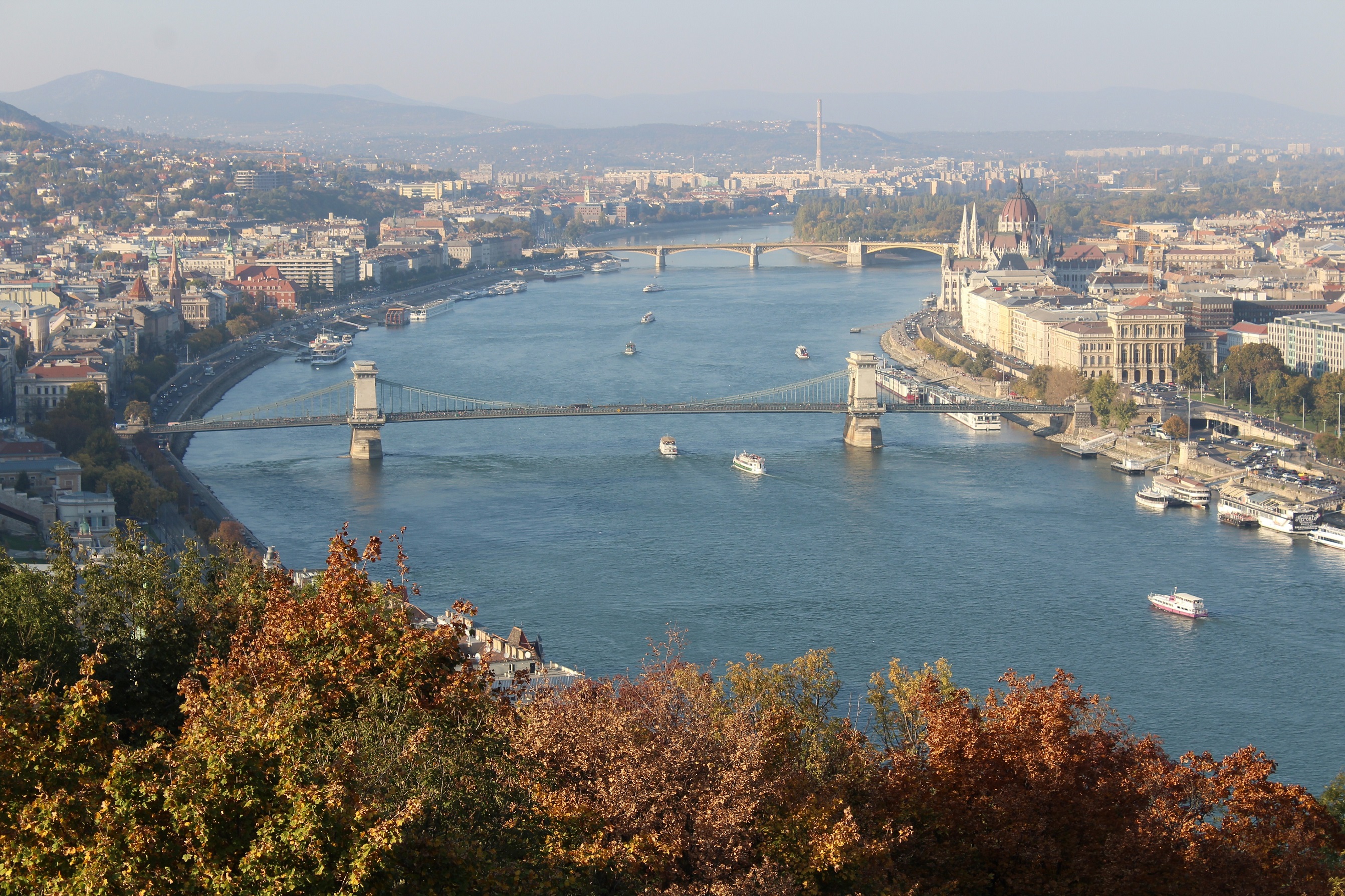
Danube photos

2025.12.29. 13:13 Eleve

Budapest 2018. X. 14.    ©

Szólj hozzá!

Címkék: magyarország híd ősz hungary duna photos ég víz hajó fák városkép fényképek danube ősziszínek

2025. XII. 20. Ukrajna. Elveszítette a háborút? NATO-n kívül, mégis NATO-tag? Interjú Kusaival

2025.12.29. 09:00 Eleve

.

Ukrajna elveszítette a háborút ?
Interjú Kusaival,
korábbi pekingi nagykövettel,
a Pázmány Péter Katolikus Egyetem címzetes egyetemi docensével.
Világos érvelés, kritikus vélemény az EU-csúcs döntéseiről,
az orosz vagyon befagyasztásáról,
Ukrajna finanszírozásáról,
a nemzetközi politikai erőviszonyok átrendeződéséről.

Műsorvezető: Fekete

(Forrás: YouTube / Hit Tv)
/Video, hangzóanyag/

38 688 megtekintés 2025. XII. 20. óta.

Kulcsszavak:

Anglia   Belgium   Brazília   Ciprus   Csehország   Dél-Amerika   Dél-Korea   Donbass   Egyesült Államok   Egyiptom   Első világháború   Európa   Európai Bizottság   Európai Unió   Észak-Korea   földrengés   Franciaország   Frank Birodalom   hangzóanyag   India   Kína   Lengyelország   Magyarország   Málta   Második világháború   NATO   Német Birodalom   Németország   Olaszország   Oroszország   Pázmány Péter Katolikus Egyetem   Portugália   Szaúd-Arábia   Szlovákia   Szovjetunió   Tajvan   Ukrajna   ünnep  video

.

Szólj hozzá!

Címkék: kína anglia video magyarország ünnep franciaország szlovákia csehország ukrajna egyiptom olaszország india oroszország európa nato földrengés brazília lengyelország portugália ciprus málta tajvan szovjetunió belgium délkorea délamerika donbass európaiunió északkorea szaúdarábia egyesültállamok európaibizottság elsővilágháború másodikvilágháború pázmánypéterkatolikusegyetem hangzóanyag németbirodalom frankbirodalom

Danube photos

2025.12.29. 08:57 Eleve

 Budapest 2018. VII. 1.  12:56 CEST   ©

Szólj hozzá!

Címkék: magyarország hungary nyár duna photos víz fák fényképek danube

2025. XII. 13 - 27. China, India, Iran

2025.12.28. 23:19 Eleve

.

Asia

China
December 25, 2025 7:08 AM GMT+1  State media
praised Peng Peiyun, head of China's Family Planning Commission from 1988 to 1998, as an outstanding leader in her work related to women and children. The reaction on China's social media to population control czar Peng’s death in Beijing on Sunday, just shy of her 96th birthday, was less positive. China’s near-universal mandate of just one child per couple from 1980 through 2015 prompted local officials to compel women to undergo abortions and sterilizations. Peng focused her commission’s work on the countryside. In rural China, large families were once seen as a goal for couples looking to ensure that they would be taken care of in their old age. Those children who were lost, naked, are waiting for you over there in the afterlife, one person posted on China’s popular micro-blog Weibo. By the 2010s, Peng had publicly shifted her views, saying the one-child policy should be eased. The number of workers declines. Rising costs from elderly care and retirement benefits will likely create additional budgetary strains for already indebted local governments. Now Beijing is trying to boost the flagging birth rate with childcare subsidies, longer maternity leave and tax benefits. China’s population declined last year to ⁠1.39 billion. Experts warn the downtrend will accelerate in coming years. (Source: Reuters - United Kingdom)

December 22, 2025 11:19 PM GMT+1  China had likely put in more than 100 solid-fuelled DF-31 intercontinental ballistic missiles (ICBMs) in silo fields close to China's border with Mongolia, according to a draft Pentagon report. Last month, U.S. President Trump said that he may be working on a plan to denuclearize with China and Russia. The draft report said Beijing did not appear to be interested on a plan to denuclearize. We continue to see no appetite from Beijing for pursuing such measures or more comprehensive arms control discussions, the report said. U.S. officials noted that the report could change before it was sent to lawmakers. The report said China's nuclear warhead stockpile was still in the low 600s in 2024, which reflected a slower rate of production when compared to previous years. Revenues at China's giant military firms fell last year as corruption purges slowed arms contracts and procurement. In the past 18 months, at least 26 top and former managers in state-owned arms companies have been investigated or removed from their positions. Investigations have expanded from a 2023 focus on procurement of rockets and missiles industry to most of China’s defense industry, including China’s nuclear and shipbuilding industry, the Pentagon report added. China's embassy in Washington D.C. said China has maintained a defensive nuclear strategy, kept its nuclear forces at the minimum level required for national security, and abided by its commitment to a moratorium on nuclear testing. China has said it adheres to a nuclear strategy of self-defense and pursues a no-first-use policy. Trump has said he wants the United States to resume nuclear weapons testing, but it is unclear what form that will take. The report comes less than two months before the expiration of the 2010 New START treaty, the last U.S.-Russia nuclear arms control accord, which limits the sides to deploying 1,550 strategic nuclear warheads on 700 delivery systems. Russian President Putin and Former U.S. President Biden extended the pact for five years in February 2021, but its terms do not allow for a further formal extension. Biden and Trump, during his first term, sought to engage China and Russia in negotiations on replacing New START with a three-way strategic nuclear arms control treaty. Many experts fear that the expiration of the pact could fuel a three-way nuclear arms race. (Source: Reuters - United Kingdom)

India
24.12.25, 05:04 PM  In its annual report to the US Congress titled ‘Military and Security Developments Involving the People’s Republic of China 2025’, released yesterday, the Department of War noted that Indian leaders announced an agreement with China in October 2024 to disengage from the remaining standoff points along the Line of Actual Control (LAC). China probably seeks to capitalise on decreased tension along the LAC to stabilise bilateral relations and prevent the deepening of US-India ties; however, India probably remains sceptical of China’s actions and motives. Continued mutual distrust and other irritants almost certainly limit the bilateral relationship, the report said. China’s leadership has extended the term 'core interest' to cover Taiwan and China’s sovereignty claims amid territorial disputes in the South China Sea, the Senkaku Islands, and the northeastern Indian state of Arunachal Pradesh, the report said. Emphasising that US interests in the Indo-Pacific are fundamental but limited, the report stated, “We do not seek to strangle, dominate, or humiliate China. Rather, as laid out in President Trump’s National Security Strategy, we seek only to deny the ability of any country in the Indo-Pacific to dominate us or our allies. That means being so strong that aggression is not even considered, and that peace is therefore preferred and preserved,” it said. (Source: The Telegraph - India)

Dec. 13, 2025  The Himalayan Incident or the Nanda Devi Affair. Voyager I, the interstellar probe launched more than 45 years ago that is still drifting through the cosmos, some 15 billion miles away, continues to communicate with Earth thanks to these generators. They were developed in the 1950s for the first generation of satellites. They work by converting heat from radioactive material into electricity, and NASA credits them with enabling “some of the most challenging and exciting space missions in history.” By the mid-1960s, they entered a new realm: espionage. In October 1964, when China detonated its first atomic bomb, President Johnson had been fixated on blocking China from going nuclear. Keeping tabs on China’s nuclear evolution was especially hard because neither the United States nor India had much human intelligence inside the country. Major Gen. LeMay was the head of the United States Air Force, a Cold War hawk and one of the architects of America’s nuclear weapons strategy. At a party, he was having drinks with Bishop, a photographer for the magazine and an acclaimed mountaineer who had summited Mount Everest. Mr. Bishop regaled General LeMay with tales of the views from the top of Everest being able to see for hundreds of miles across the Himalayas deep into Tibet and inner China. The C.I.A. laid out a bold plan. A group of American alpinists working for the agency would slip into the Himalayas undetected, drag several backpacks stuffed with surveillance equipment up the slopes and install a secret sensor at the top of a mountain to intercept radio signals from Chinese missile tests - missiles launched from China’s Lop Nur testing grounds. As missiles traveled above the Earth, they would transmit radio signals back to mission control containing information on their speed, altitude and trajectory. From the top of the second-highest peak in India, the nuclear-powered antenna of the device on Nanda Devi would listen in secrecy, free from interference thanks to the altitude. Information collected by the device would be transmited to a secret relay station 50 miles away, then on to New Delhi and eventually to C.I.A. headquarters. Mr. Bishop was a logical choice for their secret ringleader. He was a military veteran and a tested climber with an excellent cover as a National Geographic photographer. The agency tasked Mr. Bishop with recruiting the best, most trustworthy alpinists he could find. The C.I.A. then turned to India for help. Maybe two or three people in the entire government knew about this. The Indian government’s fear of China going nuclear was intense. India was just lost, had been humiliated in the brief but intense flare-up along China border in 1962. India’s Intelligence Bureau tapped Captain Kohli, a decorated naval officer who had been scaling mountains since he was 7, to head up the Indian side of the mission. The first plan that the C.I.A. hatched, Captain Kohli recalled, was to put the telemetry station on Kanchenjunga, the world’s third-highest mountain after Everest and K2. “I told them whoever is advising the C.I.A. is a stupid man,' Captain Kohli said. The Indians rejected the Kanchenjunga idea, saying it was in an acutely sensitive military area. Then China detonated a second, even bigger, atomic bomb, injecting a new sense of urgency. They had to find a new mountain. Standing 25,645 feet high, Nanda Devi has a mythic, almost terrifying reputation. It rises from a ring of white-toothed peaks like a forbidden mountain in an adventure book. But it offered a strategic location within India, towering above the Chinese border. Once again, Captain Kohli said, his concerns were dismissed. Mr. Bishop announced that the climbers were going up into the mountains to study atmospheric physics and physiological changes at high altitudes. It was all cover. The team flew off to Mount McKinley in Alaska for a quick practice run with the Indian climbers on the mission. The American team members were also taken to a secret government facility in North Carolina to familiarize themselves with explosives, in case they needed to blow holes in Nanda Devi to secure the telemetry station, and in clandestine training in Baltimore at the headquarters of Martin Marietta, the defense contractor that built the portable nuclear device. The generator known as SNAP-19C (SNAP stands for Systems for Nuclear Auxiliary Power) was a terrestrial model. Its radioactive fuel capsules were made at Mound Laboratories in Miamisburg, Ohio, and shipped out in July 1965. Next stop: New Delhi. The Americans and the top Indian climbers, including Captain Kohli, were flown by helicopter to the foot of Nanda Devi, around 15,000 feet above sea level. Late September. The climbers and a team of Sherpas still faced a climb of more than 10,000 vertical feet. Winter and its ferocious storms were just around the corner. The climbers got altitude sickness, being dehydrated and cold, racked by headaches and extreme nausea. But staggering forward. The radioactive material, Plutonium 238 has a relatively short half-life, 88 years. It sheds heat. Carrying the plutonium capsules, the Sherpas loved them, called the device Guru Rinpoche, the name of a Buddhist saint, because it was so warm. The Sherpas were never told what the heat source was. 'Oct. 4: High winds. Tent was lost; Oct. 5: Short of food; Oct. 11: Snows all day; Oct. 14: Jim tried again to move up but again developed a severe headache; Oct. 15: “Almost constant snow. Frostbite. Coming to a crux.' Packs stuffed, plutonium capsules loaded into the generator. On Oct. 16, as they tried to push for the summit, a blizzard hit. Empty stomachs, no water, no food, and totally exhausted. The mission was collapsing. If they hadn’t been experienced mountaineers, they would have all died. Kohli didn’t know anything, he was sitting at base camp. The C.I.A. had told the American climbers to leave all communication to the Indians. They didn’t want American voices on the radio. The operation was being conducted on Indian soil. There was a Chinese division right on the other side of Nanda Devi. Shouting into a walkie-talkie, Captain Kohli ordered the men to abandon the equipment at Camp Four and hurry back to base camp. “You have to bring that generator down!” Mr. McCarthy, the last surviving American climber on the mission recalled shouting. Mr. McCarthy insists the climbers could have brought the generator down. “The damn thing in its pack weighed 50 pounds. The Sherpas could take that.” But the conditions at the top were so treacherous, that the trek between the camps, which usually took three hours, required 15 that day. In a situation like that, you can’t carry an extra needle, said Wangyal, one of the last surviving Indian climbers. He said at the end of the mission they were 99 percent dead. The Indian climbers pushed the boxes of equipment into a small ice cave at Camp Four. They tied everything down with metal stakes and nylon rope. Then they scurried down as fast as possible. Captain Kohli said that he had maintained constant radio contact with his bosses in the Indian intelligence services and that they backed up all his decisions. A few days later, the climbing season ended. Captain Kohli and another C.I.A. team waited until May 1966, the next climbing season, to go back for the device. But when the climbers scaled Nanda Devi and reached Camp Four, they were shocked. The generator wasn’t there. A winter avalanche must have sheared it off, leaving nothing but a few scraps of wire. ’These are plutonium capsules!’ he remembered C.I.A. officers telling him. Had he realized how dangerous it might be, he said, he would never have left the generator behind. Captain Kohli organized another search mission in 1967 and again in 1968. The team used alpha counters to measure for radiation, telescopes to scan the snow, infrared sensors to pick up any heat and mine sweepers to detect metal. They found nothing. Mr. McCarthy believes that the very warm device buried itself in the deepest part of the glacier - it would melt the ice around it and keep sinking. In a letter found in the archives of the Lyndon B. Johnson Library, a National Security Council official expressed “the gratitude of our government” for permitting Mr. Bishop to assist a unique priority project which concerns the security of the United States. According to Captain Kohli and the once-secret Indian government documents, a team of climbers finally managed to install a new batch of surveillance equipment, powered by radioactive fuel, on a flat ice shelf on a lower summit, near Nanda Devi, in the spring of 1967. It’s the same as the model that is still missing. But the Himalayan snows constantly buried it, cutting off signals it might have picked up. Once, when Indian climbers scaled back up to see what was wrong, they found the warm generator melted straight through the flat ice cap, Captain Kohli said. It sat in a strange cave, like a tomb, several feet under the snow. It was as if the device was hiding itself. That telemetry station was shut down in 1968, with the equipment retrieved and sent back to the United States, according to Indian documents. But the C.I.A. still didn’t give up. Climbers were fighting their way up another peak near Nanda Devi. According to Captain Kohli, who wrote a book about his clandestine work, “Spies in the Himalayas,” the C.I.A. set up a snooping device in 1973 that worked well, picking up signals from a Chinese airborne missile. But by the mid-1970s, the United States was fielding a growing constellation of spy satellites. A small antenna on a mountaintop now was totally obsolete. The whole mission remained a secret for more than a decade. A relentless young reporter, Kohn, was just taken aback at the fact that ’the C.I.A. knew no bounds.’ He started digging into the story in early 1978 for Outside magazine, which was then a little-known offshoot of Rolling Stone. He said the climbers he spoke to at the time felt bitter about the mission and pointed him in the same direction: to Mr. Bishop. who tried to deny the whole thing but eventually admitted his role and broke down. “The Nanda Devi Caper” story broke on April 12, 1978, without mentioning Mr. Bishop or the other climbers’ names. That same day, two Democratic congressmen, Dingell of Michigan and Ottinger of New York, wrote to President Carter that this nation take whatever steps may be necessary to resolve this serious and embarrassing situation. The congressmen made another point: The U.S. Navy had searched exhaustively for a pair of SNAP-19B2 generators that disappeared off the Californian coast in 1968 when a weather satellite crashed. The government was so anxious to recover them that the Navy sent half a dozen ships and plumbed the ocean for nearly five months until they were found. Why, then, had the Americans simply packed up in India, leaving a similar nuclear device lost in the Himalayas? As the glaciers melt, the generator could emerge from the Himalayan ice and sicken anyone who stumbles upon it, especially if it’s damaged. Plutonium, if swallowed or breathed in, can cause internal damage and form toxic compounds in a person’s body. A few hints of the possible dangers are contained in a once-classified report from 1966 on a similar secret device, a SNAP 19-C2. The U.S. Navy placed that one on a remote rock island in the Bering Strait, apparently to spy on Soviet submarines prowling around Alaska. Anyone attempting to recover it, the 1966 report warned, needs to approach the area from an upwind direction and be equipped with self-contained breathing apparatus or ultra-filter, full-face respirators. Hungry for electricity, India is damming rivers across the Himalayas and widening mountain roads. A lot of activities are going on in that area. It’s building high-altitude army outposts along the China border, a contested area where Indian and Chinese troops have fought deadly hand-to-hand brawls. The past is now colliding with India’s future. “Once and for all, this device must be excavated and the fears put to rest”, said Maharaj, the tourism minister for Uttarakhand, the mountainous state where Nanda Devi sits. Mr. Maharaj met with India’s prime minister, Narendra Modi, in 2018 to discuss the problem. Mr. Modi seemed unaware of what had happened in 1965, Mr. Maharaj said, but promised to look into it. A spokesman for India’s Department of Atomic Energy said the agency did not have ’any information regarding the missing device.’ A new round of articles in July in the Indian press reminded people of the ’aborted secret mission’ and the possibility of radioactive contamination. That month, Dubey, a member of Parliament from Mr. Modi’s party, put out a statement on social media questioning whether the missing device was responsible for a string of natural disasters. In an interview, Mr. Dubey explained that he had heard many accounts of landslides, floods and houses collapsing. He ran across some of the old C.I.A. documents and now believes that the generator is ’very dangerous’ and that the agency needs to come back and find it. “Who owns that device should take out that device,” he said. A small group of people - Mr. Yadav, a former spy, Captain Kohli and Takeda, a well-respected American climber - have written entire books on the mission. ’The C.I.A. kept us out of the picture’, Captain Kohli said. ’Their plan was foolish, their actions were foolish, whoever advised them was foolish. And we were caught in that.’ ’The whole thing,’ he said, ’is a sad chapter in my life.” He died in June. Scientists worry about a sinister scenario in which the plutonium core is found and used for a dirty bomb. (Source: The New York Times - U.S.)

Iran
[Sat, 27 Dec 2025 19:59 +0300]  The Iranian news agency IRNA quoted Iranian President Pezeshkian, who, during an interview with the website of Imam Khamenei was saying that the country is experiencing a comprehensive war waged by the United States, Israel, and some European countries. He emphasized that these parties do not want the country to stand on its own feet or achieve stability and development. He considered that the nature of this confrontation is more dangerous and complex than the war that Iran waged against Saddam's regime (1980-1988), explaining that in that war, the battlefronts were clear and defined, while today the pressure is being exerted simultaneously and on multiple dimensions. ’These parties are seeking to besiege Iran from all sides, including imposing economic, trade, and financial restrictions, preventing its exports and trade, while simultaneously exerting political, security, cultural, and social pressures, creating internal crises, and raising expectations and social pressures within Iranian society.’ He emphasized that the Iranian armed forces, despite all the difficulties, continue to perform their duties with strength and capability, affirming that 'they now possess greater capabilities, equipment, and human resources than ever before, especially compared to the period when the country was subjected to direct attacks'. (Source: SABA – Yemen)

.5 12 28 00:31

Szólj hozzá!

Címkék: russia india taiwan tibet nasa china iran book earth europe himalaya mongolia asia israel yemen unitedkingdom unitedstates sovietunion indianocean pacificocean southchinasea beringstrait

2025. XII. 14 - 20. Russia, Ukraine

2025.12.28. 09:46 Eleve

.

Europe

Russia
December 20, 2025, Saturday // 12:02  Russian Prime Minister Mikhail Mishustin has signed a decree instructing the Defense Ministry to end a series of military agreements with 11 Western nations, NATO countries. The decree specifies the termination of multiple bilateral defense agreements, such as the pact between Russia’s Defense Ministry and Germany’s Ministry of Defense, signed in Moscow on April 13, 1993. Additional agreements terminated include: Belgium (December 19, 2001); Bulgaria (August 4, 1992); Croatia (December 18, 1998); the Czech Republic (April 16, 2002); Denmark (September 8, 1994); the Netherlands (June 18, 1997I); Norway (December 15, 199I); Poland (July 7, 1993); Romania (March 28, 1994) and the United Kingdom (March 18, 1997). /Source: Novinite - Bulgaria/

December 20, 2025 4:49 AM  Russia is moving swiftly to expand the International North-South Transport Corridor (INSTC), a multimodal trade network spanning Russia, Central Asia, Iran, and India, linking Northern Europe with South Asia. For Moscow, the corridor is a strategic lifeline, allowing Russian goods and energy to bypass the long and increasingly insecure maritime routes through the Black Sea, Suez Canal, and Red Sea. Its exports currently rely on the Black Sea route, controlled by Turkey, before passing through the Mediterranean and Suez Canal. This path is long, costly, exposed to geopolitical instability. The INSTC combines rail, road, and maritime routes and offers a direct alternative: Russian cargo travels by rail to Azerbaijan's Baku port, crosses the Caspian Sea, and then continues through through Kazakhstan, Turkmenistan northern Iran via the Rasht-Astara railway to Bandar Abbas on the Persian Gulf. From there, goods can reach India and South Asia efficiently. It ultimately connects Russia's northern cities with Indian ports such as Mumbai, cutting transit times nearly in half compared with traditional Suez Canal routes. It reduces vulnerability under Western sanctions while strengthening trade ties with India and potentially China. Iran, meanwhile, stands to emerge as a central hub in Eurasian trade, gaining influence without deploying military force. Earlier this week, Russia and Iran announced plans to accelerate work on the INSTC, signaling a renewed push to complete the corridor. Larijani, secretary of Iran's Supreme National Security Council, met Russian Deputy Prime Minister for Transport Savelyev in Tehran to review steps toward full operation. In a separate discussion, President Putin pressed Iranian Parliament Speaker Pezeshkian on progress with the Rasht-Astara railway, a critical 162.5-kilometer segment linking Russia's rail network directly to southern Iran's Bandar Abbas port. Today, more than 106 kilometers of the Rasht-Astara line are complete. The INSTC could eventually link with East-West routes to China and Europe, forming a fully integrated Eurasian rail and shipping network. Moscow and Tehran expand a corridor capable of reshaping global logistics and regional power dynamics. (Source: Miami Herald / Newsweek = U.S.)

Ukraine
Dec 18, 2025  Diplomats in Brussels dismissed the notion of fast-track Ukraine EU bid as nonsense: There needs to be an appetite for enlargement that isn’t there. Trying to accelerate Ukraine’s entry into the European Union by 2027 makes sense as part of the U.S.-sponsored efforts to end the war with Russia. This appears a practical compromise, given Zelensky’s concession that Ukraine will drop its aspiration to join NATO. But Ukraine isn’t ready, and Europe can’t afford it. Ukraine is nowhere near ready to meet the EU’s exacting requirements for membership. And it has been abundantly clear since the start of the war that Russia’s NATO red line will never change. Russia has verbalized its opposition at least since Putin’s Munich Security Conference speech in 2007, when he said that NATO expansion ’represents a serious provocation that reduces the level of mutual trust.’ He followed that up at the 2008 Bucharest NATO Summit by saying, ’we view the appearance of a powerful military bloc on our borders...as a direct threat to the security of our country.’ At the start of November, in presenting its enlargement report, the EU said that it could admit new members as early as 2030, with Montenegro the most advanced in negotiations. The EU enlargement report on Ukraine downgraded the country’s status from A+ to B, largely in light of the corruption scandal that first erupted in the summer and that rumbles on today. The report indicated that Ukraine had made good progress on just 11 of the 33 chapters required for accession. It has made limited progress on 7 of the chapters, including on corruption, public procurement, company law and competition policy. It has yet to finalize negotiations on any of the chapters. In July, German Chancellor Friedrich Merz commented that Ukraine was unlikely to join before 2034. The EU has already formalized its next seven year budget through to that time, coming in at $2.35 trillion. Ukrainian membership of the EU would come with an enormous price tag. In total, according to a 2023 estimate, Ukraine could be eligible for over $31 billion per year in EU subsidies should it join on equal terms to existing member states. Neighbouring Poland, by far the largest recipient of EU subsidies, has a proposed allocation of $145 billion in the upcoming budget; bigger, wealthier France $106 billion, Italy $102 billion and Germany $80.5 billion. Unlike Poland, those countries pay into the budget more than they receive. Lower subsidies would effectively mean they had to pay in more. Agricultural subsidies, from which Ukraine might benefit to the tune of $113.5 billion over an EU budget cycle of seven years would lead to a 20.3% cut to agriculture subsidies to farmers in other member states. That would lead to France losing around $2.2 billion per year in farming subsidies, and Poland losing around $1.2 billion. Polish farmers have consistently protested since the start of the war at the inflow of cheap Ukrainian food products. French farmers have historically been extremely protectionist and will almost certainly resist any loss of their subsidies. So the economic cost of delivering Ukrainian membership may not be politically viable any time soon, and certainly not before 2034, as the German premier has indicated. Russian President Putin has dropped his opposition to EU membership for Ukraine. Ukraine needs hope that EU membership will sweeten the bitter pill of losing out on NATO. If Ukraine is allowed to jump the queue, other countries much further forward in the accession process, such as Montenegro may rightly ask, ‘what about us?’ (Source: Responsible Statecraft - U.S.)
by Proud, who was a member of His Britannic Majesty's Diplomatic Service from 1999 to 2023, a Non-Resident Fellow at the Quincy Institute. He served as the Economic Counsellor at the British Embassy in Moscow from July 2014 to February 2019. His recently published memoir: "A Misfit in Moscow: How British diplomacy in Russia failed, 2014-2019"

December 14, 2025 09:17 - 37.  Lviv's cemetery keeps growing. The city has had to open a new burial site to accommodate the daily funerals of fallen soldiers. The expanding cemetery shows the devastating loss Ukraine is facing as the fight against the Russian invasion is in its fourth year. (Source: Radio Free Europe Radio Liberty - U.S.)
/Video, photo/

.

Szólj hozzá!

Címkék: video russia india china iran photo nato romania france book belgium croatia germany montenegro europe denmark italy asia turkey bulgaria poland norway ukraine kazakhstan unitedkingdom europeanunion persiangulf unitedstates mediterraneansea suezcanal redsea turkmenistan blacksea eurasia czechia azerbaijan thenetherlands caspiansea

2025. XII. 13 - 17. Chile, United States

2025.12.28. 00:05 Eleve

.

North America

United States
17 December 2025  Since Trump presented his list of Liberation Day reciprocal tariffs last April, targeting 180 countries and territories, the impacts of tariffs on developing nations have been profound. Since August, 22 African nations have been faced with duties ranging from 15 to 30 per cent. Last autumn, the African Growth and Opportunity Act, which granted duty-free access to the US market for thousands of products from sub-Saharan Africa, was allowed to expire. Replacing this with tariffs affected Botswana, Chad, Kenya, Lesotho, Madagascar, Mauritius, Malawi, Nigeria and South Africa. The Lesotho government was forced to declare a state of disaster and warned that 40,000 jobs in the textile sector were likely to be lost. South Africa warned that the tariffs jeopardise 100,000 jobs within the car industry – exports dropped by 60 per cent in 2025. Several African nations reliant on the US for key agricultural markets have warned that higher duties on tea, coffee and horticultural goods threaten farm incomes and rural employment. Kenya’s producers say rising costs have undercut the viability of smallholder exports, while Malawi and Ethiopia report cancelled contracts. Tariffs hit South and Southeast Asia hard, throwing countries’ short-term economic plans into disarray, undermining the basis of their long-term development models, and pushing them further into an uncomfortable embrace with China. Bangladesh, slapped with a 37 per cent tariff, relies on its garment industry, which employs four million workers and accounts for 13 per cent of the country’s economy and 80 per cent of its exports. Cambodia, hit with 49 per cent tariffs exported more than US$3billion of apparel to the USA in 2024. The apparel sector employs more than 900,000 people, more than ten per cent of the country’s overall workforce. The garment sector is Sri Lanka’s third-largest foreign exchange earner – worth US$1.9billion in 2024 – and exports to the USA sustain much of the industry’s 350,000 workers. Long- established supply chains that link developing economies to US consumers have also strained. Shipping firms report rerouting cargo away from the US after sudden increases in duties left consignments stuck at ports or returned to origin. Manufacturers in Vietnam, Bangladesh and Sri Lanka say the volatility has made forward planning impossible, with many factories operating below capacity for the first time in a decade. The first year of Trump 2.0 on the international stage has withdrawn the USA from the Paris climate accord, started the process of leaving the World Health Organization and scuppered a landmark international agreement to reduce emissions from commercial shipping. At home, it has initiatives to overwhelm opposition and media partly by issuing presidential orders (210 as of November 2025, the highest number by any president). By DOGE, the Department of Government Efficiency, thousands of staff at key agencies related to climate change, industrial pollution and public health have been fired, with targets including the National Oceanic and Atmospheric Administration (NOAA), the Environmental Protection Agency and NASA, with departure of much institutional memory in a short time. Trump has also moved forward with plans to revoke the ‘endangerment finding’ – a 2009 legal determination that greenhouse gas emissions cause climate change and threaten public health. Musk, initially put in charge of DOGE, said the mission was to end the tyranny of the bureaucracy, save taxpayers’ money and reduce US national debt, which stands at US$36trillion. DOGE claims US$214billion savings as of late November 2025 (though many media outlets have calculated it to be far less); even this figure is barely ten per cent of its US$2trillion target. The very infrastructure needed to do science has been seriously weakened, and will take years or decades to repair. It’s like blowing up a dam and deciding it was a bad idea. You can’t go and glue the pieces back togetherm says Masters, a meteorologist at Yale Climate Connections and a former hurricane scientist with NOAA. The National Science Foundation – which supports basic scientific research at thousands of US institutions – has lost more than 10 per cent of its staff. The National Oceanic Atmospheric Administration (NOAA) faces the elimination of its climate research centres and loss of hundreds of federal and academic climate scientists who track and study human-driven global warming. From hurricane warnings to a heating planet, NOAA has for decades been at the forefront of climate analysis. The agency’s 2026 budget is to be cut by $1.7 billion, about 27 per cent. The White House is seeking to eliminate NOAA’s research arm and cut funding for the agency’s Office of Oceanic and Atmospheric Research (OAR) to just over US$171million, a drop of US$485million. The budget closed the agency’s National Severe Storms Laboratory. It ended support for collecting regional climate data and information, often used by farmers and other industries (the government belatedly restored the data service for farmers). Cuts to NOAA and National Weather Service (NWS) – including the loss of key NWS early-warning staff – are hindering the nation’s ability to prepare for and respond effectively to extreme weather events. In May, NOAA announced that it would no longer update its Billion Dollar Weather and Climate Disasters product, which tracks major weather and climate disasters. Regular twice-per-day upper-air balloon soundings – the most important tool for reliable model weather forecasts – have been lost from 18 per cent of the nation’s upper-air stations, says Masters. Top heat experts at the National Integrated Heat Health Information System were no longer at their government posts at the start of what was a brutally hot summer, involving a massive heat dome over the United States, subjecting more than 255 million Americans to what meteorologists called dangerous, life-threatening conditions. NASA Science’s office faces a nearly 50 per cent cut; the National Weather Service (NWS) has lost 600 staff and the Environmental Protection Agency (EP) faces a 23 per cent budget cut. NASA faces budget cuts of up to 24 per cent. (In April, Trump’s budget request implied slashing the centre’s funding for its science missions by 47 per cent, a measure described by the American Astronomical Society as ‘an existential threat’). A question mark still hangs over the future of its Space Flight Center in Maryland. Hostility towards climate policy has been evident throughout the year. In September, the US Department of Energy instructed staff to avoid terms such as climate change, ‘green’ and sustainable, while criticism continued of the National Oceanic and Atmospheric Administration for what is said to be an exaggeration of climate risks. Regulatory shifts have favoured fossil fuels. After a decade-long trend of rapid growth in solar power, installed solar capacity now totals about 220GW, provide more than seven per cent of the nation’s electricity. The total annual US electricity generation from wind energy increased from about six billion kilowatt hours (kWh) in 2000 to about 434 billion kWh in 2022, when wind turbines accounted for 10.3 per cent of total US utility-scale electricity generation. On his first day in office, Trump signed an executive order declaring a moratorium on permits, new leases and lease renewals for all wind projects on federal land. He calls farmer- destroying solar and called wind and solar the scam of the century. In July, he signed an executive order instructing the Treasury Department to terminate the clean electricity production and investment tax credits for wind and solar facilities. Trump’s ‘One Big Beautiful Bill’ imposed steep cuts to solar energy and placed new restrictions on energy tax credits that will slow the deployment of residential and utility-scale solar. The Department of Energy says it intends to claw back US$13billion in funding for the wasteful Green New Scam agenda of clean energy projects, while a US$7billion grant programme to expand solar energy in low-income communities has been rescinded. Mayes, Arizona’s attorney general said the cuts would increase energy bills by 20 per cent for the poorest. The Environmental Protection Agency has delayed limits on toxic pollution from coal-fired power plants. Analysis by the Rhodium Group warns that dismantled climate rules could cut the pace of US decarbonisation by more than half over the next 15 years. Offshore drilling is set to expand sharply. A draft five-year leasing plan proposes up to 34 oil and gas auctions, including the first new leases off California in 40 years, major sales in the eastern Gulf of Mexico and 21 auctions off Alaska, extending into High Arctic waters previously untouched by drilling. Onshore, the administration has opened 5.3 million hectares of land to coal mining and allocated US$625million to recommission coal plants. A tax bill has also reduced royalty rates on coal production. Internationally, an agreement to cap global shipping emissions collapsed after Trump dismissed it as a green scam. Across at the EPA, critical clean-air and water regulations have been revoked amid 3,700 workforce reductions – a cut of 23 per cent in staff, according to an EPA statement. The administration has encouraged eligible staff across the agency to take early retirements, terminated staff who were recent hires and outright eliminated staff positions in areas related to environmental justice, renewable energy, scientific research and climate change. Furloughed staff have been unable to inspect water treatment plants, chemical factories, oil refineries or monitor air quality. The reoriented EPA says it plans to reinterpret the Clean Air Act (seen as the nation’s most effective safeguard against toxic air pollution from coal-burning plants), repeal all federal limits on greenhouse gas emissions from fossil fuel-fired power plants and rescind recent updates to the Mercury and Air Toxics Standards (MATS). Further proposals by the White House include a 30 per cent cut to the EPA’s science and technology budget, crippling essential research on air pollution, toxic chemicals and climate resilience along with a US$680million cut in grants to states and tribes. They are setting back clean drinking water projects and other projects across the nation, and targeting the Office of Research and Development – the backbone of EPA science – which develops publicly vetted research action plans on the harmful impact of everything from forever chemicals to wildfire smoke. The damage to the infrastructure of EPA is profound. It will result in more exposure to health-damaging pollution if polluters believe they can emit with impunity. Wildlife habitats are being primed for resource exploitation and long-standing safeguards overturned. The US Fish and Wildlife Service (USFWS) faces hundreds of job cuts. From the service’s Fish and Aquatic Conservation and Migratory Bird Programmes and the National Wildlife Refuge System the administration intends to fire dozens of officials. In the summer, agriculture secretary Rollins said she was rescinding the Roadless Rule, which for 25 years has protected 23 million hectares of national forest from new road construction, reconstruction and most timber harvesting. Rollins said the rule was overly restrictive and outdated. At the time, Trump said: We just aren’t allowed to use them because of the environmental lunatics who stopped us. Trump has imposed tariffs on timber imports, while a tax and spending bill passed last summer legally requires a 78 per cent increase in the amount of timber sold from national forests in the next nine years. There are roadless areas in 39 states, including nearly a quarter of New Mexico’s Gila National Forest and 3.6 million hectares of coastal rainforest in Alaska’s Tongass National Forest. An executive order outlines policies to maximise Alaska’s natural resource use, including energy, minerals, timber and seafood, repeals earlier measures that restricted development and prioritises the state’s liquefied natural gas potential. It also aims to initiate new leasing and permitting in the Arctic National Wildlife Refuge region, protected for its ecological and cultural importance. ‘It will result in more exposure to health-damaging pollution if polluters believe they can emit with impunity. This weakness will propagate through the entire US environmental and public health management system,’ says Dr. Meiburg, executive director for Environment and Sustainability, Wake Forest University and a former Environmental Protection Agency (EPA) Deputy Regional Administrator. The Centers for Disease Control and Prevention (CDC) has lost a third of its staff and appears set for a radical re-direction in its approach to vaccination. Last September, US Health and Human Services Secretary Kennedy Jr, known for his anti-vaccine advocacy, called for new blood at the agency and the removal of officials with conflicts of interest and catastrophically bad judgement, and political agendas. Staff at the CDC’s climate office were laid off, with outbreak forecasters, policy and data offices affected. The CDC’s Epidemic Intelligence Service – which trains the agency’s disease detectives, typically the first responders in an outbreak – lost at least 30 programme coordinators, though some were belatedly reinstated. More than 130 employees were laid off from the office of the director of the National Center for Immunisation and Respiratory Diseases. Among these were leaders of the CDC’s response to the growing number of measles cases in the country. Some firings had been reversed, but Colorado has reported its worst measles year in three decades and Florida has announced it will be the first state to eliminate all childhood vaccine mandates. All staff at the Morbidity and Mortality Weekly Report – which has published surveillance data on the nation’s health for more than a century – were fired. The cuts have excised the next generation of leaders at the CDC, the NIH, and the Food and Drug Administration, according to a former senior CDC employee and risk jeopardising the nation’s ability to innovate in biomedicine and avert disease. There will be direct impacts in discrete areas, such as those resulting from the loss of the tobacco control programme and from the departure of experts in vaccination at CDC, according to Sharfstein, public health professor at Johns Hopkins Bloomberg School of Public Health and former deputy commissioner of the FDA. He is most concerned about the loss of integrity in policymaking, as strong processes are critical to success in regulation and grantmaking for health.’ The head of the WHO says the USAID programmes - cut by 82 per cent in early 2025 - to tackle HIV, polio, mpox and bird flu, have been affected by the freeze on tens of billions of dollars of overseas aid from the USA. Last spring saw the laying off of analysts at the Department of Health and Human Services who were responsible for updating poverty guidelines used to calculate eligibility for more than 40 programmes. In September, the Department of Agriculture (USDA) announced that it would terminate not only the annual report on food insecurity in the USA but also eliminate funding for the underlying data. Data collection was suspended for the Pregnancy Risk Assessment Monitoring System, a gold-standard database of maternal mortality data. According to Gibney, senior research analyst at the Center on Budget and Policy Priorities, these actions are part of a larger pattern that will reduce the availability of data or discredit data that are available and signify increasingly overt politicisation. Decisions to collect or publish less federal data appear to be driven by the current administration’s views on issues such as LGBTQ+ identities and climate change, she says. (Source: Geographical - United Kingdom)

Dec. 16, 2025  US President Trump signed an executive order today declaring fentanyl a weapon of mass destruction. The move dramatically expands the US government’s authority to fight the synthetic opioid blamed for tens of thousands of American overdose deaths each year. It signals Trump’s intent to treat fentanyl as a national security threat on a par with chemical warfare. The classification empowers the Pentagon to assist law enforcement and allows intelligence agencies to deploy against drug traffickers the tools normally reserved for countering weapons proliferation. ’Illicit fentanyl is closer to a chemical weapon than a narcotic,’ Trump's order said. Since early September, the Trump administration has carried out more than 20 strikes against suspected drug vessels in the Caribbean and Pacific, killing more than 80 people. A Reuters/Ipsos poll published on Wednesday found that a broad swath of Americans oppose the US military's campaign of deadly strikes on the boats, including about one-fifth of Trump's Republicans. Trump has repeatedly threatened strikes on land in Venezuela, Colombia and Mexico to battle drug trafficking. In a sweeping strategy document published, Trump said his administration's foreign policy focus would be on reasserting US dominance in the Western Hemisphere. Mexico is the largest source of US-bound illicit fentanyl. Many of the chemicals used to manufacture the drug are sourced from China. The opioid is a leading cause of US overdose deaths. (Source: The Korea Herald - South Korea / Reuters - United Kingdom)

December 13, 2025  "Ending the Ukraine War will ultimately require some US-Russia nuclear arms agreement". The post-war agreement among the United States, NATO, Russia, and Ukraine should establish at least four protocols with respect to nuclear weapons and their roles in public policy.   First, the various parties should agree to abstain from explicit nuclear threats against one another, regardless of their political or military disputes.   Second, NATO, Russia, and Ukraine should agree that Ukraine will not manufacture or deploy nuclear weapons on its territory, and that Russia will not deploy any of its tactical nuclear weapons in Russian-controlled parts of Ukraine, nor in states outside of Russia that border on Ukraine.   Third, the United States and Russia should resume New START negotiations by agreeing to the Russian-proposed one-year extension of the agreement set to expire in February 2026, and also address transparency for non-strategic nuclear weapons and, possibly, agree to limits on their deployment.   Fourth, the issue of next-generation nuclear weapons and delivery systems should be included in ongoing future arms control discussions. (Source: The National Interest - U.S.)
by Cimbala and Korb

South America

Chile
15.12.2025  ’Far-right’ Republican Party candidate Kast secured a commanding victory in Chile's presidential runoff election on Sunday. The election featured a significant increase in voter participation, as voting was compulsory for the first time in more than a decade and it was overwhelmingly decided by security concerns, which have surpassed the economy, health care, and education as the country's top issue, according to polls. Kast won with 58.17% of the vote, while Communist Party member and former Labor Minister Jara got 41.83%. Although Chile remains one of the safest countries in Latin America, a recent rise in organized crime, homicides, and high-impact cases such as kidnappings fueled a public sense of lawlessness. Kast is a staunch Catholic known for his opposition to abortion and same-sex marriage. He has been an open admirer of former dictator Pinochet. As a lawyer and former lawmaker, Kast ran on a platform demanding an iron fist to restore public order. Kast was promising drastic measures to tackle security, including the deployment of the military to high-crime neighborhoods, building a wall along the northern borders, and deporting all migrants in the country illegally. Chile's immigrant population has doubled over the past decade, fueled primarily by an estimated 700,000 Venezuelans. The result marks the latest in a series of victories for the ’far right’ in Latin America, following a trend that has seen right-wing leaders rise to power in countries such as Argentina and Ecuador. The US congratulated Trump-inspired Kast for his win. "The United States looks forward to working closely with his administration to deepen our partnership and promote shared prosperity in our hemisphere." the State Department said in a statement. (Source: Anadolu Agency - Turkey)

.5 12 27 14:34

Szólj hozzá!

Címkék: space chile russia venezuela nasa china nato madagascar mexico who kenya bangladesh arctic vietnam malawi botswana lesotho asia srilanka africa ecuador argentina colombia turkey nigeria chad cambodia sahara ukraine caribbean ethiopia communist unitedkingdom unitedstates southkorea southafrica southamerica pacificocean northamerica gulfofmexico

2025. XII. 20. Globalization

2025.12.27. 14:09 Eleve

.

Globalization

Dec. 20, 2025  When the dollar had monopoly power over global commodity pricing, America got a subsidy. The U.S. printed dollars. The world needed dollars to buy stuff. So the world bought U.S. debt, kept its interest rates low and let Washington run deficits that would have sunk anyone else. Economists call it exorbitant privilege. America’s enjoyed it since 1945. That privilege is not disappearing, but shrinking. For 50 years, if you wanted to buy oil, you paid in dollars. If you wanted to buy copper, you paid in dollars. If you wanted to buy anything that crossed a border, you probably paid in dollars. That wasn’t because the dollar was magical. It was because the plumbing only worked in dollars. Every international payment ran through SWIFT, and SWIFT ran through New York. Then America started using that plumbing as a weapon. Iran got cut off. Russia got cut off. In 2022, when the U.S. froze Russian foreign-exchange reserves, every country that watched started asking the same question: What happens when Washington decides we’re next? China built an alternative. In 2024, CIPS handled $24 trillion worth of transactions, up 43% from the year before. And now African banks are plugging into it. By the first half of 2025, Chinese investment in African mining was up almost 400% from a year before. Mining now represents 20% of all Chinese projects in Africa, up from 8% five years ago. This isn’t foreign aid. This is vertical integration. China bought the warehouse. Now they’re changing the currency on the cash register. Standard Bank operates in 21 African countries. It handles trade finance across the continent. When it plugs into CIPS, every mining company, commodity trader and central bank in its network now has a direct line to settle in yuan. No dollars. No permission required from Washington. Here’s what happened while America was busy with Fed meetings. Africa holds about 30% of the world’s critical minerals. The continent is loaded with copper, chromium, lithium and rare earths. Congo has most of the cobalt. South Africa has the platinum. Cobalt goes in every EV battery. Rare earths go in every semiconductor. Platinum goes in hydrogen fuel cells. If the 21st century runs on anything besides oil, it runs on African rocks. China noticed. Beijing has spent the past decade writing checks to Africa. Its Belt and Road initiative poured money into African mining, railways to the mines, ports to ship the ore, refineries to process it - and contracts that guarantee Chinese buyers get first dibs on the output. Central banks around the world are acting like something big is shifting. The dollar’s share of global central-bank reserves has dropped below 47%, down from 65% two decades ago. Gold’s share is climbing toward 20%, highest since the 1960s. Nigeria pulled its gold reserves out of American vaults and brought them home. Ghana increased gold reserves by 35% in one year. Namibia announced it’s moving 3% of foreign reserves into gold, up from nearly zero. And in November the BRICS moved ahead with an initiative to develop a precious-metals exchange that would allow trade settlements in gold, platinum, diamonds and rare earths. South Africa, Egypt and Ethiopia are full members. Nigeria and Uganda are partners. When Central bankers start hoarding gold and building alternative settlement systems, something real is happening. The dollar’s monopoly made sense when there were no alternatives. Now there are alternatives. And they work. This is coordinated preparation for a world where the dollar shares the throne instead of sitting on it alone. Gold is up more than 60% this year. Silver is up over 100%. Some gold-miner stocks and exchange-traded funds are up over 150%. That’s a stampede. The dollar index is breaking down, slipping 8% over the past year and falling. The ratio of tech stocks to gold miners just reversed a decade-long trend. The dollar losing monopoly power is a slow leak, not a blowout. Capital is rotating out of one world and into another. (Source: MarketWatch, published by Dow Jones & Co. - U.S.)

.

Szólj hozzá!

Címkék: russia china iran egypt namíbia uganda africa ghana nigeria ethiopia federalreservesystem unitedstates southafrica globalization democraticrepublicofcongo

2025. XII. 18. Space

2025.12.27. 12:24 Eleve

.

Space

December 18, 2025  Satellites whizzing by each other at close range, maneuvering to gain strategic advantage, is a new development in the militarization of space. Orbital skirmishing has become so common that defense officials now refer to it as dogfighting. Tensions are rising amid growing technological competition between major powers. Much of the dogfighting activity in space is simply for spying, with specifics largely classified - snapping photos of each others’ satellites to learn what kind of systems are on board and their capabilities. They monitor the signals and data emitted by satellites, listening to communications between space and the ground. Many can even jam those signals or interfere with orbiting craft that provide missile warnings, spy or relay critical information to troops. One of the most dynamic close encounters between U.S. and Chinese satellites occurred in February 2022. Two experimental Chinese satellites, Shiyan 12-01 and Shiyan 12-02, were in a westward drift, just above a sensitive region of space, known as geostationary orbit. The Pentagon’s USA 270 satellite approached from behind. Over the next day, the Chinese satellites countered by splitting apart. Shiyan 12-02 maneuvered behind USA 270, putting the sun at its back. When satellites from other countries fly near each other, they get not too close. In the space, satellites can travel at 17,500 mph, or about 5 miles per second. Even an approach of 10 miles is considered uncomfortable. The jockeying-for-position encounters in orbit take place over several hours, even days. Traditionally, once a satellite was in orbit, it largely stayed on a fixed path, its operators reluctant to burn precious fuel. But now, the Pentagon and its adversaries, notably China and Russia, are launching satellites designed to fly in more dynamic ways that resemble aircraft - banking hard, slowing down, speeding up, even flying in tandem. Traditionally satellites weren’t designed to fight, and to protect themselves in a fight, said Clark, the chief growth officer of ExoAnalytic Solutions, a company that monitors activity in space. That is all changing now. Countries such as China are maneuvering their spacecraft in ways that may enable them in a conflict to try to derive a position of advantage relative to the United States, Gen. Whiting, the commander of U.S. Space Command, said. So we want to make sure that we develop our own maneuver capabilities to remain in a position of advantage and to defend ourselves, he said. China is committed to the peaceful use of outer space, and opposes any arms race in outer space or weaponizing it; China has no intention to engage in a space race with any country, nor do we seek so-called advantage in outer space, Liu the spokesman for the Chinese Embassy in Washington, said. The U.S.draws clears lines between NASA’s civilian and the Pentagon’s military responsibilities in space. China’s space program is run entirely by its military, which can mandate that technological advancements discovered by industry or academia be shared with the military. China now operates six spaceports on Earth to launch new generations of rockets designed to hoist constellations of satellites. This year, it has launched more than 80 rockets. It also is moving ahead with plans to land astronauts on the moon by 2030. In addition, China has been focused on operating in and around geostationary orbit, where the Pentagon and intelligence agencies park some of their most sensitive satellites. Located some 22,000 miles up, geostationary orbit matches the rotation of the Earth, allowing spacecraft to fly over a fixed point over the equator, which makes it ideal for satellites to provide missile warning and detection, reconnaissance and communication. The Pentagon announced in 2014 that it was creating a neighborhood watch program, deploying satellites to monitor the region and, when required, fly relatively close to potential adversaries. There are a lot of activities that are on a vector toward levels of hostility, said Graziani, the CEO of COMSPOC. Recently, for example, Germany’s defense minister, Pistorius, complained about a Russian satellite that had been flying close to a „commercial communications satellite used by the German military’. They can jam, blind, manipulate or kinetically disrupt satellites, he said. A satellite that orbits exactly 22,236 miles above the equator will stay fixed relative to a point on Earth. The satellite’s speed along its circular path is precisely synchronized with Earth’s rotation. This is a geostationary orbit. If a satellite’s altitude drops below 22,236 miles… it will spin faster than Earth and begin to drift eastward. If it moves above 22,236 miles… it’s spin will be slower and drift to the west. Positioning is crucial, especially with the sun. The brightness of the sun can be blinding a satellite to see, or photograph, another. And so satellites often maneuver to keep the sun behind them. The Pentagon’s goal is to establish “space superiority” to such a degree that U.S. satellites can operate freely the way U.S. ships and jets roam the sea and skies. Under President Trump’s proposed Golden Dome missile defense shield, low Earth orbit could be flooded in the coming decade with fleets of autonomous spacecraft designed to collide with enemy missiles launched toward the U.S. homeland. The United States, which ’destroyed a satellite in 1985, has led an effort to eliminate ground-to-space satellite strikes" that flood Earth orbit with debris. The kind of spacecraft-to-spacecraft warfare happening in space is still in its nascent stage. That could include jamming or lasing, even more destructive techniques - using microwave rays to disrupt and even kinetic projectiles to cause physical damage and impairment. Most of the engagements now usually involve just a few satellites. With more autonomy and the introduction of AI, this is going to continue to accelerate. “And then I think you’re going to see the potential to go from one versus ones, or two versus twos, to tens, if not hundreds, of sorties flying simultaneously,” a Space Command official said. Eventually, it could lead to nations developing what the official called swarming techniques. Last year, five Chinese satellites swarmed around each other in what U.S. officials said was a training exercise in low Earth orbit. The spacecraft got to a distance of about a half a mile close to each other. They were flying essentially face-to-face. Over about the last decade, the number of satellites China operates has grown dramatically to more than 1,000, and many of them are used for military purposes. That has given the U.S. neighborhood watch satellites a vast array of spacecraft to monitor. More recently, USA 270 has had its eye on another Chinese satellite, one of the most notorious in space. In 2022, Shijian-21 used a grappling arm to corral a dead satellite that was tumbling in orbit. It towed the dead satellite to what’s known as a graveyard orbit, an area deeper in space that is out of the way of other satellites. China said the mission was a demonstration of how it could help clean up space by getting rid of orbital debris. Pentagon officials acknowledge that but also saw it as a potentially aggressive maneuver. The dead satellite that it removed had been part of China’s BeiDou constellation, the country’s rival to GPS. If Shijian-21 could grapple and move a dead BeiDou satellite, it could theoretically remove a GPS satellite - which is used by U.S. Armed Forces to guide precision munitions - or one used for missile warning, spying or battlefield communication. When another Chinese spacecraft, called Shijian-25, started maneuvering toward Shijian-21 last summer, the Space Force flew a pair of its neighborhood watch satellites, including USA 270, to monitor them. For weeks the pair of Chinese satellites flew in tandem until they eventually docked. Officials believe the rendezvous in space was to allow Shijian-25 to refuel Shijian-21, marking the first time a satellite in the geostationary-orbit region refueled another. Recently, the two spacecraft separated. If Shijian-21 begins to maneuver, it could be a signal that it was a successful refueling and that its life had been extended. Russia has also flown close to other satellites, as well as operated satellites that behave like Russian nesting dolls - spacecraft that once in orbit release other, smaller satellites, which in turn release a projectile that could be used as a weapon. There is no space safety, no space sustainability application for that, said McKnight, of LeoLabs, another company that monitors activity in space. That is an in-your-face, counter-space demonstration going on here. Russia has parked such spacecraft near satellites operated by the National Reconnaissance Office, the U.S. spy agency that uses satellites to gather intelligence. Other nations have been affected, as well, the German military, Pistorius, the defense minister, recently lamented. (Source: The Washington Post - U.S.)

.

Szólj hozzá!

Címkék: space russia sun nasa china photo earth germany moon unitedstates

2025. XII. 10 - 12. Mexico, NATO, Papua New Guinea, United States, Venezuela

2025.12.13. 23:15 Eleve

.

North America

Mexico
10 December 2025  Mexico rejected U.S. requests to expel more than two dozen Russian intelligence officers operating in the country under diplomatic cover, according to a Dec. 8 report by The New York Times. Mexican officials dismissed the warnings as paranoia. Since 2022, U.S. and European officials have repeatedly observed Russia redeploying intelligence-linked personnel to its diplomatic missions in Mexico after they were expelled from EU countries and the United States, several sources told. (Source: The Insider - headquarters Riga, Latvia)

United States
11/12/2025  Leaked document shows US wants to pull four countries out of EU in Make Europe Great Again plan. The secret file, reported by Defense One, supposedly claims Washington intends to pull Austria, Hungary, Italy and Poland away from the European Union and closer in to Washington's circle of influence as part of a bold new 'Make Europe Great Again' strategy. The document is also said to call for the US to back parties and movements that seek sovereignty and preservation/restoration of traditional European ways of life. The supposed leak comes just a week after the release of the official, 33-page National Security Strategy. White House Deputy Press Secretary Kelly yesterday dismissed the claim outright, rejecting even the idea that an 'alternative version' of the strategy existed. It came after Trump yesterday expressed impatience with Ukraine and its European allies France, Britain and Germany. Trump said strong words were exchanged in the phone call with Germany's Chancellor Friedrich Merz, British Prime Minister Keir Starmer and French President Macron. Trump lashed out at Zelensky for 'not reading' the latest White House-backed proposal to secure a ceasefire. Merz said that further talks with the Americans were planned this weekend and that an international meeting on Ukraine 'could take place at the beginning of next week'. But Defense One upped the stakes hours later, publishing extracts from what it described as a fuller version of the strategy that reportedly circulated behind closed doors before the White House unveiled the public edition. In the region, Trump has enjoyed friendly relations with national-conservative leaders such as Hungarian Prime Minister Viktor Orbán - who he welcomed him to the White House last month - and Polish President Nawrocki. Trump has also endorsed Orbán before the Hungarian elections next year, describing him as fantastic and handing Hungary an exemption on sanctions for buying Russian oil and gas. Italy was mentioned in the list of four, and Trump has made no secret of his affection for Giorgia Meloni, Italy's conservative prime minister. He described his Italian counterpart as a fantastic woman who had taken Europe by storm when she visited Mar-a-Lago ahead of his inauguration. The proposal went on to urge support for political and cultural forces who seek sovereignty and preservation/restoration of traditional European ways of life… while remaining pro-American. Dutch politician Wilders, the head of the hard-Right Party for Freedom in the Netherlands, welcomed the 'contentious' report: President Trump speaks the truth, he wrote on X. 'Europe is changing rapidly into a medieval continent thanks to open borders and mass immigration. Indeed, an erasure of our culture if we don't act soon and close our borders for illegal aliens!' Russian presidential envoy Dmitriev voiced his support for Trump on X, writing: „EU & UK leaders should listen to the Daddy.” (Source: Daily Mail - United Kingdom)

11 Dec 2025  In an interview with Politico, Trump ’disparaged' Europe as decaying and its leaders as weak. Trump held a call with the leaders of France, the UK, and Germany yesterday, all of whom Zelensky met in London earlier in the week. They requested a meeting in Europe this weekend, but Trump said he wouldn’t bother coming unless there’s a real chance of a deal. “We want to know some things before a meeting. We don’t want to waste time,” he said. (Source: The US Sun)

11.12.25  U.S. President Trump's plan for peace in Ukraine includes proposals to restore Russian energy flows to Europe, major U.S. investment in Russian rare earths and energy, and tapping frozen Russian sovereign assets, the Wall Street Journal said. The newspaper said the plans were detailed in appendices to peace proposals handed to European counterparts over recent weeks. The paper said one unidentified European official compared the proposed U.S.-Russian energy deals to an economic version of the 1945 Yalta conference. At that meeting, the victors of World War Two, the Soviet Union, the United States and Britain, divided up their spheres of interest in Europe. (Source: The Telegraph – India / Reuters - United Kingdom)

10 December 2025  'China will destroy US military in fight over Taiwan, top secret document warns'. Beijing’s hypersonic missiles ‘could sink US aircraft carriers within minutes’. US reliance on costly, sophisticated weapons leaves it exposed to China’s ability to mass-produce cheaper systems in overwhelming numbers, the highly classified “Overmatch Brief” warns. A national security official under Biden reviewed the document, The New York Times reported. Losing Taiwan, the US’s key bulwark against Chinese power in the western Pacific, would deliver a severe strategic and symbolic blow to Washington. The country’s most advanced aircraft carrier, the USS Gerald R Ford the $13bn vessel, which entered service in 2022 after years of delays - is vulnerable to attacks from diesel-electric submarines and China’s arsenal of some 600 hypersonic missiles, capable of travelling at five times the speed of sound. The Pentagon is planning to build nine additional Ford-class aircraft carriers, while it has yet to deploy a single hypersonic missile. Beijing displayed its ship-destroying YJ-17 missiles, estimated to travel at eight times the speed of sound, at a military parade in September. Last year, Hegseth, the defence secretary, said that ’we lose every time’ in the Pentagon’s war games against China, and predicted the Asian country’s hypersonic missiles could destroy aircraft carriers within minutes. China has significantly expanded its arsenal of short, medium, and intermediate-range missiles, which means it could destroy many of the US’s advanced weapons. Meanwhile, the big five defence companies continue to sell the US government costlier versions of the same ships, aircraft and missiles, according to The New York Times. Defence officials have realised the US is vulnerable because these complex weapons are impossible to mass produce, following a series of recent wars, including the Ukraine-Russia conflict, which have shown the devastating capabilities of relatively cheap weapons like drones. Congress has earmarked around $1bn (£750m) to produce 340,000 small drones over the course of the next two years. Mr Trump has appointed Driscoll, the US head of the armed forces, as his drone guy, charged with modernising America’s outdated tech and countering enemies’ drone efforts. However, the US cannot compete on costs with countries like China, where labour costs are lower and regulations looser. A decisive change in US policy would likely need substantial investment, yet defence spending is at its lowest level in around 80 years, at roughly 3.4 per cent of GDP. Sullivan, the former national security adviser, has warned the US would quickly run out of essential munitions like artillery shells in a war with China. Internal Pentagon assessments show China vastly outnumbers the US in its arsenal of almost all cruise and ballistic missiles. Both superpowers maintain a stockpile of 400 intercontinental ballistic missiles (ICBMs). The US reportedly used up roughly a quarter of its high-altitude missile interceptors to defend Israel against Iran’s 12-day ballistic missile barrage in June this year. Moreover, ’China’s state-sponsored hacking group Volt Typhoon has installed malware on critical computer networks for power grids, communications systems and water supplies for American military bases’. The security threat, which US officials have struggled to locate, could hamstring the military’s ability to move weapons and forces if war breaks out in the Pacific. Xi, the Chinese leader, is thought unlikely to move unless China achieves such an overwhelming military advantage that it could effectively be certain to take Taiwan. Failing to do so would be a humiliating blow that would likely end his 13-year-premiership. The US has no formal diplomatic relations with Taiwan and, since the 1970s, has pursued a policy of “strategic ambiguity”, avoiding saying explicitly whether it would militarily defend the island chain. However, it is obliged by law to provide weapons for Taiwan to defend itself. I think Taiwan should pay us for defence. You know, we’re no different than an insurance company. Taiwan doesn’t give us anything, Mr Trump told Bloomberg last year. He went on to note that Taiwan was a short distance from China’s coast compared to thousands of miles from the US, which gave Beijing a slight advantage. In the Trump administration’s national security strategy, published last week, it said the island was important to the US economy because a third of global shipping passes through the South China Sea. The US’s priority is to preserve military overmatch, it stated, meaning that America’s military capabilities must outstrip China’s so far as to deter Xi against making a move, something which, according to this memo, it has failed to do for some time. In January, The Telegraph reported China had constructed D-Day-style barges that could be used to bypass Taiwan’s beaches and provide multiple fronts for tanks in an amphibious invasion. (Source: The Telegraph - United Kingdom)

Dec 10, 2025  US plans to order foreign tourists to disclose social media histories from the last five years. The proposal would apply to visitors from 42 countries, including Britain, France, Australia and Japan, who do not need a visa to enter the United States. They would also have to submit other “high-value data fields” including phone numbers from the last five years, email addresses from the past decade, personal details of family members and biometric information. The public has 60 days to comment on the proposal. (Source: Euractiv - Headquarters Brussels, Belgium)

NATO

11 Dec 2025  Speaking at a security conference event in Berlin, Nato chief Rutte had a stark warning for the West. Nato members were urged to rapidly increase defence spending. He predicted that Russia could engage the alliance in direct conflict within the next five years.* Putin’s sights are now set on Nato nations, Rutte warned. (Source: The US Sun)
* Coming from the chief of Nato, this is no scaremongering?

Oceania

Papua New Guinea
December 12, 2025  Papua New Guinea (PNG), the biggest Pacific Island nation said today, that Alphabet's Google will build three subsea cables, funded by Australia under the Pukpuk mutual defence treaty signed in October. The US$120-million effort will link northern and southern Papua New Guinea and the Bougainville autonomous region with high-capacity cables. The pact between Australia and PNG gives Australian defence personnel access to PNG communications systems, including satellite stations and cables, its text shows. Reuters previously reported Google planned to build a data hub on Australia's Indian Ocean outpost of Christmas Island, another strategic defence location. Two new cables are planned to link it eastwards with Australian cities hosting key defence bases also used by the US military. Google confirmed the Christmas Island data hub last month, saying two more cable systems would link its westwards with Africa and Asia, to deepen the resilience of internet infrastructure. The three international-grade subsea cables will cut reliance on single points of failure, and position the country to attract investment from hyper-scalers and global digital enterprises. The United States is also strengthening military ties with PNG, signing a defence co-operation pact in 2023. Australian and US military strategists view resource-rich but largely under-developed Papua New Guinea as having a prized location north of Australia at a time when China is boosting its influence in the region. (Source: AsiaOne - Singapore)

South America

Venezuela
December 11, 2025 07:48 PM GMT+03:00  Tanker seizure took place yesterday in the Eastern Pacific, where U.S. troops reportedly rappelled onto the vessel from a helicopter and entered the ship with rifles drawn. A video posted by U.S. Attorney General Bondi on her X account shows what she describes as the execution of a seizure warrant for a crude oil tanker used to transport sanctioned oil from Venezuela and Iran off the coast of Venezuela. Russian President Putin held a phone call with Venezuelan President Maduro today to express solidarity with Caracas. The Kremlin said Putin reaffirmed support for the Maduro administration’s efforts to safeguard Venezuela’s sovereignty and national interests. The two leaders also reviewed bilateral cooperation under a strategic partnership agreement signed earlier this year. (Source: Türkiye Today - Istanbul, Turkey)

. 5 12 11 07:11

Szólj hozzá!

Címkék: video russia india hungary venezuela taiwan japan china iran nato mexico france belgium germany latvia europe italy asia singapore israel africa turkey austria poland australia ukraine oceania unitedkingdom europeanunion unitedstates sovietunion southamerica indianocean worldwarII pacificocean southchinasea thenetherlands northamerica papuanewguinea

2025. XII. 10 - 12. Bangladesh, Cambodia, Gaza, India, Japan, Nepal, North Korea, Pakistan, Syria

2025.12.13. 22:31 Eleve

.

Bangladesh
Dec 11, 2025  Growing Chinese strategic footprint in South Asia. In June 19, China, Bangladesh and Pakistan held their first trilateral meeting at the official level in China's Kunming. At the meeting, the three sides agreed to deepen cooperation in trade, investment, health, infrastructure and debt management, and set up a joint working group to build trust and enhance regional stability. In Hasina's foreign policy India was a key partner. Following Hasina's ouster in August 2024, under Yunus's interim government, Bangladesh is gravitating towards Pakistan and China. There has been a swift and visible warming of Pakistan-Bangladesh ties across trade, defence, diplomacy and infrastructure. Days after Pakistan's Foreign Minister Dar hinted at a new trilateral grouping involving Dhaka, Beijing and Islamabad, Bangladesh's Foreign Affairs Adviser Hossain has said that it is strategically possible for Dhaka to join a regional bloc with Pakistan, not feasible for Nepal or Bhutan, excluding India. (Source: India Today)

Cambodia
11 Dec 2025  Clashes took place yesterday at more than a dozen locations along the contested colonial-era demarcated 817-kilometre Thai-Cambodian border. Cambodia’s Ministry of the Interior said homes, schools, roads, Buddhist pagodas and ancient temples had been damaged by 'Thailand’s intensified shelling and F-16 air strikes targeting villages and civilian population centres up to 30km inside Cambodian territory'. Thai military opened fire 'targeting civilian areas, especially schools, and destroyed Ta Krabey and Preah Vihear temples, the highly sacred cultural sites of Cambodia and the world cultural heritage,” it said. The Thai army said Cambodia had used a historical site as a military base of operations and therefore was guilty of violating international law. Death toll on the Cambodian side of the border stands at 10 civilians, while 60 people have been injured. Eight Thai soldiers have also been killed in the fighting so far this week, with 80 more wounded. More than 500,000 Thai and Cambodian civilians have been forced to flee border areas due to fighting. (Source: Al Jazeera - Qatar)

Gaza
December 12 2025 10:31:58  The U.S. has asked Israel to take responsibility for clearing the massive debris left across the Gaza Strip enclave, including destruction caused by airstrikes and armored bulldozers, Israel’s Yedioth Ahronoth daily reported. According to the report, Washington expects Israel to ultimately remove rubble across the entire enclave, a task that could take years and cost more than $1 billion. Arab and international actors have so far refused to finance the debris-removal effort, the paper said. Israel has agreed to the U.S. request for now, but will begin by clearing debris in a single pilot neighborhood in Rafah. The initial project is expected to cost tens to hundreds of millions of shekels. Gaza is buried under about 68 million tons of debris, The Wall Street Journal reported this week. (Source: Hurriyet Daily News - Turkey)

India
12 December 2025  Last week, the 23rd India-Russia Annual Summit unfolded as a blueprint for the post-Western order. Sixteen agreements have just been signed: Defence pacts, trade corridors, critical minerals supply chains, pharmaceuticals, joint ventures in AI and space, a fast-tracked free trade deal with the Eurasian Economic Union. Moscow’s oil flows unchecked to Indian refineries. Beneath it all, a “special and privileged strategic partnership” has been reaffirmed. As Europe roars against Russia, India doubles down on Moscow. Bilateral trade hit $65 billion this year, up 50 per cent. Russia supplies 40 per cent of India’s oil imports, discounted and sanction-proof. Defence deals include S-400 systems delivered and BrahMos missiles co-produced. Modi’s message is clear: While New Delhi will not be drawn into a quarrel with the White House, it will also not be lectured on sovereignty. Here is a partner who does not wish to wipe out our industry, nor control our infrastructure. As Beijing’s shadow falls heavy across the Indo-Pacific, India, the world’s fastest-growing major economy and a demographic titan of 1.4 billion, becomes the only viable alternative to China’s supply chains. But this partnership, despite the EU’s €100 billion trade surplus with New Delhi, may prove fragile, if Modi pivots eastward. India’s non-alignment tradition dates back to 1955. Nehru balanced Washington and Moscow, buying MiGs while courting Eisenhower. Today’s multipolar game is fiercer: A system of US, China, Russia, Europe and India as a wildcard. Xi watches as the West fractures its own alliances. The Quad – US, India, Japan, Australia – holds against China in the South China Sea, but if India drifts into a Moscow-Beijing orbit, that front crumbles. Trump’s team knows: Without India, the China game is lost before it starts. Economically, Delhi’s markets can rival Beijing’s. Geopolitically, India patrols the Malacca Strait and checks Houthi disruptions in the Red Sea. Lose India, and the Indo-Pacific becomes a Chinese lake. The new US National Security Strategy mentions India 17 times: A “comprehensive global partner” for tech, defence, and countering Eurasian competitors. America needs India to cage the dragon. Yet Trump’s 50 per cent tariffs on Indian goods sting badly - steel, aluminium, textiles, chemicals, all affected bitterly. Trump shuts doors. Europe can open them. Go for good deals in the tariffs-affected sectors. Remove barriers on pharmaceuticals, IT, textiles. Joint semiconductor ventures. Europe sleepwalks. India plays the long game. If the EU wants to remain relevant globally, it should start acting so. (Source: Brussels Signal - Belgium)
by Bogdanos

Japan
(Friday), Dec12, 2025 / 2:28 AM  A 6.7-magnitude earthquake struck off Japan's northeastern coast today. The temblor hit at 11:44 a.m. JST, about 70 miles east-northeast of Hachinohe, a city on the northeast coast Honshu Island, at a depth of 12 miles. The Japan Meteorological Agency (JMA) observed a maximum 4 intensity in 38 municipalities. Japan has a seven-level seismic scale, with level 4 meaning strong shaking was felt, level 3 meaning most people were able to feel the temblor with hanging objects observed swaying, level 2 meaning it was felt by individuals indoors and level 1 being it was felt by some people indoors. The earthquake comes after a 7.5-magnitude temblor struck the northernmost prefecture of Japan's main Honshu Island on Monday. (Source: UPI – U.S.)

Nepal
December 12, 2025  The anti-graft protests in September that forced Prime Minister K.P. Sharma Oli to resign caused more than US$586 million in losses to Nepal's US$42 billion economy, a government statement said today. The unrest that followed killed 77 people and injured more than 2,000 others three months ago. Public and private infrastructure - including the sprawling Singha Durbar office complex, the Prime Minister's office, the Supreme Court, Parliament House, the private residences of politicians, and business complexes owned by individuals close to some politicians - was set ablaze and destroyed. The office of interim Prime Minister Sushila Karki, a former chief justice, who succeeded Oli, said the cost of rebuilding would top US$252 million. The interim government has so far collected less than US$1 million from the public and different institutions. New parliamentary elections are scheduled for March 5, 2026. (Source: AsiaOne - Singapore)

North Korea
11.12.2025  North Korean leader Kim visited the Russian Embassy in Pyongyang to express his condolences over the death of Russian Ambassador Matsegora, state media reported yesterday. Kim's visit followed the North's confirmation of the ambassador's sudden death last Saturday. Matsegora had been serving as Russia's ambassador to North Korea for over a decade before his sudden death at the age of 70, with the cause still unknown. North Korea’s ties with Russia have grown closer in recent years, including its deployment of troops in the ongoing Russia-Ukraine war. In September, during a meeting with Kim in the Chinese capital Beijing, Russian President Putin acknowledged for the first time that North Korean soldiers took part in the Ukraine war at Kim's initiative. North Korea and Russia signed a comprehensive strategic partnership last year, pledging mutual military support if either came under attack by a third party. (Source: Anadolu Agency - Turkey)

Pakistan
December 12, 2025  A military court in Pakistan jailed a once-powerful general former spy chief Hamid for 14 years on four charges. Hamid is in custody and under trial since August last year. He was the chief of Pakistan's powerful Inter-Services Intelligence agency from 2019 to 2021 under jailed former Prime Minister Imran Khan. The two were considered close allies. The charges ranged from engaging in political activities and violating the Official Secrets Act in a way detrimental to safety and state interest to misuse of authority and resources as well as causing wrongful loss to individuals. The former general was found guilty on all the charges, the military said. Hamid has a right of appeal. He also faces a separate investigation of his role in May 2023 attacks by thousands of Khan's supporters on scores of military installations and offices to protest against the arrest of the 72-year-old. Information Minister Tarar said Hamid acted as an advisor to Khan's party to try to create chaos in the country. Khan, who has been in jail since August 2023 and nearly 150 of his party leaders and supporters have already been indicted by an anti-terrorism court on charges of inciting the attacks that also targeted military headquarters in the garrison city of Rawalpindi. Khan blames the military for ousting him from power in 2022. The military, which has directly ruled the nation of 241 million for more than three decades of its 77-year independent history, plays a big role in making or breaking governments. (Source: AsiaOne - Singapore)

Syria
07:26-10 December 2025  A series of security and military shifts continued to redraw the country’s landscape through 2025. The balance of control shifted sharply after the launch of the Deterrence of Aggression battles on November 27, 2024. In less than two weeks, the Assad government lost the areas it had held since 2020, which covered more than half of the country. With the government’s fall, Iran’s presence also unraveled after more than a decade of entrenchment. Iran backed militias withdrew from rural Damascus, Homs, Aleppo, the southern provinces and from Al-Bukamal and Al-Mayadin. The militias withdrew completely after supply lines linking them to Lebanon and Iraq were severed, which effectively ended Iran’s influence and that of its militias across Syria. The military role of Hezbollah - one of Tehran’s key proxies in Syria since 2013 - also came to an end. The turning point ended after factions in the Deterrence of Aggression campaign seized Al-Qusayr in late 2024 and Hezbollah forces pulled out entirely, lost one of its most critical geographic links to Iran through Syrian territory. Many areas that had been under the indirect influence of Hezbollah and Iran backed factions reverted to the authority of the new Syrian state and its security and military institutions in the north. Syria’s territorial map at the end of 2025 reflects a new political landscape dominated by four actors: the Syrian government, the SDF, the National Guard forces in Sweida, and Israel, each wielding varying degrees of influence. The largest shift in influence last year came at the expense of the Syrian Democratic Forces (SDF). The Dawn of Freedom operation ended the group’s presence in strategically important areas west of the Euphrates, beginning with the fall of Tel Rifaat and surrounding villages and extending toward Manbij, which cost the SDF one of its key cities in the region. The SDF’s influence contracted in northern and eastern Aleppo countryside and the group withdrew eastward toward Raqqa, Hasakeh and parts of Deir Ezzor. In the south, a limited but consequential development emerged in Sweida province. Local groups linked to Sheikh Al-Hajri seized parts of the province after government forces withdrew, created a pocket of influence outside the new government’s authority and added another layer of instability to the southern provinces. The area under their control is geographically small. In parallel, Israel capitalized on the collapse of the southern front. It pushed beyond the buffer zone and established a presence in select points and strategic hilltops near the disengagement line. The symbolic and intelligence value of the chosen positions gives Israel leverage through monitoring and pressure, keeping the south open to volatility. The Syrian government remains the primary authority. It holds 69.3% of the country’s territory, covering major cities, most administrative structures and key transport routes. It does not control four provincial capitals: Quneitra, Sweida, Hasakeh and Raqqa. The SDF controls 27.8% of Syria’s territory, concentrated in the north and east. The group faces serious political pressure tied to the implementation of the March 10, 2025 agreement, which is expected to reshape its relationship with the Syrian government. The National Guard forces in Sweida, loyal to Sheikh Al-Hajri, control 2.8% of the country. Their influence is distinct in nature. The significance lies in their location and in the direct support they receive from Israel. Israel’s incursion into Syrian territory covers 0.1% of the country, with high surveillance value, which reflects strategic intent. Israel is seeking an early warning line and a tighter grip over the border zone. Supporting an environment that prevents full stability in the south, this aligns with its indirect role in reinforcing the position of the Sweida National Guard forces. With regional and international actors working to head off the chaos and potential partition that threaten wider stability, any near term changes in who controls what are expected to come through political and security pressure rather than a return to large scale battles. Regional and international efforts are focused on avoiding chaos and partition. (Source: Asharq Al-Awsat – Heartquartered in London, United Kingdom, owned by a member of the Saudi royal family)

.5 12 11 07:52

Szólj hozzá!

Címkék: russia india japan china map iran bhutan belgium bangladesh europe asia singapore israel iraq pakistan nepal turkey earthquake cambodia thailand australia ukraine gaza qatar syria unitedkingdom lebanon europeanunion unitedstates northkorea redsea saudiarabia indianocean eurasia pacificocean southchinasea euphrates straitofmalacca

2025. XII. 10 - 12. Bulgaria, Denmark, European Union, France, Russia, Ukraine, United Kingdom

2025.12.13. 00:23 Eleve

.

Bulgaria
11/12/2025  Sustained anti-corruption protests had intensified in recent weeks. The demonstrations were sparked by a 2026 draft budget, which protesters branded as an attempt to mask rampant corruption. Tens of thousands of people took to the streets across Bulgaria yesterday to protest against the government and corruption in the latest rally since the end of last month. The government withdrew the budget last week, but anger has persisted. After less than a year in office, Bulgaria’s prime minister Rosen Zhelyazkov announced today that his government was resigning. His announcement came just ahead of a vote in parliament on a no-confidence motion against the government that the opposition had filed. The Balkan country has seen seven snap elections following massive anti-graft protests in 2020 against the government of three-time premier Boyko Borissov. His conservative GERB party topped the most recent election last year, forming the current coalition government in January. Last week, Bulgarian president Radev declared his support for the protesters and urged the government to resign to make way for early elections. Analysts say low trust in Bulgarian institutions and leaders has been compounded by concerns about prices as the country prepares to adopt the euro. The country is due to join the eurozone on January 1. This is expected to go ahead despite the government resigning. (Source: France 24” with AFP” /France/)

Denmark
December 10, 2025  The US has for the first time described as a potential security risk amid geopolitical frictions over Greenland, according to Denmark's 2025 intelligence outlook published today. The US president has not ruled out taking the Arctic island, a territory of the Danish kingdom, using military force. Still, Russia and China are viewed as the main risks. Uncertainty about the US’ role as a guarantor of Europe’s security will increase Russia’s willingness to intensify its hybrid attacks against the North Atlantic Treaty Organization, while China’s use of economic and military leverage continues to challenge Western influence, it said. ’The Baltic Sea region is the area where there is the greatest risk that Russia will use military force against NATO,’ the agency said. (Source: Bloomberg - U.S.)

European Union
December 10, 2025  The European Union considered China a systemic rival in 2019. The bloc no longer seeks full decoupling, but aims to reduce exposure in sectors deemed strategic for security and competitiveness. Europe has cut its dependence on Russian gas. It has at the same time become equally reliant on Chinese goods that are essential for the continent’s lofty environmental and technological goals. China dominates the global production and processing of solar photovoltaic (PV) components, rare earth elements (REEs), permanent magnets and advanced battery materials such as graphite and lithium compounds. In several stages of these value chains, Chinese producers control 80 percent or more of global capacity. This concentration creates a new type of strategic vulnerability in the supply of critical technologies. A disruption in Chinese exports of magnets, PV wafers or battery chemicals could delay renewable-energy deployment, electric vehicle (EV) production and power-grid upgrades. Even short interruptions reverberate through prices, investment timelines and industrial output. Europe’s exposure to China is deepest where its ambitions are highest. Trade tensions have added a political dimension. Beijing has tightened export-licensing requirements for certain grades of graphite and REE magnets, signaling that it is willing to weaponize its market share. Brussels is responding through the Critical Raw Materials Act (CRMA), which seeks to build mining, refining and recycling capacity within the EU; but such projects take years to mature. Europe’s strategic dilemma: to accelerate decarbonization while reducing reliance on the Chinese supply chains that enable it. Failure could leave the continent facing another energy crisis – this time rooted in processing plants and export licenses. Four sectors illustrate Europe’s vulnerability to China that underpin the EU’s clean-energy transition:    Rare earth elements and magnets;    Solar photovoltaics;    Magnesium, and    Batteries.    Rare earth elements are indispensable for EV motors, wind-turbine generators and defense technologies. For heavy rare earth elements, the EU’s reliance on China is close to 100 percent. China dominates the refining and magnet-making stages of the supply chain. The EU is highly import-dependent on China for permanent magnets. When Beijing tightened export-licensing scrutiny for high performance magnets in 2025, European manufacturers considered it a warning shot. The CRMA sets diversification targets for 2030, yet meaningful refining and magnet capacity in Europe remains more distant.    Solar photovoltaics: Chinese firms now control over 80 percent of global PV manufacturing capacity, from polysilicon to finished modules. More than 90 percent of the solar panels installed in Europe originate from China, following the collapse of the EU’s own solar industry in the early 2010s. The paradox: Europe’s flagship climate technology depends on a single foreign supplier. Any trade restriction or logistics shock could delay installations and inflate project costs, undermining the bloc’s climate targets.    Magnesium is the lightest of all commonly used structural materials and one that is crucial for lightweight aluminum alloys. 95-96 percent of EU magnesium imports come from China. Efforts to restart smelting in Romania, France and Norway face high energy costs and lengthy permitting processes. In 2021, China briefly cut its magnesium output so that it could reduce its domestic energy consumption, causing immediate price spikes and supply shortages globally. This threatened Europe’s automotive and packaging industries.   Batteries and critical minerals: China refines around 60-70 percent of global lithium and cobalt and about 90 percent of natural graphite, including almost all of the spherical graphite used in battery anodes. Partnerships with Australia, Canada and other allied suppliers are growing, but lternative refining and processing capacity is unlikely to satisfy Europe’s projected demand before the end of this decade.    The immediate strategic exposure and risk lie in clean-energy and industrial materials. These inputs are directly linked to Europe’s power systems, transport and manufacturing competitiveness – the same areas that proved most vulnerable during the Russian gas crises. Solar modules, magnets, magnesium and battery materials together form a new axis of dependency – a European energy transition built on foreign foundations. Europe lacks stockpiles and domestic refining capacity. Any Chinese export pause – intentional or accidental – would transmit instantly through supply chains. Several well-defined transmission channels could rapidly turn a disruption in critical materials into broader economic stress. This crisis would propagate through manufacturing bottlenecks, investment delays and price volatility. Even minor slowdowns could idle European production lines for EV motors or wind-turbine generators. The EU’s anti-subsidy investigation into Chinese EVs and Beijing’s counter-probes into European agricultural exports marked a new phase of politicized trade. If China were to impose duties or quotas on PV modules, magnets or battery materials, project costs would surge and installation timetables would slip, forcing governments to revise their climate-energy trajectories. European tariffs on Chinese goods would raise input prices for the bloc’s own green industries, amplifying inflationary pressures. Even without formal restrictions, disruptions in shipping, insurance or foreign exchange markets could put supply chains under pressure. A geopolitical flare-up in the South China Sea or around Taiwan would reroute maritime trade and lift freight rates. Most of Europe’s energy-transition hardware travels by sea. A few weeks of port congestion or renminbi appreciation could add billions to project budgets. Downstream sectors – utilities, carmakers and construction firms – operate on tight investment cycles. A sudden shortage of PV modules or battery cells would defer revenues, unsettle balance sheets, dampen investor confidence. Even modest delivery delays can translate into market-value losses, feeding through to credit conditions and public budgets.    Taken together these factors: Europe’s vulnerability has shifted from energy consumption to energy technology. Supply shocks in Chinese clean-tech exports could freeze the energy transition itself.    The likely scenario: Europe continues its current course: cautious diversification under the banner of de-risking while maintaining pragmatic trade with China. Chinese producers remain dominant in solar PVs, battery materials and magnets. Supply tensions persist but remain manageable through inventories and flexible contracting. Political pressure for sovereignty fades as economic growth takes precedence. The energy transition proceeds, but the underlying exposure remains: a stable dependence rather than genuine autonomy. „The likelihood of this scenario is 60 percent’.    Somewhat likely: Escalating disputes over EV tariffs or technology transfers trigger a cycle of retaliation. Beijing slows export approvals for graphite and rare-earth magnets; Brussels raises barriers on Chinese clean-tech imports. Project costs rise, renewable-energy build-outs stall and Europe again confronts supply-driven inflation reminiscent of 2022. Governments then scramble to subsidize domestic production, fragmenting Europe’s single market. Utilities and automakers delay investment, and the EU’s climate goals slip further out of reach. The crisis is as political as it is economic: Europe proves unable to reconcile its environmental ambition with its geopolitical vulnerability. ’The likelihood of this scenario is 15 percent’.    Possible: Repeated supply shocks, geopolitical headwinds and rising costs push Europe toward a strategic rethink enabling a continued drive toward clean energy via nuclear power. Ambitious goals for solar and wind power, as well as the switch from combustion engines to EVs, are abandoned. Today several European states join the nuclear power revival as a route to energy autonomy and industrial stability. The British and the Czechs are moving from design to implementation of small modular reactors [SMRs]. Slovakia is choosing Westinghouse for nuclear fuel supplies, Prague is selecting South Korea’s nuclear power firm for new large reactors at legacy power plants. France accelerates its development of SMRs with Croatia and Italy pursuing similar options. Sweden reverses course and allows nuclear power, Poland and Finland partner with U.S. and South Korean suppliers. Even Germany sets new conditions under which it will gradually restart its nuclear plants. The shift ensures long-term, low-carbon baseline energy generation and reduces reliance on Chinese clean-tech inputs to Europe, reducing its carbon footprint and that renewables alone can ensure energy security. Although it slows the expansion of solar and wind capacity and sidelines the drive for EVs in the short term, this scenario offers greater long-term stability, cost predictability and geopolitical control. This approach could ultimately strengthen both Europe’s industrial base and its strategic autonomy. ’The likelihood of this scenario is 25 percent”. (Source: Geopolitical Intelligence Services AG - Liechtenstein)
by Israel, a professor of economics at the Université Catholique de l’Ouest (UCO) in France.

France
(11 December 2025)  During the summer, several French cities imposed night-time curfews on teenagers after a spate of violence linked to drug trafficking. President Macron was holding talks today in an attempt to respond to the crisis. Drug crime has skyrocketed in Marseille, France's second largest city. The port city's fast-evolving drug wars now are marked by chillingly random acts of violence of Marseille drug gangs and by the growing role of children, who often coerced into the trade fall victim to lethal violence. France's Ministry of Justice estimates that the number of teenagers involved in the drugs trade has risen more than four-fold in the past eight years. ’It's chaos now’, said a scrawny Marseille gang-member, now in his early 20s. ’There are no more rules. Nobody respects anything these days. The bosses start... to use youngsters. They pay them peanuts. And they end up killing others for no real reason. It's anarchy, all over town’. Across Marseille, police, lawyers, politicians and community organisers talk of a psychose – a state of collective trauma or panic – gripping parts of the city. It's an atmosphere of fear. It's obvious that the drug traffickers are dominant, and gaining more ground every day. The rule of law is now subordinate to the gangs, said a local lawyer, explaining her recent decision to stop representing victims of gang violence. There's so much competition in the drugs trade that people are ready to do anything, said community organiser Benmeddour. Kids aged 13 or 14 come in as lookouts or dealers. ’The young see dead bodies, they hear about it, every day. And they're no longer afraid of killing, or being killed.’ ’Everything changed since Covid. The perpetrators are getting younger and younger. The victims are younger and younger,’ a prominent 22-year-old anti-gang activist and aspiring politician named Kessaci said. ’There was a time when the real thugs had a moral code. You don't kill in daytime. Not in front of everyone. You don't burn bodies. First you threaten with a shot to the leg... Today these steps have all disappeared.’ In 2020, his older brother, a gang member named Brahim, was murdered. Last month, was also murdered his brother Mehdi, a 20-year-old trainee policeman with no links to the drug trade. It is widely believed his death was intended as a warning to Amine, his anti-drugs activist brother. One gang, the DZ Mafia, now appears to dominate the trade. It operates a kind of franchise system, with a fractious network of small distributors often staffed by teenagers and undocumented immigrants, who clash violently over territory. According to one estimate, up to 20,000 people may be involved in the city's drug industry. Last year officials confiscated €42m in criminal assets from the gangs. Video footage shared on social media routinely shows gang members, armed with automatic rifles, shooting at each other in Marseille's various cités – poor neighbourhoods characterised by high-rise buildings and a concentration of social housing. ’This is not El Dorado. We have a lot of youngsters recruited on social media. They come to Marseille thinking they'll make easy money. They're promised €200 ($233) a day. But it often ends in misery, violence and sometimes death,’ said the city's chief prosecutor, Bessone. He described an industry thought to be worth up to €7bn nationwide and characterised by two new developments: a growing emphasis on online recruitment, sales, and delivery; and a rising number of teenagers coerced into the trade. ’The traffickers enslave these little soldiers. They create fictional debts to make them work for free. They torture them if they steal €20 to buy a sandwich. It's ultra-violence. The average age of the perpetrators and victims is getting younger and younger,’ said Bessone. On Tiktok, dozens of videos, set to music, advertise drugs for sale in Marseille's cités, ’from 10:00 to midnight’, each product with its own emoji, for cocaine, hashish and marijuana. Other adverts seek to recruit new gang members with messages like ’recruiting a worker’, ’€250 for lookouts’, ’€500 to carry drugs’. Authority must be restored. We need to end a culture of permissiveness in our country. We need to give more freedom, more power to the police and the judiciary, said Alissio, a local MP for the ’far-right’ National Rally party, and a prospective mayoral candidate. ’Today, the problem is that we are no longer able to integrate economically and assimilate. Too much immigration. It's the number [of immigrants] that's the problem. And in fact, the drug traffickers, dealers, lookouts, the leaders of these mafia, are almost all immigrants or foreigners with dual nationality’, Alissio argued. Alissio claimed that billions of euros had been poured into Marseille's poorest neighborhoods by successive governments to no effect. He added that he was focused on solving the problem, not doing sociology. Pujol, a local writer and expert on the drug trade in Marseille hit back against calls for tougher police action, arguing it was merely nursing the symptoms of a suffering society, rather than treating the causes of the problem. Describing entrenched poverty as a monster, Pujol painted a picture of a society radicalised by decades of neglect. 'The monster is a mixture of patronage, corruption, and political and economic decisions made against the public interest,' Pujol said. (Source: BBC - United Kingdom)

Russia
12.12.2025  Western countries are trying to impose their militaristic vision in Asia. This contradicts the established system of stability and security in the countries of the Asia-Pacific region, Secretary of the Russian Security Council Shoygu said, speaking at a meeting with President of Laos, Sisoulith, in the capital Vientiane, today. ’Attempts to create various kinds of new architectures, or, to be more precise, an eastern NATO, cannot satisfy us and contradict the spirit that has been established in the region,’ Shoygu said. His discussions with the leadership of Laos covered issues related to the active militarization of the region - Japan, Taiwan, Philippines. "Once again, we reiterate that we fully support the ASEAN-centric model and security architecture, which has been established for a long time and has demonstrated its viability and efficiency," he said. (Source: Anadolu Agency - Turkey)

Ukraine
December 10, 2025 4:58 pm CET  'Zelenskyy teases wartime election to disarm attacks from Trump and Putin'. 'I am ready for the elections. I’ve heard that I’m personally holding on to the president’s seat, that I’m clinging to it, and that this is supposedly why the war is not ending - this, frankly, is a completely absurd story,' he told several journalists via a WhatsApp audio message late yesterday. Zelenskyy’s closest competitor is former Ukrainian army commander Zaluzhnyi, who currently serves as Kyiv’s ambassador to the U.K. (Source: Politico - U.S.)

United Kingdom
December 12, 2025 
The UK’s new Military Intelligence Services. The Ministry of Defence announced an overhaul of all defence intelligence organisations today. ’It brings every defence intelligence unit and organisation under one roof like intelligence units from the Royal Navy, Army, the RA and the UK Space Command’. The move is designed to speed up information gathering, analysis and sharing across the Armed Forces following escalating threats like cyber attakcs, satellite and shipping disruption, and the spread of disinformation, the MoD said. Defence Secretary Healy said: ’For intelligence, this means cutting-edge technology, clearer structures and faster data flows. This gives us sharper insights into what our adversaries might do next, so we protect our forces, safeguard critical infrastructure, and deter changing threats.’ The UK defence spending has been steadily growing in recent years. In the year to March 2025, Britain spent £60.2 billion on defence. This is expected to rise to around £62.2 billion this year, and up to an estimated £73.5 billion in 2028/29. The government has pledged to grow defence spending to the Nato requirement of 2.5% of GDP by 2027. Poland, Lithuania, Latvia and Estonia – all neighbouring Russia – lead the list for 2025 expenditure of what chunk of their GDP Nato countries spend on defence. Britain is 12th on the list. (Source: Metro – United Kingdom)

10 December 2023  In February, the government said it wanted to classify 11 synthetic opioids as Class A drugs. Last month, the Home Office published an updated list, adding four more. Following a sudden spike in UK deaths this summer, the government put out a warning across the NHS and drug services - the second National Patient Safety Alert in three years. Super-strength street drugs more powerful than heroin have been linked to at least 54 deaths in the UK in the last six months. The true total could be higher - the National Crime Agency (NCA) said 40 more cases awaited further testing. Experts say the new drugs can be stronger than both heroin and fentanyl, another synthetic opioid, which is a leading killer in the US - contributing to 75,000 deaths last year. The deaths are all linked to synthetic opioids called nitazenes, which experts fear are being manufactured in labs and then imported into the UK from China. Nitazenes were first developed in the 1950s as a pain-killing medication but are so potent and addictive they have never been approved for medical or therapeutic use. Injected, inhaled or swallowed, mixing them with other drugs and alcohol is extremely dangerous and significantly increases the risk of overdose and death. Nitazenes first made news in the UK in 2021, when an 18-year-old patient was treated for a non-fatal overdose. Yates, National Crime Agency (NCA) deputy director, said he did not believe there was currently a direct link between the availability of nitazenes and the ban of harvesting opium poppies in Afghanistan, which some have suggested. The NCA believes nitazenes are being produced in illicit labs in China and often enter the UK in the ’post’. In most cases, it is then mixed with heroin by organised gangs, strengthening the drugs being sold on the street. There are an average of 42 drug poisoning deaths each week involving opiates - such as heroin, oxycodone and fentanyl - across England and Wales, latest official figures suggest. Signs that someone may have taken one of Synthetic opioids: Small, narrowed pupils; Reduced or loss of consciousness; Dizziness or drowsiness; Difficulty breathing; Nausea or vomiting; Cold or clammy skin; Blue or grey lips and fingernails; Low blood pressure or decreased heart rate. Anyone who has consumed synthetic opioids and experiences the symptoms described should seek urgent medical treatment. Dr Varney said drug users had no sense of the strength of nitazenes. He warned nitazenes could cause ’a global drug problem’. (Source: BBC - United Kingdom)

.5 12 11 08:17

Szólj hozzá!

Címkék: space wales russia taiwan japan sweden china nato romania france croatia germany arctic europe england denmark italy asia canada finland laos lithuania poland slovakia norway australia ukraine liechtenstein afghanistan greenland philippines unitedkingdom europeanunion unitedstates southkorea czechia pacificocean southchinasea balticsea balcans

2025. XII. 7. United Kingdom

2025.12.10. 11:27 Eleve

.

United Kingdom
December 7, 2025  The United Kingdom has no desire to give up on the Ukraine War. It has signaled a desire for peace as a way to keep America on board. In just a few months, the British have gone from crying Havoc! and letting slip the dogs of war against Russia in Ukraine to quietly encouraging Kyiv to embrace a settlement to end the war - no matter how distasteful it might be. This is more of a wily wait-and-see approach. The British government does not actually favor a peace deal that would address, as the Russians constantly insist, the 'root causes' of the Ukraine War. Instead, London wants to buy time for Ukraine to restore its fighting capabilities and be prepared to reopen hostilities at a more favorable point. To be clear: the British and the Europeans do not want a permanent peace in Ukraine. They want to essentially wait out the Trump administration, which has around 35 months left in office - and is likely to be hamstrung if the Democrats regain control of one or both houses of Congress after the midterm elections in November 2026. Britain and Europe assume that they can spend the next few years restoring Ukrainian fighting capabilities and then reopen hostilities with Russia once a more amenable American president is elected in 2028. There have also been cogitations at the highest levels of power in Europe and in Britain about the future of Zelensky. After suspending constitutionally mandated elections last year, with no return to normal democracy on the horizon, Zelensky has been riding his wartime image to sustain his political legitimacy in a Ukraine that is increasingly ravaged by a seemingly endless war with Russia. Even Zelensky’s most ardent supporters in Europe and Britain recognize that this is unsustainable. How could they purport to be supporting a besieged democracy if that democracy has suspended constitutional provisions indefinitely and insists on fighting to the last man before any elections can be held? That is why London has been cultivating the likes of Zaluzhny, the current Ukrainian ambassador to the United Kingdom. Zaluzhny is widely seen as MI6’s man in Ukraine’s leadership. Former MI6 spymaster (and notorious dossier author) Steele, clearly still connected to the British intelligence community was pressed on live television about the relationship between Zaluzhny and British intelligence - and their plans. He did not deny it. His only caveat was that Zaluzhny’s purported rise to the Ukrainian presidency must come after an election. As America seeks to step back from the conflict, they’re just going to buy Ukraine more time, ensure that an even more warlike leadership succeeds the oligarchy that currently runs Ukraine, and then restart hostilities once Trump is out of office. This is precisely what Europe did during the Minsk Protocol negotiations. Indeed, such perfidy was already admitted to after the fact by former German Chancellor Angela Merkel, who once admitted that Europe was never serious about the Minsk protocols - and that they were merely using those negotiations to buy time for Ukraine’s military buildup. With the revelations that the Europeans were not being above-board with the Russians during the Minsk Accord negotiations, and as even the Wall Street Journal recently admitted, Russia has gained the upper hand in the Ukraine War, any appearance of backsliding by the Europeans in terms of a potential peace deal negotiation might end Russia’s involvement in those talks entirely. All this double-dealing and these machinations for acquiring greater leverage in a conflict that is not only a peripheral concern for the United States and a minor one at best for the UK, shows how badly the European and British elite have miscalculated. These current talks are not a chance to once more buy their side in the conflict time and to restart the war on more fortuitous footing. This is the last offramp before Russia ends any chance for a viable postwar scenario where at least the majority of Ukraine remains a sovereign entity. London doesn’t seem to understand this at all - and doesn’t seem to want to. For London and Brussels, war is no longer a means to a strategic end. It’s simply the end; anything to keep the Americans from walking away more fully from NATO and the European project. And the Ukraine War is the great gateway to ensuring permanent American buy-in to this scheme. (Source: The National Interest - U.S.)
By Weichert, a senior national security editor. His books include A Disaster of Our Own Making: How the West Lost Ukraine (2024)

.

Szólj hozzá!

Címkék: russia nato book germany europe ukraine unitedkingdom unitedstates

2025. XII. 4. Russia

2025.12.10. 08:10 Eleve

.

Russia
December 4, 2025  Kuril Islands become a Sino-Russian fortress against Japan. The sparsely populated chain of islands separates the Sea of Okhotsk from the Pacific Ocean - Russia’s Pacific Fleet and Sea of Okhotsk nuclear bastion. The Kuril Islands are strategically positioned at the gateway to Russia’s Pacific Fleet basing areas. The access to the fleet headquarters in Vladivostok, is located on the western shore of the Sea of Japan. Ships that set out for patrols in the Pacific Ocean must navigate through the narrow La Perouse Strait, which lies between Hokkaido and the Russian Sakhalin Island, before passing through the Kuril Islands. These islands under Russian control since 1945, have long been a focal point of territorial dispute between Moscow and Tokyo, spanning approximately 1,300 kilometers, from Japan’s northernmost island of Hokkaido to the southern tip of Russia’s Kamchatka Peninsula. The Russian Empire first established its naval presence in the Pacific on the Kamchatka Peninsula. Japan lays claim to the four southernmost islands – Iturup (Etorofu), Kunashir (Kunashiri), Shikotan and the Habomai group – referring to them as its Northern Territories. The foundation was laid in the 1855 Treaty of Shimoda, which granted Japan sovereignty over the four southernmost islands. In the decades that followed, fluctuations occurred regarding the tradeoff rights to Sakhalin, a large Russian island north of Japan. At the end of World War II., taking advantage of Japan’s defeat, Stalin ordered the seizure of the four islands by force. Japanese locals were expelled, and Russian settlers moved in. As this occurred after Japan had already surrendered to the United States, Tokyo has never recognized the annexation as legitimate. Japan and the Soviet Union have never concluded a formal peace treaty to end World War II. The San Francisco Peace Treaty, signed in 1951, stated only that Japan had relinquished the “Chishima Islands,” without explicitly mentioning the four disputed islands. The 1956 Joint Declaration normalized diplomatic relations but left the territorial dispute unresolved. Japan continues to claim that the four southernmost islands are not part of the Kurils but rather constitute the Northern Territories. It further maintains that because the Soviet Union was not a signatory to the San Francisco Treaty, the treaty cannot be used to justify Russian claims to the islands. At a meeting in Moscow in November 1998, Russian President Yeltsin and Japanese Prime Minister Keizo Obuchi committed to resolving the dispute over the islands within 14 months. In a joint Moscow Declaration, they aimed to finalize a peace treaty by the end of 2000. Yeltsin was forced to resign in 1999, and the effort was abandoned. The last time a compromise seemed possible was in 2018, when President Putin met with then Prime Minister of Japan Shinzo Abe. By 2017, they had met 20 times, with Japan indicating that it was willing to accept a step-by-step deal in which Shikotan and the Habomai group would be returned first, followed by the larger islands of Iturup and Kunashir, provided Russia recognized Japanese sovereignty over all four. Ultimately, negotiations collapsed. The Kremlin was launching a heavily funded rearmament program in 2009, and it began militarizing the disputed islands after Russia’s invasion and annexation of Crimea. In late 2015, Russian forces stationed on the islands were provided with a Soviet-era Tor-M2U surface-to-air missile system. In 2017, a Bastion anti-ship missile battalion was deployed to Iturup, and a Bal anti-ship missile battalion to Kunashir, followed by significant construction activity on both islands, including the erection of barracks to house an estimated 3,500 troops of the 18th Machine-Gun Artillery Division. In December 2020, air defense capabilities were enhanced with the deployment of an S-300 missile battery to Iturup. Tokyo expressed concern that the P-800 Oniks supersonic missile fired by the Bastion system could threaten much of Hokkaido, enabling the interception of ships in large parts of its coastal waters. In December 2021, additional Bastion launchers were set up on Matua, situated in the middle of the Kuril Islands. On Paramushir, which lies even further north, a new airstrip was constructed alongside extensive barracks complexes. The Putin regime is determined to transform the islands into a barrier that can both threaten Hokkaido and defend approaches to the Sea of Okhotsk. The updated Russian maritime doctrine, presented in St. Petersburg on July 31, 2022, specifically mentioned that both the Sea of Okhotsk and the Kuril Islands would be protected by all means. Moscow’s full-scale invasion of Ukraine, the war has produced three major ripple effects for the Kuril Islands dispute. Ukraine has officially recognized Japan’s claim to the Northern Territories as legitimate. in October 2022. Its decree officially acknowledged the Kuril Islands as Japanese territory temporarily occupied by Russia. Considering that Ukraine has already carried out strikes ’on various targets in the Russian Far East, Russian military installations on the Kuril Islands could also come under attack’. Some observers in Japan have suggested that a considerable number of current residents on the southern islands are descendants of Ukrainians who were forcibly relocated there by the Soviets after 1945, following Stalin’s land grab. Estimates from pro-Ukrainian and Japanese sources even claim this figure could be as high as 60 percent. The second point is that Japan was compelled to follow the lead of the major Western countries in condemning Russian aggression and enacting tough sanctions. Moscow’s response to the escalation was harsh, indicating that all discussions on economic cooperation and a potential peace treaty were suspended indefinitely. President Putin chose not to attend Abe’s state funeral. The Russian Vostok-22 war games held in September, under the supervision of Russia’s Eastern Military District, took place in the waters and coastal areas around the Sea of Okhotsk and the Sea of Japan. China’s participation held political significance with Russian military units, including Pacific Fleet marine infantry, heavily involved in the war in Ukraine. Finally, China’s stance regarding the rights to the islands has shifted. Historically, the official endorsement of Japanese sovereignty was established by Chairman Mao in 1964 and maintained by all Chinese leaders since then. The change was notably highlighted during the February 2022 meeting, where President Putin and Chinese President Xi solidified their relationship under a “no limits” friendship agreement. After that meeting, President Xi stated that the two sides would support each other on issues of sovereignty and territorial integrity. At a press conference in January 2024, Russian Foreign Ministry spokesperson Zakharova responded by emphasizing that, “The Russian side acknowledges that there is only one China, that the People’s Republic of China is the only legal government representing the entire country and that Taiwan is an inalienable part of China. The Russian side opposes any form of Taiwan’s independence.” China is now backing Russia in its confrontation with Japan over the islands. This support from Beijing is tied to Moscow’s endorsement of China’s ambitions in Taiwan. As joint Sino-Russian naval operations become a key strategy for deterring Japan and South Korea from stepping up their support for Taiwan, Russia, with a vantage point near the northern shores of Hokkaido, gains a significant advantage. Control over the island chain not only offers Russia critical forward listening posts but also ensures safer routes for its aircraft. Beyond the fundamental issue of national sovereignty, the Kurils are also crucial for accessing valuable fishing grounds and rare-earth mineral deposits. The question of sovereignty has consistently taken precedence over any potential economic deal. The least likely scenario is that Japan finally gains legal recognition for its claim to sovereignty over the contested islands if the Russian Federation splits, leaving its Far East isolated. Japan could then step in as a protector of the Northern Territories that would otherwise be in serious trouble. Achieving international recognition of sovereignty would still be a long shot, given expected objections from other regional powers. A somewhat more probable scenario is that a collapse of the Russian Federation presents China with a difficult choice about how best to protect its own interests. Beyond securing continued access to energy and other raw materials, China might choose to strengthen its military stance against Japan by acting as a protector for Russian military installations on the Kuril Islands, including but not limited to the Northern Territories. ’The most probable scenario is that, as Russia faces increasing economic decline due to its war in Ukraine, it gradually becomes a vassal state under China’s control’. Beijing may then adopt a firmer stance on Taiwan while tacitly encouraging more assertive Russian actions on the Kuril Islands and near Hokkaido. As a result, Japan will need to reassess the robustness of its security guarantees with the U.S. (Source: Geopolitical Intelligence Services AG (GIS) - Liechtenstein)
By Hedlund, a professor of Russian Studies at Uppsala University.
/Map/

.

Szólj hozzá!

Címkék: russia taiwan japan china map ukraine liechtenstein unitedstates southkorea sovietunion worldwarII pacificocean crimea seaofjapan seaofokhotsk kurilislands lapérousestrait

2025. XI. 30 - XII. 5. Canada, global, Haiti, United States

2025.12.05. 17:59 Eleve

.

Caribbean

Haiti
30 November 2025  Haiti is in the grip of a security crisis as gangs battle for control of territory in the capital and beyond while continuing to expand their criminal activities. It is feared that gangs are increasingly working with international organized crime networks to traffic drugs. 1,045 kilograms of cocaine was seized in July 2025 near Haiti’s Île de la Tortue off the north coast of the Caribbean nation in a maritime operation by Haitian authorities, believed to have originated in South America and was destined for distribution across the Caribbean and the US. Just two weeks later, 426 kg of cannabis were confiscated in Petite-Anse, near Cap-Haïtien again in the north of the country. The traffickers involved in the cocaine shipment were Bahamian and Jamaican nationals. There have been additional seizures wider afield. Two Haitian nationals were arrested in Jamaica, also in July, with over 1,350 kg of cannabis. The seizures have underlined the island nation’s pivotal role in trafficking routes linking South America, the Caribbean and the United States of America. There is also recent evidence received by the UN Office on Drugs and Crime (UNODC) of drugs being shipped to Europe. In August 2025, Belgian authorities seized 1,156 kg of cocaine in the port of Antwerp in a container originating from Haiti. The largest gangs have entrenched themselves along strategic corridors in and out of the capital Port-au-Prince as well as along the border with neighbouring Dominican Republic controlling key transit routes for drugs as well as other contraband, including arms. Intelligence from Jamaica also links firearms seizures to a guns-for-drugs trade involving Haitian gangs. Île de la Tortue, suitable as a logistics and storage platform for illicit shipments has considerable size, it is remoteness, and its geographical position provides direct maritime access to the Bahamas and Jamaica, as well as the Turks and Caicos Islands. The seizures of drugs both in Haitian waters and in Europe indicate sophisticated, coordinated and established trafficking routes that require a robust regional response by law enforcement agencies. ’Newly established drug routes are also overlapping with migrant smuggling operations, in which Haitian nationals are increasingly involved’. UNODC is reinforcing border security, strengthening maritime control, advancing intelligence-led policing and addressing the corruption and financial crime that allow trafficking networks to operate. A nationwide border-management initiative designed to increase interdiction capacity at ports, airports and land borders has been launched at the request of the Haitian authorities. At sea, UNODC’s Global Maritime Crime Programme is focused on strengthening the Haitian Coast Guard. On land, UNODC is strengthening the ability of law enforcement to carry out intelligence-led operations against organized criminal groups involved in migrant smuggling, trafficking in persons and overlapping criminal activities. Exchange of information between Haiti and regional partners has also been stepped up. Specialized tribunals are being launched which are capable of handling cases involving financial crime, money laundering, gang-related offences and other sensitive criminal matters, with the objective of reducing impunity and restoring confidence in the justice system. (Source: The United Nations Office in Geneva)

North America

Canada
2 December 2025  The European Union
and Canada announced an agreement allowing Ottawa to join a €150 billion European defence financing programme called Security Action for Europe (SAFE). (Source: Brussels Signal - Belgium)

United States
Dec 05, 2025  President Trump met with the leaders of both the Democratic Republic of the Congo and Rwanda yesterday, where those two leaders signed an agreement that will signal the beginning of the end of a long-running conflict in Africa. The peace deal also involves precious minerals access for the United States. The peace agreement cemented yesterday calls for a peaceful resolution of disputes, disarmament, provisions for refugees and ending support for armed groups. It also calls for the launching of an economic framework that would expand the trade of critical minerals. The United States signed bilateral agreements on that measure with both countries. But despite the new deals, violence has continued on the ground. (Source: Scripps News - U.S.)

05.12.25  The US plans to expand the number of countries covered by its travel ban to more than 30, US Homeland Security Secretary Noem said in an interview on Fox News yesterday. Trump signed a proclamation in June banning the citizens of 12 countries from entering the United States and restricting those from seven others, saying it was needed to protect against foreign terrorists and other security threats. The bans apply to both immigrants and non-immigrants, such as tourists, students and business travellers. ’If they don't have a stable government there, if they don't have a country that can sustain itself and tell us who those individuals are and help us vet them, why should we allow people from that country to come here to the United States?" Noem said. (Source: The Telegraph – India / Reuters - United Kingdom)

12/3/2025  Soros changed criminal justice in America. Ads came from an independent political committee bankrolled by a billionaire - in this case, the former hedge fund manager and liberal 'philanthropist' Soros, who set out a decade ago to elect district attorneys who would steer drug offenders and juveniles toward rehabilitation instead of prison, oppose cash bail for minor crimes, and crack down on police misconduct. Over the past decade, the Soros-backed Justice & Public Safety PAC and affiliated committees have built a cost-effective and winning record. These entities spent roughly one-fifth of Musk’s $294 million investment in the 2024 election, spreading that money across at least 62 primary and general election races and winning 77 percent of the time. These district attorneys command extraordinary authority to pick and choose who enters the criminal justice system and for how long. Downballot races have turned into big-money brawls that polls and political science show have eroded public faith in government. Some prosecutors who face better-funded Soros-backed contenders bow out, leaving voters with fewer choices. And while voters can hold candidates accountable for misleading attacks on their opponents, billionaires like Soros do not have to answer to the electorate. When heavy-handed billionaires equate democracy with their personal ideology and drop a ton of money picking candidates and destroying others while the rest of us are left as bystanders, that’s not democracy, said Clements, CEO of American Promise, a nonprofit that advocates stronger campaign finance regulations. 'It’s leading us to disaster because of the level of toxicity and take-no-prisoners warfare. The damage is systematic.' Soros ranks fifth among the top billionaire political donors in the last 10 years, having given more than $321 million to federal and state candidates and committees. In Florida, Gov. DeSantis (R) went so far as to suspend two Soros-backed Democratic prosecutors in a two-year period as part of a crusade against what he described as'woke' ideology. And in Texas, where Soros has boosted about half a dozen prosecutors, Attorney General Paxton has promoted a campaign against 'rogue district attorneys.' A group funded by Musk that tried to dislodge one Soros-backed district attorney in Texas last year sent out mailers featuring a bloodied teddy bear and accusing him of 'filling Austin’s streets with pedophiles & killers.' Amid the backlash by conservatives seeking to tie Soros-backed prosecutors to rising crime, some failed to win second terms. At the end of last year, Musk appeared to be planning a broad counterattack against Soros-supported prosecutors, but his plans for the 2026 elections are unclear. (Source: MSN / The Washington Post = U.S.)

3 December 2025  The United States has imposed a sweeping freeze on immigration processing for applicants from 19 non-European countries, suspending decisions on green cards, citizenship, asylum and other immigration benefits. The directive, issued by the U.S. Citizenship and Immigration Services (USCIS), applies to all applications regardless of when they were filed, including those near approval. This reassessment may require new background checks, additional documentation or fresh interviews, even for people who have lived legally in the U.S. for years. (Source: Outlook - India)

Tue, Dec 2, 2025  US President Trump has threatened military strikes on Colombia amid rising tensions over drug trafficking. Speaking at the White House, he said: "If they come in through a certain country, any country ... I hear Colombia is making cocaine ... anybody doing that and selling it into our country is subject to attack." The US President held a security meeting yesterday. (Source: Express - United Kingdom)

December 2, 2025  Trump told Maduro in a phone call earlier this week to quit and offered safe passage for him and his family, a deal that expired Friday without Maduro accepting the offer. According to Reuters, Maduro requested full legal amnesty to leave Venezuela, an end to U.S. sanctions and his case before the International Criminal Court and sanction relief for over 100 Venezuelan officials accused of abuse or corruption. He reportedly wanted his vice president to lead an interim government if he stepped down. Trump rejected the demands. (Source: Miami Herald / Newsweek - U.S.)

(Sunday), November 30, 2025  White House gives Maduro ultimatum as U.S. moves toward land operations. A phone call between the White House and Caracas aimed at defusing the crisis carried a blunt message for strongman Maduro: You can save yourself and those closest to you, but you must leave the country now. The call - which The New York Times reported took place last week, quickly reached an impasse. The two sides’ positions were far apart. One source said the cal stalled over three issues. „Maduro asked for global amnesty for any crimes he and his group had committed, and that was rejected.” „They asked to retain control of the armed forces - similar to what happened in Nicaragua in ’91 with Chamorro. In return, they would allow free elections.” The administration rejected that proposal as well. The third sticking point: Safe passage would be guaranteed for Maduro, his wife Cilia and his son only if he agreed to resign right away. Caracas refused. The call - initially brokered by Brazil, Qatar, and Turkey - has not been repeated. The conversation unfolded amid growing signs that the Trump administration is preparing a more assertive phase of operations targeting Venezuela’s so-called Cartel de los Soles, which Washington says is headed by Maduro and other top officials. On Thursday, President Trump announced that U.S. military actions - until now focused on sinking speedboats suspected of carrying drugs in the Caribbean - would soon expand onto Venezuelan territory. Speaking to service members during a Thanksgiving call, he said the U.S. Armed Forces would very soon begin land-based operations to disrupt what he described as Venezuelan drug-trafficking networks. After Trump’s announcement on Saturday that Venezuelan airspace should be considered closed in its entirety, the Maduro government attempted to place another call to Washington but received no response. Addressing on Truth Social “Airlines, Pilots, Drug Dealers, and Human Traffickers,' Trump offered no operational details but warned that the directive required immediate attention. Washington has moved to expand its legal authority. The State Department formally designated the Cartel de los Soles as a Foreign Terrorist Organization, placing Maduro, Interior Minister Cabello, and Defense Minister López in the same legal category as leaders of al-Qaeda and isis. The designation, published in the Federal Register, is seen as a tool that grants the administration new latitude to undertake military action without additional congressional approval. Because U.S. officials argue the cartel operates from within the Venezuelan state, the designation effectively treats the Maduro government as part of a terrorist network. Experts note the move could allow the administration to invoke the 2001 Authorization for the Use of Military Force, the legal basis for most U.S. counterterrorism operations over the past two decades. Trump has suggested it could clear the way for strikes on Venezuelan assets and infrastructure. He has also said he remains open to negotiations. Caracas denounced the move, calling it a false pretext for foreign intervention and insisting the cartel is an American invention. For more than two months, American naval and air assets have surged into the Caribbean near Venezuela’s borders, including the Nov. 16 arrival of the USS Gerald R. Ford, the world’s largest aircraft carrier. At least 10 additional warships, a nuclear submarine and F-35 fighter jets are also deployed. The level of firepower far exceeds typical interdiction activity. (Source: Miami Herald - U.S.)

(Sunday, 30 November 2025)  The White House has launched on Friday a tracker designed to call out media offenders every week. The site is listing news sites, reporters, and stories it claims misled the public. Each story is explained and categorized under labels such as lie, omission of context, or left-wing lunacy. (Source: DW /Germany/; "The Associated Press /U.S./ contributed")

Global

December 01 2025  ’Sales by the world's top 100 arms makers reached a record $679 billion last year’. It's mostly driven by Europe. The wars in Ukraine and Gaza boosted demand, according to a report by the Stockholm International Peace Research Institute (SIPRI). Many European countries are also now looking to expand and modernise their own militaries, which will present a new source of demand. ’The United States is home to 39 of the world's top 100 arms makers’, including the top three: Lockheed Martin, RTX (formerly Raytheon Technologies) and Northrop Grumman. U.S. arms makers saw their combined revenues rise 3.8 percent to reach $334 billion in 2024, nearly half of the world's total. ’The 26 of the top 100 arms maker which are based in Europe’ saw aggregate revenues grow by 13 percent to $151 billion. ’The sharpest increase of all the top 100: Czech company Czechoslovak Group’ saw revenue spike by 193 percent - reaching $3.6 billion. ’The company benefitted from the Czech Ammunition Initiative which provides artillery shells for Ukraine’. European arms makers are also facing difficulties: sourcing materials looks to become more challenging. Airbus and France's Safran sourced half of their titanium from Russia before 2022 and have had to find new suppliers. Chinese export restrictions on critical minerals have led companies - such as France's Thales and Germany's Rheinmetall - to warn of higher costs as they restructure supply chains. ’Two Russian arms makers are also among the top 100’, Rostec and United Shipbuilding Corporation, and they saw combined revenue rise by 23 percent to $31.2 billion, despite a shortfall of components due to international sanctions. The report noted that the Russian arms industry is struggling to find enough skilled labour to support the projected rates of production needed to sustain Russia's war aims. The overall revenues of the ’23 companies based in Asia and Oceania’ went down - their combined revenues dropped 1.2 percent to $130 billion. The overall drop there was the result of by a larger drop among Chinese arms makers. A host of corruption allegations in Chinese arms procurement led to major arms contracts being postponed or cancelled in 2024. The drop deepened uncertainty around China's efforts to modernise its military. ’Japanese and South Korean weapons makers saw their revenues increase’, also driven by European demand. ’Nine of the top 100 arms companies were based in the Middle East’, with combined revenues of $31 billion. ’The three Israeli arms companies’ in the ranking accounted for more than half of that. Their combined revenues grew by 16 percent to $16.2 billion. SIPRI researcher Karim noted in a statement that the growing backlash over Israel's actions in Gaza seems to have had little impact on interest in Israeli weapons. (Source: Hurriyet Daily News - Turkey)

.5 11 30 21:14

Szólj hozzá!

Címkék: brazil russia india venezuela japan china nicaragua jamaica ruanda france belgium germany global europe asia israel canada africa colombia turkey haiti ukraine gaza bahamas caribbean qatar oceania unitedkingdom europeanunion unitednations unitedstates southkorea southamerica czechia northamerica democraticrepublicofcongo dominicanrepublic internationalcriminalcourt

2025. XI. 30 - XII. 4. China, India, Israel, Pakistan, Southeast Asia, Taiwan

2025.12.05. 17:17 Eleve

.

China
04.12.25, 12:24 PM  Apparently just routine exercises. The People's Liberation Army has not made any announcements of large-scale officially named drills. China is deploying a large number of naval and coast guard vessels across East Asian waters, at one point earlier this week more than 100, in the largest maritime show of force to date. The Chinese ships have massed in waters stretching from the southern part of the Yellow Sea through the East China Sea and down into the contested South China Sea, as well as into the Pacific. The operations exceed China's mass naval deployment in December last year that prompted Taiwan to raise its alert level. Together with warplanes, some of the Chinese vessels in the area have carried out mock attacks on foreign ships. They have also practiced access-denial operations aimed at preventing outside forces from sending reinforcements in the event of a conflict. As of yesterday morning, China has four naval formations operating in the western Pacific, and Taiwan is keeping tabs on them, Tsai, director-general of Taiwan's National Security Bureau, said, without giving details. As of today morning, there are more than 90 Chinese ships operating in the region. Beijing had begun dispatching a higher than usual number of ships to the region after November 14, when it summoned Japan's ambassador to protest Takaichi's comments on Taiwan. Still, the rise in activity is happening as China and Japan are in a diplomatic crisis. after Japanese Prime Minister Sanae Takaichi said last month that a hypothetical Chinese attack on democratically-ruled Taiwan ’could trigger a military response’ from Tokyo. Beijing has also been angered by an announcement last month by Taiwan President Lai of an extra $40 billion in defence spending to counter China, which views the island as its own territory. China's last named war game around Taiwan was in April and called Strait Thunder-2025. China never formally confirmed it held drills during last December's mass naval activity. (Source: The Telegraph – India / Reuters)

(Wednesday/, 03.12.2025  Accompanied by business leaders and government officials, French President Macron today began a three-day trip to China. In Beijing, he will hold talks with Chinese President Xi, Premier Li and China’s top lawmaker Zhao, before traveling on Friday to the city of Chengdu in the southwestern part of the country. Xi will host Macron for one-on-one talks in Chengdu, with bilateral ties, trade and Trump tariffs, and the war in Ukraine and Gaza likely on the agenda. The trade volume between China and the EU’s second-largest economy rose to around $80 billion. The trade friction between China and the EU, whose bilateral trade stood at around $785.8 billion last year, will likely dominate the discussions between the two.
/’From Beijing’s point of view, Europe is asking for concessions it cannot give or enforce. While China will continues to emphasize dialogue and peace proposals, it will not alter its core ties with Moscow. The fact being the more Europe sides with the US against China, the stronger the bonds between Russia and China get, Einar, senior fellow at Beijing-based Taihe Institute * explained. On EU-US ties, Einar said the bloc’s autonomy looks shallow. China sees this as more theater than substance - Europe wants to appear independent, but its economic and security reliance on the US makes the (Macron) visit more of a gesture than a strategic pivot, he explained. Europe may talk of strategic independence, but its leaders still defer to Washington’s line, he said, adding: China will not abandon Russia under external pressure. The analyst said Beijing expects Macron to leave with warm words, vague commitments to dialogue, and perhaps some trade announcements. China will welcome the engagement but privately judge it as half hearted - Europe wants to appear balanced, yet remains tethered to US policy on Ukraine and supply chains. But, China will continue to gauge the situation, looking for a change of attitude and sincerity from Europe, said Einar/. (Source: Anadolu Agency - Turkey/
* /In September 2025, the think tank closed/ (?)

01/12/2025, Monday  China-Japan friction. When the broader Indo-Pacific region is already marked by strategic rivalry and competing security interests, both sides trade diplomatic notes over remarks by Prime Minister Sanae Takaichi. Beijing has sent a second letter to UN Secretary-General Guterres rejecting Tokyo’s latest arguments on Taiwan, accusing Japan of distorting the issue and abandoning its stated “defense-only” posture. The letter was written in reply to a letter submitted last week by Japan’s representative to the UN, Ambassador Yamazaki, who said Tokyo has long contributed to global stability and argued that Japan’s post-war security doctrine remains “strictly defensive.” In his response, Fu, China’s permanent representative to the UN, said Japan’s position was contradicted by recent statements from Prime Minister Sanae Takaichi, who suggested on Nov. 7 that a hypothetical Chinese attack on Taiwan could be classified as a “survival-threatening situation.” Such a designation could enable Japan to invoke its right to collective self-defense. (Source: Yeni Şafak - Turkey)

India
04.12.2025  Russian President Putin today began his first visit to India since 2021. Putin and Prime Minister Narendra Modi are set to co-chair the 23rd annual India-Russia summit in New Delhi tomorrow. Defense, energy, nuclear cooperation, payment mechanisms, the BRICS bloc they founded, and the Shanghai Cooperation Organization are among issues they are likely to discuss. Putin’s visit comes as New Delhi faces mounting pressure from the US to halt purchases of Russian oil - Washington has imposed a 50% tariff on Indian imports. Putin is accompanied by a large group of businesspeople. India and Russia aim to boost the current bilateral trade volume of $68.7 billion – nearly six times higher than pre-pandemic levels – to $100 billion. New Delhi expects to increase Indian exports to Russia - pharmaceuticals, automobiles, and agricultural products (including marine products) are among areas for India to boost its exports. The two sides are also expected to sign multiple agreements and memorandums of understanding in the field of shipping, healthcare, fertilizers, and connectivity. (Source: Anadolu Agency - Turkey)

December 04, 2025  A forthcoming Fourth Pole, the organising locus for the Global South? End of globalisation and the untidy passage towards a multipolar world is now under way and likely to revolve around three established, old-power poles: Europe, the US and China. A different, more positive element of the evolving world order - the “Fourth Pole” – is a geo-economic region centred around the fast-growing Gulf states and stretching to parts of India, its vast diaspora and beyond. Individually, many of these states top the league tables for growth, are emerging as active investors in and consumers of new technologies and are arguably more geopolitically busy than the large European countries. Trade and infrastructure deals, migration and the consequences of great power competition ’are creating the conditions for a regional locus, or pole, of economic, financial and soft power’. Such a pole needs to have at least two criteria – a co-ordinated economic mass and a coherent method, or way of doing things. Europe, the US and China have mass economically and financially, as well as diplomatically (’even Europe is increasingly co-ordinated’). They all have increasingly focused industrial strategies and are military powers. By comparison, ’while Russia has nuclear weapons, it is not a pole’ given its isolation on much of the world stage. Each pole has a defined method – ’Europe is a liberal social democracy with increasingly co-ordinated policies’, China has the China Dream social contract ’between the Chinese people and the communist party’ while the US is making itself great, again. Each one has a distinctly different approach to technology, the internet and, lately, to regulating AI. So, in terms of mass and method, the idea of the Fourth Pole is a nascent one. India and Saudi Arabia, to take two of the Fourth Pole players, are meaningful economically, though less so at this stage as global or military financial players. Currently there are few policy areas where there is policy collaboration at a detailed and well-coordinated level. Building mass would take time and investment and would demand a coherence in strategy between very disparate countries. The India to Cooperation Council for the Arab States of the Gulf (GCC)/Saudi Arabia corridor is yet very different in terms of its cultures and development models and is very far from a common method. This is something that can arrive after at least 40 years of close trade and co-operation, and will be highly influenced by the Indian diaspora, which is present in huge numbers in the Gulf and Africa. Several factors suggest quicker co-operation between the Gulf states and their economic neighbours. The first is attitude. Some refer to the Middle East and North Africa as “Mena”, and this suggests a confident position on the world stage. The region has developed strong independence in its foreign policy (as opposed to being a policy taker from the US and the EU). This is evident in finance, infrastructure, labour markets and trade. On trade specifically, the Gulf has to be geopolitically ambidextrous in how it builds relationships with the US and China, though when it comes to technology, the sense is that it is very much plugged into America. Another attitudinal aspect is a form of economic agnosticism. While the great powers are busy cutting off access to each other’s supply chains, trade through the Gulf is less encumbered by geopolitics. Moreover, there are signs that the tariff war and great power rivalry have attracted more activity and talent to Gulf ports. Another factor is demographics and development economics. There is a great deal of talk about the Global South – the fast-growing, populous countries of Asia, Africa and Latin America. It does their individual cultures little justice to group them together, and the idea of the Global South vastly overestimates the ability of these countries to act as a single entity. The primary challenge for these countries is to find ways to increase the level of trade between themselves, and in the long run it may be that the India-Gulf corridor becomes the organising locus for the Global South. The rise of individual Gulf states over the past 30 years proves their singular ambitions and visions. A more complicated world will bring co-ordination challenges. One is to leverage collective influence to steward lasting peace in the Middle East’s conflict zones, such as Palestine. The second is to actively co-ordinate development plans, though the GCC’s co-operation mechanisms already provide an institutional framework for this. If these succeed, then the basis of the “Fourth Pole”, one of the positive surprises of the post-globalisation era, will be set in place. (Source: National News – United Arab Emirates)
by O’Sullivan, an economist, investor and the author of ‘The Levelling – what’s next after globalisation’

Israel
(Sunday, 30.11.2025)  From early morning, thousands of people formed long lines Saturday in front of the Portuguese Embassy in Tel Aviv to apply for Portuguese citizenship, according to a report from the Times of Israel. The embassy’s special “return to the old days” in-person appointment day, organised to overcome heavy congestion in the online booking system, attracted significant attention. Those standing in a line were waiting to apply for citizenship or to renew their Portuguese passports. Portugal, through a law adopted in 2015, granted the right to apply for citizenship to Sephardic Jews. Due to the high volume of applications, the Portuguese government announced in 2023 that the law had achieved its purpose and introduced more restrictive requirements. It is noted that Israelis seek Portuguese citizenship for benefits such as free movement within EU countries, lower living costs, easier admission to European universities and lower tuition fees. Since Israel launched its war on Gaza in October 2023, the number of Israelis seeking a second passport has increased. Tens of thousands of Israelis have left the country, interest in Portuguese citizenship continues to rise. (Source: TRT World - Turkey)

Pakistan
02/12/2025, Tuesday  Pakistan and China launch their annual Warrior-IX joint counterterrorism drill which began at the National Counter Terrorism Center (NCTC) in Kharian district's Pabbi area in northeastern Pakistan, running until mid-December. (Source: Yeni Şafak - Turkey)

Southeast Asia
2 Dec 2025  At least 1,250 people dead. What caused the extreme weather - record floods and landslides? La Nina is a natural climate pattern in which the Pacific Ocean becomes cooler than usual in the east and warmer in the west, causing winds to strengthen and push more warm water and moisture towards Asia. Different kinds of tropical storms - two cyclones and a typhoon – contributed to the disaster. Cyclone Senyar, Cyclone Ditwah and Typhoon Koto were not categorised as severe storms due to their wind speeds. They are producing more rain than they’ve ever produced. Warmer oceans fuel stronger rain bands around tropical cyclones, and a warmer atmosphere holds more moisture and releases it in more intense bursts. The latest storms came less than a week after the United Nations Climate Change Conference (COP30) ended in Brazil, without delivering the responses that countries experiencing climate change harms have repeatedly called for. Earlier this year, the International Court of Justice (ICJ), ruled that states must act urgently to address the existential threat of climate change by cooperating to cut emissions, following through on global climate agreements, and protecting vulnerable populations and ecosystems from harm. 'Failure of a state to take appropriate action to protect the climate system … may constitute an internationally wrongful act,' said ICJ President Iwasawa, in response to the case which was brought to the court by developing countries led by Vanuatu. A growing number of climate change lawsuits are making their way through courts around the world. A case was recently launched by survivors of the 2021 Super Typhoon Odette in the Philippines, who announced last month that they are suing British oil giant Shell for its role in causing the climate crisis through courts in the United Kingdom. (Source: Al Jazeera - Qatar)

December 01, 2025 3:01 AM  After a rare tropical storm formed in the Malacca Strait fuelling heavy rains and wind gusts for a week, the death toll mounted to over 600 from floods and landslides across Indonesia, Malaysia and Thailand. Over four million people have been affected - nearly three million in southern Thailand and 1.1 million in western Indonesia. There were 435 dead in Indonesia, 170 in Thailand, and three deaths reported in Malaysia. In Indonesia, in the western island of Sumatra, three provinces had been devastated by landslides and floods. 406 people were still reported missing and 213,000 displaced. The death toll from flooding in southern Thailand at 170, and 102 injuries. Songkhla Province had the highest number of fatalities at 131. Hat Yai, the largest city in Songkhla, received 335mm of rain last Friday, its highest single-day tally in 300 years, amid days of heavy downpours. Neighbouring Malaysia had evacuated over 6,200 Malaysian nationals stranded in Thailand. Parts of Malaysia were battered last week by heavy rain and wind. There are still about 18,700 people in evacuation centres. Separately, across the Bay of Bengal, another 153 people were killed by a cyclone in the island nation of Sri Lanka, with 191 others missing and more than half a million affected nationwide. (Source: The Straits Times - Singapore)

Taiwan
(Thursday), December 04, 2025 7:27 AM  Taiwan expressed thanks and China was upset yesterday after President Trump signed into law on Tuesday the Taiwan Assurance Implementation Act, requiring the US State Department to regularly review and update guidelines no less than once every five years on how the United States officially interacts with Taipei. The United States is Taiwan's most important international backer despite the lack of formal diplomatic ties, and the issue is a constant source of irritation in Sino-US relations given Beijing views the democratically-governed island as its own. In 2021 under the first Trump administration, then Secretary of State Pompeo lifted restrictions on contacts between US officials and their Taiwanese counterparts, put in place after Washington recognised Beijing in 1979. In Beijing, Chinese Foreign Ministry spokesperson Lin said China firmly opposes any form of official contact between the United States and ’the Taiwan region of China’. The Taiwan question is the core of China's core interests and the first red line that must not be crossed in China-US relations; the United States should exercise the utmost prudence not to send any wrong signals to Taiwan independence separatist forces, Lin said. Taiwan's government rejects China's territorial claims and says it has a right to freely engage with countries around the world. (Source: AsiaOne – Singapore)

.5 11 30 21:08

Szólj hozzá!

Címkék: brazil russia india taiwan japan china vanuatu france book europe shell asia srilanka israel pakistan malaysia thailand portugal ukraine indonesia philippines communist unitedkingdom palestine europeanunion persiangulf unitednations unitedstates saudiarabia southamerica indianocean pacificocean southchinasea yellowsea eastchinasea unitedarabemirates bayofbengal internationalcourtofjustice malaccastrait straitofmalacca

2025. XI. 30 - XII. 4. Belgium, European Central Bank, European Commission, Germany, Russia, Ukraine, NATO

2025.12.05. 09:19 Eleve

.

Belgium
(3 December 2025)  The European Commission was due to make public later today details of its proposal to use the Russian money as collateral to help meet Ukraine’s considerable needs through a 'reparations loan.' Russia has described the scheme as 'theft.' Ukraine’s budget and military needs for 2026 and 2027 are estimated to total around 130 billion euros ($150 billion). The European Union has already poured in over 170 billion euros ($197 billion) since 2022. Belgium rejects the plan, saying it is too risky, it fails to address its concerns. EU leaders are due to discuss the scheme and Ukraine's economic and military needs at a summit in Brussels on December 18. (Source: TRT World - Turkey)

Germany
December 1, 2025  The topic in question: the past and future of German militarism and its meaning for German society. After the Nazi surrender, the Allies destroyed what was left of Germany’s war machine and put its leaders on trial for crimes against humanity. At first, disarmament was imposed on Germany. American and Russian forces seized weapons depots, sealed off factories, and sent trainloads of military equipment out of the country. During the Cold War, countering the Soviet threat required a new West German military, always under Washington’s supervision. After the Cold War, the country’s pacifism became a mark of its faith in a global system of rules and treaties. Germany, the thinking went, could relinquish its own self-defense because brutish competition for continental dominance was over. U.S. power signs in Germany were everywhere - on bases where American troops were deployed and American nuclear weapons were stored, in cafés where Radio Free Europe broadcast American news and music, in schools and hospitals rebuilt under the Marshall Plan. Now Germany is arming itself again.    The Bendlerblock once served as the headquarters of the Wehrmacht. Now the complex houses Germany’s defense ministry. This past summer Lieutenant General Freuding was in charge of the ministry’s Ukraine unit. The next chief of the army’s role - inspector of the army - he assumed in October. His grandfather served in both world wars and was imprisoned by Allied forces in 1945. Freuding said that he spent time as a teenager in the 1980s at American bars in Grafenwöhr, a town near a U.S. Army garrison that serves as one of NATO’s most important training bases. American soldiers were a constant presence, and he liked them. But now that order is vanishing, Freuding said. Communication with his counterparts in Washington had been “cut off, really cut off,” he said. „The Trump administration had offered no warning, for instance, about its move to suspend certain weapons shipments to Ukraine”. For information about American policy, Freuding has looked to the German embassy in Washington, where “there is somebody who tries to find somebody in the Pentagon.” ’You not only have an enemy knocking at the door, but you also are in the process of losing a true ally and friend.” Freuding said. ’So Germany has recognized that it needs to rearm’. „As the United States upends the global order it created, Germany may have no other choice’.    Pistorius. His father was a pacifist who didn’t allow toy guns in the house. During the Cold War, Pistorius joined the Social Democratic Party, which had made Ostpolitik, aimed at easing relations with Moscow, the center of its foreign policy. After the Iron Curtain fell, Pistorius recalled, Germans thought they were living in a world without threats. After Russia’s annexation of Crimea, in 2014, Germany agreed to work toward spending 2 percent of its economic output on defense within a decade. Trump complained in his first term that Germany and other NATO members weren’t paying their share. It was common then for members of the officer corps to purchase their own gear: boots, pants, field jackets, German soldiers told. In 2022, Russia launched its full-scale invasion of Ukraine. Germany’s army chief admitted in a public post that the forces under his command were more or less bare. The German government promised a burst of cash for the Bundeswehr that would bring the country in line with NATO targets. On the main stage of the Munich Security Conference last February, the vice president was attacking America’s NATO partners, comparing European democracies to authoritarian regimes and accusing Europe’s leaders of stifling free speech and suppressing support for ’far-right’ parties. The targets of his criticism sat before him: the presidents of the European Commission and the European Council; heads of government from countries including Germany, Sweden, Ireland, and Latvia. A stunned silence fell over the grand hall of the Hotel Bayerischer Hof. “The threat that I worry the most about vis-à-vis Europe is not Russia; it’s not China. What I worry about is the threat from within” he said. Criticism of the host country is considered uncouth. That is unacceptable, German defense minister Pistorius shouted in English from the second row. Vance continued, unfazed. The White House was pressing for a quick settlement to Russia’s war in Ukraine, and signaling that Europe would have to enforce the terms. After the Munich Security Conference, when German officials ’watched in disbelief’ as Trump, in a televised Oval Office meeting, reprimanded Zelensky for refusing peace on terms dictated by the White House, Freuding said that ’he had never sent as many texts in a single night as he did on that occasion, to his friends and colleagues in Ukraine’.    For Merz, a member of the center-right Christian Democratic Union, then the chancellor-in-waiting, ’the confrontation made clear that Europe could no longer rely on the United States’. A senior German official told that Merz is haunted by the question “Will America serve its allies to the dogs?” After the spectacle in the Oval Office, ’he became convinced of the need to amend Germany’s constitution to authorize unlimited government borrowing for defense’. Within a month, the Bundestag approved the reform.    Across the Spree river from the Bundestag is an office building occupied by a start-up called Stark, founded in Berlin in 2024, that makes suicide drones. The drone is named Virtus. Guided by artificial intelligence, it circles a target area, identifies an enemy asset, and slams into it with an explosive warhead. The government plans to purchase a large stock of such drones next year. The start-up has begun supplying the German armed forces with weapons for testing and certification. Stark now has outposts in both England and Ukraine. It works only with NATO ’and allied’ militaries. The company’s pitch is that a drone is cheaper, and more cost-effective, than a tank. Powered by a battery, Virtus can fly for about 60 minutes at a cruising speed of 75 miles an hour. It’s easy to order it, easy to produce it, and easy to pay for it, Arlt, a former air-force officer and Social Democratic Party politician who is now a Stark executive, told. Thiel, ’a Vance mentor ’has invested in Stark. Another is the American venture-capital firm Sequoia Capital, whose most outspoken partner, Maguire, is a prominent Trump supporter.   The Germans still need to import weapons from abroad. Colonel Krüger at the General Steinhoff Barracks, home to Germany’s air force showed a retired Patriot launcher, made in the United States. The anti-ballistic-missile system is a pillar of NATO air defense. Krüger told about traveling to Tel Aviv to fine-tune a missile-defense system purchased from the Israelis that can intercept and destroy long-range ballistic missiles in space. For decades, Germany has been a top exporter of arms to Israel, its commitment to the security of the Jewish state a legacy of the Holocaust. Arrow 3, the largest defense deal in Israeli history, reverses that logic by making Israel a guarantor of German safety.    Last February, then-Chancellor Olaf Scholz heralded the city Görlitz, adjacent to the Polish border. as a hub of rearmament. Production lines once used for double-decker train cars are being altered to make parts for Leopard 2 battle tanks, Puma infantry fighting vehicles, and Boxer armored vehicles. The defense firm KNDS is taking over a factory from the rail company Alstom. The transition will be complete in 2027. By one estimate, Germany had only about 340 tanks by 2021. ’According to Bruegel, a Brussels-based think tank, effective European deterrence - averting a Russian invasion of the Baltics, for example - would require 1,400 tanks and 2,000 infantry fighting vehicles, more than the combined capabilities of Germany, France, Britain, and Italy’. ’Germany will devote more than 460 billion euros, or $538 billion, to the Bundeswehr over the next four years’. The ’far-right’ Alternative for Germany is the largest opposition bloc in the Bundestag, controlling nearly a quarter of the seats. The AfD’s national co-leader Chrupalla, who represents Görlitz in the Bundestag, is ’scornful’ of the need to deter Russia. In a recent interview with a German broadcaster, he asked, ’Do we really believe that we can defeat the world’s greatest nuclear power and win this war that isn’t even ours?” Weapons made in the city must be used only to defend Germany, not to arm Ukraine, Wippel, the AfD candidate who narrowly lost Görlitz’s mayoral race in 2019, told. Deterrence, he said, can’t mean threatening Russia. Some on the left are also skeptical of rearmament. Environmental and social activists protested in the spring against the planned assembly of weapons in Görlitz. In the decades since World War II, Germans have developed a deep aversion to anything that resembles the Nazi veneration of the soldier. They’ve been outraged by recent scandals that seem to reflect the Third Reich’s lasting imprint on some corners of the military. Today, screening for extremism is a Bundeswehr priority. Röwekamp, who chairs the Bundestag’s defense committee, told that the government needs to convince a generation raised in peacetime ’that they can’t take their safety for granted anymore’. Germany is set to begin compulsory military screening in 2026. Conscription was suspended more than a decade ago. All 18-year-olds will receive a questionnaire assessing their willingness to join the armed forces; men must respond, and women will have the option to do so. Pistorius still hopes that a voluntary model can work. Recruitment advertising is everywhere. Calls to enlist adorn train stations and buses, even fast-food packaging’s texts printed on pizza boxes. NATO targets call for a German fighting force of 260,000, far more than the country’s current roster of about 182,000 active-duty soldiers.    The last time Germany had a permanent armed presence in Lithuania was during the Nazi occupation, when the Wehrmacht swept east, invading the Soviet Union. Vilnius, the capital city, once was called the Jerusalem of the North. By the end of the war, the Jewish population of Lithuania had been slaughtered. Now Germans carrying guns are back in Lithuania, a NATO member since 2004. They’re stationed in Vilnius, in the city’s business district. Across the street from the brigade’s headquarters is the old Jewish cemetery. Memories of Soviet terror are fresher, and fears of Russian aggression are ever present. Panzerbrigade 45 is the first permanent foreign deployment of German troops since the Second World War. The German military is more popular in Vilnius than in Görlitz. The German soldiers’ mission is to help fend off a Russian attack. The brigade is projected to number about 5,000 by 2027. A permanent base will lie near the border with Belarus, that serves as a depot for dozens of Moscow’s nuclear weapons. Lithuania is located along the Suwałki Gap, the 60-mile expanse separating the Russian exclave of Kaliningrad from Belarus. That strip of land is NATO’s only overland route connecting Western Europe to the Baltic states. Brigadier General Huber leads the German soldiers in Lithuania. Huber is studying Russia’s tactics in Ukraine, ’anticipating the war of the future.’ In June, members of the Panzerbrigade cleaned up graves at a Jewish cemetery in Merkinė, a Lithuanian town where hundreds of Jews were shot by Nazi forces and local collaborators in 1941.    ’The fear of a weak and indecisive Germany is bigger than the fear of a strong Germany,’ Pistorius said. A bronze statue of a naked man with bound wrists is in the courtyard of the Bendlerblock honors the army officers who plotted to kill Hitler, and who were shot in the courtyard on a summer day in 1944.  Germany must be the only country in the world, to place a memorial to an attempted coup within its defense ministry. He appreciates the statue as a reminder of the democratic sources of his country’s military power. Pistorius said, no oath is ever taken again on a leader, but on a constitution. But constitutions can be amended, the oaths of soldiers can change as well.    An illiberal German government could reverse the country’s international allegiances - the tanks and drones now equipping the Ukrainian resistance instead ’advancing Russian interests’. Militarism can serve illiberal ends anywhere. (Source: The Atlantic - U.S.)
by Stanley-Becker

European Central Bank
(2 December 2025)  The European Central Bank has refused to backstop a €140bn payment to Ukraine, dealing a blow to an EU plan to raise a 'reparations loan' backed by frozen Russian assets. The ECB concluded that the European Commission proposal violated its mandate. (Source: Luxembourg Times)

European Commission
04/12/2025 16:50  Mogherini, the former EU foreign policy chief resigns as College of Europe rector, the university specialised in European affairs, amid fraud accusations. (Source: Euronews - based in Lyon, France)

Dec 4, 2025  Viktor Orbán is hardly short of material. ’EEAS-gate’ engulfing the European External Action Service (EEAS) and the College of Europe - two bastions of the EU establishment - comes hot on the heels of Qatargate, Huawei-gate, and the charges filed against Reynders, the former justice commissioner who regularly lectured Hungary on the rule of law. The corruption scandals have touched figures from all three of the mainstream political families: socialists, liberals, and conservatives. At the EEAS, Kallas is trying to steady the institution, promising transparency, including a Q&A with diplomats. “It’s not just dysfunctional but a corrupt organisation,” his senior adviser Orbán – no relation – told in Brussels. He argued the EEAS should be disbanded and reduced to a technocratic body that coordinates foreign policy positions without political influence. At the Commission, however, the crisis comms (read: stonewalling) aren’t going well. Sannino – the DG MENA chief now a suspect – told staff in an internal email that he would step down at the end of the year. It was the first major scalp of the scandal, and an unusual way for a director-general to exit. Sannino was due to retire as planned at the end of December and would take leave until then ’in light of allegations’ from prosecutors, a spokesperson said. Well, which version is true? As for Mogherini crisis meetings will take place today at the College as outrage, speculation, and memes ricochet through the student and alumni community. For Viktor Orbán, it proves everything he’s ever said about Brussels elites who hammer him ’for his Russia-friendly populism’. “These are just signs of Brussels leadership failing,” he said, who will lead the ruling party’s campaign in the run-up to the election next spring, casting the EU establishment firmly as the enemy. Also enjoying the ride: the ’far right’. And questions are mounting over why the Socialists & Democrats let Qatargate MEP back in the EP. They reinstated an Italian PD lawmaker, MEP Moretti they knew was under scrutiny in the Qatargate probe, linked to Panzeri and accused of taking direction from Qatar and Morocco. S&D suspended her in March. Yet she was quietly readmitted in July. MEPs have endorsed Germany’s Ritter to succeed Romania’s Codruța Kövesi at the helm of the European Public Prosecutor’s Office next year, handing him a docket packed with some of Brussels’ most sensitive investigations. (Source: Euractiv - Brussels, Belgium)

Dec 2, 2025 - 17:23  Around 10 officers dressed in civilian clothes entered the European External Action Service (EEAS) headquarters at 7:30 am today. Belgian police arrested the EU’s former top diplomat Mogherini, a socialist who headed the EU’s foreign service between 2014 and 2019, and senior Commission official Sannino, a fellow Italian diplomat who heads the Commission’s directorate general for the Middle East and Northern Africa (DG-MENA), as part a sweeping fraud investigation, renewing fears about corruption in the highest ranks of the European bureaucracy. The ongoing probe involves alleged misuse of EU funds. A third person, who works in the executive education department of the College of Europe, was also detained. All three were questioned on suspicion of procurement fraud, corruption, and criminal conflict of interest. A spokesperson for the EEAS said to requests for comment he ’had no information’. The affair the latest major scandal to hit the EU in the wake of the Huawei and ‘Qatargate‘ investigations. Authorities suspect the College of Europe and its representatives had privileged access to confidential information about a public tender launched by the EEAS to host a new EU diplomatic academy, giving them an unfair advantage over other bidders. Mogherini was rector of the College of Europe and Sannino, who had worked for Mogherini in the Italian foreign ministry, was secretary-general of the EU’s foreign service, a position that may have given him sway over the tender. The tender ended in Mogherini’s favour. In addition to running the College of Europe, she now also oversees the new EU Diplomatic Academy. She began a second five-year term in Bruges this year. During the period under scrutiny, the EEAS was led by another socialist former foreign minister, Spain’s Borrell. (Source: Euractiv - headquarters located in Brussels, Belgium)

Russia
(Thursday), December 4, 2025 11:57 AM ET  Putin says there are points he can't agree to in the U.S. proposal to end Ukraine war. He said his five-hour talks Tuesday in the Kremlin with Witkoff and Kushner were necessary and useful, but also difficult work, and some proposals were unacceptable. In Tuesday's talks, the sides "had to go through each point" of the U.S. peace proposal, which is why it took so long. "This was a necessary conversation, a very concrete one," he said, with provisions that Moscow was ready to discuss, while others "we can't agree to." Putin spoke to the India Today TV channel before he landed today in New Delhi for a state visit. (Source: NPR / The Associated Press = U.S.)

Thursday 04 December 2025 11:28 GMT  'If the crazy European Union does, after all, try to steal Russian assets frozen in Belgium under the guise of a so-called ‘reparations loan’, Russia may well view this move as tantamount to a casus belli (an act that justifies war) with all the relevant implications for Brussels and individual EU countries,' Medvedev, who now serves as deputy chairman of Russia's Security Council, wrote on X. Der Leyen said the reparations loan plan had been 'positively received' by US Treasury Secretary Bessent. 'The Commission said the EU could proceed with the scheme if 15 out of 27 member countries, representing at least 65 per cent of the bloc's population, voted in favour'. (Source: The Independent - United Kingdom)

Thursday 04 December 2025 09:56 GMT  Russian President Putin has declared in an interview published today in India Today that Moscow intends to seize full control of Ukraine's Donbas region through military force, unless Ukrainian troops withdraw. (Source: The Independent - United Kingdom)

December 03, 2025 at 12:33 pm  Putin accepted some US proposals on Ukraine and rejected others in what was a normal negotiation process, Kremlin spokesperson Peskov said. (Source: Times - South Africa)

11:22 PM CET, December 2, 2025  Today, Putin accused Kyiv’s European allies of sabotaging U.S.-led efforts to end the war in Ukraine. 'They don’t have a peace agenda, they’re on the side of the war,' Putin said of the 'Europeans'. He also reiterated his long-held position that Russia has no plans to attack Europe - a concern regularly voiced by some European countries. But if Europe suddenly wants to wage a war with us and starts it, we are ready right away. There can be no doubt about that, Putin said. (Source: AP - U.S.)

December 2, 2025 4:24 AM  Putin claims a significant victory in Ukraine, saying his forces had taken full control of Pokrovsk - Krasnoarmeysk - in the east, a logistics center for supplying the Ukrainian forces - a battlefield development that, if confirmed, would strengthen Russia’s hand in the negotiations. Witkoff and Putin are due to meet at around 5 p.m. local time in Moscow (10 a.m. ET). They will discuss the revised version of Trump’s peace plan following U.S.-Ukraine negotiations on an earlier draft proposal that Kyiv viewed as too strongly weighted in Russia’s favor. (Source: Miami Herald / Newsweek = U.S.)

Ukraine
December 3, 2025, 9:58 AM  ' Any potential peace deal to end Russia’s war with Ukraine
is likely to feature some form of security guarantee that is designed to ensure foreign assistance for Ukrainians in the event of a renewed Russian attack. But whether any such guarantee would ever be credible is unclear. The United States has categorically refused to deploy troops under any potential scenario. Europeans have likewise made it clear that they are not ready to die for Ukraine either. The original draft of the peace deal placed a permanent veto on Ukraine’s NATO membership on Russia’s behalf, as well as on the deployment of European troops, presumably even as trainers. It even alluded to a rollback of NATO infrastructure, with European fighter jets to be deployed in Poland. All of that is ostensibly in exchange for a vague mention of security guarantees that will be decided at a later stage. Europeans are livid, sidelined and desperate to find a way to influence Trump. But they have also engaged half-heartedly to support Ukraine - sending some weapons, blocking more - since 2022. They have not worded the end game, which is likely to avoid being cornered into matching that ambition with action. France and the U.K. have been taking a lead on deciding future guarantees for Ukraine through what’s called a coalition of the willing - a total of31 nations. Each country is expected to deliver in a specific way to aid Ukraine’s future defense. Europeans are still arguing over whether to use, or not to use, frozen Russian assets - worth more than $300 billion, the largest share of which lies in European countries - to help Ukraine rebuild its cities and strengthen its defense sector. Ukrainians have been in the trenches for nearly four years. ’In just the first seven months of 2025, 110,000 cases of soldiers going absent without leave’ were registered. “Anything that limits the size of armed forces, anything that limits what outside guarantors can do inside Ukraine or on behalf of Ukraine, puts limits on Ukraine’s ability to defend itself, especially when no such limits are placed on Russia,” Loss, a policy fellow at the European Council on Foreign Relations said. ’Increasingly, Ukrainians and their European allies are realizing that their best hope for a lasting peace may be an explicit reliance on the Ukrainian military’. ’Ukraine must turn itself into a militarily strong country like Israel’. French President Macron said soldiers from France, the U.K., and Turkey - which has friendlier ties with Russia - could be sent to Ukraine as part of a so-called reassurance force that’s expected to monitor the peace deal once an agreement is reached. Europeans have no idea what to do if such a force is deployed and a European contingent is attacked by Russia, said an EU official. The first security guarantee for Ukraine will be the strength of its army, the second will be European support, and the third, hopefully, will be an American commitment, a source in the French president’s office said. A militarily strong Ukraine and a strong and large Ukrainian army, however, is also a buffer for Europe. Europeans are increasingly earnest about arranging funding to pay salaries, pensions, and benefits for Ukrainian soldiers, as well as developing mechanisms to jointly produce and procure key equipment such as ammunition, drones, and air defense systems. According to a Ukrainian assessment shared with Europe, the cost of country’s defense needs will range anywhere from $70 to $100 billion for next year. Despite the endless privations of war, the heartache, the pain and loneliness, Ukrainians have no other option but to train, arm, and remain wary.  ' (Source: Foreign Policy - U.S.)
by Vohra, a Brussels-based columnist

(Sunday) November 30, 2025, 9:02 AM  Russia launched overnight aerial strike with drones on Vyshhorod, Kyiv region. Zelenskyy's top advisers traveled to the United States for talks with the Trump administration over its proposed plan for peace between Russia and Ukraine. They are expected today in Florida, where Secretary of State Rubio, Witkoff and Trump’s son-in-law Kushner are due to lead the talks. Ukraine is trying to hammer out its best starting position before White House special envoy Witkoff early next week goes to Putin who has already signalled he won’t compromise - saying any talks with Zelenskyy are pointless. Today's talks are the first high-level negotiations between the U.S. and Ukraine since they met in Geneva, Switzerland. Those talks had begun with a 28-point plan proposed by the United States, which through negotiations became a 19-point plan. ’But even that revised plan had not settled what were perhaps the most difficult issues - including whether Ukraine would cede any territory to Russia and whether Ukraine could in the future apply for NATO membership’. The Ukrainian delegation is being led by Umerov, the head of the National Security Council. It follows Zelenskyy’s Chief of Staff Yermak being forced to resign amid a corruption scandal that has rocked the country and „left Zelenskyy without his right-hand man’. We need real, reliable solutions that will help end this war. I thank everyone who is helping, Zelenskyy said. Umerov was questioned in connection with the scandal by investigators, according to Reuters and local media, but he has not been formally accused of wrongdoing. (Source: ABC News – U.S.)

NATO

3 Dec (2025), 22:02  Leading European NATO countries do not want peace in Ukraine; they want war with Russia, Hungarian Foreign Minister Szijjártó told reporters. "I can tell you that NATO member countries belonging to the European mainstream do not want peace. The mainstream does not want peace, it wants war against Russia and therefore seeks to undermine peace efforts [to settle the conflict in Ukraine],' the top diplomat said at a press conference following a NATO foreign ministers’ meeting in Brussels. (Source: TASS - Russia)

.5 11 30 20:55

Szólj hozzá!

Címkék: space russia india hungary sweden china nato romania france belgium germany latvia europe italy israel turkey ireland poland switzerland spain ukraine qatar donbass belarus morocco unitedkingdom europeanunion europeancentralbank unitedstates europeanparliament europeancommission sovietunion kaliningrad baltics worldwarII worldwarI crimea europeancouncil europeanpublicprosecutorsoffice westgermany

2025. XI. 29. United States: Make money, not war!

2025.11.30. 01:47 Eleve

.

United States
Nov. 28, 2025 9:00 pm ET  Three powerful businessmen - two Americans and a Russian - in Miami Beach last month, were privately charting a path to bring Russia’s $2 trillion economy in from the cold - with American businesses first in line to beat European competitors to the dividends. Witkoff was hosting Dmitriev, who had largely shaped the document they were revising. The two businessmen shared President Trump’s long-held approach to geopolitics. The borders matter less than the business. Dmitriev was pushing a plan for U.S. companies to tap the roughly $300 billion of Russian central bank assets, frozen in Europe, for U.S.-Russian investment projects and a U.S.-led reconstruction of Ukraine. U.S. and Russian companies could join to exploit the vast mineral wealth in the Arctic. Kushner, the president’s son-in-law, had arrived from his nearby home on an island. His investment fund, Affinity Partners, drew billion-dollar investments from the Arab monarchies whose conflict with Israel he had helped mediate. The picture that emerges is a remarkable story of business leaders working outside the traditional lines of diplomacy to cement a peace agreement with business deals. Dmitriev, head of Russia’s sovereign-wealth fund and Putin’s handpicked negotiator, arrived at the White House on April 2 and presented a list of multibillion-dollar business projects the two governments could pursue together. In April, Dmitriev welcomed Witkoff to the St. Petersburg presidential library for another three-hour meeting with Putin. Witkoff took his own notes, relying on a Kremlin translator, then briefed the White House from the U.S. Embassy. There were no limits to what two longtime adversaries could achieve, Dmitriev had argued for months. Earlier this year, Exxon Mobil met with Russia’s biggest state energy company, Rosneft, to discuss returning to the massive Sakhalin gas fields. “We can transition investment trust into a political role,” he said in an unpublished interview that month. That same month, European national security advisers planned to meet Witkoff in London to integrate him into their peace process. But he was busy with his other portfolio - negotiating a cease-fire in Gaza - and couldn’t make it. Afterward, one European official asked Witkoff to start speaking with allies over the secure fixed line Europe’s heads of state use to conduct sensitive diplomatic conversations. Witkoff demurred, as he traveled too much to use the cumbersome system. Dmitriev and Witkoff meanwhile were chatting regularly by phone about increasingly ambitious proposals. In late July, Bakanov, the head of Russia’s Roscosmos space agency, visited NASA’s Lyndon B. Johnson Space Center in Houston - the first such visit since 2018 - as well as the spacecraft manufacturing facilities of Boeing and SpaceX. Their rival space industries, which raced one another during the Cold War, could even pursue a joint mission to Mars with Musk’s SpaceX. Many in the Trump White House, key presidential advisers see an opportunity for American investors to become the commercial guarantors of peace in a new postwar Russia. Elsewhere, a cast of businessmen close to the Trump administration have been looking to position themselves as new economic links between the U.S. and Russia. Trump donor Lynch, the Miami-based investor, had been asking the U.S. government to allow him to bid on the sabotaged Nord Stream Pipeline 2 if it came up for auction in a Swiss bankruptcy proceeding. Lynch, who in 2022 was given a license by Treasury to complete the acquisition of the Swiss subsidiary of Russia’s Sberbank, had been seeking a license for the pipeline since the Biden administration, but in April dialed up his lobbying efforts by hiring McDowell, a friend of Trump Jr. Lynch, pays $600,000 over six months of this year to the lobbyist’s firm who is helping him seek a Treasury Department license to buy the Nord Stream 2 pipeline from a Russian state-owned company. Beach, a college friend of Trump Jr. and campaign donor to his father, has been in talks to acquire a stake in a Russian Arctic gas project if it is released from sanctions. He was in talks to acquire 9.9% of an Arctic LNG project with Novatek, Russia’s second-largest natural gas producer - which is partly owned by Timchenko - if the U.S. and U.K. remove sanctions on it. In a statement, Beach said that his company, America First Global, “actively seeks investment opportunities that strengthen American interests around the world.” He is “extremely grateful” for the efforts Witkoff and others are making to end the war in Ukraine. Elliott Investment Management eyed buying a stake in a pipeline that carries Russian natural gas into Europe. In secret talks, Exxon Mobil Senior Vice President Chapman met Rosneft boss Sechin, Putin’s former private secretary, in the Qatari capital Doha, to discuss Exxon’s return to the massive Sakhalin project. The U.S. sanctioned in October Lukoil, Russia’s second-largest oil producer to increase pressure on Moscow, prompting the company to put its overseas assets up for sale. Exxon, billionaire investor Boehly and others have explored buying assets owned by Lukoil. By dangling multibillion-dollar rare-earth and energy deals, Moscow ’could reshape the economic map of Europe - while driving a wedge between America and its traditional allies’. In the days after Alaska, a European intelligence agency distributed a hard-copy report in a manila envelope to some of the continent’s most senior national security officials, ’who were shocked by the contents” „Inside were details of the commercial and economic plans the Trump administration had been pursuing with Russia”, including jointly mining rare earths in the Arctic. A question for history will be whether Putin entertained this approach in the interest of ending the war, or as a ploy to pacify the U.S. while prolonging a conflict he believes is his place in history to slowly, ineluctably win. Some of his most-trusted friends, sanctioned billionaires from Putin’s St. Petersburg hometown -  Kremlin-linked businessmen Timchenko, Kovalchuk and the Rotenberg brothers - have sent representatives to quietly meet American companies to explore rare-earth mining and energy deal. More recently, they have been offering U.S. counterparts gas concessions in the Sea of Okhotsk, as well as potentially four other locations. Russia has also mentioned rare-earth mining opportunities near the massive nickel mines of Norilsk and in as many as six other Siberian locations that are still unexploited. Witkoff’ is confident that any settlement with Russia would benefit America broadly, not just a handful of investors. On Aug. 6, Witkoff flew to Moscow, at Putin’s invitation, for a meeting prepared only a few days in advance. Dmitriev walked him through Zaryadye Park overlooking the Moskva River, then escorted him to the Kremlin for another three-hour session with Russia’s leader. Putin mentioned wanting to meet with Trump personally. He gave Witkoff a medal, the Order of Lenin, to pass to a CIA deputy director ’whose mentally unwell son’ was killed fighting for Russia in Ukraine. The next day, Witkoff dialed into a videoconference with officials and heads of state from top European allies, and explained the outlines of what he understood to be Putin’s offer. If Ukraine would surrender the remaining roughly 20% of Donetsk province that Russia had failed to conquer, Moscow would forfeit its claim to Zaporizhzhia and Kherson provinces. The European officials were confused. On Aug. 9, Witkoff retreated to the Spanish island of Ibiza. European leaders were still seeking clarity from him, the White House, and the State Department, on what exactly Putin had offered. The Aug. 15 summit fell apart almost as soon as it began. Witkoff, Rubio, and Trump arrived on Air Force One, meeting Putin, his longtime adviser Ushakov, and Foreign Minister Lavrov. Putin launched into a 1,000-year history lecture on the unity of the Russian and Ukrainian people. Witkoff left uncertain where things stood, but hopeful talks would accelerate soon. When a version of the 28-point plan was leaked earlier this month, it drew immediate protests - keaders in Europe and Ukraine worried that Russia, after violently redrawing European borders, was being rewarded with commercial opportunities. As Western leaders convened this week to digest the plan, Poland’s prime minister Donald Tusk offered a pithy summary: ’We know this is not about peace. It’s about business.' “As the President said, his national security team has made great progress over the past week, and the agreement will continue to be fine-tuned following conversations with officials from both sides,” White House spokesperson Kelly said. Witkoff has worked closely with Vice President Vance and Secretary of State Rubio. He is set to visit Russia for the sixth time next week and will again meet Putin. Trump’s special envoy for Ukraine, former Lt. Gen. Kellogg, has been all but frozen out of serious talks, and last week said he is leaving the government. An administration official said that Kushner and Witkoff also met with Ukraine’s national security adviser, Umerov, in Miami and spoke with Zelensky. In October, Zelensky flew to Washington, hoping to secure long-range, U.S.-made Tomahawk cruise missiles. By the time Zelensky arrived, Trump had spoken to Putin a day earlier and decided not to offer the Tomahawks. Instead, Witkoff encouraged Ukrainian officials to ask Trump for a 10-year tariff exemption. It would supercharge their economy, he said. (Source: The Wall Street Journal - U.S.)

.

Szólj hozzá!

Címkék: video russia nasa mars map spacex arctic europe lukoil israel poland switzerland spain ukraine gaza exxonmobil qatar unitedkingdom rosneft unitedstates roscosmos seaofokhotsk nordstream2

2025. XI. 23. France, Germany, United Kingdom: The 28-point counter proposal to US-Russia peace plan for Ukraine

2025.11.30. 01:21 Eleve

.

Sunday 23 November 2025 18:49, UK  ’Europe's’ 28-point counter proposal to US-Russia peace plan for Ukraine, drafted by France, Germany and United Kingdom.   Reuters reports that the text is as follows:    1. Ukraine's sovereignty to be reconfirmed.    2. There will be a total and complete non-aggression agreement reached between Russia and Ukraine and NATO. All ambiguities from the last 30 years will be resolved.    (Point 3 of the US plan - "There will be the expectation that Russia will not invade its neighbours and NATO will not expand further." - is deleted.)    4. After a peace agreement is signed, a dialogue between Russia and NATO will convene to address all security concerns and create a de-escalatory environment to ensure global security and increase the opportunity for connectivity and future economic opportunity.    5. Ukraine will receive robust Security Guarantees.    6. Size of Ukraine military to be capped at 800,000 in peacetime.    7. Ukraine joining NATO depends on consensus of NATO members, which does not exist.    8. NATO agrees not to permanently station troops under its command in Ukraine in peacetime.    9. NATO fighter jets will be stationed in Poland.    10. US guarantee that mirrors Article 5:  a. US to receive compensation for the guarantee  b. If Ukraine invades Russia, it forfeits the guarantee  c. If Russia invades Ukraine, in addition to a robust coordinated military response, all global sanctions will be restored and any kind of recognition for the new territory and all other benefits from this agreement will be withdrawn.    11. Ukraine is eligible for EU membership and will get short-term preferred market access to Europe while this is being evaluated.    12. Robust Global Redevelopment Package for Ukraine including but not limited to:  a. Creation of Ukraine Development fund to invest in high growth industries including technology, data centres and Al efforts  b. The United States will partner with Ukraine to jointly restore, grow, modernise and operate Ukraine's gas infrastructure, which includes its pipeline and storage facilities  c. A joint effort to redevelop areas impacted by the war to restore, redevelop and modernise cities and residential areas  d. Infrastructure development  e. Mineral and natural resource extraction  f. A special financing package will be developed by the World Bank to provide financing to accelerate these efforts.    13. Russia to be progressively re-integrated into the global economy.  a. Sanction relief will be discussed and agreed upon in phases and on a case-by-case basis  b. The United States will enter into a long-term Economic Cooperation Agreement to pursue mutual development in the areas of energy, natural resources, infrastructure, AI, datacenters, rare earths, joint projects in the Arctic, as well as various other mutually beneficial corporate opportunities  c. Russia to be invited back into the G8.    14. Ukraine will be fully reconstructed and compensated financially, including through Russian sovereign assets that will remain frozen until Russia compensates damage to Ukraine.    15. A joint Security taskforce will be established with the participation of US, Ukraine, Russia and the Europeans to promote and enforce all of the provisions of this agreement.    16. Russia will legislatively enshrine a non-aggression policy towards Europe and Ukraine.    17. The United States and Russia agree to extend nuclear non-proliferation and control treaties, including the START I Treaty.    18. Ukraine agrees to remain a non-nuclear state under the NPT [Nuclear Non-Proliferation Treaty].    19. The Zaporizhzhia nuclear power plant will be restarted under supervision of the [International Atomic Energy Agency] IAEA, and the produced power shall be shared equitably in a 50-50 split between Russia and Ukraine.    20. Ukraine will adopt EU rules on religious tolerance and the protection of linguistic minorities.    21. Territories:   Ukraine commits not to recover its occupied sovereign territory through military means. Negotiations on territorial swaps will start from the Line of Contact.    22. Once future territorial arrangements have been agreed, both the Russian Federation and Ukraine undertake not to change these arrangements by force. Any security guarantees will not apply if there is a breach of this obligation.    23. Russia shall not obstruct Ukraine's use of the Dnieper River for purposes of commercial activities, and agreements will be reached for grain shipments to move freely through the Black Sea.    24. A humanitarian committee will be established to resolve open issues:  a. All remaining prisoners and bodies will be exchanged on the principle of All for All  b. All civilian detainees and hostages will be returned, including children  c. There will be a family reunification program  d. Provisions will be made to address the suffering of victims from the conflict.    25. Ukraine will hold elections as soon as possible after the signing of the peace agreement    26. Provision will be made to address the suffering of victims of the conflict.    27. This agreement will be legally binding. Its implementation will be monitored and guaranteed by a Board of Peace, chaired by President Trump. There will be penalties for violation.    28. Upon all sides agreeing to this memorandum, a ceasefire will be immediately effective upon both parties withdrawing to the agreed upon points for the implementation of the agreement to begin. Ceasefire modalities, including monitoring, will be agreed by both parties under US supervision. (Source: Sky News – United Kingdom)

.

Szólj hozzá!

Címkék: russia nato france germany arctic europe poland ukraine unitedkingdom europeanunion unitedstates blacksea worldbank internationalatomicenergyagency dnieper

2025. XI. 22. United States. Trump's 28-point Ukraine peace plan

2025.11.30. 00:46 Eleve

.

United States
Saturday 22 November 2025 21:13, UK     Trump's 28-point Ukraine peace plan:    "1. Ukraine's sovereignty will be confirmed.    2. A comprehensive non-aggression agreement will be concluded between Russia, Ukraine and Europe. All ambiguities of the last 30 years will be considered settled.    3. It is expected that Russia will not invade neighbouring countries and NATO will not expand further.    4. A dialogue will be held between Russia and NATO, mediated by the United States, to resolve all security issues and create conditions for de-escalation in order to ensure global security and increase opportunities for cooperation and future economic development.    5. Ukraine will receive reliable security guarantees.    6. The size of the Ukrainian Armed Forces will be limited to 600,000 personnel.    7. Ukraine agrees to enshrine in its constitution that it will not join NATO, and NATO agrees to include in its statutes a provision that Ukraine will not be admitted in the future.    8. NATO agrees not to station troops in Ukraine.    9. European fighter jets will be stationed in Poland.    10. The US guarantee:   The US will receive compensation for the guarantee;   If Ukraine invades Russia, it will lose the guarantee;   If Russia invades Ukraine, in addition to a decisive coordinated military response, all global sanctions will be reinstated, recognition of the new territory and all other benefits of this deal will be revoked;   If Ukraine launches a missile at Moscow or St Petersburg without cause, the security guarantee will be deemed invalid.    11. Ukraine is eligible for EU membership and will receive short-term preferential access to the European market while this issue is being considered.    12. A powerful global package of measures to rebuild Ukraine, including but not limited to:   The creation of a Ukraine Development Fund to invest in fast-growing industries, including technology, data centres, and artificial intelligence.   The United States will cooperate with Ukraine to jointly rebuild, develop, modernise, and operate Ukraine's gas infrastructure, including pipelines and storage facilities.   Joint efforts to rehabilitate war-affected areas for the restoration, reconstruction and modernisation of cities and residential areas.   Infrastructure development.   Extraction of minerals and natural resources.   The World Bank will develop a special financing package to accelerate these efforts.    13. Russia will be reintegrated into the global economy:   The lifting of sanctions will be discussed and agreed upon in stages and on a case-by-case basis.   The United States will enter into a long-term economic cooperation agreement for mutual development in the areas of energy, natural resources, infrastructure, artificial intelligence, data centres, rare earth metal extraction projects in the Arctic, and other mutually beneficial corporate opportunities.   Russia will be invited to rejoin the G8.    14. Frozen funds will be used as follows:   $100bn (£76bn) in frozen Russian assets will be invested in US-led efforts to rebuild and invest in Ukraine;   The US will receive 50% of the profits from this venture. Europe will add $100bn (£76bn) to increase the amount of investment available for Ukraine's reconstruction. Frozen European funds will be unfrozen. The remainder of the frozen Russian funds will be invested in a separate US-Russian investment vehicle that will implement joint projects in specific areas. This fund will be aimed at strengthening relations and increasing common interests to create a strong incentive not to return to conflict.    15. A joint American-Russian working group on security issues will be established to promote and ensure compliance with all provisions of this agreement.    16. Russia will enshrine in law its policy of non-aggression towards Europe and Ukraine.    17. The United States and Russia will agree to extend the validity of treaties on the non-proliferation and control of nuclear weapons, including the START I Treaty.    18. Ukraine agrees to be a non-nuclear state in accordance with the Treaty on the Non-Proliferation of Nuclear Weapons.    19. The Zaporizhzhia Nuclear Power Plant will be launched under the supervision of the IAEA, and the electricity produced will be distributed equally between Russia and Ukraine - 50:50.    20. Both countries undertake to implement educational programmes in schools and society aimed at promoting understanding and tolerance of different cultures and eliminating racism and prejudice:  Ukraine will adopt EU rules on religious tolerance and the protection of linguistic minorities.   Both countries will agree to abolish all discriminatory measures and guarantee the rights of Ukrainian and Russian media and education.   All Nazi ideology and activities must be rejected and prohibited.    21. Territories:   Crimea, Luhansk and Donetsk will be recognised as de facto Russian, including by the United States.   Kherson and Zaporizhzhia will be frozen along the line of contact, which will mean de facto recognition along the line of contact.   Russia will relinquish other agreed territories it controls outside the five regions.   Ukrainian forces will withdraw from the part of Donetsk Oblast that they currently control, and this withdrawal zone will be considered a neutral demilitarised buffer zone, internationally recognised as territory belonging to the Russian Federation. Russian forces will not enter this demilitarised zone.    22. After agreeing on future territorial arrangements, both the Russian Federation and Ukraine undertake not to change these arrangements by force. Any security guarantees will not apply in the event of a breach of this commitment.    23. Russia will not prevent Ukraine from using the Dnieper [Dnipro] River for commercial activities, and agreements will be reached on the free transport of grain across the Black Sea.    24. A humanitarian committee will be established to resolve outstanding issues:   All remaining prisoners and bodies will be exchanged on an 'all for all' basis.   All civilian detainees and hostages will be returned, including children.   A family reunification program will be implemented.   Measures will be taken to alleviate the suffering of the victims of the conflict.    25. Ukraine will hold elections in 100 days.    26. All parties involved in this conflict will receive full amnesty for their actions during the war and agree not to make any claims or consider any complaints in the future.    27. This agreement will be legally binding. Its implementation will be monitored and guaranteed by the Peace Council, headed by President Donald J Trump. Sanctions will be imposed for violations.    28. Once all parties agree to this memorandum, the ceasefire will take effect immediately after both sides retreat to agreed points to begin implementation of the agreement.' (Source: Sky News – United Kingdom)

.

Szólj hozzá!

Címkék: russia nato arctic europe poland ukraine unitedkingdom europeanunion unitedstates blacksea worldbank crimea internationalatomicenergyagency dnieper

2025. XI. 22. Europe

2025.11.29. 23:06 Eleve

.

Europe
November 22, 2025  In military history, there are instances in which one side unleashes a completely new weapon or form of combat, leaving the adversary so entirely off guard that they are unable to muster any effective defense. Europe is presently under attack from just such an unexpected form of warfare. The undercover invaders are wreaking havoc, upending the economies, undermining civil security with hitherto unseen levels of crime, splitting domestic politics, degrading the education systems, gridlocking the courts, and altering the cherished cultural practices of their host nations. While also plotting terrorist attacks, building isis cells, and unleashing a wave of sexual assault, European governments are struggling even to grasp what is happening, let alone formulate an effective response. The initial error of the Europeans was to fall for the illusion, in 2014, that the mass of arriving persons were primarily migrants and refugees. By 2024, there were 11 million refugees (excluding illegal immigrants) from 147 countries. Enter the Afghans, Pakistanis, Syrians, Iraqis, Chechens, Somalis, and others who have no such issues. They happily produce 3-6 children per non-self-fulfilled, non-equal woman. Western European governments had in the past set up programs to reward multiple childbirth with multiple financial benefits. The policy was aimed at their own young couples, but money - especially in the modest amounts offered -  didn’t work. Now, though, it is creating a rentier class of foreign men living off the wombs of their women. And this group shows a pronounced and overt disinclination to join European society, to adapt, integrate, or be productive. There is zero indication that the current immigrant cohort intends to adapt and integrate, and every indication that many are pursuing the exact opposite goal. And there are clear signs that the second generation of this cohort will not be better, but considerably more problematic than the first. Here is the definition of a nation: it is “a country considered as a body of people united by common descent, history, culture, or language.” The migrants will increase Europe’s population, yes, but the inhabitants won’t be Europeans anymore. If your country is suddenly populated by people from an entirely different background, who don’t speak your language, are the products of a completely different history and culture, have no common roots with you, express hate or contempt for you, are committed to an expansionist religion that believes in conversion, and have principles very different from yours on basic matters such as dress, food, drink, behavior, status of women; if they are determined and able to enforce your compliance with their principles, then you have not been joined by immigrants. You have been invaded by an occupying force. In Austria, the unemployment rate for citizens is 5.7 percent. For the refugees, it’s over 31 percent. 62.2 percent of the country’s welfare recipients are migrants, the majority of whom, according to Minister of Integration Plakolm, are young and capable of working. In November 2025, the Austrian Teachers’ Union was confronted with a culture war in the classrooms. Increasing numbers of their pupils were not just doing poorly in language acquisition; they were actively refusing to learn German on principle. Nearly two-thirds of isis-linked arrests in Europe over the past year involved immigrant teenagers aged 13 to 19. Germany spends over a billion Euros annually on leisure and education, homework help, and community outreach programs to charm the migrants into becoming happy fellow campers. These programs are outsourced to NGO’s. The substantive costs for migrant support in Germany alone run to 60 billion Euros a year. TVBZ counts how many individuals out of 100,000 in Germany were implicated in a violent crime (such as armed robberies, knifings, assaults) in a particular year. In 2024, the number of German citizens was 163 out of every 100,000 native Germans implicated in a violent crime. For Ukrainians, the number was 443. For Turks, 538. For Iraqis, it was 1,606; for Afghans, 1,722; for Syrians, 1,740; and for Moroccans, 1,885. One aspect of these violent crimes is the astronomical rise in sexual violence. Gang rape crime was practically unknown in Europe before the barbarians arrived. In Germany, migrants comprise around 10 percent to 12 percent of the population, but they are associated with 50 percent to 55 percent of all gang rape cases, according to data from the Bundeskriminalamt. In Austria, a gang of 17 men recently stood accused of repeatedly raping a 12-year-old girl. They filmed it on video, which was played in court, and on which you could hear her pleading with them to stop. How to reform European immigration? Rigorous application of the rule of law. Commit a crime; you’re out. Be found ineligible for asylum or a visa: out. Falsify your documents, blatantly misrepresent your age or identity, have an isis association, fail to be financially self-supporting after a designated period without serious extenuating circumstances: Out. End the child subsidies. At a minimum, cap them at the second child. Stop concealing the nationalities of criminals in the media and in your published police and court statistics. Their home countries, too, need to be held accountable. Focus a massive security effort on public transportation. Arrest offenders. Stop letting the liberals and the Left - your fifth column - sabotage your survival. Work with your young people to develop plans for work-life integration and logistical support for young families, and the pensions will take care of themselves. European governments are finally discussing - and promising their citizens - a speedier deportation of unqualified and criminal migrants and asylum seekers. Their main obstacle is the EU, which has so far blocked several attempts in that direction. The urgency could not be greater. Europe must expel this occupying force while it still can - if it still can. (Source: The National Interest - U.S.)
by Benard, who was the program director in the RAND National Security Research Division. She is the author of Veiled Courage: Inside the Afghan Women’s Resistance and Securing Health, Lessons from Nation-building Missions, as well as the editor of Afghanistan: State and Society, Great Power Politics, and the Way Ahead and Democracy and Islam in the Constitution of Afghanistan. Currently, she is the Director of ARCH International, an organization that protects cultural heritage sites in crisis zones.

.

Szólj hozzá!

Címkék: video book germany europe iraq pakistan turkey austria ukraine afghanistan morocco syria somalia europeanunion chechnya

2025. XI. 20. Europe. StopReArm letter to MEPs

2025.11.26. 18:15 Eleve

.

Europe
20 November 2025    „OPEN LETTER to Euro-parliamentarians. Over 800 organisations call Euro-parliamentarians to move the money from war to peace.    Dear Member of the European Parliament,    Next week, you will be called upon to vote on a crucial issue, the 2026 budget, and other important votes and negotiations are coming up or already underway, including the next long-term EU budget (MFF 2028-2034) and a series of “omnibus packages”, that is, deregulation processes. All these proposals contain massive increases in military spending and gifts to the arms industry. We strongly ask you to oppose these dangerous moves and redirect resources to genuine peace policies.    We are Stop ReArm Europe, a coalition of more than 800 civil society organisations and movements from across Europe, representing a variety of sectors and/or political backgrounds, and we have something in common: We want genuine security, i.e. security focused on human needs such as environmental and climate security, food and economic security, social and health security, community and political security - for Europeans and for all citizens of the world. We want a transformational and just peace that includes the conditions for societies to flourish, such as addressing root causes of conflicts, good governance, liberty, and advancing human creative potential. In short, a common security for both states and peoples. As civil society actors, we are more determined than ever to do everything in our power to make this eventually happen; but we cannot do it alone.   We need your help as decision-makers; we need your help to make universal human rights values and international law the guiding principles of EU policies, and to put an end to decades of double-standard practices that have become so blatant in recent years. The very history of European integration makes it particularly vulnerable to undue influence from corporate interests, as demonstrated by numerous reports, and rearmament policies are no exception to this rule – quite the contrary. The discreet but powerful lobbying of the arms industry played a decisive role in the adoption of the first EU subsidies ten years ago, and its influence on both military and civilian European policies has continued to grow ever since. The lobbying budgets of the ten largest arms companies increased by 40% between 2022 and 2023. In 2025 alone (up to October), the Commission met with arms lobbyists 89 times to discuss rearmament and geopolitics, and only 15 times with trade unions, NGOs or scientists on the same topics. Meanwhile, MEPs met with the arms lobby 197 times between June 2024 and June 2025, compared to 78 times over the previous five years. As a result, the so-called ’defence readiness’ plan for supposed European autonomy ultimately boils down to subsidising large, often international, military companies, boosting production and increasing arms sales, including exports outside Europe. The ‘defence omnibus’ package follows the same logic, as it further deregulates social and environmental norms as well as ethical and arms exports standards, diverts resources from civil programmes such as the Cohesion policy, and perverts sustainable finance principles, all in the interests of the armament sector. When will enough be enough for the arms industry?     In addition to indebting Europe, and therefore its citizens, for the benefit of the arms industry and an extractive and unfair economic model, rearmament plans divert financial, human and political resources away from human security as well as from the prevention and peaceful resolution of conflicts and the major challenges facing humanity, from climate change to biodiversity loss or health crisis, to name but a few. And the proposal for the next financial framework takes a further step in that direction, as it provides for a fivefold increase in the budget allocated directly to defence and space policies, in addition to civilian programmes being largely open to the arms industry. With the overall EU budget remaining virtually stable, this necessarily means a diversion of financial resources previously allocated to civilian policies, even if the profound restructuring of the Multiannual Financial Framework (MFF) makes it very difficult to identify specific transfers.    Overall, the ReArm Europe plan of March 2025, along with all previous and subsequent policies related to it, is doomed to failure because it will essentially reinforce European and global insecurity, fuel the global arms race – which in turn fuels armed conflicts – and exacerbate climate change and environmental damage, given the carbon and environmental footprint of the military. Is this the future that you and us want for the next generation?  We don’t, and we are convinced that you do not either.    We therefore urge you to move the money from war to peace, in order to create the environmental, economic, social, political and diplomatic conditions for positive peace, human security and common security. There are a number of concrete steps and decisions you can take in the coming weeks and months to start preparing a better future. In particular we urge you to:      1. Reject the 2026 budget at the plenary vote next week, and ask for:    a restart of negotiations to reduce subsidies for the arms industry and increase allocations to diplomacy and peaceful conflict prevention and resolution as a matter of urgency;    the end of all exemption clauses that prevent the normal parliamentary oversight on all military-related programmes.      2. Defend the social and environmental norms as well as ethical standards by opposing different proposals of the ‘omnibus for defence’, in particular:    prevent the EU Defence Fund to start funding testing activities outside Europe, as this would allow to use EU’s taxpayers’ money for testing weapons and military technologies in any war zone such as Gaza and Ukraine;    object before 29 November the proposal to limit the definition of controversial weapons to prohibited weapons, as long as the EU funds the development of disruptive weaponry;    reject the easing of arms transfers within the EU which contradicts EU countries obligations under international law;    reject the extension of exemptions and derogations to labour, chemicals, environmental and other norms in favour of the arms industry;    reject the easing of reporting obligations on the arms industry within existing corporate responsibility and sustainability frameworks.      3. Reject the current proposal of the next Multiannual Financial Framework (MFF 2028-2034) with regard to the following aspects:    reject the Competitiveness Fund allocating €130 billions for arms and militarised space;    reject the diversion of civil programmes, in particular civil research like Horizon as well as digital, mobility, Cohesion and other programmes, for military purposes;     reallocate these funds to strengthening diplomacy and external aid, with a clear focus on fighting climate change, poverty and inequality as well as on protecting human rights and the environment, and a resolute and consistent support for the peaceful resolution of conflicts with the involvement of women, youth and marginalised communities.       4. Strongly oppose current pressures to significantly limit the capacity and legitimacy of civil society actors to counterbalance corporate influence at EU level; the current balance of power is already heavily skewed in favour of corporate interests, and further marginalising civil society voices poses a direct threat to democratic debate in the public interest.    If you wish to interact and discuss with us about the issues raised in this letter, please contact us at contact@stoprearm.org. We would be delighted to organise online gatherings where you could exchange with many of us about your vision, hopes and plans for peace.     We thank you for your attention and we look forward to hearing from you.    On behalf of the Stop ReArm Europe campaign The coordination team of StopReArm Europe” (Source: International Peace Bureau)

.

Szólj hozzá!

Címkék: europe ukraine gaza europeanunion europeanparliament europeancommission internationalpeacebureau

2025. XI. 20 - 23. Brazil, European Commission, Nigeria, South Africa, Ukraine, United States, Venezuela

2025.11.22. 22:34 Eleve

Africa

Nigeria
(Saturday), 22 Nov 2025  Nigerian gunmen abducted a total of 303 schoolchildren and 12 teachers from St Mary's Catholic primary and aecondary school in Papiri, in north-central Nigeria’s Niger State yesterday. The attackers are still moving with the children into the bush. The school kidnappings come after an attack on a church earlier this week and after armed men stormed a secondary school in northwestern Nigeria, abducting 25 schoolgirls in similar circumstances in neighbouring Kebbi State’s Maga town, early on Monday morning. United States President Trump threatened military action over what he described as targeted killings of Nigeria’s Christians. Trump’s assertions echo claims that have gained traction among right-wing and Christian evangelical circles in recent months. (Source: Al Jazeera - Qatar)

South Africa
November 23, 2025  The White House has mounted a new verbal attack on South Africa over the G-20 Leaders' Summit in Johannesburg this weekend after South African President Ramaphosa refused to allow a U.S. embassy delegation to take part in the summit’s closing ceremony. The U.S. takes over the G-20’s presidency next year. Trump withdrew all U.S. participation in the summit over his claims that some White South Africans were being racially discriminated against. Now South Africa’s chief rabbi, Dr. Goldstein, has also lashed out at the G-20, saying, "How can it be that in the long wish list of items that make up the G-20 Leaders Declaration, there wasn’t space to condemn one of the greatest human rights crises in Africa – the continent wide jihadi war on Christians?' He continued: 'How can it be that the first G-20 hosted in Africa by an African government ignores how Africa – from Mozambique to Mali, the DRC, Nigeria, Sudan and so many other countries – has become the central front of Islamist terrorism?' (Source: Fox News - U.S.)

Europe

European Commission
(Saturday ), Nov 22, 2025  ’The EU has responded to Trump’s 28-point peace plan, with der Leyen reiterating’ that there can be no agreement on Ukraine without Ukraine. European Council President Costa and European Commission President der Leyen have already held a call with Zelenskyy, as well as with Italian Prime Minister Giorgia Meloni and French President Macron. The leaders of the UK, France, and Germany also met earlier today to discuss a joint response to a unilateral US plan for Ukraine, the French presidency said. ’The European Union’ will hold a meeting later today with leaders in South Africa on the margins of the G20 gathering in Johannesburg to discuss the peace plan proposed to Ukraine by US President Trump. The countries participating in discussions are Australia, Canada, Finland, France, Germany, Ireland, Italy, Japan, the Netherlands, Norway, Spain and the United Kingdom. 'Costa will also invite all 27 EU leaders to a meeting on Ukraine on the margins of the EU–African Union Summit in Luanda (24-25 November)'. Ukraine and the US are launching consultations in Switzerland on ways to end the war, the Secretary of Ukraine’s Security Council, Umerov, who is on Ukraine’s negotiating team, wrote on social media today. Zelenskyy had minutes earlier approved the Ukrainian delegation for the talks, which will be led by his top aide Yermak. (Source: Euractiv - Brussels, Belgium)

Ukraine
(Sunday), 23/11/2025  US Secretary of State Rubio and head of Ukraine's delegation Yermak both hailed good progress in talks underway in Geneva today to discuss a proposal to halt the Ukraine war. The new document proposes that 'Ukraine's military be capped at 800,000 in peacetime' rather than a blanket cap of 600,000 proposed by the US plan. It also says negotiations on territorial swaps will start from the Line of Contact rather than pre-determining that certain areas should be recognised as de facto Russian as the US plan suggests. The counter-proposal was drafted by the so-called European E3 powers – Britain, France and Germany. The head of the Ukrainian delegation, presidential chief of staff Yermak, wrote on social media that the first meetings were held with national security advisers from the E3. (Source: France 24 "with AFP /France/, Reuters /United Kingdom/ and AP' /U.S./)

North America

United States
(Sunday), November 23, 2025  Secretary of State Rubio on Saturday night was writing in a social media post that "The peace proposal was authored by the U.S. It is offered as a strong framework for ongoing negotiations. It is based on input from the Russian side. But it is also based on previous and ongoing input from Ukraine. "As Secretary Rubio and the entire Administration has consistently maintained, this plan was authored by the United States, with input from both the Russians and Ukrainians, State Department spokesperson Pigott posted on social media. (Source: CBS News - U.S.)

(23 November 2025)  US President Trump, who has championed the 28-point plan, said on Sunday that Ukraine had not been grateful for American efforts over the war, even as US weapons continue to flow to Kyiv via NATO and Europe keeps buying Russian oil. (Source: Irish Independent - Ireland)

(November 23, 2025  War Secretary Hegseth met with Nigerian National Security Adviser Ribadu last week amid threats from Trump to cut off aid to Nigeria if it 'continues to allow the killing of Christians.' Nigerian officials have pushed back on the accusation. "Hegseth emphasized the need for Nigeria to demonstrate commitment and take both urgent and enduring action to stop violence against Christians and conveyed the Department’s desire to work by, with, and through Nigeria to deter and degrade terrorists that threaten the United States," the Pentagon said in a statement. (Source: Fox News - U.S.)

Friday), November 21, 2025 The White House is pressuring Ukraine to sign on to its new peace proposal by Thanksgiving or lose U.S. support to the country, even as Driscoll took a lighter tone in Thursday’s meeting. U.S. Army Secretary Driscoll presented Zelensky on Thursday „with a version of the 28-point plan President Trump’s special envoy Witkoff recently drafted with Russian envoy Dmitriev”. Zelensky requested changes to the document on Thursday and Driscoll’s team agreed some changes could be made. The document would initially be signed by Zelensky and Trump before being presented to the Russians. The U.S. appears to have divided the teams between Witkoff and Driscoll to play good cop and bad cop - one presses, the other tries to say: let’s work together to change the plan. Following the Thursday meeting in Kyiv, U.S. officials including Davis, the chargé d’affaires at the U.S. Embassy in Ukraine, said the timeline for signing is aggressive. This deal is between the U.S., Ukraine, Russia and Europe so I think it will be more like 12 months to negotiate. "I think this is the beginning of the peace process, not the end,” one person familiar with the contents of the plan said. The Kremlin has yet to signal its backing for the plan. Kremlin spokesman Peskov on Friday said that Moscow officially had not received any new peace proposals, and added that Russia and the U.S. had made virtually no progress on issues that are irritants in bilateral relations. “The effective work of the Russian Armed Forces should convince Zelensky and his regime that it is better to negotiate and do so now, better to do so now than later,” Peskov said. Zelensky has been weakened in recent weeks by a major corruption scandal that has ensnared several of his close associates, and which - coupled with the exhausting pace of Russian military strikes and slow advances on the ground - could leave the Ukrainian leader with diminishing options as U.S. officials exert greater pressure on him to accept a deal to end the war. (Source: The Washington Post - U.S.)

(November 21, 2025)  Senior foreign policy correspondent reports on President Trump's 28-point peace plan for Ukraine and Russia and the reactions from Putin and Zelenskyy. (Source: Fox News - U.S.)
/Video/

South America

Brazil
(22 November 2025)  There is a bitter dispute over whether to include any reference to fossil fuels in the COP30 final text. Fears grow of collapsed summit as fossil fuel row threatens to derail it. The draft released by Brazil yesterday omitted both the phrase "fossil fuels" and the word "roadmap". European Union calls host nation Brazil's proposed COP30 agreement unacceptable. EU climate commissioner Hoekstra warned the summit risked ending with no agreement. Consensus is required for a deal among nearly 200 nations. The summit is held without the United States after President Trump shunned the event. Thirty-six countries - a group including wealthy states, emerging economies and small island nations - had written to Brazil warning they would reject any outcome that failed to include a clear plan to move away from oil, coal and gas. The rejected draft called for a manyfold increase in financial support for developing countries and urged efforts to triple adaptation finance by 2030. But divisions remained, including over the inclusion of trade measures - particularly Europe’s new Carbon Border Adjustment Mechanism - which developing nations say could damage their export revenues. (Source: TRT World - Turkey)

Venezuela
November 22, 2025  According to a recent report in The Warzone, a senior Russian general, Makarevich, has been deployed to Venezuela to head what is described as a rotational advisory mission of roughly 120 Russian troops. The report details how these Russian troops have been placed in advisory roles for the Venezuelan Armed Forces, specifically in infantry, drone operations, special forces, military intelligence/signals intelligence, armor, aircraft, artillery, even dogs and domestic surveillance. General Makarevich’s unit is part of a larger movement of Russian forces into Venezuela. The Russians have been flying planeloads of military equipment into the country since the start of the geopolitical crisis. Russians have allegedly been getting moved into Venezuela from the Russian Africa Corps - indicating the need for Russian troops with expertise in jungle warfare. It is likely that these Russian advisers will play a similar role for Venezuela as American advisers are embedded in nominally non-combat roles in Ukraine. It has been speculated that the Wagner Group mercenaries in the country will be working directly with elite Venezuelan units, preparing to build an insurgency against the invading American forces. The Russians are attempting to project power into America’s strategic backyard, which complicates American freedom of action. It signals Moscow’s willingness to hedge geographically far from Ukraine. There could even be a scenario wherein Moscow basically trades its position in Venezuela for America’s role in Ukraine. The training of Venezuelan forces in drones, special forces, signals intelligence, and even domestic surveillance hints that asymmetric warfare is afoot. A US mission in the Caribbean might face higher stakes if Russia provides not only advisory support but actual weapons (air-defense, standoff missiles) to Venezuela. For regional actors the Russian presence becomes a signal: Russia is well inside of America’s. That could influence regional alignments, arms purchases, or intelligence cooperation. In all, the United States needs to seriously understand that the Russians are not leaving Venezuela, and are placing their forces there for a specific reason. (Source: The National Interest - U.S.)
by Weichert, who has consulted regularly with various government institutions and private organizations on geopolitical issues. His newest book, A Disaster of Our Own Making: How the West Lost Ukraine.

(Thursday), Nov. 20, 2025  For more than two decades, a loose-knit group of Venezuelan generals and senior officials has enabled the shipment of thousands of tons of cocaine to Europe, the Caribbean and the U.S, American and Colombian officials say. Venezuela hardly grows any coca, the leaf from which cocaine is made, and has few laboratories. Nearly all cocaine is produced in neighboring Colombia. Venezuela plays an important role in allowing the drug to move through its territory and then onto ships and planes that traffic it. Most cocaine bound to the U.S. is shipped from Colombia’s Pacific coast and next door Ecuador. Venezuela’s military permits Colombian guerrillas and cocaine gangs who pay millions of dollars in bribes to move cocaine through the country. It does facilitate the security, the logistics by the National Guard and the Army. The cocaine is then shipped by air to Central America or by sea to Caribbean islands and Europe. This Venezuelan network, known as the Cartel of the Suns, is in the Trump administration’s sights. The Cartel of the Suns isn’t a hierarchical cartel but rather a diffuse network, a loose and sometimes fractious group mostly made up of military officers who facilitate drug shipments, getting payoffs along the way. The group’s name, “Suns” refers to the gold insignia, equivalent to a U.S. general’s stars, worn on the epaulets of Venezuelan generals’ uniforms. Venezuela denies that it facilitates the shipment of drugs to the U.S. But a 2020 indictment accused President Maduro and his associates of enriching themselves and using cocaine as a weapon that flooded the U.S. with the drug and inflicted damage on Americans. Maduro denies the charges in a September letter to Trump, urging dialogue over conflict. U.S. prosecutors trace the drug-trafficking connections to the presidency of the late Chávez, who took power in 1999 and ordered generals to provide weapons to the Revolutionary Armed Forces of Colombia, or FARC, which fought the Colombian state until a 2016 peace accord. Maduro, then the country’s vice president, succeeded Chavez as president in 2013. Since then, Maduro has presided over Venezuela’s economic meltdown, exacerbated by U.S. economic sanctions imposed in 2019. Venezuela’s GDP has contracted by 80%, forcing eight million Venezuelans, a quarter of the population, to flee. The U.S. accuses other senior Venezuelan leaders in the alleged conspiracy, placing a $25 million bounty on Venezuelan Interior Minister Cabello and $15 million for Gen. Padrino, Venezuela’s defense minister. Cabello recently denied the existence of the Cartel of the Suns, which he calls an imperialist narrative. The involvement of military officers in the drug trade is central to Maduro’s staying power. Permitting them to benefit from the drug trade binds them to Maduro, building regime cohesion. Two of the alleged members of the Cartel of the Suns are already in American prisons. Both Gen. Carvajal, a former head of Venezuelan military intelligence known as The Chicken for his long neck, and Gen. Alcalá, have pleaded guilty to helping to smuggle tons of cocaine to the U.S., and providing weapons to the FARC. In 2006, senior officials sent 5.6 tons of U.S.-bound cocaine in a DC-9 jet from the Caracas airport to Mexico, the Maduro indictment says. They created an air bridge which in 2010 alone sent 75 cocaine-laden flights from Venezuela to Honduras. In 2013, Venezuelan officials sent another planeload with 1.3 tons of cocaine to Charles de Gaulle Airport in Paris. The arrest in Colombia of Makled, then Venezuela’s top drug boss on a U.S. warrant in 2010 shed a light on the links between senior government officials and drug traffickers. At the height of his powers he exported 10 tons of cocaine to the U.S. a month and allegedly controlled Puerto Cabello, Venezuela’s most important port. ’All my business associates are generals,’ Makled said, claiming to have 40 generals on his payroll, in correspondence with an associate. In one incident, Makled bought about eight tons of cocaine from Venezuelan generals and law enforcement sources the officials had themselves stolen from major drug traffickers. Drug trafficking even reached deep into Maduro’s own family, the Maduro indictment says. In 2015, two of his wife’s nephews were arrested in a sting in Haiti after they offered to get hundreds of kilos of cocaine to DEA undercover agents. The two told agents they were at war with the U.S. and bragged about their connection to a top FARC commander. Convicted in 2016 in New York, the pair was set free in exchange for seven U.S. prisoners in 2022. Maduro is accused of stealing two presidential elections. Last year’s candidate González, now is living in exile in Spain. The State Department says it will designate the Cartel of the Suns as a foreign-terrorist organization on Monday. (Source: The Wall Street Journal - U.S.)

.

Szólj hozzá!

Címkék: video brazil russia venezuela japan nato mexico france book germany europe italy mali canada africa honduras ecuador finland colombia turkey nigeria switzerland haiti spain norway australia sudan ukraine mozambique caribbean qatar unitedkingdom europeanunion unitedstates europeancommission southafrica pacificocean thenetherlands europeancouncil democraticrepublicofcongo

2025. XI. 20 - 25. China, Gaza, Israel, Japan, Pakistan, South Korea, space, Syria, United States, Yemen

2025.11.22. 22:29 Eleve

.

Asia

China
Sun, November 23, 2025 Japanese Prime Minister
Takaichi's suggestion to the Japanese parliament on November 7 was that a hypothetical conflict in the Taiwan Strait would trigger a military response from Tokyo. For Beijing, the comments warranted economic retaliation and furious daily rebukes, including a protest to the United Nations, warnings to its citizens against travelling to Japan and suspending Japanese seafood imports. [Mainland China] will never allow external forces to interfere in Taiwan, and will never allow Japanese militarism to resurface, Beijing has also said. The Japanese prime minister says there has been no change to Tokyo's relationship with Beijing, nor has its position on the Taiwan issue shifted. But observers in China say her comments reflect Japan's years-long rightward shift, one that increasingly frames China as its main rival. It's clear that Japan has been working towards this direction for several years, Zhu, executive dean of Nanjing University's School of International Studies, said. In 1998, China and Japan signed a Joint Declaration aimed at building a partnership for peace and development. And in 2008, they signed a joint statement, pledging to fully advance a strategic, mutually beneficial relationship. No new documents have been signed in the past decade. Wu, the dean of the Institute of International Studies at Fudan University in Shanghai, said change had been occurring since conservative, right-wing forces first returned to power [in 2012]. A host of issues have dogged relations over the years, from territorial disputes around the Diaoyu Islands, which are called the Senkakus in Japan, to concerns over peace and stability in the Taiwan Strait. The late Japanese prime minister Abe spearheaded efforts to loosen Japan's constitution, with the Japanese parliament voting through legislation in 2015 that could allow troops to fight overseas. This year, Japan's annual military white paper made repeated mentions of China, framing the People's Liberation Army's rapid military build-up in recent years as Japan's greatest strategic challenge. Beijing sees Taiwan as part of China to be reunited by force if necessary. Most countries, including the United States and Japan, do not recognise Taiwan as an independent state. But Washington is opposed to any attempt to take the self-governed island by force and is committed to supplying it with weapons. China's strong reaction this time might aim to set clear rules on issues regarding Taiwan and send signals to other Western allies, Zheng, a research associate professor at Shanghai Jiao Tong University's Centre for Japanese Studies said. From China's perspective, it appears determined this time to set clear rules - not only to send a signal to Japan, but also to the Philippines, the US and other allies, Zheng said. (Source: Yahoo - U.S. / South China Morning Post)

Gaza
(Sunday), 23/11/2025  Gaza’s health ministry said today that 23 Palestinians were killed and 83 injured over the past 24 hours amid ongoing Israeli attacks across the enclave. Since the ceasefire took effect on October 11, 2025, the ministry has recorded 339 deaths, 871 injuries, and 574 bodies recovered. (Source: SANA - Syria)

Israel
November 21, 2025  In Israel, the extreme orthodox Haredi segment of the Jewish population holds a vision of the proper and desirable social order that is at odds with the country’s modern, progressive, mainstream society. They believe in gender segregation, reject secular and scientific learning, and consider the study of Torah to be the only worthwhile activity. Most of their men eschew wage-earning professions and live instead on government subsidies and on money earned by their wives. The wives believe that financially supporting the husband’s lifelong full-time Torah study by working, birthing, and raising as many children as possible is the fulfillment of a woman’s role in the divine order. The Haredim disapprove of the state of Israel as an entity and vigorously oppose the recent attempts to include them in the military draft. Though disengaged from their nation, for tactical reasons, they maintain high voter turnout, voting as a bloc and as instructed by their rabbinical leadership. This makes them a critical factor in coalition building and lends them considerable weight. It’s a clever strategy. No need to fight, no need for the men to slog away at boring jobs. They need only industriously impregnate their women. Currently, the Haredi population accounts for about 21 percent of Israel’s Jewish population. At their rate of 6.7 children per woman, projections place them near or over 50 percent of the Jewish Israeli population by the end of the century. They make no secret of their wish to impose strict religious rules of behavior on the rest of the population, and by their numbers, they will be able to do that. Their triumph will, alas, be short-lived. Israel will have a population half of which is pacifist, its males economically unproductive and, with their sedentary scholarly lifestyle, not physically fit, its females pregnant, lactating, and overworked; it won’t make them very competitive in a neighborhood dominated by hyperactive, aggressive Arab males and their equally procreation-inclined wives. The Haredim seem on course to win control of Israel, briefly, until they lose it all to the Arabs. And the secular Israeli state is hastening this outcome by paying bonuses for each additional child. This program failed to incentivize its modern citizens and ended up benefiting only the minority that is poised to bring the house down. (Source: The National Interest - U.S.)
by Benard, who was program director in the RAND National Security Research Division.

Japan
Nov 23, 2025  Prime Minister Takaichi on Nov 7 raised the theoretical possibility that Japan could deploy its military with other nations if China attacked Taiwan, drawing an angry response and economic retaliation from Beijing. She has since reverted to the government’s longstanding policy of not discussing particular scenarios that might involve Tokyo’s military, but Beijing continues to demand a retraction. Japan's Defence Minister Koizumi said Japan has to build up its deterrence by increasing its own capabilities and deepening ties with the US military. Visiting a military base close to Taiwan on the southern Japanese island of Yonaguni, he said plans to deploy missiles to the post were on track. Tensions smoulder between Tokyo and Beijing over the East Asian island. Japan is planning to station medium-range surface-to-air missiles on Yonaguni, about 110km east of Taiwan, as part of a broader military build-up on its southern island chain. Yonaguni is also home to a surveillance radar facility that scans nearby seas and airspace, as well as an electronic warfare unit introduced in 2024 that could be used to jam enemy communications and guidance systems. In recent weeks, the US military held a training exercise to bring supplies from Okinawa to Yonaguni to simulate the creation of a forward-operating base that might be needed in any regional crisis. Yonaguni is the end point of the Ryukyu island chain that stretches several hundred miles from the Japanese mainland. As tensions with China intensified in recent days, Chinese state-controlled media has published articles questioning Japan’s sovereignty over the islands and highlighting how the Ryukyu Kingdom was independent from Japan several hundred years ago. Before arriving in Yonaguni, Mr Koizumi visited bases on the islands of Ishigaki and Miyako. The Ishigaki base is equipped with anti-ship missiles, while Miyako is a hub for air surveillance and other military facilities, including ammunition storage. Japan and the US also have major bases on the larger island of Okinawa further to the east. (Source: The Straits Times - Singapore / Bloomberg - U.S.)

Pakistan
20 Nov 2025  Tensions simmer between Pakistan and neighbouring Afghanistan and India. Pakistani security forces have killed 23 fighters of banned groups, including the Pakistan Taliban, also known as Tehreek-e-Taliban Pakistan (TTP).in two separate raids near the Afghan border. The killings add to more than 30 that the military has reported throughout the week, following a suicide bombing on November 11 outside Islamabad court, that killed at least 12 people and wounded 30 more. Pakistan has long alleged that fighter groups are backed by India and Afghanistan, a charge that New Delhi and Kabul deny. Afghanistan has blamed Islamabad for violating its sovereignty through military strikes. In recent months, the Pakistan Taliban – which wants to overthrow the Pakistani government – has escalated its attacks, which surpassed a decade-old high in August. In 2024, the number of incidents recorded surged to 856, up from 645 in 2023. The Pakistan Taliban has been emboldened since the Taliban takeover of Afghanistan in 2021 after the United States’s withdrawal. (Source: Al Jazeera - Qatar)

South Korea
November 23, 2025  President Lee in Johannesburg for the Group of 20 summit said today reunification with North Korea remains South Korea's ultimate goal and a constitutional duty, vowing to pursue it through dialogue rather than unilateral action. "Our government seeks gradual and phased reunification through peaceful coexistence and mutual development, reflecting the democratic will of all people on the Korean Peninsula," he added. Since taking office in June, Lee has repeatedly expressed his intent to resume talks with North Korea, saying his government respects the North's political system and will not seek reunification by absorption. Seoul has been coordinating closely with Washington and he asked U.S. President Trump to play the role of peacemaker, while also offering his diplomatic support for renewed U.S.-North Korea dialogue, he added. (Source: Yonhap News Agency - South Korea)

Syria
November 21, 2025  On November 19, the government-controlled Syrian army and the predominantly Kurdish, US-backed Syrian Democratic Forces (SDF) battled in the area of Maadan, east of Raqqa. The SDF was able to seize “several positions in Maadan, killed two Syrian soldiers and wound a few more. The Syrian Ministry of Defense stated that the army carried out a counterattack in which it regained the positions lost to SDF forces, pushing them to retreat. The SDF’s narrative was different, as the group announced that it had foiled an attack by government-aligned forces east of Raqqa. The SDF further claimed that its retaliation was proportionate and aimed at preventing the military conflict from spreading. At the same time, the SDF said in a statement that its troops had engaged targets used by the islamic state to launch drones east of Raqqa and claimed that its forces shot down two drones originating from positions held by factions backed by the Damascus government. The SDF released video clips extracted from a shot-down Matrice M30 drone, claiming the footage shows isis elements using those positions as bases for launching drones. Tensions between the Syrian government and the SDF had previously escalated on October 6, when Syrian troops clashed with SDF units in the Kurdish enclaves of Sheikh Maqsud and Ashrafiyeh in Aleppo. A ceasefire was brokered the following day, on October 7, with the United States mediating between the two sides. The effort to implement the March 10 integration agreement was also part of the agenda during Syrian President Sharaa’s visit to Washington. Washington confirmed Syria’s entry into the anti-islamic state coalition. The US government also formally delisted Sharaa, formerly the leader of Al Qaeda’s Syrian affiliate, Jabhat al Nusra, as a Specially Designated Global Terrorist (SDGT). Syrian Minister of Interior Khattab, whom the United States also delisted as an SDGT, stated that the SDF and the Syrian government would meet in the following days to discuss integrating the SDF’s military and security units. The end-of-year deadline for the integration agreement they signed in March 2025 approaches. Sharaa has repeatedly signaled that he has managed to prevent Turkey, which views the SDF’s core component, the People’s Defense Units (YPG), as a terrorist group and extension of the Kurdistan Workers Party (PKK), from military action to allow the political process to move forward. ’While neither side appears willing to enter a full-scale military confrontation, Turkish military action may be possible’. (Source: FDD’s Long War Journal - U.S.)
by Sharawi, a research analyst at the Foundation for Defense of Democracies.

Yemen
November 23 2025  A court operating under Yemen's Houthi rebels has sentenced 17 people to death for spying. The charges included colluding with foreign nations in a state of enmity with Yemen during the 2024-2025 period, namely Saudi Arabia, Britain and America and spying for their interests through officers from those countries and from the Israeli Mossad intelligence service. It said they were sentenced to be executed by firing squad. (Source: Hurriyet Daily News - Turkey)

North America

United States
November 22, 2025  Tensions escalated between China and Japan over Japanese Prime Minister Takaichi’s remarks about potential Japanese involvement in a Taiwan contingency. The U.S. State Department on Nov. 20 reaffirmed its support for Japan, saying, “Our commitment to the U.S.-Japan alliance and Japan’s defense, including the Senkaku Islands, remains unwavering. This statement made clear that the United States would defend the Senkaku Islands in the East China Sea, which Japan administers but China claims. The State Department also emphasized the need for trilateral cooperation among South Korea, the United States, and Japan to address challenges in the Indo-Pacific, including the Chinese Communist Party’s revisionism and a hostile North Korea. South Korea Lee’s administration’s pragmatic diplomacy, which seeks to strengthen ties with China faces increased pressure. The United States has repeatedly urged South Korea to participate in countering China, particularly after approving a nuclear-powered submarine. U.S. State Department spokesperson Piggott mentioned the Senkaku Islands on Nov. 20 on X: Washington opposes any unilateral attempts to change the status quo in the Taiwan Strait, the East China Sea, or the South China Sea. On the same day, U.S. Ambassador to Japan, Glass, met with Japanese Foreign Minister Toshimitsu and described China’s ban on Japanese seafood imports and advisories against travel and study in Japan as typical economic coercion. He also criticized Chinese Consul General Xue in Osaka, who referenced beheading Takaichi, calling the remark outrageous. Taiwan President Lai posted a photo on Facebook on Nov. 20 showing himself eating sushi made with Japanese seafood. Takaichi said on Nov. 21 that she had no intention of retracting her remarks. Russia and North Korea have expressed support for China. North Korea voiced support on Nov. 18, saying, Japan is denying and distorting its historical crimes. On Nov. 20 Russian Foreign Ministry spokesperson Zakharova called Takaichi’s remarks very dangerous and stressed that Taiwan is part of China’s internal affairs. (Source: The Dong-A Ilbo - South Korea)

Space

25 Nov 2025  China has rushed to launch a Long March-2F rocket carrying the Shenzhou-22 uncrewed spacecraft to relieve three astronauts left on board the Tiangong space station without a passage to Earth. The spacecraft was lifting off from the Jiuquan Satellite Launch Centre shortly after noon local time (04:00 GMT) today. The Shenzhou-22 mission was originally planned to be crewed and take off in 2026. Debris damaged the Shenzhou-20, which is currently attached to the Tiangong station, making it unsafe for carrying humans to Earth. Three taikonauts – as Chinese astronauts are known – who had arrived in April for their six-month stay were forced to use Shenzhou-21 to return to Earth. That left the three astronauts currently on board Tiangong without a flightworthy vessel that could return them home in the event of an emergency. The uncrewed Shenzhou-22 will fill that gap. (Source: Al Jazeera - Qatar)

.

Szólj hozzá!

Címkék: video space russia india taiwan japan korea china earth asia singapore israel pakistan turkey gaza qatar yemen afghanistan philippines syria communist unitedkingdom palestine kurdistan unitednations unitedstates northkorea southkorea saudiarabia indianocean pacificocean southchinasea northamerica eastchinasea taiwanstrait ryukyukingdom

süti beállítások módosítása