HTML

Egyik 19

Magyarországról, utódállami területekről, Európáról, Európai Unióról, további földrészekről, globalizációról, űrről

Friss topikok

Címkék

1956 (94) abkhazia (5) abudhabicrudeoilpipeline (1) accademiaungheresedellescienze (1) ádeniöböl (1) adriaitenger (12) adriakőolajvezeték (1) adriapipeline (3) adriaticsea (10) aegeansea (8) aegyptus (1) afganisztán (66) afghanistan (160) africa (199) africandevelopmentbank (1) afrika (91) agriculture (4) airbus (2) ajurabirodalom (1) akabaiöböl (1) alánia (1) alaptörvény (44) albánia (18) albania (34) algeria (24) algéria (13) algérie (2) alkotmány (33) alkotmánybíróság (24) államadósság (2) állambiztonságiszolgálatoktörténetilevéltára (5) államiszámvevőszék (5) állandóválasztottbíróság (1) állat (2) állatorvostudományiegyetem (1) allemagne (1) alpok (5) alps (5) altai (1) altáj (2) amazon (6) amazonas (2) americae (1) americanhungarianfederation (1) americansamoa (3) americas (15) amerika (14) amerikahangja (1) amerikaimagyarkoalíció (1) amerikaimagyarmúzeum (1) amerikaimagyarszépművesczéh (1) amerikaimagyarszövetség (2) amnestyinternational (10) amur (1) anc (1) ancientegypt (1) ancientpersia (1) ancientrome (2) andes (1) andorra (1) andrássygyulabudapestinémetnyelvűegyetem (1) angara (1) anglia (16) angola (9) antarctic (10) antarctica (2) antiguaésbarbuda (1) antiókhiaifejedelemség (1) antiquaandbarbuda (3) apec (1) appalachians (2) appenines (1) aquincumimúzeum (1) arabfélsziget (1) arabia (1) arabianpeninsula (4) arabiansea (11) arabköztársaságokszövetsége (1) arabtenger (1) áradás (24) arafurasea (2) araltó (2) archeology (4) architecture (3) arctic (84) arcticocean (8) ardeal (3) argentina (62) argentína (1) argentine (4) ária (1) armenia (34) árpádvonal (1) aruba (1) árvíz (22) asean (1) asia (343) asianinfrastructureinvestmentbank (3) assyria (1) asteroid (29) athén (1) atlanticocean (93) atlantióceán (14) atom (1) audio (8) australia (149) austria (128) áustria (1) austrianempire (1) austrohungarianmonarchy (6) ausztrália (47) ausztria (167) autonómia (40) autonomy (6) avarbirodalom (1) azerbaijan (78) azerbajdzsán (16) azovitenger (5) azovsea (2) ázsia (75) babelmandeb (4) babesbolyaitudományegyetem (4) babilon (1) babilónia (1) badeniőrgrófság (1) bahamas (5) bahamaszigetek (1) bahrain (25) bahrein (2) baikal (2) bajkáltó (1) bajorország (8) balassiintézet (7) balaton (29) balcans (62) balkán (65) baltics (76) balticsea (41) baltikum (26) baltitenger (18) balti államok (1) banat (4) banatus (1) banglades (10) bangladesh (20) bánság (21) baptistaszeretetszolgálat (1) barátságkőolajvezeték (4) barbados (3) barentssea (14) barentstenger (2) barlang (1) batthyáneum (4) bavaria (7) bayern (1) bayofbengal (5) bécsimagyartörténetiintézet (1) békásszoros (2) belarus (88) belgakongó (3) belgium (213) belgrádimagyarkulturálisintézet (1) belize (4) beltandroadinitiative (1) benesdekrétumok (4) bengurionproject (1) benin (3) beregszászimagyargörögkatolikusesperesikerület (1) beringsea (1) beringstrait (1) beringstreat (2) beringszoros (1) besszarábia (6) bethlengáboralap (3) bevándorlásihivatal (7) bhután (1) bhutan (4) Biblia (7) bismarcktenger (1) bissauguinea (1) bizánc (3) bizáncibirodalom (5) blackrock (1) blacksea (89) bluestream (4) boek (1) bog (1) bohaisea (2) bok (1) bolivia (12) bologna (1) bolyaiegyetem (2) bolyaitudományegyetem (2) book (161) borneo (1) bősnagymaros (1) bosniaandherzegovina (27) bosphorus (4) bosporus (2) bosznia (6) boszniahercegovina (22) boszporusz (2) botswana (1) brahmaputra (1) brandenburg (1) brasil (2) brazil (90) brazília (22) britbirodalom (6) britindia (1) britishpetroleum (4) britpalesztinmandátum (1) britszomália (1) britújguinea (1) brunei (5) buch (13) budapest (1) budapestfővároslevéltára (2) budapesthistorymuseum (2) budapesticorvinusegyetem (2) budapestiközlekedésiközpont (1) budapestiműszakiésgazdaságtudományiegyetem (4) budapestitörténetimúzeum (2) budapestneutroncentre (1) budapestostroma (2) bukovina (2) bulgária (77) bulgaria (111) bulgarianacademyofsciences (1) burkinafaso (11) burma (4) burundi (4) burzenland (1) byzantineempire (1) byzantium (1) caboverde (2) calvinjteológiaiakadémia (1) cambodia (14) cameroon (8) canada (189) canto (1) capehorn (1) capeofgoodhope (4) capeverde (1) caribbean (40) caribbeansea (22) caritashungarica (1) carpathianbasin (5) carpathians (4) carte (7) cartoon (2) caspiansea (28) catalonia (8) caucasus (35) celticmusic (1) centralafricanrepublic (3) centralamerica (19) centralbankofhungary (1) ceres(dwarfplanet) (1) chad (9) chechnya (9) chevron (9) chile (34) china (566) chinoingyógyszergyár (1) chorwerke (1) címer (1) Címkék (2) ciprus (18) ciszjordánia (1) civilaviationorganization (1) clouds (1) collectivesecuritytreatyorganization (1) collègebaronjózsefeötvös (1) colombia (39) comet (8) communism (18) communist (79) comunista (1) congo (2) constitution (7) constitutionalcourt (4) cookislands (3) corsica (1) costarica (11) councilofeurope (10) courtofjusticeoftheeuropeanunion (1) covid19 (2) crimea (91) crisana (1) croatia (51) csád (3) csángórádió (2) csecsenföld (3) csehország (92) csehszlovákia (45) csendesóceán (13) csíkiszékelymúzeum (1) csónak (5) cuba (47) cyprus (39) czechia (98) czechoslovakia (4) dal (8) dalmácia (1) dalszöveg (1) dance (14) dánia (30) danube (154) danubeinstitute (1) danubianresearchcenter (1) danubio (1) dardanelles (4) debreceniegyetem (7) debrecenireformátuskollégium (1) defenseadvancedresearchprojectsagency (1) délafrika (16) délamerika (25) déliáramlat (23) déljemen (1) délkínaitenger (6) délkorea (18) délszudán (2) délvidék (55) democaticrepublicofcongo (8) democraticrepublicofcongo (33) demográfia (1) denmark (114) depleteduranium (1) deutschland (7) dévaiszentferencalapítvány (3) diegogarcia (3) djibouti (10) dnestr (1) dnieper (3) dnipro (2) dnyeper (1) dobrudzsa (2) dominica (8) dominicanrepublic (8) don (3) donau (1) donbass (41) donetsk (1) donyecmedence (1) drava (1) dráva (1) drávaszög (2) druzhbapipeline (22) dubai (19) dubaj (1) dubliniegyezmény (2) duna (211) dunaipolynemzetipark (2) dunamédiaszolgáltatónonprofitzrt (2) dunamellékireformátusegyházkerület (1) dunamúzeum (1) dunatelevízió (8) dutcheastindiacompany (1) dutchrepublic (1) dzsibuti (1) earth (171) earthquake (63) eastchinasea (10) eastgermany (5) easttimor (8) ebolajárvány (2) ecocalipse (2) ecuador (31) ecumenicalpatriarchateofconstantinople (1) ég (139) égeitenger (4) egészségügy (2) egészségügyivilágszervezet (7) egriérsekség (1) egyenlítőiguinea (1) egyesültállamok (352) egyesültarabemírségek (14) egyesültarabköztársaság (2) egyesültkirályság (21) egyesültnemzetekszervezete (47) egyházikönyvtárakegyesülése (1) egyházzene (1) egyiptom (68) egyiptom(hellenisztikus) (1) egypt (120) éjszaka (2) ekokalipszis (1) elba (1) eleve (1) elsővilágháború (89) emberijogokeurópaibírósága (11) ének (20) england (55) englishchannel (5) eni (1) ensz (64) eötvösjózsefcollegium (5) eötvöslorándtudományegyetem (15) eötvösloránduniversity (2) építészet (140) equatorialguinea (3) equinor (1) erdély (326) erdélyimagyarközművelődésiegyesület (2) erdélyimagyarműszakitudományostársaság (1) erdélyimagyarnemzetitanács (19) erdélyimagyarnyelvmívelőtársaság (1) erdélyiművészetiközpont (2) erdélyimúzeumegyesület (21) erdélyinemzetimúzeum (1) erdélyinemzetimúzeumkézirattára (1) erdélyinemzetimúzeumlevéltára (1) erdélyireformátusegyházkerület (20) erdélyirómaikatolikusegyházmegye (2) erdélyirómaikatolikuspüspökség (1) erdélyirómaikatolikusstátus (1) erdélyiszépmívescéh (1) eritrea (20) erkelszínház (1) eső (7) este (26) estonia (70) estonianssr (1) eswatini (3) északamerika (18) északiáramlat (12) északiáramlat2 (3) északírország (2) északisark (6) északitenger (3) északjemen (1) északkorea (13) északmacedónia (1) északvietnam (1) esztergomiérsekség (1) esztergomifőegyházmegyeikönyvtár (1) eszterházakulturáliskutatóésfesztiválközpont (1) eszterházykárolyegyetem (1) észtország (18) ethiopia (37) etiópia (10) etna (1) eubam (1) eufrates (3) eufrátesz (3) euphrates (14) eurasia (63) eurázsa (2) eurázsia (22) európa (437) europa (6) europa(moon) (1) európaibékeintézet (1) európaibetegségmegelőzésiésjárványügyiközpont (1) európaibíróság (18) európaibizottság (139) európaibiztonságiésegyüttműködésiértekezlet (4) európaibiztonságiésegyüttműködésiszervezet (25) európaifejlesztésiésújjáépítésibank (1) európaiközpontibank (5) európainemzetiségekföderatívuniója (2) európainukleáriskutatásiszervezet (1) európaiparlament (122) európaipolitikaiközösség (1) európaitanács (62) európaiügyészség (1) európaiújjáépítésiésfejlesztésibank (3) európaiunió (342) európaiűrügynökség (1) europe (665) europeanantifraudoffice (1) europeanbankforreconstructionanddevelopment (3) europeancentralbank (15) europeancommission (248) europeancommunities (1) europeancouncil (106) europeancourtofauditors (3) europeancourtofhumanrights (7) europeancourtofjustice (22) europeaneconomicarea (2) europeangeosciencesunion (1) europeaninvestmentbank (6) europeanombudsman (2) europeanparliament (131) europeanpoliticalcommunity (11) europeanpublicprosecutorsoffice (4) europeansciencefoundation (1) europeanspaceagency (18) europeanunion (488) europol (9) eurostat (6) evangélikusországoskönyvtár (1) exxon (1) exxonmobil (5) eυρώπη (1) fák (123) fareasternroute (1) faroeislands (1) federalreservesystem (2) federationofhungarians (1) fehéroroszország (22) fehértenger (1) feketetenger (60) felhők (117) felvidék (84) fénykép (32) fényképek (371) ferenchoppmuseumofasiaticarts (1) ferencjózseftudományegyetem (1) ferencrákóczyIItranscarpathianhungarianinstitute (1) ferenczjózseftudományegyetem (1) fertőtó (1) festmény (1) fidzsiszigetek (1) fiji (7) film (151) finland (95) finnország (34) fire (1) firenze (1) firstworldwar (3) fitchratings (1) fiumeitengerészetiakadémia (1) flanders (5) főgáz (3) föld (26) földközitenger (50) földrajziintézet (1) földrengés (3) forsterközpont (3) fórumkisebbségkutatóintézet (4) france (504) franciaország (230) franciapolinézia (1) franciavichykormány (2) frankbirodalom (2) frenchpolynesia (1) frontex (16) függetlenállamokközössége (3) fülöpszigetek (9) fundamentallaw (1) galaxy (1) galícia (3) galilea (1) gambia (5) ganges (2) gangesz (1) ganz (1) gaza (204) gáza (7) gazprom (65) generalcourt (4) generalelectric (1) genfikonvenció (2) georgia (64) germanicpeoples (1) germánok (1) germanreich (14) germany (525) ghana (17) ghána (3) gibraltar (3) global (40) globális (5) globalizáció (49) globalization (151) globalizmus (10) globalsouth (1) góbisivatag (1) golfáram (1) google (1) görögbirodalom (1) görögkatolikusmetropólia (1) görögország (97) greatbritain (193) greece (118) greenland (57) grenada (5) grófklebelsbergkunómagyartörténetiintézet (1) grönland (6) grúzia (19) guam (9) guatemala (29) guinea (6) guineabissau (1) gulfofaden (7) gulfofalaska (1) gulfofaqaba (1) gulfoffinland (4) gulfofguinea (1) gulfofmexico (15) gulfofoman (15) gulfofthailand (1) gulfoftonkin (1) guyana (7) győriegyházmegyeilevéltár (1) gyulafehérvárirómaikatolikusérsekség (9) gyulafehérvárirómaikatolikusteológia (1) haázrezsőmúzeum (1) habsburgbirodalom (12) Habsburgermonarchie (1) habsburgmonarchia (3) hadtörténelmilevéltár (1) hadtörténetiintézetésmúzeum (16) hágainemzetközibíróság (1) hagyományokháza (2) haiti (22) hajdúdorogigörögkatolikusegyházmegye (1) hajó (60) hamvasbélakultúrakutatóintézet (1) hangzóanyag (17) hargitanemzetiszékelynépiegyüttes (1) havasalföld (8) háziállatok (1) heatwave (1) hegyek (7) hegység (1) híd (68) himalája (3) himalaya (15) himnusz (6) hitelminősítők (7) hitrádió (2) (19) hőhullám (4) hold (7) holiday (18) hollandia (63) holyland (1) honduras (24) hongrie (9) hoppferencázsiaiművészetimúzeum (1) hormuziszoros (1) horvátország (88) houseofmusic (1) hunbirodalom (3) hungaria (9) HungariaArchiregnum (1) hungarianacademyofarts (1) hungarianacademyofsciences (4) hungarianamericancoalition (1) hungarianhumanrightsfoundation (1) hungariannationalbank (3) hungariannationalmuseum (5) hungarianparliamentbuilding (1) hungarianradio (1) hungarianstateopera (1) hungaricanaközgyűjteményikönyvtár (1) hungary (633) hungría (1) hunkultúramúzeuma (1) hunnia (1) hunok (1) huns (5) husarenlieder (1) hussarsongs (1) huszárnóta (2) hymn (1) iaea (1) iberia (2) ibériaifélsziget (1) iceland (26) ifla (3) IIbécsidöntés (1) IIrákócziferenckárpátaljaimagyarfőiskola (7) IIworldwar (4) ilhánbirodalom (1) imf (60) imperoromano (1) india (388) indiaióceán (6) indianocean (92) indokína (1) indonesia (49) indonézia (7) induló (1) indus (4) influenzavirus (1) információshivatal (1) inkabirodalom (1) insect (1) instituthongroisdeparis (1) interjú (1) internationalairtransportassociation (1) internationalatomicenergyagency (46) internationalbankofreconstructionanddevelopment (1) internationalcommissionofjurists (2) internationalcourtofjustice (11) internationalcriminalcourt (22) internationalcriminaltribunalfortheformerjugoslavia (1) internationalenergyagency (11) internationallabororganization (1) internationalmonetaryfund (9) internationalorganizationformigration (4) internationalpeacebureau (1) internationalseabedauthority (1) internationalspacestation (25) interpol (6) ioniansea (1) iparművészetimúzeum (5) irak (99) iran (448) irán (84) iraq (249) ireland (86) írország (23) írtenger (1) israel (428) istitutobalassi (1) itália (6) italia (7) italy (284) ithakaprogram (1) ivorycoast (7) Iworldwar (3) izland (6) izrael (107) izráel (3) jagellóegyetem (1) jamaica (13) japan (244) japán (60) japántenger (1) járművek (59) jászvásárirómaikatolikuspüspökség (1) jég (3) jegestenger (1) jemen (14) jeruzsálemikirályság (3) jordan (70) jordán (2) jordánia (35) józsefnádorműszakiésgazdaságtudományiegyetem (1) jugoszlávia (41) julianusprogram (1) jupiter (6) kaliningrad (18) kalocsabácsifőegyházmegye (2) kalocsaifőegyházmegyeilevéltár (1) kambodzsa (4) kamerun (4) kanada (61) karasea (2) karibtenger (3) károligáspáregyetem (3) kárpátalja (121) karpatenbecken (1) kárpátmedence (102) kárpátmedenceintézet (1) kárpátok (35) kashmir (9) kaszpitenger (6) katalónia (1) katar (18) katolikuskaritász (2) katonaiműszakifőiskola (1) katonanóta (2) kaukázus (13) kazahsztán (17) kazakhstan (53) kelet (1) keletikárpátok (1) keletkínaitenger (6) kenya (33) képeslap (1) kerchstrait (2) kereskedelmivilágszervezet (1) kgst (3) kijevifejedelemség (1) kijevinagyfejedelemség (1) kína (169) kínaikultúramúzeuma (1) királyhágó (5) királyhágómellékireformátusegyház (5) kirgizisztán (7) kiribati (1) kisebbségijogvédőintézet (4) kisebbségkutatóintézet (2) kitap (2) kitelepítés (1) knjiga (1) köd (3) kodályinstitute (1) kodályzoltánemlékmúzeumésarchívum (1) kolozsváriegyetemikönyvtár (1) kolozsvárifőkonzulátus (2) kolozsvárimagyarkirályiferenczjózseftudományegyetem (2) kolumbia (1) kommunista (84) kommunizmus (49) kongóidemokratikusköztársaság (6) kongóiköztársaság (1) konstantinápolyipatriarchátus (2) könyv (168) koralltenger (1) korea (24) kőrösicsomasándorprogram (1) kórus (3) kórusmű (2) kosovo (35) kossuthdíj (1) koszovó (33) kosztolányidezsőszínház (1) középafrikaiköztrásaság (3) középamerika (4) középeurópaiegyetem (1) központistatisztikaihivatal (12) krím (16) krizajánosnéprajzitársaság (4) książka (2) kuba (8) külügyiéskülgazdaságiintézet (3) kunország (1) kunsthistorischesmuseum (2) kurdistan (40) kurdisztán (8) kúria (7) kurilislands (1) kuriliszigetek (1) kuvait (7) kuwait (32) kyrgyzstan (16) lajta (2) lamanchecsatorna (2) laos (7) lapérousestrait (1) lapland (4) laptewsea (1) latinamerica (4) latvia (90) leagueofnations (1) lebanon (135) lechnerlajostudásközpont (1) leggefondamentale (1) lengyelország (171) leonardo (1) lesotho (1) lettország (22) levant (2) libano (1) libanon (36) liberia (10) libéria (3) líbia (56) libri (10) libro (7) liechtenstein (5) lisztferencacademyofmusic (2) lisztferenczeneművészetiegyetem (1) lithuania (78) litvánia (23) livre (7) londoncourtofinternationalarbitration (1) lsztferencnemzetközirepülőtér (1) ludovikaakadémia (3) ludwigmúzeumkortársművészetimúzeum (2) luhansk (1) lukoil (15) luxembourg (40) luxemburg (23) luzonstrait (1) lybia (69) macedonia (8) macedónia (36) macedonia(provincia) (1) madagascar (13) madagaszkár (1) madár (19) madžarska (1) magyarállaminépiegyüttes (1) magyarállamvasút (2) magyarenergetikaiésközműszabályozásihivatal (2) magyarfejedelemség (1) magyarföldrajzitársaság (1) magyarföldtaniésgeofizikaiintézet (3) magyarhonvédség (1) magyarírókszövetsége (1) magyarkanizsaiudvarikamaraszínház (1) magyarkirályierzsébettudományegyetem (1) magyarkirályság (59) magyarkülügyiintézet (1) magyarmáltaiszeretetszolgálat (2) magyarmérnökikamara (2) magyarművészetiakadémia (13) magyarnemzetibank (31) magyarnemzetigaléria (8) magyarnemzetilevéltár (7) magyarnemzetimúzeum (23) magyarnemzetioperaház (1) magyarnemzetitanács (2) magyarnemzetiüdülésialapítvány (1) magyarnóta (2) magyarnyelviintézet (1) magyarnyelvstratégiaiintézet (1) magyarokvilágszövetsége (16) magyarország (1022) magyarországireformátusegyház (4) magyarországiruszintudományosintézet (1) magyarországkrakkóifőkonzulátusa (1) magyarpolitikaifoglyokszövetsége (1) magyarrádió (1) magyarrendőrség (2) magyarságkutatóintézet (2) magyartáviratiiroda (5) magyartelevízió (1) magyartermészettudományimúzeum (1) magyartudománygyűjtemény (1) magyartudományosakadémia (64) magyartudományosakadémiakönyvtárésinformációsközpont (3) magyarunitáriusegyház (3) magyarvillamosművekzrt (4) magyarvöröskereszt (4) mahart (2) malaccastrait (1) malajzia (10) malawi (6) malaysia (35) malév (1) mali (32) malta (27) málta (14) mamelukbirodalom (1) manchuria (1) mansziget (1) map (89) máramaros (6) maramures (1) march (1) marcia (1) máriarádió (1) marokkó (19) maros (4) marosmegyeimúzeum (1) marosvásárhelyiművészetiegyetem (1) marosvásárhelyiorvosiésgyógyszerészetiegyetem (14) mars (19) marsch (1) marshallislands (6) másodikvilágháború (87) mathiascorvinuscollegium (4) matthiascorvinuscollegium (1) mauritania (5) mauritánia (2) mauritius (5) máv (1) médiatudományiintézet (5) mediterraneansea (101) mekong (2) memorandum (1) menekültügyihivatal (1) mercury (1) meteor (6) mexico (141) mexikó (18) mexikóiöböl (3) mezőgazdaság (7) mezopotámia (1) mia (1) mianmar (1) michelincsillag (2) micronesia (3) microspace (1) middleamerica (1) migrációkutatóintézet (1) migrationresearchinstitute (1) mikeskelemenprogram (1) mikóimrejogvédelmiszolgálat (1) miskolciegyetem (1) miskolcigörögkatolikusegyházmegye (1) mississippi (2) mol (32) moldova (107) moldva (22) molnáristvánmúzeum (1) monaco (3) monarchiaaustroungarica (1) mongolbirodalom (3) mongolia (12) mongólia (3) montenegro (21) montenegró (10) moon (44) móraferencmúzeum (1) morocco (24) morvaország (5) moszkvaifejedelemség (1) mountain (3) mounteverest (1) mozambik (4) mozambique (7) mozambiquechannel (1) műcsarnok (2) műegyetem (1) munkácsigörögkatolikusegyházmegye (3) munkácsirómaikatolikusegyházmegye (1) munkácsymihálymúzeum (1) mura (1) muravidék (4) museumofappliedarts (1) museumofhungarianagriculture (1) music (6) művészetekpalotája (1) myanmar (21) nabucco (4) naftogaz (1) nagorno-karabakh (11) nagybritannia (187) nagyváradirómaikatolikusegyházmegye (1) nakhchivan (1) namíbia (6) nap (47) naplemente (9) nápolyikirályság (1) nasa (93) nationalassembly (1) nationalheritageinstitute (1) nationalhistorymuseumofromania (1) nationalszéchényilibrary (2) nationaluniversityofpublicservice (1) nato (569) nauru (3) németausztria (1) németbirodalom (49) németdemokratikusköztársaság (11) németkeletafrika (1) németország (309) németrómaibirodalom (7) németszövetségiköztársaság (11) németújguinea (1) nemzetekszövetsége (2) nemzetgyűlés (4) nemzetiadóésvámhivatal (1) nemzetiaudiovizuálisarchivum (1) nemzeticsaládésszociálpolitikaiintézet (1) nemzetiélelmiszerláncbiztonságihivatal (2) nemzetifenntarthatófejlődésstratégia (1) nemzetikisebbségkutatóintézet (7) nemzetiközszolgálatiegyetem (10) nemzetikulturálisalap (8) nemzetikutatásifejlesztésiésinnovációshivatal (1) nemzetinépegészségügyiközpont (1) nemzetiörökségintézete (2) nemzetiszínház (4) nemzetköziatomenergiaügynökség (8) nemzetközibíróság (1) nemzetközibüntetőbíróság (2) nemzetközihungarológiaiközpont (1) nemzetközimigrációsszervezet (3) nemzetköziűrállomás (1) nemzetközivalutaalap (28) nemzetközivöröskereszt (1) nemzetpolitikaikutatóintézet (1) nemzetstratégiaikutatóintézet (8) nepal (14) népdal (2) néprajzimúzeum (5) népszövetség (7) néptánc (2) népzene (2) newcaledonia (2) newdevelopmentbank (1) newzealand (55) nicaragua (28) niger (25) nigeria (56) nigéria (15) nile (6) nílus (1) nobeldíj (14) nobelprize (31) nordstream2 (20) northamerica (241) northamericanfreetradeagreement (6) northcorea (1) northerncyprus (3) northernireland (3) northernsea (7) northkorea (136) northmacedonia (13) northpole (3) northsea (10) northvietnam (1) norvégia (30) norvegiansea (2) norway (128) norwegiansea (2) norwey (1) nyár (141) nyárisportok (3) nyugat (1) nyugatnémetország (1) nyugatrómaibirodalom (2) nyugatszahara (3) oceania (14) óceánia (2) odera (1) oecd (4) ókoriathén (2) ókoriegyiptom (5) ókorigörögország (3) ókoriizrael (1) ókorikréta (1) ókoriróma (3) ökumenikussegélyszervezet (1) olaszkeletafrika (1) olaszország (173) olimpia (9) olympics (11) oman (35) omán (1) onu (1) opalvezeték (1) opec (22) opera (1) operaház (5) organizationforsecurityandcooperationineurope (16) orinoco (1) örményország (10) oroszbirodalom (7) oroszország (300) országgyűlés (83) országgyűlésikönyvtár (4) országház (17) országoskatasztrófavédelmifőigazgatóság (2) országoslevéltár (4) országosmagyargyűjteményegyetem (1) országosmeteorológiaiszolgálat (3) országosszéchényikönyvtár (30) országosszínháztörténetimúzeumésintézet (2) őrvidék (6) österreich (2) ősz (93) ősziszínek (5) oszmánbirodalom (35) osztrákmagyarmonarchia (38) ottomanempire (19) oυγγαρία (1) pacificocean (170) pakistan (122) pakisztán (37) paks (3) palau (3) palestine (153) palesztina (16) pallaszathénéközgondolkodásiprogram (1) panama (28) panamacanal (20) panamacsatorna (4) pannonhalmaarchabbey (1) pannonhalmifőapátság (1) pannonia (3) pannónia (5) pannontenger (1) pápaiállam (1) papuanewguinea (15) pápuaújguinea (2) paraguay (10) parlament (18) parliament (18) partium (57) partiumiésbánságiműemlékvédőésemlékhelytársaság (1) partiumikeresztényegyetem (4) patagonia (1) pázmánypétercatholicuniversity (2) pázmánypéterkatolikusegyetem (13) pechorasea (1) pécsitudományegyetem (2) penclub (4) permanentcourtofarbitration (2) persia (1) persiangulf (110) peru (29) perzsabirodalom (1) perzsaöböl (16) perzsia (2) petőfiirodalmimúzeum (14) petrochina (1) philippines (73) philippinesea (8) photo (202) photos (381) pianomusic (1) picture (2) piemont (1) pireneusok (1) pluto (1) po (1) poland (294) polishamericancongress (1) polonia (2) ponte (1) poroszország (2) portugal (44) portugálguinea (1) portugália (29) portugálmozambik (1) portugálnyugatafrika (1) powerofsiberia2 (2) prussia (1) puertorico (8) pyrenees (1) qatar (142) quebec (3) rába (1) rajna (2) redsea (44) reformátussegélyszervezet (1) regát (2) régészet (3) regionálisnyelvekeurópaichartája (5) RegnumHungariae (3) rendszerváltástörténetétkutatóintézet (1) republicofcongo (2) restitution (1) retyezát (1) rionegro (1) robot (3) rodézia (1) róma (1) rómaibirodalom (16) rómaicsászárság (1) romanempire (2) romania (178) románia (310) romániaievangélikuslutheránusegyház (1) romántudományosakadémia (1) rosatom (20) roscosmos (8) rosneft (21) roszatom (3) rosznyeft (4) rovar (17) ruanda (3) russia (716) russianempire (2) russianfederalspaceagency (1) ruténia (1) rwanda (14) ryukyukingdom (1) SacraCorona (2) sahara (15) sahel (9) saintlucia (1) saintpierreandmiquelon (1) saintvincentandgrenadines (1) saintvincentandthegrenadines (1) salamonszigetek (1) salamontenger (1) salvador (27) samoa (5) sanbernardinostrait (1) sãotoméandpríncipe (1) sapientiaerdélyimagyartudományegyetem (10) sarkvidék (3) sarkvidékitanács (1) saturn (4) saudiarabia (216) saxony (1) scandinavia (6) schengenagreement (11) schengenarea (1) schengeniegyezmény (1) schengeniövezet (42) schengenzone (11) scotland (29) seaofazov (6) seaofjapan (9) seaofmarmara (2) seaofokhotsk (4) secondaguerramondiale (1) secondworldwar (4) securitycouncil (1) semmelweisegyetem (1) senegal (6) serbia (103) seychelles (1) seychelleszigetek (1) shanghaicooperationorganization (1) shell (5) siberia (15) siberia1 (1) siberia2 (1) siebenbürgen (7) sierraleone (8) sinaibirodalom (1) singapore (70) sinopec (1) siria (1) skandinavia (6) skandinávia (3) skócia (19) slovakia (110) slovenia (29) slovenija (1) snow (1) solarandheliosphericobservatory (1) solarsystem (1) solemne (1) solomonislands (5) somalia (29) somaliland (2) song (2) southafrica (84) southamerica (99) southchinasea (71) southerngasinterconnection (1) southernocean (1) southkorea (143) southossetia (5) southstream (1) southsudan (7) southvietnam (1) sovereigntyprotectionoffice (4) sovietunion (153) soyastrait (1) space (232) spacex (1) spain (175) spanyolország (75) sport (1) srilanka (13) statestreetcorporation (1) Stephanskrone (1) straitofbosphorus (1) straitofgibraltar (3) straitofhormuz (70) straitofmagellan (1) straitofmalacca (3) straitofmessina (1) straitsofmalacca (1) straitsoftiran (1) stratégiakutatóintézet (1) stratfor (1) sudan (23) suezcanal (20) sumedpipeline (1) sumer (1) summer (2) sun (89) sundastrait (1) supernova (1) suriname (2) svájc (57) svédország (55) swaziland (1) sweden (142) swelling (1) switzerland (74) syria (321) szabadeuróparádió (4) szabadkainépszínházmagyartársulata (1) szabótattilanyelviintézet (1) szahara (12) száhelövezet (1) szászföld (1) szatmárirómaikatolikusegyházmegye (1) szatmárirómaikatolikuspüspökség (1) szaudarábia (5) szaúdarábia (45) száva (1) szegeditudományegyetem (8) székelyföld (98) székelyhadosztály (2) székelymikókollégium (2) székelynemzetimúzeum (5) szeklerland (1) szellemitulajdonnemzetihivatala (1) szemerebertalanmagyarrendvédelemtörténetitudományostársaság (1) szenegál (4) szentföld (1) szentistvánegyetem (1) SzentKorona (30) szépművészetimúzeum (8) szerbhorvátszlovénkirályság (1) szerbia (134) szibéria (4) szicíliaikirályság (1) szigligetiszínház (1) szingapúr (10) szíria (147) szivárvány (2) szlavónia (1) szlovákia (130) szlovénia (37) szolyvaiemlékpark (1) szomália (13) szövetségesellenőrzőbizottság (1) szovjetunió (152) szudán (16) szuezicsatorna (6) szuverenitásvédelmihivatal (4) szváziföld (1) tádzsikisztán (5) taiwan (117) taiwanstrait (16) taiwanstraits (10) tajikistan (12) tajvan (12) tajvaniszoros (1) tánc (16) tanganyika (1) tanzania (6) tanzánia (2) tátra (1) tavasz (86) ted (1) tejút (1) tél (44) telekilászlóalapítvány (2) telekilászlóintézet (1) télisportok (4) térkép (31) terrorházamúzeum (2) thaiföld (2) thailand (34) thales (1) thecentralbankofhungary (1) thefederalreserve (1) thenetherlands (150) thevanguardgroup (1) tianshan (1) tibet (26) tigáz (1) tiger (1) tigris (3) tisza (20) tiszántúlireformátusegyházkerület (2) togo (4) tonga (7) törökáramlat (6) törökország (153) transalpinepipeline (1) transatlantictradeandinvestmentpartnership (8) transcarpathia (11) transilvania (6) transnistria (10) transpacificpartnership (4) transsilvania (1) transsylvania (2) transvaal (1) transylvania (16) transylvanianreformedchurchdistrict (1) transylvanie (1) transzatlantiszabadkereskedelmimegállapodás (1) transzjordánemirátus (1) transznisztria (2) transznyeft (2) trees (1) trianon (2) trinidadandtobago (8) tripoliszigrófság (1) tsushimastrait (2) tunézia (12) tunisia (20) turkey (445) turkishstraits (1) türkiye (1) turkmenistan (9) türkmenisztán (4) Türkmenisztán (1) turkstream (12) tűzijáték (1) ucraina (1) uganda (18) újzéland (7) ukraine (538) ukrajna (231) ukrtranszgaz (1) unesco (21) ungaria (1) ungarischesinstitut (1) ungarn (2) ungheria (4) unitedarabemirates (128) unitedkingdom (445) unitednations (297) unitedstates (840) universityofarizona (1) ünnep (41) űr (35) urál (5) ural (7) uruguay (9) usa (55) üstökös (1) üzbegisztán (6) Üzbegisztán (1) uzbekistan (19) vanuatu (5) váradhegyfokipremontreiprépostság (1) városkép (118) varsóimagyarkulturálisintézet (1) varsóiszerződés (8) vaskapu (4) vatican (65) vatikán (36) velenceiköztársaság (4) velenceitó (1) venezuela (96) venus (4) veritastörténetkutatóintézet (2) vers (22) vidéo (6) video (502) vietnám (1) vietnam (44) vihar (1) világbank (16) vinagora (1) virág (153) vírus (17) virus (79) visegradcountries (10) visegrádialap (1) visegrádiországok (56) visztula (2) víz (158) vízuminformációsrendszer (1) vojvodina (1) volcanoes (39) volga (4) volhynia (1) vöröskereszt (5) vöröstenger (4) vulkán (4) wales (11) walles (1) wallonia (2) warsawpact (1) węgrzech (1) west-eastpipeline (1) westafrica (2) westbank (36) westernsahara (2) westgermany (5) westphilippinesea (1) who (33) worldbank (36) worldeconomicforum (15) worldhealthorganizaton (19) worldheritagelist (1) worldmeteorologicalorganization (3) worldmusic (1) worldtradeorganization (15) worldwarI (16) worldwarII (72) worshipsong (1) wto (6) yamal-europe (3) yellowsea (7) yemen (103) yugoslavia (11) yukos (1) zaire (1) zambia (8) zangezurcorridor (5) zanzibár (2) zene (11) zeneakadémia (7) zenemű (4) zeneszám (4) zimbabwe (6) zöldfokiszigetek (1) zongorajáték (2) βιβλίο (1) книга (1) книгата (1) унгария (1) Címkefelhő

2026. V. 22 - 29. European Commission, Hungary, International Criminal Court

2026.07.30. 15:31 Eleve

.

Hungary
May 29, 2026 6:00 PM CET  P.M. ’trumpeted his meeting’ with der Leyen in Brussels as a breakthrough. ’Based on today’s meeting, €16.4 billion euros have been unlocked', the prime minister told reporters after Friday’s meeting, calling the outcome better than he had expected. But Hungary is still a long way from receiving the billions of euros in EU funds that Budapest wants. Yet Commission officials offered a more cautious description, describing Friday’s deal as a political agreement on a broad direction rather than a decision to release the cash. ’We haven’t agreed to disburse the funds,’ a senior Commission official said. ’We’ve agreed on a list of commitments which, if completed by Aug. 31, will trigger the payment of those funds.’ ’There is a political understanding on the landing zone. However, the agreement still needs to be translated into a formal revision of Hungary’s plans to qualify for EU post-pandemic recovery funds, setting out in detail the reforms, investments and implementation timelines required for any future payment’, the official stressed. In recent days, negotiators have worked through specific reforms and investments and, crucially, assessed whether they could realistically be completed before the EU’s Aug. 31 deadline to formally apply for the money, a second Commission official said. There is already ’considerable detail’ behind the deal, they added. Commission President der Leyen said ’a great deal of work has already been achieved in a very short time,’ adding ’this gives confidence for the next steps to come.’ The agreement also does not restore all of the funding Hungary has lost during years of disputes with Brussels. According to senior Commission officials, around €2 billion in cohesion funding has already been permanently lost after spending deadlines expired. That funding cannot be recovered, one of the officials quoted above said, stressing that Friday’s agreement ’has no impact on those funds. In addition, more than €530 million remains frozen over migration, asylum and LGBTQ-related concerns, meaning that even if Hungary ultimately secures the full €16.4 billion package, some EU funding remains out of reach’. Hungary is expected to formally submit its revised recovery plan - the next substantial step toward actually getting the cash - next week, according to the first senior Commission official. The proposal would then need to be approved by the Commission and endorsed by EU countries, with Brussels aiming for adoption in July. If all conditions are met, the agreement could unlock up to €10 billion under the EU’s Recovery and Resilience Facility (RRF), alongside additional cohesion and academic-freedom-related funding, bringing the total potentially available amount to €16.4 billion. The €16.4 billion package consists of €10 billion under the RRF — €6.5 billion in grants and €3.5 billion in loans — as well as €2.2 billion linked to academic freedom requirements and €4.2 billion in cohesion funding, cash meant to boost the economies of poorer regions. (Source: Politico – U.S.)

29 May 2026  P.M.'s Tisza party won against Orbán in the April 12 parliamentary elections, ending Orbán’s 16-year rule. ’I am very happy to announce today that we can unlock €10 billion (about $11 billion) for Hungary, der Leyen said, adding that a further €4.2 billion in cohesion funds linked to conditionality milestones would also be released. Hungary has undertaken ’long-overdue reforms’ aimed at strengthening anti-corruption safeguards, improving public procurement rules, and reinforcing the rule of law framework, she said at a press conference following a meeting in Brussels with the Prime Minister. The changes include Hungary's ’decision to join the European Public Prosecutor's Office, strengthening the national Integrity Authority, revising procurement legislation, and phasing out public interest trust structures seen as high-risk for state capture,’ she said. According to der Leyen, these steps, combined with ’agreed investment plans under the EU's recovery framework’, allow the gradual release of funds. Hungary and ’the European Commission also agreed on a revised investment package under NextGenerationEU, targeting sectors including energy, housing, transport, and small and medium-sized enterprises. P.M. said the agreement was reached within weeks of the new government taking office. And previous delays in funding ’were linked to corruption concerns rather than political disagreements over issues such as migration or Ukraine policy’. He said Hungary has accepted anti-corruption measures,’ including expanded powers for integrity institutions and new asset recovery mechanisms’. P.M. said that releasing the funds would help Hungary's ’public finances and pledged that the resources would be used to support economic recovery and public services’. He was stressing that there was no ’link between the unfreezing of the funds and the opening of the first chapter of the Ukraine talks’. The tension between the EU and Hungary began in 2010, when the bloc accused Viktor Orbán's government of promoting conservative policies that go against EU rules. Later, the EU funding was made conditional ’due to rule-of-law concerns’. (Source: Anadolu Agency – Turkey)

May 23, 2026  Hungary's new government is expected to decide within weeks on signing a gas supply contract with Romania covering annual deliveries of 1bn cubic metres from the Neptun Deep offshore field in the Black Sea, sources reported today. The Hungarian side has completed its contract preparations, with state energy company MVM having received all necessary approvals since March. The process has been complicated by political transitions in both capitals. Romanian legislation grants the state a right of first refusal on strategic deals, and the Romanian caretaker government said it intended to exercise that right but lacked the authority to take a final decision. A seven-day deadline for a response expired on May 15, after which Romania requested an extension to mid-June. Production at Neptun Deep is due to begin in 2027. Romanian gas from the contract would cover 20% to 25% of the volume Hungary will need to replace when the EU's REPowerEU programme bans purchases of Russian energy from October 2027. Hungary's total annual gas consumption stands at around 9bn cubic metres, of which approximately 4.5bn cubic metres currently comes from Russia. The agreed price for Romanian gas was already comparable to Russian levels. Hungarian Prime Minister said the EU would resume purchases of Russian gas after the end of the Ukrainian conflict and that Hungary supported energy diversification but had to consider fuel costs. He said liquefied natural gas routed via the Baltic Sea, Poland and Slovakia carried a significantly higher price than gas from Russia, Romania and Austria. (Source: bne IntelliNews - Germany)

22 May 2026  The government bans the import of agricultural products from Ukraine, the new PM wrote on US social media company X, Friday. Hungary, Poland, and Slovakia imposed trade restrictions on several Ukrainian products in 2023. On Thursday, Agriculture and Food Minister Bona said the government will restore a ban on farm imports from Ukraine that expired after a state of emergency ended. (Source: Anadolu Agency – Turkey)

European Commission
29/05/2026 - 16:26 The European Union will unlock more than €16 billion ($19 billion) in frozen funds for Hungary, European Commission (EC) chief der Leyen said Friday, praising what she described as ’long overdue reforms’ by newly elected Prime Minister. The EC president announced the release of funds frozen after talks with the pro-Europe successor, P.M. in Brussels. She praised ’early progress on reforms’ under the country's new leadership. The EU had frozen the funds while the country was ’under the leadership of nationalist premier Viktor Orbán, accusing Budapest of corruption and democratic backsliding’. While in power, Orbán, a self-described thorn in the EU's side, kept the Constitutional Court, Public Prosecutor's Office and Court of Audit ’on a tight leash’ and appointed allies to run them.’We can already feel a strong wind of change across Hungary,’ der Leyen told a press conference. The new government inherited a swelling ’budget deficit that according to the Commission might reach 6.2 percent of GDP in 2026’ after heavy pre-election spending by Orbán. "In only a few weeks, you have driven forward long overdue reforms," der Leyen told the ’conservative’ leader. P.M., whose party holds a large majority in parliament, has begun initial reforms – with his camp voting Wednesday to drop Orbán's plan to withdraw from the International Criminal Court (ICC). And Hungarian police said Friday they would not ban next month's Pride parade in Budapest – a reversal from last year when the LGBTQ event was barred under Orbán. ’We will bring this money home, as we promised, to rebuild Hungary, to jump start the economy, to restore and develop public services, and to strengthen the competitiveness of Hungarian companies and small and medium-sized enterprises’, P.M. told the news conference. The bulk of the frozen funds – just over €10 billion of the total – are from the EU's Covid recovery fund, and Hungary had until the end of August to present a new plan to secure them. Their release was ’subject to the reforms that are being adopted’ and ’the implementation of a series of investments that have been agreed on’, der Leyen said. Brussels seeks to push ahead with files previously blocked by Budapest, such as membership talks with Ukraine. (Source: France 24 „with AFP’ /= France/ and „Reuters’ /United Kingdom)
Video

29/05/2026 - 12:25 GMT+2 Hungary’s ’political transformation is being watched closely as a test case for whether democratic institutions weakened during years of populist rule can be rebuilt from within’ - and how quickly ’Brussels is prepared to reward reform with restored funding and political support’. The country's Prime Minister will meet European Commission President der Leyen on Friday. P.M. is seeking to unlock €10 billion in recovery funds, blocked over ’longstanding concerns about judicial independence, corruption and democratic backsliding’ during former leader Viktor Orbán’s years in power, ahead of an August deadline. McGrath, the EU’s Commissioner for Democracy, Justice and the Rule of Law dampened hopes that the frozen Hungarian EU funds could be disbursed any time soon. He did caution that ’restoring full rule-of-law standards’ will take time. Under Orbán and his party, Fidesz, who were in power from 1998 to 2002 and from 2010 to 2026, Hungary ’was repeatedly accused by the European Commission, the European Parliament, and international watchdogs of democratic backsliding and erosion of the rule of law’. ’This included concerns over judicial independence, media and academic freedom, corruption, public procurement and minority and LGBTQ rights’. McGrath said Brussels is ready to support Hungary’s new government in its transition ’to introducing the necessary reforms’. He is travelling to Budapest next week to meet Görög, the country’s justice minister. The transition is already raising constitutional and political tensions inside Hungary. P.M. has publicly called on several senior officeholders appointed during the Orbán era, including the country’s president, to resign, and has threatened constitutional changes if they refuse. ’It is inevitable when you have such a seismic change in the political landscape of a country that there will be personnel changes,’ McGrath, who was asked whether such pressure was legitimate, said,. ’What is important is that due process is always followed and that the rights of every individual citizen, including those serving in public office, are respected.” The new Hungarian government is also considering constitutional amendments that would limit future prime ministers to two terms - a move widely seen as aimed at preventing Orbán from returning to power. When it comes to electoral politics and the conduct of elections, it is a national competence, the commissioner said. The Commission’s broader annual rule-of-law review is expected in July. (Source: Euronews – based in Lyon, France)
Video

Published on 27/05/2026 - 20:16 GMT+2 Hungarian PM will travel to Brussels for meetings. He will meet European Commission President der Leyen in Brussels on Friday in an effort to secure a largely symbolic deal aimed at resetting Hungary’s relationship with the EU. Budapest seeks to unlock €10 billion in blocked recovery funds. P.M.is also scheduled to meet Belgian Prime Minister Bart De Wever and NATO Secretary General Rutte on Thursday. Budapest is currently revising its national recovery plan. In a recent interview, P.M. said the updated plan would prioritise railway projects, energy infrastructure and a rental housing programme. He also acknowledged for the first time that Hungary ’may not be able to access the full amount - both sides are engaging constructively, but that time of an August deadline is short and Hungary's fiscal position remains precarious. Hungary must submit a revised national recovery plan. A submission was initially expected this week. It is currently unclear whether Hungary will submit the plan on Friday or delay the submission until early June. Beyond the recovery funds, billions of euros in cohesion funds remain frozen, although unlocking the recovery funds would automatically release most of the cohesion financing. One tranche, however, is conditional on Hungary amending its previous anti-LGBTQ+ legislation and asylum law. Hungary’s request to join the EU’s joint defence borrowing scheme, the Security Action for Europe (SAFE), is also being reassessed in Budapest ’over corruption concerns connected to Orbán’s inner circle’. P.M. has also suggested that Hungary's original €16 billion programme may be excessive in scale. He may additionally seek agreement with der Leyen on resolving the Erasmus+ dispute. ’Restoring the rule of law remains a cross-cutting requirement. Hungary must guarantee the independence of the National Judicial Council and reduce political influence over judicial appointments, among other reforms. ’The opening of an accession negotiating chapter of Ukraine’ is contingent on Hungary lifting its veto. Orbán's government had opposed Kyiv's EU membership bid, framing it as a threat to European security and the economy. P.M.’s government has indicated that ’it is prepared to open the first chapter’, provided Ukraine addresses the language and educational rights of the Hungarian minority in the Transcarpathia region. Technical talks between Budapest and Kyiv on the minority issue are ongoing. EU Enlargement Commissioner Kos has said she expects to greenlight the opening of the first chapter in June. (Source: Euronews – based in Lyon, France)
by 'Zsiros

(Friday), 22/05/2026 - 12:49 GMT+2  Hungary's approved recovery plan includes measures to make the pension system more sustainable and equitable, alongside efforts to simplify the country’s tax code. More than 20 European Commission experts arrived in Budapest on Monday for talks on how to unfreeze the funds, with the visit scheduled to conclude today. A Commission official said ’the size of the delegation reflects der Leyen's personal commitment’. The Hungarian negotiation team, the official said, is ’more than constructive.’ Discussions have focused on the Recovery Funds, with experts assessing what is realistically achievable before the end of August. Brussels has advised Hungarian negotiators to concentrate on securing the non-repayable grant portion of the funds - worth €6.5 billion - ’and to forgo the loan component, valued at €3.9 billion, arguing that additional borrowing would worsen Hungary's already fragile fiscal position. Hungary's new prime minister, P.M. is expected to travel to Brussels next week to sign a political agreement with der Leyen on the path towards releasing the frozen funds. Sources inside the Commission indicate that ’the political agreement is primarily a symbolic step’ as Hungary needs to fulfill all the criteria to access the recovery funds. They are expected to agree on a timeline for the necessary steps and 'to reaffirm Hungary's commitment to joining the European Public Prosecutor's Office and the eurozone’. One concrete outcome could be a joint statement on resolving Hungary's long-running Erasmus+ dispute. In 2022, 21 Hungarian universities - restructured as public interest asset management foundations, known by their Hungarian acronym KEKVA - were suspended from EU funding ’over corruption concerns linked to their governance boards. The move significantly reduced opportunities for Hungarian students to participate in exchange programmes. A resolution would require Hungary to address governance concerns around the KEKVA foundations, though the Commission has indicated it is not demanding their abolition outright. Budapest has yet to decide how to proceed. Another major sticking point is Hungary’s continued non-compliance with a prior ruling by the European Court of Justice on the treatment of asylum seekers, which has resulted in a €1 million-per-day fine. Hungary is currently subject to this penalty, and P.M. has signaled that he is seeking a way to resolve the issue. ’Reforms on pensions and taxation’ have emerged as the main sticking points between Budapest and Brussels in technical negotiations to unlock a total of €17 billion of euros for Hungary in EU funds frozen under the previous administration. According to several European Commission officials, P.M. is resisting both reforms, ’arguing they would put additional pressure on the country's budget. Last weekend, P.M. wrote to Commission President der Leyen setting out his red lines ahead of the negotiations. The contents of the letter have not been disclosed. P.M.'s team told Brussels that Hungary ’remains committed to pension reform in principle, but that the country's weak fiscal position and the limited time available make implementation before the deadline practically impossible. Pension reform was a central pledge of P.M.’s electoral campaign, with his Tisza party having promised to raise minimum and below-average pensions. On taxation, P.M. has publicly ruled out removing windfall taxes imposed on the energy and financial sectors. The European Commission's expectation is that the government should gradually phase out some of the special taxes, P.M. said last week. ’In the current budgetary situation, the Hungarian government certainly cannot undertake this, he said. Hungary could lose €10.4 billion in recovery funding if it fails to meet the August 31 deadline required to access the money. Commission officials say they could simplify some milestones. They have ruled out any extension of the deadline. Officials within Magyar’s government ’admit that there may not be enough time to carry out sweeping sectoral reforms before the end-of-August deadline for unlocking post-COVID Recovery and Resilience Facility funds. ’Unlocking the recovery funds requires Hungary to meet a set of criteria, including 27 so-called super milestones and more than 368 individual milestones.’ (Source: Euronews – based in Lyon, France)
by 'Zsiros

International Criminal Court
27/05/2026 - 21:49 GMT+2  Set up in 2002 and backed by 125 member states, the Hague-based tribunal prosecutes individuals responsible for the world's gravest crimes when countries are unwilling or unable to do so themselves. Since it was founded, the ICC has opened more than 30 cases for alleged war crimes, crimes against humanity, genocide and offences against the administration of justice. But it has been struggling against a lack of recognition and enforcement power. China, Israel, Russia and the United States are among nations that do not recognise the jurisdiction of the ICC, hampering its ability to investigate their nationals. Hungarian lawmakers vote to reverse exit from ICC initiated by Orbán last year. The 199-member parliament voted 133 for, 37 against with five abstentions to formally repeal the law on exiting the ICC, just ahead of the deadline. It is now up to President Sulyok to sign the bill into law. Among those opposed to reversing the withdrawal, former minister for EU affairs Bóka of Orbán's Fidesz party argued while there is no question that genocide, wars and crimes against humanity are unacceptable, he questions whether the court is fit to ensure accountability. The new PM has indicated that Hungary would execute ICC warrants against anyone, even Netanyahu, despite inviting him to Budapest for later this year. (Source: Euronews – based in Lyon; „additional sources: AFP” = France)
by De Ruiter & ’Racz

25 May 2026  The Presidency welcomes the announcement of the Government of Hungary to discontinue the withdrawal of Hungary from the Rome Statute and to remain as a State Party, says International Criminal Court. (Source: Anadolu Agency - Turkey)

22 May 2026  In November 2024, the International Criminal Court (ICC) issued arrest warrants for Israeli Prime Minister Benjamin Netanyahu and former Defense Minister Gallant for war crimes and crimes against humanity in Gaza. In April 2025, then-Prime Minister Viktor Orbán announced Hungary's decision to leave the ICC calling it political over the arrest warrant issued against Netanyahu. Following his election victory last month, the new PM said his government would halt Budapest's exit from ICC. The government withdraws Hungary’s intention to leave the ICC, he wrote on US social media company X, Friday. (Source: Anadolu Agency – Turkey)

6 7 29 .13:58

Szólj hozzá!

Címkék: video russia hungary china virus nato romania france belgium germany israel turkey parliament austria poland slovakia ukraine gaza europeanunion unitedstates europeancommission blacksea magyarvillamosművekzrt transcarpathia balticsea europeancourtofjustice constitutionalcourt internationalcriminalcourt europeanpublicprosecutorsoffice

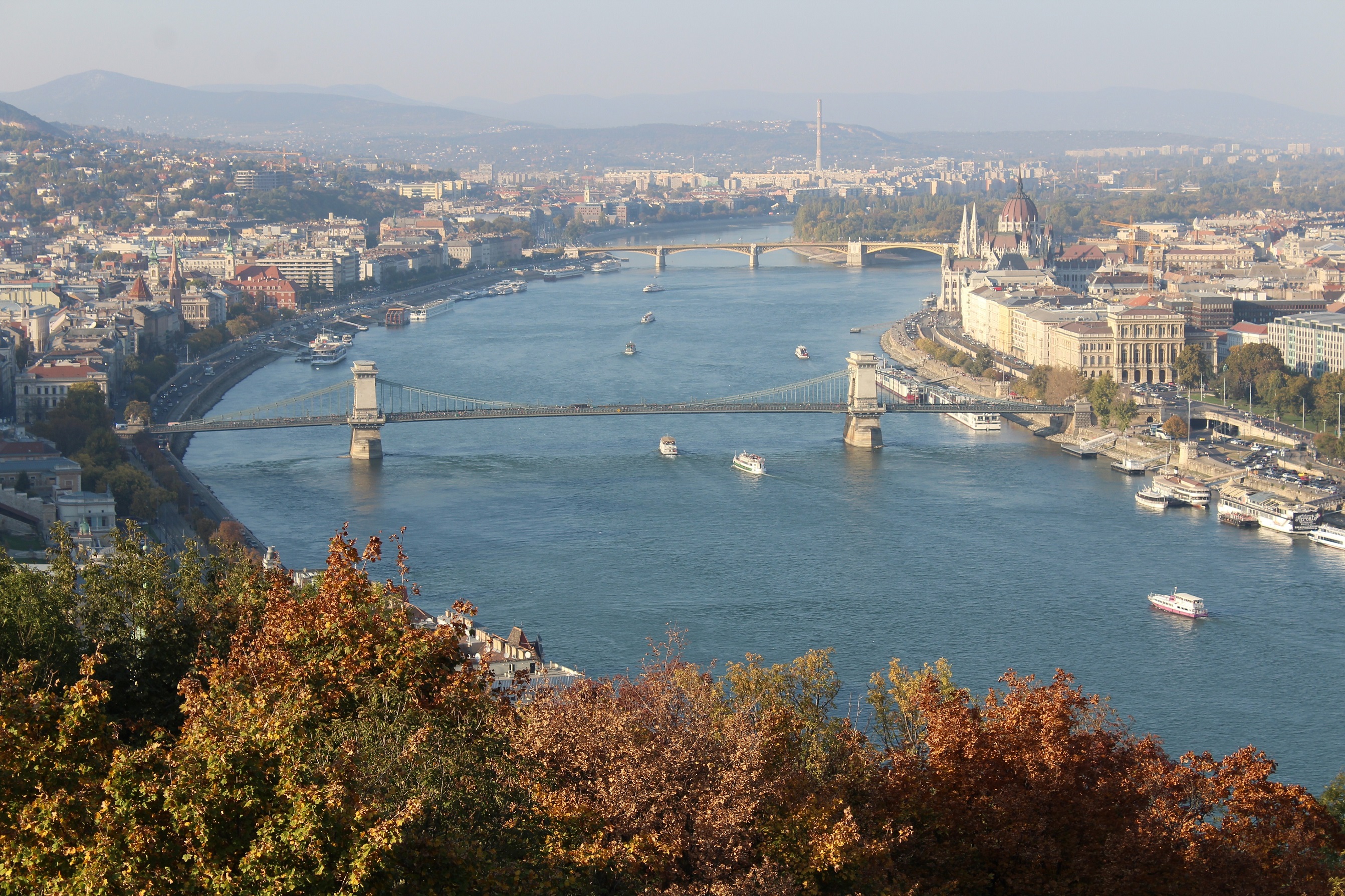
Danube photos

2026.07.29. 13:45 Eleve

 Budapest 2018. VII. 1.  12:56 CEST   ©

Szólj hozzá!

Címkék: magyarország hungary nyár duna photos víz fák fényképek danube

Danube photos

2026.07.29. 13:42 Eleve

Budapest 2018. X. 14.    ©

Szólj hozzá!

Címkék: magyarország híd ősz hungary duna photos ég víz hajó fák városkép fényképek danube ősziszínek

2026. VII. 10 - 12. Cyprus, European Commission, Poland, Russia, Ukraine, United Kingdom

2026.07.14. 15:36 Eleve

.

Europe

Cyprus
Sunday 12 July 2026 14:40 BST  UN draws up new blueprint to end Cyprus crisis after 52 years of stalemate with a watered down federal solution close to Turkish demands for two separate states. Holguín, the UN secretary-general's personal envoy for Cyprus, has been working on a deal which is flexible enough for both sides to claim they have got what they want. The Mediterranean island has been formally split since 1974 after a military coup on the island saw an attempt to unite it with Greece and an outbreak of fighting between the Greek and Turkish Cypriots. The intervention by the Turkish army on 20 July 1974 led to the island being divided between north and south with the unrecognised Turkish Republic of Northern Cyprus (TRNC) unilaterally declaring independence in 1983. The talks have been ongoing for decades with the Annan deal being rejected at the last minute by the Greek Cypriots in 2004. An attempt at talks in Crans Montangne in 2017 almost revived the deal but also failed. The prospect of a deal would be hugely significant for the UK because of the ongoing status of its two sovereign bases on the island which are crucial for dealing with problems in the Middle East. Holguín has been working on a deal with the TRNC arguing that the status of Turkish Cypriots is not being treated equally as was originally agreed when the island was given independence from the British empire in 1960. Ms Holguin is proposing a looser solution within the EU, moving away from the federal model of previous negotiations. She is understood to hope that the structure is one that Greek Cypriots could call a federation and Turkish Cypriots a confederation – bridging the gap through deliberate constructive ambiguity. Under the TRNC’s previous president Tatar, backed by the Turkish government in Ankara, the Turkish Cypriots pushed for a pure two-state solution. But since winning the election last year the TRNC’s new president, Erhürman, has adopted a more flexible approach. The UN draft solution would potentially create two constituent states with political equality and a drastic reduction in shared competences; most day-to-day governance handled by the two states, with a small central structure for what cannot be left to each side. But in exchange for recognition and autonomy, the TRNC would have to cede land including the deserted resort of Maraş (Varosha). For shared competences there would be a rotating presidential council led by the two leaders (a 2-1 or 3-1 ratio in favour of the Greek Cypriot side); an overarching council of Greek Cypriot and Turkish Cypriot MPs rather than a directly elected federal parliament; a joint cabinet of roughly five or six ministries (foreign affairs, defence, internal affairs/citizenship, finance, European affairs). At least one decisive vote for a Turkish Cypriot minister in the Council of Ministers – central to genuine political equality– is being proposed as a safeguard but could become a sticking point in the talks. The Cypriot government in the south wants to see the removal of Turkish forces from the island which they consider to be an army of occupation, while the TRNC insists it is there for their protection. To deal with the guarantor system set up in 1960, the UK, Turkey and Greece would be replaced with a Nato formula, potentially allowing a small multinational presence on the island. The UN is understood to be looking at a two or three-year transition period, with initial territorial returns (Varosha first) and the gradual introduction of the Turkish Cypriot side’s direct trade, direct flights and direct contacts, plus easing of Turkish restrictions and access to Turkish ports. There is also a hope of possible movement on natural gas exploitation, and an explicit tie between a Cyprus settlement and the Türkiye-EU agenda with regards to the customs union, making this part of a broader EU-Turkey package. It is understood that the TRNC’s President Erhürman is more ready to negotiate such a framework; while Cypriot president Christodoulides is more hesitant, balancing the process against domestic political pressures. ’The ideas being circulated appear to be speculative rather than a concrete proposal or plan. Any meaningful progress would need to come through the established UN-led process and within the agreed UN framework,’ Miltiades, deputy high commissioner for Cyprus in London, said: TRNC president Erhürman said on Facebook: ’Our people’s will for a solution is clear. We have stated our support for the efforts of UN secretary general and we continue to support them. We had said that there was no plan, only some ideas. Nevertheless, we informed our Political Parties Council, our trade unions, our Youth Coordination Desk, our business organisations, and anyone who wished to be informed about the ideas. Our only concern is the rights, future, equality, security, and engagement with the world of our people, especially our children, and the preservation of the position of Turkish Cypriots as ‘subjects’. In a statement on 1 July, Ms Holguín said: “I recognise past efforts and difficult negotiations throughout history. ’Cyprus can be a place where bridges are built in all directions and coexistence is promoted in this complex eastern Mediterranean region. As such, Cyprus can truly become an example for the region, for Europe and for the rest of the world.’ (Source: The Independent - United Kingdom)

Poland
(11 July 2026)  Polish Prime Minister Donald Tusk has announced the creation of a national memorial to the victims of a ’genocide committed by Ukrainian nationalists’ during World War Two. A commemorative ceremony was held today in capital Warsaw and other cities across the country. Tusk was speaking on the anniversary of what Poland calls the massacre in Volhynia - a Polish territory in German-occupied Poland now part of Ukraine and known as Volyn. Some 100,000 ethnic Poles were killed by the Ukrainian Insurgent Army (UPA) in 1943-45 in the anti-Polish campaign in the Volhynia, Eastern Galicia and Lublin regions, historians from Poland's Institute of National Remembrance (IPN) estimate. The Polish prime minister was urging Ukraine to embrace this truth if the country wanted one day to join the European Union. In the events about 10,000 Ukrainian civilians are also estimated to have been killed. Many in Ukraine see the UPA as ’heroes’ who fought for independence from the Soviet Union as well as against Nazi Germany and Polish authorities.  In his video address late today, Zelensky said that representatives of the Ukrainian state took part in joint prayers with representatives of the Polish state in both countries to commemorate the victims of the Volyn killings. ’Ukraine and Poland have one common threat, and this is a mortal threat to our independence, to our states, to every city, to every village, and this threat is called Russia,’ he said. Last month, Zelensky was stripped of Poland's highest state honour over his decision to name a Ukrainian military unit after the UPA, amid a diplomatic row between the two countries. Polish President Nawrocki said he had to act - but stressed that the row would not impact Poland's support for Ukraine as it continues to fight against a full-scale Russian invasion. Three former Ukrainian presidents later returned their White Eagle awards to Poland in solidarity with Zelensky. (Source: BBC - United Kingdom)

European Commission
(Friday), 10/07/2026 - 11:17 GMT+2  The European Union has entered the last stretch of negotiations to reach a deal on a new round of sanctions against Moscow. Countries scramble to avoid a politically disastrous update of the price cap on Russian oil. Under the rules, the cap, currently set at $44.10 per barrel, must be automatically adjusted every six months to remain at 15% below the average market price. The next review is scheduled for 15 July. Since Russian oil soared in the aftermath of the closure of the Strait of Hormuz, the revision is certain to push the cap much higher. If ambassadors fail to agree on the sanctions by 15 July, the price cap on Russian oil will be automatically revised, going all the way up to $58 per barrel. The European Commission considers this scenario unpalatable. It has proposed to delay the review until January next year to keep the cap at $44.10 per barrel. ’We need to have as strict sanctions as we can, including the price cap,’ Energy Commissioner Jørgensen told. But Malta, Cyprus and, in particular, Greece, three countries with powerful maritime services, have raised questions about the postponement. A meeting of ambassadors on Wednesday proved inconclusive. Another will take place today afternoon. Some diplomats are flouting the idea of an emergency meeting on Sunday. I hope for a final discussion today, a diplomat said. Several issues, however, remain unresolved. A prohibition on selling LNG tankers to Russia and allowing the transit of Russian LNG through EU waters is also proving tricky. France and Italy are resisting ambitious entry ban on Russian soldiers. Bulgaria, which recently switched governments, remains staunchly opposed to applying sanctions on Patriarch Kirill, the head of the Russian Orthodox Church, and Alekperov, a billionaire oligarch linked to Lukoil. Sofia objects to blacklisting Kirill over religious reasons. And Lukoil has filed a €3 billion compensation claim against the Bulgarian state. For now, the two contested names remain in the draft list. Diplomats expect them to be eventually dropped for the sake of unanimity. If ambassadors fail to agree on the sanctions package as a whole, they have the option of splitting it up to bring the price cap over the finish line and leave the most contentious elements for subsequent discussions. Portugal and Germany have voiced serious concerns about a proposed ban on Russian cod and pollack. They are major buyers of these species and their local industries risk a disproportionate impact. In Portugal, the cod, or bacalhau, is the national dish, and sustains a lucrative ecosystem. The two countries have engaged with the Commission to reduce imports of cod and pollack more gradually. Germany has found a solution, whereas Portugal keeps searching. (Source: Euronews - based in Lyon, France)

Russia
(Sunday), 12 July 2026  Two Russian aircraft carrying humanitarian aid arrived in Venezuela today, delivering food and other essential supplies following last month’s devastating twin earthquakes. The aircrafts landed at Simon Bolivar International Airport, near the capital Caracas. The second was met at the airport by Venezuelan Foreign Minister Gil and the Russian Ambassador Melik-Baghdasarov. The two planes delivered a total of 35 tons of humanitarian aid, the first with 10 tons and the second 25 tons. The Russian Ambassador said another Russian humanitarian aid flight is expected to arrive soon. According to the Russian Embassy, the shipment includes food and other essential supplies for those affected by the earthquakes. (Source: Anadolu Agency - Turkey)

11 July 2026 11:00 (UTC +04:00)  The Ukrainian military struck nearly 28 Russian vessels in the Sea of Azov overnight, additional reconnaissance is currently underway and the final number may increase, Ukraine's Unmanned Systems Forces (USF), Commander Brovdi said. Governor of Russia's Rostov region Slyusar confirmed that four vessels were damaged in the strait near Taganrog, at least one of the damaged vessels was a tanker, and one sailor was killed. The Ukrainian side also stated that a total of 76 tankers belonging to Russia's 'shadow fleet' have been struck over the past six days. According to Reuters, Russia closed the Azov-Don Shipping Canal following a massive Ukrainian drone attack and vessel traffic through the Kerch Strait has also been temporarily suspended. (Source: APA - Azerbaijan)

Ukraine
(Sunday), 12 July 2026  Ukraine’s prime minister Yulia Svyrydenko confirmed today that she is stepping down, shortly after Zelenskyy announced plans to reshuffle the government and replace the current Cabinet. Svyrydenko has served in the post since July 17, 2025, and succeeded Denys Shmyhal, who currently serves as first deputy prime minister and energy minister. Shmyhal is expected to become acting prime minister until Ukraine's parliament approves the makeup of a new government. (Source: Anadolu Agency - Turkey)

July 10, 2026 19:48 CET  Crowd of local residents brawl with Ukrainian military recruiters in Lviv, western Ukraine, in latest clash over mobilization on July 8. (Source: RFE/RL - U.S.)
Video

July 10, 2026, 1:48 PM  At the NATO summit in Turkey earlier this week, ’Trump agreed to give Kyiv a license to manufacture Patriot missile interceptors’, potentially mitigating a key Ukrainian vulnerability in the future, Agrawal, the editor in chief of Foreign Policy said. Germany and Japan have this license, and it’s been very difficult for them to actually manufacture these interceptors, and they’re several years in. Now, Trump seems ’decidedly more optimistic’ about Ukraine’s future. ’Do you agree that Trump’s tone has shifted a fair bit in the last 18 months or so?' What is changing for Trump when it comes to this war? - Agrawal asks Kuleba, the former FM of Ukraine, now a senior fellow at the Belfer Center at the Harvard Kennedy School. ’It’s good that he is positive these days’, Kuleba says, and ’I agree with you that he probably was advised that Ukraine is winning the war now and he should change the tone, although it’s a big question whether we are already winning the war’. ’I live in Kyiv. We all know now that we are within shooting range for Russia. They have plenty of missiles; we have zero interceptors. They shower us with ballistic missiles’, he adds. At the last few months of conflict in Iran, the United States has extinguished about a third of its own supply of Patriot interceptors, Agrawal told. How much has the war on Iran hurt Ukraine’s effort ’to win’ its war on Russia? The war had a negative impact on Ukraine’s defensive capabilities because of the vast use of Patriot interceptors by America, Kuleba figures out. It takes years to manufacture them, Agrawal notes. We have to understand that in 2026 and beyond, the war will be decided in the air, not on the ground, Kuleba continues. ’This is a race in which Russia could catch up fairly quickly or could have new innovations that could nullify the ones that Ukraine currently has. The drone technology can be obsolete very quickly’, he says. ’Putin is waiting for the winter to come because he believes that will be a good time to crush Ukraine, its energy system, and the resilience of its people’ Kuleba believes. ’I think we will spend the rest of 2026 in a war, in a state of very active fighting, primarily in the air’. ’What is your theory for how this war ends? If it’s not a negotiated deal, what is the thing that changes the status quo?’ – Agrawal enquires. ’I think this war will end with the collapse of one of the parties to it: Either Russia will cease to exist as an imperial project, or Ukraine will cease to exist as an independent, sovereign, and European project. They cannot coexist. Both sides believe firmly that the loss in this war will mean the end for them. ’This is the main driving force behind the conflict’, Kuleba says. (Source: Foreign Policy - U.S.)

United Kingdom
Saturday 11 July 2026 14:23 BST  One of the president’s greatest personal enemy in the West, Sir Browder told that Putin’s growing unpopularity in Russia means he cannot afford to end the war with Ukraine. ’If he loses power, then he’ll get strung up from a lamp post.’ Browder once ran the biggest investment fund in Russia through his Hermitage Capital Management. The anti-corruption campaigner has ’fought against Putin’ for nearly two decades. The Sir, who was often shunned by the British establishment in London, which was a major centre for laundering dirty Russian money, was knighted in 2024 for his efforts to clean it up. Putin has variously claimed that he ordered the invasion of Ukraine in 2014 „to see off a potential threat of Nato membership for Kyiv, to save Russian-speaking peoples in the east of the country”, or as part of a patriotic duty to return Ukraine to Russia’s empire. But the truth, according to Sir Bill, is that ’thousand billion dollars has been stolen by Putin and the thousand people around him from the Russian state,’ he said. And that money ’was spent on private jets and yachts and villas’ in the south of France. He said the president could take out his political opponents, but if he compromised over Ukraine the nation would react with rage at the waste of life. ’So what do you do, if you’re a very small man – he’s a tiny little man – who’s a very cowardly little man? You create a foreign enemy, and you start a war. And that’s the reason why this war is not going to end.’ The Sir believes the war will drag on and end up in a stalemate, with neither side winning. ’The best likely outcome is that Ukraine extracts such a heavy price for Russia’s war that it dwindles into a frozen cold conflict’, as in the Korean Peninsula, Sir Bill said. And that as the US appeared to drift away from Nato and European defence under Trump’s stewardship, Ukraine’s role has become increasingly critical. ’ I think in a few years’ time, the Europeans – in a new Nato which doesn’t include the United States – are going to be begging Ukraine to be part of their defensive situation ’. Sir Bill, 62, has avoided numerous attempts to extradite him to Moscow during his 17-year campaign for justice for his lawyer, Magnitsky, who was tortured and murdered in Russian detention in 2009, after exposing a massive fraud against the state. The US Magnitsky Act, is now the legal basis for personally targeted sanctions in America against Russia and corrupt officials all over the world. Similar legislation has been passed in the UK, the EU, Canada and elsewhere to sanction human rights abusers and corrupt officials and is the backbone of the international sanctions regime against Russia over Ukraine. There have been multiple attempts on Sir Bill's life, and ’few individuals who are still alive have had a more personal reason’ to study Putin. Russian money is no longer ’easily sloshing through the City’. But he warned that many other corrupt officials and leaders from around the world still use the British capital as a safe haven for stolen loot. (Source: The Independent - United Kingdom)

.6 7 13 16:37

Szólj hozzá!

Címkék: video don russia venezuela japan korea iran nato france germany europe italy lukoil canada malta turkey bulgaria earthquake poland portugal greece ukraine cyprus unitedkingdom europeanunion straitofhormuz unitednations unitedstates europeancommission mediterraneansea sovietunion worldwarII azerbaijan germanreich seaofazov kerchstrait northerncyprus

2026. VII. 10. India, Iran, Israel, Syria, United Arab Emirates

2026.07.13. 10:08 Eleve

.

Asia

India
Jul 10, 2026 11:20 IST  During his three-day visit to Australia, Prime Minister Narendra Modi held summit talks with Prime Minister Anthony Albanese. A major focus of the summit was on significantly stepping up defence ties, especially in the maritime domain. Modi has left Australia after securing agreements on civil nuclear energy, maritime security and critical minerals. An agreement on civil nuclear energy, which will facilitate the commercial supply of uranium from Australia to India for New Delhi's nuclear power projects, was sealed after more than two years of negotiations. "From strategic defence cooperation and economic engagements to education, sports and vibrant community connections, the visit opened new avenues for collaboration and reinforced the deep bonds between the people of India and Australia”. the Ministry of External Affairs said in a post on X. Before Australia, Modi visited Indonesia, where he signed 14 agreements to strengthen cooperation in critical minerals, maritime security and other key sectors. Modi will travel to Auckland at the invitation of New Zealand Prime Minister Christopher Luxon. During the two-day visit, he will hold bilateral talks with Luxon and other top leaders, and address the Indian diaspora. Modi’s talks with Luxon would focus on ways to enhance economic, trade and commercial engagements. India and New Zealand have committed themselves to strengthening bilateral trade and commercial ties with the signing of the Free Trade Agreement, Modi said. (Source: India Today „with PTI inputs”)

Iran
10 Jul 2026  The week that Beirut and Baghdad broke the Iranian crescent. Soleimani spent years building a network of pro-Iranian proxies or state allies in Yemen, Syria, Lebanon, and Iraq. Syria fell in December 2024. At the end of June, so did two others: Baghdad and Beirut - turned on the militias that gave Iran its reach, through an active decision taken by the Iraqi and Lebanese state authorities. The crescent that the late Iranian commander Soleimani built from Yemen and Gaza to Syria, Lebanon and Iraq rested on a single bet: that the host states would stay too weak, too divided or too frightened to claim the monopoly on force. In Washington on 26 June, under American mediation, Lebanon signed a framework agreement with Israel that tasks the Lebanese army with restoring the state’s monopoly on arms and disarming Hezbollah zone-by-zone, beginning in pilot areas agreed with the Israeli command. The text treats Hezbollah’s arsenal as the obstacle to sovereignty, not its guarantee. Nasrallah’s successor, Qassem, called the agreement with Israel null and void and promised to fight on, but what he can no longer do is claim to fight in Lebanon’s name. In Lebanon, Hezbollah still commands its fighters, but it defends its arsenal inside a country ruined by the wars it imported. Within Lebanon, the new president, Aoun had been drawn from the army command and the cabinet had already tasked the army with planning the state’s monopoly on weapons. Two days later, the new Iraqi government of Zaidi - in office since May - sent the Counter Terrorism Service into the Green Zone at dawn and arrested 47 officials and parliamentarians for corruption, the financing of armed factions, and the smuggling of Iranian oil and dollars. Zaidi’s government has also ordered every armed faction outside the state to surrender its weapons by 30 September, the day the American-led coalition’s mission in Iraq ends, which strips the militias of their oldest pretext, staying armed to fight the occupiers. The deadline comes with a demobilisation programme that trades weapons for state employment. The significance is in the meaning: Baghdad has stopped negotiating with the militias as institutions and started buying back their men. Just as Beirut has moved against the Guards’ founding proxy, Baghdad has moved against their relays at the summit of the state, and against their treasury. In Iraq, the fracture runs through the militias themselves, the biggest being the Popular Mobilisation Forces (PMF). Sadr, an influential Shiite cleric, placed his brigades under state authority in late May and handed their arsenal to the army, the first to do so. Two of the largest pro-Iran factions have signalled they will follow. Only the hard core closest to Soleimani's Quds Force refuses, arguing that foreign forces must leave first. Baghdad has now put an expiry date on that argument. On 7 July, the dollar traded at 1,754,000 rials in Tehran, after losing 8% in a single day. The budget can no longer sustainably carry the networks it built. Internally, the Revolutionary Guards now argue about dissolution. And the war the doctrine was built to export is coming home. Washington's hand is visible in both capitals, whether it be mediation in Beirut or pressure and a departure timetable in Baghdad, but the decisive act in each case was national. Beirut and Baghdad decided that they would prefer to be states, not fronts. (Source: Al Majalla - Saudi-owned, London-based)

Friday - 10 July 2026 In Iran today the management of uncertainty is the name of the game. The 60-day scheme could be described as hostile-truce - a new category in the lexicon of international bellicosity. In it you are supposed to silence your guns and talk to the foe but also keep the option of opening fire when and where you wish. The 60-day hostile truce was designed to suit Trump’s packed early summer agenda starting with his visit to Beijing, his birthday, the 250th anniversary of American Independence, FIFA World Cup the NATO summit and the Republican Party primaries. The same hostile truce also helped bring down oil prices, tame inflation somewhat and open space for a new reds-under-the-bed campaign at home. The question is where do we go from here? One easy option is more bombing. But Pentagon data show that US warplanes are forced to hit targets they have already struck several times before. The other day, a dairy factory in Bandar Abbas was hit for the second time and a radar site in Bushehr for the third. Trump knows that Tehran will not indeed be forced to submit by merely more bombing. For its part, Tehran knows that launching missiles and drones at Iran’s Arab neighbors won’t end bombings by Trump. There is no doubt that the 'Iran problem' could have a military solution. Though not necessarily pro-West, three groups tend to desire an end to the conflict with the outside world and a return to normality, something Khamenei adamantly rejected. Iran’s strong bureaucratic structure it has shown that it can manage the paraphernalia of statehood without Khamenei’s North-Korean style control. The second layer consists of political and military figures that have always been keen on rapprochement with the 'Great Satan'. Many of them US-educated, these are the ones who send their children to the US. In 2015, the Iranian parliament reported that children of some 1,500 senior officials were in the US while numerous senior officials had Canadian residency permits. The third layer is represented by several dozen ultra-rich oligarchs, many of them retired IRGC 1-star generals, clerics or strawmen for senior ayatollahs. Finally, we have the hardcore Khomeinist constituency that consists of Mafia-style fraternities linked to the IRGC and the other paramilitary and security services. Their rivals within the system call them merchants of sanctions. Accounting for 10 to 15 percent of the population, they control the street-base of the regime, the so-called dispossessed masses that are now calling for revenge rather than accommodation with it. A letter by a number of former diplomats attached to this group sent to Foreign Minister Araghchi reminds him of the fate of Rathenau, the German Foreign Minister who signed the Versailles Treaty and was assassinated as a traitor. Those who wish to make a deal dare not do so because they lack a popular street-base within the Khomeinist movement. Those who make can a deal because they have such a base won’t do so because if they do, they risk losing not only that support but also the wealth and position they have illegally acquired. More bombing will strengthen the bitter-enders who have fed on raw anti-Americanism for half a century. Doing nothing may also strengthen them and discredit the accommodationists who are already blamed for having kowtowed to the Great Satan and obtained nothing in return. Not a single dollar of frozen assets has reached Tehran while huge amounts of sanction-free Iranian oil remains unsold in tankers in the Indian Ocean. What is needed is a Plan B for Iran. (Source: Al Majalla - Saudi-owned, based in London, England)

10 Jul 2026  The Guards are dissolving from within, and they know it. The Islamic Revolutionary Guard Corps is Iran’s dominant force militarily, politically, and economically, but there is growing pressure for its armed wing to merge with the Iranian armed forces. Two armies for one state was the regime’s survival strategy; an army to defend the country, and a praetorian counterweight to watch that army, society, and the various political factions. There is the regular army, the Artesh, to guard against foreign enemies, and there is the Islamic Revolutionary Guard Corps (IRGC), the paramilitary force established in 1979 to protect Ayatollah Khomeini’s Islamic revolution. The latter has since expanded to become the country’s dominant force militarily, politically, and economically. Kayhan, the newspaper most closely associated with Iran’s conservative hardliners, denounce the American and Israeli recipe to eliminate the IRGC applied to Iraq’s Popular Mobilisation Forces (PMF), the powerful pro-Iran militia. Javan, the Guards’ own daily, called it a shot fired at the pillar of the country’s security. Hardline networks accused Iran’s negotiators - Parliament’s Speaker Ghalibaf and the administration of President Pezeshkian - of mounting a coup against the Revolution’s armed guardians, prompting rumours that a merger of the two sets of armed forces was a condition Washington had placed on the negotiating table. This appeared to be a fracturing of the Iranian establishment playing out in public. For more than a decade, the Ministry of Intelligence and the IRGC’s own Intelligence Organisation have run in parallel - competing, duplicating, contesting, and policing each other. Te Guards are commonly referred to as ‘a state within a state,’ and this comprises three elements. The first is an ideological body, doctrinally welded to the Velayat-e Faqih (Guardianship of the Islamic Jurist) system of governance established by Khomeini in 1979. The second is a military apparatus built on the discourse and philosophy of martyrdom. The third is an oligarchy built on the culture of survival. The second and third elements are in contradiction - while martyrdom resists to the end, survival negotiates, adapts, and concedes where needed. Two contrary cultures under one command end in impasse. Most feel that such a monolithic structure would never simply vanish. Rather, it would rebrand and rebadge. There are several reasons why a Guards-Artesh fusion would not work in practice. No regular Iranian army could run an ‘Axis of Resistance’ (as the Guards’ network of proxies was known). The Guards’ elite Quds Force's wars were never conducted as acts of state. It has armed regional proxies, conducted parallel diplomacy, and undertaken deniable special operations across four regional capitals. Were the Quds Force to merge with the national army, every shipment, adviser, and operation would become an official act of the Iranian state - attributable and answerable. Talk of a merger forces a choice long ignored: shut down the Quds enterprise or make the state itself the belligerent. Either way, the regime loses something it cannot replace. The same trap waits at home. The Basij is the paramilitary force responsible for internal crackdowns, and a conscript national army cannot inherit it. The Artesh declared neutrality in 1979, when it refused to save the monarchy by firing on the crowds. What would happen to that neutrality if it was ordered to merge with a partisan, ideological conscript army used to shooting protesters? The ideological component cannot be absorbed in any Guards-Artesh merger, because it is not administrative, it is constitutional. Article 150 orders the Corps to guard the revolution and its achievements, while Article 110 binds it to the Supreme Leader alone. To dissolve it in law means rupturing the Constitution itself, which would threaten the survival of the regime. The oligarchic component has no intention of disappearing. The Guards are not only a militia; they are an economy. Khatam al-Anbiya, an engineering firm controlled by the IRGC, has a subcontracting empire, holdings that some estimate to be worth more than half the state's gross domestic product (GDP). More than half of oil export revenue was assigned to the security forces in a recent budget, with conglomerates tied to the Leader's office valued at nearly $200bn. Becoming 'a normal commercial partner' following a rebrand would let the Guards lose their name but keep their power. One possible scenario, which the Europeans are believed to favour, is that an absorbed Corps serves a changed regime, keeping power but renouncing aggression in neighbouring states. But aggression is the regime's doctrine. The Constitution's preamble commits the armed forces to extending the revolution beyond Iran's borders, and Article 150 arms that commitment permanently. Power without aggression would not represent the reform of this regime; it would be its successor. To let its oligarchy re-emerge as a business partner, or its officer corps re-emerge in national uniform, would be to give a pardon dressed as pragmatism. The Corps exists by Article 150, and 'to dismantle the armed guarantor of the revolutionary order is to rewrite the order it guarantees'. (Source: Al Majalla - based in London, England; a Saudi-owned journal)

(Friday), 10 July 2026  Regional mediators seek to defuse US-Iran tensions, the Axios news site reported late yesterday. Qatar, Saudi Arabia, Pakistan and Egypt hold calls with both parties on Wednesday. The mediators believe the recent Iranian attacks in the Strait of Hormuz were carried out by elements within the Iranian regime opposed to the memorandum of understanding between the US and Iran and were seeking to undermine it. (Source: Anadolu Agency - Turkey)

Israel
Jul 10, 2026, 01:14 pm  On July 9 (local time), the Israeli Prime Minister's Office announced that President Trump updated Prime Minister Netanyahu during the phone call on recent American military movements in the Gulf region and the status of airstrikes against Iran. During the conversation, Netanyahu stressed the necessity of Israel continuing to maintain a buffer zone along its northern border. Meanwhile, Netanyahu expressed serious concerns regarding recent anti-Israel remarks made by Turkish President Erdogan. Netanyahu conveyed his strong opposition to any potential U.S. sale of F-35 stealth fighter jets to Turkey, warning that such a move could compromise Israel's national security. (Source: Asia Today - South Korea)

Syria
05:35-10 July 2026  Syrian officials said late yesterday the country had captured an isis-linked cell responsible for two bomb blasts during French President Macron's visit to Damascus earlier this week. Two blasts hit central Damascus on Tuesday, killing one person and wounding dozens during the French president's first visit to Syria. The explosives had been planted near the Four Seasons Hotel, where Macron had spent the night, with Syria's interior ministry saying one was placed in a garbage container and the other in a vehicle near the hotel in the heart of the capital. (Source: Asharq Al Awsat - headquartered in London, England, owned by a member of the Saudi royal family).

United Arab Emirates
July 10, 2026, 6:00 AM  Why an Arab vision for regional security does not work anymore? The world is no longer what it used to be. Geography alone no longer determines alliances, and Arab nationalism or identity is no longer a sufficient reason or framework for building effective security systems. What we are witnessing is a comprehensive redefinition of security itself. It is no longer confined to protecting borders; it now encompasses energy security, supply chains, cyber security, technological superiority and even the capacity to manage complex emerging global scale crises – from pandemics to conflicts. In this context, linguistic, cultural or historical affinity is no longer the primary determinant. What matters instead is the ability to contribute to a flexible, adaptive and credible system of security. Security is no longer articulated in the language of grand slogans, of nationalist or regionalist identities but in the language of capability and achievement. The recent experience in the Gulf, particularly in the face of Iranian aggression, has laid bare the limits of the traditional model. The Arab world did not move as a unified bloc, nor did the cohesion long assumed in Arab national and regional security doctrine materialise. The countries that moved swiftly to support the UAE were not Arab states. France, the UK, Greece, Ukraine and South Korea engaged in direct and rapid military and political co-operation. Politically, countries such as Ethiopia, Serbia, India, Italy and Albania also aligned in support. This is a model of emerging security and political alliances rooted in shared interests rather than shared geography or identity. By contrast, major Arab states hesitated at first even to issue clear political statements condemning the Iranian missile and drone attacks, let alone offer material support. Arab national security emerged in a different historical context, when threats were understood primarily through the lens of conventional military conflict and when the region’s post-colonial nation-states were still taking shape. Today, the states that have succeeded are those that have redefined security from within: building diversified economies, forging pragmatic international partnerships, developing advanced defence capabilities, investing in technology and strengthening social cohesion. Overall, it is a model where shared economic interests take prime position in foreign policy (a key stated principle for the Emirates). The realistic alternative today is not to revive an outdated concept but to transition towards a more flexible and pragmatic model. Alliances are increasingly formed around specific priorities: protecting maritime routes, stabilising energy markets, advancing air defence systems, countering cyber threats and collaborating in artificial intelligence and advanced technologies. These alliances are not measured by cultural similarity but by the extent to which interests align and co-operation proves effective. The Arab world, in practical terms, is entering a new political era in which the winners will be defined by alliances of forward-looking shared interests, not the empty slogans of the past. (Source: The National News - United Arab Emirates)
by Hattlan, an Emirati journalist and commentator

.6 7 11 01:34

Szólj hozzá!

Címkék: india iran nato egypt france germany europe england italy asia israel iraq pakistan canada turkey greece australia ukraine gaza serbia albania indonesia qatar yemen ethiopia syria newzealand unitedkingdom lebanon straitofhormuz persiangulf unitedstates northkorea southkorea saudiarabia indianocean unitedarabemirates

2026. VII. 10. NATO, United States, Venezuela

2026.07.10. 11:08 Eleve

.

North America

United States
July 10 2026 08:17  Israel shared intelligence with the United States this week about a new and ’specific’ plan by Iran to assassinate President Trump, U.S. media reported yesterday. ’The warning from Israel was new and concerned a specific plot,’ CNN reported, citing unnamed sources familiar with the matter. The Wall Street Journal, also citing unidentified sources, said the intelligence described a ’fresh’ plot. The reports come as renewed U.S. and Iranian attacks raised fears of a return to all-out war, and after Trump's puzzling use of an old plane to depart from Türkiye after the NATO summit. Trump used his old Air Force One plane to leave Türkiye, sending his new Qatari-gifted jet on ahead to Britain, where he switched planes for the journey to Washington. The switch from the new jet on its maiden foreign trip sparked speculation it was because its security features were lacking - particularly as the U.S. launched fresh strikes against Iran, which borders Türkiye. When AFP contacted the White House about the reports, an unidentified official pointed to Trump's remarks from Wednesday. ’They want to take out the U.S. leader - me. I'm on whatever list. I saw this morning I'm on every single one of their lists,’ Trump told reporters aboard Air Force One. The New York Times reported late yesterday that the switch was made at the request of the U.S. Secret Service as a security precaution. In a press conference, Trump sidestepped safety questions but alluded to previous alleged assassination attempts by Iran. (Source: Hürriyet Daily News - Turkey)

10 July 2026 07:47 (UTC +04:00)  Technical consultations between US and Iranian representatives are continuing, Reuters reports, citing a representative of the US administration. According to the agency, Washington remains committed to finding a solution with Iran. (Source: APA – Azerbaijan)

July 10, 2026, 12:01 AM  As internet sleuthing replaces traditional intelligence collection, one big mystery about the PLA remains. The old ways of intelligence collection have not been entirely superseded; astonishingly, modern versions of the U-2 spy planes that undertook perilous reconnaissance missions over the Soviet Union still serve with the U.S. Air Force. But traditional tools of intelligence collection on foreign military forces are now being heavily supplemented by sources that are freely available on the internet. Despite the so-called Great Firewall, information emerges from unofficial sources on the Chinese internet. Chinese authorities recognize their propaganda value. Shanghai’s naval shipyard is routinely photographed by passengers onboard passing airliners, revealing details of new ship designs. One such photo revealed that China’s next aircraft carrier is likely to be nuclear powered because two square voids built into the hull closely resemble reactor containment vessels. A driver passing by an airfield recently took dashcam footage of a highly classified new fighter jet as it landed. We currently know more about China’s next-generation fighter ambitions than we do about the United States’ because numerous images of two Chinese prototypes have appeared online. Meanwhile, the United States’ F-47 remains shrouded in mystery. Another major new source of open-source intelligence is satellite photos, ’geospatial’ intelligence has ceased to be the purview of governments alone. Companies including PlanetLabs, Vantor, and BlackSky provide a tasked satellite service for those who can afford it, while the U.S. Geological Survey’s EarthExplorer provides a free service updated by NASA’s Landsat program. When media outlets, think tanks, or independent analysts reveal commercial satellite photos of previously unknown Chinese bases or weapons, it is wise to consider the possibility that the U.S. government has offered them some clues about where to look. Some of the most valuable work is being done by specialists in U.S. research organizations such the Rand Corporation, China Aerospace Studies Institute, James Martin Center for Nonproliferation Studies, and China Maritime Studies Institute. This ecosystem certainly has its share of propaganda and misinformation, but it also breaks down analytic silos and democratizes expertise by weakening the hold of gatekeepers who previously shut out specialists lacking formal credentials. PLA watchers do not have open and ready access to doctrinal, strategic, or logistical information. Researchers wanting to understand American thinking about such issues have no shortage of specialist publications available to them - from the Journal of Advanced Military Studies to the Army Lawyer. There are far fewer such publications available to China researchers, a major blind spot in the study of the PLA. That’s why many of the advances in PLA open-source analysis have centered on assessing its capabilities - but not so much its intentions, which are harder to divine. Mysteries have no definitive answer and additional information may not bring more certainty. An example would be, ’How many bombers does China have?’ whereas a mystery is, ’What does China plan to do with them?’ This should be a sobering lesson for security authorities in Asia. We know a great deal about China’s capabilities to invade Taiwan. Beijing cannot disguise the rapid expansion of its short-range rocket and missile arsenal, and there is clear evidence that it plans to use civilian ferries in an invasion. Last year, we even saw photos of a fleet of mobile barges, which would allow China to put large numbers of heavy vehicles ashore over a beach. Moreover, invading Taiwan would require months of preparation, including the prepositioning of a vast array of assets. In the present information environment, this would be impossible for China to hide, yet as Russia’s invasion of Ukraine demonstrated, this doesn’t necessarily translate to certainty about its objectives. The task of understanding China’s intentions is not only more difficult than assessing its capabilities, but also more urgent. A nation’s intentions can change suddenly. To understand what a state might do with its military assets, it is useful to understand what those assets can do. For instance, although China’s military is heavily focused on Taiwan, it is also building a fleet of ships and aircraft more suited to long-range power projection than to a cross-strait conflict - aircraft carriers and cruisers, large replenishment and amphibious assault ships, long-range bombers, and more. The country’s military capabilities nevertheless point to ambitions beyond self-defense. In analyzing the military intentions of any foreign power, it is wise to follow Gropius’s approach to architecture: Form follows function. Good policy is built on a bedrock of facts. The intelligence analysts, think tankers, academics, and enthusiasts watching China’s rise as a military power all recognize the importance of this task but also understand its limitations for knowing what Beijing plans to do with its newfound power. If Beijing does feel misunderstood, if it is concerned about its intentions being interpreted correctly, then perhaps it could be a little more open about them. To quote China’s ambassador to Australia, Xiao, “Rumours cease when people are truly well-informed.” (Source: Foreign Policy - U.S.)
by Roggeveen, director of the International Security Program at the Lowy Institute, author of The Echidna Strategy: Australia’s Search for Power and Peace; Vallance, a research associate in the International Security Program at the Lowy Institute.

Jul 10, 2026  The name of a Florida airport was officially changed yesterday (US time). It was renamed in honour off US President Trump. A stretch of road connecting it to his nearby Mar-a-Lago home was renamed earlier this year. There are already 12 other US airports named after presidents - the Florida one will be the first to honour a sitting president. President Trump himself praised the renaming of the airport in a post on his social media platform Truth Social. ’A very big day in Palm Beach, Florida, where it was my Great honour to have the Palm Beach International Airport be renamed, by a spectacular vote, The President Donald J. Trump International Airport,’ he proclaimed. „The Area is HOT, the Location is GREAT, and the Renovation will be SPECTACULAR. Thank you to all in Palm Beach for your Vote and your Confidence,’ he wrote in part, calling it ’one of the Greatest and Most Spectacular Airports anywhere in the World!’ Changing the airport’s name is expected to cost as much as $5.5 million for new signs, branding and other updates. Trump Force One – a Boeing 757 owned by the Trump Organisation – was the first plane to arrive at the airport under its new name, with the President’s son Eric on board. ’There is no person who has done more for Florida and our country, and no one more deserving of this incredible Honour.’ ’As a son, and someone who flies out of this airport nearly every day, I will forever be proud to see the initials ‘DJT’ on my boarding pass,’ Eric posted on X. Florida’s Democratic representative Frankel called the decision misguided and unfair, arguing that locals who opposed the change were ignored. ’This decision was made in Tallahassee, overriding the voices of the residents, businesses, and travelers who use it every day,’ Frankel wrote. The latest controversy follows the rebranding of the iconic Kennedy Centre in Washington to include President Trump’s name – a move that was overturned by a judge’s landmark ruling last month. More than eight million passengers fly in and out of the Palm Beach airport each year, with the President regularly using it since it is so close to Mar-a-Lago. Travellers interviewed about the change had mixed reactions. Some were agreeing Trump should be honoured. Many others argued it was undeserved. ’I think it’s disgusting, ridiculous, pompous and a lot of other bad things… it makes me sick every time I even see the sign…’ one angry Florida resident complained to MS Now. ’I resent that the name is on every institution that we have, this included,’ said another. A third traveller said she was unhappy ’because of who it is – I don’t agree with his way of thinking… and I’m going to fly in and out of Orlando from now on to get to my destination.’ (Source: The New Daily – Australia)

NATO

(10 July 2026) 07:30  ’Deterrence by presence’ in the High North: The creation of Forward Land Forces Finland. The Alliance is building a military architecture in the Arctic and the High North. Before Finland joined NATO in April 2023 and Sweden followed in March 2024, this space was outside the Alliance’s collective defence structure. Now it has become one of NATO’s 'most important operational theatres’. Finland and Sweden are quickly proving that their accession to NATO was not symbolic. Both countries are looking north because ’they understand that Russia’s pressure will not be limited to Ukraine, the Baltic states or the Black Sea’. On 6 June 2026, NATO formally activated Forward Land Forces Finland during a ceremony in Boden, home to Sweden’s Norrbotten Regiment, one of the key units trained for operations in subarctic conditions. They are shaping NATO’s northern posture: Finland brings geography, mobilisation culture, territorial defence experience and deep knowledge of the Russian border, Sweden brings Arctic expertise, the Norrbotten Regiment, defence-industrial capacity and direct operational depth next to Finnish Lapland. Together, they turn the High North from a weak point into ’a structured theatre of deterrence’. The force being placed in Rovaniemi in Finnish Lapland is the Alliance’s ninth multinational battlegroup and the first of its kind in the High North. It is the closing of a major gap on NATO’s north-eastern flank. Finland shares a 1,340-kilometre border with Russia, the longest land border between Russia and any NATO member in Europe. Sweden moved from neutrality and non-alignment to direct responsibility for allied security in the High North in barely two years. Its initial contribution is around 600 soldiers, with the ability to expand to 1,200 personnel if the security situation requires it. The long-term ambition is to scale the force towards brigade level, around 3,000 to 5,000 soldiers. Finland and Sweden are looking very hard at the Arctic, Lapland, the Barents region and the approaches to the Kola Peninsula because this is where Russian strategic assets, nuclear forces, air power and Arctic infrastructure are concentrated. They bring operational knowledge of a region that many older allies treated for too long as peripheral. From Finnish Lapland to the Barents Sea and the Kola Peninsula, the northern flank connects land defence, Arctic logistics, air surveillance, naval operations ’and nuclear deterrence’. Moscow has treated the Arctic as a protected military zone for years. The Kola Peninsula hosts a major part of Russia’s strategic military infrastructure, including the Northern Fleet, nuclear submarines, missile systems, air assets and Arctic bases rebuilt since 2014. NATO is now ’responding by placing command structures, exercises and forward forces’ closer to the theatre where Russian power is concentrated. ’The message is not escalation. It is deterrence through presence, planning and the ability to reinforce quickly’. The command structure confirms the seriousness of the shift. FLF Finland falls under NATO’s operational chain through SACEUR, Joint Force Command Norfolk and the Multi-Corps Land Component Command Northwest in Mikkeli, Finland. Finland has also become a hub for NATO command structures in only a short period, with Rovaniemi, Mikkeli and Riihimäki taking on roles connected to land forces, multinational command and digital integration. A country that was outside NATO three years ago is now becoming one of the pillars of allied defence planning in the north. Exercises are already turning this concept into practice. Cold Response 26 gathered more than 32,000 soldiers from 14 allied nations in Norway and Finland. In Finland alone, around 7,500 troops took part, including 3,500 Finnish soldiers and 2,000 reservists. The exercise tested movement, logistics and operations in Arctic conditions, as well as the ability of Swedish forces to move from Boden towards Finland. Northern Star, held in May 2026 near Kajaani, only about 70 kilometres from the Russian border, brought together forces from seven NATO countries, including Finland, the United States, Poland, the United Kingdom, France, Italy and Hungary. The northern theatre is unforgiving. Arctic defence is not only about soldiers and flags. It is about bridges, roads, fuel, ammunition, maintenance, winterised equipment, long distances, limited infrastructure and the ability to fight at temperatures reaching minus 20 degrees Celsius. A battlegroup that cannot move, refuel or repair itself in Lapland is not a deterrent. China adds another layer. NATO commanders increasingly speak about Beijing’s growing interest in the Arctic, including sea routes, energy, minerals and logistical access. Russia provides the geography and military presence, China brings capital, technology and long-term strategic patience. ’For Finland and Sweden’, this means that the north is not only a Russian problem. This northern turn also need to remember that the Baltic Sea remains equally important for NATO’s defence. The security of Poland, the Baltic states, Denmark, Germany and the Nordic countries is connected through the same maritime space, ’the same Russian pressure from Kaliningrad’ and the same need to protect sea lines, ports, energy infrastructure and military mobility. NATO needs Finland and Sweden in the High North, but it also needs them in the Baltic Sea. Their accession strengthens the Alliance only if both theatres are treated as one connected north-eastern flank, not as competing priorities. The timing is also relevant before the NATO summit in Ankara. NATO decided at the Washington summit in 2024 to extend the forward land forces model to Finland. Less than two years later, the structure exists. This is a visible result: FLF Finland reached initial operational capability before the summit and aims for full operational capability by 2030. The challenge now is to move beyond declarations. France, the United Kingdom, Norway, Denmark, Iceland and Italy have signalled political commitments - willingness to contribute to the development of the force. The difference between a credible northern posture and another NATO announcement will be measured in soldiers deployed, units trained, command procedures tested and equipment adapted to Arctic conditions. (Source: Defence 24 - Poland)

South America

Venezuela
10 Jul 2026  Acting president Rodriguez’s rise has given the administration of US President Trump a de facto ally in its effort to revive US dominance over the Western Hemisphere under what has become known as the Donroe Doctrine. She has accepted US demands to open up Venezuela’s oil, mining and electricity sectors, and has permitted the deployment of US military forces to assist with the earthquake relief effort. Rodriguez’s challenge is to satisfy Washington without losing control at home. Her advisers, the former ’comrades’ are now moving closer than ever to open alignment with Trumpism in Latin America. The acting president has reached out to Trump’s regional allies, including President Milei in Argentina and President Bukele in El Salvador. Despite initially saying the US military intervention that removed Maduro had Zionist overtones, the acting president has since been paving the way to re-establish relations with Israeli Prime Minister Benjamin Netanyahu’s government. Throughout the Chavez-Maduro era, successive Venezuelan governments considered Israel a genocidal state and an enemy of peace, condemned almost every Israeli military action in the Middle East, and denounced its very existence. Chavez broke diplomatic relations with Israel in 2009 and deepened cooperation with the Islamic Republic of Iran, as well as with its regional non-state allies. In late February, the Venezuelan Ministry of Foreign Affairs issued a statement calling for dialogue and criticising Iran’s retaliation against countries in the region hosting US military assets. In April, the interim president sent the Venezuelan Jewish community and Venezuelan Chief Rabbi Cohen a warm Passover greeting on social media, praising the Jewish people and advocating for peace and intercultural and interreligious respect. A few days later, she addressed Rabbi Cohen and Jewish Venezuelans again in a televised speech, reassuring them that Venezuela held no anti-Semitic positions. After 17 years without diplomatic relations, in June Venezuela publicly thanked Israel for sending a disaster-response team after the devastating earthquakes that struck the country. The interim president personally praised the Israeli delegation’s expertise in search and rescue and infrastructure assessment. The rapprochement between Venezuela and Israel is part of a calculated survival strategy by the Venezuelan government to consolidate its power, to undercut her main rival, to weaken its main domestic opponent. Machado, the leading opposition figure, has built a strong alliance with Israel over the years, especially with Prime Minister Netanyahu. If Rodriguez can win Netanyahu over at Machado’s expense, Machado could lose one of her most important sources of support, both internationally and in Washington, where pro-Israel lobbying networks hold significant influence. To this end, Rodriguez has adopted increasingly Israel-friendly positions while courting sectors of Venezuela’s Jewish community with strong ties to Israel. Rodriguez’s government appears to be driven less by conviction than by survival. So far, that strategy has served its purpose. But whether this bargain can survive the weight of 27 years of anti-Israel rhetoric and produce a durable alliance with a state the ruling party long treated as an enemy remains far from certain. Another element of this strategy is to reassure Washington that Caracas is distancing itself from actors Washington considers enemies, such as Iran and its regional non-state allies, including Lebanon’s Hezbollah. Weeks after Maduro was ousted from power, US Secretary of State Rubio warned of links between Maduro’s regime and the Lebanese organisation. In response, the Rodriguez administration has moved to extradite two alleged Hezbollah collaborators from Venezuela: Jalil to Panama and Saab to the United States.  Jalil has been accused of terrorism by the Panamanian government, while Saab has been indicted in the US on money laundering and other charges. (Source: Al Jazeera - Qatar)
by Piña, a Venezuelan political scientist and international relations specialist, a political risk consultant, with a research focus on Latin American politics and China–Latin America relations.

Fri 10 Jul 2026 03:40 CEST  According to local authorities, 3,889 people have now been confirmed dead in the twin earthquakes that hit the country on June 24. Another nearly 17,000 people were injured. Nearly 18,000 people have lost their homes. (Source: Sweden Herald)

.

Szólj hozzá!

Címkék: russia hungary venezuela taiwan nasa sweden china iran photo nato salvador holiday panama france earth germany arctic denmark italy israel finland argentina turkey earthquake poland norway australia iceland ukraine lapland qatar unitedkingdom lebanon unitedstates sovietunion kaliningrad blacksea balticsea barentssea

2026. VI. 25 - 30. Venezuela

2026.06.25. 23:04 Eleve

.

Venezuela
June 30, 2026 / 9:21 AM EDT  Six days after powerful twin earthquakes devastated northern Venezuela, the confirmed death toll from the 7.5 and 7.2 magnitude quakes, which struck within a minute of each other just after 6 p.m. local time on June 24, had risen to more than 1,700 by today. A NASA assessment based on satellite imagery taken before and after the June 24 earthquakes hit Venezuela suggests approximately 58,870 buildings may have been damaged or destroyed across the affected region. The space agency stressed that it was a preliminary product produced within days of the event, which had not been corroborated by on-the-ground assessments in the immediate wake of the disaster. (Source: CBS News - U.S.)

6:43 PM CEST, June 29, 2026  A strong aftershock jolted Venezuela early today which struck about 27 kilometers north of Caraballeda on Venezuela’s Caribbean coast at 7:01 a.m. local time, measured 4.6 on the Richter scale according to the United States Geological Survey. Colombia’s geological survey put the magnitude at 5.1. (Source: AP News – U.S.)
Photo, video

29/06/2026 - 7:39 GMT+2  Venezuela's worst earthquakes in more than a century have come after the oil-rich country endured more than a decade of economic collapse. The crisis has hollowed out hospitals and public services, driving millions to leave the country. Yesterday, National Assembly President Rodríguez reported 1,450 dead, a toll expected to rise, with 3,150 people injured. 189 buildings have totally collapsed, Rodríguez said. Some 774 buildings were badly damaged. Tens of thousands of people were still reported missing. The United Nations estimated $6.7 billion (€5.8 billion) in physical damage, equivalent to 6% of Venezuela's GDP. Experts say the first 72 hours after natural disasters define the narrow window for rescuing the living. Interim Venezuelan President Rodríguez yesterday praised rescuers for still pulling survivors from the ruins. Rodríguez thanked other countries for the outpouring of aid. Twenty-four nations have sent 521 tonnes of supplies, 86 units with dogs trained to locate people trapped beneath the rubble and more than 2,700 search-and-rescue personnel, she said. US helicopters ferried in aid. The United States, which captured Venezuela's former president Maduro in a military raid on Caracas in January, had already sent a 250-strong disaster response team. 230 more US military personnel were arriving to help expand airport capacity and reopen a key seaport to boost relief efforts, the US Southern Command said yesterday. In Chacao, an area of the capital, large electronic screens on a building usually used for advertising were showing the faces of missing people in a bid to help find them. Millions more people were feared to lack sanitation and other basic needs. Some of residents complained of the slow and meagre post-quake aid coming from authorities. Outbreaks of looting hit La Guaira, much of which now lies in rubble after Wednesday's disaster. Pharmacies, supermarkets and other businesses were ransacked. The UN migration agency said that based on population and damage data, up to 6.76 million people could be affected, and would require shelter, water, sanitation, healthcare and essential relief items. (Source: Euronews based in Lyon, France ; „Additional sources”; AFP - France)

09:40, 28/06/2026, Sunday  More than 1,600 international rescue specialists have arrived on 17 flights to assist search-and-recovery operations following Wednesday's twin earthquakes. Venezuela's Foreign Ministry announced yesterday. Over the next 24 hours, the arrival of 25 more flights were expected. Further personnel are en route to bolster ongoing search efforts. On Wednesday, the stronger quake tremor hit 23 kilometers southeast of Yumare, while the second struck near San Felipe, according to the US Geological Survey agency. National Assembly President Rodriguez confirmed on Friday that the disasters have killed 920 people and injured 3,360. (Source: Yeni Şafak / Anadolu Agency = Turkey)

5:32 AM CEST, June 28, 2026  Three days after earthquakes struck, desperation grew in Venezuela’s state of La Guaira as rescuers and civilians searched for earthquake survivors and the death toll rose to 1,430. For days, smaller aftershocks occasionally shook the capital, Caracas and areas hit by the quakes, including one measuring 4.8 yesterday. Families reported at least 68,900 people missing yesterday. Search teams and foreign aid continued to arrive from Mexico, the U.S., Brazil, El Salvador, France and elsewhere. Venezuelans joined by a growing number of international rescue teams climb through the rubble, offering a small glint of hope to anguished families. A U.S. Navy transport ship was docked off the coast, ready to receive airlifted survivors in need of medical attention. Simón Bolívar International Airport, which serves Caracas, was badly damaged. One runway was operational as U.S. teams worked to repair the crucial throughway. Venezuelan officials said 17 flights carrying more than 1,600 rescue team members had touched down by yesterday. Venezuelan soldiers, firefighters, police and military cadets were evidently underprepared to respond to the scope of the tragedy. Frustration was amplified by efforts to project the image of a robust state response. Aid agencies consider the first 48 to 72 hours as crucial for retrieving people alive, though that can be extended if they have access to food and water. As 72 hours passed since the earthquakes struck, many felt every minute ticking away as they ran out of time to rescue people alive. Acting President Rodríguez said on state television that more than 14,000 members of the military and police are patrolling the area, where access is now blocked and special permits are required to enter. But many in disaster zones said they had seen little of their government. Some people climbed the remnants of buildings and cried out names, hoping for any proof of life. In punishing heat, more people wore masks as the stench of decomposition spread. Without hard hats or other gear, rescuers and civilians instead wore motorcycle helmets as they searched piles of debris that were once people’s belongings. The International Organization for Migration said over 6 million people could be affected, some 2 million in the capital, Caracas, alone. (Source: Associated Press - U.S.)

28 Jun 2026  The death toll from Venezuela’s twin earthquakes has reached 1,430, with an estimated 51,000 people still missing. (Source: Al Jazeera - Qatar)
Video

27/06/2026 - 11:37 GMT+2  At the time of publication, the death toll is approaching one thousand and more than 50,000 people are missing. Initial estimates pointed to tens of thousands of deaths. Given the number of collapsed buildings, the situation is critical and the search for survivors has become a race against time. Satellite images leave no doubt about the tragedy unfolding in Venezuela. (Source: Euronews - based in Lyon, France)
Satelite images

(Saturday, 27 June 2026)  On Wednesday evening, June 24, northern Venezuela, the coastal state of La Guaira, near the capital Caracas, suffered the heaviest destruction, with entire residential complexes reduced to rubble by two earthquakes, measuring magnitudes 7.2 and 7.5. The twin earthquakes were the strongest to strike Venezuela since a magnitude 7.7 offshore earthquake in 1900. The emergency response remains extremely complex, the death toll is likely to rise significantly as rescue operations continue. International search-and-rescue teams have begun arriving in the disaster zone, including from Chile, Spain, El Salvador, Switzerland, Colombia, and Mexico. Teams from at least 17 countries are being mobilized to assist in the search for survivors. At one collapsed residential complex in La Guaira, Chilean rescue team leader Polanco said the destruction was nearly total and there is little chance of finding survivors. „Efforts are now focused on recovering the bodies of the deceased," he said. Interior Minister Cabello announced that access to the disaster zone would be restricted beginning at 8:00 p.m. yesterday. Relatives, neighbors, and volunteers continued digging through rubble with their bare hands, saying heavy machinery and official assistance remained insufficient. They need machinery to start lifting the columns. Interim leader Rodriguez said she received a telephone call from US President Trump and Secretary of State Rubio, who reaffirmed Washington's commitment to supporting relief operations by sending rescue personnel, specialized equipment, temporary shelter assistance, and humanitarian aid. The United States had earlier announced the deployment of a disaster response force of more than 250 personnel, including three specialized urban search-and-rescue teams equipped with search dogs. A senior US military official also arrived in Caracas to oversee the American relief mission. Authorities said the victims include 28 Portuguese nationals, five Spaniards, two Brazilians, seven Chinese nationals, one Chilean, and one Italian-Venezuelan. Portugal reported that 85 of its citizens remain missing or unaccounted for, while Spain said 119 of its nationals are still missing. (Source: Kurdistan24)

(Friday), June 26, 2026 / 5:48 AM EDT  The 7.2- and 7.5-magnitude earthquakes that struck Wednesday evening were among the strongest in Venezuela in more than a century. Venezuela sits near multiple fault lines, its position straddling the South American and Caribbean plates makes strong earthquakes much less common than in other parts of Latin America. The U.S. Geological Survey said both earthquakes were centered near Moron on the Caribbean coast, about 105 miles west of Caracas. In cities across northern Venezuela, neighbors helped each other dig through rubble to search for loved ones yesterday. The official death toll rose to around 235 late yesterday, with at least 4,300 people injured, Venezuela Health Minister Alvarado told. The number of casualties is expected to climb with thousands reported missing and ’frantic’ rescue efforts to find survivors is continuing. In downtown Caracas, hundreds spent the night huddled in parks, parking lots and other open spaces. Buildings were flattened, reduced to skeletons and streets cracked open. Few government search teams were initially seen outside Caracas. The coastal region of La Guaira, north of the capital Caracas, suffered some of the heaviest damage and casualties. The country's main airport is there and was closed due to damage, complicating aid efforts. Venezuelan authorities said they were diverting rescue teams from other parts of the country to La Guaira. Venezuela has been facing economic disarray for more than a decade. Millions of people were already facing economic instability and lacked consistent access to resources like power and clean water before the earthquakes. The natural disaster is the latest challenge for acting President Rodríguez, the former vice president who took office in January after the capture and removal from power of then-President Maduro by the United States. She declared a state of emergency in an address to the nation late Wednesday. Rodríguez said the government was creating a $200 million reconstruction fund for damaged hospitals and homes and appealed to businesses yesterday to make heavy construction equipment available for rescue operations. Shortly after United Nations officials in Venezuela called on the government to lift social media restrictions so people can get potentially life-saving information, Venezuelans in the country were able to access X. The site had been blocked by Maduro since August 2024 in an attempt to suppress the exchange of information among those who rejected his claim of victory in the July presidential election. U.S. Secretary of State Marco Rubio, who spoke to Rodríguez following the quake, said the United States was immediately deploying big, fast, and effective assistance, while acknowledging the closure of Venezuela's main airport near Caracas created logistical challenges. He said the U.S. aid efforts would be led by the Pentagon, as the Defense Department has the ability to access cut off areas. Rescue teams from El Salvador and the Dominican Republic arrived yesterday, along with rescuers and material aid from Mexico. Venezuelan public television showed the arrival of rescue workers and aid from Chile at a military base in Aragua state early today. A team of 80 specialists and eight search dogs from Switzerland also arrived with aid supplies. Turkey announced two flights will leave Istanbul today with military, medical and rescue personnel and a pair of search dogs. Leaders from Qatar, Brazil, Spain, Portugal and Canada also vowed to send assistance. The Venezuelan diaspora also was helping. (Source: CBS News) / AP = U.S.)

2:10 PM EDT, Thu June 25, 2026 - 8:37 AM EDT, Wed, June 26, 2026  Venezuela quakes kill at least 188 people. The death toll is expected to climb. (Source: CNN - U.S.)
Photo, video

Updated June 25, 2026, 1:58 p.m. ET - Published June 24, 2026  The 7.2- and 7.5-magnitude deadly quakes toppled dozens of buildings, killed at least 32 people and injured at least 700 others, the authorities said. Rescue effort underway. (Source: The New York Times - U.S.)
Photo, video

Updated 6:31 PM CEST, June 25, 2026  Two powerful earthquakes struck Venezuela within about a minute of each other yesterday, causing buildings to collapse and damage in Caracas. The rare back-to-back tremors were measuring magnitudes 7.1 and 7.5. (Source: Associated Press - U.S.)
Photo

Jun 25, 2026, 04:27 pm  Serial magnitude-7 quakes rock Venezuela, leaving 32 dead and 700 hurt. (Source: Asia Today - South Korea)


Szólj hozzá!

Címkék: video brazil chile venezuela nasa china photo salvador mexico france italy asia canada colombia turkey earthquake switzerland portugal spain caribbean qatar kurdistan unitednations unitedstates southkorea southamerica caribbeansea dominicanrepublic internationalorganizationformigration

2026. VI. 12. European Commission

2026.06.13. 23:38 Eleve

.

European Commission
(Friday), 12/06/2026 - 14:31 GMT+2  Plans to relocate asylum seekers - watered down. The European Union's new Pact on Migration enters into force today. The pact includes eight legislative acts, which together are meant to improve member states' cooperation on migration management, hold frontline states to stricter standards for minimising irregular entries into the EU, and speed up asylum procedures. The bloc finally has a set of clear-cut rules to manage migration that applies to all EU member states – at least, on paper. The new law ’introduces a border procedure which shortens the period to assess an asylum request for certain categories of applicants to 12 weeks, with 12 additional weeks to carry out returns for those who are not granted the protection’. It does not change the basic principle that any third national should ask for asylum only to the EU country of first arrival, but ’envisages a system of mandatory solidarity that offers countries three different options to manage migration flows: host a number of asylum seekers in its territory, pay a financial contribution to frontline member states, or help finance personnel, equipment, surveillance systems at the border and other operational costs’. The so-called ’mandatory solidarity’ is not actually mandatory – instead, EU countries have used a variety of tactics to reduce their commitments to helping frontline states and take in as few migrants as possible. Around 800,000 people are already in the asylum system. Some 669,000 individuals asked for asylum in the EU last year. The EU's member states will relocate fewer than 9,000 asylum seekers this year – even after the annual minimum was set at 30,000. Less affected ’member states’ will make €76 million of financial contributions to support EU countries under migratory pressure. Each year ’the Commission should propose a solidarity pool that defines the help member states need to offer each other' for the following year, according to the EU's Asylum and Migration Management Regulation, which makes up the bulk of the pact. The pool has a quota of relocations of asylum seekers from countries considered under migratory pressure, and ’financial contributions from other member states’, including via the financing of alternative solidarity measures such as construction and hardware procurement. The solidarity pool has ’a minimum contribution threshold of 30,000 relocations and €600 million in financial contributions’. The pool assigns a share to each member state based on population and GDP. ’Each government’ can then decide in what form to contribute. 'The European Commission's mantra' has been that solidarity is ’mandatory but flexible’, repeated many times by EU Internal Affairs and Migration Commissioner Brunner. For 2026, Spain, Italy, Greece and Cyprus were considered under migratory pressure. ’Czechia, Croatia, Austria and Poland were granted a total exemption from their quotas, for being classified as facing a significant migratory situation.’ The remaining 19 countries have to contribute by paying or relocating migrants. 'The Commission set' the minimum number of relocations and size of financial contributions as low as possible to accommodate member states’ low ambitions. National governments have found ways to further reduce the number during the process that set the contributions for 2026. Member states argued that the new migration rules will only cover the second half of 2026 rather than a full year and agreed to reduce the size of the ’solidarity pool’. In a meeting held in Brussels on 8 December 2025, EU Interior Ministers agreed to ’21,000 relocations or other solidarity efforts,’ and €420 million in financial contributions, specifying the contributions expected from each member state. The legal text of the agreement specifies that the solidarity pool shall be at least 30,000 relocations and €600 million, but that it should be set on the basis of the needs ’identified by the Commission.’ During the negotiations that established the pool, Hungary and Slovakia decided not to make any contributions, neither in relocations nor in money that so far has met with no sanction ’from the Commission’. ’An EU official told that the new Hungarian Prime Minister is more keen to cooperate’ than his predecessor Viktor Orbán. But P.M. has also clearly stated his country will not take any asylum seekers from the others, and it does not provide any financial contribution to the pool by the end of 2026. According to people familiar with the matter, the system can still function without Hungary's and Slovakia's contributions. Of the 19 EU countries obliged to contribute, only seven have chosen to accept relocations, and nine are making financial contributions only. The real number of people transferred from one country to another and the amounts of money contributed will be even smaller than the figures on paper. The Spanish government, for example, has pledged €42 million to the pool, but will in fact pay nothing as Spain is classified as under migratory pressure and will thus be a net beneficiary of this year's cycle. Considering only the real pledges made by countries effectively obliged to offer solidarity – that is, those deemed not under pressure – the total numbers stand at 8,878 relocations and €76.3 million. The upshot of this is that solidarity payouts to Spain, Italy, Greece, and Cyprus for the first cycle have been significantly reduced. This is why Spain and Cyprus abstained in last December's vote to set up the solidarity pool, which was approved by a large majority of EU countries. Madrid considers the help from the other countries very insufficient and fears that this year's cycle could set a precedent. Numbers are deliberately at the lower end and have come down in the process, Gehrke, director of the Brussels office of the International Organization for Migration told. Brunner, for one, believes the level of solidarity could be sufficient for the current situation but ’of course we don't know how the situation will evolve,’ he told yesterday. Member states also have another legal tool at their disposal to avoid taking part in real relocations of asylum seekers from other EU countries - the so-called responsibility offset, another form of granting solidarity support considered equivalent to physical transfers. Under this system, ’an EU country can take care of a specific number of secondary movement asylum seekers’ – individuals who are currently in its territory, but who should have asked for asylum in their first EU country of arrival. This quota would then be deducted from the relocations the given member state has to accept, reducing the actual transfers under the pool's requirements. ’Germany in particular is expected to invoke the offset’, having struck bilateral agreements with Greece and Italy. The same pattern is being followed by multiple other countries, among them France, as it is easier to put into practice and more convenient for domestic public opinion than accepting new arrivals. As a result, fewer than 1,000 asylum seekers will be physically transferred in 2026 from one country to another. (Source: Euronews - based in Lyon, France)

.

Szólj hozzá!

Címkék: hungary france croatia germany italy austria poland slovakia spain greece cyprus europeanunion europeancommission czechia internationalorganizationformigration

2026. VI. 10 - 13. European Commission, Frontex, Germany, Russia, Ukraine, United Kingdom

2026.06.10. 21:06 Eleve

.

Europe

Germany
10 June 2026 
Germany today declined to support new sanctions against extremist Israeli occupiers, despite their growing violence against Palestinians in the occupied West Bank. Foreign Minister Wadephul told that Germany’s opposition to Israel’s illegal settlements is well known and has been repeatedly conveyed to the Israeli government, but Berlin has no plans to back additional sanctions. Australia, Canada, France, New Zealand, Norway and he United Kingdom announced sanctions targeting networks involved in financing, enabling, and carrying out settlers' (occupiers') violence against Palestinians. Germany, a staunch supporter of Israel, has so far resisted tougher sanctions on Israeli politicians who endorse the expansion illegal settlements and plans to annex the West Bank. Berlin has also blocked efforts to suspend the EU-Israel trade agreement. (Source: Anadolu Agency - Turkey)

European Commission
13/06/2026 - 13:00 GMT+2  Reports were this week pointing to a plan by European capitals to take control of the European External Action Service, stripping EU foreign policy chief Kallas of most of her powers, with member states handling foreign policy directly. The French did circulate an informal document that – if implemented – would see an overhaul of the EU's foreign service set up only 15 years ago. The document envisions three scenarios. One would see the European Commission emerging victorious from a tussle over who represents the EU on the global stage and practically take over the EEAS. Der Leyen, who is already tapping hard into Kallas' terrain, would cement her powers over foreign affairs in her 'geopolitical' Commission. A second option would see EU leaders taking control. The European Council would move into an operational role. In that case, Kallas would also see her authority diminished. A third scenario would - and granted, this got less attention - sees the High Representative of the Union for Foreign Affairs and Security Policy/Vice-President of the European Commission (HRVP) role strengthened, with the top European diplomat having direct input on Commission portfolios intertwined with foreign action, like trade. In that case, a restructuring would embolden it. Here, the Commission would lose out, and leaders could score a win if the HRVP becomes a vehicle to implement their vision. Kallas, a one-trick pony, lacking skills, expertise and global outreach on anything beyond Ukraine, a 'diplomat' who does not master the art of subtleties, goes off script in clumsy ways and is most efficient at NAFO chitchat on social media. Her weaknesses - just as her strengths - were clear from the start. Kallas did not have any meaningful foreign policy experience before she was appointed HRVP - but she had made a name for herself as the Iron Lady standing up to Russia. Leaders knew exactly who they were appointing and went for a package deal to include von der Leyen. If Kallas no longer works, that's their mistake too. On key regions such as the Middle East and Latin America, Kallas is far weaker than any of her predecessors. She has also alienated southern European countries who feel there is a form of prejudice against them on security matters. The departure of her Secretary-General at the EEAS, Martínez, a little over a year into the job, points to management problems of her own. Kallas is determined to fight not only for her own reputation, but for the very future of the EEAS itself, stressing that the High Representative's role is defined by the EU treaties. On that, she's right. Only the leaders can bring her back from the negative spiral she's caught in. (Source: Euronews - based in Lyon, France)

12 June 2026  EU Commission expresses support for bloc’s foreign policy chief amid reports of discontent by member states. Financial Times reported yesterday that member states are weighing reducing powers of Kallas. (Source: Anadolu Agency - Turkey)

(Thursday), June 11, 2026 11:39 AM CET  The European Commission should have been more transparent with the public about its multimillion-euro Covid vaccine contracts, EU court adviser, advocate General Rantos said. It was impossible to tell whether the Commission staffers negotiating these contracts with drugmakers were impartial, given that the EU executive only published ’anonymised versions of declarations of no conflict of interests.’ The Commission’s lawyers had argued at the Court of Justice of the EU that revealing who exactly worked on the contracts ’could have opened them up to abuse from conspiracy theorists.’ A lack of trust about the contracts meant ’EU officials could have been subjected to physical or psychological harassment, Commission lawyer Bouchagiar told judges’ at the Luxembourg court at a hearing in March. The case reached the top-tier EU court after the Commission decided to fight a 2024 ruling from the EU’s General Court (a lower court), which said that the EU executive should have provided more details about the lucrative contracts - and the people negotiating them - when asked to do so by a group of Green MEPs and members of the public. The Commission signed six advance purchase agreements with pharmaceutical companies at the height of the Covid-19 pandemic in 2020 and 2021. The Green lawmakers said the public deserved to know more about how those contracts were negotiated and they made their requests for access to documents. The Commission published redacted information, removing the names of the people working on the negotiations as well as certain contractual clauses. The Green lawmakers took the Commission to court, as did more than 3,000 members of the public, many of them skeptical about the EC’s approach. Today’s opinion is not binding, but it will inform the final decision at the Court of Justice of the EU. A date for that ruling hasn't been confirmed. Last year, the General Court ruled that the EU executive was wrong not to reveal the text messages sent between Commission President der Leyen and the CEO of Pfizer, in a case that became known as Pfizergate. (Source: Politico - U.S.)

10 June 2026  EU publishes code of practice for labelling AI-generated content published on matters of public interest. It will become applicable on Aug. 2, requiring clear labelling of AI-generated or AI-manipulated content. The section for providers outlines measures to ensure that AI-generated or AI-manipulated audio, images, videos, and text are marked in a machine-readable format and can be detected as artificially created or altered. The section for deployers explains their obligations to clearly label deepfakes and AI-generated or AI-manipulated text published to inform the public on matters of public interest when no human review or editorial oversight has taken place. (Source: Anadolu Agency - Turkey)

June 10, 2026  The European Commission has released nearly €2.8 billion to Ukraine on 8 June 'to support its financing needs and maintain public administration. This is the seventh disbursement under the Ukraine Facility. Total EU support provided under the Ukraine Plan reaches €29.5 billion. Ukraine submitted a partial payment request on 14 April. (Source: EU Reporter - based in Brussels, owned by an Irish company)

Frontex
12 June 2026  Irregular border crossings into the EU fell by almost 40% in the first five months of 2026 compared with a year earlier, according to preliminary data published today by Frontex, the EU’s border and coast guard agency. Around 39,000 crossings were recorded during the January-May period. The decline was linked to cooperation with partner countries and preventive measures in key departure states. The figures came as new EU migration rules - the EU Pact on Migration and Asylum - entered into force today, introducing a standardized screening system at the bloc’s external borders. Frontex Executive Director Leijtens said the new rules would apply the same standard to all arrivals at EU borders, adding that the pact would unify 27 different ways of doing things. Frontex said nearly 1,300 people have died in the Mediterranean so far this year, according to the International Organization for Migration. The agency said the Central and Eastern Mediterranean routes remained the busiest, while the Western African route saw the steepest drop, down 71%. It added that crossings via the Western Mediterranean rose 46%, driven mainly by departures from Algeria. (Source: Anadolu Agency - Turkey)

Russia
June 12, 2026, 5:00 AM  How Russia could escalate? In recent months, Ukraine has begun choking off Russian logistics through the use of new, intermediate-range explosive drones that prowl deep behind Russian lines. Russia’s economy and society are also showing signs of stress. Weighed down by military spending, Ukrainian strikes on energy, and the diversion of the labor force into the military or defense industry, Russia’s economy is stagnating, raising the possibility of further centralization of the economy. An attempt to more tightly control the internet has left many Russians angrier than they have been in years. Russia has gained some economic relief thanks to higher energy sales on the back of the Iran war. But the war has also distracted the United States from its role as mediator between Ukraine and Russia. This stagnation, in turn, is pushing the Russians to think about ways they can shift the balance in their favor, said Peek, a former senior director for European and Russian affairs at the Trump administration’s National Security Council. They’re looking for ways they can regain escalatory initiative, if not the war initiative.’ Ballistic missiles are one of the few weapons Moscow possesses that Ukraine cannot easily shoot down, thanks to a lack of interceptors. Within Ukraine, Russia is already hitting the country hard. They don’t really have much more vertical escalation left to go, Peek said. While Russia could increase ballistic missile strikes, its production capacity is limited, with no more than 50 to 70 strikes possible per month. Some signs suggest Russia may already be trying to seek new ways to intimidate. On June 2, Russia unleashed a massive attack on Kyiv, apparently seeking to increase fear by prominently telegraphing the attack and then hitting the Podilskyi district of the city, a historic neighborhood that is not typically targeted. Some experts warn that Russia may seek to regain the initiative by leaning into some of its most provocative tactics, such as sabotage in Europe and drone incursions into NATO territory. On May 29, a Russian attack drone slammed into a Romanian building near that country’s border with Ukraine, - part of a wider attack of 43 Russian drones, which are frequently used to strike grain-exporting ports along the Ukrainian-Romanian border. ’Russia has previously flown unarmed drones through Poland’. In Europe, Russia could step up attempts to influence politically. Its chances of success may be slim, with three recent separate elections, in Armenia, Hungary, and Moldova, ending in defeat for ’Kremlin-backed candidates’. Europe has doubled down on support for Ukraine with the recent implementation of a more than $100 billion loan. Russia has also seemingly attempted a renewed charm offensive against the United States and Europe. Earlier this month, right-wing commentator Owens as well as the man overseeing U.S. President Trump’s ballroom, Cook Jr., went to the St. Petersburg International Economic Forum, organized by the Russian government’s most senior members. While in St. Petersburg, Cook spoke at a roundtable and conveyed a “good hello” from Trump to Putin. Owens has since posted multiple glowing accounts of Russia, getting an approving reaction from former U.S. Rep. Taylor Greene: “We should be friends, allies, and trading partners with Russia,” Greene wrote. British activist Robinson and social media influencers, the Tates, separately visited Russia in June. “I’ve come to see how this country got itself so well on to the straight and narrow,” Robinson was telling the Guardian. A Tate representative was telling that they came to see how the country works, understand how people live. (Source: Foreign Policy - U.S.)

Wednesday 10 June 2026 16:02 BST  Davydov, responsible for supplying missiles and artillery ammunition to the front line at the Russian ministry of defence, appointed as head in 2017, was killed in an explosion in Balashikha at 5.30am local time yesterday. He has held the rank of colonel since the start of Russia’s full-scale invasion of Ukraine. He is reported to have been directly involved in planning and organising the Russian military invasion of Ukraine on 24 February 2022, according to a database, named the Book of Executioners, set up by Ukraine to collate evidence of war crimes. It is believed Davydov owned several patents for rocket engines and artillery ammunition. An explosive device was detonated while a BMW X3 was driving near a residential building, the Investigative Committee of Russia said. They added that the driver died at the scene. The explosives were hidden under the BMW and detonated remotely. Just a short distance from where Davydov was reportedly killed, lieutenant general Moskalik, deputy chief of the Main Operations Directorate of the General Staff of the Russian Armed Forces was killed in a car bomb in April 2025. (Source: The Independent - United Kingdom)

10 June 2026 13:10 (UTC +04:00)  Ukraine launched a large-scale overnight strike on targets deep inside Russia early today, with explosions reported at a major oil refinery in Samara. Footage reviewed by Russian independent outlet Astra showed explosions and a fire at the Kuibyshev oil refinery. The Rosneft-owned facility - one of the largest oil-processing plants in the region - previously halted operations after a drone strike in April and was also targeted in January. The Ukrainian military has confirmed that a military plant in the Chuvash Republic - the VNIIR-Progress defense enterprise, considered one of the main manufacturers of navigation equipment for Russia's high-precision weapon - was struck with Flamingo missiles. The plant produces Kometa-type satellite navigation receivers and Kometa antennas used to shield Russian drones from Ukrainian electronic warfare systems. This equipment is used in Shahed (Geran-2) strike drones, Kalibr cruise missiles, Iskander-M operational-tactical missile systems, as well as unified planning and correction modules for aerial bombs. The Chuvash Republic's officials confirmed a missile attack on the city of Cheboksary. The strike targeted the VNIIR-Progress plant. Authorities were assessing casualties and infrastructure damage. Missile alerts were also declared overnight in the Kurgan, Chelyabinsk, Sverdlovsk and Penza regions, as well as the Yamalo-Nenets autonomous district. Drones struck Russia’s Vladimir region, causing fires at two infrastructure sites. No casualties were reported. Russian air defenses shot down 12 drones approaching Moskow early today. Russia’s Defense Ministry claimed air defenses intercepted and destroyed 326 Ukrainian drones over 20 regions overnight. The ministry did not report any missile interceptions. (Source: APA - Azerbaijan)

Ukraine
Jun 12, 2026  Despite a warm reception in early 2022, European publics and governments have started to sour on Ukrainian refugees. Europe wants to force Ukrainian refugees to return home to fight. The collapse in the number of volunteers in the Ukrainian military is an overlooked aspect of the conflict, one that reflects a wider, structural challenge that officials in Kyiv have so far been unable to resolve. EU leaders are thinking that sending men back will resolve Kyiv's recruitment crisis - but it will only prolong an unwinnable war. In a 2022 survey, 94% of Polish respondents supported accepting Ukrainians fleeing the conflict across the border, but that figure has since plummeted to 48%, with 46% opposing. In Germany, two-thirds support cancelling unemployment benefits to Ukrainians, and 62% support sending military-aged Ukrainian men back to their country. Though the Czech Republic has generally been supportive of Ukraine, 47% of Czechs now believe that their country has accepted more Ukrainian refugees than they can handle, with only 23% in favor of allowing them to settle permanently. At a European Union summit earlier this month, Sweden’s migration minister revealed that there is ’strong support’ among European governments for excluding military-aged Ukrainian men from the bloc’s temporary protection scheme for Ukrainian refugees. The policy, which allows Ukrainian citizens to live and work in the European Union, currently covers more than 4.3 million people. Ukrainian men between the ages of 23 and 60 are legally barred from leaving the country without prior authorization. The majority of the beneficiaries are women, children, and the elderly. 26.6% of those in the EU are adult men, many of whom either were already in the bloc prior to the current conflict or left Ukraine in order to avoid mobilization and deployment to the front. Amid the growing weariness, some European leaders are pushing to repatriate Ukrainian men. Ukraine’s manpower shortage has continued to grow more acute. This trend could weaken Ukraine’s negotiating leverage and push the Ukrainian leadership to make concessions to reach a final peace agreement with Russia. This would run counter to the apparent preference of many Western policymaking elites, some of whom view the conflict as a valuable way of weakening Russia. In 2024, the Polish and Lithuanian defense ministers pledged to assist with repatriation of Ukrainian men. Last year, in response to the increased number of Ukrainian arrivals after Ukraine raised the exit ban age from 18 to 23, German Chancellor Friedrich Merz urged Zelenskyy to ensure that young men did not leave the beleaguered and conflict-riddled country. Earlier this year, the Norwegian Directorate of Immigration announced that Ukrainian men between ages 18 and 60 who arrived after May 5 will no longer be covered by temporary collective protection and would instead have to apply individually. Domestically many are avoiding military service. By January of this year, according to Defense Minister Fedorov, approximately 200,000 soldiers were absent without official leave, and an additional two million men have been avoiding the draft. Differences between EU member states may also result in Ukrainian men moving around the bloc. Under the current scheme, most Ukrainians in the EU have not applied for asylum, which is determined by national governments, so a policy reversal here might lead to a surge in asylum applications that may take months if not years to assess. Many may simply find themselves as undocumented migrants who are unable to access public services and are therefore forced to live underground. This is already the case for many within Ukraine, where men live in hiding out of fear of being apprehended by mobilization officers. When one takes into account the time it would take to repatriate, train, and deploy a cohort of unenthusiastic conscripts, a brief swelling of the Ukrainian ranks is unlikely to meaningfully alter the course of the conflict. A proactive approach can save lives instead of resorting to sex-based discrimination against refugees. Some European governments may even wish to carry out formal deportations. By seeking to replenish Ukraine’s manpower through an infusion of men living in the EU, European governments risk simply extending the conflict while increasing the number of combatant deaths on both sides. European Commissioner for Migration Brunner argues that this is ’what the Ukrainians want us to do.’ (Source: Responsible Statecraft - U.S.)
by Habtom, a non-resident fellow at the Quincy Institute for Responsible Statecraft as well as a foreign and security policy researcher, writer, and editor, who holds a PhD from the University of Cambridge. He was a guest researcher at the Swedish Defence University.

United Kingdom
(11 June 2026)  The armed forces minister has followed Defence Secretary Healey in quitting the government in a dispute with Prime Minister Sir Keir Starmer over funding for the military. Healey resigned in a scathing letter warning that the level of military spending proposed by PM "falls well short" of what's needed to protect the UK. Carns resigned today evening, telling PM that the government's defence investment plan (DIP) was "neither transformative enough nor sufficiently funded". Carns posted his resignation letter to X. The former defence secretary Healey was one of the prime minister's most loyal cabinet allies. Healey said the prime minister had been "unable" and the Treasury "unwilling" to "commit the resources that the nation needs to defend the country at this time of rising threats’. In his response to Healey's resignation, the prime minister said he was proud of record on funding. Jarvis, the security minister and a former British Army officer, has been appointed to replace Healey in the cabinet role. The prime minister has yet to respond to Carns' exit. Labour MP Nash has also quit as Healey's parliamentary assistant at the Ministry of Defence (MoD). In her letter to the prime minister, Nash said "delays and difficulties with securing the necessary funding to progress the defence investment plan has been the latest issue that is damaging to the trust of the public in us". The resignations have left the government reeling and have further sapped the authority of PM, whose long-term future in Downing Street was already in doubt. It also comes a week before a crucial by-election in which Labour candidate Burnham is seeking a return to Westminster to enable him to challenge the PM for the premiership. Healey is the second cabinet minister to resign from the prime minister’s government in recent weeks, after Streeting quit as health secretary having "lost confidence" in the PM's leadership. The prime minister has faced calls to resign within his own party following a poor set of election results in England, Scotland and Wales last month, although he has told supporters he will stand in any Labour leadership contest. Reports have suggested the government was preparing to announce a £13.5bn funding increase for the Ministry of Defence (MoD) over the next four years, less than the extra £28bn requested by the department. Last year's Strategic Defence Review (SDR) outlined a shift towards ’warfighting readiness’ to deter threats and pledged billions in extra spending for additional ammunition, next-generation fast jets, drones, and new attack submarines. The increases in spending ’will mean significant reallocations of funding from across government departments and the right choices to protect our nation’, the prime minister said. The details of the cuts have not been confirmed, but reports suggest PM is asking all government departments to trim their capital budgets by 1% to raise £6bn towards defence. (Source: BBC - United Kingdom)

June 11, 2026 1:24 AM ET  Police blasted water cannons yesterday at protesters in Northern Ireland who set small fires and hurled bricks, rocks and bottles at them during a second night of violence over the brutal stabbing on a Belfast street. A detective said Alodid, 30, blinded Ogilvie in the left eye during the knife attack. He was charged with possessing a knife and threatening to kill a radiographer. When police arrived at the crime scene, they found Alodid on the man, armed with a kitchen knife, the detective said. Alodid later told hospital staff: ’I've killed someone, I don't know if they are dead,’ and said, ’I will kill you.’ Monday's attack, caught in video footage that quickly spread on social media, was seized on by anti-immigration activists. Police said Alodid entered Northern Ireland from the neighboring Republic of Ireland in 2023, applied for asylum and was given a 5-year permit to remain. Clashes with police came several hours after the 30-year-old man from Sudan appeared in a Belfast court charged with attempted murder in a stabbing attack that left a man seriously injured and triggered anti-immigrant violence. Demonstrators wearing masks smashed sidewalks with sledgehammers to toss at riot police, used sections of a dismantled a picket fence to take cover on the street. Much of Tuesday's violence took place in working-class areas where former paramilitary groups still hold considerable sway over the streets. Police were prepared for more violence after masked men on Tuesday set fire to several homes they believed to house immigrants, burned trash bins, torched a Belfast bus and pelted police with objects. Firefighters rescued several people from burning houses and more than two dozen people were left homeless. Shima, a Belfast resident originally from Congo, said he saw smoke from burning vehicles near his home. ’I've lived on my street for almost 10 years, I have a good relationship with my neighbors, but last night was a horrific one,’ he said. ’We don't know what to do. I'm scared. Seeing this, I'm wondering if I'm next.’ 200 more officers would be on the streets Wednesday and the PSNI was calling in support from other forces, Boutcher, Police Service of Northern Ireland Chief Constable said. Bus and train operators in Belfast said they would stop services early because of expected protests. ’We do not want this terrible tragedy to be used to divide people or fuel hostility,’ Ogilvie's family said in a statement. The street violence erupted despite politicians' calls for calm. ’Groups of masked men burning families out of their homes is nothing less than disgusting cowardice,’ O'Neill of Irish Sinn Fein said. ’Taking frustration at the evil actions of a person out on those who had no part in it is utterly wrong’, Deputy First Minister Little-Pengelly, of the pro-British Democratic Unionist Party, said. Northern Ireland Justice Minister Long said social media agitators who yesterday would have struggled to find Belfast on a map were weaponizing the fears of local people. ’If you're driving people from their homes based on nothing but the color of their skin, you can't dress that up any other way, it's racism, and those bad faith actors need to take a step back,’ she told the BBC. Last week a separate case of a university student who was stabbed to death in Southampton, England, in December was seized on by activists and U.S. Vice President Vance, who blamed immigration for the violence, an idea rejected by Starmer and other British politicians. Nowak, who was white, was killed by Digwa, a Sikh who falsely claimed to police that he was the victim of a racist assault by Digwa was convicted of murder and sentenced last week to life in prison with a minimum 21-year term. A protest over Nowak's death turned violent, with some attacking police with chairs and rocks. Several people were charged with violent disorder. Prime Minister Keir Starmer said violence against people based on their background would not be tolerated. ’There is no justification for the violence and disorder that we saw threatening our communities, nor for those who encouraged it, online or elsewhere.’ Starmer said on X. Some politicians said the stabbing should spark a review of the open border between Northern Ireland, which is part of the U.K., and the Republic of Ireland. The border is a highly sensitive issue. Allowing the free flow of people is a major pillar of the peace - the conflict involving Irish Republican and British Loyalist militants and U.K. security forces left almost 3,600 people dead before a 1998 peace accord. (Source: NPR – U.S.)

(Wednesday, 10 June 2026)  On Tuesday night, houses, cars, and a bus were set on fire in Belfast - in one area, hundreds of masked men shouted foreigners out. Meanwhile in Scotland, people were attacked because of the colour of their skin during unrest in Glasgow last night, police say. The victim in Monday night's knife attack in Belfast has lost his left eye, has damage to his right eye, and has injuries to his neck and back. The suspect, Alodid, was a 30-year-old Sudanese man. He entered the UK in 2023 and was given refugee status. He was charged with attempted murder, threats to kill an NHS radiographer and possession of a knife. Swann, Ulster Unionist Party MP for South Antrim, describes the attack as not just medieval, but pure evil. He asks for reassurance that members of the public who stepped in to stop the attack will not be prosecuted for their actions. Robinson says the alleged perpetrator abused the privilege of living in Northern Ireland and needs to be "convicted and deported on the first flight out, on a one-way ticket". Compared to most UK regions, Northern Ireland has 'a relatively small number' of ethnic minorities and migrants. The 2021 census found that just under 97% of the population was ethnically white, down from more than 98% in 2011. Belfast was the most diverse area but was still more than 90% white. There was very little migration to NI before the enlargement of the EU in 2004, which saw significant numbers of people arrive from Poland and Lithuania. Since the post-Brexit changes to UK government policy, there has been increased migration from African and Asian countries, particularly India. Immigration, asylum and visas are not under the control of the devolved government at Stormont. They are reserved matters, which means 'they fall under the remit of the UK government at Westminster'. (Source: BBC - United Kingdom) 

.

Szólj hozzá!

Címkék: video russia india hungary sweden iran nato romania france book moldova germany europe israel canada scotland congo armenia ireland lithuania poland algeria norway australia sudan ukraine newzealand unitedkingdom palestine europeanunion rosneft unitedstates europeancommission mediterraneansea southamerica czechia frontex europeancourtofjustice westbank internationalorganizationformigration

2026. VI. 10 - 15. India, Iran, Israel, Jordan, Lebanon, Pakistan, United Arab Emirates, West Bank

2026.06.10. 20:57 Eleve

.

Asia

India
(Saturday), 13 June 2026  Indian Prime Minister Narendra Modi began a visit to France today as part of a six-day European trip. On the second leg, Modi will pay a state visit to Slovakia from June 14 – 16. This will be the first-ever visit by an Indian prime minister to Slovakia since its independence in 1993, the ministry said. Modi will also participate in the Group of Seven (G7) summit next week, according to officials. (Source: Anadolu Agency - Turkey)

13 June 2026 1:11 pm  Speaking at the Kultaranta Talks in Finland on Thursday, External Affairs Minister Jaishankar hit back at European criticism of India's position on the Russia-Ukraine conflict, saying Europe sells weapons that are used against India, while New Delhi has never done anything to endanger the continent. "Europeans sell weapons which are used to attack India. Not now. For many, many years," he said in an apparent reference to the long-standing supply of arms and military equipment by several European countries to Pakistan. "We Indians have never done anything to endanger Europe," Jaishankar added. He has frequently pushed back against Western criticism of India's Russia policy. (Source: Outlook - India)

(Thursday), 11.06.26, 05:06 AM  India yesterday summoned US charge d’affaires Meeks to register its protest over the US attack on a commercial vessel, Settebello, off the coast of Oman, following which three Indian seafarers are missing while 21 were rescued on Tuesday. The US military said in a post on X that it fired precision munitions into the engine room of an oil tanker in the Gulf of Oman, disabling the vessel, after the crew failed to comply with directions from American forces. This is the second time this week that a vessel with an Indian crew has come under fire from the US, which is carrying out a naval blockade of Iranian ports and shipping in the Strait of Hormuz. While the external affairs ministry had confirmed that a Palau-flagged oil vessel with an Indian crew, MT Marivex, had been targeted by the US on Monday, this is the first time India has condemned the US action. The ship MT Marivex was disabled off the coast of Oman. The UKMTO, a British military organisation that tracks movements of various vessels in strategic waterways, said the vessel reported one casualty and two missing. According to the ministry, the Indian embassy in Oman is closely monitoring the situation and proactively coordinating with the Omani authorities on the ongoing search-and-rescue operation. Settebello is an oil tanker and is also Palau-flagged. All 24 Indian crew members were rescued from the vessel with the help of Omani authorities. The continuing incidents of attacks on shipping in the region are deeply worrisome. New Delhi condemns attacks on commercial shipping, seeks de-escalation and backs search efforts as crew members are rescued from Settebello. ’The targeting of commercial shipping and civilian infrastructure in the region must end, and free and unimpeded navigation and commerce through the international waterways in the region in keeping with international law must be restored at the earliest,” in its statement, the ministry also said. (Source: The Telegraph – India)

10 Jun 2026  India shares a 4,096km land border, the world’s fifth-longest, with Bangladesh, a Muslim-majority nation with historical and cultural ties to India, including a common language spoken by millions of Muslims and Hindus on both sides of the border, and a century-long history of migration of mainly impoverished workers between what is now Bangladesh and West Bengal, Assam and other Indian states. After its sweeping victory in West Bengal, home to nearly 100 million people, a state where 27 percent of its population is Muslim, the state’s Hindu majoritarian Bharatiya Janata Party (BJP) government which stormed to power in West Bengal for the first time only a month ago, ordered a crackdown to trace undocumented Muslim migrants, while it also announced the construction of holding centres to detain and eventually deport them back to Bangladesh. Hundreds are taken to the border and many others put in detention centres as part of a ‘detect, delete and deport’ crackdown on undocumented migrants. In the summer of 2025, Indian security agencies in the neighbouring state of Assam - also ruled by Modi’s BJP - forcible sent dozens of Indian Muslims across the border into Bangladesh, accusing them of being undocumented immigrants. Bangladesh sent them back, leaving them temporarily stranded in no-man’s land. They were eventually admitted back into India - but never received any explanation, leave along justice, for the ordeal they were put through. According to media reports, India’s foreign ministry has shared details of more than 2,800 suspected Bangladeshis with Dhaka for nationality verification which remain pending with the Bangladeshi side. Though India is home to tens of thousands of Buddhist refugees from Tibet, and Tamil refugees from Sri Lanka, the BJP has consistently singled out Muslim migrants – the Bangladeshis and the Rohingya – over their religion. The BJP’s targeting of Bangladeshi and Rohingya migrants ties in with the party’s larger policy of marginalising and persecuting India’s 200 million Muslims in order to turn a constitutionally secular country into an ethnic Hindu state. (Source: Al Jazeera - Qatar)

Iran
(Monday), 15/06/2026 - 13:28 GMT+2 The initial agreement between the US and Iran reached on Sunday has already faced hurdles. The US framework deal faces first test as Tehran declared the US was forced to sign a surrender; Iranian state TV was showing a banner on Sunday night asserting that US was forced to sign an agreement to end the war. Iran's military said enemies had no option but to accept defeat. Islamic Republic's military operational headquarters Khatam al-Anbiya issued a separate statement on Sunday night. It claimed that ’the humiliated ... enemies have no option but to surrender before a people inspired by God and the soldiers of the Almighty. ’There is no alternative for the enemy other than acknowledging defeat, Khatam al-Anbiya said. The deal follows weeks of fraught negotiations and periodic threats of fresh hostilities, but its details remain unclear. Tehran's claims that it aims to control maritime traffic through the Strait of Hormuz as the war's victor. After Iran's Deputy Foreign Minister Gharibabadi confirmed in televised remarks that the framework deal put an immediate end to the war pending a final agreement after another 60 days of talks, Fars news agency stated that a legal framework governing navigation in the waters of the Persian Gulf would be established through cooperation between Iran and Oman. The Strait of Hormuz is some 38 kilometres wide at its narrowest, meaning both Iran and Oman operate the waterway. Tehran has previously stated it would introduce tolls on passing ships, implying it would collect transit fees together with Oman - a claim Muscat quickly rejected, stating that no fees can be legally imposed because the Strait of Hormuz is a natural, not man-made, passage. Iran has also published a map in late May claiming regulatory control over a stretch of the Strait of Hormuz that extends deep into the territorial waters of the UAE and Oman, prompting five Gulf states to formally warn shipping companies through the International Maritime Organisation (IMO) not to comply. Iran's Mehr news agency reported that the US would release $12 billion (€10.3bn) in frozen assets to Iran before negotiations begin. It quoted a 14-point memorandum of understanding between the two nations, which it said stipulated the release of $24 billion (€20.6bn) in frozen Iranian assets during the 60 day negotiation period that begins after the framework deal is signed. The Trump administration did not immediately comment on the details. US President Trump initially declared on Sunday that the crucial waterway had been reopened with the US naval blockade lifted. He later backtracked, saying this was pending the agreement's signing in Switzerland on Friday. In an interview with the New York Times on Sunday, Trump said the US was still negotiating whether Tehran would suspend its enrichment for 20 years. He hinted that he might settle for a 15-year suspension, but said he did not want to negotiate via the press. The White House has previously rejected alleged leaked drafts of the agreement as spurious. Israel, which took part in the opening salvo of the war on 28 February, has since said its operations would continue despite the announcement that the deal would apply across all fronts, Lebanon included. Israel said IDF forces would remain in the security zones in Lebanon, Syria and Gaza for an unlimited period of time, ’ in order to protect the border and Israeli communities from there against jihadist elements,’ Israel's Defence Minister Katz said today, insisting that it would hold onto land seized in Lebanon as it battles Hezbollah. Israeli Finance Minister Smotrich meanwhile deemed the deal announced on Sunday as ’bad for Israel and for the entire free world, period.’ ’We will have to continue the campaign to topple the regime ourselves and in creative ways, and ensure that Iran will never have nuclear weapons,’ Smotrich added. Iran has previously criticised the US and Trump for not being able to rein in Israel and its intervention against Tehran's proxy Hezbollah in Lebanon. which Tehran finances, arms and directs. The network was built over decades by the IRGC's Quds Force and functions as Iran's primary instrument of regional influence. Israel has been involved in a military intervention against Hezbollah since the early days of the Iran war, which began with US-Israeli strikes on Iran in late February that resulted in the death of Ayatollah Khamenei. The Israeli campaign has resulted in the deaths of 3,700 people, wounded nearly 11,500 and displaced over 1.5 million since March, according to Lebanese state officials. Hezbollah launched a series of missile attacks against Israel in response to his killing, triggering the ongoing conflict. Iran has also repeatedly stated that the end of hostilities in Lebanon is a precondition for a peace deal with the US, and has reiterated its stance since. Iran's Foreign Minister Araghchi placed responsibility for implementing the agreement on the US. Araghchi said in a statement that he spoke separately with his Turkish, Iraqi, and Egyptian counterparts today to demand that Israel stop all hostilities against Lebanon and thanked the three nations for supporting the ceasefire and diplomatic efforts. (Source: Euronews - based in Lyon, France; „additional sources"; AFP’ - France)

(Sunday), June 14, 2026 4:24 AM  The funeral for Iran's late Supreme Leader Ayatollah Khamenei will begin in Tehran on July 4 and conclude with his burial in his hometown, the northeastern holy city of Mashhad, on July 9, state media reported yesterday. The funeral arrangements will include ceremonies on July 7 in the holy city of Qom, south of Tehran. Islamic law requires the deceased to be buried as soon as possible, and ideally within 24 hours of death, but exceptions are allowed, for example in time of war. Khamenei was killed on the first day of Israeli and US airstrikes against Iran on Feb 28. The airstrike that killed him pulverised his central Tehran compound. The 86-year-old cleric had been at the helm of the Islamic Republic for 36 years. (Source: AsiaOne – Singapore)

Jun 13, 2026 06:21 IST  The United States and Iran are signalling that an initial agreement could be signed within days. Details emerging from the proposed memorandum suggest eased economic pressure on Tehran, a framework that would reopen the Strait of Hormuz in exchange for a phased release of frozen Iranian assets, relief from some US sanctions, particularly those targeting oil exports. The US-Iran deal leave the most contentious issue - Iran's nuclear programme, which Trump cited as the reason for the war - not be resolved immediately, to be addressed in subsequent negotiations. The draft agreement envisages a 60-day period of negotiations focused exclusively on Tehran's nuclear activities. Tehran claims victory. Iranian Foreign Minister Araqchi, while cautioning that changes were still possible, portrayed the tentative agreement as a strategic success for Tehran. ’Iran is the winner of the war with the US,’ Araqchi said in remarks carried by Iranian state television. According to Reuters, the proposed deal largely reflects terms originally put forward by Tehran, according to Western, Iranian and Pakistani sources. Araqchi said Iran, alongside Oman, would oversee maritime traffic through the waterway. Reports from sources involved in the negotiations also suggest the deal could include discussions on possible war reparations for Iran and a softening of longstanding US demands regarding Tehran's missile programme, although US officials have disputed those claims. The proposed agreement has already drawn scrutiny - Israel is not a party to the negotiations. Israeli Prime Minister Benjamin Netanyahu has said his government will not be bound by the agreement and has indicated that Israel intends to preserve its freedom to act against perceived threats. Financial markets reacted positively to signs of a breakthrough. Global equities gained ground while oil prices fell sharply. If finalised, the agreement would mark the most significant diplomatic engagement between Washington and Tehran since the collapse of the 2015 nuclear deal, which was abandoned by President Trump during his first term. (Source: India Today)

(Friday), 12 June 2026 3:20pm BST  Iran's Mehr news agency, quoting a source close to Iran's negotiating team, published what it said was the draft text of a memorandum. The deal is understood to be a memorandum of understanding – effectively a promise to hold further negotiations rather than a finalised peace agreement. Tehran has demanded $300bn from the US to end the war in Iran and open up the Strait of Hormuz.It will not give up control over the strategic waterway. It calls on the US and its allies to pay Iran reparations for damage caused by the war and to present reconstruction plans for Iran amounting to at least $300bn. It is understood that the reconstruction fund would depend on a final agreement to stop Iran's nuclear programme – which remains a distant prospect at this time – congressional support, and Tehran being willing to open up to US investment. That would require the lifting of US sanctions on Iran, which is only likely to happen with a tough nuclear deal, a similarly strict agreement curbing ballistic missiles and the lifting of the US terror designation of the Iranian Revolutionary Guards. The text would end the war on all fronts, including in Lebanon, see the release of $24bn in Iran's frozen assets and set a 60-day period for negotiations on Tehran's nuclear programme. It also includes the suspension of sanctions on the sale of Iran's oil and petrochemical products and the complete lifting of the US naval blockade of Iranian ports, which has been in place since April 13. It removes Iran's missile programme and support for regional armed groups from the agenda entirely. Sources close to the negotiations said that both parties had been brought to the table by economic pain. While the US has been hit by rising gas and oil prices, Iran has laboured under the US naval blockade, which sources said had accomplished more than the US air strikes. However, later today US president Trump pushed back against Tehran's stated version of the deal, saying Iran's description of the proposed agreement bears no relation to the truth. Mr Trump has repeatedly said that a deal with Iran was close, only for hopes to be dashed. CNN said the president had predicted an agreement no fewer than 39 times. Yesterday night, Benjamin Netanyahu, the Israeli prime minister and a Trump ally, said Israel was not party to the memorandum of understanding. He said the US president had given him a commitment that a final peace deal would include the removal of enriched material, the dismantling of enrichment infrastructure, limits on missile production and the cessation of Iran's support for its terrorist proxies in the region. However, Iran has not made any firm commitments to those goals so far. (Source: The Telegraph – United Kingdom)

(Thursday), 11.06.26, 07:55 AM  US targets Iranian military surveillance facilities, air defence sites in fresh attack.  Earlier, the US Central Command said that the military was striking multiple targets in Iran. Iranian media reported that explosions were heard in southern Iran, in Bandar Abbas, Sirik and Minab. The strikes took place after a day of Iranian fire in Bahrain, Kuwait and Jordan - all of which host US troops. It was the third time this week that back-and-forth strikes have tested a two-month ceasefire. Trump has urged Iran to sign a deal to end the war and suggested earlier this week that an agreement could be reached in days. Iran has proved resilient despite weeks of heavy bombing. It is betting that its ability to effectively close the Strait of Hormuz - a crucial passageway for oil and natural gas - gives it a strong bargaining chip. Iran's United Nations envoy said the US should refrain from threats of force if it wants a deal. "Iran has never negotiated under threats and pressure and will never submit to pressure or question," Ambassador Iravani told the UN Security Council yesterday. Still, both countries seem to be looking for a way to end the conflict - if they can manage to sell it as a win at home. On Monday, Iran and Israel targeted each other. Israel Prime Minister Benjamin Netanyahu appears intent on pursuing goals that make compromise harder: the collapse of Iran's theocratic government, the elimination of its nuclear programme, and the destruction of the Iranian-allied Hezbollah militant group in Lebanon. (Source: The Telegraph – India / AP – U.S.)

June 10, 2026  Thousands of Iranians in the southern port town of Sirik have lost access to drinking water after US strikes hit two reservoirs in the area, supplying the Bemani and Kouhestak areas of Sirik town, Iranian state media said, according to AFP. Following this attack, 20,000 residents of the region have lost access to safe drinking water. With temperatures ranging between 45 and 50 degrees Celsius, conditions have become extremely difficult and critical for local inhabitants, Iran’s state television quoted local water company officials as saying. (Source: Dawn - Pakistan)

Jun. 10, 2026  Tehran and Washington appear to be on the brink of an agreement to end their conflict that began in late February, with a brief re-ignition of hostilities between Iran and Israel on Sunday that risked jeopardizing the progress, ultimately resolved. Iran and the United States exchanged fire early today. The Iranian army carried out missile attacks against targets. The US Central Command (CENTCOM) yesterday announced that two crew members were rescued after a US military helicopter crashed near the coast of Oman on Monday, adding that the cause of the crash is being investigated. CENTCOM said today it began launching ’self-defense strikes’ against Iran, a “proportional response to unjustified Iranian aggression,’ in response to yesterday’s downing of a US AH-64 Army Apache helicopter over the Strait of Hormuz. The targets included Iranian air defense, ground control stations, and surveillance radar sites near the Strait of Hormuz. Iran responded by striking US bases across the Middle East, with state media saying at least 21 targets were struck in Jordan, Bahrain and Kuwait. In a later statement, Iran’s foreign ministry warned the Gulf countries of their legal and moral responsibility to prevent US and Israeli attacks via their territories. (Source: The New Region - Kurdistan Region of Iraq)

Israel
11:07, 14/06/2026, Sunday  Emerging US-Iran deal meets none of Israel's war goals: Ex-PM. Opposition leader Lapid said yesterday that the emerging US-Iran agreement represents a complete failure for Prime Minister Benjamin Netanyahu, warning that the deal would leave Iran's government and missile program intact while allowing Tehran to rebuild its nuclear capabilities and reducing Israel to a satellite state taking orders on national security. (Source: Yeni Şafak - Turkey)

Jordan
11 June 2026  In a statement, the Iran’s Islamic Revolutionary Guard Corps (IRGC) said its Aerospace Force launched 12 ballistic missiles at Al-Azraq Air Base and what it described as key facilities belonging to the US military. It claimed the attack destroyed facilities at the base as well as a large number of American fighter jets stationed there. The IRGC said the strikes came in response to US missile attacks targeting a recreational site, an industrial complex and areas near Karaj and Nazarabad west of Tehran, along with a local Revolutionary Guard base in Pishva County. Earlier, the IRGC said 18 major US military targets were struck at the Ali Al Salem and Ahmad Al Jaber bases in Kuwait, along with the Sheikh Isa base in Bahrain. The Iranian military statements also announced attacks targeting Patriot systems, communications facilities and the US Fifth Fleet in Bahrain. The developments came following US strikes on southern Iran and subsequent Iranian attacks targeting US military assets across the region. (Source: Anadolu Agency - Turkey)

Lebanon
(Saturday), 13/06/2026 11:57 am  Repeated evacuation warnings have triggered widespread waves of displacement of Lebanese families toward safer areas in Sidon, Beirut, and Mount Lebanon, creating extremely complex humanitarian conditions, a worsening humanitarian crisis in the overcrowded shelters housing the displaced. The Lebanese authorities condemned these ongoing threats and the Israeli policy. The Israeli army has issued immediate evacuation orders today for residents of 20 towns and villages in southern Lebanon in preparation for launching large-scale military operations, including air and ground attacks, against what it described as Hezbollah targets in those areas. It warned local residents against being near Hezbollah operatives, facilities, or weapons. It asserted that anyone remaining in those villages was putting their life at constant risk, any movement of vehicles southward could subject them to direct fire as military targets. The Lebanese towns and villages subject to immediate evacuation orders cover a geographical area stretching between the Nabatieh district, the Jezzine region, and the Iqlim al-Tuffah region. Citizens were instructed to leave their homes and head immediately to the north of the Awali River. (Source: Voice of Emirates - headquartered in Dubai, United Arab Emirates)

Pakistan
12.06.26, 11:02 PM  The US and Iran have agreed on the text of a peace deal, Pakistan Prime Minister Mian Muhammad Shehbaz Sharif confirmed today. "Amid ongoing intense mediation efforts by Pakistan, we are fully aware of incessant misinformation campaign being waged by those who want to sabotage the peace deal,’ Shehbaz said in a social media post. Pakistan is now working closely with both sides to finalise the next steps, he said. In the post that came after a barrage of reporting on the possible deal, Shehbaz also tagged US President Trump, vice president Vance, secretary Rubio as well as Iranian President Pezeshkian and Foreign minister Araghchi. The "Islamabad Memorandum of Understanding has never been closer," Foreign minister Araghchi earlier said. Pending its finalisation, the media should refrain from entering speculation about its content - all details will be shared with the public in due course, he said. (Source: The Telegraph – India / Press Trust of India)

10 June 2026  Afghan government spokesman  Mujahid claimed that Pakistani military aircraft violated Afghanistan's airspace last night, killing 13 civilians, including 11 children, in the eastern provinces of Kunar, Khost, and Paktika. Pakistani security forces carried out targeted operations along the Pakistan-Afghanistan border, targeting locations used by militants, striking militant hideouts in response to recent attacks inside the country, Information Minister Tarar said in a statement through US social media platform X, noting that 26 militants were killed in the strikes. (Source: Anadolu Agency - Turkey)

United Arab Emirates
June 12, 2026 8:12 PM GMT+2; Updated (Saturday), June 13, 2026  The United Arab Emirates has agreed to unlock billions of dollars for Iran after weeks of Iranian attacks on the wealthy Gulf state during the U.S.-Israeli war with the Islamic Republic. Word of the move by the UAE - which was heavily targeted by Iran at the height of the war - coincides with the final stages of broader negotiations between Tehran and Washington on ending the war. Diplomats say talks could involve the release of tens of billions of dollars in Iranian oil revenues frozen in foreign banks under U.S. sanctions. On April 11, a senior Iranian source said that the U.S. had agreed to release Iranian frozen assets held in Qatar and other foreign banks, although a U.S. official swiftly denied the assertion. In the past month, the UAE has been spared fresh strikes. Iran has trained its missiles and drones on Kuwait and Bahrain. The last known direct attack by Iran on the UAE was a May 4 strike on the Gulf state's Fujairah port on the Gulf of Oman. Through much of the war Iranian attacks emptied Dubai's hotels, drove some expatriates to flee and shook the reputation for safety that is central to the country's position as a premier business hub. Dubai's banks have long held substantial Iranian-linked deposits, much of them now immobilized under U.S. sanctions that police the global dollar-clearing system and expose any foreign bank dealing with blacklisted Iranian entities to being cut off from the American financial network. The UAE had agreed to release a total of $10 billion, more than $3 billion of which had already been made available, one regional source told. Two other sources put the total funds involved at $20 billion, adding that the move had been agreed in return for a halt to Iranian attacks on the UAE. The UAE foreign ministry issued a statement early on Saturday categorically denying reports of the transfer including allegations concerning $3 billion and it affirmed that these allegations are ’entirely false and unfounded, stressing that no frozen Iranian funds have been released, transferred or facilitated through the UAE. The UAE's foreign policy is guided by promoting de-escalation and reducing tensions across the region, while advancing lasting peace and stability, a UAE official said. "The UAE supports efforts, including those undertaken by the United States, to protect the peoples of the region from the repercussions of conflict." In Washington, Vice President Vance said on Friday that funds would not be released to Iran for signing a deal with the U.S. or attending a meeting, adding that the potential deal is structured to ensure that economic benefits would flow to Tehran if it meets its obligations. One of the sources said that in return for the disbursement, Iran would halt missile and drone attacks on the UAE, and there would be a rebuilding of bilateral ties, including intelligence sharing and economic cooperation. The source told that unfreezing the assets was "directly linked to ensuring safe passage through the Strait of Hormuz", a key issue in talks aimed at ending the conflict. The source added that Iran had approached at least two other Gulf countries to make a similar arrangement. The other source said talks had started several weeks ago but quickened pace when officials of Iran's Revolutionary Guards visited Abu Dhabi last week to meet Sheikh Nahyan, the UAE's national security adviser and deputy ruler of Abu Dhabi, and stayed at his guest house. That trip was followed by a visit by UAE officials to Tehran to negotiate the details of the mechanism. The source said Iran can claim it extracted compensation for war damages, Washington can insist it paid nothing, and Abu Dhabi obtains its own security and Dubai's hub status, while framing the move as an investment in rebuilding regional trust. (Source: Reuters - United Kingdom)

West Bank
10 June 2026  About 750,000 Israeli occupiers live in 141 illegal settlements and 224 outposts in the West Bank, including about 250,000 in occupied East Jerusalem. Since October 2023, Israeli army fire and occupier attacks have killed at least 1,169 Palestinians in the West Bank, wounded 12,666 others, led to the arrest of about 23,000 people and displaced 33,000, according to official Palestinian figures. Israeli occupiers set fire to a hill with agricultural land in Taybeh, in the central West Bank. Taybeh, like other Palestinian towns east of Ramallah, faces repeated occupier attacks aimed at forcing residents to leave their land. Taybeh is one of the few Palestinian towns in the West Bank that still has a Christian majority. The attacks do not distinguish between Muslims and Christians. 'The occupiers want the land without its people, Khoury, the town’s mayor said today. (Source: Anadolu Agency - Turkey)

.

Szólj hozzá!

Címkék: dubai russia india tibet jordan map iran kuwait egypt bahrain france bangladesh europe asia srilanka singapore israel iraq pakistan finland turkey slovakia switzerland palau ukraine gaza qatar afghanistan oman syria palestine lebanon straitofhormuz persiangulf kurdistan unitednations unitedstates unitedarabemirates gulfofoman westbank

2026. VI. 10 - 16. Argentina, global, NATO, United States, Venezuela

2026.06.10. 20:53 Eleve

North America

United States
16 June 2026 10:23 am  Questions have emerged, speculations intensified over a reconstruction package - over reports that Iran could gain access to a reported $300 billion reconstruction fund potentially financed by Gulf Arab countries if it complies with the terms of of a proposed US-Iran peace agreement. During an interview with CBS News, US Vice President Vance said such benefits would be conditional, could be available only if Iran fulfils its commitments under the deal. Vance also sought to draw a distinction between direct payments and economic relief through sanctions removal. According to Vance, the main incentive being discussed involves easing sanctions rather than direct financial transfers from Washington. "We are willing to give significant sanctions relief if the Iranians make the kind of long-term commitments that are necessary to be a normal country, to give up their nuclear weapons program, and to stop funding terrorist activities all over the Middle East," he added. Speaking after arriving in France for the G7 Summit, US President Trump said a memorandum of understanding designed to end the conflict had already been signed by both countries. "The deal's all signed. And the strait is already partially opened," Trump told reporters, referring to the reopening of the Strait of Hormuz. While reports have suggested the agreement may include reconstruction assistance, sanctions relief and the release of frozen Iranian assets, the full text of the memorandum has not yet been made public. The exact structure, source and conditions attached to any reconstruction funding remain unclear. Trump has repeatedly criticised the Obama administration's settlement of a decades-old dispute involving a $1.7 billion payment to Iran, arguing it effectively amounted to handing cash to Tehran. While acknowledging the possibility of economic incentives, Trump strongly denied reports that the US would directly provide money to Iran, calling them fake news. On Truth Social, the president stressed that any sanctions relief would depend on Iran's behaviour and implementation of its commitments. More details are expected after the planned official signing ceremony take place in Geneva on Friday. President Trump said the text of the agreement could be released shortly afterward. (Source: Outlook India)

Jun 16, 2026, 10:39 am  The United States and Iran have entered into a memorandum of understanding (MOU) to end their hostilities, with the U.S. administration confirming that the agreement will pave the way for the resumption of International Atomic Energy Agency (IAEA) nuclear inspections in Iran. In an interview with NBC News on June 15 (local time), U.S. Vice President Vance emphasized that a cornerstone of the agreement involves the IAEA and the United States assisting Iran in dismantling its stockpiles of highly enriched nuclear material, a provision explicitly mandated in the memorandum. The current arrangement follows a scenario where Iran's nuclear framework has been effectively dismantled, requiring a formal pledge that prevents its reconstitution. The Vice President noted that nuclear inspections are highly anticipated to commence on June 19, adding that Iran would receive reciprocal benefits provided it remains in strict compliance with the terms. He also acknowledged the diplomatic contributions of Qatar and Pakistan in mediating the breakthrough. Regarding the controversial transit fees proposed for the Strait of Hormuz, Vance confirmed that the agreement guarantees free, unhindered access through the vital waterway during the 60-day period designated for final contract negotiations. He downplayed Iran's stated plans to impose service fees on traversing commercial vessels, attributing the rhetoric to certain Iranian factions seeking to exaggerate their domestic gains. Iranian President Pezeshkian offered a measured perspective via social media platform X, framing the MOU as a pivotal stepping stone toward halting the conflict and initiating structured dialogue, while reminding the public that negotiations toward a final accord remain ongoing. Addressing the delay in releasing the text of the memorandum, Vance clarified that the parties are currently fine-tuning technical implementation details rather than amending the core document itself. The full text of the bilateral MOU is scheduled to be made public following an official signing ceremony in Switzerland on June 19. (Source: Asia Today – South Korea)

16.06.26, 07:34 AM  A U.S. Air Force B-52 Stratofortress bomber, the eight-engine, jet-powered aircraft, built to carry nuclear and conventional bombs, was on a routine test mission when it crashed on the runway at Edwards Air Force Base in Southern California's Mojave Desert, about 161 km north of Los Angeles, immediately after leaving the ground yesterday, bursting into flames and killing all eight crew members aboard, Air Force Colonel Hayes said at a press conference hours later. He said the "mixed crew" aboard the aircraft consisted of government civilians, contractors and uniformed military personnel. The flight was intended to support a radar modernization program, Hayes told reporters. "After reviewing footage of the crash, it was deemed to be unrecoverable and unsurvivable,’ Hayes said. The cause of the crash was unknown and under investigation, he added. Edwards, a sprawling test flight facility established in the 1930s around a dry lake bed, occupies about 1,245 square km of the Mojave desert, making it the Air Force's largest airfield. The B-52 Stratofortress, designed and built by Boeing, is a long-range, subsonic aircraft that has long served as the backbone of the U.S. crewed strategic bomber force. The swept-wing aircraft is capable of carrying munitions, including cluster bombs, gravity bombs, precision-guided missiles and nuclear warheads at altitudes of up to 15,166 m, according to an Air Force fact sheet. In a conventional conflict, the B-52 can perform strategic attack, close-air support, air interdiction, offensive counter-air and maritime operations, the fact sheet said. Monday's incident marked the first crash of a B-52 Stratofortress since the same type of bomber crashed on the island of Guam in May 2016. All seven crew members aboard that aircraft survived. Only H models of the B-52 remain in the Air Force inventory. The aircraft involved in Monday's crash was assigned to the 412th Test Wing, which is based at Edwards. Most B-52s are stationed in North Dakota and Louisiana. (Source: The Telegraph - India / Reuters - United Kingdom)

01:36, 15/06/2026, Monday Update: 01:41, 15/06/2026, Monday  US President Trump announced on Sunday that a comprehensive peace agreement with Iran has been finalized. "The Deal with the Islamic Republic of Iran is now complete. Congratulations to all!," Trump wrote on his Truth Social platform. "I hereby fully authorize the toll free opening of the Strait of Hormuz, and, simultaneously herewith, authorize the immediate removal of the United States Naval blockade." "Ships of the World, start your engines. Let the oil flow!" He did not provide additional details regarding the agreement's implementation timeline. Pakistani Prime Minister Shehbaz Sharif announced on X early today that both sides have agreed to the immediate and permanent termination of military operations on all fronts, including in Lebanon. He added that the official signing ceremony is scheduled to take place on June 19 in Switzerland. (Source: Yeni Şafak / Anadolu Agency - Turkey)

June 14, 2026 2:12PM ET  Levin is one of President Trump's most reliable media defenders and a leading hawk on the Iran war. With Trump now moving to wind the conflict down and cut a deal that delivers Iran sweeping economic relief, Trump's loyal attack dog turns on him over secretive new deal. Levin has shifted from cheerleader to skeptic - joining a chorus of hawks bristling at an outcome they spent months warning against. As Trump pushes to finalize the agreement today - his 80th birthday - the conservative radio host pressed in a post on X today for transparency on the memorandum of understanding the administration says it will sign with Iran. The complaint lands Trump declared on Truth Social that the deal was scheduled to get signed and that the Strait of Hormuz would be "OPEN TO ALL" immediately afterward, casting it as a barrier to a nuclear-armed Iran. The details of the deal itself remain murky. Iran has repeatedly cautioned against speculation about the timing and contents, and its Fars news agency reported the strait would stay under Tehran's control, dismissing Trump's open to all claim as incomplete and inconsistent with reality. Trump, for his part, has denied Iran's account of the terms. According to Reuters and other outlets, the draft would have Iran reopen the strait while the U.S. lifts its naval blockade, releases roughly $25 billion in frozen Iranian assets - including direct cash transfers - waives oil sanctions and holds off on new ones, with broader nuclear talks pushed to a later phase. As the fighting moved toward a truce, Levin declared on his show, ’I hate this word ceasefire,’ and argued that Iran should be forced to sign a surrender document. Unconditional surrender. After an earlier ceasefire, he warned on Hannity's program to make no mistake: they are the enemy, insisting the regime would not be contained if there's not regime change. Also today, Levin wrote: ’Iran’s Hezbollah continues firing missiles into Israel. This is precisely what I and others have been warning about’. He has been just as dismissive of the diplomacy itself, calling Iran's proposals an absolute disaster and branding reported drafts of the deal disastrous, warning that an agreement along those lines would let the Iranian regime survive. That hard line has put Levin crosswise not only with the president he usually defends but with parts of Trump's own base - figures like Bannon have accused him of undermining Trump's peace posture and quietly siding with the neocon hawks the MAGA movement claims to reject. (Source: Raw Story – U.S.)

June 14, 2026 10:34 p.m. ET  “Let the oil flow!” With those words on Sunday evening, US President Trump announced that the United States had reached an agreement to end the war with Iran and open the Strait of Hormuz. Shortly after, Iranian officials confirmed that the two sides had finalized a memorandum of understanding (MOU) that would remove the US naval blockade of Iranian ports and extend the current ceasefire. What we know - and still don’t know - about the deal, what it all means, and what to expect next? Experts react:      We do not know the full details of what is in the MOU between Iran and the United States to date - a fourteen-point plan that codifies the tenuous ceasefires in Iran and Lebanon and outlines areas for future negotiations. It will most likely temporarily reduce violence, increase maritime traffic. There are structural incentives in the United States, Iran, and Israel that will make a second phase difficult to achieve. To date, the United States hasn’t shown the patience necessary to complete a complicated nuclear deal that requires new monitoring and verification measures. Creative solutions are also needed for an overlapping sanctions regime to prevent a return to a nuclear deal. An MOU, without any follow-on deal, will be volatile and impossible to sustain on its own. There must be a further understanding regarding the Strait of Hormuz to ensure the resumption of maritime commerce - or else the United States could easily slip back into war with Iran. Likewise, Iranian Supreme Leader Khamenei may not want to do anything beyond a small, transactional deal with the United States, given Trump’s withdrawal from the Obama administration’s deal in 2018 and the fact that the United States and Israel killed Khamenei’s father, mother, wife, and son. It’s possible Iran agrees to terms that are wildly in Iran’s favor, but those are likely to be so unpalatable in the United States and Israel that a deal is extremely unlikely, it does not appear to resolve the core issues surrounding the mechanics of the Strait of Hormuz, Iranian nuclear concessions, or Iranian financial incentives and sanctions relief, supposed to be addressed in a second phase. Meanwhile, Israel appears opposed to any deal and will use its influence to block or undermine one - especially if the terms are bad.        US military action over the past year (Midnight Hammer and Epic Fury) has succeeded in degrading Iran’s nuclear program, conventional military, political leadership, and defense-industrial capacity. Trump may succeed, ’in defanging one of the world’s most dangerous terrorist states in exchange for several months of higher energy prices. That is a good trade’. The major downside cost has been Iran’s threats to the Strait of Hormuz and the US retaliatory blockade, which have choked off global energy flows, leading to higher energy prices and a global economic shock. The deal announced this weekend promises to alleviate this economic pressure. Both sides have a strong economic incentive to get energy flowing to global markets. The US doesn’t actually need a nuclear deal with Iran. Iran’s nuclear program no longer exists, and if Tehran tries to rebuild, ’the US can simply bomb again’. **         The war’s tactical achievements have not amounted to strategic success. The Iran deal is likely the best possible outcome, but it is perhaps no better than what could have been achieved had the United States pursued diplomacy rather than war in the first place. The Trump administration decimated key elements of Iran’s military power. Despite these tactical successes and the elimination of key Iranian leaders, the war was a strategic failure. Since the United States launched this war, its strategic objectives have changed. It has ultimately failed to bring regime change and instead strengthened the hand of the hardliners. The regime remains in place, and it is emboldened after its retaliation throughout the Gulf. The ability to close the Strait of Hormuz is a potent weapon that Iran will threaten to wield in the future. The war may have persuaded the Iranian leadership that a nuclear deterrent is the best way to safeguard its future. There is a possibility that this ceasefire could pave the way for a more permanent deal, but it is more likely this will be a temporary and fragile understanding that will, in the best-case scenario, prevent renewed war through the end of this administration. ***         The end not just of war, but also of a strategic assumption. A US-Iran agreement will likely bring to an end, at least for the foreseeable future, the long-standing expectation in parts of Jerusalem and Washington that sustained pressure could lead to regime change in Tehran. It would amount to the collapse of a broader strategic assumption: that coordinated American and Israeli pressure could generate conditions conducive to fundamental political change inside Iran. From Israel’s perspective, the conditions appeared unusually favorable for change. Israel operated with unprecedented military freedom and the support of the world’s most powerful military ally. The Iranian leadership could emerge from its most significant test in decades having demonstrated resilience, retained control, and shown a willingness to absorb substantial costs while preserving core regime interests. Such an outcome is likely to reinforce the confidence of the ruling elite rather than weaken it. The campaign that many hoped would weaken or even destabilize the Islamic Republic will instead conclude with the regime intact, strengthened, and formally engaged by the United States. Moreover, Tehran stands to gain several important advantages: economic relief, renewed diplomatic legitimacy through engagement with Washington, and a perception that American leverage over Iran has diminished relative to what it was at the outset of the crisis. The broader strategic consequence is that today’s decision reduces the likelihood of renewed large-scale conflict in the immediate future while simultaneously strengthening the Iranian regime’s regional and international position. Unresolved issues, particularly those related to Lebanon and regional security arrangements, could still complicate implementation. Assuming maritime routes remain open and regional escalation is contained, negotiations will inevitably return to the nuclear file. Neither Iran’s missile program nor its network of regional partners is likely to be central to any near-term agreement. It also risks increasing Israel’s diplomatic isolation on the Iran issue, particularly as Gulf Arab states increasingly prioritize de-escalation, economic stability, and a durable ceasefire over continued confrontation. From Tehran’s perspective, such a result would constitute a significant strategic achievement. Iran’s ability to impose risks on global markets, combined with the practical limitations of eliminating or removing its nuclear infrastructure through force alone, pushed all sides toward negotiation. The result is an agreement that underscores a growing divergence between Washington and Jerusalem. For the United States, the agreement may represent a pathway to regional stabilization.Iran would preserve critical strategic capabilities, maintain its influence across multiple theaters - including the increasingly interconnected Lebanese and Iranian fronts. It would retain its ability to threaten vital maritime chokepoints and global energy flows, a source of leverage that remains central to its regional strategy. Military pressure imposed significant costs on Iran, but it did not produce the political transformation that some anticipated - operational success does not automatically translate into strategic success. For Israel, it may be seen as confirmation that military achievements alone were insufficient to achieve the broader strategic objectives that guided the campaign from the outset. Israel may continue to view such an arrangement with deep skepticism. Its ability to prevent the outcome appears increasingly limited. ****         (Source: Atlantic Council - U.S.)
* By Swanson, a resident senior fellow and director of the Iran Strategy Project at the Scowcroft Middle East Security Initiative. Beginning in 2015, he served as a senior advisor on Iran policy to successive administrations, including most recently as director for Iran at the US National Security Council;
** by Kroenig, vice president for geostrategy and senior director of the Atlantic Council’s Scowcroft Center for Strategy and Security. He previously served in the US Department of Defense and the intelligence community during the Bush, Obama, and Trump administrations;
*** by Taylor, director of the Atlantic Council’s Iraq Initiative. She served most recently as deputy assistant secretary of state for Iraq and Iran during the Biden and Trump administrations;
**** by Citrinowicz, a nonresident fellow with the Atlantic Council’s Middle East programs, a fellow at the Institute for National Security Studies. He previously served for twenty-five years in Israel Defense Intelligence, including as the head of the Iran branch in the Research and Analysis Division.

11:03, 14/06/2026, Sunday  US President Trump announced yesterday on his Truth Social platform, that a comprehensive agreement with Iran is scheduled to be signed today, declaring that the Strait of Hormuz would reopen to global shipping „to all” immediately after the accord is finalized. He characterized the agreement as a wall to a nuclear weapon. Trump said that Tehran no longer wants such a weapon and ’nor will they have one, either through purchase, development, or any other form of procurement,’ emphasizing that no money will exchange hands with Tehran under the deal. ’At the appropriate time, when all is calm, we will go in and get the Nuclear Dust, buried deep under the powerful sunken granite mountains, thanks to our beautiful B-2 Bombers and their brilliant pilots, and downblend and destroy it, whether in Iran, or the United States,’ he said. US officials told Axios the signing will take place virtually. Pakistan confirmed progress toward finalization. Pakistani Prime Minister Shehbaz Sharif, whose country mediated an April ceasefire in the US-Israeli war on Iran, said earlier yesterday that the deal could be finalized within 24 hours. Iranian officials denied the today timeline was fixed. ’We will have to wait and see about the exact time of signing the memorandum; although it will not be tomorrow, the possibility of this happening in the coming days cannot be ruled out,’ Iranian Foreign Ministry spokesman Baghaei said. (Source: Yeni Şafak / Anadolu Agency = Turkey)

08:48-14 June 2026 AD  The United States and Iran said they were close to reaching a deal toward ending the war. A deal would cap a week of diplomatic talks punctuated by airstrikes and Israel’s ongoing campaign in southern Lebanon. Both the US and Iran have sought to frame the emerging deal as a diplomatic victory. US officials signaled on Friday that a potential framework deal could be signed within days. Iran’s foreign minister, Araghchi, has said that an agreement had never been closer. Tehran and Washington have agreed to a preliminary deal that would end the fighting, reopen the crucial Strait of Hormuz for the passage of ships and lift the US naval blockade on Iranian ports in the Gulf. The United States has not confirmed these details. The agreement appears to push many of the thorniest issues to a 60-day negotiation period, including Iran’s nuclear program. For that period, the war would stop on all fronts, including Lebanon, Iran and countries in the region would discuss the future management of the strait. Iranian officials said the next phase of talks would include discussion of the lifting of American sanctions, including on Iran’s oil sales and international banking transactions, in exchange for concessions on the Iranian nuclear program. Speaking on state television Friday, Araghchi said there would be a two-part agreement to end the war: The first would be the signing of a memorandum of understanding between Tehran and Washington, and the second would be for a lasting peace deal. Araghchi added that the Strait of Hormuz would reopen as part of the initial agreement between the US and Iran, but the economically vital waterway would not return to its prewar status. He told Iranian state television that all commercial ships would be guaranteed safe passage, but said Tehran would maintain its control of the passage and would eventually charge a service fee for vessels passing through, an arrangement the Trump administration had previously warned against. The nuclear issue has been left for the second round and a final agreement, Araghchi said. According to US officials and diplomats, there are four major points of negotiation on a nuclear agreement between the United States and Iran:    The United States has demanded for months that Iran agree to conduct no uranium enrichment for at least 20 years. The Iranians have countered by offering a 10-year halt, but American officials believe Tehran would settle for 15 years.   The United States would work with the International Atomic Energy Agency, the UN inspection body, to dilute or downblend Iran’s stockpile of enriched uranium. American officials envision an active role in handling the nuclear material. Iranian officials say the United States would serve only as an observer. Secretary of State Rubio has said repeatedly in recent weeks that any agreement would have to cover all 11 tons of enriched uranium in Iran’s possession, not just the half-ton of near-bomb-grade fuel. The Iranians have not talked publicly about whether they are willing to give up their entire existing stockpile. But if it was downblended, rather than shipped outside the country, Iran’s leaders could say they still have possession of the fuel.   The United States has demanded that Iran dismantle its three major nuclear sites at Natanz, Fordo and Isfahan. The United States struck all three nearly a year ago, severely damaging them. Iran has discussed dismantling two facilities but insists on leaving one open, in part to demonstrate it has not surrendered what it views as a right to enrich. That could prove problematic: Critics of the Obama-era nuclear agreement with Iran focused on its failure to close down Fordo, a deep underground site, which the Iranians later revived to produce near-bomb-grade fuel.   The United States wants international inspectors to be able to conduct snap inspections, anytime and anyplace inside Iran. It is not clear if the Iranian government will agree. Many of the nuclear sites are inside Revolutionary Guards military bases, where inspectors have frequently been barred at the gates. (Source: Asharq Al-Awsat - headquartered in London, England, owned by a member of the Saudi royal Family / The New York Times - U.S.)

(Saturday), June 13, 2026  'Iran launched multiple one-way attack drones in an attempt to strike commercial ships transiting the Strait of Hormuz,' US Central Command (CENTCOM), which oversees operations in the region, posted on X. US forces have downed several Iranian drones, the military said late yesterday. CENTCOM insisted that the strait remains open for transit. (Source: The Times - Kuwait)

Jun 11, 2026 07:59 IST  US released footage of Tomahawk missiles launched at Iran overnight. The missile launches come amid one of the most serious US-Iran confrontations in years, with both sides trading strikes and warnings. Speaking to Fox News, US President Trump said 49 Tomahawk missiles were used to strike targets deep inside Iran, with some as close as 64 km from Tehran. He also said US fighter jets were operating over Iran and were taking out radar and air defence systems in the south-western part of the country, close to the Persian Gulf. According to the US Central Command (CENTCOM), the missiles were launched at multiple targets beginning at 3:45 am IST. Local media reports said the latest strikes hit western Tehran, Fars province, Bandar Abbas, Qeshm Island, Kish, Minab and parts of central Isfahan. The escalation widened as Iran’s Islamic Revolutionary Guard Corps, or IRGC, said its aerospace force and navy had launched a two-wave operational strike on US forces in the region, targeting 18 key installations at bases hosting American troops. The IRGC also said it had closed the Strait of Hormuz to all vessels, including oil tankers and commercial ships. CENTCOM disputed that claim and said commercial traffic was continuing through the waterway despite the fresh hostilities. Fox also reported that Trump said top Iranian officials had called him and asked the US to stop the bombing. He further said that if Tehran did not sign the peace deal proposed by US negotiators, American forces would bomb again tomorrow night, reportedly using an expletive while making the threat. IRGC Aerospace Force commander Brigadier General Mousavi said Iran would respond across the region. ’We will bring the region into hell for you from across Iran if you make the sacred Strait of Hormuz unsafe,’ he said. Iranian media, citing senior officials, also said Trump’s claim that he had directly spoken by phone with senior Iranian officials was false and that there had been no such communication between the two sides. (Source: India Today)

June 11, 2026 12:39 AM  The United States and Iran traded air attacks today for a second straight day. The escalation in hostilities began after Monday's downing of a U.S. Apache helicopter near the Strait of Hormuz, which sparked a series of tit-for-tat attacks across Iran and on U.S. bases around the region. Early yesterday, the U.S. military said its latest attacks targeted military surveillance capabilities, communication systems, and air defense sites around the Strait of Hormuz, in response to what it called Tehran's ’unwarranted and continued aggression.’ President Trump has repeatedly said a deal is close, though there has been no sign of a breakthrough, while also threatening to resume bombing. Yesterday evening Trump told that he would resume heavy bombing if Iran's leaders did not sign immediately an agreement with the United States. The military's Central Command announced the strikes were complete about four hours after they began, soon after midnight in Tehran. Oil prices rose nearly $3 following Trump's threat of escalation, and extended gains in early Asian trade today. The conflict has become a political headache for the White House, with polls showing Trump's approval ratings sinking amid voter anger over high gasoline prices. Iranian news agencies reported explosions in several cities across the country of 93 million, including Sirik, Kargan, Bandar Abbas, Minab, and Karaj near the strait, as well as Varamin far to the north, closer to the Caspian Sea. Iran's Islamic Revolutionary Guard Corps (IRGC) said it had launched counter-attacks on 18 U.S. military targets at airbases in Kuwait and Bahrain, as well as the U.S. Navy's Fifth Fleet in Bahrain. It later said it had also targeted the al-Azraq air base in Jordan for a second night running, firing 12 ballistic missiles at the U.S. base. Kuwait's air defences were engaging hostile aerial targets, the U.S. ally's army said, while Bahraini air defences intercepted and destroyed Iranian aerial attacks, a media adviser to Bahrain's king said on X. Iran accused the U.S. of striking reservoirs that supplied drinking water to 10 villages and violating international law. It is a calculated war crime and a flagrant violation of human rights, said foreign ministry spokesperson Baghei. Iran's top joint military command also warned it would fire on any vessel trying to pass through the Strait of Hormuz, which has been largely closed for months. Fighting continued in a parallel war in Lebanon between Israel and Iran-backed Hezbollah militants. Tehran's demands include an end to Israel's attacks in Lebanon, the lifting of sanctions on Iran, the release of billions of dollars in frozen assets, and recognition of its control of the strait. Trump says Iran must end its restrictions on shipping through Hormuz. He also says any peace deal must ensure Iran cannot develop a nuclear weapon. Iran denies any such ambition. Hezbollah claimed fresh attacks against Israeli forces. Israeli airstrikes in southern Lebanon killed at least 13 people yesterday. (Source: Miami Herald - U.S. / Reuters - United Kingdom)

(10 June 2026) 16.58 CEST  Musk has rejected claims that he is to blame for inciting disorder in Belfast. In a post on X, the platform he owns, Musk retweeted a post from Goodwin, the Reform UK candidate at the recent Gorton and Denton byelection, saying: It’s not social media that’s inflaming tensions. It’s not Musk. It’s not Farage. It’s not the ‘far-right’. It is the very deliberate policy of mass uncontrolled immigration & open borders. This policy has to end or it will destroy Western nations. Musk added his own comment on Goodwin’s tweet, saying: “Exactly.” (Source: The Guardian - United Kingdom)

NATO

June 15, 2026, 12:11 AM  The end of Trans-Atlanticism as an ideology. It’s over. But the relationship is not. (Source: Foreign Policy – U.S.)

12/06/2026 - 16: 30 GMT+2  The Trump administration informed NATO allies last year it would cut military assets available to Europe even during times of war or invasion. The details of exactly how the Pentagon intends to scale back access to such assets were unclear until now. As part of its wider plan to pull out of Europe's security architecture, the US is planning to withdraw access to deep strike capabilities for NATO allies. Everything linked to deep strike capabilities will be cut. This includes US long-range bombers such as the B2 and B-52. Naval assets, including missile-launching submarine and aircraft carriers, will also be withdrawn and re-directed to other theatres. According to reporting from the New York Times, the US is also planning on reducing the number of F-16 and F-15E fighter jets available to NATO from roughly 150 to 100 and maritime reconnaissance aircraft from 26 to 15, as well as withdrawing all eight aerial refuelling tanker jets previously available to Europe. The significant changes to US commitments are being undertaken within NATO’s so-called Force Model system, which allows allies and military planners identify troops and capabilities available to NATO operations based on deterrence and threat assessment. Confirming its plans, the US European Command said in a statement last week that it would “right size” its contributions to the NATO Force Model. Senior officials have publicly downplayed the implications, arguing that European allies are now contributing far more to the continent’s deterrence and will be able to compensate for gap left by the US. The move comes at a particularly tense moment, with US Trump increasingly angry at NATO allies over their refusal to join in the US and Israel's war in Iran. Spain, Italy and France refused to allow US planes headed for Iran to use their airspace and bases on their territory. Since then, a coalition of NATO allies and other countries including South Korea and Australia have been formulating a strategy to reopen the strait once hostilities come to an end, with several countries sending frigates and personnel to the region for pre-positioning ahead of the war's end – though it remains unclear when that might come. “The solution would be to open the Strait of Hormuz," Trump wrote on social media in March, complaining allies don’t want to help and warning that “Without the U.S.A., NATO IS A PAPER TIGER!”. “COWARDS,” he concluded. “We will REMEMBER!” (Source: Euronews - based in Lyon, France)

South America

Argentina
13 June 2026 1:00pm BST  President
Milei’s hope is that foreign investors and executives will flock to his freshly deregulated economy. He proposes to grant legal status to “non-human corporations”: businesses that are run entirely by artificial intelligence (AI). If fully automated, they might not have any human staff or shareholders whatsoever. Machine-run companies could “own assets, hire employees, participate in international trade, sue you in court and even donate to political campaigns – all without a single human’s input or liability”, the histoian Harari says. Milei’s proposal’s meaning: companies with no directors and a free-for-all for bots setting up businesses. He has described the measure as “an invitation”, and some tech bros are apparently already taking him up on it. Altman’s OpenAI is looking at investing up to $25bn (£19bn) in data centres in Patagonia. Billionaire Thiel, the cofounder of PayPal and Palantir, has reportedly bought a house in Buenos Aires. Thousands of digital nomads are reported to be arriving in Thiel’s slipstream, attracted to Milei’s technofuturism and his libertarian politics. “Don’t be surprised if Argentina becomes the next [AI] global hub,” Milei said in December. Since he took office at the end of 2023, his take-no-prisoners reform programme has tamed Argentina’s runaway inflation and stabilised the economy. Milei announced his world-first legal concept in an opinion piece in the Financial Times. ’As much as the industrial revolution freed us from the constraints of the human muscle, AI will free us from the constraints of the human brain, pushing productivity beyond our wildest dreams,’ he wrote last week. If entities operated by AI agents or robots were to succeed, he said, they needed to be able to take risks. And this meant they needed the same limited liability laws, shielding them from open-ended risks and costs, as those enjoyed by human entrepreneurs. This legal framework had allowed the 17th-century Dutch East India Company to take the risks that helped launch the industrial revolution, he said. It would now do the same for the AI companies that will drive the tech revolution. “Let Buenos Aires become for AI what Amsterdam was for the age of sail – the place where the legal imagination caught up with the technological moment, and the world was changed,” he declared. Four days after Milei’s pitch, the historian Harari published a response. In January, he recalled, he had told the World Economic Forum in Davos that governments might one day grant AI models legal personhood. Yet ’I never imagined that ‘one day’ would come around a mere four months later’. He cited studies showing that AI programs will often cheat when facing the prospect of losing a game. For an AI-run company, bankruptcy is “the equivalent to its death”, so ’it would presumably be willing to do anything to avoid that fate’. The machines will also be superior to humans at using legal loopholes and regulatory arbitrage. And it will not be easy to deter them from engaging in downright illegal activities, because the ultimate sanction that deters human executives and employees – jail – is irrelevant to AIs, he said. The International Monetary Fund last month endorsed Milei’s programme with another $1bn of funding. This week, credit rating agency S&P also raised its grade for Argentinian debt, making it more investable. The biggest question, though, is whether Milei’s zealous ambitions might let the AI genie out of the bottle. (Source: The Telegraph – United Kingdom)

Venezuela
13 June 2026 08:58 (UTC +04:00)  US President Trump has announced on his Truth Social account that, on his orders and in coordination with Venezuela, US authorities carried out a lethal strike against the leader of the Tren de Aragua criminal group, Guerrero. „Early in my Administration, I delivered on my promise to designate Tren de Aragua as a Foreign Terrorist Organization, deport thousands of evil criminals, and wage war against the Cartels, who have long been waging war against our Citizens, while weak leaders left America helpless and defensive. This action was coordinated closely with our friends in Venezuela, with whom we are working very well. As a result, Tren de Aragua terrorists no longer have safe haven in Venezuela or anywhere else and, under my leadership, we will find these vicious murderers and drugs lords anytime, anyplace, and send them to the depths of hell where they belong. (Source: APA - Azerbaijan)

Global

June 15, 2026, 12:13 AM  The End of Neoliberalism. The virtues it extolled - cosmopolitanism and competition - led to its demise. (Source: Foreign Policy - U.S.)
By Milanovic, a research professor at the City University of New York (CUNY) Graduate Center.

June 15, 2026, 12:10 AM  The end of climate politics. As the West debated a green energy future, Beijing was building it. (Source: Foreign Policy - U.S.)
By Aronowsky, an assistant professor at the Columbia Climate School.

(Monday), June 15, 2026 6:25 AM ET  Crude oil prices are down sharply today morning, after President Trump, Iranian leaders and Pakistani negotiators all indicated that a deal to end the war with Iran will be signed on Friday *. Prices had already fallen significantly on Thursday and Friday in anticipation of a deal. Trump posted online about the deal yesterday evening. Throughout this conflict, oil prices have repeatedly fallen on headlines promising an imminent deal to reopen the Strait of Hormuz; however, they've never dropped this low. Cheaper crude oil should push U.S. gasoline prices down, which should in turn help with high levels of inflation - but gasoline remains more than a dollar higher than the prewar average. The war in Iran had driven the national average price up by as much as $1.50 a gallon. Oil futures prices promptly sank around 4% after markets reopened for trading following their typical weekend break. By today, prices were down nearly 13% from where they had been in the middle of last week. The cost of one barrel of Brent crude, the global oil benchmark, was around $83, and West Texas Intermediate, the U.S. benchmark, around $80. At one point in this conflict, global oil prices had touched $126 a barrel. Oil prices remain elevated compared with prewar prices, which were in the $60s. Pakistani Prime Minister Shehbaz Sharif, who has played a central role negotiating between the U.S. and Iran, has confirmed that a deal has been reached. This is more than another short-lived diplomatic cycle: Washington has an incentive to avoid a spike in gasoline prices ahead of the midterms, Tehran is seeking sanctions relief and restored export revenues, the global economy has a strong interest in keeping the Strait of Hormuz open - these incentives align in a coherent way, and that is the strongest argument that, wrote Galimberti, the chief economist for the research firm Rystad Energy, in a note. A reopening of the strait would begin to reduce global inflationary pressures, which have been mounting. Before the war began, the world had been oversupplied with oil, which was keeping prices ’low’. Returning to normal will mean returning to that status quo. It's not obvious that we'll be in a surplus anytime soon. A rapid reopening of the strait would ease pressure on the world's oil consumers, particularly in Asia and Europe, but it would not mean an immediate return to prewar oil supply levels and prices, because some oil and natural gas production fields and refineries have been taken offline or damaged in the conflict. The ship’s transit takes time too. The world has tapped into its stockpiles of oil to make up for missing supplies; refilling those inventories could keep upward pressure on oil prices for months. (Source: NPR - U.S.)
Friday, June 19

.

Szólj hozzá!

Címkék: india venezuela jordan iran nato kuwait imf bahrain france europe england italy asia israel pakistan argentina turkey guam switzerland spain australia qatar unitedkingdom lebanon straitofhormuz persiangulf unitednations unitedstates southkorea saudiarabia southamerica atlanticocean azerbaijan caspiansea northamerica worldeconomicforum internationalatomicenergyagency dutchrepublic dutcheastindiacompany

Magyarország 2026. I. 21 - IV. 5 - 9. Az április 12-i országgyűlési választások legvalószínűbb „forgatókönyve” (eredményei)

2026.06.09. 01:21 Eleve

.

A várható választási eredmények "a közel 1000 interjú alapján, amit az elmúlt 7 hónapban felvettünk, valamint a földrajzi, történelmi, politikatörténeti és szociográfiai hátteret is figyelembe véve":

Fidesz–KDNP: 106 mandátum;

Tisza: 85 mandátum;

Mi Hazánk: 6 mandátum;

Független: 1 mandátum;

Roma nemzetiségi: 1 mandátum."

Lásd:

Mandátumbecslések

vármegyénként; Buda s Pest; hogyan választanak a magyarországi nemzetiségek, a külhoni és a diaszpórában élő magyarok? A mandátumbecslés módszertana.

(Forrás: Köztér)

Lásd még:

egyéni választókerületek mandátumainak várható megoszlása

„Fidesz–KDNP: 64 egyéni mandátum;

Tisza: 41 egyéni mandátum;

független: 1 mandátum.

Biztos Fidesz – KDNP: 31 választókerület; bizonytalan, de inkább Fidesz – KDNP: 33 választókerület.

Biztos Tisza: 20 választókerület; bizonytalan, de inkább Tisza: 21 választókerület.

Bizonytalan, de inkább független: 1 választókerület."

(Forrás: Index)

.

Szólj hozzá!

Címkék: térkép magyarország országgyűlés

2026. III. 24 - 30. Hungary - Magyarország. Ukrán információ-manipulációs hálózatról

2026.06.09. 01:00 Eleve

.

Magyarország
2026.03.30.  Ukrán szervezetek manipulálják a magyarországi kampányt. A progresszív nyomásgyakorló hálózat és az Európai Bizottság forrásaira támaszkodva épült ki az elmúlt években az az ukrán információ-manipulációs gépezet, amely képessé vált a nyugati nyilvánosság befolyásolására. Ez a rendszer a 2026-os hazai választások során is aktív szerepet játszhat a magyar belpolitika befolyásolásában és a választási eredmények hiteltelenítésében. A hálózat a 'független tényellenőrzés' keretein belül egy 21. századi cenzúrarendszert tart fenn. Ennek lényege, hogy bizonyos tartalmakat dezinformációnak minősítenek, majd a technológiai vállalatokon keresztül korlátozzák azok elérését a közösségi médiában. Magyarországon e hálózat fontos tagja a Political Capital által vezetett Magyar Digitális Média Obszervatórium, amely az Európai Bizottság Digitális Média Európai Megfigyelőközpontjának irányítása alatt áll. A dezinformáció azonosításában és a narratívák alakításában három ukrán kötődésű cég tölt be központi szerepet. A LetsData mesterséges intelligenciával figyeli a médiát, és szoros kapcsolatban áll az ukrán állammal, valamint amerikai alapítványokkal. A Mantis Analytics nevű cég az ukrán Nemzetbiztonsági és Védelmi Tanáccsal együttműködve határozza meg, milyen témákat kell cáfolni vagy ellen-narratívával ellensúlyozni. Részt vesz a magyar energiapolitika hiteltelenítésében is. Végül a Szabad Európa korábbi munkatársai által alapított Osavul, mely az ukrán fegyveres erők alapjából kap támogatást. A hálózat erejét mutatja a 2024-es román elnökválasztás, ahol Georgescu győzelme után az Osavul elemzéseire hivatkozva állítottak orosz beavatkozást. Bár később az amerikai törvényhozás megállapította, hogy nem történt orosz befolyásolás, a román alkotmánybíróság ezen információk hatására megsemmisítette a választás eredményét. A hálózat tagjai „Az igazság leleplezése' elnevezésű konferenciákon hangolják össze tevékenységüket, ahol olyan szervezetek vesznek részt, mint a USAID, a Soros Alapítványok, a Transparency International, valamint a Meta. A legutóbbi, 2025-ös moldovai eseményen már magyarországi szereplők, például a Lakmusz és a Political Capital vezetői is megjelentek. A magyar szuverenitás akadályt jelent az ukrán és a globális hálózat céljai számára, ezért várhatóan közös erővel próbálják majd befolyásolni az áprilisi választásokat. Kedvezőtlen eredmény esetén a cél a szuverén magyar kormány delegitimálása lehet az információs térben előállított bizonyítékok és a cenzúrahálózat összehangolt munkája révén. (Forrás: Szuverenitásvédelmi Hivatal - Magyarország)

Hungary
24 March 2026  Ukrainian organizations are manipulating the campaign in Hungary. (Source: Sovereignty Protection Office - Hungary)

.

Szólj hozzá!

Címkék: magyarország ukrajna románia oroszország európa hungary alkotmánybíróság moldova ukraine egyesültállamok európaibizottság sovereigntyprotectionoffice szuverenitásvédelmihivatal

2026. III. 24. Hungary - Magyarország. A network actor - az egyik hálózati személy

2026.06.09. 00:53 Eleve

.

Hungary
24 March 2026  The network actor: Panyi (Source: Sovereignty Protection Office - Hungary)

Magyarország
2026.03.24  A hálózati személy. A Szuverenitásvédelmi Hivatal a magyarországi politikai nyomásgyakorlás és dezinformációs kampányok vizsgálata során az Európai Bizottság és az Egyesült Államok demokrata hátterű megbízói által finanszírozott és mozgatott hálózati személyként azonosította be Panyit. A saját bevallása szerint külföldi titkosszolgálatokkal együttműködő Panyihoz kapcsolódó szervezetek szintén a transzatlanti nyomásgyakorló hálózatnak a részei. Panyi kapcsolatrendszerének kiépülésében jelentős szerepet játszottak az Egyesült Államokban elnyert ösztöndíjak, valamint a Transparency International által szervezett szakmai programok. Kutatói tevékenységét egy, az Atlantic Council égisze alatt működő szervezetnél végezte. Az Atlantic Council tagja a 2022-es választások kapcsán feltárt tiltott külföldi finanszírozásokban kulcsszerepet játszó Korányi, illetve az egykori baloldali miniszterelnök, Bajnai is. Panyi elsősorban a Direkt36 és a VSquare portálokhoz kötődik. A Direkt36 korábban a Transparency International Magyarország támogatásával működött, finanszírozói között pedig olyan brüsszeli és Soros-pénzekből működő szervezetek is megtalálhatók, mint a Sigrid Rausing Trust vagy a Civitates Alapítvány. A portál 2026-ban Berlinbe költözött. A német főváros több elemzés szerint a Magyarországgal szemben végrehajtott dezinformációs és politikai műveletek stratégiai gócpontja. A VSquare a visegrádi térségre fókuszáló kezdeményezésként jött létre, feladata, hogy varsói központjából fogja össze az Organized Crime and Corruption Reporting Project (OCCRP) nevű politikai nyomásgyakorló szervezet közép-európai partnereit. Az amerikai hírszerzési szakemberek által létrehozott OCCRP az elmúlt években a nemzetközi politikai küzdelmek egyik fontos eszközévé vált azzal, hogy hetvenöt különböző oknyomozó portálból, ügynökségből álló globális hálózattá formálódott. Vezetője, Sullivan nyíltan elismerte, hogy szervezete 'legális pénzmosással' foglalkozik, amerikai demokrata köröktől és befektetőktől származó forrásokat juttat el a partnerszervezetekhez, amelyek a finanszírozásért cserébe a megrendelők számára fontos témákat dolgoznak fel. A Szuverenitásvédelmi Hivatal értékelése szerint Panyi ebben a rendszerben nem önálló szereplőként, hanem egy nemzetközi politikai és média-infrastruktúra végrehajtójaként jelenik meg. A körülötte kirajzolódó kapcsolatrendszer ezért nem egy független újságíró pályaívét, hanem egy politikai nyomásgyakorlást folytató hálózati személy portréját mutatja. (Forrás: Szuverenitásvédelmi Hivatal - Magyarország)

.6 5 9

Szólj hozzá!

Címkék: magyarország németország európa hungary egyesültállamok európaibizottság visegrádiországok sovereigntyprotectionoffice szuverenitásvédelmihivatal

2026. III. 21. Hungary. The Conservative Political Action Conference (CPAC), Budapest event (film)

2026.06.09. 00:50 Eleve

.

Conservative Political Action Conference, Budapest

The largest event of the conservative right,

this time for the fifth time in Budapest

- film -

/Recording of the live broadcast/

(Source: YouTube / The European Conservative)

16 302 views on 30 March 2026


Keywords (from 1st hour 11th minute to 2nd hour 40th minute):

Argentina    Asia    Austria    Bolivia    Bosnia and Herzegovina    Caucasus    Chile    Czechia    Denmark    Donbas Druzhba pipeline    Europe    European Commission    European Parliament    European Union    film    Georgia    Germany    global    Hungary    hymn    Iran    NATO    The Netherlands    Nord Stream    Persian Gulf    Poland Portugal    Russia    Schengen Area    Serbia    Slovenia    South America    Strait of Hormuz    Turkey    TurkStream    Ukraine    United States    Visegrád Countries

.6 3 22 18:04

Szólj hozzá!

Címkék: film chile russia hungary iran nato germany global europe denmark asia bolivia georgia hymn argentina turkey slovenia austria poland portugal ukraine serbia caucasus donbass europeanunion straitofhormuz persiangulf unitedstates europeanparliament europeancommission southamerica visegradcountries czechia thenetherlands bosniaandherzegovina nordstream2 turkstream druzhbapipeline schengenarea

2026. III. 17. Magyarország. Új hidegháború zajlik - Horváth és Kusai beszélgetése a globális hatalmi átrendeződésről (Video)

2026.06.09. 00:25 Eleve

.

Miért marad el az EU-ban a szolidaritás,
amikor Magyarországot fenyegetések érik Ukrajna részéről?
Új hidegháború zajlik, 
a kínai stratégia a többpólusú világrend kialakítására épül;
alapjaiban kérdőjelezi meg az eddigi, egyetlen domináns hatalomra épülő rendszert?
Horváth, a Szuverenitásvédelmi Kutatóintézet igazgatója
és Kusai, Magyarország korábbi pekingi nagykövete,
a Pázmány Péter Katolikus Egyetem docense beszélget.
Aki kérdez: Árendás.

Forrás: YouTube / Szuverenitásvédelmi Hivatal
(video)

Egyre élesebb a geopolitikai küzdelem.
A világ újrafelosztása folyamatában
a nagyhatalmak közötti verseny erőpolitikaként jelenik meg.
Egyik következmény: Magyarország is egyre gyakrabban válik külső befolyásolási kísérletek –
politikai nyomás, fenyegetések vagy választási folyamatokat érintő beavatkozások - célpontjává.

13 610 megtekintés

Kulcsszavak:

Afrika    Arab-tenger    Atlanti-óceán    Ázsia    Bizánci Birodalom    Dánia    Egyesült Államok    Egyesült Királyság    ENSZ    Európa    Európai Központi Bank    Európai Unió   Földközi-tenger    Franciaország    globális    Grönland    Hollandia    Hormuzi-szoros    Irán    Izrael    Japán    Kína    Magyarország    Második Világháború    NATO    Németország    Olaszország   Oroszország    Panama-csatorna    Pázmány Péter Katolikus Egyetem    Római Birodalom    Spanyolország    Száhel-övezet    Szovjetunió    Szuverenitásvédelmi Hivatal    Törökország    Ukrajna    Venezuela 

.6 5 19 21:14 /  6 4 29   

Szólj hozzá!

Címkék: afrika kína video magyarország spanyolország franciaország ukrajna japán olaszország németország izrael ensz oroszország irán európa venezuela hollandia törökország ázsia dánia nato globális szovjetunió grönland egyesültkirályság európaiunió egyesültállamok rómaibirodalom földközitenger hormuziszoros európaiközpontibank másodikvilágháború pázmánypéterkatolikusegyetem panamacsatorna atlantióceán bizáncibirodalom szuverenitásvédelmihivatal arabtenger száhelövezet

2026. II. 6. Magyarország. Miért nyeri meg a választást a Fidesz, avagy ki tartja Orbán Viktort a hatalomban? / Bogár

2026.06.08. 23:59 Eleve

.

Miért nyeri meg a választást a Fidesz, avagy ki tartja Orbán Viktort a hatalomban?

"Választásokon a választópolgár helyett

a média valóságipari műveit sikeresebben működtető oligarchikus csoport dönt.

Orbán Viktor 16 éve fennálló hatalma nem a magyar választó akaratán, hanem

a globális birodalom egyre dominánsabb szárnyának támogatásán alapul,

amit sikeresen konvertál a magyar választó látszólagos akaratává.

Ez egy hármas nagy-koalíció

ami a német globális tőke struktúrákból,

az amerikai fehér, konzervatív termelőtőkés struktúrákból

és a birodalom kiválasztó főhatalom békepárti szárnyából áll - válaszol Bogár.

/Video/

(Forrás: YouTube / Egy bogár naplója)

38 300 megtekintés

Kulcsszavak:

1956     Egyesült Államok     globalizmus     Izrael      Kína     Magyarország     Németország     Oroszország     Osztrák-Magyar Monarchia     Parlament     Szent Korona     Ukrajna

.6 2 15

Szólj hozzá!

Címkék: kína magyarország ukrajna németország izrael 1956 parlament oroszország globalizmus egyesültállamok osztrákmagyarmonarchia SzentKorona

2026. III. 29. Lengyelország. Kaczyński az Európai Unió jövőjéről, a lengyel és magyar politikai helyzetről (video)

2026.06.08. 23:54 Eleve

.

Interjú Kaczyńskivel, volt lengyel miniszterelnökkel,

a lengyel konzervatív Jog és Igazságosság (PiS) párt elnökével

Kérdezi: Szalai

- video -

(Forrás: YouTube / Mandiner)

2026. IV. 2.-án: 15 036 megtekintés


Részletek az átiratból:

(15:36 - 19:47):    - Hogyan értékeli az Európai Parlamentben lévő munkát, illetve hogyan látja a jelenlegi európai vezetést? Der Leyen, vagy hogyha a legnagyobb pártról, az Európai Néppártról beszélünk, Weber vezetésével, mi azt látjuk, hogy egyre inkább egy 'európai Egyesült Államok' felé tartanak. Önnek erről mi a véleménye? És érdemes-e ez ellen fellépni? És ha igen, akkor mit tud tenni Ön, a lengyelek és a magyarok? Milyen Európát képzelne el Ön az elkövetkezendő évtizedekre?    - Ami erre a két személyre vonatkozik, akikre a kérdés vonatkozott, csak azt mondhatom, hogy ők - ez a hölgy és ez az úr - német neoimperializmus szereplői, függetlenül attól, hogy milyen változatban kerül elfogadásra az az 'egyesülés'. Ez tulajdonképpen dominanciát jelent, és az összes állam - leszámítva Németországot és Franciaországot - az összes állam megfosztását a szuverenitásuktól. Közben pedig, ami a közép-kelet európai országokat illeti, ez lesz velük szemben a legintenzívebb, és teljesíti azokat a terveket, amelyeket Németországban már a 19. - 20. század fordulóján szövögettek. Az egyik legfontosabb, legismertebb publikáció ezen a téren - mert sok ilyen volt - Naumann munkája volt 1915-ben, 'Mitteleuropa' címmel. Mi nem szeretünk, nem szeretnénk ilyen Európát. Olyan Európát szeretnénk, amelyben a nemzeteink szuverének, és részt vesznek valamilyen intézményesített együttműködési mechanizmusban. De ennek vannak nagyon határozottan körvonalazódott határai. Minden állam egyenlő - nem csak a szavazásokra gondolok itt. De ilyen elv szerint működik minden: hogyha valami megvalósítható Németországban, akkor megvalósítható más helyen is, akár Németországban, akár Magyarországon, akár Lengyelországban, akár Cipruson. Tehát nincs az a szabály, amit ők próbáltak híresztelni, hogy különböző politikai, kulturális szintek vannak, tehát amit szabad Németországban, azt nem szabad Lengyelországban. Itt abszolút nem lehet kompromisszumot kötni, és el kell törölni azt az elvet, amely a két szerződés elején szerepel - tehát, hogy az Európai Unió 'folyamatosan törekszik az együttműködés elmélyítésére'. Dehát ha erre törekszik, akkor ennek a vége egy központosított európai állam. Már nem is 'Európai Egyesült Államok', hanem egy 'Központosított Állam'. Ez értelmetlen szöveg. De sok ilyen értelmetlen szöveg van, amit módosítani kell a szerződésekben. Tulajdonképpen legjobb lenne új szerződéseket kötni. Egyszer beszélgettünk erről, mert készültünk. Ez még Merkel asszonnyal folytatott beszélgetés volt, abszolút nem hivatalos szinten, és sajnos nem hozott eredményt. De egy picit aggasztotta a beszélgető partnereinket - mert ott többen is részt vettek - hogy nekünk van egy konkrét tervünk és szeretnénk ezekre a tervekre visszatérni. Remélem, hogy itt ezen a téren együttműködhetünk a Fidesszel és Orbán Viktor miniszterelnök úrral.      (19:48 - 25:13):    - Mit gondol, hogy a jelenlegi ellenzéktől - s aki próbál hatalomra kerülni - mit várhatnak tőlük a magyarok, amennyiben nem a Fidesz nyerne? Ön szerint mi történne a gazdaságban, mi történne a külpolitikában, mi történne a magyar belpolitikában? Illetve: sikerült-e Önnek átnéznie, megnéznie, hogy Magyar egy milyen jelölt, ki ő valójában? És mi róla a véleménye?    - Én azt gondolom, hogy itt a 'követendő' példa - és azt hiszem, az, amit követni szeretne Péter, Magyar - az 'Lengyelország. Tehát: "a jogállamiság eltörlése' - egy olyan jelszóval, hogy "Visszaállítjuk a jogállamiságot". Egy hazugság. Tehát: mindent megkérdőjeleznek; a fehér fekete, a fekete fehér. És mindent úgy csinálnak, ahogy Tusk csinálja. A gazdasági politikát illetően, a kormányzási, közbiztonsági kérdésekben, Magyarország, Budapest jellegzetességének fenntartásában. Ugye, Budapest egy nagyon jól rendbe tartott, tiszta város. Gondolom, hogy ez hamarosan változni fog, méghozzá rosszabbodik. Ami Magyart illeti, én tudom, hogy milyen múlttal rendelkezik. Tudom, hogy Fidesz-tag volt, tudom, hogy valamilyen dolgok voltak a volt feleségével. Ismerem az egyes akcióit éttermekben, amelyek tulajdonképpen egy 16 éves fickóra jellemzőek, ami azt jelenti, hogy meg lehetne bocsátani, ha 16 éves lenne, de szerintem egy picit idősebb annál.    - Azt is látjuk, hogy nagyon erősen építi a média, illetve különböző nemzetközi szervezetek; hogy adott esetben 'csalás' van a választásokon, orosz 'befolyás' van a választásokon; mintha már azt is lehetne érezni egyes lapokon, hogy készülnének egy Fidesz győzelemre, hogy utána megkérdőjelezzék a választás eredményét - 'orosz befolyással', 'csalással'. Erről mi a meglátása, illetve tapasztaltak-e ilyet Lengyelországban, és hogyan érdemes erre adott esetben reagálni?    - Ami ezt a módszert illeti, ezt a köztársasági elnöki választások után próbálták csinálni, ez nem sikerült nekik. Itt nagyon határozottan kell fellépni. Van bizonyos eltérés, különbség: Magyarországnak nincsen más választása, minthogy fenntartsa az energetikai függőséget. Tehát jó kapcsolatot ápolnak Oroszországgal. Ami viszont minket illet, ez teljesen ellentétes. De azt nem jelenti, hogy. Minket szoktak vádolni azzal, hogy 'Putyin emberei'. Itt az "igazságnak" semmilyen jelentősége nincs, legkisebb jelentősége nincs - ezzel Önöknek számolni kell. Tehát, ha ők fognak győzni, akkor az igazság egyszerűen megszűnik létezni, maga az "igazság" fogalma, az "igazság eszméje" tulajdonképpen nem jelent semmit. Ez a hatalom, ez a kormány nem veszi figyelembe a legalapvetőbb tényeket. Három nap alatt képes teljesen megváltoztatni a véleményét, aztán pár nap elteltével újra megváltoztatja a hozzáállását. Egyetlen vádat sem vesznek figyelembe komolyan. Legutóbb volt egy pedofil botrány. Ez sem hat. Még egy zoofil botrányt sem vesznek komolyan. És azt gondolom, hogy hasonló helyzet lesz Magyarországon. Itt a részletekről nem beszélek. Itt lehetnek messzemenő különbségek, de én úgy vélem, hogy ez egy hasonló párt, gondolok itt Magyar pártjára. És ugyanolyan típusú ember. Nem tudom, hogy a fiatal korában hogyan alakult az ő sorsa, de mielőtt én megismertem volna Tusk-ot, korábban a testvérem ismerte, mert az én testvérem a tengerpartnál lakott, Sopot-ban, Tusk-hoz nagyon közel. Tulajdonképpen szomszédok voltak, és ismerték egymást, az ellenzéki működésük kapcsán. A testvérem mindig azt mondta, hogy: "Ezek' - ez már több 10 évvel ezelőtt volt - "kedves fiúk, ifjak, csak nagyon hazugak, egyfolytában csak hazudnak' - mert ez egy nagyobb csoport volt, ami mindmáig létezik. Nem ismerem Magyar urat, nem tudom, hogy körülötte is van-e ilyen csoport, de feltételezem, hogy hasonló lehet a helyzet.      (25:09 - 26:38):    - Utolsó kérdésem az lenne, hogy Ön szerint mi a választás tétje, illetve mit üzenne a magyar választóknak?    - A tét Magyarország számára is nagy, valamint Európa számára is nagyon nagy. Ami a magyarokat illeti, ez a szuverenitásukat, a méltóságukat illető tét, valamint az élet-komfortjukat illető, gazdasági és szabadsági szintjüket érintő tét. Ezeket a kóros állapotokat, amelyek Nyugat-Európában vannak, próbálnák átültetni Magyarországra is. Európa számára viszont nyílik a változások lehetősége, és itt ez a magyar hang nagyon fontos lesz. Vagy: folyamatosan lezárva lesz a perspektíva, ami természetesen Európa kárára fog fordulni - azoknak a nemzeteknek a kárára, akikben még ez nem tudatosult.    - Kaczyński Elnök Úr, nagyon szépen köszönöm a beszélgetést! - Én köszönöm! És egy dolgot kívánok: Győzelmet! Most is, és a következő választások során, és a még következő választások során. Orbán Viktor nagyon fiatal ember még.

Kulcsszavak az elhangzott, teljes szövegben:

Ciprus    Európa    Európai Parlament    Európai Unió    film    Franciaország    Görögország    kommunizmus    könyv    Lengyelország   Magyarország    Németország    Oroszország   Olaszország    Ukrajna    vírus 

.6 3 30 18:40 / 6 4 2

Szólj hozzá!

Címkék: video film könyv magyarország vírus franciaország ukrajna görögország olaszország németország oroszország európa kommunizmus lengyelország ciprus európaiunió európaiparlament

2026. III. 23. Lengyelország. Utolsó figyelmeztetés (film)

2026.06.08. 23:43 Eleve

.

Utolsó figyelmeztetés

- politikai dokumentumfilm -

Kísérteties párhuzamok Donald Tusk és Magyar választási hadjárataiban 
angolul elbeszélve, magyar felirattal

(Forrás: YouTube / Mandiner)

63 097 megtekintés

Kulcsszavak:

Alkotmány    Alkotmánybíróság    Csehország    Duna    Egyesült Államok    Európa    Európai Bizottság    Európai Parlament    Európai Unió    Európai Ügyészség    film    Franciaország    kommunista    kommunizmus    Lengyelország    Magyarország    Németország    Oroszország    Parlament    Portugália    Románia    Spanyolország    Ukrajna    Visztula

.6 3 24 00:01 / 6 5 9

Szólj hozzá!

Címkék: film magyarország spanyolország franciaország csehország ukrajna románia németország parlament oroszország európa duna kommunizmus alkotmánybíróság alkotmány kommunista lengyelország portugália visztula európaiunió európaiparlament egyesültállamok európaibizottság európaiügyészség

2026. III. 21. Ukrajna. Nem tud teljesíteni (video)

2026.06.08. 23:32 Eleve

.

Geopolitikai elemzés Casteltől

orosz-ukrán háború aktualitásairól,

az Egyesült Államok külpolitikájáról, Trump döntéseiről

és az Európai Unió történéseiről.

Kérdezi: Fekete.

- video -

(Forrás: YouTube / Fekete)

2026. III. 24.-én: 59 208 megtekintés

Részlet az átiratból

"Most lehet, hogy meglepő, amit mondani fogok, de ez a fegyverátadás, meg ez az emberkedés Oroszországgal szemben, meg ezek az adósságok, amiket az Európai Unió rá akar kényszeríteni a tagállamokra, ezeknek az égvilágon semmi köze nincs Ukrajnához. Tehát itt, amit az Európai Unió vezetősége csinál, gyakorlatilag ez a Hamilton-féle forgatókönyv az Egyesült Államokban. Mi történt? Azt láttuk, hogy az Egyesült Államok, mikor megszületett, a Fiatal Egyesült Államok, egy ilyen nagyon laza konföderáció volt, kicsit olyan, mint most az Európai Unió. És ott is volt egy ilyen szándék, hogy egy komoly, komoly nemzetet, egy komoly államot kovácsoljanak ki belőle. És erre két eszközt használtak. Az egyik az adósságok. Az államoknak az adósságait Hamilton összevonta, és egy föderális adóssággá tette. Ez volt az első ilyen lépés. A másik, második ilyen lépés: a Hiltont követő elnökök elkezdtek komolyan beleállni az észak-afrikai kalózok elleni, kalózállamok elleni harcba, akik megsarcolták az amerikai hajózást, az amerikai tengeri kereskedelmet a Földközi-tengeren. És ezt a háborút használták föl tulajdonképpen egyfajta ilyen emelőrúdként, egyfajta ilyen eszközként arra, hogy ebből a laza konföderációból egy uniót hozzanak létre. Tehát ez, gyakorlatilag ez az európai forgatókönyv is. Háború és adósság, kölcsönök, és ezek faragnak egy laza konföderációból egy 'igazi uniót'. Tehát én ezt látom, ezt a forgatókönyvet próbálják leutánozni az európai honatyák'.

Kulcsszavak:

Afrika     Ázsia     Csendes-óceán    Dél-Korea     Duna     Egyesült Államok     Egyesült Királyság     Európa     Európai Tanács     Európai Unió     Észak-Korea     Földközi-tenger     Franciaország     globális     Guam     Irán     Izrael     Japán     Japán-tenger     könyv     Krím     Lengyelország     Magyarország     NATO     Németország     Oroszország     Perzsa-öböl     Románia     Spanyolország     térkép     Ukrajna     űr     

6 3 22 06:28 / 6 4 2

Szólj hozzá!

Címkék: afrika video könyv térkép magyarország spanyolország franciaország ukrajna románia japán németország izrael oroszország irán európa ázsia űr duna nato lengyelország globális délkorea guam egyesültkirályság krím európaiunió északkorea egyesültállamok európaitanács földközitenger perzsaöböl japántenger csendesóceán

2026. III. 20. Európai Unió. 'Nincs olaj, nincs pénz." Értékelés az EU-s csúcstalálkozót követően (video)

2026.06.08. 23:12 Eleve

.

Az európai uniós csúcstanácskozón az ukrán zsarolás elbukott.

Orbán Viktor megállította Zelenszkijt:

Amíg Magyarország nem kap kőolajat, addig Ukrajna sem kapja meg a 90 milliárd euro-t.

Video

(Forrás: YouTube / Mandiner)


2026. III. 20. óta: 55 740 megtekintés


/Részletek a Bóka, európai uniós ügyekért felelős miniszterrel készült interjú szövegéből/:

"Nincs olaj, nincs pénz."   'Zelenszkij-féle (olaj)zsarolás: - Ukrajna lezárta a Barátság kőolajvezetéket nyilvánvalóan politikai okokból. Ez nyilvánvalóan egy energia-fegyver, nyilvánvaló beavatkozás a magyar választásokba. Ilyen körülmények között Magyarország ehhez nem tud hozzájárulni, úgy, minthogyha semmi se történt volna. Tehát akkor: a magyar álláspont az nem egy kampány-álláspont. Ugye ez volt az egyik fontos vád Magyarországgal szemben, hogy Orbán Viktor ezt azért csinálja, mert Ukrajnából egy kampánytémát csinál'.    - "Nem, ezt Magyarország azért csinálja, mert Zelenszkij csinál belőle kampánytémát. Tehát azt azért látni kell, hogy a Barátság olajvezeték már korábban, a háború kitörése óta 22 alkalommal meghibásodott úgy, hogy az ukránok ezt nem politikai szinten, hanem technikai szinten kezelték. A vezetéket ütemezetten helyreállították, majd utána mehetett tovább a kőolajszállítás. Most néhány héttel a választások előtt döntött úgy Zelenszkij elnök, hogy ezt ő politizálja. A magyar választási kampányba beavatkozik az energiafegyver alkalmazásán keresztül, és erre a helyzetre kellett valahogy reagálni a magyar miniszterelnöknek. Még, ugye, Zelenszkij ráadásul még meg is fenyegette a magyar miniszterelnököt életveszélyesen. Tehát nem arról van szó, hogy a magyar miniszterelnök fenyegette Zelenszkijt, hanem fordítva. Tehát ezt én elég egyértelművé tettem a kollégáimnak is és a brüsszeli sajtó kérdéseire is, hogy az ukránok politizálják át a Barátság olajvezeték kérdését. Az ukránok teszik ezt kampánytémává, nem Magyarország. Nekünk semmi problémánk nem volt azzal, hogy az előző 22 alkalommal az ukránok helyreállították a vezetéket anélkül, hogy ennek az ügynek bármilyen politikai szintre föl kellett volna kerülnie. Most az ukránok döntöttek úgy, hogy ebből politikai kérdést csinálnak. Maga Zelenszkij többször, több alkalommal márciusban és egészen az Európai Tanácsot megelőző utolsó napokig azt mondta, hogy ha rajta múlik, akkor ő nem állítja helyre a Barátság vezetéket. Ő a Barátság vezeték helyreállítása ellen van. Ez nyilvánvalóan egy politikai pozíció, amire Magyarországnak valamilyen politikai választ kell adnia. A magyar álláspont szilárd".    - A válasz megszületett, és mik a reakciók az európai partnerek részéről? Most duzzognak, felháborodnak, vagy elmennek és meggyőzik Zelenszkij elnököt, hogy márpedig nincsen más választás?   - 'Nagyon sokáig ment ilyen susmus Brüsszelben arról, hogy lehet, hogy van más megoldás is, lehet, hogy Magyarországot meg lehet kerülni. Én ezt nem zárom ki, hogy erre kísérletet tesznek. Ugye az európai intézmények jogi szolgálatai elég 'kreatívan' viszonyulnak ezekhez a kérdésekhez. Tehát én azt nem tudom nem eskü alatt vallani, hogy az Európai Unió szabályait nem tudják a jogi szolgálatok úgy csavarni, ahogy az ő érdekükben áll, de az uniós jog általunk ismert állapota szerint Magyarország megkerülése nem lehetséges."      Európa fizet?      Kijev titkolózik.      Szóba került a Zelenszkij-féle halálos fenyegetés?      Meddig tarthatóak az orosz szankciók?      Közel-Kelet: Európa teljes tehetetlensége...      Újabb migrációs hullám fenyeget.      "Mi lesz az uniós költségvetéssel?    "- A mi nyitó pozíciónk rendkívül egyszerű. Három pillére van. Az egyik az, hogy semmiről sem állapodunk meg addig, amíg mindenről nincs megállapodás. A másik pozíció az, hogy nem nyitunk új fejezetet az uniós költségvetés történetében, amíg az előző fejezetet le nem zártuk, vagyis hozzá nem jutottunk valamennyi uniós forráshoz, ami bennünket megillet. A harmadik pedig az, hogy mi csak valódi uniós forrásokról vagyunk hajlandóak tárgyalni, fiktív forrásokról nem. Tehát mi valódi pénzt és nem játékpénzt szeretnénk kitenni az asztalra. Mindaddig, amíg a kondicionalitás lehetővé teszi, hogy az EU-s intézmények politikai vagy ideológiai okból blokkolják a hozzáférést, addig ez fiktív pénz, nem valódi pénz. Mi csak valódi pénzről akarunk tárgyalni. Ez a magyar pozíció."      A csúcstalálkozó értékelése.    - Akkor ezek szerint nem történt ezen a találkozón túl sok azon kívül nyilván, hogy Magyarország álláspontja érvényesült.    - Attól függ, hogy mi a túl sok, ugye, mert egyébként az ET következtetések 23 oldalt foglalnak le, tehát azt nem lehet mondani, hogy kevés következtetés született, de azt is szokták mondani, a sok beszédnek sok az alja.   - Így értettem. A belga miniszterelnök arról beszélt, és ez már az utolsó kérdésem, hogy az Európai Unió egyre inkább Belgiumra hasonlít egy örökkévalóság, mire bármilyen döntés megszületik. Ez egy helytálló összefoglalója volt ennek a csúcstalálkozónak? Ennyire rossz és ennyire lassú Európának a reakciója?   - Nyilván az intézmények reakció ideje is lassú. Ugye emlékszünk arra, hogy amikor kitört az új közel-keleti háború, akkor az volt a döntés, hogy majd két-három nap múlva, amikor ugye letelik a hétvége, akkor összeülnek az uniós intézmények illetékesei és értékelik a helyzetet. De hát, ugye, azért a hétvégi pihenést emiatt talán ne szakítsuk meg... Ez volt, ez volt az általános vélekedés Brüsszelben. Tehát nyilván az intézmények maguk is lassúak, de valójában arról van szó, hogy a politikai helyzetértékelés az rendkívül széttartó, és sokan a nyilvánvaló politikai helyzetértékelésből sem hajlandóak levonni a következtetéseket, aminek valószínűleg szintén alapvetően személyes politikai okai vannak. Nagyon nehéz konszenzust teremteni alapvető kérdésekben, és az európai intézményrendszer működéséből az adódik, hogyha nincsen konszenzus alapvető kérdésekben, akkor az egész rendszer, az működésképtelen. Ugye, ez az Európai Unió az egy olyan autó, amiben van 27 kormány - illetve vannak még intézményi vezetők, akik úgy gondolják, hogy az ő kezükben is van kormány, de ők valójában csak a levegőt vezetik - tehát van 27 kormány egy autóban, és valahogy úgy kellene azt a 27 kormányt tekerni, hogy az autó, az egy irányba haladjon. Ha pedig az autó nem tud egy irányba haladni, akkor a dolog természeténél fogva helyben fog állni.

Kulcsszavak:

Baltikum    Barátság kőolajvezeték    Belgium    Ciprus    Egyesült Államok    Európa    Európai Bizottság    Európai Központi Bank    Európai Parlament    Európai Tanács    Európai Bíróság    globális    Irán    Lengyelország   Libanon    Magyarország    Németország    Oroszország    Skandinávia    Spanyolország    Szíria    Szlovákia    Ukrajna    video

.6 3 21 / 6 4 1

Szólj hozzá!

Címkék: video magyarország spanyolország szlovákia ukrajna németország oroszország libanon irán európa szíria skandinávia lengyelország ciprus globális belgium baltikum európaiunió európaiparlament egyesültállamok európaibizottság európaitanács európaiközpontibank barátságkőolajvezeték európaibíróság

2026. II. 26. Hungary. The Brussels-funded pressure network is preparing multiple scenarios for the 'post'-2026 election period.

2026.06.08. 23:06 Eleve

.

Hungary
26 February 2026  The patterns and information identified by the Sovereignty Protection Office indicate that preparations for a disinformation operation are being coordinated from international political pressure centres, with the aim of questioning the legality of the elections in Hungary. Based on the information uncovered so far by the Sovereignty Protection Office, a high level of organisation, a concrete Brussels-based financial background, and a potential escalation strategy can be identified – all elements of a political pressure model. A narrative has already begun to be constructed that accuses the government of electoral fraud and suggests that it would not hand over power even in the event of defeat. As part of this operation, organisations financed from abroad are recruiting and training activists. Their objective is to mobilise these activists if the outcome of the election does not align with the expectations of the financiers or supporters. Through reports originating from polling stations and studies intended for international forums, they seek to challenge the legitimacy of the election. In order to intensify pressure, preparations for demonstrations and unrest have also begun. The stakes of the 2026 election are the preservation of Hungary’s sovereignty, a fundamental element of which is the exercise of popular sovereignty. The Sovereignty Protection Office draws attention to the fact that anyone who establishes, leads, or participates in an organisation whose aim is to alter Hungary’s constitutional order by force or by threatening force commits a criminal offense. Two political pressure organisations, largely financed by the European Commission, are attempting to influence the April parliamentary elections through a disinformation narrative. The Berlin-based Democracy Reporting International (DRI) and Gesellschaft für Freiheitsrechte (GFF), on the basis of the EU’s Digital Services Act, sought to enforce their right of access to data against the social media platform X outside of court proceedings. The financial background of the two political pressure organisations raises the possibility that the European Commission may be seeking to exert influence over political processes in Hungary through them. In recent years, Gesellschaft für Freiheitsrechte (GFF) has indirectly received several hundred thousand euros in EU funding through a pass-through organisation called Digital Freedom Fund. The European Commission supported Democracy Reporting International (DRI) directly already in the early years of its operation, and with substantial amounts. Between 2014 and 2023, it received more than EUR 10 million in additional EU funding, mainly for ’good governance projects’ outside the EU. In the past two years, it has been awarded a further EUR 4 million from the Horizon Europe and Citizens, Equality, Rights and Values Programme (CERV) programs. Other international political pressure centres are also involved in shaping the disinformation narrative built around alleged ’rule of law deficiencies,’ aimed at questioning the legality of the Hungarian elections. For example, The German Marshall Fund of the United States (GMF), which has significant lobbying influence in Brussels, stated in its April 2025 analysis titled Safeguarding Hungary’s 2026 Elections that the 2026 vote ’will be neither free nor fair,’ and that Orbán ’may commit widespread irregularities’ on election day in order to tilt the outcome in his favour. The Unhack Democracy, a Brussels-based organisation has been working since 2018 to undermine Hungarian voters’ trust in democratic processes and in the lawful conduct of election. Political pressure organisations already began recruiting and training vote-counting activists last autumn in preparation for the April elections. The 20K Movement has been revived, and since 2025 its activists have – based on prior developments – presumably been working for the Tisza Party. The movement led by Jámbor, a member of parliament from Párbeszéd, Szövetség az Igazságos Változásért (SZÍV), is likewise recruiting vote counters for the Tisza Party. The Szabad Magyar Nagykövetség (Freie Ungarische Botschaft – FUB) is, by its own admission, a group engaged in political pressure activities, with the declared objective of 'overthrowing the Hungarian government from abroad.' The organisation had already held discussions on cooperation with Korányi during the previous parliamentary election campaign. The Sovereignty Protection Office has, in several of its reports, examined Korányi’s role within the international pressure network and presented his involvement in the 2022 illegal campaign financing scandal. FUB’s long-term plan is explicitly to participate in the campaign of the 2026 parliamentary elections as part of a network together with cooperating foreign organisations. Preparations for this included a conference held in Berlin on October 22, where activists who had played key roles in mass protests in Ukraine, Poland, and Serbia shared their experiences regarding the organisation and coordination of unrest. The identity of the speakers at the event points to the organisation’s objectives. They are professional protest organisers who, in their own countries, have already demonstrated how to cause disruption, create instability, and undermine systems – allegedly using foreign funding and acting in line with foreign interests. Jakubovszka was an activist in the Euromaidan uprising, which resulted in more than one hundred casualties. She is also a board member of Vitsche, a Ukrainian diaspora organisation. Torlo is an activist of the far-left organisation CK13 based in Novi Sad, a coordinator within the Serbian pressure network, and one of the organisers of the 2025 protests. Machowski was an activist and prominent figure in the October 2022 protest series that helped bring Donald Tusk to power, overthrowing Poland’s sovereigntist government and advancing Brussels’ interests. International examples and the information presented in this report serve as a warning that, during election periods, protecting sovereignty in modern democracies primarily requires early detection, as well as increased analysis and assessment by state authorities. (Source: Sovereignty Protection Office)
See also: Külföldről finanszírozott nyomásgyakorló szervezetek arra készülnek, hogy megkérdőjelezzék a magyar választások eredményét. (Forrás: (Szuverenitásvédelmi Hivatal)

.

Szólj hozzá!

Címkék: hungary parliament poland ukraine serbia europeanunion europeancommission sovereigntyprotectionoffice

2026. II. 17. Ukrajna. A felmorzsolódás kegyetlen játszmája. (Video)

2026.06.08. 23:02 Eleve

.

A felmorzsolódás kegyetlen játszmája - Ukrajna 

Resperger, biztonságpolitikai szakértő, ezredes, egyetemi tanár

 elemző összefoglalója

11:03-tól.

(Forrás: YouTube / Mandiner)

61 461 megtekintés

Kulcsszavak a fent említett szóbeli összefoglalóban:

Ausztria     Donyec-medence    Egyesült Államok     Egyesült Királyság    Európa    Európai Unió    Észak-Korea   Fehéroroszország    fénykép    Franciaország    Irán    Izrael    Kína    NATO    Németország    Oroszország    Ukrajna    Venezuela


.6 3 9

Szólj hozzá!

Címkék: kína video franciaország ausztria ukrajna németország izrael oroszország irán európa venezuela nato fénykép fehéroroszország egyesültkirályság európaiunió északkorea egyesültállamok donyecmedence

2026. VI. 4 - 7. Armenia, Europe, France, Germany, Ireland, Poland, Romania, Russia

2026.06.08. 22:25 Eleve

.

Europe

France
07/06/2026 - 19:22 GMT+2  Arcadia, developed with French firms Mistral AI, Safran, Thales, and Airbus, is being positioned as a European alternative to Maven, an AI command and control system used by NATO that was developed by the US defence tech contractor company Palantir. NATO began using Maven Smart System - which integrates vast amounts of battlefield data - derived from the Pentagon's Project Maven, in 2025. AI battlefield systems ’help optimise decision-making and target identification’. Palantir has drawn controversy for, among other things, its use in military operations, mass surveillance, and immigration enforcement. The Dutch government is working on a two-track policy to reduce dependency on the company so they can operate independently as soon as possible and find a European alternative. Germany has said it will not be contracting any US companies, including Palantir, for its contracts. As much as we are interested in the functionality for our own database, it is simply inconceivable at the moment to grant industry staff access to the national database, Daum, the head of Germany’s cyber defence, reportedly said this week. French officials have raised concerns about relying on non-European systems and France is set to begin trialling its own artificial intelligence-powered battlefield command during a NATO exercise tomorrow. The system, known as Arcadia, will be deployed during NATO's Coalition Warrior Interoperability Exercise in Poland from 8 to 26 June, according to General Justel, deputy chief of staff of the French Army. The question arises whether we should adopt Maven blindly, or should we look for other solutions, said Justel in a media briefing on Thursday. France has already tested Arcadia in exercises in Romania and domestically, and says the system has been designed to comply with NATO's Federated Mission Networking (FMN) standards, a key framework for interoperability between allied forces. Denmark is reportedly looking for local solutions to replace a 7-year deal with Palantir. Arcadia is designed as a decentralised system, linking command posts to field-based servers in a mesh network, while Maven boasts a more centralised architecture. French officials say the decentralised approach improves resilience by allowing operations to continue even if parts of the network are disrupted. (Source: Euronews - based in Lyon, France)

Germany
04/06/2026 - 19:59 GMT+2  The European Commission asked Austria, Denmark, France, Germany, Italy, the Netherlands, Slovenia and Sweden to gradually lift border controls. A request was also sent to non-EU member Norway. Poland is the tenth country with such controls still in place but it was not asked to ease border controls. The checks were supposed to be temporary but in some countries they have been place for years. Seven of EU countries say migration is the justification for keeping them in place. Speaking as EU interior ministers met in Luxembourg today to discuss the bloc’s recent migration pact, Germany’s Interior Minister Dobrindt pushed back against the European Commission request that the country scrap internal border checks, arguing that they remain necessary and are working. The significant number of pushback, illegal migration, the seizure of smuggling gangs, all of this shows how effective these border roles are and that is why we want to continue them, he told. 'We want to further develop border controls, but we will also need these border controls further'. (Source: Euronews - based in Lyon, France)

Ireland
Sun, 07 Jun, 2026 - 16:47  The much-debated EU Migration and Asylum Pact will come into effect on Friday, June 12. The pact aims to 'burden-share', with several countries in the Mediterranean seeing higher levels of immigration. Ireland officially opted into the pact in June 2024. In the intervening two years, the Government has been adopting legislation to enact the pact - an agreement among EU member states – which ’suggests’ it will secure external borders and make the asylum process quicker. It also aims to burden-share, with several countries in the Mediterranean seeing higher levels of immigration. Countries will either ’take in a certain quota of asylum seekers’ or make a financial contribution. Justice minister O’Callaghan has confirmed that Ireland will make a financial contribution amounting to €9.26m in 2027. It will also introduce an obligation for people to apply for asylum in the first country they enter, which will cut down on secondary movements. The pact will see mandatory border procedures introduced for some applicants, which aims to make quicker assessments. This will include instances where people are unlikely to be granted asylum, or they pose a security risk. They will not be allowed to enter the country and, instead, will be held in reception centres. Screening will see uniform health, identity, and security checks of migrants who cross EU external borders illegally. This must be done within seven days. Those who arrive in Ireland via the airports will be subject to security checks and registered on the Eurodac system, which will record fingerprints. Standard applications must be processed within six months, while those who come through the border procedure or an accelerated procedure must receive a decision within three months. Return decisions will be issued at the same time as negative asylum decisions. There have been calls on the Irish Government to enact Protocol 21 of the Lisbon Treaty, which provides Ireland with the ability to opt out of justice and home affairs measures. A spokesperson for justice minister told there are no mechanisms available to opt out of the pact, as the Dáil (Assembly /of Ireland/) voted to opt in two years ago and a new International Protection Bill has become law. When the EU Migration and Asylum Pact passed in the Dáil in 2024, the only people who voted in favour of it were the three government parties - Fianna Fáil, Fine Gael, and the Greens. The current Government has suggested that Ireland cannot go it alone, and the pact will reduce the number of people seeking asylum as secondary movements will be disallowed, and applicants will be processed faster. Some argue that the pact goes too far, while others argue that it has not gone far enough. Fine Gael MEP Walsh have expressed concerns about return hubs, which will see centres for failed asylum seekers set up outside the bloc. Independent Ireland accused the Government of selling out Irish sovereignty by joining the pact. Aontú leader Tóibín said that it outsources Ireland’s decisions on immigration. Sinn Féin MEP Funchion said that her party believes each country should have its own migration policy. (Source: Irish Examiner - Ireland)

Poland
06 June 2026  Poland’s defense chief today said he met with Budanov, a senior envoy of Zelensky and raised Warsaw’s objections to Ukraine’s decision to name a military unit the 'Heroes of the UPA,' after the Ukrainian Insurgent Army (UPA, drawing criticism from Polish politicians across the political spectrum. The UPA, a nationalist guerrilla force which fought for Ukrainian independence during and after World War II, is primarily associated in Poland with the Volhynia massacres of 1943-44, during which Polish historians said tens of thousands of Polish civilians were killed by UPA units and local collaborators in Volhynia and eastern Galicia. Ukraine has generally honored the UPA despite Poland’s strong support for Ukraine in its war against Russia. Poland’s parliament has officially recognized the killings as genocide. In a post on the US social media company X, Kosiniak-Kamysz said he met with Budanov and told him that the memory of victims of the Volhynia massacres was not subject to negotiation. (Source: Anadolu Agency - Turkey)

Romania
June 5, 2026, 2:20 PM  Romania has perfected the art of forgetting - in a new memoir, Nobel laureate Müller condemns her homeland for failing to reconcile with history. “Do you have a handkerchief?” was the question Müller’s mother, hardened by five years in a Soviet labor camp, asked her every day before she left the house. In her moving new memoir, The Village at the End of the World: Writing and Surviving in Ceaușescu’s Romania *, translated from the German by McNaughton, Müller addresses many of the same themes that surface throughout her novels: authoritarianism, censorship, deprivation, and persecution. But where Müller’s fiction lyrically reflects on discrete moments in her or her family’s history, the memoir provides a visceral and more complete depiction of life under tyranny, and shows how art can serve as a means of both survival and commemoration. Müller was born in 1953 in Nitzkydorf, a village in western Romania populated by Banat Swabians, an ethnic German minority that had migrated to the area in the 18th century. “It stood there as it always had, over the course of its dreary three hundred years,” Müller writes of the village. “[B]ut in reality it had long been pulled off its hinges by the catastrophes of history.” Those catastrophes had taken the form of war and dictatorship. Müller’s grandfather served in World War I, while her father fought for the Nazi SS in World War II. Romania, run by a fascist dictatorship, was an ally of Nazi Germany until August 1944, murdering hundreds of thousands of Jews in its own territory. But the Communist Party that took power after the war denied Romania’s role in the Holocaust and placed much of the blame for fascist crimes on the country’s small German minority. The communists confiscated the Müller family’s property, and Müller’s father returned home an unrepentant Nazi, singing SS songs with his buddies in the village when they’d had too much to drink. Her mother, then aged 17, was sent to a Soviet labor camp at the end of the war, as were many other ethnic German civilians. “I often thought that my mother had to go to the Russian labour camp because of my parents’ collective guilt,’ she writes. ’[H]ow absurdly is the great sweep of history reflected as guilt and punishment in a single married couple.” Müller’s mother rarely spoke of the camps, which Müller depicts in her 2009 novel The Hunger Angel. But the experience imprinted itself on her mother. Her teeth were destroyed by malnutrition and so she wore dentures from a young age. She was a woman in motion, never capable of stopping work lest she be confronted with what she had endured. “Drudgery was a means of retaining order, of keeping a hold on life,” Müller writes. Müller left the village in her teens to study in a nearby city. After university, she fell in with a group of German-language writers and artists known as the Aktionsgruppe Banat, which brought her to the attention of the Romanian secret police, known as the Securitate. An estimated 700,000 people - out of a population of just 22 million - were informants to this sprawling surveillance apparatus, spying on their friends and colleagues for the regime. The secret police approached Müller at the tractor and wire mesh factory where she worked, asking her to do their bidding. With the simple phrase, “It’s not in my nature,” Müller refused the assignment, and her life changed forever.  Within days, her colleagues at the factory turned on her, ousting her from the office where she worked as a translator. Hoping she would leave of her own accord, they refused to fire her, and for weeks she did her work while sitting on the office stairs. Eventually she was forced out of the factory. Penniless, she drifted between part-time jobs, each one lasting just a few months before the secret police caught up with her, forcing her employers to drop her. Without her mother bringing her food from the village, she says, she would have starved. She spent her days being tailed by agents and subjected to prolonged, humiliating interrogations by the secret police, who accused her of everything from parasitism and prostitution to bootlegging. Müller started writing fiction at this time. Through imagery and metaphor, she attempted to create a firmer reality than the one she was living in. During interrogations, she took note of every detail of her persecutor, from fingernails like pumpkin seeds to the soft, hairless slice of calf visible above his trouser leg. While walking around the city, sleep-deprived by stress, she watched others with obsessive vigilance so that she could write down images later: birth marks became pebbles, walking sticks became vanilla pods. “[T]he best distraction is precise observation,” Müller writes. “The details grow so big that the whole disappears into them.” Müller’s fiction reflects this process. The Land of Green Plums, which is set in Nicolae Ceausescu’s Romania, redounds with shimmering imagery that emerges from the narrator’s childhood fantasies or village adages. Factories spew out useless goods: “tin sheep” and “wooden melons.” In The Hunger Angel, the deprivation of the camps is given powerful physical form: 'When you can no longer bear the hunger, your whole head is racked with pain, as though the pelt from a freshly skinned hare were being stretched out to dry inside.' Her memories are unclouded by nostalgia and clear-eyed about the horrors of the communist regime. While her friends, bound together by common artistic and political goals, were a sanctuary, she also watched many of them break under pressure, driven to alcoholism or suicide. She was relieved to learn later that most of her friends had not been informants, but writes movingly about being betrayed by her closest female friend, who was suffering from terminal cancer at the time. Still, Müller makes a powerful case for art as a means of survival. “I desperately needed the beauty of these sentences because I was writing in order to find something to hold on to in the face of misery, not because I wanted to create ‘literature,’” she writes. Although Müller fled Romania for West Germany in 1987, it’s clear that for her, art continues to serve as a way of grappling with the horrors of the past, collectively forgotten by both her ethnic German compatriots and many Romanians. Throughout her memoir, Müller condemns modern-day Romania for failing to reconcile with its history. Ceausescu and his wife, Elena, were summarily executed by a military court in December 1989. But in that same month, more than 1,000 protesters were killed in the lead-up to the execution, making Romania an outlier among the largely peaceful democratic transitions in the region. Other former Soviet bloc countries took steps - sometimes controversial - to expunge their pasts: In the Czech Republic and Poland, “lustration” facilitated the removal of former communist officials from public life; in Germany, the Stasi archives were famously opened to the public to allow for a historical reckoning. Romania chose a different path. The state has largely swept its repressive history, under both communism and the fascist regime before it, under the rug. Security service dossiers were only made widely accessible to the public after 2001. Even then, as Müller describes with regard to her own file, much of the information in them has been lost or expunged, including the names of informants or security agents, providing little hope of holding to account those who propped up the regime. Top bureaucrats from the former Communist Party and the Securitate continue to play an outsized role in Romanian politics. Iliescu, Romania’s first post-communist president, was a high-ranking official under Ceausescu; after three terms in office, he was belatedly indicted for his alleged role in the deaths of protesters during the December 1989 revolt, but the trial didn’t get off the ground before his death in 2025. In 2019, a Romanian court found that another president, who was in power from 2004 to 2014, had been an informant for the Securitate during communist times. The Romanian Security Service (SRI), the successor to the Securitate, maintains significant influence in the country and at times has run widespread wiretapping and surveillance operations domestically. Attempts to hold former Securitate agents responsible for past abuses, including for serious violations such as death from torture, have resulted in acquittals. As Müller alleges, many of the Securitate were absorbed into the SRI after communism’s collapse; others have gone on to become influential businessmen. As far as Müller is aware, her Securitate handler returned to his native province in the guise of an innocent old-age pensioner, never to face judgment. Collective forgetting also plagues Romania’s treatment of the Holocaust. In 2024, a right-wing populist named Georgescu unexpectedly topped the ballot in the first round of Romania’s presidential elections. Georgescu has called the fascist leaders of Romania, who were responsible for the murder of Jews in World War II, martyrs who carried out ’good deeds.’ The election was abruptly canceled by Romania’s Constitutional Court on the grounds that Georgescu received significant financial and social media support from an outside actor, presumed to be Russia. He was banned from running in the rescheduled vote in May 2025. While Müller has not lived in Romania for decades - along with tens of thousands of other ethnic Germans who fled the country during communism’s collapse - her memoir reminds us of the perils of collective forgetting, whether it be the crimes of her Nazi father or of her Romanian persecutors. Müller’s art helped her endure the darkest parts of Romania’s history while ensuring they aren’t forgotten by others. For Müller, the past is not a foreign country. “The present is laced with the past, so that the past is part of our present time.” (Source: Foreign Policy - U.S.)
by Mills, a human rights researcher and writer based in New York. She worked for the Wall Street Journal and The Associated Press in Moscow and Kyiv from 2012 to 2018.
* The Village on the Edge of the World: Writing and Surviving in Ceauşescu’s Romania / Müller, trans. Kate McNaughton, Pegasus Books, 256 pp., $29.95, May 2026

Armenia
Saturday 06 June 2026 15:34 BST  Armenian authorities have arrested six candidates from a 'pro-Russian' opposition party, just a day before they were due to stand in general elections. The candidates belong to the Strong Armenia party, led by Russian-Armenian billionaire Karapetyan who is currently under house arrest himself, facing charges of calling for the overthrow of the government – accusations he dismisses as politically motivated. Yesterday, the Armenian Central Election Commission rejected a lawsuit filed by an opposition group to ban Strong Armenia from participating in the elections over accusations it was bribing voters and financing its campaign illegally. Around 2.4 million Armenians will be eliglbe to cast their ballots in Sunday's election Polls suggest Strong Armenia has the support of between 6% and 11% of the electorate, putting it in second place behind P.M. Pashinyan's ruling Civil Contract ‌party, which has a substantial lead with between 24% and ‌32%. Strong Armenia wants to maintain Yerevan's economic and political ties to Russia, and has accused Pashinyan of stoking war with Moscow. (Source: The Independent - United Kingdom)

Russia
June 5, 2026 1:56 p.m.  The mounting costs of the Russia-Ukraine stalemate - and whether this moment represents the best opportunity for peace since the war broke out in 2022. As the Royal United Services Institute’s Watling writes in the pages of Foreign Affairs, a ceasefire is now a realistic possibility. On the ground, the front line is largely frozen. Russia’s monthly casualty rates, ’now above thirty thousand’, have reportedly exceeded its recruitment rates every month since December 2025. In January 2026 alone, Western intelligence officials assessed that Russia sustained roughly nine thousand more battlefield casualties than it could replace. Yet, according to the Institute for the Study of War (ISW), Russia’s ’rate of advance is collapsing - less than half of last year’s pace’. It is a direct result of new and improved Ukrainian materiel and tactics, particularly with respect to drones - which have turned the 15-to-25-kilometer band on either side of the front line into a 'kill zone' that neither side can mass forces within. The deep-strike campaign is escalating on both sides. Russian massed drone-and-missile strikes against Ukrainian cities now arrive weekly in barrages of hundreds of drones and dozens of missiles. On Tuesday, Russia unleashed its largest aerial assault against Kyiv in months, killing more than twenty people and wounding more than one hundred. Ukrainian forces have proved adept at neutralizing the drone component of these strikes. Their capacity to thwart the ballistic missile threat is rapidly diminishing. Ukraine relies entirely on foreign-produced ballistic missile interceptors - above all the U.S.-made Patriot system, supplemented by the Franco-Italian SAMP/T - and its stocks of both are dwindling, produces only 60 to 65 anti-ballistic interceptors per month and expended nearly half its Patriot stockpile in seven weeks of the Iran war. And it is no longer donate these munitions to Ukraine. New deliveries depend on European allies purchasing U.S. systems on Kyiv’s behalf. The largest such order, a $3.7 billion German-financed purchase of Patriot interceptors signed in April, won’t begin deliveries until 2028 at the earliest. Ukrainian cities may soon have no effective defense against Russia’s most advanced missiles. Ukraine is prosecuting a sustained campaign against targets more than 1,000 kilometers behind Russian lines. Since March, Ukraine has dramatically expanded the tempo and reach of these attacks, damaging Russian oil export and refining assets in addition to defense industrial base targets outside major Russian cities. Last month, the Ukrainians also struck targets in Moscow ahead of the Kremlin’s annual Victory Day parade - which paled in comparison to last year’s showcase. On Wednesday, groups of international businesspeople who had gathered in St. Petersburg for a discussion of Russia’s economic potential were met with clouds of dark, billowing smoke shrouding the port city - the result of long-range Ukrainian drones striking an oil terminal and military targets. Ukraine has actually achieved numerical drone superiority (at the tactical level), ’now fielding 1.3 strike drones for every Russian one. Then there is the economic piece of the puzzle. Putin has configured the entire Russian economy around the war, allocating nearly 40 percent of the federal budget (approximately $238 billion) to defense and security this year. According to a recently leaked warning from the Russian finance ministry, war spending is on track to overshoot the budget by at least $28 billion in 2026. This prompted Russian Finance Minister Siluanov to ask the cabinet to freeze trillions of rubles in civilian spending through 2028. Russia’s deficit hit 5.9 trillion rubles (roughly $83 billion, or 2.5 percent of GDP) in the first four months of the year, its largest since the full-scale invasion. The economy ministry slashed its 2026 growth forecast to just 0.4 percent. The Iran war’s oil price spike has offered some relief. But sanctions, subsidies to domestic refiners, as well as Ukraine’s mounting strikes on Russian refineries and export terminals, are eating into its revenue flows. Ukraine’s economy is both lopsided and weak. Defense and security consume 27 percent of GDP. Growth stalled in the first quarter, inflation is running at 8.6 percent a year. Defense producers face chronic working capital shortages. The state railway - the logistical backbone of the war effort - missed a $45 million coupon payment in January and is on the brink of insolvency. The country survives on foreign aid and loans, which finance nearly half of all government spending. The long-term outlook on the Ukrainian economy remains bleak. Nearly six million Ukrainians remain refugees abroad and another 3.7 million are displaced within the country. How many of the former cohort will return is uncertain. Young men are killed or maimed at the front. Deaths now outpace births nearly three to one. The IMF projects that Ukraine’s public debt will exceed 122 percent of GDP by the end of this year, more than double its prewar level, with no clear answer for how a shrunken Ukraine will repay its creditors once the fighting stops. When Hungary held up the European Union’s €90 billion support package last winter, ’Kyiv came close to having the central bank print money to fund the war, as it did in 2022’. Money from that aid package is now flowing, with the first tranches arriving this month, dwarfed by the resources Russia is marshaling. This week, the U.S. House of Representatives passed legislation providing support for Ukraine. It authorized $1.8 billion in security and reconstruction aid and $8 billion in loans following a 226–195 vote. It still faces a vote in the U.S. Senate and the possibility or likelihood of Trump’s veto. Yesterday, Zelenskyy published an open letter to Russian President Putin calling for a meeting between the two leaders and a full ceasefire during subsequent peace negotiations. An optimist would conclude that Ukraine’s deep-strike campaign, its newfound effectiveness at the front, and the mounting financial strain on the Kremlin will soften Putin’s negotiating posture. A pessimist would conclude that those very same headwinds will prompt Putin to double down his continuation of the war. Some in Europe are now arguing that this is the wrong time to press for peace negotiations, just as Ukraine is gaining an upper hand. The better argument might be that the costs of stalemate now might be sufficiently high on both sides that the current situation presents the best possible opportunity for peace that the region has seen in this long conflict. (Source: Council on Foreign Relations - U.S.)
by Froman, CFR Expert, President, Council on Foreign Relations

Europe
06 June 2026  Today, speaking at the American Cemetery in Colleville-sur-Mer, France, to commemorate the 82nd Anniversary of the WWII landing in Normandy, referring to migration, Hegseth, the US defense secretary, said Europe faced an invasion, boats and men arriving by sea to beaches in Spain, Italy, Greece and Bulgaria. According to a Defense Ministry statement, he underscored the necessity of Western nations resisting the comfortable complacency that has developed in the past, reminding them that freedom doesn't come without a price. ’We forgot that freedom is not free. It is bought with purpose, with honor and with strength”, he said. (Source: Anadolu Agency - Turkey)

.6 6 8 21:42

Szólj hozzá!

Címkék: russia hungary sweden iran nato imf romania france book germany europe denmark italy armenia banat turkey bulgaria ireland slovenia austria poland luxembourg spain greece communism norway ukraine communist unitedkingdom europeanunion unitedstates europeancommission mediterraneansea sovietunion czechia worldwarII thenetherlands worldwarI nobelprize westgermany

2026. VI. 1 - 6. China, Iran, Israel, Kuwait, Lebanon

2026.06.08. 18:53 Eleve

.

Asia

China
01/06/2026 - 15:28 GMT+2  Chinese companies received between three and eight times more subsidies than Western firms between 2005 and 2024, according to a report published on Monday by the Organisation for Economic Co-operation and Development (OECD). Global state subsidies are concentrated in sectors including solar panels, semiconductors and heavy industries such as steel and aluminium. State subsidies have hit record levels, climbing to nearly 10% of company revenue in the chip sector and distorting markets. (Source: Euronews - based in Lyon, France)

Iran
06 June 2026  Iranian Foreign Minister Araghchi criticized Lebanese President Aoun in a post on the US social media company X, after the latter’s comments on Tehran’s role in Lebanon. Araghchi said Aoun’s remarks created the impression that Iran, rather than another actor, was responsible for Lebanon’s current challenges. ’Based on Mr. Aoun’s comments, one would think it’s Iran that has occupied 1/5 of Lebanon, displaced 1/4 of Lebanese and bombing his country on daily basis,’ he wrote. The Iranian foreign minister also rejected the notion that Lebanon was being used by Tehran as leverage in negotiations. Had Lebanon been bargaining chip for Iran, we’d have a deal long ago, he said. Araghchi concluded his message by urging the Lebanese president to focus on what he described as Beirut's real foe. The remarks came in response to comments made by Aoun during an interview with CNN, in which the Lebanese president discussed Iran and the Islamic Revolutionary Guard Corps (IRGC). /Source: Anadolu Agency - Turkey/

10:12, 01/06/2026, Monday  Iran's Islamic Revolutionary Guard Corps said its Aerospace Force destroyed a US air base allegedly used to attack a telecommunications tower on Sirik Island which lies close to the Strait of Hormuz. (Source: Yeni Şafak - Turkey)

(Monday), Jun. 01, 2026  The US Central Command (CENTCOM) today said it conducted 'self-defense strikes' on Iranian radar and command sites for drones in Goruk and Qeshm Island over the weekend, while Iran reported another attack on a telecommunications tower in Sirik Island in Hormozgan province. Iran’s Islamic Revolutionary Guard Corps (IRGC) had previously announced intercepting a US MQ-1 drone in its territorial waters yesterday. “US fighter aircraft swiftly responded by eliminating Iranian air defenses, a ground control station, and two one-way attack drones that posed clear threats to ships transiting regional waters,” CENTCOM added. (Source: The New Region - Kurdistan Region of Iraq)

Israel
09:12, 02/06/2026, Tuesday  Israeli forces will continue operations in southern Lebanon and strike terror targets in Beirut if Hezbollah persists in attacking Israeli cities, contradicting the US president's earlier announcement of a ceasefire understanding between the two sides. Speaking in comments carried by the daily Yedioth Ahronoth, Netanyahu said he informed Trump during their evening conversation that Israel's position remains unchanged despite Washington's diplomatic efforts. Israeli public broadcaster KAN reported that Israel had planned to attack Beirut's southern suburbs yesterday morning but decided to postpone the bombardment following direct US intervention. (Source: Yeni Şafak - Turkey)

Kuwait
03 June 2026 15:50 (UTC +04:00)  A total of 63 people - both airport employees and passengers - were injured as a result of Iran’s attack on Kuwait International Airport. One person has been killed. (Source: APA - Azerbaijan)

10:57, 03/06/2026, Wednesday  US Central Command (CENTCOM) announced on Wednesday that an additional wave of Iranian drones targeting US forces in Kuwait had failed. In a statement on social media, CENTCOM said its air defenses successfully shot down multiple Iranian unmanned aerial vehicles (UAVs), and no US personnel or assets were harmed. CENTCOM also denied IRGC claims of hitting the US 5th Fleet headquarters in Bahrain and a US air base, calling them false.(Source: Yeni Şafak - Turkey)

Lebanon
01 June 2026  Netanyahu orders attacks in Beirut southern suburbs, a Hezbollah stronghold known as Dahiyeh despite US-mediated truce extended through early July. According to the Lebanese Health Ministry, Israeli attacks since March 2 have killed more than 3,400 people across the country. (Source: Anadolu Agency - Turkey)

June 1, 2026 3:13 AM  Israel's Netanyahu ordered military to attack targets. (Source: Miami Herald - U.S./ Reuters - United Kingdom)

Monday, 01 June 2026 10:50 AM  Rubio speaks with Lebanese President, Israeli PM, proposes plan to de-escalate tensions. The US has proposed that as a first step, the Iranian-backed Hezbollah militant group would stop all attacks on Israel and in return Israel would refrain from escalation in Beirut. (Source: The Telegraph - India / Reuters - United Kingdom)

.6 6 8 18:27

Szólj hozzá!

Címkék: india china iran kuwait france israel iraq oecd turkey unitedkingdom lebanon straitofhormuz kurdistan unitedstates azerbaijan

süti beállítások módosítása