
Budapest 2018. VII. 1. 12:56 CEST ©

Budapest 2018. VII. 1. 12:56 CEST ©
.
Asia
Iran
22 May 2026 15:22 (UTC +04:00) The final draft of a possible agreement between the United States and Iran, mediated by Pakistan, 'is expected to be announced' within hours, Al Arabiya sources said today. Its key terms obtained by the network include the following: Immediate, comprehensive, unconditional ceasefire on all fronts, including land, sea, air; Mutual commitment not to target military, civilian or economic infrastructure; End to military operations and halt media war; Commitments to respect sovereignty, territorial integrity and non-interference in internal affairs; Guarantees freedom of navigation in the Arabian Gulf, the Strait of Hormuz and the Gulf of Oman; Joint mechanism to monitor implementation and resolve disputes; Negotiations on outstanding issues would begin within seven days; Gradual lifting of US sanctions in exchange for Iran’s commitment to the terms of the agreement; Draft agreement reaffirms compliance with international law and UN Charter; Agreement would take effect immediately once officially announced by both sides. US Secretary of State Rubio told reporters yesterday there had been 'some good signs” in the talks, but there could be no solution if Tehran enforced a tolling system in the strait, which it effectively closed to most shipping after the war began on February 28. A senior Iranian source told Reuters yesterday that gaps had been narrowed, although uranium enrichment and the strait remained among the sticking points. (Source: APA - Azerbaijan)
22/05/2026 - 13:09 GMT+2 In a post on X on Wednesday, Iran's Persian Gulf Strait Authority defined its claimed management zone as running from Kuh-e Mobarak in Iran to the south of Fujairah in the UAE at the strait's eastern entrance, and from the end of Qeshm Island in Iran to Umm al-Quwain in the UAE at its western entrance. The zone covers waters that the UAE and Oman regard as their own sovereign territory. (Source: Euronews - based in Lyon, France)
North America
United States
22 May 2026 US Secretary of State Rubio told today reporters ahead of a NATO foreign ministers meeting that there had been ’some slight progress” regarding the situation involving Iran and the Strait of Hormuz. The “fundamentals remain the same,” Rubio said - Washington was awaiting the outcome of ongoing discussions related to Iran while underlining that issues surrounding uranium enrichment and Tehran’s stockpile of highly enriched uranium would have to be addressed. Rubio also accused Iran of attempting to establish a ’tolling system’ in the Strait of Hormuz, saying Tehran was trying to persuade Oman to join the initiative. There is not a country in the world that should accept that, he said, calling the idea not acceptable. ’If that were to happen in the Straits of Hormuz, it will happen in five other places around the world,’ Rubio added. The top US diplomat said Washington was working through the UN on a Bahrain-sponsored resolution related to the issue, claiming it had garnered broad international backing, while criticizing unnamed Security Council members allegedly considering vetoing the resolution. Rubio also said the upcoming NATO leaders summit in Ankara would be ’one of the more important leaders' summits in the history of NATO,’ citing defense industrial production, burden sharing, and global security challenges among the alliance’s priorities. (Source: Anadolu Agency - Turkey)
.6 5 22
.
Europe
Russia
(20 May 2026) 11:04 /CST/ Russia and China have come to a general understanding on the Power of Siberia 2 pipeline, a major project that if completed would transport up to 50 billion cubic metres of gas annually to China. Putin's press secretary Peskov told reporters that "some nuances remain to be ironed out" but an "understanding already exists", according to state-owned news outlet RIA Novosti. The consensus includes the route of the pipeline and construction method, he reportedly said. No further details or timings have been given. China is Russia's top trading partner and also its biggest customer for oil and gas. Earlier this week, reports said that Russian gas giant Gazprom and the China National Petroleum Corporation had signed a preliminary deal. Based on 2025 estimates, this natural gas pipeline is expected to carry through Mongolia around 12% of China's total gas consumption - gas from the gas fields of Russia's Yamal. The war in Iran hurts Chinese interests. There's no end in sight to the crisis which has blocked the Strait of Hormuz. Beijing has stockpiles of oil, but around 45% of China’s oil sails through that vital shipping lane. Russia provides China with around 18% of its oil. (Source: BBC - United Kingdom)
(20 May 2026) 09:05 /CST/ Peskov, Putin's spokesperson, did not rule out a meeting between Putin and Trump at the Apec summit in the southern city of Shenzhen in China in November, Russian news agency Interfax has reported. The annual Asia Pacific Economic Co-operation Summit (Apec) is typically attended by leaders of Russia, China and sometimes the US. Putin had earlier confirmed his attendance at the Apec summit later this year. The US will send a delegation, but did not specify if Trump will be there. (Source: BBC - United Kingdom)
(20 May 2026) 07:58 /CST/ In this morning’s Russian newspapers several articles take a dig at Trump’s recent China trip. In terms of concrete achievements, it was a failure...despite the Americans claiming otherwise, declares the daily broadsheet Izvestia. Russian diplomats accompanying Putin know the nuances of Chinese etiquette, unlike the Americans, suggests newspaper Komsomolskaya Pravda. ’Trump doesn’t understand Chinese culture, and doesn’t want to understand it.’ “Beijing welcomes Russia’s leader as an ally and a reliable partner,” claims the weekly newspaper Argumenty I Fakty, adding: “It hosted America’s leader as a rival from whom you don’t know what to expect,’ Rosenberg Russia editor wrote. (Source: BBC - United Kingdom)
United Kingdom
(Wednesday), May 20, 2026 UK eases sanctions on Russian oil and LNG imports. Effective today, a new license allows the import of diesel and jet fuel derived from Russian crude oil, provided the products have been processed in a third country. In a separate easing of restrictions, companies are now permitted to transport and deliver LNG by ship from Russia’s Sakhalin-2 and Yamal LNG terminals. This specific exemption is time-limited and will expire on January 1, 2027. (Source: Organized Crime and Corruption Reporting Project - U.S.)
Asia
China
20 May 2026 05:40 - 06:48 /CST/ As reported by Chinese state media Xi tells Putin that the current international situation is complex and volatile, with unilateral hegemony running rampant. The Chinese leader told his Russian counterpart that the world was in danger of reverting to the law of the jungle - a reference to the war in the Middle East. Xi says that the situation in the Middle East is at a critical juncture and is currently transitioning from war to peace. "My four-point proposal for maintaining and promoting peace and stability in the Middle East aims to further build international consensus and contribute to easing tensions, deescalating conflict, and promoting peace," Xi said. Xi's four-point proposal, put forward last month during his meeting with the crown prince of Abu Dhabi, promotes peaceful co-existence, national sovereignty, international rule of law, and a coordinated approach to development and security. A restart to the conflict would be unacceptable, the Chinese leader added. And he said the two should work together to promote a more just system of global governance. As permanent members of the UN Security Council and important world powers, Xi says, China and Russia should adopt a "long-term strategic view" and cooperate to build "a more just and equitable global governance system". The Treaty of Good-Neighbourliness and Friendly Cooperation between China and Russia has been extended. The 20-year treaty was signed in 2001 by Putin and then Chinese leader Jiang. It was extended for another 5 years after its expiration in February 2022, and has now reportedly been extended again. The strategic treaty outlines the basis for peaceful relations, economic collaboration, and diplomatic and geopolitical reliance between the two countries. It includes stipulations about military cooperation and defence pacts. Later today, the presidents are expected to oversee the signing of 21 documents. Trade turnover between Russia and China has increased more than 30 times over the past 25 years, Putin said. China is buying almost half of Russia's oil exports. Chinese parts are also vital for Russian weapons such as the ubiquitous killer drones. Chinese consumer goods - for example, cars - are replacing Western equivalents. Putin appears keen to discuss the construction of a major natural gas pipeline from Russia to China, China correspondent Bicker wrote. Putin and Xi’s meeting 'ends without final details' on a natural gas pipeline between Russia and China. The two countries reached a "general understanding" about the pipeline, an aide to Putin tells reporters. Russian foreign minister Lavrov will also hold talks with his Chinese counterpart Wang. Putin has invited Xi to visit Russia next year. (Source: BBC - United Kingdom)
(20 May 2026, about 13 CEST) Following talks between Russian President Putin and his Chinese counterpart Xi in Beijing, the two countries stressed the importance of respecting the sovereignty and territorial integrity of Arctic states in a joint declaration. Moscow and Beijing said they were interested in preserving the Arctic as "a territory of peace, stability and low military-political tension." "The parties express concern over the militarisation of the high latitudes by the United States and its allies, reaffirm their commitment to the norms of international law in the Arctic," it said. Russia and China also warned against a return to the “law of the jungle” in international affairs and opposed hegemonic practices, unilateral sanctions, and external interference in the internal affairs of sovereign states. Moscow and Beijing also backed Afghanistan's counterterrorism efforts and pledged stronger coordination on Afghan issues through multilateral platforms like the Moscow format, the Russia-China-Iran-Pakistan quartet, and the Shanghai Cooperation Organization (SCO). In the statement, the two countries also said US and Israeli military strikes on Iran violated international law and 'seriously undermine stability in the Middle East.' Russia and China further voiced support for achieving a sustainable ceasefire in Gaza and reaffirmed commitment to a comprehensive, just and sustainable settlement of the Palestinian issue based on the two-state solution, including the establishment of an independent and territorially integral Palestinian state. The statement also expressed support for Syria’s sovereignty, independence and territorial integrity, saying the Syrian transitional government must “resolutely resist all forms of terrorism and extremism.” On Africa, Moscow and Beijing said the continent possessed “significant development potential in the 21st century” and backed efforts by African states to achieve the goals of the African Union’s Agenda 2063 strategy. (Source: TRT World / Anadolu Agency = Turkey)
(May 20, 2026) 05:08 /CST/ Russian President Putin is in Beijing for a state visit, where he is set to hold bilteral talks with his Chinese counterpart Xi later today. He landed in the Chinese capital late yesterday. Putin was received by Chinese foreign minister Wang. This is the Russian president's 25th official visit to China. After being greeted by a grand ceremony in Beijing's central square, Putin has bilateral talks with Chinese leader Xi and a wider delegation, followed by a ceremony where they sign documents and issue a joint statement on further strengthening strategic co-operation. Authorities on both sides have not announced specific topics of discussion during the Xi-Putin meeting. A key area of bilateral trade is Russia's massive energy supplies, including oil and gas. The Power of Siberia 2 pipeline, which could finally be built after years of stalled negotiations, would deliver an annual 50 billion cubic metres of Russian gas to China - offering a boost to China's energy security, especially with the crisis in the Strait of Hormuz. Russia reportedly relies on Chinese exports - such as dual-use items and drone components - to sustain its military campaign in Ukraine. China holds the official stance of neutrality in the war, but it has criticised Western sanctions against Russia, claiming they are illegal and unjustified. Beijing will not want a destabilising war in Europe, Xi will want stability. But he will also not want to see Putin’s regime collapse, China correspondent Bicker said. Were China to lower its trade with Russia, would significantly complicate Russia's foreign policy objectives, considering the breakdown of relations with the West, sais Shah editor, BBC Global China Unit. Economic ties between the two since the war have deepened and bilateral trade has now soared to record highs. Years of Western sanctions have gradually pushed Moscow deeper into trade engagement with Beijing and it has become increasingly dependent on Chinese components for its war machine. China is Russia's largest trading partner. Russia makes up 4% of China's international trade. Russian President Putin's trip comes days after US President Trump's high-stakes visit to China. Trump described the talks as very successful while Xi called it a historic landmark. But when it came to the key issues looming over the relationship between the superpowers - from the Iran war to Taiwan and trade - but few concrete agreements have been announced by both sides so far. Trump told reporters that China had agreed to buy 200 Boeing jets - a deal confirmed by China's commerce ministry and Boeing. The White House also said China would buy at least $17bn worth of agricultural goods from the US - but China has not confirmed this. Apart from Putin and Trump, leaders from around the world have accepted invitations to China in the last few months. Among the state leaders who have descended on the Chinese capital were British Prime Minister Keir Starmer and Canada's Mark Carney. Beijing has also welcomed German Chancellor Friedrich Merz, Finnish Prime Minister Petteri Orpo, South Korean President Lee and Vietnamese President To, among others. Xi and his officials have conducted far fewer state visits overseas. (Source: BBC - United Kingdom)
May 20, 2026 11:52 AM US President Trump's Golden Dome missile-defence shield plans threatened strategic stability and Washington had been irresponsible not to work on a replacement for a landmark nuclear treaty, Russia and China said today in a joint statement, after President Xi welcomed President Putin with an honour guard and a gun salute at the Great Hall of the People in Beijing. „The parties believe that the US 'Golden Dome' project, which aims to build an unlimited, multi-level, multi-sphere, and global missile defence system to destroy all types of missiles, including all types of 'peer adversaries' missiles, at all stages of their flight and before they are launched, poses an obvious threat to strategic stability,’ they said. The Golden Dome envisions expanding ground based defences such as interceptor missiles, sensors and command and control systems while adding space based elements meant to detect, track and potentially shoot down incoming threats from orbit. These would include advanced satellite networks and orbiting weapons. ’These plans completely contradict the key principle of maintaining strategic stability, which requires the interconnectedness of strategic offensive and strategic defensive weapons." China and Russia also said they regretted the ’irresponsible policy’ of the US which had allowed the 2010 New START arms control treaty to expire without a replacement earlier this year. Russia said it supported China's position ’on not seeking to take part in potential US-Russian nuclear arms control talks’. US critics of extending New Start say that ’the US needs to free itself from controls to take account of China's rapid nuclear build-up’. Russia and China also said that certain unidentified nuclear powers had plans to forward deploy ground-based intermediate and shorter-range missiles which posed a threat to other states. They said that attempts by some states to position ’pre-emptive or preventive missile strikes in order to decapitate and disarm the enemy, are highly destabilising and pose a strategic threat’. Russia today showed what it said was footage of troops delivering nuclear warheads to mobile Iskander-M missile launch systems, loading them and moving them to launch sites as part of a major nuclear exercise across Russia and Belarus. (Source: AsiaOne - Singapore)
North America
United States
(20 May 2026) 08:02 /CST/ Witkoff, US Special Envoy for Peace Missions is set to visit Russia in the near future, Russian state media has reported, citing Russian envoy Dmitriev. Through his multiple visits to Russia, Witkoff said he has developed a "friendship" with Putin. In his role Witkoff deals with issues related to Russia-Ukraine diplomacy. Last December, with Trump's son-in-law Kushner, they spoke for hours to Putin about potential ways to end the Ukraine war - though such a deal has remained elusive. (Source: BBC - United Kingdom)
(20 May 2026) 07:43 /CST/ Earlier today, China had confirmed it would buy 200 Boeing jets. The announcement - China's first confirmation of the order - came as Xi was locked in talks with Putin. Under the deal, the US will provide China with supply guarantees for aircraft engine parts and components, China's Commerce Ministry said. The two sides will also work towards an extension of the tariffs truce they agreed in October and seek tariff cuts on $30bn or more of goods each, the ministry added, Hoskins, Business reporter, Singapore wrote. (Source: BBC - United Kingdom)
.6 5 21
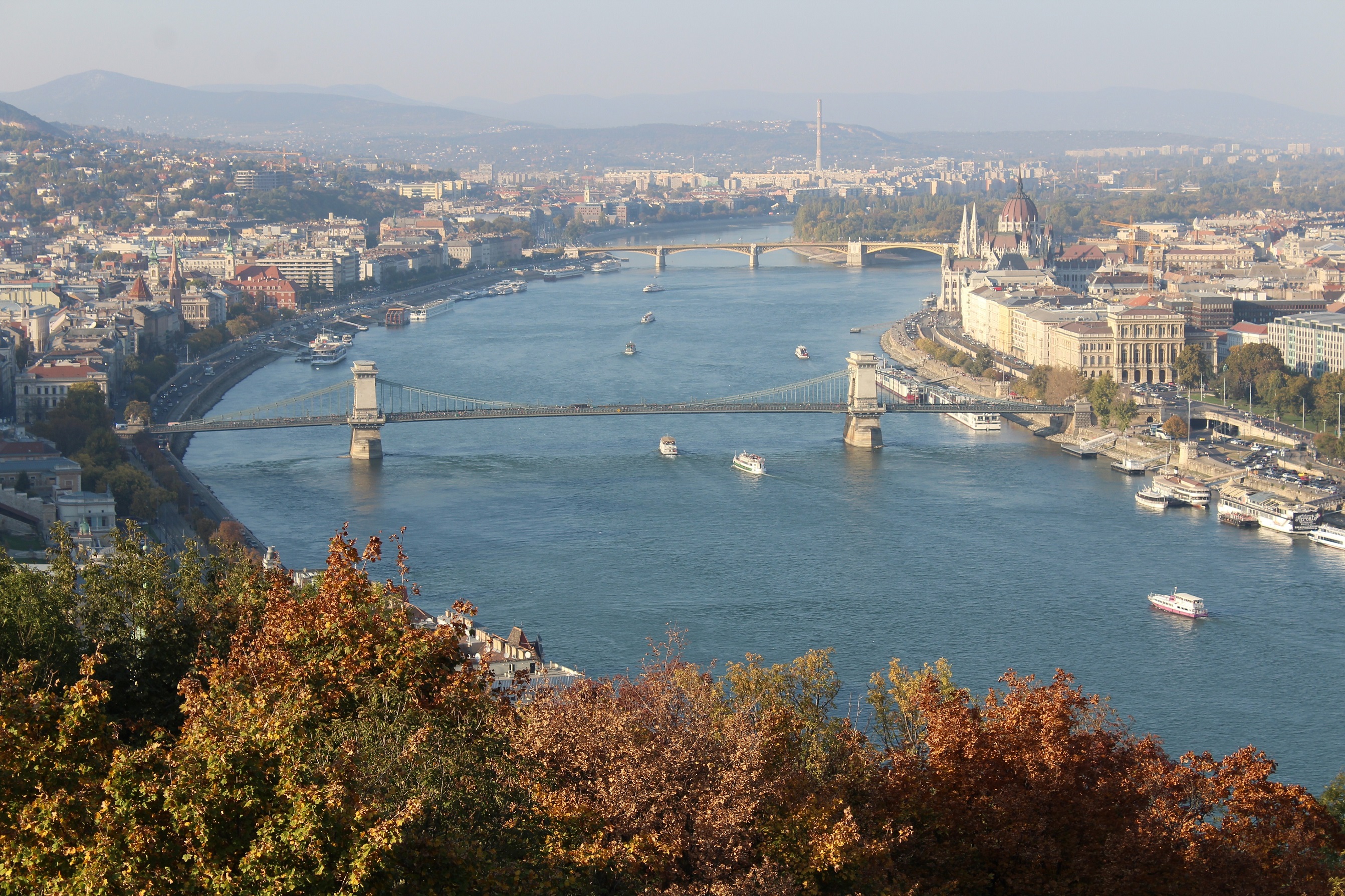
Budapest 2018. X. 14. ©
.
Africa
Kenya
(Monday), 18/05/2026 - 19:39 Dependent on fuel imports from the Gulf, Kenya has been heavily affected by Iran's effective closure of the Strait of Hormuz. Last week, the Kenyan government announced price hikes in response to rising global oil prices, including a 23.5-percent increase for diesel - triggering a call for the strike by transport workers. Privately owned "matatu" minibuses, Kenya's main form of public transport, went on strike. Kenya's public transport system was paralysed when protesters barricaded roads over fuel price hikes and lit bonfires on the outskirts of the capital, Nairobi, attempting to stop cars and motorbikes. Schools are closed and events cancelled. Four Kenyans died and at least 30 were injured today in fuel price protests triggered by the Middle East war, which saw the country's public transport system grind to a halt. Interior minister Murkomen alleged that 'criminal elements had been mobilised' to target government and personal property. Police had made 348 arrests and the roads had now been cleared, he said. Kenyan rights group Vocal Africa strongly condemns the use of lethal force by law enforcement. The protests spread to other major towns, including Mombasa, Nakuru, Eldoret and Nyeri. "This is a war that we have not caused," treasury and economic planning minister Mbadi told the NTV broadcaster. Critics argue that Kenya has high taxes on fuel that could be reduced, although it is also reliant on them to service high levels of debt and a strained budget. A day of protests such as today's can cost Kenya's economy around 50 billion shillings ($390 million) a day, said economist Iraki. Since the start of the Middle East conflict, Kenya has raised petrol prices by 20 percent, while diesel has increased by up to 45.8 percent. "The government is responsible because it determines the price... It takes a lot of money from fuel for tax," Iraki said. The energy regulator said the government had spent $38.5 million to cushion consumers from soaring diesel and kerosene prices in its latest review. While Kenya is among East Africa's most dynamic economies, around a third of its 50 million citizens still live in poverty. Last month, Kenyan authorities also ’suspended fuel quality standards to maintain supply in the face of shortages’. (Source: France 24 / AFP)
Asia
Iran
(19.05.2026) Yesterday evening, Trump announced that he had postponed an attack planned for today against Iran at the request of Saudi Arabia, Qatar, and the United Arab Emirates. He added in a post that he instructed the Defense Department to be prepared to go forward with a full, large-scale assault of Iran, on a moment’s notice, in the event that an acceptable Deal is not reached. Iran today revealed details of its latest proposal submitted to the United States to end the war launched by Washington and Israel against Tehran in February. Tehran says its proposal calls for ending the war on all fronts, lifting sanctions and withdrawing US forces from around Iran. (Source: TRT World - Turkey)
Israel
19/05/2026 2:42 pm The Israeli newspaper Yisrael Hayom reported that Prime Minister Benjamin Netanyahu convened another emergency meeting of the Security Cabinet yesterday evening - meeting twice in 24 hours to discuss an imminent round of fighting with Iran. This reflects a state of high alert within the Israeli security establishment, given the rapidly evolving intelligence and military developments related to the possibility of a renewed full-scale war with the Islamic Republic. The meeting focused on in-depth and lengthy discussions assessing the likelihood of another violent round of fighting with Iran in the foreseeable future. This comes amidst escalating field movements and heightened security alerts in Tel Aviv. (Source: Voice of Emirates - United Arab Emirates)
Persian Gulf
May 19, 2026, 2:17 PM The Strait of Hormuz may never truly reopen, Tehran's Persian Gulf Strait Authority launched yesterday reflects. It converts the Strait of Hormuz from an international waterway into a sovereign toll booth. The reputational damage to Hormuz as a reliable corridor is already irreversible. Gulf policymakers are mapping alternatives. The legislation underpinning the PGSA bans Israeli vessels under any circumstances, requires Supreme National Security Council approval for ships from hostile nations and denies passage to vessels from countries deemed to have damaged Iran until compensation is paid. 'We now have a single, central scenario which assumes a prolonged and significant disruption to the Strait of Hormuz through autumn', ratings agency Moody’s said as has abandoned its earlier weeks not months baseline. Moody’s warns that even a ceasefire does not equal normalisation: shipping backlogs, tanker repositioning and insurance market recovery would take months. There are four realistic options for how the strait is managed in future – none of them comfortable for the Gulf Cooperation Council (GCC). Unilateral Iranian control is out of the question for the Gulf oil producers, who regard it as politically selective access in the interests of Tehran and not of its neighbours in the Arabian Gulf. An Iran-Oman co-management arrangement, suggested early on in the conflict, is theoretically possible but would require GCC acceptance that Abu Dhabi and Riyadh are unlikely to extend. A US-Iran condominium – joint oversight as part of a wider nuclear and conflict settlement – is a framework Trump has dallied with, but it would be viewed with deep suspicion in the Gulf. A broader Gulf arrangement including Iran and the GCC states would seem to be the most logical long-term solution, but it requires a level of trust that does not exist now 'and may not exist for years'. Alternatives? Saudi Arabia’s East-West pipeline is pumping at full capacity, with crude exports via Yanbu of about 5 million barrels per day; the UAE’s Habshan-Fujairah pipeline adds another 1.5 million to 1.8 million bpd. Together they cover less than a third of pre-war Hormuz throughput – and both have been targeted by Iranian drones. Kuwait, Bahrain and Qatar have no alternatives at all. Longer term, analysts point to revival of the 45-year-old Iraq-Saudi pipeline, the Kirkuk-Ceyhan route to Turkey’s Mediterranean coast, a second UAE pipeline to Fujairah and rail corridors connecting to Oman’s Sohar port outside Hormuz.
(Source: Arabian Gulf Business Insight - headquarters: London, United Kingdom; regional office: Dubai, United Arab Emirates)
by Kane, Editor-at-Large of AGBI who acts as a consultant to the Ministry of Energy of Saudi Arabia
.6 5 20
.
Miért marad el az EU-ban a szolidaritás,
amikor Magyarországot fenyegetések érik Ukrajna részéről?
Új hidegháború zajlik,
a kínai stratégia a többpólusú világrend kialakítására épül;
alapjaiban kérdőjelezi meg az eddigi, egyetlen domináns hatalomra épülő rendszert?
Horváth, a Szuverenitásvédelmi Kutatóintézet igazgatója
és Kusai, Magyarország korábbi pekingi nagykövete,
a Pázmány Péter Katolikus Egyetem docense beszélget.
Aki kérdez: Árendás.
Forrás: YouTube / Szuverenitásvédelmi Hivatal
(video)
Egyre élesebb a geopolitikai küzdelem.
A világ újrafelosztása folyamatában
a nagyhatalmak közötti verseny erőpolitikaként jelenik meg.
Egyik következmény: Magyarország is egyre gyakrabban válik külső befolyásolási kísérletek –
politikai nyomás, fenyegetések vagy választási folyamatokat érintő beavatkozások - célpontjává.
13 610 megtekintés
Kulcsszavak:
Afrika Arab-tenger Atlanti-óceán Ázsia Bizánci Birodalom Dánia Egyesült Államok Egyesült Királyság ENSZ Európa Európai Központi Bank Európai Unió Földközi-tenger Franciaország globális Grönland Hollandia Hormuzi-szoros Irán Izrael Japán Kína Magyarország Második Világháború NATO Németország Olaszország Oroszország Panama-csatorna Pázmány Péter Katolikus Egyetem Római Birodalom Spanyolország Száhel-övezet Szovjetunió Szuverenitásvédelmi Hivatal Törökország Ukrajna Venezuela
. 6 4 29
.
Europe
Germany
April 29, 2026, 4:45 AM On a new international footing. Lau, a journalist at the weekly Die Zeit is one of Germany’s foremost foreign affairs specialists. His personal-political reflections are distilled in a new book entitled Der Westen sind jetzt wir, or The West, That’s Us Now, in which he divides his critique into four thematic regions: the United States, Russia, the Middle East, and China. He concludes with a series of prescriptions of how a more courageous and self-confident Germany, ’leading’ a more autonomous Europe, can begin to cope with the dystopian world order of U.S. President Trump, Russian President Putin, and Chinese President Xi. When Merz took office, Europe was still reeling from the Trump administration’s early attacks on liberal democracy. He signaled a more robust response from Berlin toward Washington, Moscow, and Beijing, declaring that Germany ’is back.’ Then came the June 2025 U.S. attacks on Iran, followed by the operation in Venezuela, interspersed with threats to Canada and Greenland, peppered with casual volleys of insults about European leaders. And most recently, the mayhem of the U.S.-Israeli war on Iran that began on Feb. 28. Merz has rhetorical inconsistencies. Before leaving on a trip to Washington, he said in February that he wouldn’t lecture the White House on international law. Furthermore, he dismissed the notion of values, which has underpinned eight decades of foreign policy, echoing the Trumpian mantra of “deals” and “interests.” He praised the United States for doing the West’s ’dirty work’ in taking out the former spiritual leader, Ayatollah Khamenei, and degrading Iran’s nuclear potential. While sitting by Trump’s side in the Oval Office, one in a long line of excruciating sofa-based press conferences to which visiting leaders have been subjected in Washington, he smiled meekly when the president excoriated the Spanish and British prime ministers, Pedro Sanchez and Keir Starmer, for not aiding the war effort. When he arrived back in Germany - and possibly only then realized the potentially catastrophic consequences for Germany’s and Europe’s economies, alongside the benefit that skyrocketing oil prices were providing Putin - that he did an abrupt U-turn. Each subsequent statement seemed designed to distance himself further from Trump. And in remarks that seemed destined to antagonize the White House, Merz suggested that the US was being outplayed. ‘An entire nation is being humiliated by the Iranian leadership, especially by these so-called Revolutionary Guards,’ he declared. On China, Merz portrays himself as a hawk, then travels there with business delegations in tow, talking benignly about partnership in a bid to do whatever it takes to boost the economy. In this regard, he is no different from his European equivalents. Then there have been the straightforward clangors. Merz was in a minority of leaders of major economies who took the time to travel to Belém, Brazil, to attend the opening of the U.N. Climate Change Conference in November, only to undo much of that goodwill by disparaging the host city on his return home. ’Last week, I asked some journalists who were with me in Brazil: ‘Who among you would like to stay here?’ No one raised their hand. Everyone was delighted to be back in Germany and to have left that place.’ Utterances such as these show a lack of sure-footedness. Does his longer-term strategy deserve more praise? The German foreign policy that he inherited had reached what Lau describes as at rock bottom. ’ ’He has gotten many of the big calls right.’ ’ In barely a year, 'he has overhauled the country’s entire approach to military spending'. ’He’ did push through a constitutional change allowing for heavy borrowing on defense. ’He has also not shied away from a difficult public debate on the need to turn Germany’s armed forces into Europe’s most powerful’ - and quickly. He has mooted the possibility of European Union defense guarantees (something that the French have been pushing for years). He even talked of the possibility of ’ ’extending the French nuclear umbrella among a populace ritualistically hostile to all things nuclear’ ’. And ’he has been at least as forthright other leaders on the need for sustained support for Ukraine’. All of this is vigorously debated in Berlin. But when it comes to meaningful debate about Israel, Germany remains paralyzed. Lau, like many reasonable commentators, calls for a nuanced discussion, separating the requirement to combat antisemitism at home and protect Israel as a state, with the need to move away from slavish support for Israeli Prime Minister Benjamin Netanyahu, his expansionist dreams and his extremist ministers. Many politicians say the same, but only within the safety of private discourse. Lau concludes his book by recalling a recent conversation over a beer, with a Finnish colleague. How would that country feel about U.S. withdrawal from NATO? Finland, the colleague replied, already assumed that the United States wouldn’t be there for the Finns and that, together with the Nordic and Baltic states and Poland, they had enough to hold back the Russians. The Germans are heading in that direction. They still have some way to go militarily and psychologically. (Source: Foreign Policy - U.S.)
By Kampfner, the author of Braver New World: The Countries Daring to Do Things Others Won't, published by Atlantic Books.
Ireland
28/04/2026 - 16:13 PM EU presidency should be used to advance Irish unity, Sinn Fein MEPs say. (Source: Breaking News - Ireland)
Romania
(Monday), April 27, 2026 1:27 pm CET Leaders of the PSD - formerly a member of the governing coalition - and the 'far-right' opposition Alliance for the Union of Romanians (AUR), which is leading in the polls, said at a joint press conference today that they would submit a motion of censure together. Together they have only 219 seats in parliament, 14 votes short of the majority needed to topple the prime minister. Bolojan, head of the center-right National Liberal Party (PNL), is currently leading a minority coalition government after the PSD decided to join the opposition last week. Romania was plunged into political crisis in 2024 after a presidential election was controversially annulled due to suspected foreign interference. (Source: Politico - U.S.)
23 April 2026 Seven ministers from Romania’s Social Democratic Party (PSD) stepped down after the party withdrew its political support for Prime Minister Ilie Bolojan, triggering a cabinet shake-up. National media reported that efforts could now begin to form a minority government, while noting that the country is facing a new wave of political crisis. (Source: Anadolu Agency - Turkey)
23 April 2026 Political crisis. Tensions between Prime Minister Ilie Bolojan and the Social Democratic Party (PSD) escalate into an open confrontation. PSD withdraws support after internal vote with 97.7% backing move. Prime Minister Bolojan’s government is at risk of losing majority. Multiple scenarios emerge, including minority rule, government collapse or leadership change as talks intensify. PSD, the largest force in parliament, has increasingly criticized the government’s economic policies and leadership style. Bolojan has refused to step down. President Dan is saying consultations among political parties would follow PSD’s decision and could involve multiple rounds of talks. He stressed that all options remain open, except for including the far-right Alliance for the Union of Romanians in government. Bolojan was appointed prime minister in June 2025. Backed by the National Liberal Party (PNL) and endorsed by President Dan, he was tasked with forming a broad-based government maintaining Romania’s 'pro-European direction'. It brought together the Social Democrats, the Liberals, the reformist Save Romania Union, and the Democratic Union of Hungarians in Romania. The coalition agreement included a rotating premiership: the Liberals would hold the post until April 2027, after which the Social Democrats would take over. Bolojan’s government has prioritized fiscal discipline and structural reforms, as Romania grapples with budgetary pressures and strict commitments tied to European Union funding. Cutting the deficit, curbing spending, and meeting EU milestones have formed the backbone of the government’s agenda, policies increasingly difficult to sustain politically at home. PSD has gradually shifted its tone, criticizing the very economic measures it helped endorse. Inflation remained elevated at 9.9% in March 2026. The party repositioned itself as a critic of austerity, arguing that the government’s policies were placing excessive pressure on households. Bolojan argued that coalition partners were trying to evade responsibility through political manoeuvres. The PNL has reaffirmed its support for Bolojan, while the Save Romania Union has said it would continue supporting the prime minister on an interim basis. The Democratic Union of Hungarians in Romania has ruled out supporting a motion of censure but stressed that no stable government can be formed without the PSD. If the Social Democratic Party withdraws its ministers, Bolojan could remain in office and attempt to govern with a minority Cabinet. He would have a limited window, up to 45 days, to seek a new vote of confidence in parliament. During that period, the government’s ability to pass major legislation would be significantly constrained. A more decisive outcome would be the collapse of the government through a no-confidence vote. If the PSD aligns with opposition forces, including the Alliance for the Union of Romanians, the parliamentary arithmetic could quickly shift against Bolojan. Such a move would trigger negotiations for a new government, but not necessarily a quick resolution. In a coalition reset without a full collapse, the ruling alliance could survive by replacing the prime minister with another figure from the National Liberal Party who is more acceptable to the Social Democrats. This would allow the coalition to maintain its parliamentary majority. Such a compromise would reinforce the perception that leadership is negotiable and that internal pressure can override agreed power-sharing arrangements. A more gradual scenario: a period of prolonged instability, where the government stays but the political blame game and deadlocks continue. (Source: Anadolu Agency - Turkey)
European Commission
April 29, 2026 11:08 am CET Iran war costs EU €500M a day, der Leyen warns. The ongoing closure of the Strait of Hormuz has driven up global energy prices. She said the Commission will present an Electrification Action Plan by the summer. She also urged 'closer coordination' on diesel and jet fuel reserves, oil stock releases and output from refineries. (Source: Politico - U.S.)
27 April 2026 6:15 pm 'Europe' has paid an extra $32 billion for oil and gas imports since the U.S.-Israel war against Iran began, European Commission chief der Leyen said, speaking at a news conference in Berlin. 'In 2022, Putin cut off our gas supply', and now it’s the Strait of Hormuz, she told. She 'urges' faster clean energy transition, nuclear innovation, and opposes premature sanctions relief for Iran. (Source: Outlook - India)
European Parliament
28/04/2026 - 19:03 GMT+2 'European Parliament demands €200 billion extra for EU budget in hardball talks calling for a 10% increase and pushing for EU-level taxes'. (Source: Euronews - based in Lyon, France)
Bosnia and Herzegovina
April 26, 2026 The Party of Democratic Action strongly condemns the holding of a meeting in Zagreb at which, under the guise of a discussion on the position of Croats in Bosnia and Herzegovina, the ideas of ethno-territorial divisions are once again being promoted and new maps of Bosnia and Herzegovina are being drawn. The Republic of Croatia, as a member of the European Union and NATO, has a special responsibility to respect the sovereignty of Bosnia and Herzegovina. (Source: Sarajevo Times - Bosnia and Herzegovina)
Moldova
28 April 2026 11:11 (UTC +04:00) Moldova’s 'integration' into Romania could allow Chisinau to join the European Union more quickly, said Moldova’s President Sandu in an interview with Le Monde. Sandu holds Romanian citizenship. She emphasized that such a decision must be accepted by the majority of citizens. Sandu did not rule out the possibility of Moldova joining the bloc without the unrecognized Transnistrian Republic. (Source: APA - Azerbaijan)
Europe
23 April 2026 There will be no European Union nuclear deterrent. Contrary to the headline-inducing claims of their leaders, most European Union member states are not actually rearming (sans the Baltics, Poland, and a few others). But they are aware that Russia remains eager to restore its control over its near-abroad. This caused Western European leaders – who are aware that Russia does not really threaten their own states – to pursue an all-out attempt in order to keep the Trump administration involved in NATO, the cheapest way to keep the EU defended without them having to actually spend significantly more money. Multiple member states refused American access to their bases or overflight rights during the Iran War. Lists are reportedly being drawn up of countries which need to face consequences. This week, Polish Prime Minister Donald Tusk spoke with French President Macron about the possibility of joint Polish-French nuclear exercises. These efforts are going to go nowhere in the short- to mid-term. America has a nuclear triad, meaning it utilises three nuclear delivery systems: Land-based silos, submarines, and aircraft. The United Kingdom only has submarines, and those four linked to only one base, located in Scotland. Each of them have a secret letter from the prime minister with instructions on what do if they cannot reach London during a conflict. What would those letters say if the UK became responsible for Europe’s defence? Currently, one of the options is to turn over command to Washington. If Scotland ever successfully leaves for the European Union, London would have to scramble in order to find a new base. Three EU member states – Ireland, Austria, and Malta – have already signed the Treaty on the Prohibition of Nuclear Weapons and would arguably require them to do everything possible to block the use of nuclear weapons. France would likely love to expand its influence into Eastern Europe, seeking to replace the United States as the protector of the continent. But France’s nuclear deterrent still possesses no land missiles and they ’only’ possess roughly 300 missiles – far fewer than Russia and even China. France, Paris – which already has incredible influence in Brussels – would see that influence heightened further, likely surpassing Berlin’s. Who would give the order? The European Commissioner of Defence and Space does not even have a say over the European Union’s defence forces; that instead goes to High Representative Kallas. ’Warsaw would be foolish if it has not already quietly begun looking into what it would take to speedily develop a nuclear weapon’. This would be far more effective than relying on a weak British/French deterrent – or a nonexistent Brussels-based one. (Source: Brussels Signal - Belgium)
.6 5 10
.
United States
May 16, 2026 13:43 IST US President Trump came to China with big hopes of securing concrete agreements on trade and rare earths. Apart from agreements on soybeans and Boeing aircraft, Trump left Beijing empty-handed, literally. Yesterday, Trump and his team left Beijing with nothing Chinese on his Air Force One. Not even any souvenirs. The US delegation, including White House staff and American reporters, discarded every Chinese gift into a trash bin kept near the aircraft. The same playbook has been followed by US delegations in Beijing for generations. This time it happened in full public view, as the US delegation tossed out everything Chinese officials gave them during the two-day visit, to prevent any possibility of Chinese spying or tracking. "American staff took everything Chinese officials handed out - credentials, burner phones from White House staff, pins for delegation - collected them before we got on AF1 and threw them in a bin at the bottom of the stairs. Nothing from China allowed on the plane," this was revealed by Goodin, the New York Post's White House Correspondent. The precautions were not just limited to the departure itself. Trump and his delegation, which included Nvidia CEO Huang and Musk, even left their personal electronic devices in the US before travelling to China. This was done to shield against possible hacking. Mobile phones were kept stored on Air Force One in Faraday bags, which protect data from being hacked remotely. These bags not only block wireless signals, but also keep out GPS, Wi-Fi, Bluetooth and RFID signals. Trump and his team used only burner phones and burner email addresses throughout the trip. These "clean devices" only have the most basic functions designed to hold minimal information. (Source: India Today)
(May 15, 2026) Trump left with little to show for two days of talks with Xi. US president returns from China after summit that yielded no big deals but brought hope of more stable ties. (Source: Financial Times - U.S.)
May 15, 2026 at 5:49 AM The Chicago Council found 77 percent favoring food and medical aid, 71 percent favoring sanctions, and 63 percent favoring arms or military supplies if China moved against Taiwan. But support for sending U.S. troops stood at 43 percent and opposition at 51 percent, according to the same survey. A Reuters/Ipsos poll found in 2023 that 38 percent supported, and 42 percent opposed, a U.S. troop deployment if China attacked Taiwan. The Reagan Institute found last year 60 percent of Americans supporting the commitment of U.S. forces if China invaded Taiwan - and 77 percent saying it was important for the U.S. military to defend Taiwan against Chinese aggression. A Center for Strategic and International Studies (CSIS) war game in 2023 found that Taiwan, the U.S., and Japan defeated a conventional Chinese amphibious invasion in most scenarios, but at enormous cost in ships, aircraft and servicemembers. Taiwan counts for more than 60 percent of global foundry revenue and more than 90 percent of leading-edge chip manufacturing, according to a U.S. trade guide. Those chips run through phones, cars, data centers, telecommunications equipment, aircraft and munitions. They are essential ingredients for an advanced society, from consumer comfort right through to defense of the homeland. It also anchors the military balance in the Western Pacific. Taiwan sits at the pivot between Northeast and Southeast Asia, inside the First Island Chain. If China controlled Taiwan, it would gain a major geographic opening into the wider Pacific, put more pressure on Japan and the Philippines, and make it harder for the U.S. and allies to maintain a free and open Indo-Pacific. Taiwan matters because it is simultaneously a semiconductor super-node, a military chokepoint and a democratic credibility test for U.S. power in Asia. Congress wrote the stakes into law in 1979 with the Taiwan Relations Act, declaring peace and stability in the Western Pacific to be political, security and economic interests of the U.S. The same law says the U.S. should provide Taiwan defensive arms and maintain the capacity to resist force or coercion that jeopardizes Taiwan's security or social and economic system. (Source: Miami Herald / Newsweek - = U.S.)
Wednesday, May 13, 2026 In January, Mr. Trump said he hopes talks with Russia and China will lead to major power denuclearization. The president also said he is willing to support bilateral nuclear talks with China but favors a three-way forum with officials from the U.S., China and Russia. Mr. Trump also said he has spoken to Mr. Xi about joining talks on a replacement for the now-expired New START nuclear accord after the treaty lapsed in February. Chinese officials have previously stated that their opposition to nuclear arms talks stems from fears of disclosing strategic weapons secrets, which they believe would undermine deterrence. U.S. nuclear deterrence efforts are under stress as Russian and Chinese nuclear forces in recent months have shown a greater interaction, demonstrated in joint nuclear bomber and submarine patrols. (Source: The Washington Times - U.S.)
Wednesday, May 13, 2026 The People’s Liberation Army is on the march militarily and U.S. military forces in the Pacific are working to deter a war with China over Taiwan, against Japan or in the South China Sea, according to the deputy commander of Army forces in the Pacific. Lt. Gen. Vowell, the No. 2 leader at the U.S. Army Pacific, provided a blunt assessment of the PLA and its designs for taking control of neighboring countries and regions in the Pacific. Strategically, China is on an insidious, incremental, pernicious and malicious march across the region to be the big brother in the neighborhood - and not in a helpful big brother way, a bully, Gen. Vowell said in a podcast for the Army War College. Since the late 1980s, the PLA has built challenging capabilities ranging from space weapons to submarines, he said. 'We see this every day in the theater. They’re rubbing up against surface combatants. You see the airplanes that are doing interdictions. Our partners see this all the time when there’s challenges to sea features in the South China Sea, or East China Sea, or Japan and the Ryukyus,' he said. The rapid buildup of PLA forces is focused on naval power and projecting that power through the first island chain stretching from Japan to the South China Sea. The threat also includes expanding missile and nuclear forces. Gen. Vowell, who has been working in the region since 2018, said the Chinese communists, since 1949, are bent on taking other nations’ territory. The drive for expansion is being fueled by a Beijing propaganda narrative of Chinese suffering during a 'century of humiliation' from the 1800s, when a weak and divided nation was dominated by foreign powers. “That century of humiliation is over and they’re on the march to be the century of rejuvenation by 2049,” Gen. Vowell said. “These are all declared things from Xi, the Chinese Communist Party. The PLA’s actions are a response to this.' China’s actions suggest the expansion is not about righting past wrongs. New military power is not going to be used in benevolent ways, he said. 'They’re building it up to be able to walk across the water and take any sea feature that they think is theirs,' he said, noting a push to alter the status quo and using laws as part of the activity. The initial expansion is regional but the ultimate objective for the PLA is to control areas globally, he said. What we really face is a [anti-access, area denial] network that’s [a] pretty exquisite system of sensors to shooters, Gen. Vowell said. The Russian invasion of Ukraine also raised new fears among regional states over a future Chinese invasion of Taiwan. Beijing used a version of Russia’s argument that Ukraine is part of Moscow’s territory in claiming Taiwan is a false country owned by China, he said. 'What happened was people realized just how insistent China could become, soon seizing territories in Japan, seizing territories in the South China Seas or Philippines, or seizing Taiwan,' Gen. Vowell said. Operationally, Chinese military pressure campaigns on Taiwan also highlight the dangers. Increased PLA warship and warplane activities around the island are designed to wear down Taiwan’s defenses. “The ships would set up and look like they’re ready to start either a quarantine or a blockade. And that’s very provocative for an island nation,' he said. In response to Chinese military activities, regional nations have been joining with the U.S. military in conducting large-scale regional exercises, he said. Cold War deterrence of the Soviet Union in Europe proved that forward-deployed troops, like U.S. forces in the Indo-Pacific, are the best guarantee of keeping the peace, Gen. Vowell said. (Source: The Washington Times - U.S.)
.6 5 15
.
China
(Thursday) 14 May 2026 China's President Xi and his US counterpart Trump at Beijing summit today agreed on 'new vision' of China-US ties, building a "constructive China-US relationship of 'strategic stability' the Chinese Foreign Ministry statement said. Xi stressed Washington and Beijing should be "partners, not rivals," as the two leaders met in the Chinese capital. The two sides agreed to build a bilateral relationship of constructive strategic stability to provide strategic guidance for ties over the next three years and beyond, which Xi said would be welcomed by "the people of both countries, as well as the international community." The constructive strategic stability "should be a positive stability with cooperation as the mainstay, a sound stability with moderate competition, a constant stability with manageable differences, and an enduring stability with promises of peace," Xi said, stressing that it should not be a mere slogan but concrete actions by both sides toward the shared goal. Xi also urged the two sides to better utilize political, diplomatic, and military communication channels while expanding exchanges and cooperation in trade, health, agriculture, tourism, culture, and law enforcement. China and the US "both stand to gain from cooperation and lose from confrontation,' Xi said in opening remarks at the Great Hall of the People, China's ceremonial state building. "We should help each other succeed, prosper together, and find the right way for major countries to get along in the new era," he said. Xi said the world is undergoing transformations “not seen in a century” and described the international situation as fluid and turbulent, adding that it has reached “a new crossroads.” He said China and the US faced questions “vital to history, to the world, and to the people,” including whether they could create a new paradigm of major country relations, jointly address global challenges, and provide more stability for the world. “They are the questions of our times that you and I need to answer as leaders of major countries,” Xi said. He "always believed" Beijing and Washington have "more common interests than differences," Xi said, adding that one country’s success represented "an opportunity for the other" and that stable bilateral ties were beneficial for the world. Xi noted that he looked forward to further discussions on issues important to both countries and the wider international community, and to working with Trump "to set the course for and steer the giant ship of China-US relations," with the aim of making 2026 a historic landmark year that opens a new chapter in bilateral ties. He emphasized that economic ties between the two nations are "mutually beneficial and win-win in nature." "Yesterday, our economic and trade teams produced generally balanced and positive outcomes. This is good news for the people of the two countries and the world," Xi said. On Wednesday, top Chinese and US trade negotiators met in South Korea to hold what Beijing described as "candid, in-depth, and constructive exchanges." "Facts have shown time and again that trade wars have no winner," Xi said, emphasizing "equal-footed consultation" as the only right choice, while urging the two sides to "jointly sustain the good momentum that they have worked hard to create." Xi also emphasized China's commitment to the stable, healthy, and sustainable development of China-US relations, state broadcaster CCTV reported. While the White House called the Xi-Trump meeting "good," it did not mention any discussion about Taiwan, which China claims as its own. (Source: Anadolu Agency - Turkey)
May 14, 2026 5:20 AM "The Taiwan question is the most important issue in China-U.S. relations," Xi told Trump during a meeting at the Great Hall of the People. "If it is handled properly, the bilateral relationship will enjoy overall stability," Xi said. 'Otherwise, the two countries will have clashes and even conflicts, putting the entire relationship in great jeopardy.' (Source: Miami Herald / UPI = U.S.)
.6 5 16
.
Africa
Kenya
11/05/2026 - 07:41 France is bringing together French and African business and political leaders in Nairobi, Kenya, today at the Africa Forward summit – the first time it has staged such an event in an English-speaking country with the desire to diversify France's alliances, in light of the recent diplomatic crises in the Sahel. 7 million French people have connections to Africa – from those of African descent to those married to Africans, or born on the continent. Macron wants to embody a new generation with many shared interests, particularly concerning youth, culture and the diaspora, Confavreux, spokesperson for France's Ministry for Europe and Foreign Affairs said. Alongside French President Macron and his Kenyan counterpart Ruto, some 30 heads of state and between 1,500 and 2,000 French and African business leaders and stakeholders are expected to attend. Young people, artists and athletes have also been invited. On the agenda will be artificial intelligence and digital transformation ecosystems, as well as health sector investments and local manufacturing of essential commodities, discussions on creative and cultural industries as economic drivers, sport as an emerging frontier for investment and job creation, the energy transition, infrastructure development, regional connectivity, agriculture and food systems. The two-day event conference will pay attention to promises on investment and 'climate justice' issues. Macron may rhetorically commit some money for new climate initiatives, but this will be heard with some scepticism, as African leaders know very well that France is facing its own internal issues. The choice of Kenya to host the summit could add credibility to Macron's promises, Marchal, a senior research fellow at Sciences Po Paris covering Africa told. "We must consciously move away from pre-written narratives that have historically defined this relationship. The Africa Forward Summit is about breaking these barriers and focusing on solutions," SingOei, principal secretary of state in the country's Department for Foreign Affairs, said. In the past decade, France has invested an estimated €1.8 billion in Kenya. France currently ranks as Kenya’s fourth largest foreign direct investment partner, as well as the leading bilateral partner in the country's energy sector. More than 140 French enterprises operate in Kenya. Nairobi is a central hub for transport and logistics, infrastructure investment expert Odumade told. It has a booming financial industry as well as a technology start-up environment, she said. The Kenyan government has really started capitalising private sector investments within various key sectors such as agriculture, infrastructure. The gap between what African countries need on climate adaptation finance and what has been delivered is widening, not narrowing, Juma, a Kenyan independent policy advisor, said. "Summits like this one are increasingly being judged on whether they close that gap or add to a long list of pledges.' He added that one issue that should most definitely be on the agenda is the current Iran-United States conflict. 'Any escalation affects global oil prices, shipping routes and the cost of refined imports into African markets,' he said. "That's not just a foreign policy story – it hits household livelihoods directly via transport fuel, food prices and the operating costs of critical infrastructure.' (Source: RFI - France)
Europe
Austria
(Tuesday), 12 May 2026 Austria scrambled Eurofighter jets twice Sunday and again Monday after two US Air Force PC-12 aircraft, a turboprop model often used for surveillance and reconnaissance missions entered Austrian national airspace without permits required for military transit. After the Austrian jets intercepted, the US military planes reportedly turned back and returned to Munich. Last month, Austria barred US military aircraft involved in the war against Iran from using Austrian airspace, citing the country’s neutrality law. Austrians „wanted nothing to do with US President Trump’s politics of chaos and his war’, Vice Chancellor Babler wrote on social media, adding, “Neutrality is a precious asset in our country. No to war.” (Source: Anadolu Agency - Turkey)
Belgium
12 May 2026 Tens of thousands march in Brussels against pension and wage reforms. Protesters voiced opposition to government measures affecting pensions, automatic wage indexation, and rising energy costs. Trade unions accused the federal government of dismantling key elements of the social model. According to police, around 40,000 protesters joined the march. Trade unions said the number reached approximately 75,000. Public transport across Belgium is heavily disrupted by national strike. Brussels and Charleroi airports experienced limited capacity during the day. (Source: Anadolu Agency - Turkey)
France
11/05/2026 - 11:49 GMT+2 First protests against high fuel prices. ’Producing is more expensive than ever, and prices are not keeping pace’ - around 50 farmers mobilised in the Lyon region today morning following a call by the Coordination Rurale union to protest soaring fuel costs linked to the crisis in the Middle East. With around 20 tractors demonstrators headed along the A7 motorway towards the Rhône prefecture under police escort, moving towards Lyon’s Confluence district, where significant traffic disruptions were reported. A prefectural order issued yesterday was banning any procession, march or demonstration in the area today. Authorities cited industrial safety concerns linked to the storage and transport of flammable and hazardous materials near major infrastructures in the hydrocarbon distribution chain. The Coordination Rurale (CR), which organised the mobilisation, is demanding stronger government support in response to what it describes as exploding production costs and unsustainable fuel and non-road diesel (GNR) prices. The price of agricultural diesel had almost doubled since the start of the Middle East crisis. Agricultural diesel already benefits from preferential taxation that costs the French state nearly €1 billion annually. On 21 April, the French government ’unveiled €20 million in emergency support measures for struggling farmers’, including a temporary increase in the GNR rebate to 15 cents per litre throughout May. The package also includes deferred social security and tax payments, a flash fuel loan for small and medium-sized farms, and the suspension of excise duties on tractor fuel in April. ’GNR prices have risen by between 60% and 80% for all farmers, while the government’s targeting will only benefit a minority,’ France’s largest farming union FNSEA president Rousseau said last Thursday. The FNSEA is calling for fuel aid of 30 cents per litre. (Source: Euronews - based in Lyon, France)
Germany
11/05/2026 - 14:42 GMT+2 German telecommunications company Deutsche Telekom and defence firm Rheinmetall plan to jointly develop a defence shield to protect cities and critical infrastructure across Germany - a system capable of detecting, disrupting and intercepting drones in emergencies, the companies announced today. The system would use sensors to detect drones and could disable them using jamming technology or interceptor drones. Rheinmetall chief executive Papperger said drone defence required a combination of sensors, countermeasures and secure communication systems. Deutsche Telekom said it would contribute expertise in cloud computing, connectivity and data analysis. The companies say laser technology could also be used to stop drones near industrial sites, power stations and other sensitive infrastructure. Germany has passed legislation allowing the armed forces to shoot down drones in some high-risk situations. Deutsche Telekom has been developing a sensor network since 2017. It said its systems use a combination of video, audio, radio-frequency and radar sensors to detect drones. One method uses passive radio-frequency detection, which does not emit signals itself. Telekom said the technology could detect more than 90% of drones operating at low altitude. The companies say detection systems now need to adapt because more drones are being controlled via mobile phone networks rather than traditional radio controllers. Together with Helmut Schmidt University/University of the Federal Armed Forces Hamburg, Deutsche Telekom is researching ways to detect such drones. Researchers are studying whether mobile networks themselves can help identify drone activity by detecting unusual data traffic patterns. The research is based on an Ericsson 5G standalone network installed on the university campus. Rheinmetall is also expanding its civilian drone defence operations. In December 2025, Rheinmetall, Hamburg police and the Hamburg Port Authority entered into a strategic partnership to help protect the port, where dense infrastructure and heavy radio traffic can make drone detection more difficult. Rheinmetall, whose defence systems are already in use in Ukraine and the Middle East, said it would develop customised solutions for critical infrastructure. (Source: Euronews - based in Lyon, France)
11/05/2026 - 14:01 GMT+2 German Defence Minister Pistorius and his Ukrainian counterpart Fedorov signed an agreement in Kyiv today to launch joint programme ’Brave Germany.’ After a visit to Berlin last month, Fedorov announced on Telegram that Germany and Ukraine had agreed on a new €4 billion defence package. Berlin accounted for around a third of all assistance provided to the country. The package includes funding ’for several hundred’ Patriot missiles and 36 IRIS-T launchers, alongside €300 million ’in investment for Ukrainian deep-strike capabilities’. ’ ’ It also includes the joint production of AI-enabled medium-range strike drones’ ’ , with an initial batch of 5,000 earmarked for the Ukrainian armed forces. Pistorius arrived in Kyiv today. Speaking to German news agency dpa, he said the trip would focus on expanding joint arms projects and developing new weapons systems together as part of the countries' strategic partnership. ’ ’The main focus is the joint development of cutting-edge unmanned systems across all ranges, particularly in the area of deep strike. In doing so, we are strengthening the security of both our countries.’ ’ At today's signing ceremony in Kyiv, Fedorov said ’Germany had begun financing mid-strike and deep-strike capabilities’. Despite Germany's massive military spending drive, the Bundeswehr still lacks one crucial capability: deep strike - the ability to carry out precision strikes against high-value military or infrastructure targets located hundreds – or even thousands – of kilometres 'behind the frontlines'. Former Chancellor Olaf Scholz had agreed with then US President Biden that American Tomahawk cruise missiles would be stationed in Germany as part of NATO's ’deterrence strategy’ against Russia. The missiles had originally been due to arrive in Germany in 2026, but that now appears increasingly unlikely. According to a report by the Financial Times, Pistorius is planning a trip to Washington to try to convince the Trump administration to sell Germany Tomahawk cruise missiles and the Typhon launch systems needed to fire them. At present, the Bundeswehr only has one weapon system that could be considered part of the lower end of the deep-strike category: the Taurus cruise missile, which has a range of more than 500 kilometres. Kyiv unveiled a potential long-range option last year that ’could help address Germany's deep-strike shortfall’: the FP-5 Flamingo ground-launched missile. The system's warhead carries more than 1,000 kilograms in total weight, equivalent to an estimated 450-550 kilograms of explosives. The impact radius is estimated at around 21 metres against heavily fortified targets such as reinforced concrete buildings, and up to 38 metres against softer infrastructure like refineries. The Ukrainian military has reportedly used the Flamingo to strike targets deep inside Russia, including a factory in the town of Votkinsk, more than 1,300 kilometres from Ukraine in February 2026. Russia is believed to manufacture Iskander missiles at the site, which is located near the city of Izhevsk. It remains unclear which specific weapons systems Germany and Ukraine are planning to develop under the new investment and cooperation agreements. (Source: Euronews - based in Lyon, France)
Latvia
(Monday), 11/05/2026 - 9:27 GMT+2 Latvian Defence Minister Spruds resigned yesterday following a recent incursion by two Ukrainian drones into the Baltic country's territory. On Thursday, two drones crossed over the Russian border into Latvia. A fire briefly broke out at an oil depot, but was quickly brought under control by firefighters, according to the national police. Latvia's Prime Minister, Evika Silina, had called for Spruds's resignation, and said anti-drone systems had not been deployed quickly enough to counter Thursday's incursion. "The drone incident that occurred this week clearly demonstrated that the political leadership of the defence sector has failed to fulfill its promise of safe skies over our country," Silina wrote. The country is allocating nearly 5% of its GDP to defence, she added. Colonel Melnis is now set to take the position of defence minister, Silina said. (Source: Euronews; „Additional sources: AFP” = France)
Poland
11/05/2026 - 14:50 GMT+2 Poland has escalated its opposition to the Mercosur trade deal by filing a complaint with the EU’s top court and demanding that the agreement be suspended. Deputy Foreign Minister Bosacki stressed that Poland expects the Court’s ruling to lead to a suspension of both the validity and implementation of the agreement. In his view, the current version of the deal with the Mercosur countries would be harmful to both Polish and wider EU agriculture. Poland was the only EU member state to take legal action against the agreement before the EU’s top court, Agriculture Minister Krajewski said. He said that the Polish farming sector could count on the government’s full support. He added tghat the government’s priority was to protect both farmers and consumers, stressing that Polish producers were not afraid of competition provided it took place under fair conditions and high standards. The agreement was agreed by a majority of the EU Council on 9 January, with Poland, France, Ireland, Hungary and Austria opposed. The full partnership agreement will only enter into force after ratification by all EU member states. (Source: Euronews - based in Lyon, France / The Associated Press - U.S.)
European Commission
May 11, 2026 9:48 AM CET High Representative for Foreign Affairs and Security Policy, EU’s Kallas rejects Gerhard Schröder as Russia-Ukraine negotiator. „Former German Chancellor Gerhard Schröder is unfit to represent Europe in any peace talks to end the Russia-Ukraine war’, the EU’s chief diplomat said on her way into a meeting of foreign ministers in Brussels, today. Russian leader Putin has said he would like the ex-German chancellor to negotiate on Europe’s behalf. ’I think Gerhard Schröder has been the high-level lobbyist for Russian state-owned companies so it’s clear why Putin wants him to be the person, so he would be sitting on both sides of the table, she said. So far, the U.S. has acted as the chief mediator in Russia-Ukraine talks while Europe has been on the sidelines - though some leaders have called for Europe to take a more active role. Over the weekend, German Foreign Minister Wadephul said Europe should participate in the talks, represented by officials from the so-called E3 group of powers - Germany, France and the U.K. Asked under what conditions the EU could accept entering direct talks with Putin, Kallas said that Moscow needed to make concessions, she was last week in Moldova and mentioned the withdrawal of Russian troops from Moldova as one possible step to get Europeans more involved. (Source: Politico – U.S.)
European Union
13/05/2026 - 8:20 GMT+2 For the first time since 2017, Trump visits China. For Europe it’s a crucial happening. Trump needs a win. In Brussels, the ’centre-right’ EPP is rushing to settle, as a weakened Trump could turn his attention toward Europe next. Trump is under pressure to relax chip export controls for quick business deals. If he trades away this edge, Washington and Beijing will set the global standards for AI alone with Europe becoming just a rule-taker, not maker. European firms are already struggling to compete with cheap Chinese goods at home. If Trump relaxes tariffs for China, the flood of cheaper electric vehicles and steel might result in European exporters losing their competitive advantage in the US to the same Chinese rivals that are already flooding European shores. If Trump treats Taiwan’s security as a bargaining chip ’to secure China’s help in ending the Iran war, he might hollow out Europe’s own strategic commitments in the Indo-Pacific’. (Source: Euronews - based in Lyon, France)
Russia
13 May 2026 19:48 BST Russia has added Wallace, the former British defence minister, who was a close ally of Boris Johnson to a wanted list in connection with an unspecified criminal investigation. Mr Wallace served as the UK’s defence secretary from before Russia’s full-scale invasion of Ukraine in 2022 until August 2023. This development follows a call last October from a regional Russian lawmaker for Mr Wallace to be placed on Russia’s international wanted list. This demand stemmed from comments he made at the Warsaw Security Forum in September, where he suggested assisting Ukraine in carrying out a military strike on the bridge connecting southern Russia to Crimea, which Russia annexed from Ukraine in 2014. 'We have to help Ukraine have the long-range capabilities to make Crimea unviable. We need to choke the life out of Crimea. And if we do that, I think Putin will realise he's got something to lose. We need to smash the cursed bridge,' he said. (Source: The Independent - United Kingdom)
13 May 2026 10:25 (UTC +04:00) The United States wants to take control of gas transit from Russia to the European Union through Ukraine, said Russian Foreign Minister Lavrov. According to him, the Americans are also planning to buy the part of the Nord Stream pipeline owned by European companies for a small amount and restore the damaged pipelines. “If you look at other parts of the world, I would mention Venezuela, with which the Rosneft Group cooperates. Now the Americans want to take over this cooperation. This will no longer be an equal partnership,’ the Russian foreign minister said in an interview with RT India. (Source: APA - Azerbaijan)
Tuesday 12 May 2026 18:18 BST Russia today test-fired a new intercontinental ballistic missile as part of efforts to modernize the country's nuclear forces. Putin said that the nuclear-armed Sarmat missile would enter combat service at the end of the year. It was built to replace the aging Soviet-built Voyevoda. The combined power of the Sarmat’s individually targeted warheads is more than four times higher than that of any Western counterpart, the Russian leader said. The Sarmat - designated “Satan II” in the West - is meant to replace about 40 Soviet-built Voyevoda missiles. Its development began in 2011. Before, the missile had only one known successful test and reportedly suffered a massive explosion during an abortive test in 2024. Putin said today that the Sarmat is as powerful as the Voyevoda but with a higher precision. It is capable of suborbital flight, he said, giving it a range of more than 35,000 kilometers and an extended capability to penetrate any prospective missile defenses. Moscow's new weapons include the Avangard hypersonic glide vehicle, capable of flying 27 times faster than the speed of sound. The first vehicles have already entered service. Russia has also commissioned the new nuclear-capable Oreshnik intermediate-range ballistic missile, and used its conventionally-armed version twice to strike Ukraine. Oreshnik's range is of up to 5,000 kilometers. Putin also announced Russia was in the final stages of the development of the nuclear-armed Poseidon underwater drone and the Burevestnik cruise missile powered by miniature atomic reactors. The Poseidon is designed to explode near enemy coastlines and cause a radioactive tsunami. The Burevestnik has virtually unlimited range thanks to nuclear propulsion, allowing it to loiter for days, circling air defenses and attacking from an unexpected direction. Putin has described those new weapons as part of a Russian response to the U.S. missile shield that Washington developed after its 2001 withdrawal from a Cold War-era U.S.-Soviet pact that limited missile defenses. "We were forced to consider ensuring our strategic security in the face of the new reality and the need to maintain a strategic balance of power and parity,” Putin said. The last remaining nuclear arms pact between Russia and the U.S. expired in February, leaving no caps on the world's two largest atomic arsenals for the first time in more than a half-century and fueling fears of an unconstrained nuclear arms race. (Source: The Independent - United Kingdom)
Ukraine
(12 May 2026) Zelensky's former right-hand man, close friend Yermak appeared in a Kyiv court today, named by Ukraine's two anti-corruption agencies as a suspect in a money-laundering scheme, caught up in a corruption scandal surrounding a $10.5m luxury construction project outside Kyiv. Ukraine's Anti-corruption Prosecutor's Office (Sap) said it was asking the Kyiv court to either place the ex-chief of staff in preventive detention or give him bail of about $4m. Yermak, Zelensky’s closest adviser became caught up into an alleged $100m embezzlement scheme in Ukraine's nuclear energy sector. The swirling allegations have cast a shadow over Ukraine's bid to join the European Union. As part of Operation Midas, ex-Deputy Prime Minister Chernyshov was charged with abuse of office, while businessman Mindich reportedly fled the country after he was flagged as a suspect and ex-Energy Minister Haluschenko was detained while trying to leave. Like the former chief of staff Yermak, Mindich was once part of Zelensky's inner circle and co-owned the president's former TV studio Kvartal95, before sanctions were imposed on him. Mindich now lives in Israel and denies wrongdoing. The latest claims centre on an elite housing project called Dynasty in a village outside Kyiv where millions in construction funds were allegedly laundered. Six more people had been identified as suspects. (Source: BBC - United Kingdom)
See also: May 12, 2026 7:01 pm CET Corruption scandals during wartime threatens Zelenskyy’s EU push (Source: Politico - U.S., owned by a German company)
May 12, 2026 / 10:05 AM EDT The governments of the U.S. and Ukraine have drafted a memorandum outlining the terms of a potential new defense deal between the countries. The draft hashed out by the U.S. State Department and Ukrainian Ambassador to the U.S. Stefanishyna is a first step toward a defense agreement that would allow Ukraine to export military technology to the U.S. and to manufacture drones in joint ventures with American companies. Technology pioneered by Sine Engineering, ’a Ukrainian defense firm that recently received a multi-million dollar investment from the U.S.-Ukraine Reconstruction Investment Fund’, allows drones to fly without GPS guidance to evade signal-jamming. A broader defense agreement, which would potentially bring more Ukrainian technology to the U.S., has faced political roadblocks. Ukrainian officials told they felt a "lack of buy-in" on a drone deal from senior figures within the Department of Defense and the White House, particularly since the war in Iran began. President Trump has publicly rebuffed Ukraine's efforts to supply counter-drone technology to the Middle East. "We don't need their help in drone defense," Mr. Trump told Fox News in early March. "We know more about drones than anybody. We have the best drones in the world, actually." ’But the memorandum drafted between Kyiv and Washington on an early-stage drone deal appears to suggest those obstacles may be falling away’. (Source: CBS News - U.S.)
United Kingdom
13 May 2026 In the last ten years, the UK has had six failed prime ministers: David Cameron promised “full on treaty change with the EU,” came back from Brussels with less than Mr. Chamberlain brought back from Munich, lost the Brexit referendum and his office. Theresa May defined leaving Europe as remaining within it while claiming to leave, and lost the leavers and the remainers. Boris Johnson got Brexit done, lied to Parliament, and forgot to leave his diverting circus buffoonery at the door of Downing Street and the majority government that he had achieved evicted him. Liz Truss brought in a Thatcherite budget she could not defend, and was given the boot after 45 days. Rishi Sunak tried to run a Labour government for the Conservative Party and was overwhelmingly disembarked by the voters. Because the Reform Party chopped the Conservatives off at the knees, the Labour Party won a huge parliamentary majority with only a slight rise in popular support and Keir Starmer has been a disaster. Nothing like this has ever happened in British history since Walpole’s time: A series of failed prime ministers in quick succession, five of them from the same party. The result of this is that Britain has had no influence in the world. It is not in Europe and it does not have a special relationship with the United States and it has no particular association with the old Commonwealth led by Canada and Australia. It is adrift, unable to prevent illegal immigration, failing to provide housing for new immigrants and representing the legitimate concerns of lower income British citizens about the resulting increase in housing costs and racism, and devising outrageous and authoritarian measures to suppress legitimate concern. Historic Britain would have rejected anti-Semitism and a powerful national majority would have demanded respect for minority rights. Instead the cowardly Labour government, intimidated by extremist Muslim voters in many districts, has abdicated, and effectively encouraged the despicable and profoundly un-British practice of Jew-baiting and scapegoating. The world misses British political wisdom. A feeble and waffling Europe misses it, and resurgent America, astounded at Britain treating it with equivalence to the terrorist-sponsoring murderous despotism of Iran, is close to washing its hands of the British relationship. Britain has shut down its oil exploration in deference to insane climate alarmists, has stormed out of Europe, insulted its greatest ally and benefactor, and transformed Shakespeare’s “sceptered Isle” into an inert and spiteful relic with only the statues in and near Parliament Square of great figures of the nation’s past to remind the living of what the British had been. (Source: Brussels Signal - Belgium)
by Black
12 May 2026 British Prime Minister Keir Starmer is facing mounting pressure within the Labour Party as speculation over his future intensified after as many as 70 members of parliament either called for him to resign or urged him to set out a timetable for his departure. The growing unrest comes after a difficult set of election results for Labour across the UK. The elections, held across Scotland, Wales and 136 English local authorities, were the largest electoral test since Labour’s landslide victory in the 2024 general election. In Wales, the party suffered a historic defeat in the Senedd elections, while in Scotland the Scottish National Party retained power for a fifth consecutive term in the Scottish Parliament. ’Far-right’ Reform UK also continued its recent rise, winning more than 1,450 council seats and building on gains made in local elections last year. According to The Times, Home Secretary Mahmood is among at least four ministers who have privately urged the prime minister to consider outlining a timeline for stepping down from Downing Street. (Source: Anadolu Agency - Turkey)
Europe
May 11, 2026 Drones, counter-drone systems. Drones dominate tactics, not outcomes. Will counter-drone systems ultimately be able to neutralize the drone threat? The development of high-energy lasers is seen as one of the decisive developments in this regard. The large-scale introduction of AI also creates the possibility of unintended escalation. (Source: Geopolitical Intelligence Services AG - Liechtenstein)
By de Wijk, the founder of The Hague Centre for Strategic Studies.
.6 5 11
.
United States
13 May 2026 Head-to-head: The US and China on economics, military and resources - who sits atop the world order. Today, Beijing is regarded as the factory of the world and is outpacing its Western counterpart in many regards. Twenty-five years ago, the US was the world’s largest exporter, selling goods worth $729bn in 2001. China ranked fourth at $266bn according to the World Bank’s World Integrated Trade Solution (WITS). Today, China is the world’s largest exporter, selling $3.59 trillion in goods globally per year. Currently, 145 economies trade more with China than with the US. It is the larger exporter of machinery and electrical machines ($1.68 trillion), such as phones and computers, accounting for nearly one-third of total exports; metals ($286bn); textiles ($268bn). In 2024, China bought $2.58 trillion, producing a trade surplus of more than $1 trillion – the largest of any country. In 2024 the US - the second-largest exporter in the world – sold $1.9 trillion worth of goods globally and bought $3.12 trillion, creating a large trade deficit. US President Trump used the that trade deficit as justification for the trade tariffs he imposed on countries globally since returning to the White House in January last year. The US’s main exports include machinery and electrical machines ($447bn); mineral products including fuels, oils, waxes and their derivatives ($364bn), accounting for nearly one-fifth of total exports; chemical products ($245bn). The US and China are exchanging more than $500bn worth of goods in 2025. Trade has fallen as the two countries exchanged retaliatory tariffs from the beginning of Trump’s second term. The average effective US tariff on imports from China is about 31.6 percent, according to the Penn Wharton Budget Model. China has imposed a series of tariffs on key US energy and agricultural exports, including a blanket 10 percent levy on all US imports, surcharges on specific items from 11 percent on propane and ethane to 77 percent on beef. Despite this, the US remains China’s largest trading partner, while China ranks third for the US, behind Mexico and Canada. In 2024, the US bought $453bn worth of goods from China: miscellaneous items such as toys, bedding and furniture ($57.9bn); textiles ($31.9bn). That same year, China bought $145bn worth of goods from the US, with the main goods including machinery and electrical machines ($30.8bn); mineral products including fuels, oils, waxes and their derivatives ($24.1bn); chemical products ($18.2bn). US general government debt is standing at 115 percent of GDP. The 2008 global financial crisis was a turning point for the US, when debt surged sharply as the government bailed out banks and provided economic stimulus. China’s stands at 94 percent of GDP. Its debt is believed to be underestimated. China’s debt has also grown, but more steadily, from about 22 percent of GDP in 2000 to about 34 percent in 2009. After it began to incline even more steeply, mainly driven by infrastructure investment and local government borrowing, as opposed to crisis spending like the US. Both countries saw their debt levels surge dramatically during the COVID-19 pandemic. The governments unleashed massive stimulus programmes to prop up their economies. The US allowed trillions of dollars in relief spending in the form of business loans and unemployment benefits, while China increased its infrastructure investments. The US national debt now exceeds $39 trillion, which is the highest level in history. The exact level of China’s government debt is more difficult to establish. Together, the US and China make up more than half of the world’s total military spending. The US is the world’s biggest military spender, outpacing China by almost three times in dollar terms, according to the research institute SIPRI. The US spent $954bn or 3.1 percent of its GDP on its military in 2025. China spent $336bn or 1.7 percent according to estimated figures. The US holds a clear advantage in air power, with three times as many aircraft and far superior support infrastructure. At sea, China has more ships numerically, but the US maintains a qualitative edge in firepower, submarines and aircraft carriers. Energy consumption in China has grown rapidly since the turn of this century as the country has ramped up its manufacturing industry and its economy has industrialised. Today, China is the world’s largest energy consumer. In 2024, the country of 1.4 billion people consumed 48,477 TWh, with 80 percent generated by fossil fuels, mostly coal. The US is the world’s second-largest energy consumer. In 2024, the country of nearly 350 million people consumed 26,349 TWh, also with approximately 80 percent coming from fossil fuels, mostly oil. When it comes to green energy investments, China is surging ahead. According to the REN21 Global Status Report, in 2024 China spent $290bn on green energy, while the US spent $97bn. Emerging technologies - artificial intelligence (AI) robots, electric vehicles: The US leads the world in AI investment with $109bn in corporate spending in 2024 alone, nearly as much as the rest of the world combined, according to Morgan Stanley. It has twice as many notable AI model releases as China, including OpenAI’s ChatGPT, Google’s Gemini and Meta’s Llama – compared with China’s most notable release, DeepSeek. The US also has an edge in semiconductors, with Nvidia’s CUDA software platform giving US chips a significant advantage over Chinese alternatives. Both countries, however, rely heavily on Taiwan, which produces almost 90 percent of the advanced chips needed for AI development. Where China has surged ahead is electric vehicles. Almost half of all new cars sold in China in 2024 were electric, compared to about 10 percent in the US, helped by nearly $230bn in government subsidies between 2009 and 2024. Rare earths have been a major flashpoint in tense trade negotiations between China and the US and are expected to be revisited during this week’s meeting China holds the world’s largest rare earth mineral reserves, with an estimated 44 million tonnes of known rare earth oxide deposits in 2024 – a little more than half of the world’s total. Rare earth minerals are a group of 17 metallic elements that are essential components in modern technology, including electric vehicle batteries, wind turbines, smartphones, military equipment, and semiconductors. China also dominates the processing of rare earths globally. Even minerals mined elsewhere often get sent to China to be refined, giving it influence well beyond just what is in the ground. The US has the seventh-highest known rare earth reserves in the world at 1.9 million tonnes, less than 5 percent of China’s, making it highly dependent on Beijing for rare earth imports. Rare earth mining is highly polluting, and the US has faced numerous lawsuits and compliance costs, making it expensive to keep mines open. Where the US confronts regulatory and environmental concerns, China has been willing to absorb the environmental and social costs. Beijing has managed to outpace Washington in rare earth mining because ’it faces fewer obstacles’. Last year, an escalation deepened the trade war between the two superpowers before a temporary truce was reached six months ago. President Trump threatened to levy a 100 percent trade tariff on China after it restricted exports of rare earth elements and equipment The US and China are part of a number of organisations jointly, such as the UN Security Council, the World Trade Organization (WTO), the International Monetary Fund (IMF), the G20 and APEC. Separately, China is part of the Shanghai Cooperation Organisation (SCO) and BRICS. It is also part of the Asian Infrastructure Investment Bank (AIIB). The US is part of the North Atlantic Treaty Organisation (NATO), the OECD, the G7, the Five Eyes Alliance and the trilateral security partnership AUKUS with Australia and the UK. China’s economy is driven by the state, with heavy investment in infrastructure, industry and technology, a reliance on exports and long-term national planning rather than free-market forces. Trump’s America First model takes a different approach: Tariffs, especially on China; tax cuts; deregulation; and a push to bring manufacturing back home. He has also publicly pressured the Federal Reserve to cut interest rates, favoured one-on-one trade deals over global agreements, restricted immigration and pushed to reduce America’s dependence on China. (Source: Al Jazeera - Qatar)
May 12, 2026 Mr. Trump has vowed to build a defense system similar to Israel’s Iron Dome, with air defense capabilities that intercept rockets and missiles. He estimated that the project would cost $175 billion. Trump’s ‘Golden Dome’ missile defense plan could cost $1.2 trillion over 20 years, a report from the Congressional Budget Office said. Space-based interceptors, the president envisions which do not currently exist - satellites armed with missiles orbiting the planet - would probably consume about 60 percent of the total cost. To protect the continental United States, Alaska and Hawaii would require four separate layers of defensive assets, including several thousand satellites as well as a half-dozen radar and missile sites to engage intercontinental ballistic missiles and 35 new regional sites to defend against hypersonic missiles and cruise missiles. Even if the system is built, the report concluded, an adversary like Russia or China that has a large arsenal of nuclear weapons could overwhelm it and some missiles would hit their targets. The C.B.O. assumed that countering as many as 10 enemy intercontinental ballistic missiles in space simultaneously could require a constellation of roughly 7,800 armed satellites. To be effective, such space-based interceptors, the C.B.O. said, would need to be placed in low orbit where they would be subject to drag from the planet’s atmosphere - which over a five-year span could cause them to lose enough altitude that they would burn up and need to be replaced. In the past, the only weapons capable of intercontinental ranges contained nuclear warheads, and their use would invite a counterattack. But an attack on the United States with conventional guided weapons could achieve a similar strategic effect without necessarily triggering nuclear retaliation, a scenario the Golden Dome is designed - in part - to defeat, Mr. Karako, a missile defense expert at the Center for Strategic and International Studies, said. The C.B.O. report did not estimate the cost of protecting U.S. territories specifically but said the territory of Guam, a small island in the western Pacific that hosts Air Force, Marine Corps and Navy bases, was slated to receive an extensive system of integrated defense” outside of the Golden Dome project. American Samoa and the Northern Mariana Islands in the Pacific and Puerto Rico and the U.S. Virgin Islands in the Caribbean could potentially be protected by separate regional missile defense sites, the report says. In December, the Congressional Research Service said in a report that some lawmakers had expressed concern that, if built, the Golden Dome could invite Russia and China to increase their nuclear arsenals in response. The report noted that the Antiballistic Missile Treaty, which the United States and the Soviet Union signed in 1972, and that Russia later honored, precluded the development of antimissile systems like the Golden Dome project. But President Bush’s decision to exit the treaty in 2001 paved the way for such a network of defensive missiles. (Source: The New York Times - U.S.)
5/12/2026 US Treasury pays $3 billion a day in interest on national debt nearing $39 trillion mark. The U.S. Treasury has paid $628 billion in net interest this year to service its borrowing, according to the the Congressional Budget Office (CBO). The report demonstrates the government’s largest outlays: $953 billion so far this year for Social Security benefits, $588 billion for Medicare, and $409 billion for Medicaid. Net interest on public debt is a larger figure than both Medicare and Medicaid, totaling $628 billion for the seven months between October and April. The overall debt picture has marginally improved: The April update shows government income totaled $3.3 trillion for the fiscal year so far, up from $3.1 trillion for October to April of 2025. Outlays have also increased, from $4.2 trillion to $4.3 trillion, meaning the deficit for FY26 stands at $955 billion, which is $94 billion less than for the same period in FY25. A significant driver in this change was the revenue generated by Trump’s tariff agenda, intended to rebalance trade deals with every nation on the planet. (Source: MSN / Fortune = U.S.)
May 11, 2026 / 5:59 PM Musk, and other 15 senior executives of U.S. companies will accompany President Trump on his trip to Beijing this week as part of a wide-ranging summit with Chinese President Xi. The list include Apple's Cook, BlackRock's Fink and Boeing's Ortberg, among others. Executives from Blackstone, Cargill, Citigroup, Coherent, GE Aerospace, Goldman Sachs, Illumina, Matstercard, Meta, Micron Technology, Qualcomm and Visa will also travel to China with Trump. Each of the executives traveling for the meetings has significant business interests in China. The U.S. caravan will depart for Beijing tomorrow, with meetings scheduled for the rest of the week between the two delegations. Trump is expected to discuss trade, artificial intelligence, Taiwan and the Iran War, with the creation of a board of investment and a board of trade with China high on his list of goals for his meetings with Xi. (Source: UPI - U.S.)
(Monday), 05/11/26 1:17 PM ET The Pentagon revealed the location of a U.S. Navy nuclear-armed submarine in a rare move a day after President Trump rejected the latest peace proposal from Iran. Iran laid out its demands in a counteroffer, which reportedly included war reparations, Iran’s sovereignty over the Strait of Hormuz and an end to U.S. sanctions. The president called the counteroffer on Sunday totally unacceptable. In general, the locations of the U.S. nuclear-armed submarines are highly classified. The Ohio-class ballistic missile submarine arrived in Gibraltar, a British territory on Spain’s south coast, on Sunday, the U.S. Sixth Fleet said today. “The port visit demonstrates U.S. capability, flexibility and continuing commitment to its NATO allies,” the Sixth Fleet said in a press release. “Ohio-class ballistic missile submarines are undetectable launch platforms for submarine-launched ballistic missiles, providing the U.S. with its most survivable leg of the nuclear triad.” The Pentagon did not disclose the name of the submarine, one of the U.S. military’s most secretive weapons. The Ohio-class is made up of 14 ballistic missile and four guided missile submarines. The submarines are stealth, are able to carry Trident II ballistic missiles and can conduct extended deterrence patrols. The Ohio-class guided missile submarines can have over 150 Tomahawk missiles on board. (Source: The Hill - U.S.)
(Monday), May 11, 2026 1:13 AM Trump's swift rejection of Iran's response to a U.S. peace proposal sent oil prices surging today amid concerns the 10-week-old conflict will drag on, keeping shipping through the Strait of Hormuz paralyzed. Oil prices jumped more than $4 a barrel today following news of the continued stalemate that leaves the narrow Strait of Hormuz largely closed. Days after the U.S. floated an offer in the hopes of re-opening negotiations, Iran yesterday released a response focused on ending the war on all fronts, especially Lebanon, where U.S. ally Israel is fighting Iran-backed Hezbollah militants. The U.S. had proposed an end to fighting before starting talks on more contentious issues, including Iran's nuclear program. Tehran also included a demand for compensation for war damage and emphasised Iranian sovereignty over the Strait of Hormuz. It also called on the U.S. to end its naval blockade, guarantee no further attacks, lift sanctions and end a U.S. ban on Iranian oil sales. Within hours, Trump dismissed Iran's proposal with a post on social media. I don't like it - TOTALLY UNACCEPTABLE, Trump wrote on Truth Social, without giving further detail. It is not clear what fresh diplomatic or military steps may be ahead. Addressing whether combat operations against Iran were over, Trump said in remarks aired yesterday: They are defeated, but that doesn't mean they're done. Israeli Prime Minister Benjamin Netanyahu said the war was not over because there was more work to be done to remove enriched uranium from Iran, dismantle enrichment sites and address Iran's proxies and ballistic missile capabilities. The best way to remove the enriched uranium would be through diplomacy, Netanyahu said in an interview that aired Sunday on CBS News' 60 Minutes. But he did not rule out removing it by force. Clashes have continued in southern Lebanon between Israel and Iran-backed militant group Hezbollah, despite a U.S.-brokered ceasefire announced on April 16. An end to hostilities with Iran would not necessarily bring an end to the war in Lebanon, Netanyahu said in the 60 Minutes interview, in which he also said Israeli planners had underestimated Iran's ability to choke off traffic through the Hormuz Strait. It took a while for them to understand how big that risk is, which they understand now, he said. Iran's President Pezeshkian said in a social media post that Iran would never bow down to the enemy and would defend national interests with strength. On Sunday, the United Arab Emirates said it intercepted two drones coming from Iran, while Qatar condemned a drone attack that hit a cargo ship coming from Abu Dhabi in its waters. Kuwait said its air defences had dealt with hostile drones that entered its airspace. Shipping data on Kpler and LSEG showed three tankers laden with crude exited the waterway through the Strait of Hormuz last week, with trackers switched off to avoid Iranian attack. Trump is expected to arrive in Beijing on Wednesday. (Source: Miami Herald - U.S. / Reuters - United Kingdom)
Sunday 10 May 2026 10:16 BST It was the first day of the joint US-Israeli strikes. Reports emerged that hundreds of people had been killed in an attack on a primary school in southern Iran. A team of investigators rushed to social media – ’the Human Rights Watch’s digital investigation team, with the critical task of uncovering the facts and establishing the truth’ surrounding the attack. The team of eight investigates war crimes worldwide, analysing every piece of digital evidence ’to reconstruct the events from their offices’ in London, Berlin, Geneva, and California. They spent hours verifying and analysing scores of videos and photographs recorded immediately after the strike or during search-and-rescue operations, as well as from funerals. ’Satellite images from the past 25 years were reviewed by the team’ and compared to those captured following the attack. They showed both the site and the nearby cemetery where victims were apparently buried. They revealed that at least eight structures across the compound had been directly struck by munitions, including at least one that had been hit and severely damaged. A report was published a week later, which called for the US and Israel to immediately assess their responsibility and prosecute anyone responsible for war crimes. The team’s work ranges from tracking down suspected criminals to analysing ’immigrant deportation patterns’, using technology to investigate conflict violations and human rights abuses worldwide. The team’s digital investigations lab uses social media, artificial intelligence, and satellite imagery documenting crimes and abuses. Their work spans protests in Europe and conflicts in the Middle East to deaths in custody in El Salvador, as well as violence in countries including Burkina Faso, Sudan, and Myanmar. The team was established a decade ago. Investigations can take anywhere from days to years. Their published reports aim to ’put pressure on governments and policymakers’ to act. The team is constantly across social media platforms, hunting for photos, videos, or audio of attacks, which they verify and fact-check. They investigate military units, alleged perpetrators, or victims to determine who they are, what they have posted online, and whether there is evidence they were involved in a crime. One of their main tools is ’satellite imagery analysis’, which is used to track the destruction of villages or sites. They reconstruct areas of attacks using 3D models to provide clear evidence of the before-and-after effects. ’Artificial Intelligence is an essential part of their operations, helping them gather data from foreign government websites or mine data sets for patterns in arrest rates’. Earlier this month, they published a two-year-long report into civilian killings in Burkina Faso. The team used AI to uncover essential information and analyse nearly 40,000 posts, which exposed the activities of perpetrators at a scale that would have been impossible to cover otherwise. Digital tools have made it possible for the team to investigate alleged crimes everywhere, including in countries where they can’t enter, such as Russia, Iran, or Myanmar. ’Technology allows us to look over those walls that are being built, even in places like China. Looking over the Great Firewall, it's very hard, it's very difficult, it requires brave people, but it’s possible, Mr Dubberley, who directs the organisation’s technology, rights and investigations division said. Iran’s internet blackout has made it difficult for them to obtain and verify information, but they are still able to reach sources via WhatsApp, Telegram, and other social media. ’It's important to investigate what's going on in the Middle East right now, what’s going on in Ukraine. People know technology is key for them to have their stories told. ’But it's also really important to make sure that we have the resources to investigate situations that are forgotten, Mr Dubberley added. One of their biggest achievements, Mr Dubberley said, was a 2023 report that found that Saudi border guards had killed hundreds of Ethiopian migrants and asylum seekers who tried to cross the Yemen-Saudi border between 2022 and 2023. The organisation was able to map the route used to cross the border thanks to geospatial and open-source researchers from the digital investigations team, who verified videos and images recorded by migrants and border residents. Analysis of satellite imagery allowed them to assess the development of security infrastructure on the border and identify burial sites near migrant camps, which had grown considerably. Following the report, the German Justice Ministry suspended its training programme for Saudi Arabian border guards. ’We got so many media hits, that was part of the strategy, to embarrass Saudi Arabia as much as anything else, to see if we could get the killings to at least slow down, and for a while at least, they did, Mr Dubberley concluded. (Source: The Independent - United Kingdom)
.6 5 10
.
Asia
China
(Monday), 11.05.26, 09:42 AM US President Trump will pay an official visit to China from May 13 to 15 at the invitation of Chinese President Xi, the Chinese foreign ministry announced today. Trump would arrive in Beijing on Wednesday evening. He will attend a welcome ceremony and bilateral meeting with Xi on Thursday, followed by a visit to the Temple of Heaven and a state banquet. The two leaders are also scheduled to hold a bilateral tea and working lunch on Friday. The talks are expected to focus heavily on tariffs and trade disputes between the world’s two largest economies. Officials from both sides indicated that agreements could be reached on agriculture purchases, energy cooperation, investment mechanisms and Boeing aircraft deals. The US and China are also expected to discuss extending a truce in their trade war that currently allows rare earth minerals to continue flowing from China to the United States. A Chinese commerce ministry statement said the negotiations would be “guided by the important consensus” reached by the two leaders during their previous meeting in Busan, South Korea, as well as in subsequent phone conversations, and would address economic and trade issues of mutual concern. Beyond trade, the Trump-Xi summit is expected to cover several sensitive geopolitical flashpoints, including Iran, Russia, nuclear weapons and artificial intelligence. ’The president has spoken multiple times with General Secretary Xi about the topic of Iran and about the topic of Russia, to include the revenue that China provides to both those regimes, as well as dual-use goods, components and parts, not to mention the potential of weapons exports, one US official said. The Trump administration is also expected to raise concerns about the rapid advancement of Chinese artificial intelligence models and seek the establishment of communication mechanisms to avoid future conflicts linked to AI technologies. The Taiwan issue remains one of the most contentious points in US-China relations. The summit comes amid growing US concern over Taiwan’s defence preparedness after Taiwan’s opposition-controlled parliament recently approved a smaller defence budget than requested by the government. Taiwan has meanwhile expressed confidence in its relationship with Washington but said it hopes there are no surprises concerning the island during the Trump-Xi summit. Washington was disappointed with the reduced spending levels and Taiwan Premier Cho also warned that cuts to defence funding could damage international confidence in Taiwan’s security commitments. We are confident in the stable development of Taiwan-U.S. relations, speaking in Taipei, Taiwan Foreign Minister Lin said. The U.S. government has repeatedly expressed that its Taiwan policy will not change, he added. Beijing continued to raise the Taiwan issue in discussions with Washington, Lin said. Taiwan independence' is the root cause destabilising peace in the Taiwan Strait, and we will absolutely not tolerate or condone it, Chinese defence ministry spokesperson Jiang said over the weekend. Washington is additionally expected to renew efforts to engage Beijing on nuclear arms discussions, though US officials acknowledged China remains reluctant to enter formal arms control talks. Ahead of the summit, both countries announced that Chinese Vice-Premier He will travel to South Korea for trade talks with US Treasury Secretary Bessent on May 12 and 13. Washington plans to host Xi for a reciprocal visit later this year. (Source: The Telegraph – India / Reuters – United Kingdom)
Dubai
3:00pm, 13 May 2026 Nine fraud centres - scam networks - were dismantled and 276 suspects arrested, most of them from Southeast Asia, in a joint operation between FBI, Chinese Ministry of Public Security and Dubai Police ahead of US President Trump’s visit to China. “The operation delivered a decisive strike against three criminal syndicates and dismantled nine fraud centres behind high-yield investment scams (HYIS), ‘pig butchering’ schemes, and virtual currency fraud, all of which are among the fastest-growing forms of financial crime worldwide,” according to the Dubai Police statement released on April 28. The Trump administration has ramped up efforts to crack down on Chinese nationals and others believed to be involved in scam centres accused of defrauding Americans, and more coordination with China to tackle these networks could be on the agenda when Trump meets President Xi in Beijing tomorrow. According to US government figures, Americans lost a record US$20.9 billion in cyber-enabled crimes last year. Chinese and American law enforcement agents have in recent years cooperated to investigate and prosecute crimes like drug trafficking. Olson, a visiting senior fellow at the ISEAS-Yusof Ishak Institute in Singapore, said strategic concerns could hold back efforts against fraud. Where and when possible, US and Chinese officials will be happy to cooperate in anti-scam operations, he said. ’But given their geopolitical rivalry, there are a number of strategic concerns that could limit the extent of their cooperation, especially in Southeast Asia where the countries compete for influence.’ US officials have accused Beijing of using its campaign targeting cyber scams to expand its influence in Southeast Asian nations like Cambodia, Laos and Myanmar. Olson noted that joint policing efforts could also involve divulging information about surveillance capabilities and techniques that they would prefer not to share. He said the operation in Dubai might have been driven by practical law enforcement needs rather than a broader thaw in US-China relations regarding cyberfraud. “Both sides will proceed with caution.” Alleged Chinese involvement in scams was labelled as a national security risk in a March report by the US-China Economic and Security Review Commission. The report also noted concerns that more Americans were falling victim to such scams, as the cybercriminals behind them turned their attention to non-Chinese to avoid angering Beijing. In March, when asked if Trump should raise the issue when he met Xi, commission vice-chair Kuiken said: “Any time American citizens are being victimised by criminal institutions, my answer is yes.” (Source: South China Morning Post)
Iran
11 May 2026 Iran’s latest counterproposal to a US peace plan calls for compensation from the United States and stresses Tehran’s sovereignty over the Strait of Hormuz, Iranian state broadcaster Press TV reported early today. The report said it also demands an end to sanctions and the release of Iranian assets frozen abroad. Tehran rejected the US plan because it would have required submission to President Trump’s excessive demands, the report said. Iran’s response also emphasized the fundamental rights of the Iranian nation. (Source: Anadolu Agency - Turkey)
11 May 2026 09:15 Iranian authorities have secretly executed Shakourzadeh, a 29-year-old political prisoner, satellite technology researcher, and top-ranked aerospace engineering graduate student at Iran University of Science and Technology, at Ghezel Hesar Prison in Karaj at dawn today, following nearly two years of detention on espionage-related charges. Judiciary-affiliated Mizan News Agency later claimed that he had been accused of collaboration with the CIA and Mossad. He was reportedly subjected to nine months of severe physical and psychological torture in solitary confinement in order to extract forced confessions. The researcher, who worked in the field of satellite constellation control and positioning systems, had been accused by security agencies of transferring scientific information related to satellite projects to foreign intelligence services. The allegations were never proven in a fair trial with access to an independent lawyer. His death sentence had recently been upheld by Iran’s Supreme Court. (Source: Hengaw Organization for Human Rights – registered, headquarters in Norway)
May 10, 2026 15:53 IST Iran produces over three million barrels of crude oil per day, the majority of which flows through its main export terminal at Kharg Island. Amid the war with the US and Israel, Iran is rapidly running out of space to store the unsold crude. Iran revived offshore tanks and floating storage vessels. These ageing vessels, positioned near the island, are now holding excess oil to prevent production shutdowns and keep wells operating. They have seemingly filled quickly. Tehran cannot shut down production, because doing so risks severe and potentially permanent damage to its underground reservoirs. When wells are shut in for extended periods, water and gas can intrude into rock formations, permeability can decline, and sediment or paraffin can clog pores and pipelines. Restarting production later often becomes far more expensive - and in some cases, output never fully recovers. Satellite images near Kharg Island - as reported by Tel Aviv-based YNet and American broadcaster CNN - have raised questions about whether Iran is releasing crude into the sea as its storage fills up under the US blockade. European Space Agency Sentinel imagery has shown multiple suspected oil slicks across the Persian Gulf and around the Strait of Hormuz in recent weeks. Patches appeared near the Kuwait coast on March 5, around Lavan Island on April 10, just days after reports of strikes on nearby facilities, off Qeshm Island on April 22, and most recently in a large slick west of Kharg Island on May 6. One slick near Kharg covered more than 120 square kilometres. The suspected slicks have added to concerns over environmental damage and carry real risks for people. The Gulf supports fishing communities, coral reefs and rich marine life that provide food and income for coastal families in the region. Large numbers of dead shrimp washed ashore on beaches in southern Oman's Dhofar region. US President Trump has maintained the US naval blockade of Iranian ports and the Strait of Hormuz, which began in mid-April 2026. It remains fully in effect despite a fragile ceasefire. It's costing Iran significant oil revenue daily. The sustained US blockade might have now forced Iran to dump some of the surplus oil, floating unused in the sea. (Source: India Today)
Iraq
(Tuesday), May. 12, 2026 A report published Saturday by The Wall Street Journal (WSJ) said that Israel had established a clandestine military outpost in Iraq’s desert shortly before the war with Iran began on February 28, allegedly with US knowledge. In a yesterday statement, Iraq’s Joint Operations Command stated that there is an exaggeration in statements made without knowledge of the facts, affirming that there are no unauthorized forces or bases currently present on Iraqi soil. The military unit also noted that necessary legal measures will be taken against entities who attempt to disseminate misleading information or malicious rumors about Iraqi sovereignty and security institutions. The Iraqi government does not maintain any official relations with nor indeed recognize the state of Israel. In May 2022, the Iraqi parliament passed a law to criminalize the normalization of ties with Israel with a majority vote, with the penalties ranging up to life imprisonment or the death penalty. The Iraqi Army and the Popular Mobilization Forces (PMF) today announced the launch of operation Imposing Sovereignty in the deserts of Najaf and Karbala, following reports of foreign military presence in Iraq’s western deserts. The joint campaign will operate along four axes, and involves carrying out a security sweep extending for a distance of 120 kilometers with the participation of explosives disposal units, intelligence services, and all supporting units. The participating forces are conducting search and sweep operations to a depth of up to 70 kilometers. The campaign is being carried out under the direction of outgoing Prime Minister Sudani and the supervision of the Iraqi Army’s Chief of Staff Yarallah. The developments come after widespread reports of foreign military activity recorded in the desert zone stretching between Najaf and Karbala. (The New Region - Kurdistan Region of Iraq)
Israel
09:34-12 May 2026 Israeli lawmakers approved a bill yesterday, setting up a special tribunal that would try and have the authority to sentence to death Palestinians convicted of taking part in the 2023 Hamas-led attack. The measure passed 93-0 in the 120-seat Knesset, or parliament. The remaining 27 lawmakers were absent or abstained from voting. Defendants can appeal their sentences but the appeals have to be heard by a separate, special appeals court rather than regular appeals courts. The bill empowers a panel of judges to hand down the death penalty by a majority vote and requires the trials to be conducted in a livestreamed Jerusalem courtroom. It has drawn comparisons to the 1962 trial of Nazi war criminal Eichmann, which was broadcast live on television. Eichmann was executed by hanging, the last time the death penalty was carried out in Israel. Hamas-led ’fighters’ stormed into Israel on Oct. 7, 2023, killing some 1,200 people and taking 251 as hostages. Israel’s ensuing blistering offensive on Gaza has killed over 72,628 Palestinians, including at least 846 killed since a ceasefire took hold last October. Israeli forces also took an unknown number of suspects into Israeli custody where they now await trial. The bill is separate from a law passed in March that approved the death penalty for Palestinians convicted of murdering Israelis. That law applies to future cases and is not retroactive so it could not apply to the October 2023 suspects. At least 7,000 Palestinians from Gaza had been held in Israeli custody since October 2023, and 5,000 of them were later released. The country still holds about 1,300 Palestinians from Gaza without charge in its detention facilities. The 1,300 number does not include those held on suspicion of attacking Israel on Oct. 7 or involvement in holding the hostages. (Source: Asharq Al-Awsat - headquartered in London, England, owned by a member of the Saudi royal family)
12 May 2026 Yesterday evening the Knesset (Israel’s parliament) has passed the first reading of a bill that would place heritage sites in the occupied West Bank under direct Israel’s Heritage Ministry control. The bill also proposes to grant the body all the necessary powers to excavate, develop, and manage archaeological and heritage sites, as well as expropriating and acquiring land for this purpose. In February, Israel’s Security Cabinet ordered the repealing of a law barring the sale of Palestinian land to Jews in the West Bank, unsealing land ownership records, and transferring building permit authority from the Palestinian municipality to Israel’s civil administration. Over the past few years, Palestinian and international organizations have indicated that the Israeli government is seeking to annex the West Bank as a fait accompli through a series of settlement measures without a formal declaration of annexation. (Source: Anadolu Agency - Turkey)
Persian Gulf
May 10, 2026 5:10 AM ET A cargo ship caught fire today after being hit by an unknown projectile off Qatar's coast. The attack happened 43 kilometers northeast of Qatar's capital, Doha. In Sunday's naval attack, the United Kingdom Maritime Trade Operations Centre said that the strike caused a small fire on the ship, which was extinguished. There were no reported casualties. The Trump administration says the month-old ceasefire remains in effect. On Friday, the U.S. struck two Iranian oil tankers after it said that the vessels were trying to breach its blockade of Iran's ports. Iran has mostly blocked the critical waterway for global energy since joint strikes on Feb. 28 by the U.S. and Israel launched the war. (Source: The Associated Press - United States)
United Arab Emirates
May 11, 2026 4:11 pm ET In a war in which it has been Iran’s biggest target, the United Arab Emirates has secretly carried out military strikes on Iran. Speculation about the U.A.E.’s involvement in the war has swirled since mid-March. Researchers who track publicly available images and other information have pointed to photos purporting to show French Mirage fighters and Chinese Wing Loong drones - both used by the U.A.E. - in action in Iran. The strikes, which the U.A.E. hasn’t publicly acknowledged, have included an attack on a refinery on Iran’s Lavan Island in the Persian Gulf in early April, and sparked a large fire and knocked much of its capacity off line for months. Iran said at the time that the refinery had been struck in an enemy attack and launched a barrage of missile and drone strikes against the U. A.E. and Kuwait in response. Iran focused much of its fire on the U.A.E., targeting it with more than 2,800 missiles and drones - far more than any other country, including Israel. The attacks have hammered the U.A.E.’s air traffic, tourism and property market, and have led to a wave of furloughs and layoffs. They also have prompted a fundamental shift in the country’s strategic outlook to one that now sees Iran as a rogue actor bent on undermining the country’s economic and social model based on expatriate talent and a reputation for safety and stability. Gulf countries said ahead of the war they wouldn’t let their airspace or bases be used for attacks. The U.A.E. has since emerged as the most openly confrontational country in the Gulf and has maintained strong military cooperation with the U.S. throughout the war. Its military is well-equipped with Western-made jet fighters and surveillance networks. The U.S. has quietly welcomed the participation of the U.A.E. and any other Gulf states that want to join in the fight. The U.A.E. has a highly trained and capable air force with Mirages and a fleet of advanced F-16 jet fighters supported by refueling planes, command and control aircraft and surveillance drones. After the U.S. and Israel wiped out Tehran’s air defense capabilities, the risk of flying combat missions over the country dropped sharply. In addition to the strikes, the U.A.E. backed drafts of a resolution at the United Nations that authorized the use of force if necessary to break Iran’s chokehold on the strategic Strait of Hormuz waterway. Iran has responded by repeatedly accusing the U.A.E. of joining the U.S. and Israeli campaign. (Source: The Wall Street Journal - U.S.)
Australia
May 12, 2026 Shipping traffic in the Strait of Hormuz remained at a standstill today, with oil rising after President Trump rejected Iran’s latest offer and suggested a ceasefire may not hold. Brent crude climbed two per cent to trade above US$106 a barrel. ’The impacts of the war in the Middle East are already serious. There is still a risk that they become quite severe and we’ve tried to give you a sense of that severity’, Treasurer Chalmers told reporters today. Australia’s ruling Labor government conducted scenario analysis in its annual budget under which the war in Iran intensifies, driving oil to US$200 a barrel and throwing the global economy into chaos. ’This could occur if the conflict is protracted or if an escalation further damages energy and export infrastructure across the Middle East and shuts off oil supply from the region, including through the Red Sea trade route,’ the Treasury said in today’s budget papers. Oil prices at that level in the July-to-September period would drive the Australian economy into contraction in that quarter and push domestic inflation to 7.25 per cent in the year through the fourth quarter, with unemployment also moving higher. Higher prices for fuel, fertilizer and other petrochemicals would make some businesses unviable and hit the margins of others, the Treasury said in the report. A prolonged war would also raise the prices of Australian exports of coal and LNG, providing some support to the economy. However, the Labor government’s central forecast is that inflation peaks in the three months through June and then starts to come down as the war ends. That is ’heavily dependent, heavily hostage to developments overseas for obvious reasons, including the duration of the conflict,’ Chalmers said. (Source: Financial Post – Canada / Bloomberg – U.S.)
.6 5 10
.
A NER-lovagok lázadása döntötte be Orbán rendszerét, nem a kórházak állapota? / Schiffer
'Hatvanpuszta mindent visz';
Társadalmi kötelékek fellazításáról;
A lázadásról - élményt árulnak politikai nyilvánosság címén;
Jogállamisági kritériumok címén pedig idegen hatalmi központok
avatkoznak be külföldről pénzügyi eszközökkel, algoritmusokkal
- és megbuktatják a magyar kormányt.
Visszaemlékezések a jólétre.
(Forrás: YouTube / Fekete Rita)
- video -
81 581 megtekintés
Kulcsszavak:
Alkotmánybíróság Anglia Ausztria Ausztrália Belgium Egyesült Királyság Európa Európai Bizottság Európai Unió fénykép film Franciaország Hollandia Kanada Magyarország NDK Németország NSZK Olaszország Oroszország Parlament Skócia Svájc Ukrajna vírus
6 5 12 / 6 4 26
.
.
'Interjú' Szijjártó, távozó magyar külügyminiszterrel
Forrás: 'Telex'
- video -
1 488 784 megtekintés
Kulcsszavak:
1956 II. Világháború Barátság kőolajvezeték Csendes-óceán Egyesült Államok Eurostat Európa Európai Bizottság Európai Tanács Európai Unió film Föld Franciaország Gazprom globális Grúzia hangzóanyag himnusz Kárpátalja kommunista Lengyelország Litvánia Lukoil Magyar Nemzeti Bank Magyar Villamosművek Zrt Magyarország MOL NATO Németország Oroszország Paks Parlament Roszatom Rosznyeft Shell Svédország Szlovákia Törökország Ukrajna video
.6 5 10 / 6 4 26
.
Africa
Egypt
April 22, 2026 at 2:10 pm Egypt condemns raising of Israeli flag at Al-Aqsa compound. In a statement, the Egyptian Foreign Ministry said it strongly condemns the storming of the blessed Al-Aqsa Mosque by settlers under the protection of Israeli police, and the raising of the Israeli occupation flag in its courtyards. Earlier yesterday, settlers raised the Israeli flag during a raid on the Al-Aqsa compound in occupied East Jerusalem, under police protection. (Source: Middle East Monitor - Location: London, United Kingdom; financed by State of Qatar)
Asia
China
Thursday, 07 May 2026 Two former Chinese defence ministers, Wei and Li, were sentenced to death by China's military court with a two-year reprieve over graft charges today. Wei served as Defence Minister from 2018 to 2023, and Li barely served a few months as his successor. Both Wei and Li headed the People's Liberation Army's all-important Rocket (Missile) Force, established in 2015. (Source: The Telegraph - India)
(Friday) 01/05/2026 - 16:19 China will extend zero-tariff treatment to all African countries with diplomatic ties from today. (Source: RFI - France)
April 14, 2026 11:31 AM CET Chinese President Xi today committed to strengthening relations with the EU following a meeting at the Great Hall of the People in Beijing with Spanish Prime Minister Pedro Sánchez. Xi also said that, amid complicated global relations, Spain and China had worked to forge close ties that were “contributing to the stability” of his country’s broader relationship with the EU. He added that ’both Madrid and Beijing were on the right side of history’ and committed to work with the Spanish prime minister to “reject the world’s return to the law of the jungle” and jointly defend ’genuine multilateralism.’ The Spanish leader is on his fourth visit to Beijing in as many years. The premier has long advocated for stronger ties with China insisting the EU must look for other global partners as the transatlantic relationship appears to deteriorate. Following Sánchez’s trip to Beijing last year, U.S. Treasury Secretary Bessent said Spain’s attempts to forge closer trade relations with China were akin to ’cutting your own throat’. Sánchez again defended today a EU-China relationship based on trust, dialogue, and stability and the ultimate goal of a multipolar order built from respect and pragmatism. At Politico’s European Pulse Forum in Barcelona last week, European Commission Vice President and Industrial Strategy Commissioner Séjourné said the EU needed Chinese investment and counseled against following the U.S.’s isolationist stance toward Beijing. The Chinese president recognized Sánchez as a key interlocutor between Beijing and the EU, and praised Spain for being a country that acts with moral rectitude. (Source: Politico - U.S., owned by a German company)
Iran
April 29, 2026 at 9:35 am Fifty two Iranian vessels have crossed a US-imposed blockade of Iranian waters within a 72-hour period, Iran’s Fars News Agency reported. The report cited satellite tracking data covering the three days leading up to 10:00 pm local time on Monday. The vessels included 31 oil tankers and 21 cargo ships. (Source: Middle East Monitor - Location: London, United Kingdom; financed by State of Qatar)
Iraq
(24 April 2026) 09:20 The US State Department is offering up to $10 million seeking information on Saraji, also known as Walai, the leader of the Tehran-backed Iraqi armed group Kataeb Sayyid al-Shuhada (KSS), which Washington designates as a terrorist organization. The group has 'killed Iraqi civilians and attacked U.S. diplomatic facilities in Iraq, as well as attacking U.S. military bases and personnel in Iraq and Syria,' Washington said. (Source: This is Beirut - Lebanon)
Israel
May 4, 2026 at 2:54 pm Israel approves $270M budget for settlement roads in occupied West Bank. (Source: Middle East Monitor - Location: London, United Kingdom; financed by State of Qatar)
(29.04.2026) In the southern city of Ashkelon 200 ultra-Orthodox demonstrator Haredi Jews protest arrests of draft evaders, storm military police chief's home in Israel. In a related development, hundreds of ultra-Orthodox protesters demonstrated at Golda Meir Junction in West Jerusalem, attempting to block roads and clashing with Israeli police. Earlier in the evening, demonstrators also blocked Highway 4 near the entrance to Bnei Brak, chanting slogans including, We will die and not enlist. Israel's Supreme Court ruled in June 2024 that Haredim must be drafted and ordered a halt to state funding for religious institutions whose students refuse to serve. Ultra-Orthodox Jews make up roughly 13 percent of Israel's population of approximately 9.7 million. (Source: TRT World - Turkey)
April 22, 2026 Over 150,000 Palestinian laborers have been denied work permits in Israel for two years. They're now smuggling themselves across the Green Line amid the war on Iran, where they are banned from over 11,775 shelters when missiles strike. Before October 2023, about 140,000 Palestinian laborers held permits to work in Israel, accounting for 29% of the construction workforce. An additional 40,000 were employed illegally in settlements and industrial zones. In the aftermath of the Israeli genocide in Gaza, Israel barred most Palestinian workers from entering. Today, only about 7,000 are permitted to enter each month. Many turned to smuggling themselves across walls and in hidden vehicles. (Source: Mondoweiss - U.S.)
(Wednesday), 22 April 2026 Hundreds of Israeli occupiers storm Jerusalem’s Al-Aqsa Mosque. The Islamic Waqf in Jerusalem, which oversees the mosque, said in a statement that 508 occupiers forced their way into the site during the morning period. It said that more occupants are expected to raid the compound after the noon prayers. The Jerusalem Governorate said the occupiers moved through the compound’s courtyards and carried out provocative religious rituals, including what is referred to as epic prostration - considered the highest form of yielding and a tool to assert Jewish presence at the site - near Bab al-Rahma gate and the Dome of the Rock mosque inside the complex. The incursion came as Israeli police continued to tighten restrictions across East Jerusalem by setting up checkpoints, closing roads and limiting access for worshippers to the mosque. Al-Aqsa Mosque is the world's third-holiest site for Muslims. Jews call the area Temple Mount, claiming it was the site of two Jewish temples in ancient times. Since 2003, Israeli police have unilaterally allowed the occupiers to enter the mosque daily during two periods - morning and afternoon prayers - except on Fridays and Saturdays. Palestinians say Israel is intensifying efforts to Judaize East Jerusalem, including Al-Aqsa Mosque, and erase its Arab and Islamic identity. The Palestinians regard East Jerusalem as the capital of their future state, based on international resolutions that do not recognize Israel’s occupation of the city in 1967 or its annexation in 1980. (Source: Anadolu Agency - Turkey)
20:31 ET, 19 Apr 2026 Image of an Israeli soldier destroying a statue of Jesus Christ in Lebanon is circulating on the internet. The photo was posted this morning by Palestinian journalist Tirawi. He said that the statue was in a Christian town in Lebanon called Debel. The photo was not AI. "Following the completion of an initial examination regarding a photograph published earlier today of an IDF soldier harming a Christian symbol, it was determined that the photograph depicts an IDF soldier operating in southern Lebanon,' the official IDF account on X wrote. 'Appropriate measures will be taken against those involved in accordance with the findings. Furthermore, the IDF is working to assist the community in restoring the statue to its place. The IDF is operating to dismantle the terrorist infrastructure established by Hezbollah in southern Lebanon, and has no intention of harming civilian infrastructure, including religious buildings or religious symbols.' (Source: The Mirror - United Kingdom)
Jordan
2026/05/03 9:56 AM Jordan destroys arms and drug traffickers’ sites along northern border. (Source: SANA - Syria)
Lebanon
09 May 2026 Lebanon is preparing for a third round of direct U.S.-mediated talks with Israel, expected to take place in Washington on May 14 and 15, with Hezbollah’s weapons expected to be a central issue on the agenda. Israeli warplanes carried out extensive raids across dozens of towns and villages in southern Lebanon. In a major development, Israeli aircraft also launched two separate strikes south of Beirut. The strikes marked a notable geographic expansion in Israeli operations during the ceasefire period and signaled a widening operational scope beyond traditional frontline areas in the south. In response, Hezbollah continues to launch attacks targeting Israeli military positions near the border while refusing to hand over its weapons despite state demands; therefore, Israel continues conducting strikes and military operations inside Lebanon. (Source: This is Beirut - Lebanon)
7 May 2026 Israel has expanded its military campaign by bombing Beirut in the first strike on the Lebanese capital since a ceasefire, widely seen as fragile, came into force on April 17. (Source: Al Jazeera - Qatar)
Sunday 03 May 2026 14:04 BST Christian villages are on the front line of Israel’s war on south Lebanon. Christian residents are refusing to leave as Israel seeks to empty villages of their inhabitants. (Source: The Independent - United Kingdom)
30 April 2026 Is Hezbollah a Lebanese movement or an Iranian proxy? Interview with Damien. (Source: Brussels Signal - Belgium)
Video
Persian Gulf
April 28, 2026, 11:20 AM 20,000 seafarers remained trapped aboard vessels inside the Gulf under severe psychological and operational strain. (Source: Arabian Gulf Business Insight - Headquarters: London, United Kingdom; Regional Office: Dubai, United Arab Emirates)
13:02 ET, 21 Apr 2026 Satellite images captured from space show oil spills in the Persian Gulf due to the Iran war. (Source: The Mirror - United Kingdom)
Photo
Strait of Hormuz
20:44, 05 May 2026 US Secretary of State Rubio has said at least 10 sailors in the Strait of Hormuz have died while about 23,000 sailors have been stranded in the Persian Gulf and left for dead in the strait. He described them isolated, starving and vulnerable. (Source: Mirror - United Kingdom)
April 22, 2026 Clearing Strait of Hormuz of mines could take 6 months, Pentagon tells Congress. (Source: The Washington Post - U.S.)
12:07, 18 Apr 2026 Iran has taken back control of the Strait of Hormuz. Iranian gunboats opened fire in the Strait of Hormuz after closing the cross again. At least two vessels tried to pass through the key waterway today. The strait was shut less than 24 hours after it reopened as Trump warned that the US will start dropping bombs again if Iran does not make a deal by Wednesday. A US blockade applies to Iranian ships, those that have visited Iranian ports and vessels carrying sanctioned oil. (Source: The U.S. Sun)
(Saturday), Apr 18 2026 5:02 Iranian state media say the Strait of Hormuz has been closed again under strict management and control of the armed forces and passage requires Iran approval because the U.S. did not fulfill their obligations. Iran blamed the U.S. for its ongoing blockade of Iranian ports. Iran’s Supreme National Security Council said that it considered the U.S. naval blockade a violation of the ceasefire and that the Strait of Hormuz would not reopen until it was lifted. Approaching the Strait of Hormuz will be considered as cooperation with the enemy and be targeted. Iran’s Revolutionary Guard navy said. Iran’s Supreme National Security Council said in a statement that it would collect detailed information on passing vessels, issue transit certificates and impose tolls. U.S. President Trump said the blockade of Iranian ports will remain in place. Oil prices plunged more than 10% yesterday to below $90 per barrel. Yesterday, Trump said that Iran had agreed to hand over its stockpile of enriched uranium. He said the U.S. will go into Iran and ’get all the nuclear dust,’ referring to the 440 kilograms of enriched uranium believed to be buried under nuclear sites badly damaged by U.S. military strikes last year. Iranian Deputy Foreign Minister Khatibzadeh dismissed the U.S. president’s claims. (Source: CNBC - U.S.)
Friday 17 April 2026 17:40, UK Iran war day 49: The Strait of Hormuz has been declared completely open as a 10-day ceasefire between Israel and Lebanon came into effect. (Source: Sky News - United Kingdom)
United Arab Emirates
May 1, 2026 23:43 IST Israel deployed Iron Beam laser anti-missile interception system, developed by Israel's Rafael Advanced Defense Systems, troops to operate it and Iron Dome to the UAE during the conflict with Iran, the Financial Times reported. Several dozen Israeli military personnel were stationed in the UAE as part of this effort. Alongside the laser system, Israel also sent a surveillance platform known as Spectro, capable of detecting Iranian drones from as far as 20 kilometres. Israel reportedly also shared intelligence with the UAE, including alerts about preparations for short-range missile launches inside Iran. The move pointed to a sharper expansion of Israel-UAE defence coordination after the 2020 Abraham Accords. Iran had launched more than 500 ballistic missiles and around 2,000 drones targeting the UAE after the United States and Israel launched an offensive against the Islamic nation on February 28. (Source: India Today)
April 28, 2026 12:36 pm ET The UAE is leaving OPEC on 1 May 2026. OPEC membership requires adherence to collective output targets, which can limit individual countries’ production levels. The UAE has expanded its oil production capacity to around 5M barrels per day and wants the ability to utilize that capacity more fully outside OPEC quotas. According to The Guardian, leaving the group could allow the UAE to increase output beyond current caps, with potential additional supply estimated at up to 1M barrels per day. The U.A.E. was the third-largest producer in OPEC in February, behind Saudi Arabia and Iraq. Differences within the broader OPEC+ alliance, which includes Russia, have also been reported. (Source: WSJ - U.S.)
Tue, Apr 28 2026 4:30 PM EDT United Arab Emirates leave OPEC on May 1, energy chief says still committed to oil price stability. (Source: CNBC - U.S.)
Apr 25, 2026 A reminder to the U.S. that alternatives exist. Given all of his economic pain and the currently remote hope of a resolution between the U.S. and Iran, the UAE is invoking the China card: the threat that it might be forced to use the yuan or other currencies for oil sales. This threat has a precedent. In 2023, Saudi Arabia began accepting yuan as payment for Chinese oil purchases, a move at the time widely interpreted as being aimed at Washington. The Biden administration responded by increasing diplomatic contact with Saudi Arabia and initiated high-level negotiations on a comprehensive security agreement, including advanced weapons sales and a stronger US defense commitment. Abu Dhabi has watched and learned. The most striking moment in recent talks between United Arab Emirates officials and U.S. Treasury officials in Washington was the warning: If the UAE runs out of dollars, Emirati officials might be forced to use Chinese yuan instead of U.S. dollars for its oil sales and other transactions. The U.S. dollar’s dominance rests, in part, on its near monopoly over oil transactions. And because the vast majority of global oil transactions are settled in dollars, almost every country must hold greenback reserves to buy fuel. The specific vehicle the UAE raised was a currency swap line - an arrangement where two central banks agree to exchange currencies at a fixed rate, giving each party access to the other’s currency during moments of crises. The UAE pegs its dirham to the U.S. dollar, and to preserve that peg it must maintain stable access to dollars. That access is now coming under pressure: The closure of the Strait of Hormuz is depriving the UAE of oil revenue, while missiles in Emirati skies have damaged its aviation and tourism industries. But this isn’t a country that needs to borrow money from Washington. The UAE held $285 billion in foreign reserves at the end of 2025, and its total dollar assets exceed its dollar liabilities by roughly $1 trillion - one of the strongest net international investment positions in the world. The country had highest possible short-term credit rating and near perfect long-term rating last month. The dirham peg to the dollar has comfortably held, and Abu Dhabi’s sovereign wealth funds have continued deal making through the war, including a $2.3 billion dollar transaction in Jordan last week. The grievance at its root is not economic, but political. Before American and Israeli bombs started falling on Iran on February 28, Emirati officials were reportedly shuffling between Tehran and Washington urging restraint. They made explicit assurances that their territory would not be used as a launchpad for attacks on Iran (though there were reports the Emirates were preparing to get into the fight with the U.S. and Israel to help open the Hormuz Strait in early April. They also stood out in that they were the first Gulf state - followed by Bahrain - to have normalized relations with Israel under the 2020 Abraham Accords). Since Operation Epic Fury began, the UAE has absorbed more Iranian missiles and drones than any other country - roughly 90% of which targeted civilian infrastructure. Jebel Ali port has been struck, as has Dubai International Airport. Oil and gas infrastructure has been damaged, and the Strait of Hormuz, through which the UAE ships oil, its primary revenue generator, has been effectively closed, severing its financial lifelines. The Emiratis are acutely aware that their pledge to invest $1.4 trillion in the U.S. economy, reaffirmed by its ambassador in Washington at the height of bombardment, is becoming harder to sustain as it simultaneously rebuilds expensive missile defense systems as well as energy and other infrastructure at home. The current maneuver is more about posturing than about the Gulf state undertaking a fundamental, long-term pivot away from the U.S. Gulf and UAE sovereign wealth funds remain overwhelmingly oriented towards U.S. and European assets. The UAE hosts a network of U.S. military bases that it has no immediate interests in closing. As the Emirati ambassador to the U.S., Otaiba, put it in his Wall Street Journal op-ed, “We need a conclusive outcome that addresses Iran’s full range of threats.” This is hardly the tone of a country shopping for a new security patron. What helps the UAE’s posturing is the fact that Abu Dhabi is taking clear steps to boost its investment exposure to China. Crown Prince Khaled’s visit to Beijing last week resulted in dozens of agreements to boost economic and trade ties, including increasing commercial travel between the two countries. The UAE can use this rapprochement to demand better terms in its alliance with Washington. Its manner of doing so entails a steady stream of signals - the currency swap line enquiry, the Beijing visit, an influential Emirati commentator’s suggestion that it may be time to close U.S. bases because they are “a burden and not a strategic asset.’ The UAE’s requests are fairly concrete. It wants Washington to acknowledge (and be prepared to help with) the economic damage its war has inflicted on a country that was not party to its decision to go to war on its much larger neighbor. It also wants to be consulted on and have a say in the terms of any deal with Iran, particularly as it relates to the Strait of Hormuz. A deal where the Trump administration simply cuts loose and walks away from the Iran quagmire - leaving behind a battered but more hardline Islamic Republic with its military infrastructure intact - is no deal at all from Abu Dhabi’s perspective. The UAE understands it possesses immense leverage to renegotiate the terms of its alliance with its senior partner. The swap line conversation is therefore not a plea for help, but a reminder that the UAE has options - and the means to use them. (Source: Responsible Statecraft - U.S.)
by Ibrahim, a writer and analyst covering the politics of the Middle East and Africa, with a special focus on Sudan.
21/04/2026 4:32 pm British Foreign Secretary Cooper asserted that Hezbollah cannot be considered representative of the Lebanese state or the aspirations of its people. She described it as an Iranian proxy acting to implement Iran’s agenda in the region. Simultaneously with these statements, the British newspaper The Sunday Times revealed an intelligence report documenting a secret alliance between Hezbollah and the New IRA (Irish Republican Army). The report stated that the Lebanese party had been supplying the Irish organization with money and weapons, thus shifting the party’s activities from the region into the heart of British national security. This information was based on evidence obtained by the British intelligence agency MI5 through a covert agent - McFadden, a former member of Scotland’s Special Police Service - who had infiltrated the ranks of the opposition for over 20 years. The information he provided uncovered a complex web of how funding and military support flowed from Beirut to Belfast. Security operation codenamed Arbacia recently led to the arrest of 10 people in Northern Ireland on terrorism-related charges. This reinforces the British view that Iran’s international reach must be curtailed. These developments place Hezbollah in direct confrontation with European security laws. Its transnational activities are no longer confined to regional conflicts but now directly and demonstrably threaten the stability of European nations. (Source: Voice of Emirates - United Arab Emirates)
Global
(Monday) May 4, 2026 at 3:43 p.m. ET Global oil prices today surged back above $114 per barrel and settled at its highest level in nearly four years, after Iran ramped up attacks on energy facilities in United Arab Emirates and ships in the Strait of Hormuz. (Source: MarketWatch - headquarters: New York City, U.S.)
.6 5 8 05:36 / 6 5 7
.
Central America
Panama
April 24, 2026 Panama's government is maximising what it can earn from the Panama Canal. The average price to cross through the canal ranges between $300,000 and $400,000 depending on the vessel. Previously, to get an earlier crossing, businesses would pay an additional $250,000 to $300,000. In recent weeks, the average additional cost has jumped to around $425,000. Vásquez, the canal’s administrator, said another company that he would not name paid an extra $4 million when its fuel vessel had to change its destination because of ongoing geopolitical tensions. Other oil companies paid an excess of $3 million in addition to the crossing fee to accelerate their passage in the face of soaring oil prices. The price of a barrel of Brent crude oil briefly jumped above $107 this week, soaring from around $66 a barrel a year ago. (Source: TRT World - Turkey)
North America
United States
08/05/2026 - 20:25 US President Trump today announced a three-day ceasefire between Russia and Ukraine, starting on May 9. Aside from a pause in the fighting, the two warring sides will also engage in a prisoner swap, with 1,000 prisoners from each country. (Source: France 24)
5:57 p.m. on Wednesday, May 6, 2026 The Trump administration today unveiled a national counterterrorism strategy calling for more aggressive steps to crack down on left-wing violence, including antifa and the savage attacks prompted by radical gender ideology. “Our counterterrorism activities will also prioritize the rapid identification of violent secular political groups whose ideology is anti-American, radically pro-transgender and anarchist, President Trump wrote in the 16-page document outlining the strategy. “We will use all the tools constitutionally available to us to map them at home, identify their membership, map their ties to international organizations like antifa and use law enforcement to cripple them operationally before they can maim or kill the innocent, he wrote. Gorka, the Trump administration’s senior director for counterterrorism, told reporters that America is witnessing a disturbing resurgence of violent left-wing ideology. In 2015, left-wing terror attacks and plots accounted for roughly 2% of all terror attacks and plots. That number soared to 42% by 2025, a record high. Over the past decade, right-wing extremists carried out 152 attacks in the U.S., killing 112 people, compared with 35 attacks and 13 deaths attributed to left-wing extremists. Islamic Jihadist attacks accounted for 82 deaths over the same period. Mr. Gorka linked left-wing violence to radical gender ideology, ticking off a series of recent murders that authorities have linked to gender dysphoria. Among the cases he cited were Hale, a transgender man who killed three nine-year old children and three adults at a Nashville Christian school in 2023; Westman, a transgender male who killed two children and injured 28 others at a Minneapolis Catholic church last year; and Robinson, the alleged Kirk assassin who opposed Kirk’s views on gender identity. He emphasized that right-wing groups would not be immune from the full force of the federal government should they engage in violence. The State Department designated four left-wing groups in Europe - two in Greece, one in Germany and another in Italy - as terrorist organizations. (Source: The Washington Times - U.S.)
Wed, May 6, 2026 at 7:14 PM GMT+2 Oil prices plunged on reports that Iran and the US are nearing an agreement to end the war. Data highlighted by commentators online showed a well-timed oil short made just ahead of the report. Ex-JPMorgan quant, Kolanovic, said it showed blatantly manipulated markets. Data flagged by the The Kobeissi Letter - its analysis in a today morning post - shows that nearly $1 billion of crude oil shorts were opened roughly an hour before an Axios report that the US and Iran were nearing a deal to end the war. At 3:40 AM ET today, nearly 10,000 contracts worth of crude oil shorts were taken without any major news, an unusually large trade for 3:40 AM ET. At 4:50 AM ET, just 70 minutes later, Axios reported that the US is ’close’ to a memorandum of understanding to end the Iran War. By 7:00 AM ET, oil prices had fallen over -12% with these crude oil shorts gaining approximately +$125 million. Brent oil was down as much as 11.9%, while WTI oil dropped more than 13%. Around 10:20 a.m. Brent and WTI were down roughly 7% at $101.93 and $95.06, respectively. The trades highlighted by market watchers online are the latest example of well-timed bets tied to developments in the war. A $950 million oil trade on April 7 and a $760 million bet a week later were put on just minutes before breaking news that moved the price of crude. Rezaei, Iranian spokesperson for the National Security and Foreign Policy Commission, said that the Axios report represents "Americans' wish list," not the reality of negotiations. (Source: AOL / Business Insider = U.S.)
May 6, 2026 5:24 AM The White House believes it is getting close to an agreement with Iran on a one-page memorandum of understanding to end the war and set a framework for more detailed nuclear negotiations, Axios reported today. Among other provisions, the deal would involve Iran committing to a moratorium on nuclear enrichment, the U.S. agreeing to lift its sanctions and release billions in frozen Iranian funds, and both sides lifting restrictions around transit through the Strait of Hormuz. The U.S. expects Iranian responses on several key points in the next 48 hours. (Source: Miami Herald - U.S. / Reuters - United Kingdom)
May 5, 2026 Why Trump doesn’t want European Strategic Autonomy? Instead of issuing empty threats while clinging to hegemonic ambitions, the United States should engage constructively with Europe, encourage Europe’s strategic autonomy, and - most importantly - take concrete measures to retrench from the region. (Source: The National Interest - U.S.)
May 4, 2026 5:13 p.m Canceled missile deployments and dwindling weapons stockpiles are quietly eroding the foundations of NATO deterrence. (Source: The Council on Foreign Relations - U.S.)
Map: U.S. bases located in Europe
May 2, 2026 / 3:50 PM In response to questions about the Pentagon's request for a nearly 50% increase in its budget, after two months of an intense campaign in Iran, U.S. warns European allies - including the United Kingdom, Poland, Norway and Estonia - of ammunition for the High Mobility Artillery Rocket System, or HIMARS weapons delivery delays. Among the weapons systems that could be affected are the NASAMS missile systems, shortages of which were reported in Estonia and Norway in April. The delays may also spread to deliveries to Asian allies. Japan and South Korea are reportedly bracing for delays, including Patriot missile interceptors and Tomahawk cruise missiles. U.S. munitions stockpiles are reportedly lower than military leaders would like. (Source: UPI - U.S.)
2026/05/01 8:33 PM The U.S. Department of 'Defense' (the Pentagon) said today it has signed agreements with seven leading technology firms, giving the U.S. military access to their artificial intelligence software for classified operations, including mission planning and weapons‑targeting tasks. Reuters quoted the Pentagon as saying the companies involved are SpaceX (parent of AI lab xAI), OpenAI, Google, Nvidia, Reflection, Microsoft, and Amazon Web Services (AWS), Amazon’s cloud‑computing unit. The deals do not include AI firm Anthropic, which is locked in a dispute with the Pentagon over how the military is allowed to use its AI tools. The Pentagon said the deals will accelerate the transformation of the U.S. armed forces into an AI‑centric fighting force and strengthen soldiers’ ability to maintain decision‑making superiority across all domains of warfare. (Source: SANA - Syria)
Friday, May 1, 2026 Secretary of Defense Hegseth today ordered the withdrawal of about 5,000 U.S. troops from Germany, days after the German chancellor criticized U.S. strategy in the war in Iran. The move follows Wednesday’s announcement from President Trump on Truth Social that the White House would be studying and reviewing a possible reduction in U.S. troop strength over the next short period of time. A standard infantry brigade has about 3,000 to 5,000 personnel. Pentagon officials said the troop pullout should be completed within six months to a year. There are about 35,000 U.S. active duty military personnel based in Germany, the largest U.S. troop presence in Europe. Major hubs for American service members include Ramstein Air Base and the Grafenwoehr Training Area. President Trump’s latest comments came after German Chancellor Friedrich Merz’s criticism of U.S. strategy in its conflict with Iran. “The Americans clearly have no strategy, and the problem with conflicts like this is always that you don’t just have to go in; you also have to get out again,” Mr. Merz said Tuesday. Mr. Trump responded on social media, “The Chancellor of Germany should spend more time on ending the war with Russia/Ukraine (where he has been totally ineffective!) and fixing his broke country, especially immigration and energy, and less time on interfering with those that are getting rid of the Iran nuclear threat, thereby making the world, including Germany, a safer place.” (Source: The Washington Times - U.S.)
(30.4.2026) The war on Iran has cost Washington at least $25 billion so far, according to a senior Pentagon official. Once the cost of rebuilding damaged bases and replacing lost equipment is factored in, some estimates suggest the true bill could rise to between $40 and $50 billion. (Source: TRT - Turkey)
(30 April 2026) Washington views insufficient support from Berlin in the war with Iran. Germany, along with Spain, Italy, and the United Kingdom, has come under fire from Trump for its stance on the U.S. war with Iran and for failing to assist in reopening the Strait of Hormuz. It was to be expected that the United States would impose some form of “penalty” on its NATO allies. One such measure could be a reduction of the American military presence in these countries. On Monday, Merz stated that the U.S. conflict with Iran is unlikely to end quickly. He noted that the Iranians are stronger than expected, while accusing the Americans of lacking a convincing negotiation strategy. The following day, the U.S. president responded to the chancellor, on Truth Social: “The Chancellor of Germany, Friedrich Merz, thinks it’s OK for Iran to have a Nuclear Weapon. He doesn’t know what he’s talking about! If Iran had a Nuclear Weapon, the whole world would be held hostage. I am doing something with Iran, right now, that other Nations, or Presidents, should have done long ago. No wonder Germany is doing so poorly, both economically and otherwise!” President Trump announced that the United States is considering reducing the number of troops stationed in Germany. Back in 2020, Trump had already announced plans to withdraw 9,500 of American troops, accusing Berlin of failing to meet its NATO commitments. The reduction did not take place. (Source: Defence 24 – Poland)
28 April 2026 09:21 (UTC +04:00) US Secretary of State Rubio said that Iran still has half of its pre-war missile stockpile. 'Now they have half the missiles, none of the factories, and no navy,' Rubio told Fox News. (Source: APA - Azerbaijan)
(26 April 2026) How gunfire sparked chaos at Trump press dinner. Source: BBC - United Kingdom)
video
(24 April 2026) Trump shared a four-page transcript of remarks made by podcaster Savage on America's birthright citizenship where he accused people from India and China of abusing the privilege. "A baby here becomes an instant citizen, and then they bring the entire family in from China or India or some other hellhole on the planet," the transcript documents Savage as saying. India's foreign ministry reacted to the remarks without naming Trump or Savage but said they were uninformed, inappropriate and in poor taste. I used to be a great supporter of Indians in India until I opened my eyes up to what's going on here. White men need not apply to jobs in the state of California. Nevermind in high tech. I don't care what your qualifications are. You're not getting a job at High Tech in California,' Savage said without offering evidence to support these allegations. He goes on to say that white people don't stand a chance to get these jobs because almost all the internal mechanisms are set up to run by Indians and Chinese. Savage said his remarks were sparked by arguments made in the US Supreme Court, which is hearing a challenge to Trump's executive order that aims to end birthright citizenship for children born in the US to undocumented immigrants and some temporary visitors. (Source: BBC - United Kingdom)
Apr 22 2026 2:14 PM EDT Secretary of the treasury Bessent says ‘many’ U.S. allies have asked for currency swaps amid Iran war turbulence. A swap line would help buoy nations like the United Arab Emirates with liquidity in the U.S. dollar as Iran’s closure of the Strait of Hormuz sinks Gulf oil revenues. (Source: CNBC - U.S.)
.6 5 5
.
Space
12:01 AM CEST, May 9, 2026 Aldrin observing a fairly bright light source while aboard the Apollo 11; A mysterious object making multiple 90-degree turns at a speedy clip; A blaringly bright object doing corkscrew twists over the skies in Kazakhstan - yesterday, the Pentagon has begun releasing a new batch of files on UFOs, saying members of the public can draw their own conclusions on unidentified anomalous phenomena. ’Whereas previous Administrations have failed to be transparent on this subject, with these new Documents and Videos, the people can decide for themselves, ‘WHAT THE HELL IS GOING ON?’ Have Fun and Enjoy!” Trump wrote yesteray in a Truth Social post. The files include old State Department cables, FBI documents and transcripts from NASA of crewed flights into space. The files reflect cases that the government deems unresolved, meaning that for a variety of reasons they couldn’t be explained with certainty. Experts urge caution around the release of the new files, warning that UAP videos are often misinterpreted and mischaracterized by those unfamiliar with military technology. The initial release - a trove of videos, other imagery and testimony - is sure to stir more speculation among those who believe we are not alone in the universe. A 1948 report from U.S. airmen in the Netherlands raised concerns about recurring flying saucer sightings. Swedish counterparts saw them, too, and believed they did not come from any presently known culture on earth. In a 1969 debriefing of Apollo 11 crew members, the astronaut Aldrin recalled spotting several unusual sights, such as a sizeable object close to the moon and a fairly bright light source that the crew felt could be a laser. Another file is a NASA photograph from the Apollo 17 mission in 1972, showing three dots in a triangular formation. The Pentagon says that a new, preliminary analysis indicated that it could be a physical object. A State Department cable from the U.S. Embassy in Tajikistan in 1994 details how one Tajik pilot and three Americans saw a brightly lit UAP while flying a jet over Kazakhstan. The object, according to the cable, was making 90 degree turns, doing corkscrews and maneuvering in circles at great rates of speed. Several files include military videos from the past several years that showed small ambiguous dots moving above the landscapes of Iraq, Syria and the United Arab Emirates. The objects range from fast-moving specks captured in the distance to a football-shaped object spotted over the East China Sea in 2022. A military report from the Aegean Sea in 2023 cited a UAP flying just above the surface of the ocean and making multiple 90-degree turns at an estimated 29 km/h. An FBI interview with someone identified as a drone pilot in September 2023, reported seeing a linear object with a light bright enough to see bands within the light in the sky. The object was visible for five to ten seconds and then the light went out and the object vanished. Other files include written reports from U.S. military service members who were surveilling locations in the Middle East. One report described an object that was shaped as a bouncy ball and traveling 777 km/h consistently for at least seven minutes over Syria in 2023. The object was later determined to be benign. A 2024 Pentagon report rebutted claims that the U.S. government has recovered alien technology or confirmed evidence of alien life. A U.S. intelligence official last year, doing a search on a helicopter, encountered a super-hot orb hovering over the ground, traveling about 32 kilometers at a speedy clip, then spotted four or five more orbs that flared up and down. The documents include more than 20 video files showing unidentified objects captured by military sensors in locations from Syria and Japan to North America. The most recent video is from Jan. 1 of this year and appears to show two circular lights flying against an inky black backdrop in North America. Congress created an office in 2022 to declassify material. Its 2024 debut report revealed hundreds of new UAP incidents but found no evidence that the U.S. government had ever confirmed a sighting of alien technology. A March letter from Rep. Luna, R-Fla., demanded 46 UAP videos identified by whistleblowers, which will be released later by the Pentagon. (Source: Associated Press - U.S.)
April 21, 2026 The frequency of fireballs in our planet’s skies seemed to grow in recent months. Where are all these Meteors coming from? NASA and other meteor experts can’t agree on what explains it. (Source: The New York Times - U.S.)
17:55 BST, 16 April 2026 Putin is planning a Pearl Harbor-style attack against satellites in space that could cause pandemonium across the world, General Whiting, the head of US Space Command, has warned. Whiting told the Times: 'They are thinking about placing in orbit a nuclear anti-satellite weapon that would hold at risk everyone's satellites in low Earth orbit, and that would be an outcome that we just couldn't tolerate.' He added: Russia continue to invest in counter-space weapons. 'From a Russian perspective, they look at the United States, they look at NATO and they see an overmatch there of conventional arms. 'And they believe that novel ways of trying to undermine the United States and NATO, such as by neutralising our space capabilities, helps them to level the battlefield.' He declined to comment on how the US came to its understanding of Russia's plane. If true, they would be a major violation of the Outer Space Treaty, which Russia is a signatory to. (Source: Daily Mail - United Kingdom)
.6 5 6
.
Hungary
Apr 17, 2026 Europe is now finally supporting a model of migration control that prioritizes enforcement, deterrence, and externalization. In fact, the European Union is now belatedly moving in the direction Orbán charted years ago. The clearest proof came in late March, when the European Parliament adopted sweeping new migration measures that would have been unthinkable a decade ago. In a decisive vote of 389–206, lawmakers approved legislation enabling EU member states to deport rejected asylum seekers to offshore return hubs outside the Union. Under the new framework, individual countries - or coalitions of countries - can strike bilateral deals with third nations to host detention and processing centers for migrants who have no legal right to remain in Europe. These facilities are explicitly designed to accelerate deportations, reduce the burden on domestic asylum systems, and deter illegal migration flows. The legislation also expands detention authority - allowing migrants deemed a flight risk or security concern to be held for up to two years - while introducing tougher penalties for those who refuse deportation and potentially long-term or even lifetime bans on reentry into the EU. In short, Europe is now finally supporting a model of migration control that prioritizes enforcement, deterrence, and externalization - the very pillars of Orbán’s approach since the 2015 migration crisis when he stood up to then-German Chancellor Angel Merkel’s catastrophic open border policies which allowed more than a million migrants to press into central Europe. Equally significant was how the legislation passed. The vote was carried by a coalition of center-right and right-wing parties - including the European People’s Party, European Conservatives and Reformists, and Orbán’s own Patriots for Europe - that joined forces despite years of political taboo enforced by the Left. This alliance represents yet another breach of the so-called cordon sanitaire, the long-standing effort by Brussels elites to isolate right-leaning and nationalist parties from governing coalitions. That barrier is now thankfully crumbling. On migration - the most politically salient issue in Europe - the 'center-right' is no longer able to exclude parties that reflect the concerns of millions of voters. The result is a new governing reality in Brussels, one where sovereignty-minded parties are shaping policy rather than being sidelined. And that is Orbán’s real legacy. For years, he argued that Europe must defend its external borders, reject compulsory migrant quotas, and retain national control over who enters its territory. He built fences when others issued statements. He resisted EU migration pacts when others signed on. And he insisted that mass migration posed not just administrative challenges, but fundamental questions about sovereignty, identity, and democratic accountability. At the time, these positions were widely dismissed as extreme. Today, they are increasingly accepted - even by governments that once condemned them. Across Europe, countries are tightening border controls, expanding deportation mechanisms, and exploring offshore processing arrangements strikingly similar to those pioneered or championed by Hungary. What was once labeled “illiberal” is now widely regarded as necessary. It happened because Orbán forced the debate. By refusing to conform to Brussels orthodoxy, he exposed the failures of Europe’s migration system and demonstrated that alternative policies were not only possible - but politically popular. Over time, reality caught up with rhetoric. Now comes the test for Hungary’s new leadership. Magyar may have won an election, but he inherits a country where Orbán’s migration policies remain deeply popular. Hungarians have consistently supported strict border enforcement and opposition to EU-imposed migration schemes. Any attempt to reverse those policies, by agreeing to accept migrants from other EU countries, would not only defy public opinion - it would risk political self-destruction. Peter M. would be wise to recognize that. Because while he may seek to reposition Hungary within the European mainstream, the European mainstream itself has moved toward Orbán. Undoing Hungary’s migration framework would not align the country with Europe’s future - it would place it out of step with it. And Hungarian voters are unlikely to reward that. The broader lesson is unmistakable. Orbán’s critics focused on his style. But history will remember his substance. He understood earlier than most that uncontrolled migration would become Europe’s defining political issue. He recognized that national governments - not distant institutions - would ultimately be held accountable. And he acted accordingly. Now Europe is following his lead. Orbán may have lost power. But he won the argument - and in politics, that is the victory that lasts. (Source: The Heritage Foundation - U.S.)
by McCarthy, a Senior Research Fellow for European Affairs in The Heritage Foundation’s Margaret Thatcher Center for Freedom.
(Thursday), 16 April 2026 Populism without sovereignty is mere words. Magyar offers Hungary's sovereignty to Brussels. That the European elite were desperate to see the back of Orbán it was their publicly announced policy. The European elite’s eagerness to welcome Hungary back into the fold was well predicted by every analyst. At 9.29 pm on Sunday, just moments after Viktor Orbán took to the stage to concede the Hungarian election, European Commission President der Leyen announced on X that ’Europe’s heart is beating stronger in Hungary tonight.’ Before 10 pm, Macron announced he had already spoken with the winner, Peter M. P. M.’s victory was far from ’a rejection of national conservatism and a rebuff of the global far-right movement’. P.M. had not transformed conservative Hungary overnight into the political milieu of a progressive city like Amsterdam. P.M. promised no social revolution. P.M., the former Fidesz insider, had campaigned on a kind of Orbánism without Orbán, promising to preserve the key plank’s of Orbán’s political legacy, including a rejection of Ukraine’s EU accession. P.M. had even criticised Orbán for allowing too many migrants into Hungary. Tusk similarly made criticisms of Law and Justice for an overly-permissive approach to migration. Orbán’s greatest legacy was the establishment of ideological hegemony over the fundamental questions of migration, identity and energy security. Although Orbán never described himself as such, even that much-maligned descriptor of Orbán – populist – is not about to be retired. P.M. was quick to assume its mantel. But then why were der Leyen and Macron – indeed, the entire globalist class from Obama and Soros – so eager to celebrate P.M.’s victory as a historic moment? In his speech the day after the election, he claimed to be a populist, though of the good kind. Populism is nothing without sovereignty. Right-wing opinions on migration are meaningless without the national independence to see them through. For all of P.M.’s appealing noises about conservative priorities, his overriding political significance is his desire for reconciliation with Brussels. This has been the subject of the first announcements since his victory. P.M will work tirelessly to see the billions of Euros suspended by the EU sent swiftly to Hungary. The price of this sorely needed cash is submission to Brussels, to the ’27 conditions’ that the EU has been trying to impose on Hungary in exchange for the blocked funds. Tusk, without lifting a finger to reform Poland’s ’corrupt’ institutions, was immediately rewarded for his victory by Brussels with cash. He even managed to secure a so-called opt-out from the EU’s Migration Pact – just as Magyar promises. The opt-out was however not as it seemed – merely a temporary derogation from refugee quotas justified by Poland’s support for millions of Ukrainian war-refugees. More importantly, it was not an assertion of national sovereignty, but a blessing bestowed by Brussels. Sovereign is he who decides on the exception. P.M.’s agenda: The granting of sovereign power to the European Public Prosecutor, the promise to abide by ’fundamental values’ (read: EU rulings and policies on LGBT), and the lifting of the veto on EU sanctions and energy policy. Der Leyen even smells a bigger prize: The abolition of the unanimity requirement in the European Council. She moved fast, waited less than a day after Orbán’s defeat to call for the EU to get more power over national governments to force through foreign policy decisions. Brussels may be prepared to strategically relax its most maximal demands, but only if it senses that it is working with someone who is ’one of us’. The quid pro quo eventually comes due, as is clear in the case of SAFE in Poland – Tusk is desperately attempting to ram through a funding agreement which would seriously curtail Poland’s ability to choose its own defence partners and leave it dangerously reliant on Germany. The fundamental question is about the substance of populism, not its outward manifestations. Without the fundamentals of sovereignty, there is no national policymaking; subject to international institutions, politics becomes reduced to merely having opinions. Through repeated experience of the reality of EU policymaking, Orbán was drawn to the truth of this lesson. His increasingly combative relationship with the EU elite was the product of an understanding of the reality of power and just how precarious a democracy can be in the midst of the European Union’s relentless desire to draw all sovereignty to itself. Real populism is inseparable from the commitment to maintain national independence – to which the EU is by far the biggest threat in Europe. There might be good reasons to be mistrustful of the patchy record of contemporary populists. In replacing a commitment to national sovereignty with a few choice words about border security, it is these faux-populists who are, by definition, the ones really shilling slop. (Source: Brussels Signal - Belgium)
by Reynolds, the head of policy for MCC Brussels
Bulgaria
20 April 2026 European leaders congratulate Bulgaria’s Radev on election victory. EU, NATO leaders welcome Progressive Bulgaria win, pledge continued cooperation. (Source: Anadolu Agency - Turkey)
Germany
22/04/2026 - 21:14 GMT+2 German defence minister Pistorius unveiled for the first time a military strategy for the Bundeswehr and Germany as a whole on Wednesday. The German government has examined how threats may evolve, which scenarios are plausible, and which potential conflicts Germany needs to prepare for. Pistorius said the strategy had been driven primarily by Russia's full-scale invasion of Ukraine and the developments on the battlefield and in the defence industry. The international order is challenged more than at any time in recent memory, Pistorius warned. Germany is now formally articulating national military objectives, priorities and room for manoeuvre, ’which it can then bring into NATO and Europe’, German security expert Dr Mölling wrote in a post on LinkedIn. A fundamental rethink: In future, the German army will focus less on fixed force numbers and more on specific capabilities. What matters is what the forces can actually do, Pistorius said. This approach was echoed by the Armed Forces' inspector general Breuer. ’We are now looking at the impact we can achieve,’ he said. Capabilities will no longer need to be tied to a single system – the outcome is what counts. Priority areas include air defence, long-range strike capabilities - to hit targets far behind the front line - and the ability to wage modern, data-driven warfare. Long-range precision weapons designed to take out enemy supply routes, command centres and critical infrastructure at an early stage will become increasingly important. This approach is seen as crucial to weakening enemy structures early and easing pressure on one’s own forces. Germany aims to significantly expand its ability to strike such targets with precision – and at greater distances. At present, the Bundeswehr has only limited capability in this area. Its main system is the Taurus cruise missile, a German-Swedish weapon with a range of more than 500km, placing it at the lower end of the deep strike spectrum. The planned procurement of the JASSM-ER cruise missile with a range of around 1,000km, for the new F-35 fighter jet, it would extend the Bundeswehr’s reach well beyond current systems. New technologies such as artificial intelligence are also set to play a much greater role. Both the aircraft and the missile are produced by US defence giant Lockheed Martin. Parts of the strategy remain secret, according to Pistorius. Concrete scenarios and potential deployment plans will not be made public. The German government is planning a significant expansion of the Bundeswehr. Germany currently has around 184,300 active soldiers and roughly 860,000 reservists. The immediate goal is to boost operational readiness rapidly by 2029. The aim is to reach a total strength of 460,000 personnel, combining active troops and reserves. To ensure enough personnel, 'more applicants will be accepted than there are posts available'. In the years that follow, new capabilities are to be developed – also in anticipation of incoming weapons systems. Expanding personnel is central to the entire strategy. Reservists are set to play a much larger role, as an integral part of the armed forces. ’In a crisis, Germany is expected to serve as a logistical hub for Europe’, with troop movements, supply lines and critical infrastructure needing protection, tasks that would largely fall to reservists. Organisationally, the defence ministry aims to cut bureaucracy and streamline processes as part of a broader reform push. Plans include digital workflows to replace paper-based systems, fewer reporting requirements, and greater use of technologies such as artificial intelligence. These strategies are living documents, the defence minister said, and will be regularly updated as threats and technologies evolve. (Source: Euronews - based in Lyon, France)
Poland
20 April 2026 Presidential spokesman Urbanek said Tusk’s office pushed for Macron’s trip to take place in Gdansk rather than Warsaw, effectively making a meeting with Nawrocki impossible. Talks in Gdansk are expected to focus on French proposals for a 'European' nuclear deterrent, military cooperation and possible French involvement in Poland’s second nuclear power plant. The Polish president traditionally represents the country alongside the government in foreign affairs, particularly on defense issues. (Source: Anadolu Agency - Turkey)
European Commission
April 22, 2026 6:44 pm CE Der Leyen last weekend seemed to suggest Ankara posed a geostrategic threat to the EU while addressing an audience in Germany. 'We must succeed in completing the European continent so that it does not fall under Russian, Turkish or Chinese influence, she said at an event hosted by German newspaper Die Zeit. 'We must think bigger and more geopolitically. Her remarks generated headlines in Turkey, a longtime EU candidate country and key NATO ally. Former EC President Michel today took to X to slam der Leyen for her comments. He described Turkey as “a core #NATO ally, a key migration partner, an energy corridor, a major defense actor on Europe’s flank, and a serious regional power.” “Europe doesn’t get stronger by applying double standards or simplifying reality,” he added. Michel resurfaced this week to accuse der Leyen of having an authoritarian style in an interview with the Brussels Times. “Dear Charles, since you are talking about double standards, let me remind you that Turkey invaded Cyprus in 1974, and still occupies European territory,” Cypriot President Christodoulides wrote on X ahead of an informal summit of EU leaders in the Cypriot capital April 23-24. (Source: Politico - U.S.)
21/04/2026 - 17:34 GMT+2 The head of the International Energy Agency, Birol, warned that jet fuel in Europe is in short supply, a claim backed by several European airlines that have warned it could lead to flight cancellations. The warning has so far been downplayed by the European Commission, which argues that flight cancellations have nothing to do with shortages but rather with the airlines' own lack of profitability. European transport ministers are exploring options to import jet fuel from alternative supplies such as the United States amid potential shortages across the continent. EU refineries account for roughly 70% of the bloc's jet fuel, with the remainder usually imported from the Middle East. 'Ministers also addressed measures' to avoid queues at fuel stations by encouraging people to use public transport and electric bikes and vehicles. (Source: Euronews - based in Lyon, France)
European Parliament
17 April 2026 A cross-party group of four Dutch MEPs has written to European Parliament President Metsola, calling for an immediate temporary end to the monthly relocation of plenary sessions from Brussels to Strasbourg. The MEPs state that if the European Union is urging countries and citizens to save energy immediately, including through discussions in Brussels about measures such as car-free Sundays, then the EP itself must take concrete action. Estimates of the annual cost vary, but a 2014 study of the European Court of Auditors put the amount north of €114 million at the time, involving lorries, high-speed trains, flights and significant staff time. Previous attempts to end the arrangement have failed due to opposition, particularly from France, which views the Strasbourg seat as symbolically important. (Source: Brussels Signal - Belgium)
European Union
(21 April 2026) Diesel prices in the EU rose by 19.8% in March 2026 compared with March 2025, while petrol prices rose by 9.4% over the same period. On a month-on-month basis, compared with February 2026, diesel prices increased by 19.1% and petrol prices increased by 10.6%. In terms of the countries that saw the biggest increase in fuel prices, Germany led the way at 19.8%, followed by Romania (+19.6%), the Netherlands (+18.8%), Latvia (+18.5%), and Austria (+17.2%). Two countries recorded annual decreases, Hungary (-2.7%) and Slovenia (-5.9%). (Source: Europe-Data - Ireland)
Russia
16/04/2026 - 21:14 GMT+2 The Russian Defence Ministry says that in late March, the leadership of a number of EU countries decided to increase the production and supply of drones to Ukraine for use in strikes on Russian territory and to expand the financing of enterprises located in European countries for the production of attack drones and their components. 'We regard this decision as a deliberate step leading to a sharp escalation of the military and political situation on the entire European continent and the creeping transformation of these countries into Ukraine's strategic rear,' the Russian ministry said in a statement. The published list includes 11 branches of alleged Ukrainian companies producing drones and components, among them locations in the United Kingdom, Denmark, Germany and Latvia. Among the foreign enterprises allegedly producing UAVs and components for Ukraine, the coordinates of 10 companies in Germany, Spain and Italy have been listed. Deputy Chairman of the Russian Security Council and former President Medvedev said that the information should be perceived as a list of potential targets for the Russian Armed Forces. (Source: Euronews - based in Lyon, France)
2026-04-16 17:17 A Haifa-based firm was identified as supplying critical communication modules for drones, according to Russia, which claims such components enable remote control systems used by Ukraine’s unmanned aircraft. Russia threatens to strike Israel-based drone production firm. (Source: Iustitia - Bulgaria)
16 April 2026 18:57 (UTC +04:00) 'Recently, an increase has been observed in the number of Ukrainian drone strikes on Russia via Finland and the Baltic states. As a result, civilians are suffering and civilian infrastructure is being seriously damaged,' said Secretary of the Russian Security Council Shoigu. He stated that either Western air defense systems are 'quite ineffective,' or the aforementioned countries are deliberately allowing their airspace to be used by Ukraine for drone operations. 'In other words, they are open participants in aggression against Russia. In the latter case, according to international law, in the event of an armed attack, Article 51 of the UN Charter on the right of self-defense comes into force,' Shoigu noted. (Source: APA - Azerbaijan)
Ukraine
4/21/2026 Billionaire Akhmetov, Ukraine’s richest man, bought a vast, five-floor luxury apartment in Monaco’s most prestigious new development for an eye-popping €471 million ($554 million). Monaco has long been the priciest real-estate market in the world because of its small size and tax haven status. The tycoon has a net worth of more than $7 billion, rooted in SCM, Ukraine’s largest industrial conglomerate with investments in metallurgy, mining and energy, in addition to property. The reported price would make it the biggest known home sale in history. (Source: MSN - U.S.)
.6 5 7
.
Andor "Négyszemközt" című műsorában Kiszely,
a Századvég politikai elemzési igazgatója.
Mi történt vasárnap, mire készül Orbán Viktor és mikor jön az első válság?
A kutató részletesen beszél Orbán Viktor miniszterelnök szerepéről
és arról, hogy mire készül a Tisza Párt -
akarja-e, tudja-e tartani az ígéreteit.
Mire számíthat Magyarország a közeledő gazdasági gondok idején?
(Forrás: YouTube / Kontextus)
- video -
37 123 megtekintés
Kulcsszavak:
Alaptörvény Alkotmány Ausztria Barátság kőolajvezeték Bulgária Csehország Egyesült Arab Emírségek Egyesült Államok Egyesült Királyság ENSZ Erdély Európai Bizottság Európai Parlament Európai Unió fénykép Franciaország Görögország Hollandia Horvátország Irán Írország Japán Kína Magyarország Málta MOL Németország Olaszország Omán Oroszország Országgyűlés Perzsa-öböl Románia Szerbia Szlovákia Tajvan Törökország Ukrajna Venezuela
.6 5 8
.
Vajon elárulta Meloni Orbán Viktort?
A jóléti intézkedések és a családtámogatások veszélybe kerültek
a háborús pszichózis miatt?
Európa totális kifosztása megkezdődött.
Az orosz kincsekért bárkit feláldoznak?
Brüsszel 27 pontos, kíméletlen ultimátummal kényszeríti térdre Magyarországot,
miközben az európai 'elit' az évszázad rablására készül.
Megrázó elemzés a TISZA párt brüsszeli paktumáról, a nukleáris fenyegetésről,
Európa tervezett kifosztásáról.
Szomráky, külpolitikai újságírót és Olaszország-szakértőt kérdezi Fekete.
(Forrás: YouTube / feketerita)
- video -
51 557 megtekintés
Kulcsszavak:
I. Világháború II. Világháború Afrika Alkotmány Dél-Amerika Egyesült Államok Egyesült Királyság Európa Európai Bizottság Európai Parlament Európai Unió Észtország Franciaország Hollandia Kína kommunista Lengyelország Magyarország MOL NATO Németország Olaszország Oroszország Portugália térkép Ukrajna
.
.
Vendég propagandája
a propagandának tartott közmédia-hírszolgáltatás felfüggesztéséről,
egyebekről
Forrás: YouTube / Telex
(Átirat: Van!)
Csak 60 éven felülieknek (mert rossz példát mutat)
59 922 megtekintés
Kulcsszavak:
Adriai-tenger Adria Kőolajvezeték Alkotmány Druzhba Pipeline Csehország Egyesült Államok Erdély Európa Európai Bizottság Európai Parlament Európai Tanács Európai Unió Horvátország Kárpátalja Lengyelország Magyar Nemzeti Bank Magyar Tudományos Akadémia Németország Oroszország Országgyűlés Románia Szlovákia Ukrajna
.6 5 5
.
Europe
France
April 14, 2026 10:43 pm CET French police was barred from raiding Macron’s palace to investigate Panthéon contracts. Investigators are looking into allegations of favoritism and corruption regarding contracts linked with memorial ceremonies in Paris. (Source: Politico - U.S., owned by a German company)
Slovenia
14 April 2026 I must say that we promised the people a referendum on the issue of leaving NATO, and we will hold this referendum, Slovenia’s newly appointed parliament speaker Stevanovic told the country’s public broadcaster RTVSLO. Stevanovic acknowledged that public support for exiting the EU is unlikely. (Source: Anadolu Agency - Turkey)
Spain
14 April 2026 Spain's government has approved plans to give legal status to 500,000 undocumented migrants. (Source: BBC - United Kingdom)
European Union
14 April 2026 The total number of people from Ukraine receiving temporary protection increased to 4.4 million at the end of February, Eurostat data showed on Tuesday. Germany hosted the highest number of beneficiaries with 1.27 million people, representing 28.8% of the EU total. Poland followed Germany with 966,595 people, or 22%, and Czechia with 399,630 individuals, accounting for 9.1% of the total. (Source: Anadolu Agency - Turkey)
Russia
18:52, Wed, Apr 15, 2026 Russia has warned ships and aircraft to avoid large areas of the Barents Sea off northern Norway, designating them as impact areas for Russian missiles ahead of a planned space launch. The zones - north of Varanger and northeast of Bear Island - will remain restricted until April 30, in an unusually long safety notice for the region. (Source: Express - United Kingdom)
United Kingdom
14/04/2026 - 20:29 GMT+2 United Kingdom approves takeover of Telegraph newspaper by German publishing giant Axel Springer. (Source: Euronews - based in Lyon, France)
.6 5 5
.
Europe
Hungary
13 April 2026 Poll expert takes apart Orbán’s defeat. The magnitude of Prime Minister Viktor Orbán’s defeat is surprising, perhaps even shocking. The fact his Fidesz party lost by a solid margin, however, should have surprised no one. Orbán was re-elected three times. He won because he did what every good democratic politician does: Provide peace and prosperity while respecting the nation’s values. From 2010 through 2022, Hungary’s economy grew steadily, bringing comfort and some luxuries to the former Communist nation for the first time. The country did not get sucked into the nascent conflict in Ukraine and proudly refused to take in the any of the millions of mainly Middle Eastern migrants who swarmed into Europe in the last decade. There is no evidence that average Hungarians wanted something different. Many current leaders probably wish their nations had been more like Orbán as they figure out how to deal with the growing internal unease over the migrants whom their predecessors let in. Orbán also had ’the luxury’ of running against a largely discredited centre-left, Budapest-focused opposition. He lost on Sunday because he took his eye off the ball following his decisive 2022 re-election. Cronyism, never far beneath the surface, seemed to increase. Inflation has been much higher in Hungary than elsewhere in Europe since 2022, and real GDP has been essentially flat. The country isn’t in recession, but it is in the fourth year of stagnation – and that is never good news for an incumbent government. Fidesz wasn’t entrusted with government to enrich its friends and protect them from justice. It was elected to make Hungarians richer materially and spiritually. Orbán also stopped delivering material riches. The clemency scandal that caused the resignation of the President and Justice Minister added to the sense that Fidesz now served a clique rather than the people. The fact that Fidesz elites would pardon a paedophile in their circle severely weakened the national spiritual bond the party had spent so much time building up. Any Western European government that had experienced scandal and a stagnant economy would expect to be tossed on its rear come election time. That’s what happened to Britain’s Conservatives in 1997 and 2024, and that’s what happened to Viktor Orbán. The fact that this seems so surprising to Fidesz backers – presumably including President Trump and Vice President Vance – makes this landslide defeat stand out, however. It seems that the media empire Orbán created also built a bubble for the regime’s allies. Regime friendly pollsters churned out surveys that told them what they wanted to believe, that Orbán was sure to win re-election. Other polls were discredited for being connected to the opposition. But just because someone is your adversary doesn’t mean they are lying. A ’genuinely independent’ poll from Atlas Intel, a South American firm, showed the same thing as the non-Fidesz pollsters and ’mainly backed up the opposition polling narrative’. Fidesz supporters in the last few days were supremely confident of re-election with only relatively minor losses. They believed their leaders – and ’those people were either lying to themselves or to their backers or both’. Hungarian populist conservatism took an ’enterprising politician’, and a complete rebranding of the opposition into a ’centrist-to-centre-right’ entity to give it even a shot at winning. Keeping a centre-right policy focus while depending mainly on centre-left voters is going to be very difficult. P.M. will also find it easier to talk about restoring economic growth than bringing it about. ’He surely will soon be rewarded’ with a resumption of suspended European Union funding, which should help. That won’t do anything to improve Hungary’s ’lacklustre entrepreneurial culture’, nor can it shield the country from the energy insecurity that affects everyone. Magyar was also aided by the magnitude of Fidesz’s complacency. Orbán should have known he needed to shift gears. We saw the government doubling down on its old playbook. It added even more subsidies for families and pensioners rather than spend on the decrepit health service. It tried to tie P.M. to Zelensky even though ’its not plausible that Hungary is going to get dragged into a war’ that has been a stalemate for years. No wonder Hungarians rejected him. ’It’s difficult to see how Orbán can remain as Fidesz’ leader’. P.M. 'may not get the chance to run again against a tired, overconfident foe’. The Brussels elite surely thinks it had won a permanent victory, though, in Poland in 2023 when Donald Tusk’s coalition unseated the populist Law and Justice party. Tusk found it hard to govern, though, and the Law and Justice-backed candidate for President, Nawrocki, won last year. Populist conservatives elsewhere – I’m looking at you, President Trump – should take note that cultural affinity will not trump economic stagnation at the ballot box. This is a setback for populist conservatism, not a final defeat, as long as they take away the right lessons. In democracies, ultimately the people rule. 'Orbán forgot that'. (Source: Brussels Signal - Belgium)
by Olsen
France
13/04/2026 - 15:10 The election in Hungary had the highest turnout since the fall of Communism. According to Magyar, Hungary's former Minister of Education and one of the founding members of the Alliance of Free Democrats, this election marks the 'third regime change' since 1989-90, which will involve transforming it from a 'mafia state back into a liberal democracy'. Magyar built 'wide popular movement': 43% liberal, 22% left-wing, 10% green and only 11% right-wing, Balint said. 'There are three pillars of this latest regime change, he explains. One is the restitution of the constitutional state. The second is abolishing the state criminal organization led by Orbán. And the third is abolishing the client relation to Russia that Hungary would act as an agent, as the most valuable asset of Russia, subversing the EU, subversing the NATO partners. (Source: France 24)
Germany
14/04/2026 - 18:46 GMT+2 P.M.'s election win in Hungary threatens Orbán's EU influence network, putting figures including Commissioner Várhelyi, think tank MCC Brussels, and the Hungarian ambassador on the 'chopping block'. (Source: Euronews, based in Lyon, France)
by 'Zsiros'
April 14, 2026 2:22 AM CET The Hungarian election had been a major priority just days earlier. Vance had traveled to Budapest last week and while Trump didn’t make the trip himself, he did call into the rally. And that eleventh hour campaign push came weeks after another visit by Secretary of State Rubio. Trump, in his remarks via telephone during Orbán’s rally aside Vance last week, credited 'the autocrat' for his strict immigration policy in particular, stating that he “kept your country strong, and he kept your country good, and you don’t have problems with all of the problems that so many other countries have.” “We didn’t go because we expected Viktor Orbán to cruise to an election victory,” Vance said during an interview on Fox News. “We went because it was the right thing to do to stand behind a person who had stood by us for a very long time.” “His legacy in Hungary is transformational - 16 years, fundamentally changing that country,” Vance said. „We certainly knew there was a very good chance that Viktor would lose that election. We did it because he’s one of the few European leaders we’ve seen who has been willing to stand up to the bureaucracy in Brussels.” Vice president Vance’ comments yesterday evening marked the administration’s first acknowledgment of the disappointing election result which put an end to a 16-year run that served as inspiration for President Trump, Vance and countless MAGA allies. A political ally of Vance, the de facto 2028 GOP frontrunner who has long been a fan of Orbán, said that the vice president has to be aware of the parallels between the circumstances that led to ’the dictator’s’ ouster and an America where Trump’s poll numbers have dropped in recent weeks as the Iran war has driven energy prices higher. ’Several more mainstream European leaders have openly celebrated Orbán’s defeat, many of them relieved about the ouster of the one individual who had been blocking a major EU loan to provide additional defense aid for Ukraine’. One of them, Finnish President Stubb, spoke carefully about the matter during an appearance Monday at The Brookings Institution, a non-partisan Washington think tank focused on foreign policy. After asserting that the fate of nationalist populism varies from country to country, Stubb was asked if he had any advice for countries like Germany that have seen a rise in support for far-right parties. You can take this as you wish, he told his questioner. It’s quite often not very helpful for your own goals to meddle in the politics of another country. President Trump, who has twice taken questions from reporters over the last 24 hours, has yet to make a public statement about the defeat of his closest political ally in Europe. (Source: Politico - U.S., owned by a German company)
’Messerly contributed
April 13, 2026 3:52 pm Russia will not be congratulating P.M. for his landslide victory in the Hungarian election, Kremlin spokesman Peskov told Russian media today. We don’t send congratulations to unfriendly countries, he said. “And Hungary is an unfriendly country, it supports sanctions against us.” (Source: Politico - U.S., owned by a German company)
by Melkozerova
April 13, 2026 3:20 - 4:28 pm In a press conference with Hungarian and international press, P.M. told reporters he is ready 'to find compromises at an EU level, to be a constructive partner to other EU countries, to help countries that are ready to join rather than to make them wait in line'. He did not name-check Ukraine, whose accession he said in the past should be submitted to a referendum. Prime Minister-elect P.M. today 'claimed outgoing Foreign Minister Szijjártó is currently destroying documents' in ministries, but also the background institutions. He said it is in Hungary’s interest to join the Eurozone. 'Whether it is in 2030, 2031 or later, I cannot tell you, he added. Magyar signaled he would not block the EU’s €90 billion loan to Ukraine, but Hungary will not financially support Kyiv. He stated that Hungary should diversify its oil imports from multiple sources, but the Russian oil should remain part of this diversified mix. Magyar expressed hope that sanctions on Moscow energy products would eventually be lifted. He has already said he’s ready 'to sit down' with President Putin, acknowledging Hungary’s energy dependence on Moscow. 'But we will not be friends, he added. 'What Russia is experiencing, they can’t even influence elections in Moldova or Hungary right now, Astrov, an associate professor of international relations at Central European University in Vienna told. (Source: Politico - U.S., owned by a German company)
by Andreu and Hartog
April 13, 2026 11:32 am Leading members of the U.S.’s Democratic Party celebrated Prime Minister-elect P.M.’s victory over Viktor Orbán in messages posted on social media today. Former President Obama compared the outcome to the 2023 Polish election, in which Donald Tusk defeated incumbent Prime Minister Mateusz Morawiecki, of the right-wing Law and Justice party. Former Secretary of State Clinton also celebrated the end of Viktor Orbán’s 'autocratic regime,' calling P.M.’s win a victory 'for people who value democracy around the world.' (Source: Politico - U.S., owned by a German company)
by Knapp
April 13, 2026 10:58 am The EU has withheld some €14 billion from various programs 'due to concerns about democratic backsliding' under Orbán and also postponed a decision on Hungary’s request for €16 billion in defense-related loans under the SAFE program. But things might be about to change. Financial markets are celebrating P.M.’s victory. Hungary’s forint rose a thumping 2.5 percent against the euro to its highest in over four years, 'reflecting the scale of the leader of the Tisza’s achievement'. It’s now up over 7 percent from last month’s lows. (Source: Politico - U.S., owned by a German company)
April 13, 2026 10:40 am The Patriots for Europe group in the European Parliament, home to Viktor Orbán’s Fidesz and France’s National Rally, issued a brief statement today after abruptly canceling a planned press conference, accusing the European Commission of 'interfering' in the election without explaining how. “The group highlights the role of Orbán and Fidesz as key representatives of democratic self-determination and traditional European values within the European Union and frames current political developments as a setback for forces advocating this course,” they wrote. (Source: Politico - U.S., owned by a German company)
April 13, 2026 9:11 am The people of Hungary have delivered a clear and resolute no to any attempts at pulling their country back into Moscow’s orbit, Ukrainian Prime Minister Yulia Svyrydenko said today morning. 'Russia’s attempts to undermine our unity have failed. We remain confident that Ukraine and Hungary will continue to strengthen our partnership and advance a shared European future, Svyrydenko said.' (Source: Politico - U.S., owned by a German company)
by Melkozerova
April 12, 2026 10:47 PM CET Orbán just lost his populist touch. The Hungarian PM misread his electorate by bashing the EU and Ukraine. Instead, people cared more about his cronyism and ’economic mismanagement’. Not even the gaming of the electoral playing field - or state capture rolled out over a decade-and-half in power - could save Hungarian Prime Minister Viktor Orbán from a crushing defeat today. Nor did the support of Orbán’s MAGA friends, including U.S. President Trump and Vice President Vance, went all in for their most loyal European ideological ally, breaking the taboo against politicians campaigning in other people’s elections. Voters were restless, and increasingly tired of Orbán and his ruling Fidesz party, which they associated with the cronyism and corruption that is helping sink the economy. Orbán stuck resolutely to a playbook he used in the previous three elections portraying himself as the only man capable of protecting Hungarian interests, and conjured up external threats. In this campaign, Orbán accused his rival of dragging the country toward war by aligning with two of his eternal bogeymen: the EU and Zelenskyy. The prime minister has engineered unfair edge through gerrymandered constituencies, a captive media landscape and ’vote-buying’. It gave ’center-right’ Tisza party’s the opening it needed. The great populist had mislaid his popular touch and failed to appreciate that he was being undermined by rampant corruption and cronyism, a kleptocratic ruling class, and 'deteriorating infrastructure'. “You could see it and sense it at the campaign rallies, where there was a tangible enthusiasm at the opposition rallies, but not at the government ones,’ Orbán’s biographer Rényi told Politico. The outside interference of MAGA and European populists, such as France’s Le Pen, the Netherlands’ Wilders and Italy’s Salvini, who like Vance turned up in Budapest to campaign for Orbán, ’was just a wasted effort’. So too the endorsement by Germany’s Weidel, co-leader of the far-right Alternative for Germany (AfD), who had told Hungarians in a video: “Europe needs Viktor Orbán.” Despite their nativist and sovereigntist principles, and advocacy of countries taking back control of their political and cultural destinies, there was absolutely no holding back by global ’far-right luminaries’ as they issued ever bleaker and more frantic warnings of what would befall Hungary in the event voters had the temerity to vote for change and end Orbán’s 'goulash populism'. The grand appeals and lectures fell flat with a Hungarian electorate that had more parochial concerns about paying bills, getting jobs and ’receiving decent medical care’. The foreign meddling just didn’t matter; take Vance, said Tompos, an opposition lawmaker with the centrist Momentum party. ’He’s absolutely unknown’ to the Hungarian public, so thinking his presence would change anything was naive at best. The display of transatlantic loyalty was never going to alter the political equation in Hungary. Calling in the American cavalry wasn’t naive, but an act of desperation. Orbán was out of other ideas in his battle with P.M., a Fidesz defector who understood the system Orbán had built. He ’refused to give ground’ when it came to patriotism and embracing national symbols; P.M. urged his supporters to bring national flags to campaign rallies. He sometimes wore traditional embroidered Hungarian shirts. He turned up as a spectator to soccer matches and sat with ordinary fans in the stands. ’He was also succinct in dealing with foreign interference’, arguing that any meddling whether from Washington, Brussels or Moscow was unwelcome: ’It was a strong patriotic’ line that made Orbán look more like the stooge. He remained laser-focused in his campaigning on bread-and-butter issues while hammering Fidesz over corruption, noting how Orbán’s family, business cronies and inner circle have grown ever richer as ordinary Hungarians have just got poorer. What really concerned voters - inflation, economic malaise and endemic corruption P.M. - all remained front and center in P.M.’s campaign, according to Bódi, an election geographer affiliated with Budapest’s Eötvös Loránd University, who analyzed raw local polling data from 'independent pollsters' throughout the election campaign. 'What drove Orbán’s defeat was the cost of living, lack of economic opportunities and lack of jobs, Bódi added. P.M.’s messaging about poor public services also resonated. If you look at health care, transportation, the education system, for ordinary people the average experience has been one of disrepair and increasing dysfunction. Magyar’s ’promises to build a modern, European Hungary appealed not only to young voters but also to middle-aged male blue collar workers, an important segment of Fidesz’s own traditional electoral base, Bódi said. While Orbán campaigned on the risks of being sucked into the conflict in Ukraine and portrayed his challenger as a stooge of both Zelenskyy and the EU, Magyar remained unfazed, defying all efforts to goad him. He remained combative and forward-leaning and had no hesitation campaigning at pace in traditionally Fidesz-supporting towns and villages. For every town Orbán visited, Magyar visited a half-dozen to highlight his accessibility. In his early tours of the countryside he carried with him a cardboard cutout of Orbán as a prop to illustrate how the PM was absent. P.M.’s highlighting of corruption was also telling, said Ash of Britain’s Chatham House. Scheppele, a professor at Princeton University and ’an expert on Hungarian elections’, said: “Orbán was able to be continuously reelected as long as the Hungarian economy was strong and Orbán’s corruption remained hidden from the general public. Those who have observed the Hungarian leader for years, like Rényi, said they felt Orbán sensed early in the election campaign that he would lose - which partly explains his often reckless stoking of tensions with Brussels and Zelenskyy, and his desperate goading of his opponents. He just hoped something would go his way. “The way he was speaking, the language he used, his gestures, his body language, it all seemed different to me and I’ve been covering him for 16 years. He seemed deflated,” Rényi said. (Source: Politico - U.S., owned by a German company)
by Dettmer
April 12, 2026 8:56 pm CET The Hungarian prime minister concedes to Magyar, who is set to win a supermajority in the 199-seat parliament. The crushing election loss on Sunday will send political shockwaves from Washington to Moscow. 'The EU’s most autocratic leader' — a close ally of both U.S. President Trump and Russian President Putin - was on course to lose by a decisive margin in today’s vote. With more than 97 percent of the vote counted, his opponent Magyar looked set to win 138 seats in the 199-seat parliament. Orbán’s Fidesz party was on track to win only 55. A jubilant Magyar, theatrically clutching a Hungarian flag, stepped out onto a stage on the banks of the River Danube to the strains of Frank Sinatra’s My Way as his supporters cheered and popped Champagne corks. 'Together, we have liberated Hungary,' he said. Magyar will secure a supermajority in parliament that will allow him to change the constitution and unravel key pillars of Orbán’s illiberal democracy - demolishing the former prime minister’s tight control over the judiciary, state companies and the media. He called for a raft of top-level resignations to clean up up the state, including the presidents of the supreme court, the judicial council, the state audit office, the competition authority and the media authority. Crucially, he also called for Hungary’s President Sulyok, who has powers to veto legislation and send it back to parliament, to step down. P. M. announced his first foreign trip would be to Poland, his second to Austria, and his third to Brussels “to get the funds that the Hungarians deserve”. Orbán’s departure will come as a huge relief to the EU, whose systemic weaknesses he has exposed and exploited for years, most recently by 'helping Putin' block €90 billion of European support to Ukraine. P.M. has not specifically declared whether he will remove Hungary’s veto on the cash for Ukraine, but spoke more generally today night about clarifying 'outstanding issues' with European neighbors. 'A gleeful European Commission President der Leyen announced: 'Europe’s heart is beating stronger in Hungary tonight.' A heavy loss for the Hungarian premier also delivers a painful blow to Trump’s MAGA movement, which has viewed Hungary’s prime minister as a talismanic trailblazer for its own brand of anti-immigrant, Christian-oriented nationalism. Trump offered several personal endorsements before the race - backed up by visits from Secretary of State Rubio and Vice President Vance - but could do nothing to swing a contest that was shaped by growing public frustration over Hungary’s ailing economy, and the corruption and cronyism associated with Orbán. Brussels officials have long accused Orbán of undermining key pillars of Hungarian democracy - from the judiciary to the media. Looking to quickly reset ties with Budapest, French President Macron rang P.M. to congratulate him. German Chancellor Friedrich Merz invited P.M. 'join forces' for a strong, secure and, above all, united Europe. A relieved Zelenskyy congratulated Magyar and said Ukrainians were 'ready to advance our cooperation with Hungary.' The party would be able to remove Fidesz loyalists from key positions, including the president and the chief of the Constitutional Court, which could otherwise torpedo the new government’s laws. 'With this two-thirds majority, the government could kill off the structures that keep 80 percent of media under Fidesz’s influence, reclaim state assets handed to Orbán-aligned foundations and think tanks, and rewrite election rules long skewed to make it difficult for any contender to remove a party from power, paving the way for a return to democratic pluralism'. (Source: Politico - U.S., owned by a German company)
Serbia
14.04.2026. At an international press conference held yesterday, the winner of the Hungarian election, Magyar, commented to Serbian N1 television on the discovery of an explosive device near the Serbian–Hungarian pipeline during the final week of the election campaign. Magyar reiterated that his government would investigate what had happened and added that he knew who the 'godfather' behind the relationship between Serbian President Vučić, outgoing Prime Minister Viktor Orbán, and Slovak Prime Minister Robert Fico was. He noted that, as he put it, 'similar to Hungary, independent media in Serbia are also in a very difficult situation.' 'What I can say to the Serbian people, without interfering in their internal affairs, is to draw strength from yesterday’s elections in Hungary. I say this to many other countries where people are in a difficult situation, where there is a so-called hybrid regime, meaning where there is no full rule of law: it is possible – truly possible – if people unite'. '“We showed that despite all the obstacles and the international support Viktor Orbán had, practically from the entire global political leadership – the Russian president, the American president, the Chinese president, the Turkish president, the Israeli prime minister, as well as many other leaders such as Vučić and Robert Fico – the Hungarian people said that Hungary’s history is written by Hungarians in Hungary, and the Hungarian people won', Magyar said. (Source: European Western Balkans - Serbia)
United Kingdom
15 April 2026 19:50 BST 'New Hungarian PM', P.M. tells president to ‘leave office now’ in scathing attack – minutes after posing with him for a picture. (Source: The Independent - United Kingdom)
by Reynolds
Wednesday 15 April 2026 16:01 BST Mr Orbán has denied eroding any democratic standards and said his government had aimed to protect Hungary’s “Christian character” against liberal ideas fielded by the European Union. Despite Tisza sweeping election victory, could be a complicated reform path with Orban loyalists in control of most key public posts for years to come ’analysts and rating agencies say.’ Hungary’s election victor has announced that the country’s president has confirmed his new government could assume power in the first week of May. He told he would be the nominee as the next prime minister. The new leader announced his government could assume power at the end of the first week of May. He has vowed to conduct a major overhaul in Hungary’s governmental structure - he will create separate ministries for health, environmental protection and education. Magyar in his first appearance on Hungary’s public broadcaster today morning said he would suspend the service’s news programming, until ’conditions are established that are independent, objective, and impartial’. He has called on Mr Orbán’s government to act as a caretaker in its final weeks, and not to make any decisions 'that could threaten Hungary’s interests’. P.M. said he 'had asked the president’ ’I repeated to him’ ’that he is unworthy of embodying the unity of the Hungarian nation, and unfit to be the guardian of the law’. His new government will make constitutional changes to remove him ’along with all the other puppets that the Orbán system has installed’. Four key areas where his cabinet could: 10 billion euros of EU pandemic recovery funding by an end-August deadline ; anti-corruption measures joining the European Public Prosecutor’s Office; the independence of the judiciary and investigative authorities; restoring media and academic freedoms. He had ’a conversation’ with European Commission president der Leyen on yesterday. They ’had agreed to start ’informal consultations’ before the government was formed. 'I explained it clearly to her as well, and we have made it clear before, that We can only comply with conditions that are good for Hungarian people, good for Hungarian businesses and, in general, for our country.' (Source: The Independent - United Kingdom)
by 'Spike'
Sunday 12 April 2026 21:51 BST Just two hours after polls closed, Mr Magyar posted on Facebook that Mr Orbán had “congratulated me on the phone on our victory', with 45.7 per cent of the count predicting Tisza were projected to win 135 mandates in the 199-seat parliament. 'Prime Minister Sir Keir Starmer has congratulated Mr Magyar on his victor, hailing a 'historic moment, not only for Hungary, but for European democracy' It would likely spell an end to Hungary's adversarial role inside the EU, possibly opening the way for a 90 billion euro ($105 billion) loan to war-battered Ukraine blocked by Mr Orbán. Defeat for Mr Orbán could also mean the eventual release of EU funds to Hungary. In Hungary, a Tisza victory could open the way for reforms that the party says would aim to combat corruption and restore the independence of the judiciary and other institutions. Ahead of the vote, 'opinion polls' showed Mr Orbán's Fidesz party trailing Mr Magyar's upstart centre-right opposition Tisza party by 7-9 percentage points, with Tisza at around 38-41 per cent. Pollsters predicted record voter turnout of well over 70 per cent. (Source: The Independent - United Kingdom)
Video, photo
Eurasia
India
April 13, 2026 13:15 IST The downfall of Orbán marks the end of an extensive political experiment that the prime minister branded as building an "illiberal democracy”. Over his four successive election victories, Orbán aggressively remade the Hungarian state in his own image, writing a new constitution and systematically dismantling checks and balances by filling the judicial system and independent agencies with loyalists. He effectively seized control of the vast majority of state and independent media, transforming outlets like the M1 TV channel into platforms that slavishly broadcasted his party’s talking points. He was also behind a controversial patronage network which funneled state resources to his political allies. Such measures prompted Transparency International to rank Hungary as 'the most corrupt' EU country. Despite presenting himself as a fierce anti-globalist and champion of national sovereignty, Orbán's lengthy reign was fundamentally riddled with policy contradictions. He openly railed against immigration, yet he quietly facilitated the arrival of foreign workers from the Philippines, Sri Lanka, Turkey and Ukraine to staff newly constructed factories. He aggressively criticised the European Union and globalist economic policies, yet he eagerly invited German car manufacturers and Asian electric vehicle battery producers to build massive facilities in Hungary. Furthermore, his extensive financial investments designed to boost birth rates and champion traditional family values completely failed, leaving the nation's fertility rate at 1.31 in 2025, which is exactly the same level it was when he originally assumed power from the Socialists in 2010. Because he was deeply familiar with the inner workings of the regime as 'a former diplomat' and state agency official, Magyar was able to effectively expose its vulnerabilities. Strategically, Magyar campaigned primarily on the simple fact that he was not Orbán, deliberately avoiding polarising progressive issues like LGBTQ+ rights to build the broadest possible coalition. During the 2022 general election, a previous conservative challenger named Márki-Zay failed miserably after Fidesz's media machine successfully painted him as a warmonger, but Magyar proved immune to these exact same tactics. For months, Hungary had felt like two different worlds running in tandem: one where Orbán's sympathetic pollsters forecasted victory, and another where Magyar attracted massive crowds while 'respected pollsters' correctly noted his increasing lead. Internationally, this election outcome represents a monumental shift for the European Union, Ukraine and the broader global geopolitical landscape. For years, Orbán functioned as a 'profound security risk' and an obstinate thorn in the side of EU officials in Brussels. He consistently abused his veto power to block crucial initiatives, including sanctions against Russia and vital military and financial aid to Ukraine. Orbán nurtured a cozy alliance with Russian President Putin, 'making' Hungary highly reliant on cheap Russian oil and gas, and he 'allowed his government to leak' sensitive European Union meeting information directly to the Kremlin. Furthermore, the Orbán administration froze a desperately needed €90 billion loan to Ukraine, choosing instead to plaster the country with billboards blaming Zelensky for Hungary’s economic struggles. Magyar's administration 'is expected to immediately' clear the path for the €90 billion loan to Ukraine, while also working to unlock a €10 billion EU grant package and access €16 billion in European rearmament loans. European leaders, including der Leyen and Metsola, openly celebrated the election results following the vote. Orbán's devastating defeat strikes a massive blow to right-wing populists worldwide, who had long viewed his regime as a successful, invincible model for the anti-woke movement. The Trump administration had heavily invested in Orbán's survival, with Vice President Vance travelling to Budapest last week to offer a ringing endorsement and 'baselessly accuse' the EU of election interference. The sudden collapse of this electoral autocracy deprives Trump and Putin of their most essential European ally, 'demonstrating' that even deeply entrenched illiberal systems can ultimately be peacefully dismantled by a determined electorate. (Source: The Week - India)
by Joy
Turkey
12 April 2026 Viktor Orbán: The man who ruled Hungary for 16 years. ’Dubbed as 'Putin's ally in EU,' Viktor Orbán loses general elections to Magyar. Orbán frequently came into conflict with other EU leaders over war in Ukraine. Viktor Orbán was born in 1963 in a town about an hour west of Budapest. He was the oldest of three boys in a family where his father worked as an agricultural engineer and was a member of the Communist Party, while his mother was a special education teacher. He attended grammar school and took part in the Young Communist League. Football was his main passion. He played for his local team, FC Felcsut, and has remained deeply committed to the sport ever since. In 2014, he opened the controversial Pancho Arena in his hometown, where the top-division club Puskás Akadémia now plays, often before modest crowds. Before starting university, Orbán completed his military service. He has said that during this time, he rejected an attempt by the communist secret police to recruit him as an informer. At 23, he married fellow student Levai, whom he met at university. They have five children, four daughters and one son, Gaspar, who received training at Britain’s Sandhurst military academy and later served as an officer in the Hungarian army in Chad. Soon afterward, Orbán left his studies early to campaign in the 1990 elections, in which Fidesz won 22 parliamentary seats, with him heading the party list. Several of his university-era associates later became central figures in Fidesz. His former college director, Stumpf, eventually served as his chief of staff during Orban’s first term as prime minister from 1998 to 2002. As a young lawmaker, Orbán led Fidesz into the Liberal International movement in 1992. In 1998, he guided Fidesz to electoral victory and, at the age of 35, became Europe’s youngest prime minister. During that term, Hungary joined NATO in 1999. He then lost two elections, in 2002 and 2006, experiences that shaped his later political strategy. Orbán returned to power in 2010 amid the turmoil of the global financial crisis and has remained in office ever since. Orbán has frequently come into conflict with other EU leaders over the war in Ukraine, including by holding up key financial support for Kyiv. He has accused Ukraine of trying to drag Hungary into a conflict with Russia. At the same time, he has strong backing abroad. He is widely seen as Russian President Putin’s 'closest ally within the EU,' and US President Trump supported his campaign for a fifth straight term. Trump has said he would use American economic power to benefit Hungary if Orbán were re-elected, while Vice President Vance visited Budapest five days before the vote and urged Hungarians to support Orban, saying he represents their interests. (Source: Anadolu Agency - Turkey)
North America
United States
April 13, 2026 4:30 AM Truths for Trump in Orbán's big loss. One of the consequences of Viktor Orbán's decisive election defeat in Hungary is a direct blow to President Trump's strategic vision for Europe, in which an Orbánist Hungary played a starring role. In MAGA's worldview Orbán was openly described by Trump's supporters - and treated by the White House-as a model and partner whose political successes could be replicated across Europe. Orbán was the keystone of Trump's effort to cultivate a loose alliance of nationalists that could weaken Brussels as the European Union (EU) power center, soften resistance to Russia, and legitimize bilateral, strongman‑to‑strongman diplomacy. Hungary was meant to be Exhibit A, proof that nationalist governance could win, entrench itself, and thrive inside Western institutions where it could disrupt and thwart globalist liberalism from within. With Orbán swept out by a ’center‑right’, pro‑EU challenger despite heavy MAGA backing, Trump now faces uncomfortable realities. So when that model collapses at the ballot box, it weakens Trump-fueled claims of inevitable nationalist momentum across Europe. Voters removed Orbán in a landslide, handing his challenger-a former political ally turned rival-a supermajority big enough to dismantle his system. Trump's foreign policy advisers face a recalibration of their strategy in a post-Orbán world, about how far his brand of politics travels, and where it stops. For Trump, the lesson is blunt: personal backing that energizes MAGA audiences can alienate foreign electorates rather than supercharge them. Orbán's loss exposes a basic vulnerability in Trump's worldview: MAGA-style nationalist populism is shrinking where it was supposed to be strongest. Trump still has sympathetic leaders abroad. What he has lost is the illusion of a coherent, durable movement that voters will reliably defend when the going gets tough. The Hungarian election confirmed that American political interference carries real electoral risk in Europe. Trump leaned hard into his support for Orbán, repeatedly and openly endorsing him in the kind of political meddling Washington has little tolerance for the other way around, even sending Vice President Vance to Budapest days before the vote. That intervention could not rescue Orbán. ’Many Hungarian voters believed they were making between European reintegration and deepening isolation’ aligned with Washington's most confrontational instincts. Abroad, the Trump imprimatur is no longer neutral, it is polarizing and even counterproductive. For years, Budapest slowed or blocked EU action on Ukraine, sanctions, and rule‑of‑law enforcement, giving the bloc a built‑in brake. Orbán's strategic value was his veto. With Orbán gone, that brake is lifted, at least for now. Without Hungary playing permanent dissenter, the EU regains institutional momentum, and Washington loses one of its most useful pressure points. European leaders immediately welcomed the result as a chance to restore consensus, and stalled Ukraine financing and EU decision‑making is set to accelerate. That directly undercuts Trump's preference for a divided Europe treat is easier to pressure, bypass, or bargain with bilaterally, whether it be on Russia-Ukraine, trade, market regulation, defense, or other issues. Orbán's defeat is widely seen as a setback not just for Trump, but for Russian President Putin, with whom he had good relations shaped by an outsized Hungarian need for Russian gas, giving the Kremlin a rare friend inside the EU and NATO. The incoming Hungarian government has pledged closer EU and NATO alignment and support for Ukraine. For Trump, this narrows the room to maneuver as he seeks to end the war in Ukraine and bring about a broader reset in relations with Russia to unfreeze much of the economic potential. Orbán served another function for Trump in making fence‑sitting on Russia look European rather than purely American. Calls for accommodation with Russia appear more unilateral, and more exposed to criticism that they isolate the U.S. rather than rebalance it. Orbán's defeat undercuts a core MAGA assumption that culture‑war politics and ostentatious displays of national strength are enough to overwhelm the more prosaic and traditional concerns of voters. Even well‑entrenched leaders eventually face an accounting when daily costs rise and opportunities shrink. Orbán's long control of media and institutions slowed that reckoning, but it could not cancel it. ’Hungarian voters’ were driven to demand change by anger over economic stagnation, oligarchic favoritism, and costly international isolation. Strongman governance can endure for years even inside democracies. When it falls, it often does so decisively, toppled by a public voting with their pockets. Orbán's loss is not a herald of the end of populism in Europe, nor does it erase Trump's considerable influence abroad, even in Europe, where he remains a popular figure among nationalist political parties. ’But Hungary's voters’ chose reintegration over confrontation, and did so despite sustained MAGA pressure. This punctures a strategic fantasy: that nationalist alliances are ascendant and self‑sustaining, electorally immune, and easily exported. (Source: Miami Herald / Newsweek)
Note: ’Newsweek's reporters and editors used Martyn, our Al assistant, to help produce this story’.
April 12, 2026 9:54am EDT Trailing in the opinion polls, Orbán received a major boost earlier this week when Vice President Vance visited the country, making clear what the administration’s position was on the importance of having a pro-U.S. candidate in the heart of Europe, as so many of its continental allies have proven lackluster, most notably for a lack of help in the war against Iran. In his remarks, Vance made clear why he was there. "The reason why we're doing it is because we thought there was so much garbage happening against Viktor in this election that we had to show that there are actually a lot of people and a lot of friends across the world who recognize that Viktor and his government are doing a good job, and they're important partners for peace," he said at the Mathias Corvinus Collegium, a private university in Budapest, the capital of Hungary. "That's why we're here, but ultimately the Hungarian people are going to be sovereigns because that's how it should be." Following Vance’s return to the U.S., Trump weighed in on Truth Social Friday: "My Administration stands ready to use the full economic might of the United States to strengthen Hungary’s Economy, as we have done for our great allies in the past, if Prime Minister Viktor Orbán and the Hungarian People ever need it. We are excited to invest in the future prosperity that will be generated by Orbán’s continued leadership!" Orbán’s strained relationship with the European Union comes from his positioning on Russia’s war against Ukraine, his country’s firm support of Israel and his hard stance on not accepting migrants, which led to EU financial sanctions for his refusal to open the country's border to foreigners. The country’s GDP per capita (what the average person earns annually) rose to nearly $17,000 last year, up from approximately $12,000 in 2014, according to Trading Economics data. However, it’s not all good. Inflation has recently been relatively high at an annual rate of 4.9%, and business sentiment has been consistently negative since August 2022. The polls shows Magyar’s Tisza party with 50% of the vote and Orbán’s Fidesz party behind at 39% as of April 9, 'according to Politico'. If the opposition wins, there’s a chance that the EU unlocks the frozen funds, which are around 7% of the GDP, Wood, portfolio manager at William Blair Investment Management, told. (Source: Fox News - U.S.)
.6 5 4
.
Magyarország
2026.04.08 Külföldi hátterű csoportok és nyomásgyakorló szervezetek próbálják megrendíteni a magyar társadalom választásokba vetett bizalmát, szerveznek választási csalásról szóló dezinformációs kampányt. A választási rendszer és a választás tisztaságának megkérdőjelezésére irányuló dezinformációs kampányban nyomásgyakorló szervezetek és velük szövetségben működő közéleti szereplők koalíciója vesz részt - átmeneti szövetségesként fellépő vagy régről ismert, újraaktivált csoportok. A kiterjedt dezinformációs művelet célja a választás törvényességének megkérdőjelezése, morális zavar keltése a társadalomban. A folyamatos készenlét hangsúlyozásával próbálják megteremteni a bizalmatlanságnak azt a fokát, amelyben nekik nem megfelelő választási eredmény esetén az utcára vezényelhető a politikai küzdelem. A névleg a választás tisztaságáért síkra szálló csoportok nagy hírveréssel azt a látszatot keltik, hogy Magyarországon a voksolást szükségszerűen csalás kíséri, ezért a számos meghívott nemzetközi megfigyelő ellenére is szükséges minél nagyobb számban civil megfigyelőket delegálni. Az önkéntes szavazatszámlálók, aktivisták toborzásának, képzésének hátterében valójában adatgyűjtés, adománygyűjtés, szürke zónás pénzmozgások történnek a politikai nyomásgyakorló szervezetek által létrehozott digitális terekben. Vélhetőleg csak a választásra hozták létre a De! Akcióközösség Egyesületet, amelynek égisze alatt jelent meg a legnagyobb videómegosztón egy több mint ötvenperces videófilm, amelyben már jó előre 'megmutatják, miként fognak választási csalást elkövetni a magyar kormánypártok'. A De! Akcióközösség Egyesület nevű, célja szerint politikai és közéleti véleményformáló tevékenységet végző civil szervezetet 2025. december 12-én vette nyilvántartásába a Fővárosi Törvényszék Cégbírósága. A balassagyarmati székhelyű formáció megbízott képviselői, társelnökei Hegyes és Tímár. Az egyesület alapító okiratban vállalt célkitűzése, hogy 'erősítse' a magyar társadalom demokratikus gondolkodásmódját, 'képviselje és terjessze' a demokratikus értékeket, valamint 'együttműködjön mindazon civil, szakmai és társadalmi szervezetekkel, amelyek hasonló értékeket képviselnek'. Az egyesület az áprilisi országgyűlési választásra készülve a tisztességes és átlátható választások 'elősegítése' érdekében 'tájékoztató kampányokat' folytat. Honlapja szerint ezt három lépésben tervezi elérni: 1.): A szavazat ára2 című, a YouTube portálon terjesztett 'dokumentumkrimivel'; 2.): egy április 12-én indítandó, az egész országra kiterjedő kampánnyal, amelyben az egyesület azt vállalja, hogy 'őrszemeket küld' a 'választási csalással fenyegetett' helyszínekre; 3.): április 13-ára és az azt követő időszakra ígért 'emlékezetes' akciókkal. A szervezet doménját 2025. augusztus 15-én regisztrálták, tulajdonosa nem publikus. A domén angol verziójának a regisztrációja friss, 2026. március 25-én jegyezték be, a magyar főoldalra van átirányítva, amelyen ugyanakkor már létezik az angol nyelvű verzió. Ezért okkal feltételezhető, hogy az angol nyelvű domain más jövőbeli terveket fog szolgálni például külföldi kampányokban, adományok gyűjtésére, kapcsolatépítésre, sajtókapcsolatokhoz használható olyan nyelvi környezetben, amelyben a magyar megnevezés nehezen érvényesül. Külföldi ambíciókra utal az is, hogy az egyesület eddig publikált e-mail-címeinek végződése is .org. Az egyesület weboldalán adatokat gyűjtött az önkéntes jelentkezőktől: e-mail-címet, telefonszámot, megyét és irányítószámot kértek, ezekből csak a megye megadása nem volt kötelező. Azt írták, hogy ezek az adatok a kapcsolatba lépéshez és a tájékoztatáshoz szükségesek. Az irányítószám mint kötelező elem azonban inkább adatbázis-építésre utal. Az űrlapon a 'választási megfigyelőnek' jelentkezők szállást is felajánlhatnak, valamint információt adhatnak a választással kapcsolatban tudomásukra jutó vélt jogsértésekről. Az egyesület a Stripe Payments Europe Ltd. szolgáltatását használja a fizetéshez és platformként, amely széles körben elterjedt online fizetési megoldás, és számos civil kezdeményezés, illetve nemzetközi hálózat is alkalmazza adománygyűjtésre. A nyilvánosságban ugyanakkor olyan – függetlenül nem igazolt – állítások is megjelentek, amelyek szerint egyes politikai szereplők finanszírozása részben hasonló online csatornákon keresztül, külföldi forrásból történhet. Egy magát volt ukrán hírszerzőként azonosító személy médiában tett nyilatkozata szerint például a Tisza Párt kampányfinanszírozása kapcsán is felmerült külföldi – állítása szerint ukrán – pénzügyi támogatás lehetősége, illetve készpénzes források mozgása. Ezek az állítások jelenleg nem tekinthetők bizonyítottnak, ugyanakkor rámutatnak arra a strukturális kockázatra, hogy a digitális fizetési infrastruktúrák és a határokon átnyúló finanszírozási csatornák potenciálisan alkalmasak lehetnek a közéleti folyamatok külső befolyásolására, különösen akkor, ha a források átláthatósága korlátozott vagy nehezen ellenőrizhető. Hegyes, társelnök, 2023 óta az egyesült államokbeli Acton Institute munkatársa, 2024 óta a CEU hallgatója, aktív Tisza Párt-szimpatizáns. A 2025 nyara óta bejegyzett magyar nyelvű domén, a nemzetközi jelenléthez szükséges angol nyelvű cím, a választás napjához közeli dátumra időzített bemutató, az aktivistatoborzás, az adatgyűjtés és a Stripe alkalmazást használó pénzmozgatás felveti annak gyanúját, hogy egy összehangolt, előre megtervezett dezinformációs művelet készül. A magyar választási rendszer elleni erősödő támadások egy összehangolt, külföldről finanszírozott művelet részeként próbálják megingatni a társadalmi bizalmat, céljuk a destabilizáció, a magyar választási rendszer hitelének rombolása és az utcai erőszak lehetőségének megteremtése. (Forrás: Szuverenitásvédelmi Hivatal - Magyarország)
.
.
Külföldi titkosszolgálati beavatkozási műveletekről,
valamint a Tisza Párt és az ukrán titkosszolgálat közötti összefonódásokról -
Lánczi beszélgetése Horváth, nyugállományú vezérőrnaggyal,
a Szuverenitásvédelmi Kutatóintézet igazgatójával
(Forrás: YouTube / Szuverenitásvédelmi Hivatal)
- video -
3 177 megtekintés
Kulcsszavak:
Ausztria Barátság kőolajvezeték Egyesült Államok Egyesült Királyság Európa Európai Unió Észtország film Lengyelország Magyarország MOL Magyar Villamossági Művek Zrt NATO OMV Oroszország Pakisztán Shell Szlovákia Szuverenitásvédelmi Kutatóintézet Ukrajna űr Venezuela video Vietnám
.
